
Bathroom Fixtures & Water Equipment
Return to category.
Go to categoryThe double sink is one of the solutions that promise to change the everyday life of a family bathroom. The image is familiar: two sinks on a large piece of furniture, two batteries, a large mirror, a separate space for each user and no more waiting outside the bathroom in the morning. In a home where two parents are getting ready for work and two children for school, the idea sounds almost self-evident.
In practice, however, a double sink is not always the right solution. It wants width, depth, proper facilities, double drain or proper connection, a large mirror, sufficient lighting and space in front so that two people can stand at the same time without bumping elbows. If all these are there, it can really solve the problem of morning congestion. If there are none, it can end up with an expensive piece of furniture that squeezes the bathroom and gives two small, uncomfortable sinks instead of one comfortable one.
The mistake that is often made is that the owner only measures if the furniture "fits" on the wall. He sees that there is a 120 cm wall and thinks that a double sink can fit in. But it's one thing for a 120 cm piece of furniture to fit, and another for two people to be able to use it comfortably. You need space on the right and left, distance between the washbasins, free depth in front and a correct relationship with the door, the basin, the shower and the drawers.
The double sink is not just "two troughs". It's a change in the way the bathroom works. It can offer better organization, less stress in the morning, more storage space and a more premium image. But it can reduce counter space, drive up costs, make plumbing difficult, and make a medium-sized bathroom look cluttered.
In this guide we'll see when it's worth investing in a double vanity, what minimum widths are needed, what distances should be there for two users, how supplies and drainage are affected, what are the most common mistakes and when a large single sink with a good countertop is ultimately a better solution.
Double vanity is the name given to the bathroom furniture or composition with two washbasins, usually on the same counter or on the same piece of furniture. It can have two separate inset washbasins, two counter tops, two under counter tops or a single long wash basin with two taps and two points of use. In simpler solutions, the piece of furniture has a long double piece of furniture. In more custom solutions, there is a bench with two independent troughs.
Its popularity does not only come from its image of luxury. It comes from a real need. In family bathrooms, in the morning the bathroom acts as a small preparation station. Face washing, teeth, shaving, contact lenses, makeup, hair, hand washing, children rushing to school. When there is only one sink, use is done serially. One waits for the other. With two sinks, two people can do basic movements at the same time.
The second advantage is organization. A large double vanity can have separate drawers, two utility zones, two mirrors or one large mirror and better distribution of objects. In a couple, each person can have their own side. In a family, there may be separate areas for children and parents.
The trend remains strong in master bathrooms and family bathrooms, but modern design guides now emphasize that the solution should not automatically enter every bathroom. In smaller bathrooms, a large single sink with a convenient counter and storage can be more practical than two cramped troughs. Recent decorating guides point out that double vanities work well when they fit the size and use of the space, but can become bulky and impractical in narrow bathrooms.
The double sink makes sense when there is simultaneous use in the bathroom. If a bathroom is primarily used by one person at a time, the second sink may be more of an aesthetic choice than a real necessity. But if two or more people are getting ready at the same time, then the difference is big.
Consider a family bath at 7:30 in the morning. One child brushes teeth, another wants to wash his face, one parent needs a mirror and another is looking for a place to shave. In a single sink, all this is done with waiting and minor collisions. With two sinks, the basic tasks are shared. Not all the pressure disappears, but it is significantly reduced.
The value is most apparent when the bathroom is the only master bathroom in the home. In homes with a second WC or second bathroom, the need may be less. But if the whole family uses the same bathroom in the morning, the double vanity can give a real improvement.
But we need to make something clear: the double sink solves congestion in the sink, not in the bathroom as a whole. If the problem is that everyone wants a shower or basin at the same time, the two sinks do not solve the basic problem. If the door, traffic or passage in front of the furniture is narrow, two people may not even be able to stand comfortably. So first we look at the flow of the space and then the product.
Width is the first and most important criterion. A double sink needs enough wall length for two users to have personal space. In international dimension guides, the functional minimum for a double vanity is often listed at around 60 inches, which is about 152 cm, while 48 inches, about 122 cm, is considered technically feasible but quite cramped for two sinks.
In the Greek market, there are double furniture and double washbasins even at 120 cm. This does not mean that 120 cm is always comfortable. It means they can fit two smaller troughs or a single double sink. For really comfortable everyday use by two adults, 140–160cm is usually a safer base. If there is 170–180 cm or more, then the solution starts to become really comfortable and not just possible.
In a 120 cm piece of furniture, two washbasins can work in a WC or in a bathroom where simultaneous use is short. In a family master bathroom, it can be borderline. Users will stand close together, bench space between troughs will be limited and objects will compete for space. Conversely, a single 120cm unit with a large sink and plenty of counter space may be more practical for some families.
The right rule of thumb is to not only look at total width, but also width per user. If each person does not have about 70–80 cm of functional zone, the use becomes narrower. It doesn't always have to be perfectly symmetrical, but there should be a sense of personal space.
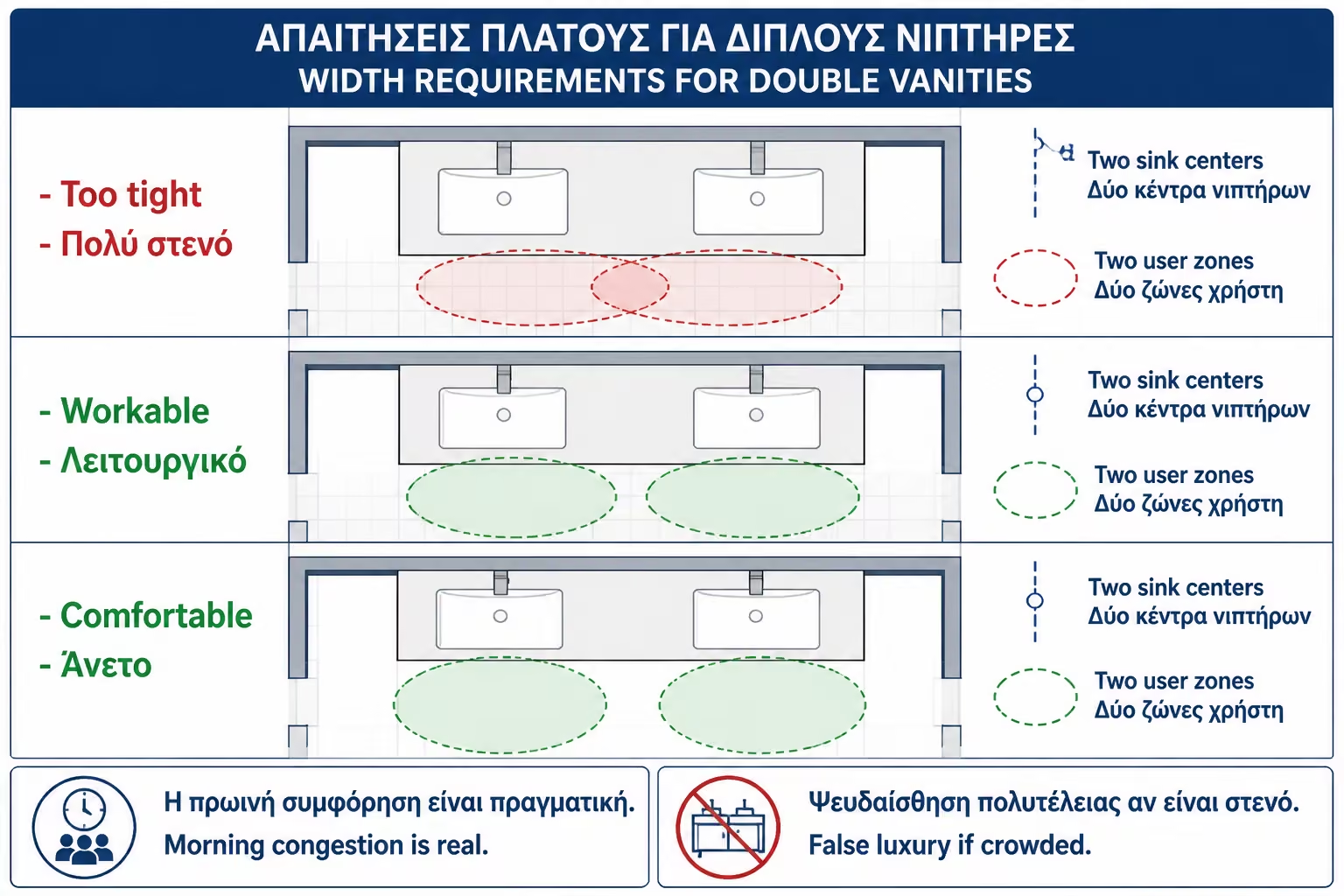
The table below gives a practical picture. It's not a substitute for space planning, but it does help you understand when a double sink makes sense and when it's a compromise.
| Width of furniture / bench | Practical assessment | What to watch out for |
|---|---|---|
| 100–110 cm. | Usually not suitable for two real sinks | Better a comfortable single sink |
| 120 cm | Technically possible, but marginal | Small troughs, limited counter space, narrow simultaneous use |
| 130–140 cm. | Better little solution | It requires careful selection of troughs and batteries |
| 150–160 cm. | Good daily basis | More comfortable use by two people |
| 170–180 cm. | Very comfortable double vanity | Space for troughs, counter and storage |
| 200 cm+ | Premium solution | It can be designed with two full usage zones |
In the Greek market there are 120-250 cm double washbasin products, as well as 120 cm double furniture washbasins, which show that the category starts from relatively compact dimensions and reaches large custom solutions. For example, Greek stores display large double washbasins 120–250 × 52 cm with prices from around €450–630, depending on design and variants.
The practical conclusion is that 120 million is more of a "minimum commercial possibility", not a comfortable family solution for everyone. If the goal is real comfort for two users every morning, aim for 150 cm and above as much as possible.
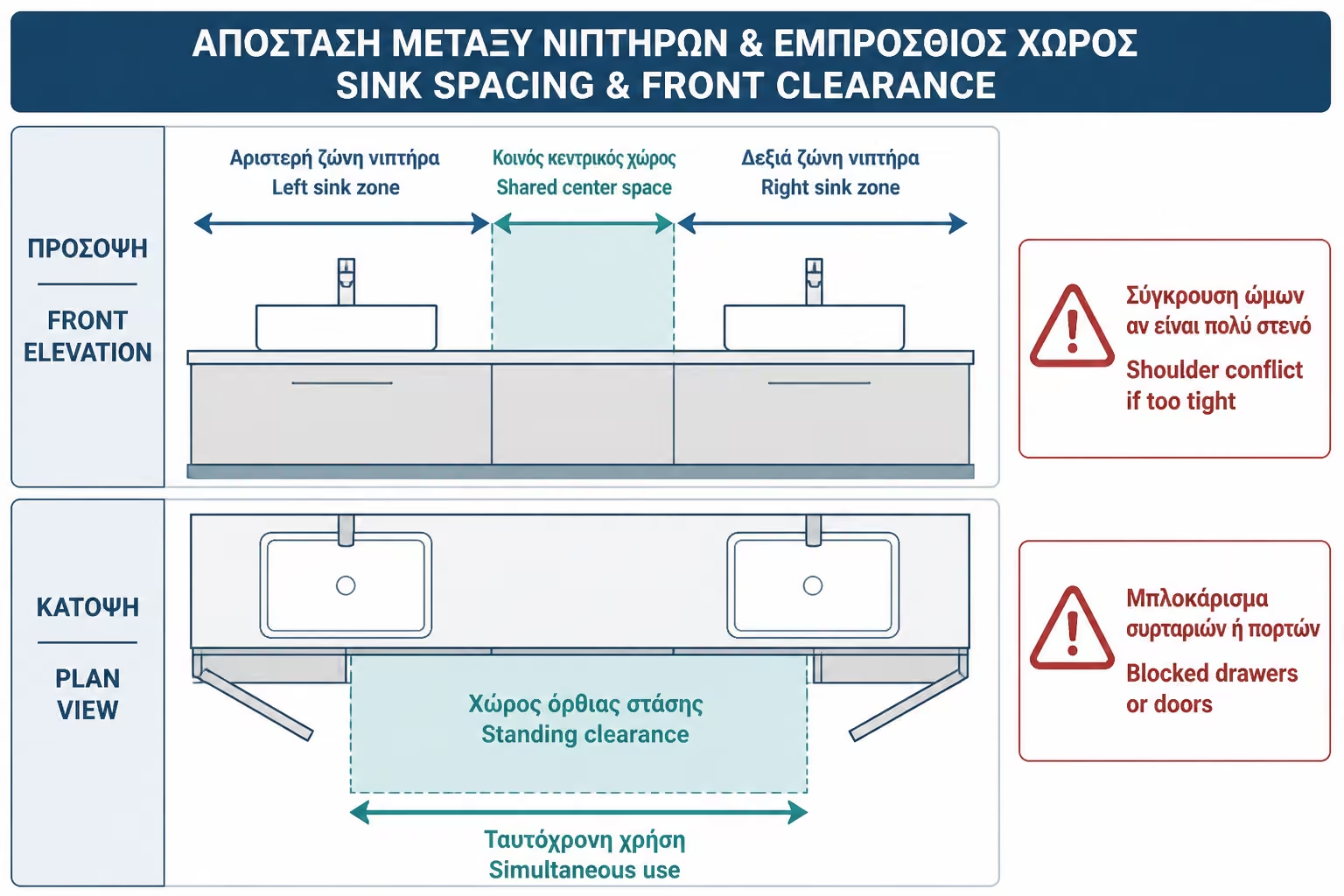
Just as important as the overall width is the distance between the two sinks. If troughs are too close, users bump elbows. If it is too far, a useful bench is lost or the furniture becomes too large. In double vanity design guides, a center-to-center distance of about 18–24 inches, i.e. about 45–60 cm, depending on the size of the trough, along with a free space in front of about 30–36 inches, i.e. about 76–91 cm, is often cited as a practical benchmark for comfortable movement.
In practice, for two adults, we want the places of use not to coincide. The center of each sink should give the user enough room for shoulders and arms. If two small troughs are placed on a 120 cm piece of furniture without sufficient distance, the double sink can look impressive but not be comfortable to use.
Distance also affects the mirror. Will one large single mirror go in or two separate ones? If two mirrors are inserted, they must be aligned with the sinks. If a grown man comes in, he should comfortably cover both positions. The same applies to lighting, sockets and accessories.
A common mistake is to choose two large undermount sinks on a modest countertop. The bowls take up so much space that there is no practical intermediate section left. In such a case, two insets or a single double sink may be a more practical solution.
The double sink needs free space in front. If two people cannot stand at the same time, the advantage is lost. The problem is not only the width of the furniture, but also the depth of the bathroom. If there is a basin, shower, door or narrow passage immediately behind the users, simultaneous use becomes inconvenient.
For everyday comfort, a free space of about 80–90 cm in front of the vanity is much more functional than marginal distances. In small bathrooms, it can work even less, but then we must know that we are talking about a compromise. If the drawers open outwards, an additional check is needed: can the user stand forward and open a drawer without blocking the movement?
A practical example: in a bathroom where the furniture is placed opposite the shower cubicle, the double sink can fit on the wall. However, if the shower glass is only 65 cm from the furniture, two people will not be comfortable. One should step back, the other should open a drawer, the door might be knocking. The effect doesn't solve the congestion, it just moves it.
Before you decide, mark the width and depth of the furniture on the floor with tape. Stand two people in front, open hypothetical drawers, see how the door moves. This test is more revealing than any photo.
There is no absolute number of square meters, because the layout is more important than the total area. A bathroom of 5 sq.m. with a long free wall can better accommodate a double vanity than a 6 sq.m. bathroom. with broken floor plan, doors and bad basin position. Nevertheless, we can give practical directions.
In bathrooms under 4 square meters, a double sink is rarely a good idea. It will usually take up space from the shower, storage or circulation. In bathrooms of 4–5.5 m2, it can only be considered if there is a suitable long wall and if it does not press the other elements. In bathrooms of 6–8 m2, it starts to become a more realistic solution. In master bathrooms over 8 m2, it can be integrated very comfortably, especially if the space has been designed from the beginning.
The crucial thing is not to sacrifice the shower or circulation for the sake of two sinks. If in order to fit a double vanity, the shower needs to be reduced below comfortable dimensions, maybe it's not worth it. If the space in front of the basin needs to be reduced a lot, it may not be worth it. A bathroom works as a whole.
In a family bathroom, often the best solution is a large single sink with a wide bench and very good storage. If the bathroom does not allow for two comfortable zones of use, the double sink can become a symbolic luxury rather than a real improvement.
There are two main rationales. The first is two separate washbasins, usually inset, under-seated or over-seated, on a common counter. The second is a single double sink, usually made of porcelain, solid surface or other material, with two troughs or a long double design.
The two separate washbasins give a cleaner feeling of two independent places. They are ideal when there is enough width and we want symmetry. They also allow greater freedom of choice of material and shape. The downside is that they often require more cuts, more joints, and perhaps less uniform cleaning.
The single double sink is more practical in many cases. It has a single surface, is often easy to clean and can be combined with furniture of a certain series. In Greek stores you can find 120 cm bathroom furniture with a double sink and prices from around €578 including VAT for simpler Greek constructions, which shows that there are more affordable solutions than fully custom systems.
The choice depends on the style and use. For a premium master bathroom, two underseats or two overseats on a custom counter may give a better look. For a family bathroom where we want practicality and more controllable costs, a single double vanity sink may make more sense.
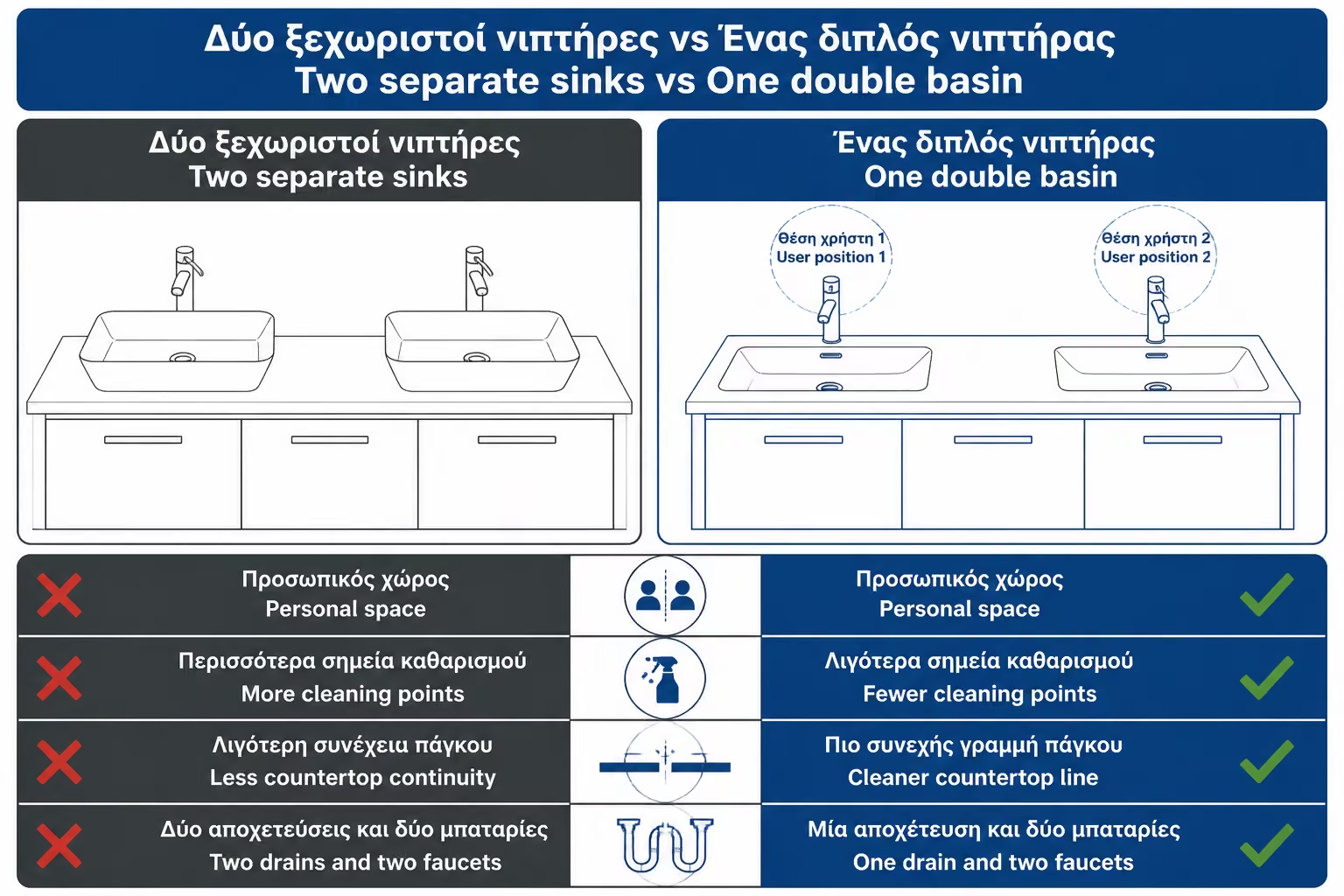
A double sink almost always means two faucets. This increases comfort, but also costs and maintenance. Two batteries means two mechanisms, two sets of hoses, two potential leak points, two salt spots and two cleaning areas.
If countertop washbasins are chosen, the faucets can be counter-height or wall-mounted. In a dual system, symmetry is very important. If the fittings or holes in the counter are not aligned correctly, the mistake is immediately apparent. In two built-in batteries, pre-tiling accuracy is critical.
For a family bathroom, it is worth choosing durable batteries, with easy cleaning and reasonable flow. You don't always need the most impressive solution. Two matte black batteries may look great, but in a hard water area they will show more salt and ring than two classic or brushed options.
The cost also doubles. If a good battery costs €100–180, two batteries mean €200–360 for this part alone, excluding valves, siphons and labor. Deciding on a double vanity should consider all the double vanity components, not just the vanity.
The double sink requires proper plumbing provision. Ideally, there are two hot supplies and two cold supplies, one for each battery, or proper branching with suitable valves. There are also two basin valves and two drainage connections, which may end in a common siphon or two separate ones, depending on the composition and the furniture.
The usual mistake is to underestimate the space inside the furniture. Two faucets and four faucets can reduce drawer storage space. If the furniture is not designed for a double sink, the siphons may fall on the drawers or require special cutouts. In ready-made double vanity furniture this has usually been provided for. In custom furniture it must be designed from scratch.
In a complete renovation, the solution is relatively simple: the plumber puts the waits in the right places. In replacing an existing single sink, however, the conversion to a double one may require breaking a wall or floor, new networks, changes to the drainage and adaptations to the furniture. It's not always "put a bigger piece of furniture".
Before choosing a double vanity, there must be a plan with the exact positions of sinks, faucets, faucets and drawers. If the carpenter, plumber and tiler don't work on the same plan, mistakes can be seen when it's too late.
Many people think that a large double vanity automatically means more storage space. This is only partly true. Yes, the piece of furniture is bigger, so it can have more drawers. But the two sinks, the two siphons and the two batteries take up space inside the cabinet and on the counter.
A single 140cm vanity with a wash basin on the side can leave a huge counter and large drawers. A 140cm double vanity with two troughs can have less free counter space and two areas with siphons that cut into the drawers. So it goes without saying that a double sink gives better storage.
The right solution is to design zones. Each user can have their own drawer or section. The center may have shared storage space. If the siphons are space-saving or the furniture is properly designed, the loss is reduced. But if random furniture with random plumbing routes is thrown in, the storage space may turn out to be less than you expected.
In family bathrooms, organization is perhaps more important than the second sink. If the bathroom is full of stuff, maybe it needs better storage first and then a second trough. The double sink solves the simultaneous use, not necessarily the clutter.
The mirror is a key part of the double vanity. One large single mirror above the entire cabinet can be inserted, or two separate mirrors, one for each sink. Both solutions can work, but they give a different picture.
The large single mirror makes the bathroom look more spacious and connects the two spaces. It is practical when users move freely and we want a uniform surface. The two separate mirrors give a more personalized, symmetrical image and suit a master bathroom or a more classic composition.
Lighting must support both positions. A light fixture in the middle can cast shadows at the edges. In a large double vanity, two lights are often needed, linear lighting above the mirror or lighting around each seat. If applying makeup or shaving, the right lighting is just as important as the sink.
Sockets must also be provided. In a double vanity, two zones with access to outlets for hair dryers, shavers, electric toothbrushes or chargers are often needed. It's not practical to have one outlet on one side only and have cables running over the counter. In electrical bathrooms, the location and protection of the sockets must be checked by an electrician in accordance with the applicable safety rules.
The double sink means more cleaning surface. Two troughs, two valves, two batteries, more furniture, a bigger mirror and more places where scale collects. If the water in the area is hard, this should be taken into account.
In single double porcelain sinks, cleaning is relatively easy. In two counter-top basins, there are two bases around which water collects. With two underseats, the bench is easier to clean, but the installation is more demanding. In black or matte options, the salts will be more visible.
For a family bathroom, the most practical solution is often a single double vanity sink or two inset/undermount troughs with a sturdy counter top. The two pedestals are beautiful, but need more sweeping around the bases. If everyone is using the bathroom in a hurry, this can become a daily nuisance.
Cleaning should be part of the decision. If the family is already struggling to keep one sink clean, two sinks won't magically clean themselves. They will reduce the wait, but increase the maintenance surface.
The double sink is worth it when there are three conditions: enough space, real simultaneous use and available budget for proper installation. If one of them is missing, the value is reduced.
It is especially worthwhile for families with children who use the same bathroom in the morning, for couples who get ready at the same time, in master bathrooms where the bathroom is a personal space for two people, and in residences where the renovation is done for long-term ownership. There the everyday comfort can justify the cost.
It is also worth it when the bathroom is wide enough for the double vanity to look natural. On a 170–180 cm wall, the solution can be excellent. On a 120 cm wall, a very careful assessment must be made. It might work, but it's not always the best option.
It's not worth it when it's done just to impress in a small space. If the double vanity shrinks the shower, restricts circulation, or cuts into storage space, it may ultimately detract from the bathroom. Luxury is not having two troughs. It is to make the space work comfortably.
There are many situations where a large single sink is a better solution. If the width is 100–130 cm, a comfortable single washbasin with a large counter, good lighting and many drawers may serve better than two small troughs. If simultaneous use is rare, the second sink simply removes a counter.
A large single sink allows more free space for items, simpler cleaning, one faucet, one siphon, fewer leakage points and lower costs. In many small to medium sized bathrooms, this is a more sensible choice. Especially if the family already has a second WC at home, the need for a second sink is reduced.
A long basin with one large trough or a trough-style basin with two taps can also be chosen. This is an intermediate solution: two people can use the same long sink, but cleaning and drainage can be simpler than two completely independent troughs. But it needs careful planning so that there is no water left and for there to be a correct slope towards the drainage.
The key question is: do you need two water points or do you need more counter and storage? The answer varies from home to home.
The cost of a double sink depends on the width, material, furniture, faucets, countertop, plumbing conversions and whether it is a ready-made solution or custom construction. In the Greek market we find ready-made hanging furniture with a double washbasin 120 cm from around €578 including VAT for simple constructions, while more complex 120 cm solutions with furniture, soft-close drawers and a washbasin can appear around €1,397 without VAT or higher, depending on materials and company. ([e-kapouranis.gr](https://www.e-kapouranis.gr/product/kremasto-epiplo-baniou-me-diplo-niptira-furnibath-d1-mdf-se-3-diastasis/?utm_source=chatgpt.com), [psaradellis.gr](https://www.psaradellis.gr/bathroom/bathroom-furniture/bathroom-furniture-set?utm_source=chatgpt.com))
| Category | Indicative cost of Greece 2026 | What does it usually include? |
|---|---|---|
| Simple ready-made furniture 120 cm. with double washbasin | €550–€900 | Basic cabinet and sink, often without faucets |
| Medium double vanity 120–140 cm. | €900–€1,800 | Better materials, soft-close, mirror optional |
| Large piece of furniture 150–180 cm. | 1,500–3,000€+ | More drawers, better counter, custom options |
| Custom counter with two sinks | 2,000–5,000€+ | Carpentry, bench, sinks, cuts, special materials |
| Two sink faucets | 120–500€+ | Depending on finish and quality |
| Hydraulic adjustments | Wide variation | Dependent on existing utilities and drainage |
Prices are indicative and depend on region, VAT, transport, brand, material, availability, whether the offer includes mirror, lighting, valves, siphons, batteries and labour. Don't just compare the price of the furniture. A double sink has double fixtures and often more work.
The higher price is justified when you get real functionality: enough width, good material, durable drawers, proper plumbing solution and everyday comfort. There is no justification if two small sinks are crammed into a space that would work better with a single sink.
The first mistake is to choose a double sink because "it is more premium", without a real need. If the bathroom is not used by two people at the same time, the investment may not pay off.
The second mistake is placing it in too small a width. Two sinks in 120 cm may be possible, but not always comfortable. If the troughs are small and the bench non-existent, daily use becomes uncomfortable.
The third mistake is ignoring the space in front. If two people cannot stand in front of the furniture, the double sink does not solve the congestion.
The fourth mistake is underestimating plumbing. Two sinks mean more supplies, faucets, valves and possible customizations. It is not a simple change of furniture if the bathroom had a sink.
The fifth mistake is the loss of storage. Two troughs can cut drawers and counter. If the bathroom needs storage, this should be calculated from the beginning.
| Inquiry | Yes / No |
|---|---|
| Do two people use the sink at the same time every day? | Yes / No |
| Is there a width of at least 140–150 cm available for a comfortable solution? | Yes / No |
| If the width is 120 cm, have you accepted that the solution will be more compact? | Yes / No |
| Is there a free space of about 80–90 cm in front of the furniture? | Yes / No |
| Do the drawers open without blocking traffic? | Yes / No |
| Are there two hot/cold supplies or proper branching? | Yes / No |
| Is the drain designed for two sinks? | Yes / No |
| Is there enough storage space after the two siphons? | Yes / No |
| Have you decided whether to put in two mirrors or a single one? | Yes / No |
| Does the lighting cover both places of use? | Yes / No |
| Are there sockets in safe and practical places for two users? | Yes / No |
| Does the total cost include furniture, sinks, faucets, faucets, valves, and labor? | Yes / No |
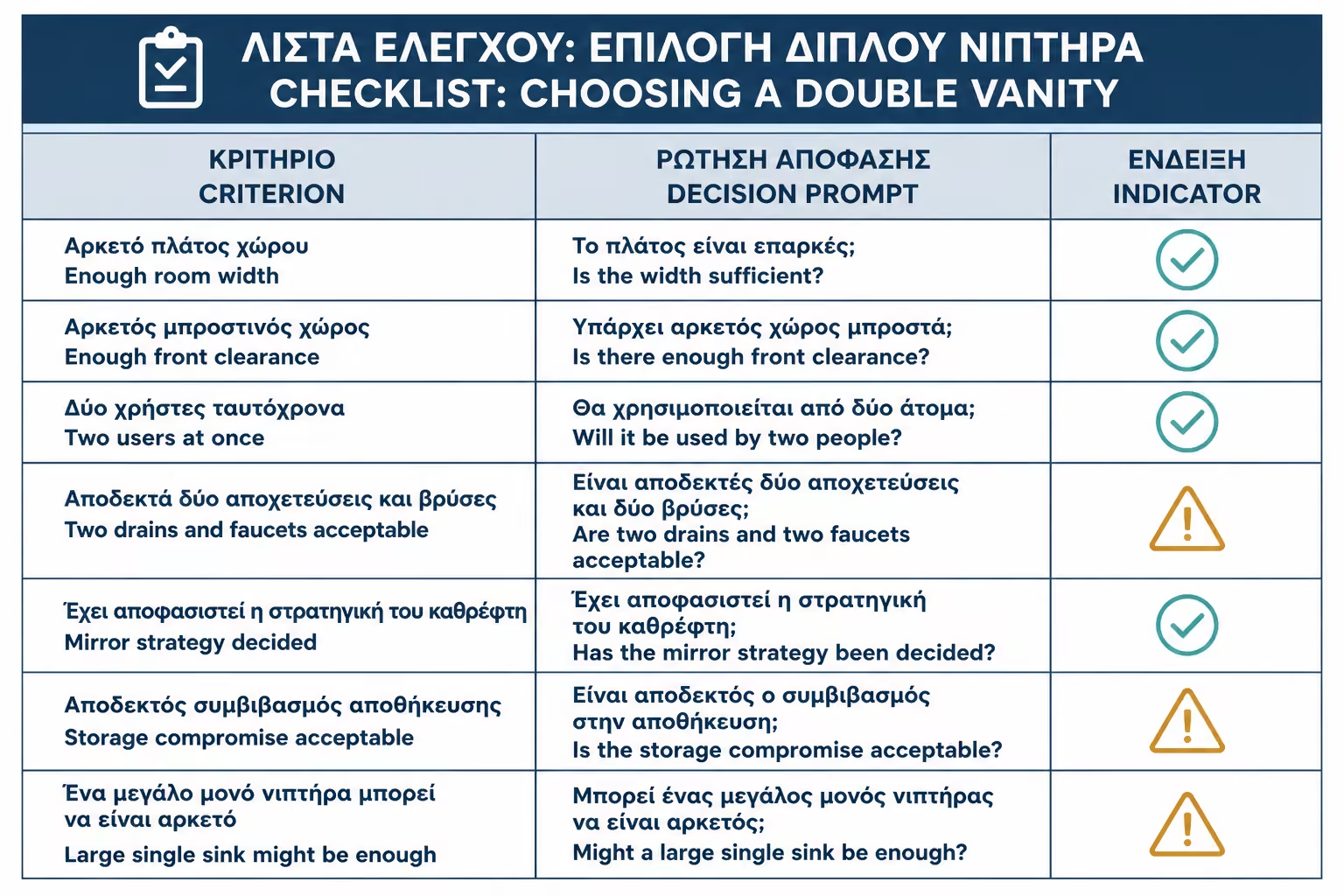
If most of the answers are “no”, the double sink should not be purchased yet. First the layout must be solved and then the product selected.
If you keep only one idea from this article, make it this: a double vanity is worth it only when two people can genuinely use it at the same time.
Do not measure only whether the unit fits on the wall. Measure usable width per person, circulation space in front, drawer clearance, plumbing positions, drainage, and storage.
If you have 150-180 cm available and regular family morning traffic, it can be an excellent investment. If you are trying to squeeze two tiny bowls into a narrow bathroom, one generous basin with a good countertop may be the far better solution.
A double vanity can be one of the most useful upgrades to a family bathroom. When space allows, it reduces the morning wait, better organizes personal belongings and gives a more premium image. In homes where two people get ready at the same time every day, the difference is immediately apparent.
However, it is not a solution for every bathroom. It needs enough width, correct distance between troughs, free space in front, two functional lighting zones and careful plumbing. If it puts pressure on the shower, basin, circulation or storage, it can make the bathroom less practical, despite the higher cost.
For small and medium-sized bathrooms, it is worth seriously comparing the alternative of a large single sink with a comfortable counter and very good storage. Many times this solution serves everyday life better than two marginally small troughs. For large family or master bathrooms, a double sink is often an investment that is justified.
The right decision is not to choose the one that looks more luxurious, but the one that solves the real problem of the house. If the problem is morning congestion at the sink and the space is sufficient, the double vanity is worth it. If the problem is lack of space, storage or circulation, then more careful planning is needed before adding a second sink.
Return to category.
Go to categoryReturn to the central guide.
Go to guide