
Bathroom Fixtures & Water Equipment
Return to category.
Go to categoryThe bathroom counter is one of the points that show whether the renovation has been done with real study or just with nice photos. On it rests the washbasin, the battery, the soap, the cosmetics, the toothbrushes, the razor, the hair dryer, the hair dyes and everything that a family uses every day. Accepts water, salts, steam, soaps, cleaners and small impacts. That's why the material of the bench is not just a decorative choice. It's a technical decision.
In a showroom, all the counters look clean and beautiful. Natural wood gives warmth, quartz looks modern and durable, marble exudes luxury, while Bakelite or HPL offers practicality and a wide variety of textures. But the question is not how they look on the first day. It's what happens when hair dye falls, when water is left around the battery, when defoamer is sprayed, when a child leaves toothpaste on the surface, or when the bathroom is not well ventilated.
The bathroom counter is more exposed than we think. In a countertop sink, the base of the bowl leaves water around it. In a tall bench battery, its base collects scale. In an undermount sink, the countertop cut must be perfectly protected. In a built-in sink, the connection to the counter is a point that needs attention. Even the best material can fail if cuts and joints are not properly sealed.
The big mistake is to compare materials only as "expensive" or "cheap". Wood is not a bad choice, but it needs protection and maintenance. Quartz is very practical, but it is not indestructible and does not like very strong chemicals. Marble is unique, but it reacts to acids and needs pH-neutral cleaners. HPL is one of the most reasonable solutions for everyday use, but the quality of the core and edges determine the real durability.
In this guide we will look at which material is suitable for a master bathroom, guest WC, family use, Airbnb, hard water bathroom and areas where hair is dyed or cosmetics are heavily used. We will also see what to look out for in cuts, battery holes, silicones, cleaners and costs in the Greek market in 2026.
Many people think of the bathroom counter as a small kitchen counter. This is half true. Both accept water and detergents, but the usage is different. In the bathroom we have more water vapor, more salts, more small amounts of cosmetics and often less ventilation. Also, the waters do not fall only momentarily. They often stay around the sink and faucet for hours.
The bathroom counter should be treated as a wet zone. This means that the material must withstand contact with water, but the cuts must also be protected. A large quartz or HPL surface can be extremely durable, but if the battery hole allows water to seep into the core, or if the silicone around the sink opens, the problem will start there.
The same applies to natural wood. A properly protected wooden bench can work in the bathroom and give an excellent result. An unprotected or sloppily varnished wooden counter can blacken around the sink, pool water, open at the joints or show stains from soaps and cosmetics.
That's why the bench is not only chosen based on the material. It is selected as a system: material, core, finish, cuts, sealing, sink, battery and cleaning method.
Countertops rarely break down evenly across the surface. The first problems appear in specific places: around the faucet, around the valve, around the base of the sink, in the cuts of the inset or sink, in the back joints with the wall and on the edges.
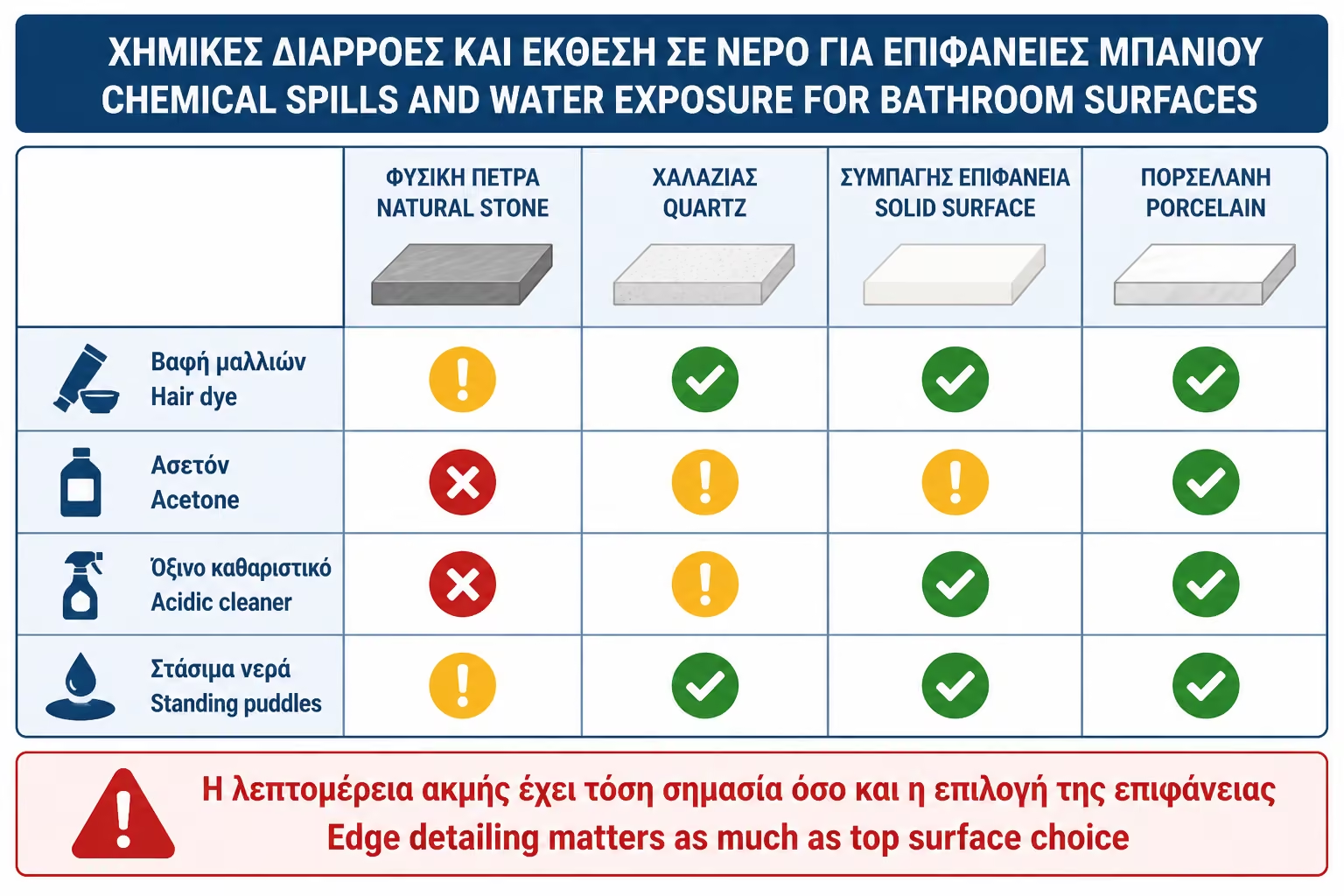
Scale remains around the battery. The owner sprays degreaser, rubs, the product runs onto the counter, and if the material is sensitive, tarnishing or wear begins. In marble, for example, acid defatters can cause etching, i.e. chemical dullness. The Natural Stone Institute explains that limestone stones, like marble, are sensitive to acidic solutions and need mild, non-acidic cleaners.
Around the undermount sink, water may remain at the base of the bowl. If the bench is wood or HPL with a vulnerable cut, the seal must be flawless. If the counter is marble or stone, salts and soaps can leave marks. If it is quartz, the surface is more durable, but still the area needs regular cleaning.
Edges are also critical. In HPL/Bakelite, the surface can be very durable, but if the edge or joint is not properly taped, water can seep into the core. In wood, the edge should have the same protection as the top surface. In marble, the edges can be chipped or absorb stains if the stone is porous and not sealed.
Natural wood on the bathroom counter has something that is hard to duplicate: warmth. In a bathroom with white sanitary ware, beige tiles, stone or pressed aesthetics, a wooden bench can make the space more human and less cold. It goes very well with free-standing washbasins, black faucets, earth tones and minimal furniture.
However, wood is not a material that can be left unprotected in the bathroom. It requires the right choice of species, appropriate processing, varnish or oil suitable for wet areas, cut protection and regular maintenance. Some wood bench care guides stress that water should not sit on the surface and that regular protection with a suitable oil or finish is required, especially around sinks/sinks and cuts.
Natural wood is more susceptible to darkening around the sink, stains from cosmetics and wear and tear from the wrong cleaners. If acetone, hair dye or strong cleaner is spilled, the finish may be affected. If water gets through the battery hole or the wall contact, the wood can split, water rise or create dark spots.
It's not a wrong choice. It is an option for an owner who accepts maintenance. In a guest WC or adult master bathroom it can work great. In a family bathroom with children, hard water and hurried cleaning, it needs a lot of thought.
Natural wood is worth it when the countertop will not receive continuous water, when there is good ventilation, when the sink and faucet are designed so that water does not pool, and when the owner is willing to wipe and maintain it. It is ideal for spaces where aesthetics take priority, but not at the expense of complete indifference to use.
In a guest WC, a wooden bench with a small washbasin can be a great solution. The use is limited, the water is less and the warmth of the wood immediately upgrades the space. In a master bathroom where users are careful, it can also work very well.
In a main family bathroom, wood should only be chosen if there is proper protection and practicality. If water remains around the battery every day, if hair dyes are used on the counter or if the space is not ventilated, the wood will need more care than a family usually wants.
A practical example: a wooden bench under a round washbasin looks impressive. However, if the base of the sink is not properly sealed and water remains around it, a dark ring may appear in a few months. The problem is not only wood. It is the combination of wood, sink, seal and use.
Quartz or engineered quartz is one of the most popular solutions for higher strength bathroom countertops. It is not a natural quartz slab in the simple sense. It is a composite material, usually with a high percentage of quartz mineral and resins, which gives a hard, non-porous and stable surface. This makes it very practical in bathrooms.
The big advantage of quartz is that it resists stains well and does not need regular sealing like natural marble. It is more resistant to daily cosmetics, soaps, water and salts, as long as it is cleaned properly. Recent care guides point out that quartz is durable and non-porous, but not invulnerable: stains should be cleaned promptly and harsh chemicals, acids, ammonia, bleach and abrasives should be avoided.
In the bathroom, quartz is particularly suitable for family use, double vanities, standing sinks and counters that accept everyday objects. It is usually cleaned with mild soap, water and a soft cloth. It does not require the same distress as marble and does not have the same need for maintenance as natural wood.
But he is not immortal. It can be affected by intense heat, strong chemicals, long-lasting dyes or inappropriate cleaners. Better Homes & Gardens warns that quartz is stain-resistant but not stain-proof, and that incorrect cleaning methods can cause permanent damage to the surface.
In daily use, quartz is one of the most tolerable materials for cosmetics. Makeup, soaps, shaving creams and toothpastes are usually easy to clean if they don't stay on for long hours. Its non-porous nature helps it not absorb stains easily.
Caution is needed with products such as hair dyes, acetone, strong coloring products, oils and strong cleaners. If hair dye falls on the counter and stays, it can leave a mark, especially on light colored quartz. The correct thing is to wipe immediately with a soft cloth and mild detergent. For more difficult stains, follow the manufacturer's instructions rather than homemade mixtures.
Also, quartz does not like excessive heat. A hot hair tool should not rest directly on the counter. It may not hurt the first time, but the resins in the material can be affected. In bathrooms where hair straighteners or scissors are often used, a heat-resistant protector is needed.
For a family bathroom or Airbnb, quartz is often a better choice than marble and wood because it's more forgiving. But it must be combined with proper use and not with the illusion that "nothing happens".
Marble is perhaps the most classic premium bathroom countertop material. It has natural beauty, unique waters and timeless value. A marble countertop can give a sense of luxury that is hard to replicate with man-made materials. In a master bathroom or in a highly aesthetic guest WC, it can be an excellent choice.
The difficulty with marble is its chemistry. Marble is a limestone material and reacts to acids. Vinegar, lemon, many softeners, some bathroom cleaners and strong products can cause dulling or etching. Etching is not a simple stain on the surface. It is a chemical alteration that removes the gloss or creates a dull spot. Natural stone care sources clearly warn that acidic cleaners such as vinegar or lemon can cause permanent damage to marble and other limestone stones.
Marble is also porous to some extent and needs sealing. Sealing reduces stain absorption, but does not make the marble invulnerable to acids. Natural stone care guides recommend pH-neutral cleaners, soft cloths and avoiding acidic products.
So marble is a choice for an owner who wants its aesthetics and accepts its patina or care. It is not the most practical solution for a family bathroom where dyes, softeners and strong cosmetics fall.
In the bathroom, salts are a daily problem. The owner takes a defoamer, sprays the battery and cleans. If the countertop is quartz or HPL, the risk is lower, although care is still needed. If the countertop is marble, an acidic product run over it can leave dull marks.
This is one of the most common mistakes. Marble should not be cleaned with "descalers". You need a product suitable for natural stone. Natural stone cleaning guides state that vinegar, lemon, orange, caustic soda, toilet cleaners, and typical descalers should be avoided on marble or limestone sinks/countertops because they can chemically etch the surface.
Therefore, if marble is chosen, the cleaning routine must be changed. The battery can be cleaned carefully, the product does not remain on the counter, and the surface is wiped immediately. Cosmetics, hair dyes and oils should not stay on the marble. If something falls, it is immediately wiped with a mild cleaner suitable for stone.
In a neat master bathroom, this care can be acceptable. In a children's bathroom, rental or heavily used space, it is usually too demanding.
In the Greek market, the term "bakelite" is often used for HPL or high pressure laminate surfaces, especially in furniture and countertops. It is a material with a durable surface layer, a wide variety of colors and textures, and good behavior in daily use. It can imitate wood, stone, monochromatic matte surfaces or more technical textures.
HPL is very practical for the bathroom because it is resistant to scratches, stains and moisture at surface level. It is used in areas that require cleaning and durability, and material guides describe it as suitable for demanding surfaces in bathrooms and kitchens due to its durability and ease of cleaning.
The critical point is not so much the top surface as the cuts and edges. If the countertop has a chipboard or MDF core and water gets through the sink hole, faucet hole, or edge, the core may swell. So HPL is only a very good solution when edges, joints and cuts are properly protected.
In a family bathroom, HPL on a good core, with correct edges and careful placement, is one of the most reasonable choices. It does not have the natural luxury of marble nor the warmth of real wood, but in durability and everyday practicality it is a very strong solution.
HPL is more forgiving of the everyday. If toothpaste, soap, shaving foam or a bit of makeup gets spilled, it's usually easy to clean up. If the material is of good quality, it does not absorb like wood or marble. This makes it very practical for kids, Airbnbs, family bathrooms and places where we don't want to worry about every drop.
Caution is also needed here with strong chemicals, prolonged contact with hair dyes and harsh scrubbing. No finish should be treated like a lab bench. But compared to marble or natural wood, HPL is more tolerant and easier to maintain.
The point to check is the faucet and the sink. If a counter-top basin is fitted, the valve hole must be protected. If inserted, the cut must be sealed. If an undermount goes in, it needs to be evaluated very carefully, because wood-core HPL is not always ideal for exposed under-sink cutting.
In practical terms: HPL for a countertop with a surface or inset washbasin can be a very good solution. For an undermount sink, a much more careful choice of material, core and construction technique is needed.
The following table summarizes the practical behavior of the basic materials. It does not replace the manufacturer's instructions, but helps in the initial selection.
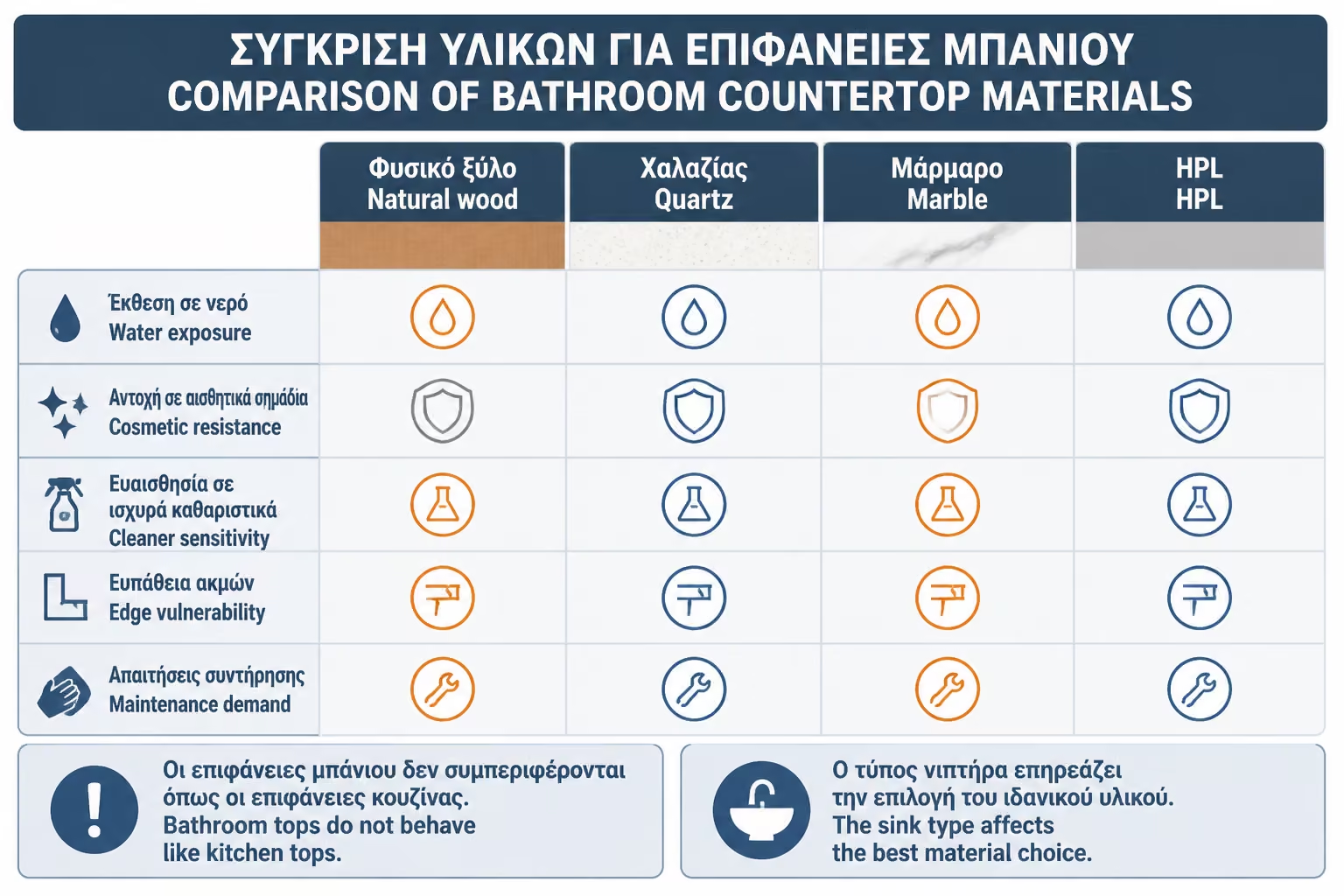
| Bench material | Water resistance | Resistance to cosmetics | Resistance to cleaning agents | Basic risk |
|---|---|---|---|---|
| Natural wood | Only good with proper protection | Moderate | He wants mild products | Blackening, blistering, varnish wear |
| Quartz | Very good | Very good if cleaned immediately | Good, but not with harsh chemicals | Dyes, heat, strong cleaners |
| Marble | Good sealing, but porous | Moderate | Sensitive to acids | Etching, stains, care needed |
| HPL / Bakelite | Very good on the surface | Good | Good with mild products | Edges, cuts, water in the core |
| Compact laminate | Very good | Good | Good | Cost, proper cut and finish |
If you want the most carefree solution for everyday family bathing, quartz and good HPL are usually safer choices. If you want a natural aesthetic, wood and marble give better character, but require more maintenance. If you want lower cost and practicality, HPL is often the most sensible choice, as long as it's done right.
The main thing is not to say "marble is better because it is expensive" or "HPL is cheap so it is bad". Each material has its proper field of application.
Hair dyes and acetone are two of the most dangerous products for bathroom counters. They should not be considered mere "cosmetics". They contain dyes, solvents or active substances that can leave marks, affect varnishes, dull natural stones or stain light colored surfaces.
On quartz, paints must be cleaned immediately. The material is durable, but not stain-proof. In HPL, again a quick wipe is needed, especially if it is a heavy pigment. On wood, paint and acetone can damage the protective finish. On marble, the paint can stain and at the same time some products can affect the surface.
If hair coloring is often done at home, the most practical choice is good quality quartz or HPL, not marble or natural wood. Even better, have a separate protective surface or work towel so that the products do not touch directly on the counter.
The same goes for acetone. We don't leave it on the counter, we don't put cotton balls with acetone on the surface and we don't use it as a "cleaner" for stains. It can loosen a stain and create more damage to the finish.
The type of sink greatly affects the choice of countertop. With a counter top sink, the counter is more visible and receives water around the base. There wood is beautiful but needs care, quartz is very safe, marble is impressive but delicate, and HPL is practical if the holes are properly sealed.
With an inset sink, cutting the countertop is critical. Water can pass through the lip. Quartz and marble can work well with proper cutting and sealing. HPL needs very good cut protection. Wood also needs special attention.
With an undermount sink, the countertop material must withstand exposed cutting and frequent contact with water. Here quartz is a very good choice. Marble can be done, but needs proper sealing and care. Wood-core HPL is not the safest solution if the cut is exposed. Wood is high risk unless it has very specialized construction.
With a single sink-bench, such as solid surface or porcelain, the discussion changes, because we do not have the same associations. But the article here is mainly about freestanding vanity tops under sinks.
The prices of bathroom counters depend on material, thickness, dimensions, cuts, edge finishing, holes, transportation, installation and whether it is a ready surface or custom construction. The same material can have very different costs depending on the origin and quality.
| Material | Indicative cost of Greece 2026 | What affects the price? |
|---|---|---|
| HPL / bakelite bench | €80–€250 for small/medium counters | Thickness, core, edges, cuts |
| Natural wood | 150–500€+ | Wood type, thickness, varnish/oil, custom work |
| Quartz | €250–€700+ for a standard vanity top | Brand, thickness, cuts, edges, shipping |
| Marble | 200–800€+ | Type of marble, thickness, waters, processing, sealing |
| Compact laminate | 200–600€+ | Thickness, quality, cuts, edges |
| Custom counter with two sinks | Wide variation | Length, Material, Holes, Undermount Washbasins, Transportation |
The prices are indicative. They are affected by area, VAT, availability, if the work includes cutting for a sink and tap, if fitting is included and if the bench is part of a complete piece of furniture. In stone and quartz, cuts and edges can raise the price significantly. In HPL and wood, the quality of the seal and edges determines whether the lower cost will prove beneficial.
Don't just compare material costs per meter. Compare the final cost of a finished, cut, sealed and installed bench.
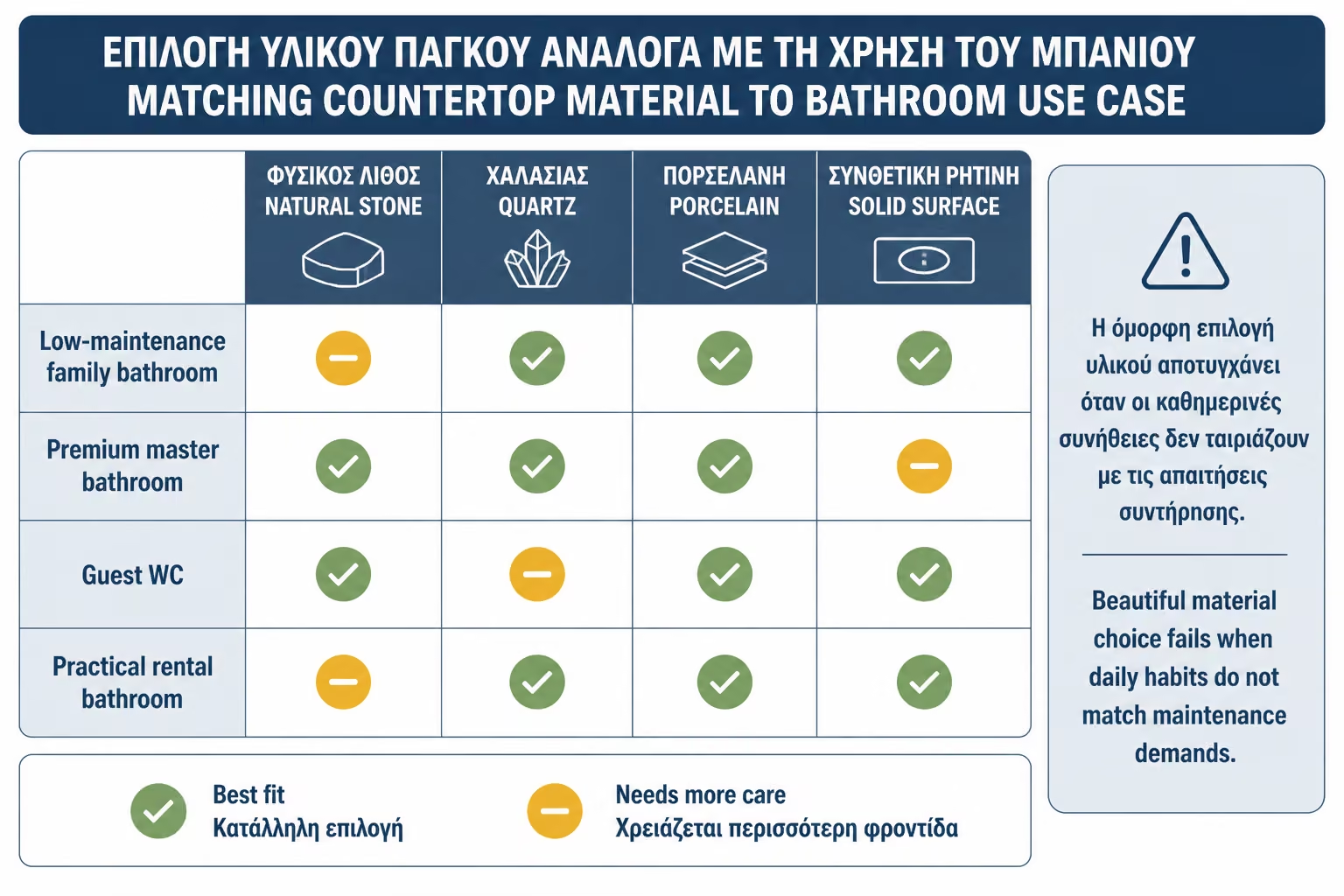
For a main family bathroom, the most practical choices are quartz and good HPL. Quartz gives a more premium look and great durability, while HPL gives good practicality at a lower cost. If there are children, hard water and daily use, these two materials have a clear advantage.
For an adult master bathroom, you can consider marble or natural wood, as long as you accept the maintenance. Marble will give luxury, wood warmth. Both need attention to cleaners and water.
For guest toilets, you can give more freedom to the aesthetics. A wooden or marble counter can work well, because the use is limited. But if the WC has no ventilation or is frequently used by many guests, HPL or quartz remain safer solutions.
For Airbnb or rental, prefer durability and easy cleaning. Visitors won't notice marble or wood like you do. HPL, compact laminate or quartz are usually more reasonable choices.
The first mistake is choosing wood without real protection. A beautiful wooden shelf does not automatically become a bathroom counter. It needs proper processing and maintenance.
The second mistake is using marble with salt cleaners. Marble is not cleaned like tile. It wants pH-neutral cleaners and avoiding acids.
The third mistake is underestimating HPL cuts. The surface may be durable, but if the faucet or sink cut is not properly sealed, the core may swell.
The fourth mistake is the belief that quartz never stains. He is very durable, but not invulnerable. Paints, strong chemicals and heat need attention.
The fifth mistake is the choice of material without taking into account the type of sink. There is another risk for a superset on wood and another for a quartz subset.
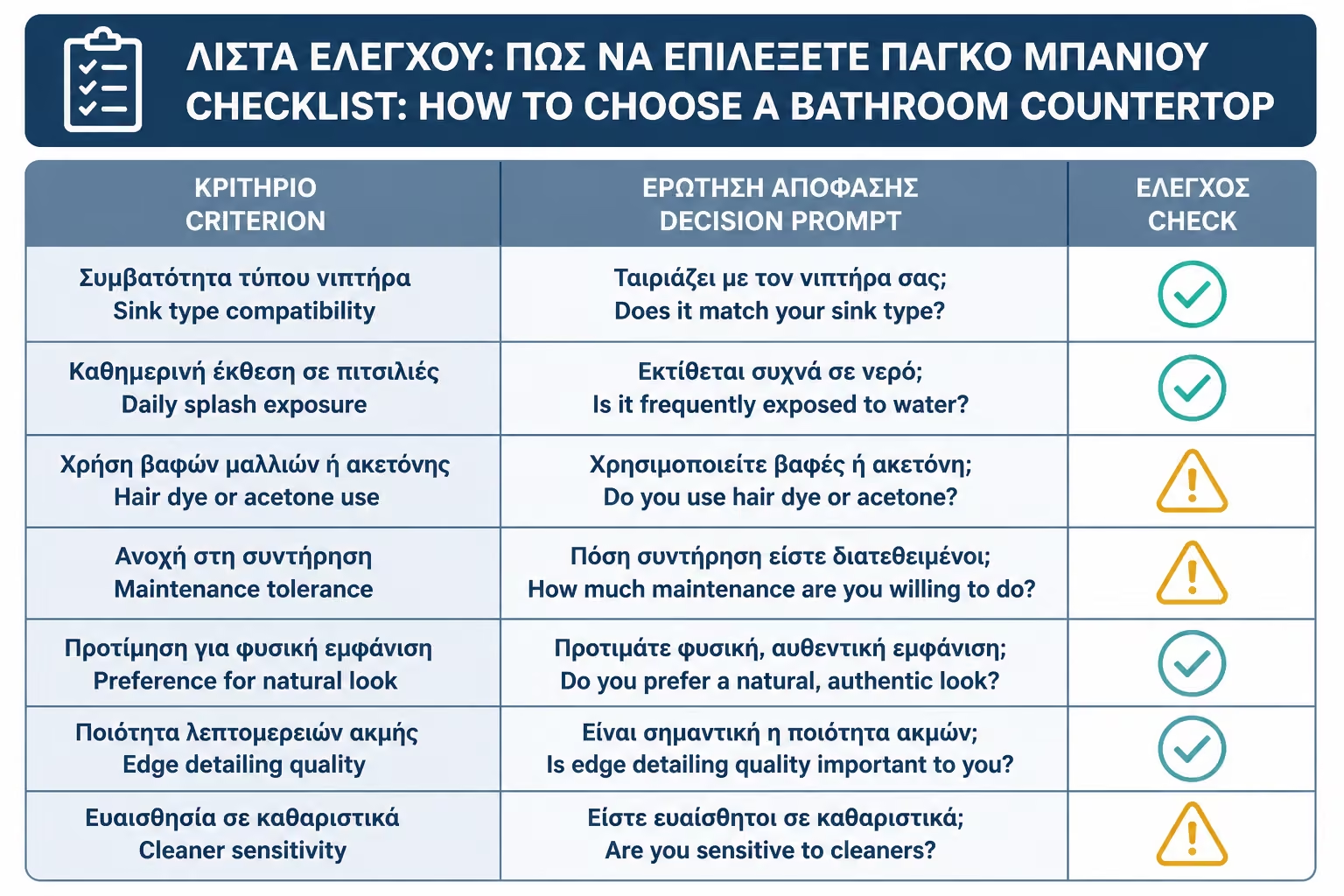
| Inquiry | Yes / No |
|---|---|
| Will the bench fit into a master bathroom or guest WC? | Yes / No |
| Will a surface, inset or undermount sink be used? | Yes / No |
| Have you checked if the material can withstand water around the battery and sink? | Yes / No |
| Will the sink and faucet cutouts seal properly? | Yes / No |
| Does the bathroom have hard water and lots of salt? | Yes / No |
| Are hair dyes or acetone used over the counter? | Yes / No |
| Do you know which cleaners are allowed on this material? | Yes / No |
| If it is marble, is there provision for sealing and pH-neutral cleaning? | Yes / No |
| If it is wood, is it properly protected and do you accept maintenance? | Yes / No |
| If HPL, has the core and edges been checked? | Yes / No |
| If it's quartz, do you know to avoid harsh chemicals and heat? | Yes / No |
| Does the total cost include material, cutting, edging, transportation and installation? | Yes / No |
If you can't confidently answer the questions about cuts, cleaners and everyday wear, don't just choose from a color swatch. The bathroom counter must be chosen based on the wear and tear it will receive.
If you keep only one idea from this article, make it this: a bathroom countertop rarely fails across the big flat surface. It usually fails at the cut edges, around openings, and near the tap.
For an everyday family bathroom, quartz or a good HPL top are usually the most practical options. Wood and marble can look more luxurious, but they demand maintenance, proper cleaners, and quick wiping after water exposure.
Do not choose a material that depends on care you know you will not give it. Above all, never leave cut edges unprotected.
The bathroom counter is one of the most exposed surfaces of the renovation. Accepts water, salts, cosmetics, cleaners and daily use. That is why the choice of material must be made with practical criteria and not only based on aesthetics.
Natural wood gives warmth and a unique atmosphere, but needs protection, drying and maintenance. Quartz is one of the most balanced solutions for durability and a premium look, as long as strong chemicals and heat are avoided. Marble is luxurious and timeless, but sensitive to acids, salts and the wrong cleaners. HPL or Bakelite is very practical and makes economic sense, provided the edges and cuts are properly protected.
For master bathroom and family use, practicality should come first. For a guest WC or adult master bathroom, you can give more weight to marble or wood, as long as you accept their care. For rentals and Airbnbs, durability and easy cleaning are usually more important than physical luxury.
The best choice is not the "most expensive" material. It is the one that stands up to the use it will actually receive. If the bench is properly combined with the sink, faucet, cuts and the right cleaners, it will remain beautiful and functional for years.
Return to category.
Go to categoryReturn to the central guide.
Go to guide