
Bathroom Fixtures & Water Equipment
Return to category.
Go to categoryThe freestanding floor sink is one of those elements that immediately change the feel of a bathroom. It doesn't look like a simple sink on a piece of furniture. It stands alone, like a sculpture. It can be cylindrical, rectangular, conical, monolithic, marble, solid surface, porcelain or in the form of a totem. In a master bathroom or a luxurious guest WC, it can become the focal point of the space.
This is also the reason why freestanding washbasins are gaining ground in more careful renovations. They are not chosen because it is the most practical storage solution. They are chosen because they create experience. A free-standing washbasin in front of a striking wall, with concealed lighting, a large tile slab or a floor/wall mixer, gives the impression of a hotel or architectural bathroom. It's not just a hygiene item; it's a design statement.
But precisely because it looks so "clean" and simple, it hides many technical requirements. In a classic washbasin with a cabinet, the fittings, the siphon and the connections can be hidden inside the cabinet. In a freestanding sink, there is no furniture to hide mistakes. Supplies and drainage must be in the right place, often through the floor or very carefully through the wall, depending on the model. The valve, siphon and service access must be provided before the floor is finished.
The mistake that is often made is that the owner sees a totem sink in a photo and thinks that he can simply replace the old sink. In practice, it is often necessary to transfer sewage, new facilities, exact location on the floor, special siphon, weight control, fixing and study of the battery. If these are not done from the start, the result can be an expensive item that doesn't fit properly or that leaves visible piping where a clean design should have been.
In this guide, we will see where freestanding floor basins fit in, what are their aesthetic and practical advantages, what technical requirements they have for valves, siphons and supplies, what should be foreseen before laying tiles, how much they cost in Greece in 2026 and when this solution is really worth it.
The freestanding washbasin is a washbasin that stands on the floor as an independent body. It can be fully monolithic, i.e. a single sculptural object from floor to trough, or consist of a body/column and basin integrated into one whole. The terms freestanding, floor standing, monoblock or totem are often used.
The main difference from a wall-hung or counter-top washbasin is that the washbasin does not need a piece of furniture or a bench to stand on. Its aesthetics are based precisely on this autonomy. In the market they are often described as single pieces that start from the floor and function as autonomous "sculptures" in the space, without needing a piece of furniture or a support bench.
That doesn't mean it's always a simple installation. Image autonomy requires precision in technical preparation. The drain must come in the right place, the battery supply must be provided for, the siphon must fit inside the body or be connected in a way that does not spoil the image, and the floor must be finished properly.
Dimensions vary. Many totem models are about 85–90 cm high, so they function as a complete utility basin. In solid surface/free standing collections, indicative dimensions such as 50 × 40 × 90 cm or 50 × 45 × 90 cm are mentioned, which indicates that the selection should be checked in actual dimensions and not only in a photo.
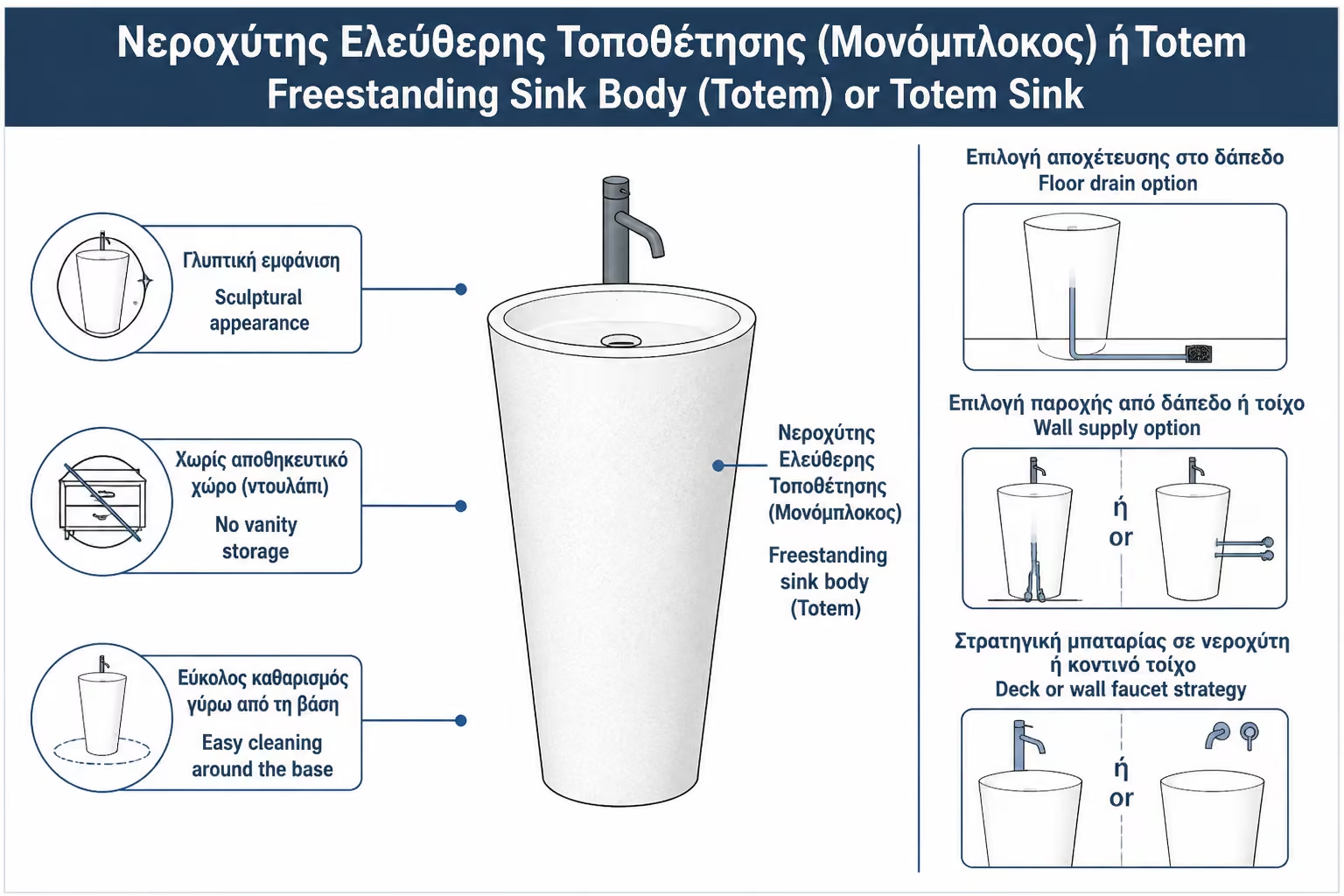
The freestanding washbasin fits best in spaces where there is enough visual and functional margin around it. It's not a solution that loves cramming. It needs air, background and proper position. In a master bathroom, it can be placed opposite a shower, in front of a large mirror or next to a free-standing bathtub. In a luxurious guest WC, it can become the only striking element of the space.
In small WCs, it can also work, but only if the dimensions are correct. A small totem basin can look impressive and avoid the need for furniture. But if the space is very narrow, it can hinder movement more than a small wall-hung sink. The difference is that the freestanding has volume up to the floor, while the hanging leaves the floor visually free.
Its most natural environment is the bathroom designed from scratch. If the supplies and drainage can be placed exactly where they are needed, the solution is clear. If we try to put it in an old bathroom without moving pipes, the limitations can invalidate the design.
A practical example: in a 1.40 x 1.80 m guest WC, a small freestanding washbasin can look great if placed on a free wall with a built-in faucet and proper floor drainage. In the same WC, if the drain is in the wrong place and a visible pipe is added to the side, the result immediately loses its value.
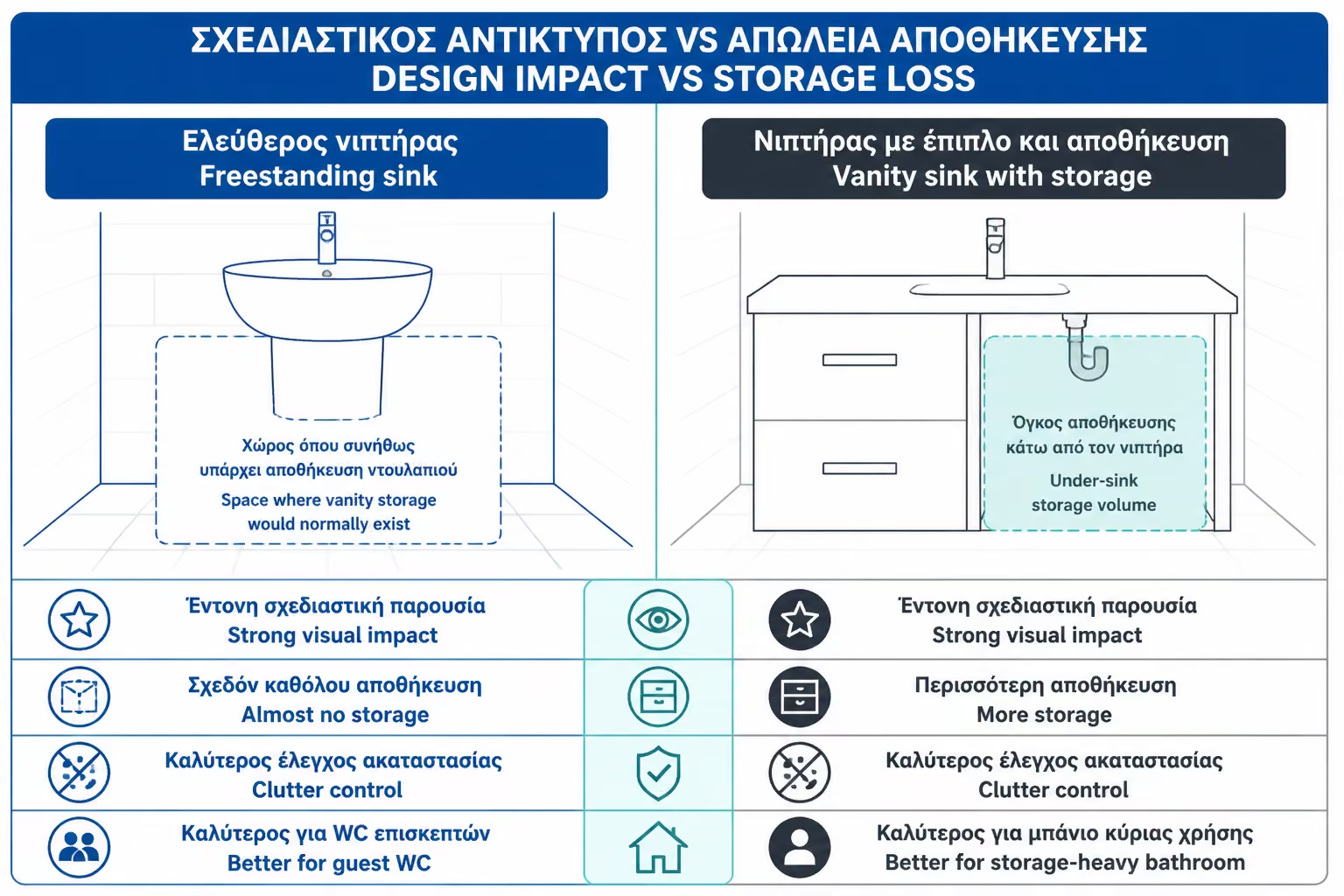
The free-standing washbasin is ideal when we want the bathroom not to look full of furniture. It leaves the space more architectural and less "furnished". There is no cabinet, counter, drawer or classic stand. There is an object in pure form. This is its aesthetic advantage.
In master bathrooms, this option can work very well when there is other storage space: bathroom closet, built-in shelf, separate piece of furniture, hidden cabinet or vanity area. If the freestanding sink is the only space around which all everyday objects must be organized, then the solution becomes less practical.
In a guest WC, lack of storage is not a big problem. There they usually need soap, a small towel and maybe a basket. The washbasin can act as a clean design statement. That is why totem washbasins are particularly suitable for reception areas, restaurants, boutique accommodation, professional WCs of high aesthetics and residences where the guest WC wants to impress.
The aesthetic effect, however, requires purity. If visible pipes, plastic siphons, rough silicone, poorly cut tiles or a mismatched faucet are added around the freestanding sink, the design collapses. In this category, the details are more visible than in a vanity unit.
The most obvious sacrifice is storage. A freestanding sink has no drawers, no bench, no cabinet under the trough. If the bathroom is used daily, there must be another solution for the objects: shelf, wall cabinet, column, mirror-cabinet or separate piece of furniture.
In a master bathroom, this may be acceptable or even desirable. The sink acts as a sculpture and the storage is moved elsewhere. In a small apartment bathroom, however, where every object has to find a place, the absence of furniture can become a daily problem. Soaps, cosmetics and toothbrushes end up on the rim of the sink or on rough shelves, canceling the clean image.
There is also the matter of the desktop. A counter top sink leaves space next to it for soap, glass, perfume or decoration. Freestanding usually leaves almost nothing. If it has a wide lip, it might hold a small bar of soap, but it shouldn't count as a real counter.
That is why the freestanding washbasin is more suitable when the use is short or when the space has a planned alternative storage. Not the best solution for a family bathroom where everyone leaves items around the sink.
The most important technical issue in freestanding washbasins is drainage. In many models, the drain must exit the floor in the center or at a specific point within the body of the sink. This must be done accurately before the floor is finished. If the hold comes out a few centimeters wrong, the siphon may not fit or the body may not be positioned correctly.
In a classic washbasin with furniture, there is room for correction. The siphon can make small displacements inside the cabinet. In a freestanding, the body of the washbasin covers and limits the space. There is no free cupboard to hide discrepancies. Drainage must follow the instructions of the specific model.
This means that the purchase or at least the technical selection of the sink must be made before the pipes are laid and before the final floor tiles are laid. The plumber needs the technical drawing of the product: outlet location, diameter, siphon required, access method, connection margins and whether the drain can exit from the floor or wall.
If the owner buys the sink after the bathroom is finished, there is a risk that the drain will not match. Then the compromises begin: exposed piping, exposed metal siphons, placement closer to the wall than we wanted, or even breaking the floor. In a freestanding washbasin, the technical forecast is not a detail. It is a condition.
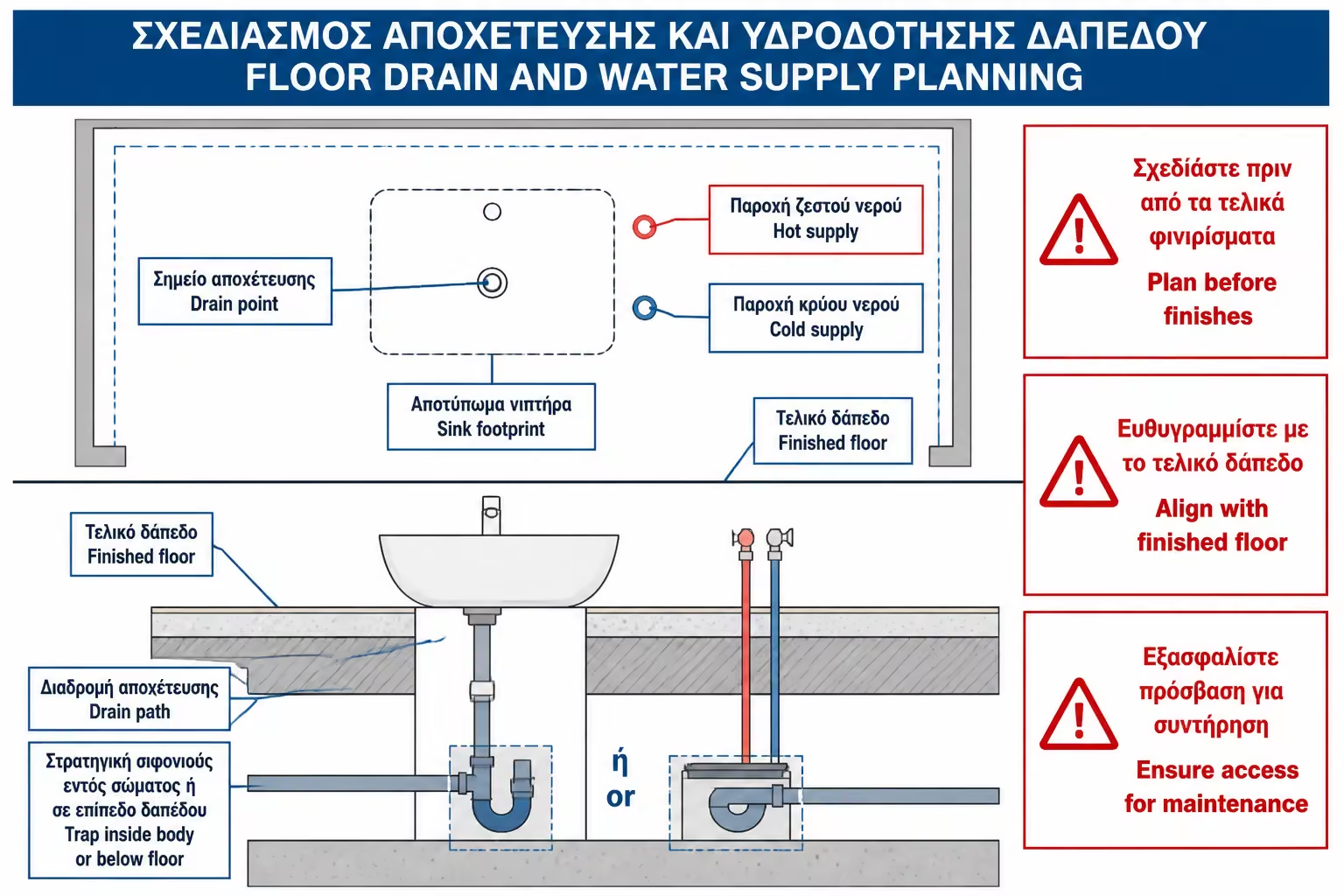
The term "floor drain" is often confusing. The freestanding sink needs a hydraulic odor trap, like any sink. How this is integrated depends on the model. In some cases, the siphon is located inside the body of the sink and is connected to a drain in the floor. In others, there is a special connection to the wall or to the floor, hidden by the base.
The crucial thing is to have an odor trap and the possibility of cleaning or intervention. If the solution completely hides the siphon without any access, a future clog can become disproportionately difficult. The plumber should know how to loosen or clear the trap if necessary.
In some models, the valve and siphon must be of a specific type. Not all universal valves fit. There are totem products where the manufacturer indicates that the drain fitting is suitable for a specific type of thicker connection rather than universal drain fittings, indicating that valve/sink compatibility should not be taken for granted.
The practical advice is simple: before you buy, ask for a technical drawing and ask which valve and siphon are required. Do not assume that "the plumber will install a siphon". In a freestanding sink, this may not be so simple.
The battery is the second big technical issue. There are freestanding washbasins with a battery hole on the body itself, others designed for a built-in wall battery, and more impressive solutions that are combined with a floor battery. Each option has different requirements.
If the sink has a tap hole, the supply must be reached in a way that is hidden inside the body of the sink. This can be done from the floor or from the wall, depending on the model. If the faucet is built into the wall, the supplies must be placed at the correct height and with the correct projection, so that the water falls into the center of the trough without splashing.
The floor battery is the most impressive, but also the most demanding. It needs supplies from the floor, stable anchorage, correct position in relation to the sink and attention to cleaning around the base. If misplaced, correction is difficult. It is not a solution that is decided after the tiles.
In a freestanding washbasin, the choice of battery must be made together with the product. It is not enough to say "we will put a tall battery". We need to know trough height, water outlet location, sink depth, drop point and distance from wall or floor.
The valve is a small part, but in a freestanding sink it can create a big problem if it is bought incorrectly. It should be checked whether the sink has an overflow or not. If it has an overflow, it needs a valve suitable for an overflow basin. If it doesn't have one, it needs a non-overflow valve. The wrong valve can create a leak or poor drainage.
Many freestanding, countertop or design washbasins do not have an overflow, for aesthetic reasons. This means that if the valve closes and water flows, there is no second safety outlet. In a guest WC this might not be a big deal. In a place with children or in professional use, it needs attention.
The click-clack valve is practical and aesthetically clean, but it must be of good quality and accessible for cleaning. If it collects hair, soaps or salts, it must be removable. In a sink where access from below is limited, valve selection must be made even more carefully.
Also, the finish matters. In a plain white wash basin, a classic chrome valve can be enough. In a black, stone or solid surface freestanding sink, the valve must fit aesthetically, but first it must fit technically.
The free-standing sink hits the floor. This means that the floor must be level, stable and properly finished. If there are slopes, unevenness or poor tile cutting around the drain, the sink may not sit properly or leave visible gaps.
In bathrooms with large slabs of tile, precision is even more important. The freestanding washbasin will stand on the finished surface and will catch the eye. If its base does not sit cleanly or if the drain has been cut roughly, the problem will show every day.
We also need to think about the seal at the base. In many installations, thin silicone or a suitable seal is used to prevent water from entering under the body. This detail should be done discreetly. Too thick or poorly laid silicone spoils the image of an expensive sink.
If the bathroom has underfloor heating or pipes pass under the point, the fixing must be done with care. We don't drill a floor without knowing what's underneath. In such cases, the technician must have an installation plan or a non-hazardous way of support must be decided.
Freestanding sinks can be heavy, especially if they are made of natural stone, concrete, marble or solid surface. Weight doesn't just affect transportation. It affects mounting, flooring, support and safety during installation.
A natural stone totem basin may need two or more people to carry, special attention at the entrance of the house, tile protection and proper handling. If the bathroom is on a floor without an elevator or with a narrow staircase, the cost and difficulty go up. These must be calculated before ordering.
The weight also means that the sink must rest on a solid floor. If there is an old, loose subfloor, hollow tiles or rough construction, it is not a good base for a heavy object. In a complete renovation, the technician must know in advance that a freestanding sink will be installed in order to properly prepare the area.
We should not think that because it "steps on the floor" it does not need any support. Depending on the model, it may need to be anchored, secured, or have a specific mounting procedure to keep it from moving. Manufacturer's instructions are essential.
The freestanding sink cleans differently than a sink with a cabinet. Water, dust, salts and floor cleaning residues can collect around its base. If the base is too close to a wall or corner, cleaning becomes difficult. If it is free enough, it is easier to clean but it needs space.
The material also plays a big role. Porcelain is easier to care for. The solid surface needs gentle cleaning and attention to scratches. Stone and concrete need special care, avoiding acids and often sealing or protection, depending on the product. A freestanding stone washbasin should not be cleaned like simple white porcelain.
In dark or matte finishes, the salts are more visible. If the water in the area is hard, the trough and battery base may show white marks quickly. This is not to say that such material should not be selected, but a gentle cleaning and drying routine should be in place.
Because the freestanding washbasin is visible from all sides, cleanliness has a greater aesthetic importance. In a furniture sink, a lot is hidden. In a totem, everything is visible.
In a master bathroom, the freestanding sink can be a great choice when there is enough space and alternative storage. It can be placed as a central element, combined with a free-standing bathtub, walk-in shower, large tile surfaces and lighting that highlights it.
In such spaces, use is usually more controlled. The owner often accepts that the bathroom also has an aesthetic dimension. The vanity doesn't necessarily have to carry all of the bathroom storage. If there are built-in cupboards or a separate dressing area, freestanding works very well.
The technical requirement is to design together with the floor, facilities and lighting. If the drain is wrong, if the battery does not fall correctly, or if the mirror does not line up with the sink, the premium effect is reduced. In the master bathroom, the detail must match the choice.
A freestanding washbasin in the master is not necessarily an everyday practical solution for everyone. It's a design choice that works when the rest of the bathroom is designed to support it.
The guest WC is probably the most successful field for a totem basin. The use is limited, the space often needs an element of sensation, and the lack of storage space is not so important. A freestanding washbasin can transform a small WC into a very neat reception area.
But here we have to pay attention to the dimensions. A large cylindrical or rectangular sink can steal space from the basin or the door. If the WC is narrow, you may need a smaller model, a slimmer form or alternatively a small wall-hung basin. The impressive solution should not make the space uncomfortable.
In a guest WC, the wall mounted faucet is often a very good choice because it keeps the whole thing clean and reduces the pedestals on or around the sink. However, if the renovation is small and the wall is not opened, a model with a battery hole and properly hidden supplies can be chosen.
The guest WC is also a space where we can choose a more special material: black, stone, concrete, colored solid surface. Usage is less, so maintenance is more manageable. Nevertheless, cleaning instructions remain important.
A freestanding sink is rarely a simple replacement of an old sink. The old wash basin usually had a supply and drain in the wall, possibly inside a cabinet or with an obvious siphon. Freestanding may need a floor drain or an expensive hidden connection. This changes the project.
If you want to put it in an existing bathroom without breaking it, it must first be checked whether the model accepts the existing facilities. If not, the solution may become unsightly or technically problematic. It makes no sense to buy an expensive totem basin and then see plastic pipes or rough connections on the side.
In a complete renovation, everything is easier. The supplies are passed from the beginning, the drain is placed in the right place, the floor is prepared, the battery is decided early and the result is clean. That is why the freestanding washbasin must be included in the study from the first stage.
If the supplier does not provide a technical drawing, if the plumber does not know where the waits will come out, or if the product does not have clear valve/siphon instructions, the purchase is at risk. In this category, technical documentation is almost as important as design.
Freestanding washbasins usually belong to a higher price category than simple hanging or standing washbasins. Cost is affected by material, dimensions, brand, finish, weight, country of origin and whether it is a simple solid surface model or a premium Italian/handcrafted product.
In the Greek market there are categories of floor/freestanding washbasins in porcelain, stone and Corian/solid surface, with specialized stores presenting them as monoblock or totem solutions of high aesthetics. In premium catalogs of the Greek market, Italian free-standing washbasins appear with prices from around €2,600–3,900 and above, depending on the model and color, showing how large the variation can become in the high class.
| Category | Indicative cost of Greece 2026 | What affects the price? |
|---|---|---|
| Simple freestanding solid surface / Corian type | €600–€1,500 | Dimensions, color, material quality, import |
| Porcelain freestanding / monoblock | €700–€1,800 | Brand, design, availability, valve |
| Stone or marble totem basin | 1,200–3,000€+ | Stone type, weight, handmade construction |
| Premium design / Italian series | 2,500–4,000€+ | Brand, colors, special finishes, limited design |
| Wall or floor battery | 150–800€+ | Fitting, finishing, mechanism quality |
| Plumbing conversions / floor drainage | Wide variation | Breaking, Pipe Transfer, Tiles, Access |
The prices are indicative and depend on VAT, transport, weight, floor, difficulty of transport, special installation, availability of spare parts and whether the offer includes a valve, siphon or only the body of the washbasin. In this category, a net quote must be requested: product, valve, siphon, battery, plumbing, transport and installation.
The higher cost is justified when the sink is really part of a well thought out premium bathroom. It is not justified when he enters a space that does not have the right infrastructure and will be forced to work with sketchy connections.
The first mistake is buying without a technical plan. The sink can be beautiful, but if you don't know where the drain, fittings, valve and siphon go, you can't fit it properly.
The second mistake is deciding after the tiles. If the floor is finished and the waits are not correct, the options are limited. In a freestanding washbasin, the position must be known before closing the floor.
The third mistake is underestimating storage. The sink may look impressive, but if there is nowhere for soap, towel or items, everyday use becomes sketchy.
The fourth mistake is choosing material without thinking about cleaning. Stone, concrete, matte solid surface and dark finishes need more careful care than white porcelain.
The fifth mistake is the wrong choice of battery. A freestanding sink can be functionally destroyed by a faucet that splashes water, falls in the wrong place or looks out of proportion to the body.
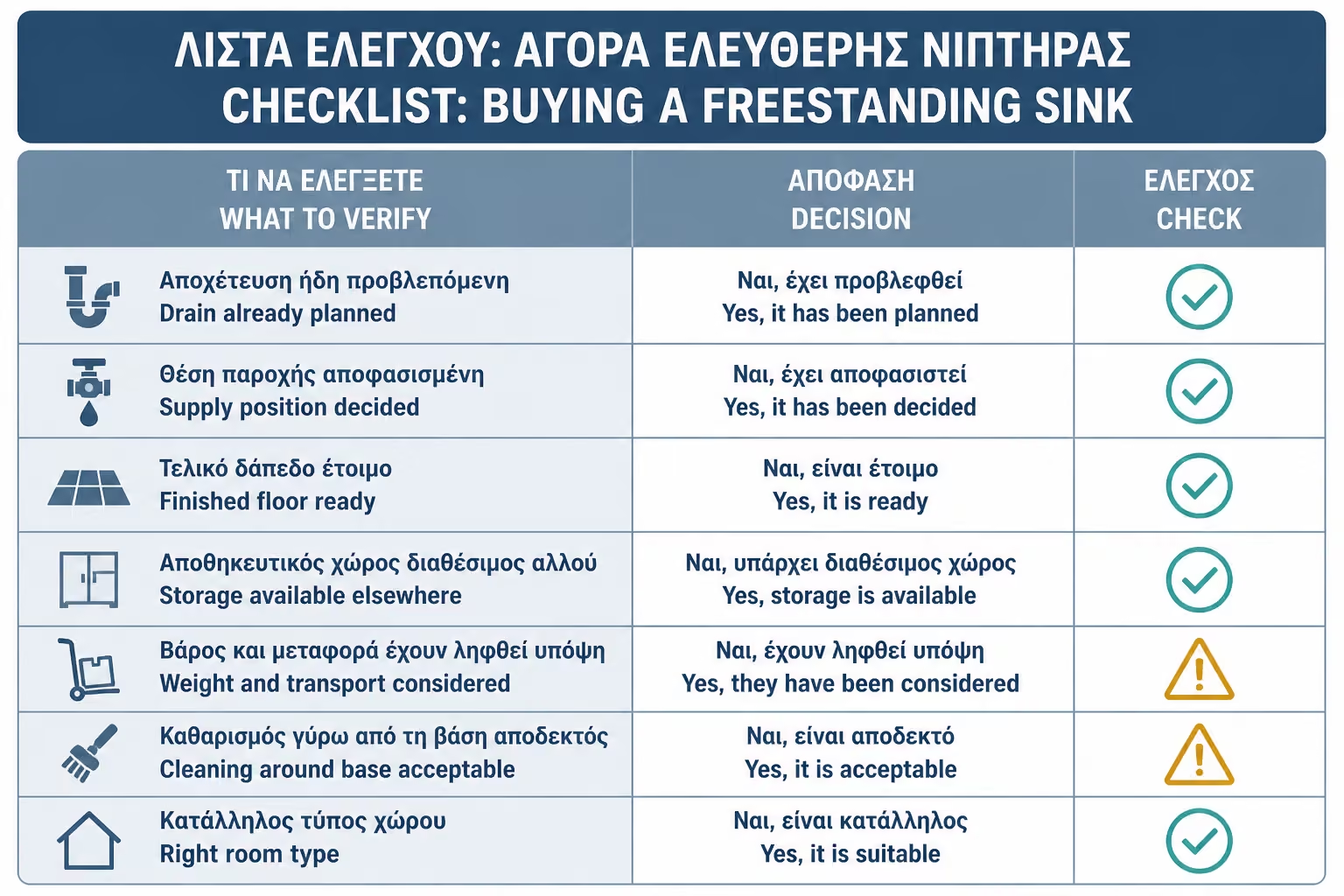
| Inquiry | Yes / No |
|---|---|
| Do you have a technical drawing of the sink with drainage and service points? | Yes / No |
| Can the drain exit exactly where the product requires? | Yes / No |
| Has it been confirmed what valve is needed, with or without overflow? | Yes / No |
| Has it been confirmed what siphon is required and how future service will be done? | Yes / No |
| Has the faucet been selected together with the sink? | Yes / No |
| If the battery is built-in or floor-standing, are the utilities provided before the tiles? | Yes / No |
| Is the floor level, stable and suitable for the weight of the sink? | Yes / No |
| Has weight and volume transportation been calculated? | Yes / No |
| Is there alternative storage in the bathroom? | Yes / No |
| Can it be easily cleaned around the base? | Yes / No |
| Is the material suitable for the use and maintenance you are willing to do? | Yes / No |
| Does the total cost include product, valve, siphon, battery, labor and shipping? | Yes / No |
If the answers to drain, siphon, valve and battery are not clear, do not proceed with the purchase yet. In a freestanding washbasin, technical compatibility precedes aesthetics.
If you keep only one idea from this article, make it this: a freestanding washbasin is not just a beautiful object sitting on the floor.
It is a technical installation that needs precise plumbing positions, proper drainage, a compatible waste, the right trap, and a tap planned together with the bowl. If you decide on it from the beginning of the renovation, it can deliver a striking result.
If you leave the decision until after the floors and plumbing are already fixed, there is a real risk of paying for expensive design and ending up with a compromised technical solution.
Freestanding floor basins are among the most impressive options in the modern bathroom. They give a sculptural presence, a clear image and a sense of luxury. In master bathrooms and luxury guest WCs they can work exceptionally well, especially when combined with the right lighting, a large tile surface, a built-in or floor-standing faucet and a well-thought-out background.
However, their success depends on technical forecasting. The drain must be in the right place, the valve and siphon compatible, the supplies designed before the floors are closed and the material suitable for the use. It is not a solution that is easily fixed in the end. The cleaner the aesthetics, the less mistakes are hidden.
For a guest WC, the freestanding washbasin can be an ideal design statement, because the use is limited and storage is not so critical. For a main family bathroom, it needs more thought because it doesn't offer a counter or cupboard and requires more careful daily care. For a master bathroom, it can be an excellent choice when there is an overall design.
The right decision is not to choose the most impressive sink. It is to choose a washbasin that can be installed technically correctly, easily maintained and supported by the space. If these have been studied, the freestanding sink can become the most special element of the bathroom. If not, it can become an expensive item that doesn't work as it should.
Return to category.
Go to categoryReturn to the central guide.
Go to guide