
Bathroom Fixtures & Water Equipment
Return to category.
Go to categoryBuilt-in taps are among the options that immediately change the image of a bathroom. Instead of seeing the whole body of the faucet on the wall, we only see the control, spout, shower head or hand shower. The technical parts are hidden inside the wall. The result is cleaner, more minimal and more architectural. In a modern bathroom with large tiles, a walk-in shower and black, brushed nickel or chrome details, the built-in faucet often looks much more premium than the classic wall-mounted one.
But the aesthetic advantage is only half the story. The other half is the installation. A concealed mixer tap is not an accessory that comes in at the end. It is a plumbing system that must be installed before the walls are closed, before the waterproofing is done, before the tiles are put in and before the final heights and centers are decided. If a mistake is made at this stage, the correction may require breaking tiles.
The most important component is the one that is not visible: the inner body or built-in box. In well-known series, you will hear it as iBox, SmartBox, EasyBox, Rapido, universal concealed body or simply "inner part". This piece goes into the wall and the outer set, i.e. the visible battery, will later snap onto it. hansgrohe describes the iBox universal 2 as a basic set that hides under the plaster and offers design freedom for built-in solutions in showers and bathtubs.
The value of such systems is that they create a more standardized and secure basis for installation. For example, the iBox universal 2 is referred to as a universal system for different bathroom scenarios, while it can be placed in, on or in front of the wall, depending on the construction. Accordingly, the GROHE Rapido SmartBox is presented as a universal concealed installation system for flexible shower control solutions, while in technical descriptions it appears with an installation depth of approximately 75–105 mm, three 1/2" outlets and two 1/2" inlets.
In this guide we will see when the built-in faucet is worth it, what are the advantages in terms of aesthetics and cleanliness, what role does the internal built-in box play, why it must be bought and installed before the wall is closed, what mistakes lead to broken tiles and how to choose correctly between a shower, sink and bathtub.
Built-in tap is the tap whose main hydraulic body is inside the wall. Only the decorative part is visible from the outside: control, rosette, lever, thermostatic control, diverter, spout or shower outlet. The hot and cold water connections, the mixer and the outlets to the shower or bathtub are hidden behind the finished surface.
This differentiates it from the classic wall-mounted mixer, where the entire body of the tap is outside the wall. In the wall-mounted solution, the supplies come out on the wall and the tap is screwed onto them. In the built-in, the supplies are connected inside the wall, in the built-in body, and the external set is inserted at the end.
There are built-in faucets for showers, bathtubs, washbasins and in some cases bidets or special applications. In the shower, they may only control one head. But they can also control more points: ceiling head, hand shower, body jets or bathtub filler. That's where the diverter comes into play, i.e. the mechanism that changes the water output.
Crucially, the concealed mixer tap should be selected as a system, not as a single visible component. The inner body is different, the outer set is different, the head is different, the arm is different, the diverter is different. If they don't match, the end result may not install or work as you intended.
The first advantage is the cleaner look. A concealed mixer tap removes visual bulk from the wall. There is no large exposed tap body, no pair of visible supply rosettes on either side, and no obvious limescale build-up around external fittings. The wall stays calmer and the eye mainly sees the tile, not the mechanism.
In walk-in showers, this is very important. When we have a large tile surface, a linear siphon and a fixed crystal, a concealed mixer tap keeps the composition minimal. Especially in black, gold, brushed or colored finishes, the result looks more architectural because only the details are visible.
At the sink, a built-in wall faucet frees up the counter. There is no battery holder on the counter to collect water and limescale. This is especially useful in freestanding sinks, where the tall countertop faucet can look bulky or splashy if it doesn't have the right projection. With the wall-mounted tap, the whole can become cleaner and more premium.
hansgrohe mentions that the main advantage of built-in controls is that they make the space look tidier and offer more room to move in the bath or shower. This is exactly the aesthetic and ergonomic gain: less objects outside, more clean surface.
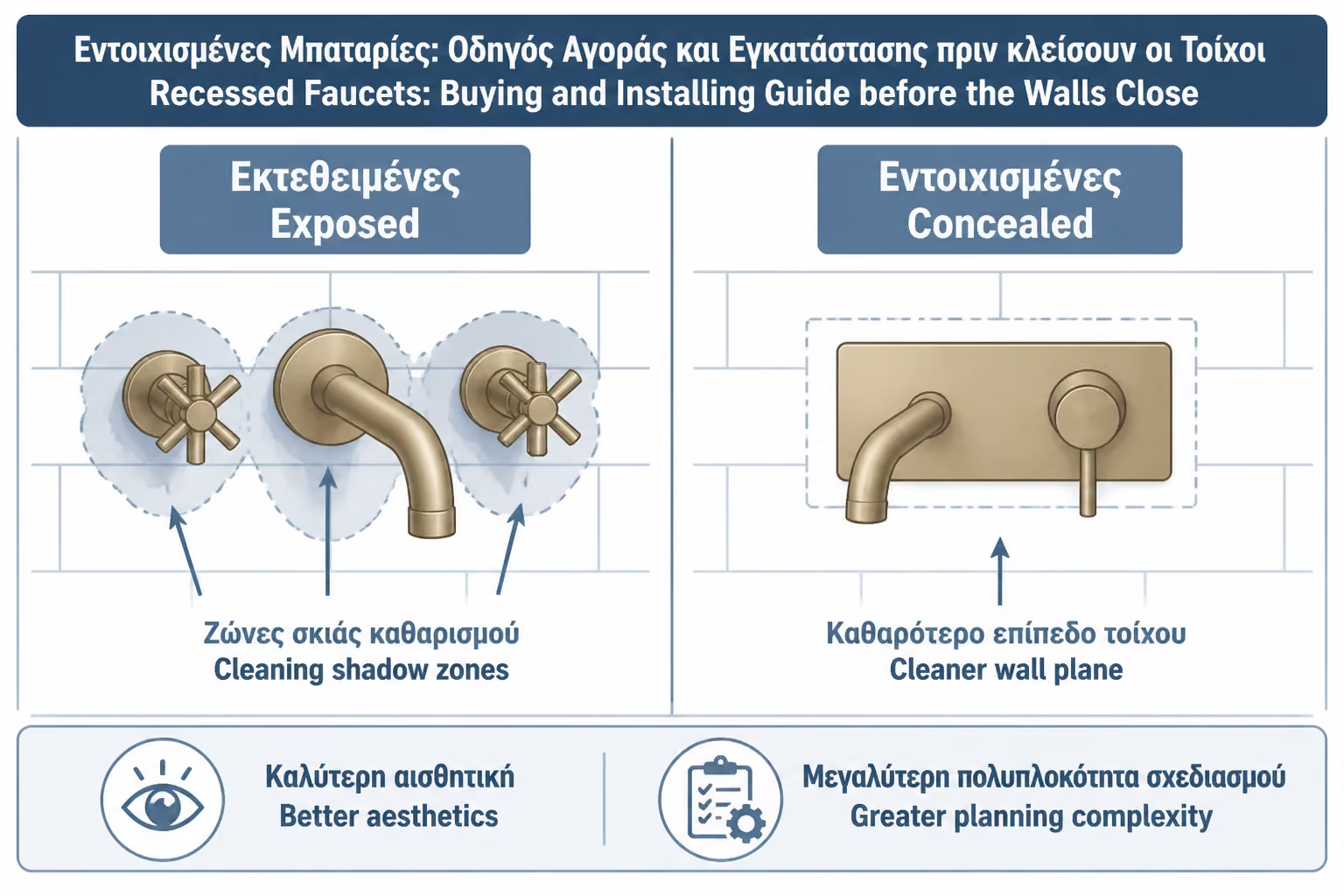
The concealed mixer tap is easier to clean because it has fewer external surfaces. In the classic wall-mounted mixer, there is a body, rosettes, connections, joints, spirals, supports and places where limescale collect. In the built-in, you usually clean a flat rosette, a lever and the water outlet.
This is of great importance in hard water areas. Salts appear quickly around joints and bases. The fewer external points there are, the easier the maintenance. On black or brushed taps, where scale is more visible, reducing the outer surfaces is even more useful.
In the washbasin, the built-in wall mixer has another advantage: there is no base on the counter. The base of the bench tap is one of the places that collect water and limescale. If the bench is wood, HPL or natural stone, this spot can become sensitive. With a wall-mounted tap, the countertop is easier to clean and has fewer holes.
This does not mean that the built-in solution does not need cleaning. Finishes should be cleaned with mild products, without harsh descalers that can dull surfaces. But the daily routine is simpler, because there are fewer places that hold water.
The big disadvantage of concealed mixer taps is that the installation does not easily forgive mistakes. In a wall-mounted mixer, if the body breaks or you want a change, access is external. In the built-in, the main body is behind tiles. If it is inserted incorrectly, if it is not properly sealed, or if there is no compatible outer set, the problem can be serious.
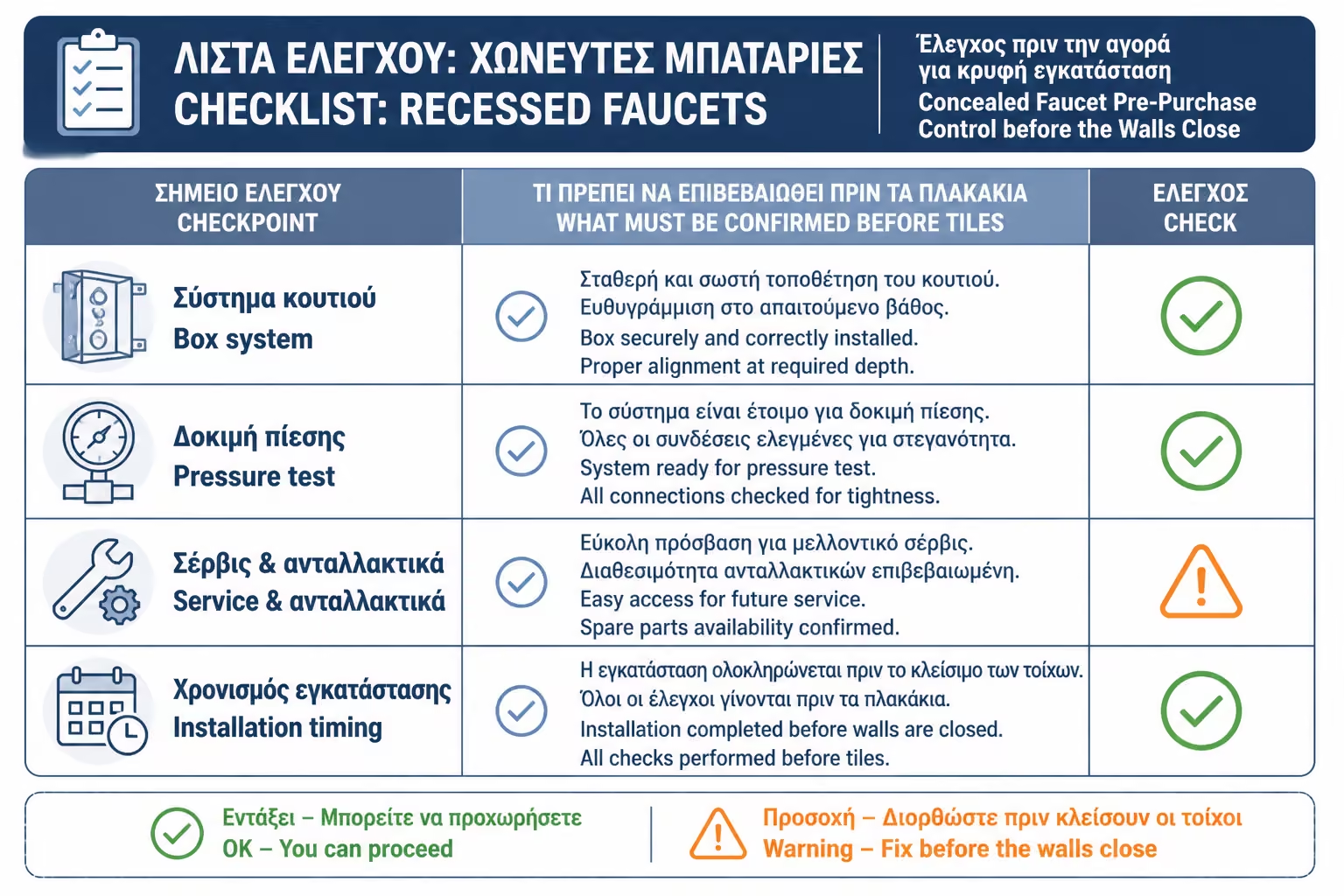
That is why the installation must be done by an experienced plumber and checked before the wall is closed. Concealed mixer installation guides state that piping and fittings must be installed before tiling and that the body must be at the correct depth below the finished surface for the cover plate to fit properly.
The wrong depth is one of the most common problems. If the inner body goes in too far, the outer set may not fit properly. If it goes in too far, the rosette may not fit or protrude. The iBox and SmartBox type systems give room for installation, but do not negate the need for precision. The iBox universal 2, for example, is reported to cover conventional depths of around 80–108mm, with optional extensions for shallower or deeper installation.
In a concealed mixer tap, "we'll bring it later" is not good logic. After tiling, corrections become expensive.
The internal wall box is the part that goes into the wall and receives the water supplies. The outer set is clipped on or connected later. It can be universal, i.e. accept many different external trims of the same company or series, or be specific for a specific battery.
The value of the box is that it standardizes the installation. It gives specific entry and exit points, specific depth, sealing flange, protection during work and possibility of future change of outer set within the compatibility of the system. It's not just "a box". It is the basis of the entire built-in installation.
In systems like iBox or SmartBox, the company is trying to create a platform. That is, the plumber puts the inner part in the piping stage and later the visible set is selected or installed. This helps with planning, but it assumes that we know the order and functions we want in advance.
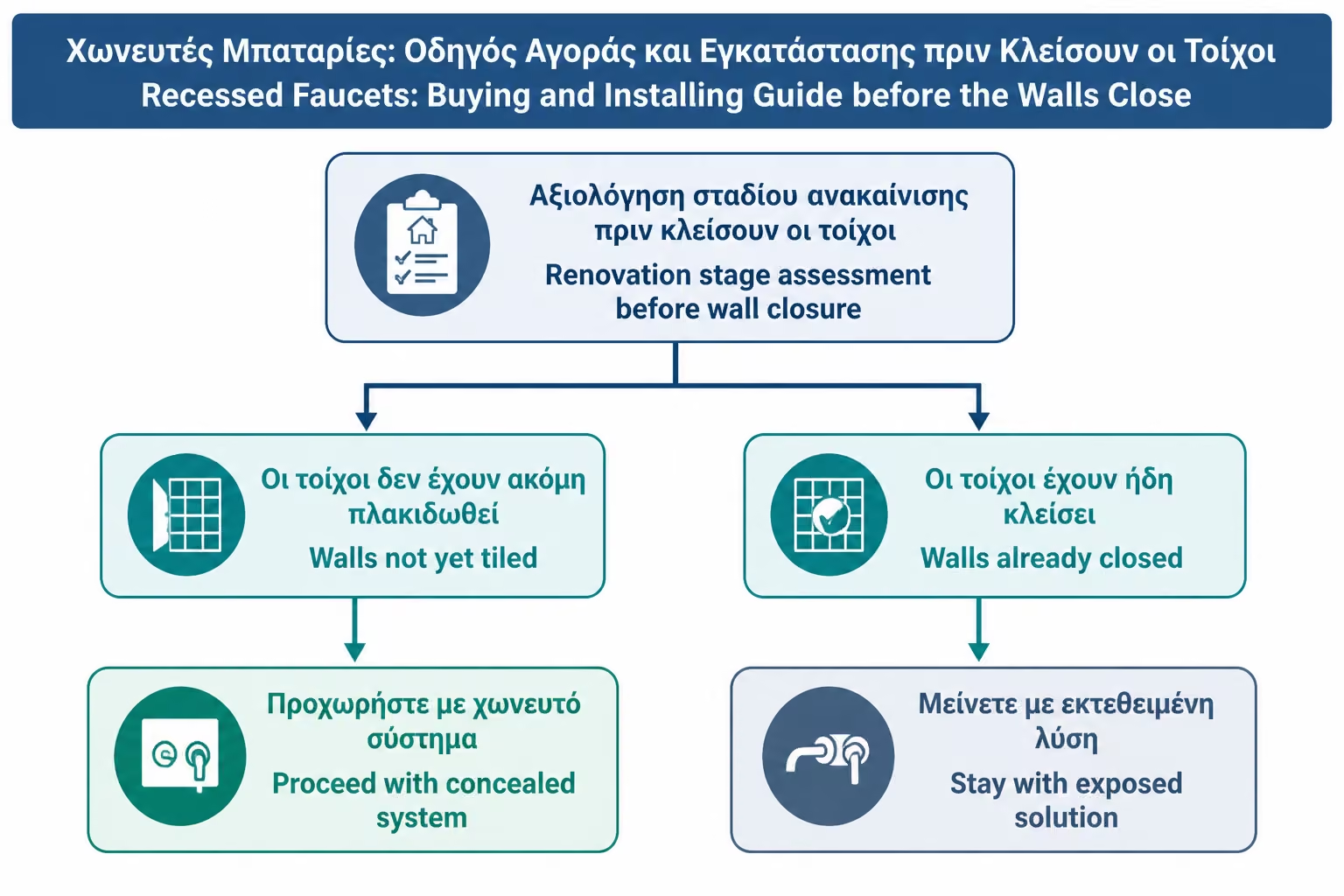
The inner box must be purchased before the walls are closed. It is not purchased at the end together with the rosette. If it's not in in time, there's nowhere for the outer set to clip. This is one of the most common mistakes of owners who choose a tap "at the end", when the built-in installation should have been foreseen at the beginning.
The names iBox and SmartBox have become almost synonymous with built-in boxes, but each company has its own system, its own compatibilities and its own external sets. It does not mean that a Hansgrohe external set will fit into a GROHE box or that a trim from another series will fit into any universal body. Compatibility must be confirmed with codes.
The GROHE Rapido SmartBox, for example, is presented as a universal concealed installation system, but that means universal within the ecosystem and applications it supports, not universal compatibility with all brands. Accordingly, the hansgrohe iBox universal 2 acts as a basis for specific hansgrohe/AXOR solutions, with its own technology, installation depths and sets.
The choice of brand on the inner box is more binding than the choice of external battery. If you buy a wall-mounted mixer and after years you want another one, it is relatively easy to change it. If you put a certain box inside the wall, your future choices will depend on it. That is why a serious company with available spare parts and external sets should be chosen.
The cheap no-name box may look tempting, but if after 6–8 years you can't find an external kit, mechanism or part, the problem is big. In built-ins, long-term support is more important than in simple external taps.
The decision must be made before plumbing work begins. Ideally, before the walls are opened. The reason is simple: the plumber must know what body to place, at what height, with how many outlets, in which direction, with what depth and with what final surface.
If the tap is a shower, we need to know if it will only have a ceiling head or a phone as well. If it will have thermostatic control. If it will have a diverter. If the phone will come from a separate supply. Whether the head will be on the wall or the ceiling. If there is a tub, we need to know if there will be a fill spout. All of these affect piping.
If the faucet is a sink, we need to know the exact height, spout projection, sink type and final trough height. The wall-mounted faucet for a washbasin is one of the most beautiful solutions, but if it is inserted at the wrong height or the wrong projection, the water will fall in the wrong place and splash.
The right decision time is before the tiles, not the week the tile comes. A built-in faucet is part of the bathroom infrastructure.
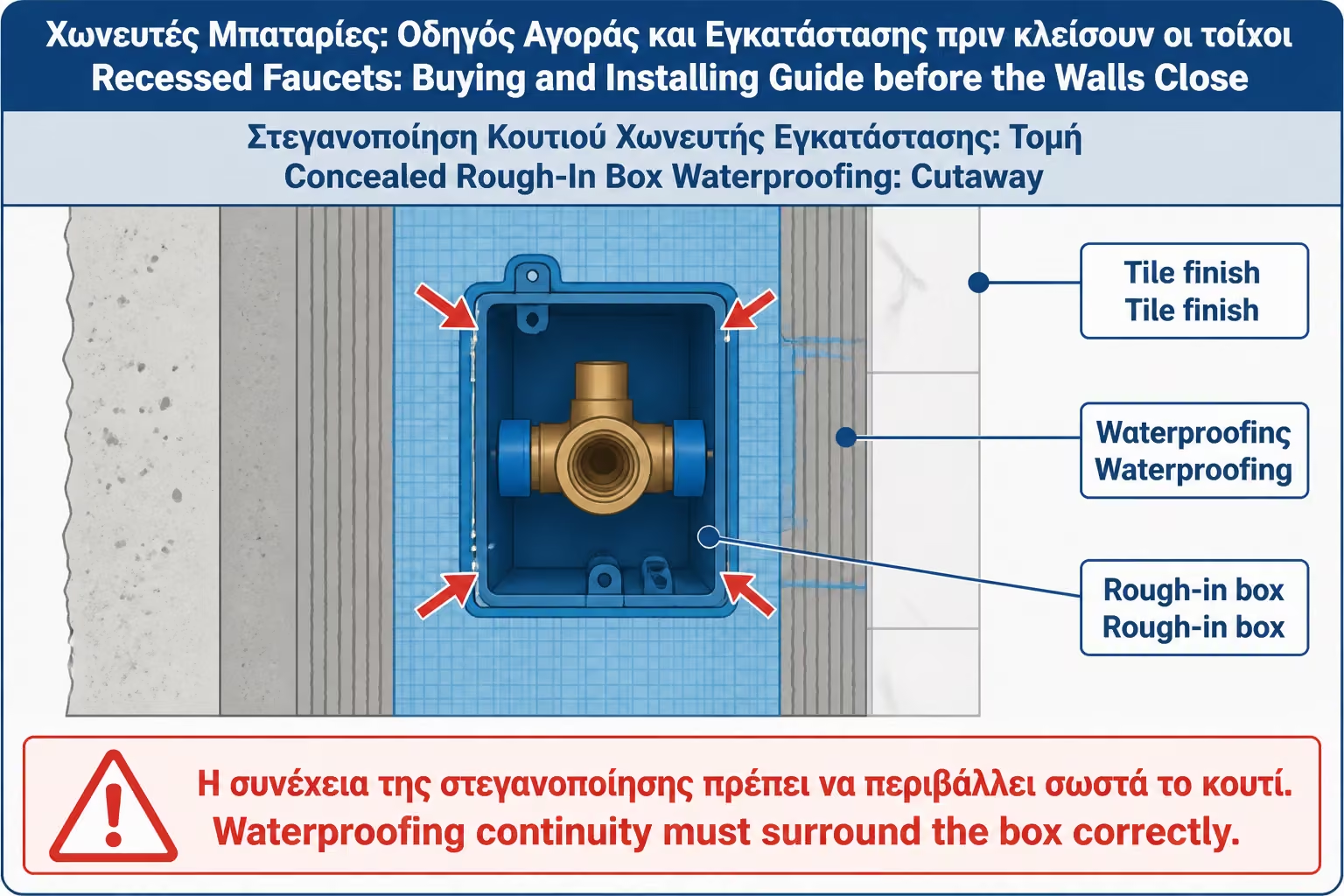
The built-in box is located in a wet zone, especially in the shower. This means sealing around it is critical. It is not enough to screw the box and pass tiles. It must be properly integrated into the waterproofing layer of the wall, with flanges, cuffs or the system provided by the manufacturer.
If water gets behind the rosette or from poor sealing around the box, it can enter the wall. This is an insidious problem because it is not immediately apparent. It can cause moisture behind tiles, mold, drywall wear, or damage to an adjacent space.
Many built-in boxes have sealing flanges or grommets that must work together with the bathroom's waterproofing system. In technical descriptions of iBox products, elements such as adjustable clamping collar and seal are mentioned in the basic set. These are not decorative parts. It is part of the correct integration of the product on the wall.
The waterproofing must be checked before the structure is closed. The plumber, tiler and whoever is doing the waterproofing must work together. The box is a meeting point of plumbing and waterproofing. If everyone tackles it individually, the risk of error increases.
Before the wall is closed and before tiles are inserted, the joints should be checked for leaks. This applies to all plumbing, but in concealed mixer taps it is even more important. After tiling, a leak in the inner body is much more difficult to detect and fix.
Concealed bodies installation instructions mention the need to clean the pipes of dirt before connecting and check tightness/pressure to confirm that there is no leakage in the connections. This must be done in practice, not just on paper.
The control must include all outputs. If the system has a shower head, telephone and spout, the connections should be checked before they are concealed. Also, the piping must be flushed to remove any shavings, sand or debris that could damage the mechanism.
A serious workshop does not close a concealed mixer tap without inspection. If someone tells you "okay, it won't be a problem", ask for a test. It is much cheaper before the tiles than after.
In the shower there are several options. The simplest is a built-in mixer tap that controls one outlet, usually a shower head or telephone. A more complex solution is a tap with a diverter so that it controls two outputs, for example a ceiling head and a telephone. An even more comfortable option is the thermostat, which keeps a more constant temperature.
The thermostatic solution is particularly useful in family bathrooms and in homes where there are pressure or temperature fluctuations. It offers comfort and safety, especially for children or the elderly. But it is more expensive and requires proper installation, proper supplies and compatible internal body.
The choice of single or double output must be made from the beginning. If you put in a box and piping for one outlet today, you can't easily add a second head later without opening a wall. If you are considering a possible future upgrade, it should be discussed with the plumber and whether the system allows for it.
Practically, for a simple bathroom, it is often sufficient to have a built-in shower head and a telephone through a diverter. For a master bathroom or premium shower, a thermostatic system with two outlets is a more complete solution. For a small bathroom with simple use, you don't need to go overboard with complexity.
The built-in faucet is one of the most beautiful solutions in a modern bathroom. It frees up the counter, goes well with countertop sinks and gives a clean look. But it is also one of the solutions that require the greatest precision.
The height and projection must match the wash basin. If the spout is too high, it may splash. If they are too low, they won't fit the hands. If it is too short, the water falls back close to the wall. If it is too long, it falls forward and throws water. These distances must be decided with the actual sink model.
Here the error "we will adjust it later" does not apply. The tap supply and the built-in body go in before the tiles. Then they don't move without breaking. That's why the washbasin, the counter and the faucet must be chosen together.
The built-in washbasin mixer is especially useful in neat bathrooms, freestanding washbasins, freestanding/totem solutions or counters where we want a clean surface. In simple economic renovation, a good table tap can be more practical and less risky.
A common fear is: "if the concealed mixer tap fails, will I have to break the wall?". The correct answer is: for common faults in quality systems, service is usually done from the outside by removing the rosette or control. There should be no need to break in to change a cartridge, thermostat or outer set as long as the installation is done correctly and spare parts are available.
Breakage becomes possible when there is leakage in the internal connections, incorrect installation, incompatible body or unsupported product. That's why the quality of the inner box and the choice of company with spare parts is critical. We don't just buy the visible design. We also buy the service option.
In iBox and SmartBox type systems, one of the advantages is standardization and the ability to change/maintain the external part within the same ecosystem. But this only applies when we know the codes and keep the product details. Keep photos, instructions, receipts and codes before the walls close.
A practical tip: photograph the installation before the drywall or tiles go in. Photograph piping, box, heights and distances. In future service, these photos may save many cases.
The cost has two main parts: the inner body and the outer set. In many cases they are purchased separately. This confuses many owners, because they see a price for "external parts" and do not understand that the inner box is also needed.
In the Greek market, indicatively, the GROHE SmartBox 35600000 appears at around €75–81, while the Hansgrohe iBox internal part appears in a Greek online store at around €109. These prices are usually for the inner part, not necessarily the complete visible set with controller, head, arm and other accessories.
| Category | Indicative cost of Greece 2026 | What to watch out for |
|---|---|---|
| Built-in internal box | Around €75–150 for well-known basic solutions | Compatible with external set |
| External set of single shower mixer | 100–350€+ | Color, series, mechanism |
| Thermostatic external set | 250–800€+ | Thermostatic control, outputs |
| Shower head / arm / telephone | 80–600€+ | They are not always included |
| Built-in basin faucet | 150–600€+ | Height, projection, inner body |
| Installation work | Wide variation | Depends on wall, piping, waterproofing |
| Fix after tiling | Much more expensive | It often requires breaking |
The prices are indicative and are affected by VAT, color, brand, availability, if an internal part is included, if there are more outlets, if it is thermostatic and if additional parts are needed. Don't compare a full in-wall tap with an external trim flush-mount without the box. It's not a like-for-like comparison.
It is worth it when there is a complete renovation, when the walls are open, when you want a clean image, when you want a premium result and when there is an experienced plumber. It is a particularly good choice in walk-in showers, master bathrooms, freestanding washbasins, freestanding bathtubs or modern bathrooms with large tiles.
Also worth it when cleanliness is a priority. Fewer foreign bodies mean fewer points for limescale. In bathrooms with minimal design, this is important. If you choose black or brushed finishes, the built-in solution can look cleaner than a bulky wall-mounted faucet.
It is not always worth it in small budget renovations where no walls are opened. If you're just changing sanitary ware and don't want plumbing, a quality wall mounted faucet is more practical. It's also not worth it if the repair shop has no experience or if you're not willing to buy a reliable internal system.
The concealed mixer tap is a choice that must be made consciously. She is not just "the prettiest". It is the most demanding in preparation.
The wall mounted tap is better when you want simple installation, easy service, lower cost and less risk. In a secondary bathroom, rental, low-budget Airbnb or renovation where the walls do not open, it is often a more reasonable solution.
It is also best when existing facilities are already in place and you do not want conversions. Changing a wall tap is relatively easy. If after years you want another model, you don't depend on a hidden box inside the wall.
In technical areas, children's bathrooms or areas of heavy use where practicality precedes aesthetics, a good wall-mounted thermostatic mixer can be an excellent choice. It doesn't have the same minimal image, but it's direct and accessible.
The built-in is not "superior" in all cases. It's cleaner aesthetically and more premium when installed properly. Wall-mounted is a simpler, more accessible and often safer option for a limited budget.
The first mistake is choosing an outer set without a compatible inner box. The owner buys what he likes visually, but does not have the right built-in body. Codes should always be checked.
The second mistake is deciding after the tiles. If an internal body has not been inserted before the wall is closed, the concealed mixer tap cannot be installed without serious intervention.
The third mistake is the wrong depth. If the box is not in the correct relationship to the finished tile surface, the rosette and outer set may not fit properly.
The fourth mistake is insufficient sealing around the box. Water must not find its way behind the finished surface.
The fifth mistake is the absence of a pressure test before the wall is closed. All connections should be tested while they are still accessible.
The sixth mistake is choosing a no-name system without spare parts. In a concealed mixer tap, the cheap internal part can cost dearly in the future.
| Inquiry | Yes / No |
|---|---|
| Have you decided on a built-in solution before the plumbing starts? | Yes / No |
| Have you selected inner box and outer set as compatible system? | Yes / No |
| Have you kept the exact product codes? | Yes / No |
| Does the plumber know the required installation depth? | Yes / No |
| Has the final adhesive and tile wall thickness been calculated? | Yes / No |
| Has it been decided how many water outlets are needed? | Yes / No |
| For a sink, is the sink and faucet view selected together? | Yes / No |
| For showers, has it been decided whether there will be a head, telephone, diverter or thermostat? | Yes / No |
| Is proper sealing provided around the box? | Yes / No |
| Has it been pressure tested before the wall is closed? | Yes / No |
| Are there spare parts and future external kits available for the system? | Yes / No |
| Have you photographed the piping before the walls are closed? | Yes / No |
If you can't answer "yes" to most of them, it's not time to close the wall. In concealed mixer taps, prevention is much cheaper than correction.
If you have to keep only one thing, keep this: in the concealed mixer tap you don't just buy what it looks like. You are mainly buying the system that will stay inside the wall. The inner box, whether it is called an iBox, SmartBox, EasyBox or otherwise, must be selected before the walls are closed, placed at the correct depth, properly sealed and pressure tested. You can enjoy the exterior design every day. But the internal error can force you to break tiles.
Built-in faucets are one of the most beautiful and practical options for a modern bathroom. They give a clear image, reduce visible components, facilitate cleaning and are ideally suited to walk-in showers, standing washbasins and premium compositions. When installed correctly, they make the bathroom look calmer, more modern and more thoughtful.
But their success is judged before anything is seen. The internal flush box must be selected correctly, compatible with the external set, installed at the correct depth and integrated into the wall waterproofing. A pressure test should be done before tiles are inserted and the codes kept for future service. These steps are more important than the color of the rosette.
For a complete renovation, the built-in solution is seriously worth it. For simple replacement or a limited budget, a good wall mounted tap may make more sense. The decision should be based on the work, not just the image. If the walls are open, there is time for proper installation and a reliable system is chosen, the concealed mixer tap is an excellent investment. If the decision is made late or without a technical plan, the risk rises.
The best concealed mixer tap isn't the one that looks the most impressive on the list. It's the one with the correct internal body, available parts, compatible external kit and installation done before the walls were closed. That's where the real quality lies.
Return to category.
Go to categoryReturn to the central guide.
Go to guide