
Bathroom Fixtures & Water Equipment
Return to category.
Go to categoryThe thermostatic shower mixer is one of those upgrades that doesn't always impress in the photo, but is immediately visible in everyday use. It's not just a more expensive battery. It is a mechanism that tries to keep the water temperature constant, even when the conditions in the network change: when someone turns on another tap, when the cistern is full, when the pressure changes or when there are small fluctuations in hot and cold water.
Anyone who has showered in an old bathroom knows the problem. You have set the temperature, everything is comfortable, and suddenly someone flushes the toilet or turns on the water in the kitchen. The shower suddenly becomes hotter or colder. For an adult this is annoying. For a child or an elderly person it can be dangerous. The thermostatic mixer exists precisely to reduce this risk and make the shower more stable.
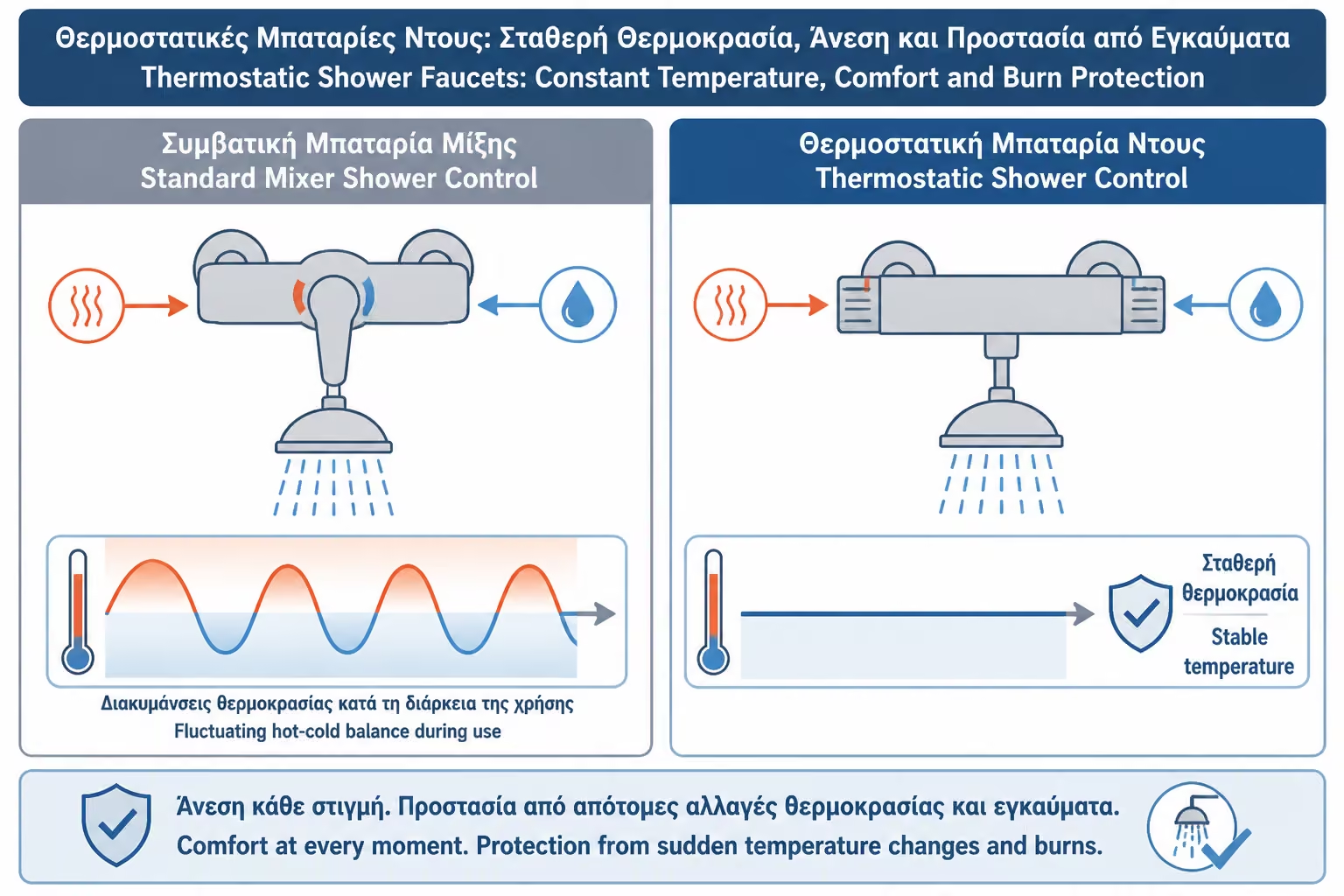
Its main difference from a standard mixer tap is that it does not rely only on the position of a lever. It has a thermostatic mechanism that "reads" the temperature of the mixed water and automatically adjusts the ratio of hot and cold. If the cold pressure drops, it restricts the hot. If the inlet temperature changes, it corrects the mix. Technical comparison sources explain that the thermostatic valve controls the actual temperature of the water, while a pressure-balance valve mainly controls the ratio of hot and cold pressure.
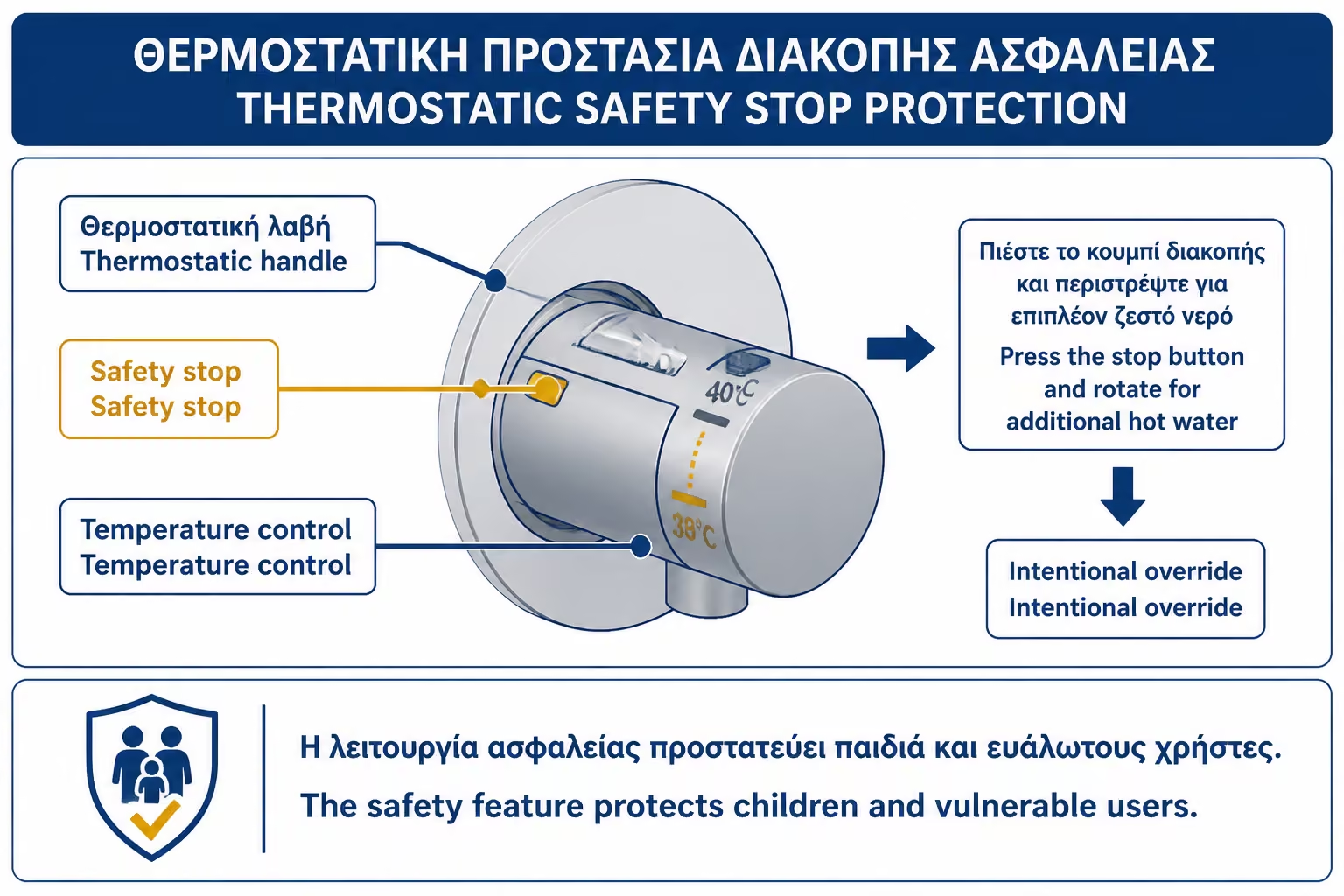
This is why thermostatic mixers are considered particularly suitable for family bathrooms. Many models have a safety stop at 38°C or 40°C so that the child cannot easily turn the dial in very hot water. GROHE, for example, describes SafeStop as a stop at 38°C that acts as an additional safety measure against scalding. Accordingly, hansgrohe mentions technologies such as CoolContact, so that the body of the thermostat does not overheat to the touch, something especially useful for children and the elderly.
In this guide we'll see how a thermostatic mixer works, why it helps when someone flushes the toilet or uses water elsewhere, what burn protection means, when it's worth the investment, when it's not enough on its own, what to look out for in installation and maintenance, and how to choose the right one for a family bathroom.
A thermostatic shower mixer lets you adjust water temperature separately from flow. It usually has two controls: one adjusts the temperature and the other turns the flow on and off or adjusts its volume. Unlike a standard single-lever mixer, where you try to control temperature and flow at the same time, the thermostat keeps the setting more stable.
Its internal mechanism mixes hot and cold water and reacts when the outlet temperature tends to change. Many thermostatic valves use a heat-sensitive element, often a wax element, that expands or contracts with temperature and moves internal parts of the valve to change the hot/cold ratio. The general principle of thermostatic mixing valves is that they mix hot and cold water to provide a nearly constant temperature at the outlet and reduce the risk of scalding or thermal shock.
In practice, the user sets the temperature once, for example to 38°C, and then every time he takes a shower he does not have to "search" for the right point again. It turns on the flow and the tap tries to give the selected temperature, as long as hot and cold water is available with sufficient pressure.
This makes the thermostatic mixer much more comfortable in everyday use. Especially in family bathrooms, where different users shower, the fixed setting reduces mistakes and surprises.
The thermostatic mixer does not "produce" hot water. It does not replace the water heater or boiler. What it does is mix the hot and cold in a way that keeps the output temperature more consistent. If the hot water comes a little warmer, it decreases the hot or increases the cold. If the cold drops under pressure, it reacts by limiting the hot so that very hot water does not come out suddenly.
This explains why it helps when someone flushes the toilet. In old installations, refilling the cistern can temporarily reduce the pressure in the cold water line. In a simple mixer, if the cold flow drops but the hot stays about the same, the shower water can suddenly become hotter. The thermostatic mixer senses the rise in outlet temperature and limits the hot side, reducing thermal shock.
It doesn't mean it always wipes out 100% of every change. If the mains has very poor pressure, if the pipes are problematic, if the water heater does not give constant hot water or if there are large fluctuations, there may be little change. But in correct installation conditions, the thermostatic mixer significantly reduces sudden changes.
Roto-Rooter describes the thermostatic valve as allowing a specific temperature setting and maintaining it regardless of pressure changes elsewhere in the home, offering a more consistent showering experience. This is also the main advantage in practice: the user does not need to react immediately to every network change.
The standard mixer tap is the classic solution. With a lever or two switches it mixes hot and cold. It is economical, simple to install and easy to replace. But it does not have active thermostatic control. If the inlet pressure or temperature changes, the output may change.
The thermostatic mixer adds a temperature stabilization mechanism. It usually has a separate temperature and flow setting. This means you can leave the temperature where you want it and turn the flow on/off without resetting each time. In a bathroom that is used every day, this is a great comfort.
The difference is mainly seen in houses where there are fluctuations. If the installation is old, if several outlets are used at the same time, or if someone turns on the water in the kitchen while you are showering, the standard mixer can become a nuisance. The thermostat absorbs much of these changes.
The disadvantage is the cost and more complex construction. The thermostat has a cartridge, filters, mechanism and often needs more careful maintenance, especially in areas with hard water. They are not necessary for every bathroom, but they are a definite upgrade in comfort and safety.
Thermostatic valves are often confused with pressure-balance valves. Both try to protect the user from sudden changes, but they do it in a different way. The pressure-balance valve mainly reacts to pressure changes between hot and cold. The thermostat reacts to the outlet water temperature.
This means that the thermostat is more accurate in terms of the effect the user feels. If the temperature of the hot water changes, not just the pressure, the thermostat can react better. Technical comparison sources state that the thermostatic valve controls the actual water temperature, while the pressure-balance mainly controls the ratio of hot and cold based on pressure.
In many modern installations, especially in countries with stricter anti-scald requirements, pressure-balance valves are used as a basic protection measure in showers. Thermostats are considered a more premium and more comfortable solution, because they offer more direct temperature regulation and often separate flow handling.
For the owner, the practical difference is simple: if you mainly want protection against sudden pressure drops, a pressure-balance solution can help. If you want a specific, constant shower temperature with greater comfort and control, the thermostat is a more complete option.
In the Greek market, the term you will encounter most often for end users is "thermostatic mixer". But it is good to know the difference, especially if you are comparing technical solutions or built-in systems.
Children are more vulnerable to sudden temperature changes. They don't always react quickly, they may get scared, slip or not immediately realize that the water is getting dangerously hot. Also, the skin of young children is more sensitive. That is why the thermostatic mixer is one of the most logical upgrades in a family bathroom.
The first element of safety is stability. If someone flushes the toilet or turns on water elsewhere, the tap reduces the risk of a sudden burst of very hot water. The second is the safety stop. Many models have a stop at 38°C or 40°C. To go to a warmer temperature, the user must press a button or make a conscious movement. This reduces the chance of a child accidentally turning the dial to a high temperature.
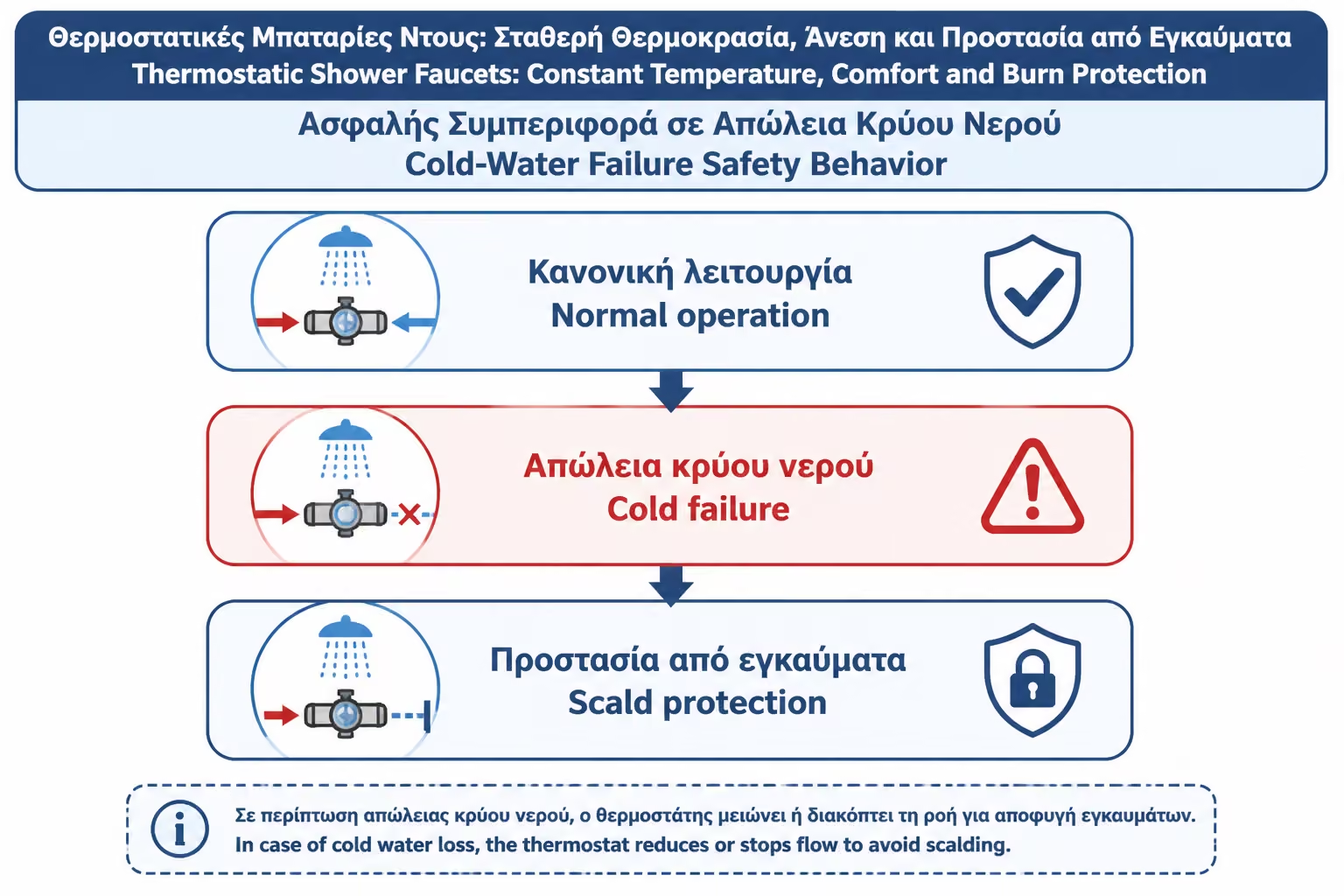
GROHE mentions SafeStop at 38°C as an additional safety measure against scalding. Bristan also states that if the cold water supply fails, thermostatic showers are designed to immediately shut off the shower to prevent scalding or injury.
The third element is the body temperature of the tap. Some models have technologies so that the external body does not overheat to the touch. This is useful for children who may touch the tap while showering. hansgrohe describes CoolContact technology as a way to keep the body of the thermostat from getting hot and reduce the risk of pain or burns on contact.
The safety stop is a mechanical or functional limit on the temperature dial. It is usually at 38°C or 40°C, depending on the make and model. Until then, the dial turns normally. For a higher temperature, the user must press a button or unlock the stop.
This does not mean that water can never cross the line. If the adult presses the button, he can choose a higher temperature. The point is to have conscious energy, not random spin. In a home with children, this is especially important. It reduces the possibility of error, but does not replace supervision.
The safety stop must be set correctly. In some installations, the 38°C reading on the tap may need calibration, because the actual temperature depends on the water inlet pressure and temperature. The plumber should check with a thermometer and adjust according to the manufacturer's instructions if necessary.
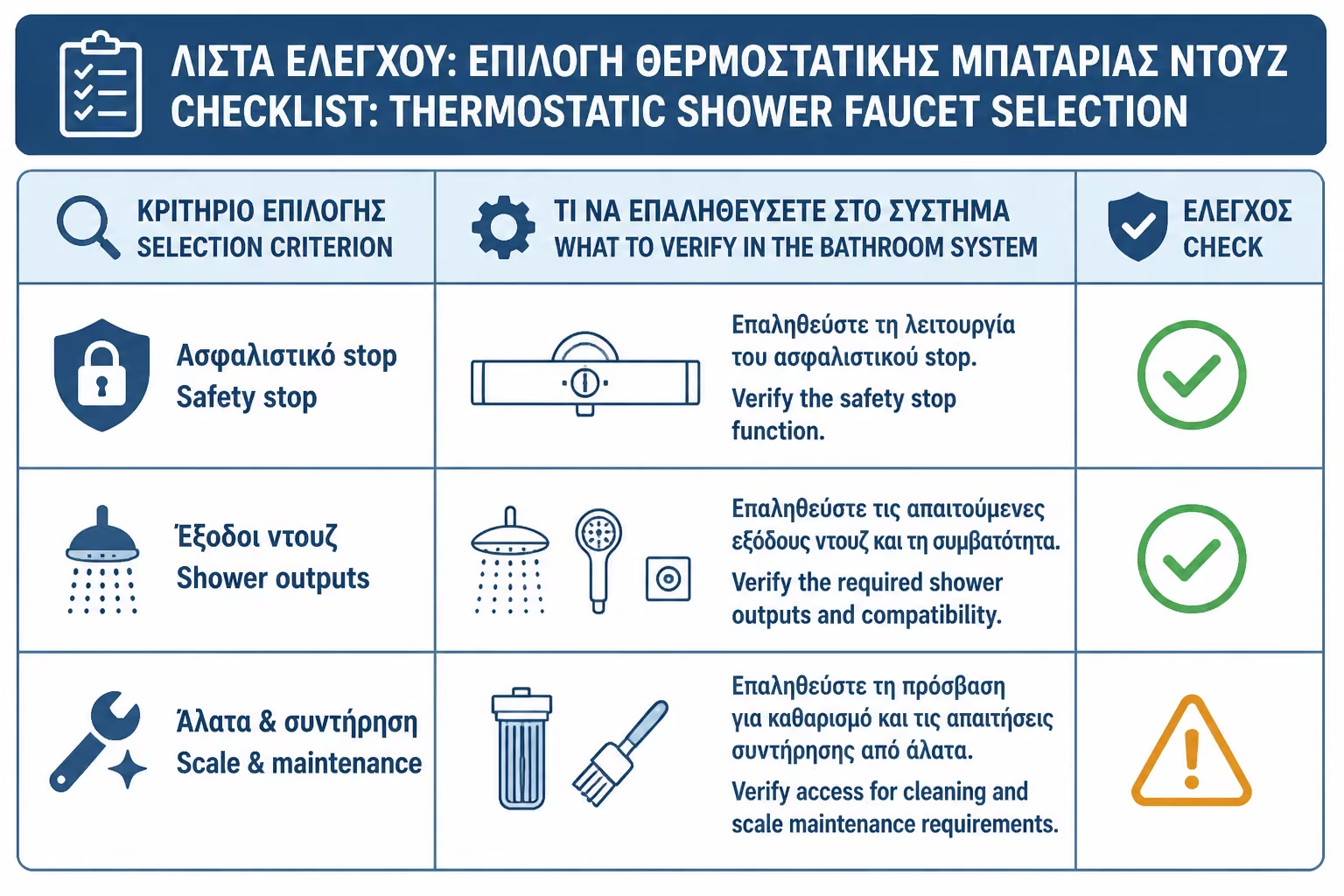
In a family bathroom, the safety stop is one of the features worth asking for. It is not enough to be "thermostat". See if it has a safety stop, at what temperature, if it can be bypassed and how it works.
One of the most important characteristics of a good thermostatic mixer is the reaction to loss of cold water. If the supply of cold stops or drops suddenly, a dangerous situation would be to keep coming out only hot. Thermostatic taps are designed to reduce or stop flow to reduce the risk of scalding.
This should not be interpreted as an absolute guarantee in every condition and every product. It depends on battery quality, mechanism condition, maintenance, pressure and proper installation. But it is a key feature of anti-scald thermostatic systems. Bristan says that if the cold supply fails, the thermostatic showers are designed to shut off immediately to avoid scalding.
Accordingly, general descriptions of thermostatic mixing valves state that many TMVs close quickly in case of failure of hot or cold supply to avoid scalding or thermal shock.
For a family bathroom, this is one of the main reasons for choosing a thermostat. It's not just about comfort. It is a matter of risk mitigation in the event of an unforeseen change in the network.
When the cistern is pulled, the cistern begins to refill with cold water. If the installation has shared or old lines, the cold pressure to the shower may be temporarily reduced. In a standard mixer, the hot continues to come almost as before, while the cold is reduced. The mixture becomes warmer. This is the classic "scalds when they pull the faucet".
The thermostatic mechanism senses that the outlet temperature is rising and limits the hot flow or adjusts the mix. So the water stays much closer to the set temperature. It is not magic pressure correction. If the pressure drop is huge, the flow may be reduced or there may still be some change. But the dangerous sudden scalding is limited.
This is particularly useful in old apartment buildings, in houses with small pipe cross-sections or in installations where the cistern, kitchen and bathroom affect the same network. In such cases, the thermostatic mixer can make the shower much more predictable.
But it must be said clearly: if the plumbing is very problematic, the thermostat does not fix it. If the pressures are out of specification, if the water heater cannot provide a constant flow, or if there are clogged filters and limescale, a plumber needs to be checked. A thermostat improves use, but is no substitute for a proper installation.
The thermostatic mixer needs an adequate supply of hot and cold water. If the water heater, boiler or heater does not provide enough heat, the tap cannot generate hot water on its own. If the hot water temperature keeps dropping, the tap will try to adjust, but the experience won't be perfect.
In installations with a gas heater or boiler, compatibility with thermostatic mixers must be checked. Some devices need minimal flow to activate properly. If the thermostat reduces the flow or if there is very low consumption, there may be fluctuations. Usually modern devices work better, but it's good to check.
In a solar water heater, the water can be very hot on certain days. There, the thermostatic shower battery offers comfort, but in installations with very high hot water temperatures, a central thermostatic mixing valve at the boiler/solar outlet may also be needed, depending on the design of the installation. This is a matter of hydraulic design.
The right solution is not only "put a thermostat in the shower". It is to check overall hot source, pressures, piping and usage requirements.
The thermostatic mixers are available in wall-mounted and built-in versions. The wall-mounted thermostat is simpler to install and often replaces a classic shower mixer, as long as the fixtures are standardly spaced and positioned. It is a good solution for upgrading without major renovation.
The built-in thermostat is cleaner aesthetically. The body goes inside the wall and only the controls are visible. It is ideal for complete renovation, walk-in showers and premium bathrooms. But it needs an internal walling body, correct depth, waterproofing and installation before the walls are closed.
If you are doing a complete renovation, the built-in thermostat is seriously worth it. If you're simply looking to improve safety and stability in your existing bathroom, a quality wall mounted thermostat can provide a big benefit with less cost and less work.
In a family bathroom, you don't necessarily need a built-in to be safe. What matters is the thermostatic mechanism, the safety stop, the quality and the correct installation. The installation is mainly an aesthetic and ergonomic upgrade.
Many modern showers have two outlets: a fixed head and a telephone. The thermostat can be combined with a diverter so that the user can change the output. This is very practical, especially in family bathrooms. The head gives a comfortable shower, while the phone helps with bathing children, cleaning the shower and more controlled use.
If you choose a two-outlet thermostatic system, the supply must be checked. A large rain head needs enough flow to function properly. If the pressure is low, a huge head can be frustrating. The thermostat holds temperature, but doesn't magically increase pressure.
In built-in solutions, the two outlets must be provided before the wall is closed. In wall-mounted thermostatic columns, the system is more complete and easier to replace. For renovations with a limited budget, a wall-mounted thermostatic shower column with head and telephone can be a very good practical solution.
The important thing is not to choose a system based on image alone. See flow, required pressure, heights, how to change the outlet and if there is easy service.
Thermostatic taps have a more complex mechanism than simple ones. In hard water areas, limescale can affect their operation over time. The temperature dial may struggle, the flow may decrease, the thermostat may stick, or it may not adjust as well as it did at first.
That's why it needs maintenance. Inlet filters, if present, must be cleaned according to the manufacturer's instructions. The outer body should be cleaned with mild products, without harsh abrasives that will damage the finish. If the temperature selector always stays in the same position for years, in some models it helps to move it periodically so that it does not "stick" from limescale, always according to the product instructions.
In very hard water, a filter or general limescale treatment can help not only the tap but also the whole installation: heads, siphons, cisterns, washing machines, water heaters. The thermostat is not super sensitive per se, but it is more demanding than a simple mechanical battery.
If the thermostat starts giving the wrong temperature, fluctuates or abruptly reduces the flow, it does not necessarily mean that it has "broken". Filters may need cleaning, descaling or cartridge replacement.
Thermostatic faucets cost more than simple faucets. The price range depends on brand, wall or built-in installation, number of outlets, if column, head, phone, finish and mechanism quality are included.
| Category | Indicative cost of Greece 2026 | Practical observation |
|---|---|---|
| Simple wall-mounted thermostatic shower mixer | 80–250€ | Good upgrade for an existing bathroom |
| Branded wall thermostat | €150–€400 | Better feel, spare parts, safety features |
| Thermostatic shower column with head and telephone | 250–800€+ | Complete solution without installation |
| Built-in thermostatic external set | 250–900€+ | It requires a compatible inner body |
| Internal body / built-in box | 80–200€+ | Not always included in the price |
| Premium multi-outlet thermostatic system | 800–2,000€+ | For master bathroom / composite showers |
| Installation / conversions | Wide variation | It depends on existing facilities and walls |
Prices are indicative and subject to VAT, availability, finish, if all fittings are included, plumbing work and possible conversions. Do not compare a simple wall-mounted thermostat with a built-in multi-outlet thermostatic system. They are different categories.
For a family bathroom, the most reasonable cost-benefit ratio is often a good wall-mounted thermostat or a thermostatic column with head and telephone. For a complete renovation, it is worth considering a built-in thermostat, if the budget and technical preparation allow it.
The thermostat is particularly useful in homes with small children, the elderly, people with reduced mobility or users who do not react quickly to sudden temperature changes. There, protection against burns and thermal shock is more important than aesthetics.
It is also worth it in homes where the shower is affected by other water uses. If every time the faucet is pulled the temperature changes, the thermostat will greatly improve the experience. If the kitchen, laundry, or other bathroom is affecting the shower, that's also a strong indication.
It is worth it in master bathrooms and in daily use showers, because the comfort is great. Entering the shower and having the same temperature every time without "searching" is a small luxury that quickly becomes a habit.
It is not necessary in a very simple WC with a shower only for occasional use or in a secondary bathroom that is rarely used. A simple good tap may suffice there if there are no children or fluctuating hazards.
The thermostatic mechanism does not correct low pressure, undersized pipework, an old boiler that cannot keep up, clogged filters or poor plumbing. If the hot water runs out, the thermostat cannot create it. If the pressure drops too much, the tap may reduce the flow for safety reasons. If the supply is full of limescale, the mechanism can be affected.
It should also not be considered a substitute for child supervision. It reduces the risk, but does not make showering "automatic and safe". Children must be supervised, the temperature controlled and the safety stop properly set.
It doesn't fix installation errors either. If the hot and cold are connected backwards, if filters are not inserted, if the pipes are not cleaned before installation, or if the tap is not calibrated, it may not work properly.
The thermostat is a great tool when the plumbing is reasonably correct. If the system has serious problems, it needs diagnosis and repair, not just a tap change.
The first mistake is buying based on looks alone. The thermostatic mixer must be selected based on mechanism quality, spare parts, safety stop, compatibility and pressure requirements.
The second mistake is choosing a very cheap model without support. If the cartridge breaks and you can't find a replacement, the tap may need a complete replacement.
The third mistake is installation without pipe cleaning. Debris, sand or shavings can get into the mechanism and cause a problem.
The fourth mistake is skipping filters or not maintaining them. Filters protect the mechanism from particles, but if they become clogged, the flow is reduced.
The fifth mistake is not adjusting the temperature. The safety stop must correspond to the actual temperature, not just the dial indicator.
The sixth mistake is to consider the thermostatic panacea. If the network has serious fluctuations, the piping, pressures and source of hot water should also be checked.
| Inquiry | Yes / No |
|---|---|
| Are there young children, elderly or vulnerable users at home? | Yes / No |
| Does the shower change temperature when the faucet is pulled or another faucet is turned on? | Yes / No |
| Do you want a constant temperature without adjusting the lever each time? | Yes / No |
| Does the model have a safety stop at 38°C or 40°C? | Yes / No |
| Is it possible to bypass the safety stop only by conscious movement? | Yes / No |
| Is the tap compatible with the house pressure and supply? | Yes / No |
| Are there filters and can they be cleaned/maintained? | Yes / No |
| Are cartridge and mechanism spares available? | Yes / No |
| If it is built-in, has the correct internal body been selected? | Yes / No |
| Has a head, phone or second output been provided from the start? | Yes / No |
| Will the plumber check and adjust the actual temperature? | Yes / No |
| Have you calculated battery, parts and installation costs? | Yes / No |
If the answers indicate family use, temperature fluctuations and a need for safety, the thermostatic mixer is one of the most essential bathroom upgrades.
If you must keep only one thing, keep this: the thermostatic mixer is not just a comfort upgrade; it is a safety measure. In a home with children, elderly users or old pipework that reacts when someone flushes the toilet, it is worth far more than a merely "pretty" tap. Choose a model with a real safety stop, available spare parts and correct installation. And ask the plumber to check the actual temperature with a thermometer, because a reading of 38°C should correspond to water that is actually safe.
A thermostatic shower mixer is one of the most essential upgrades for a modern bathroom. It offers a more stable temperature, greater comfort and significantly increased safety compared to a standard mixer tap. The difference is especially noticeable when someone flushes the toilet, turns on water elsewhere or changes the network pressure. Where the standard mixer can give sudden bursts of hotter or colder water, the thermostat tries to keep the temperature constant.
For homes with small children, its value is even greater. The safety stop at 38°C or 40°C, the quick reaction to loss of cold water and the possibility of a more controlled shower reduce the risk of burns and thermal shock. It doesn't replace supervision, but adds an important layer of protection.
The choice must be made with technical criteria. Mechanism quality, filters, spare parts, pressure compatibility, serviceability and proper installation are more important than finish. In a complete renovation, a built-in thermostat gives a premium effect. In an existing bathroom, a good wall-mounted thermostat can immediately improve comfort and safety without major intervention.
The best thermostatic mixer isn't just the one that keeps the water steady when everything is working perfectly. It is the one that reacts correctly when something changes: when it gets cold, when another faucet is turned on, when there is a child in the bathroom, when the user does not have time to react. That's where its true value is seen.
Return to category.
Go to categoryReturn to the central guide.
Go to guide