
Bathroom Fixtures & Water Equipment
Return to category.
Go to categoryThe faucet of the sink is a small element compared to the tiles, the furniture or the sink itself, but it can determine whether the bathroom will function comfortably or if it will be filled with water every day. A wrong faucet can splash on the counter, drop the water too close to the rim, be too low for hands to fit, or too high and cause the water to "pop" into the trough. On the other hand, a properly matched battery makes the sink work naturally, without the user thinking about how to wash their hands.
The problem is that most people choose a tap based on looks. They see a tall black faucet in a photo, a countertop sink, and a beautiful piece of furniture, and they think the combination will work. But the tap should not only match the style. It must match height, projection, flow angle, sink type, trough depth, valve position and usage. If one of these is wrong, the water will find a way out of the porcelain.
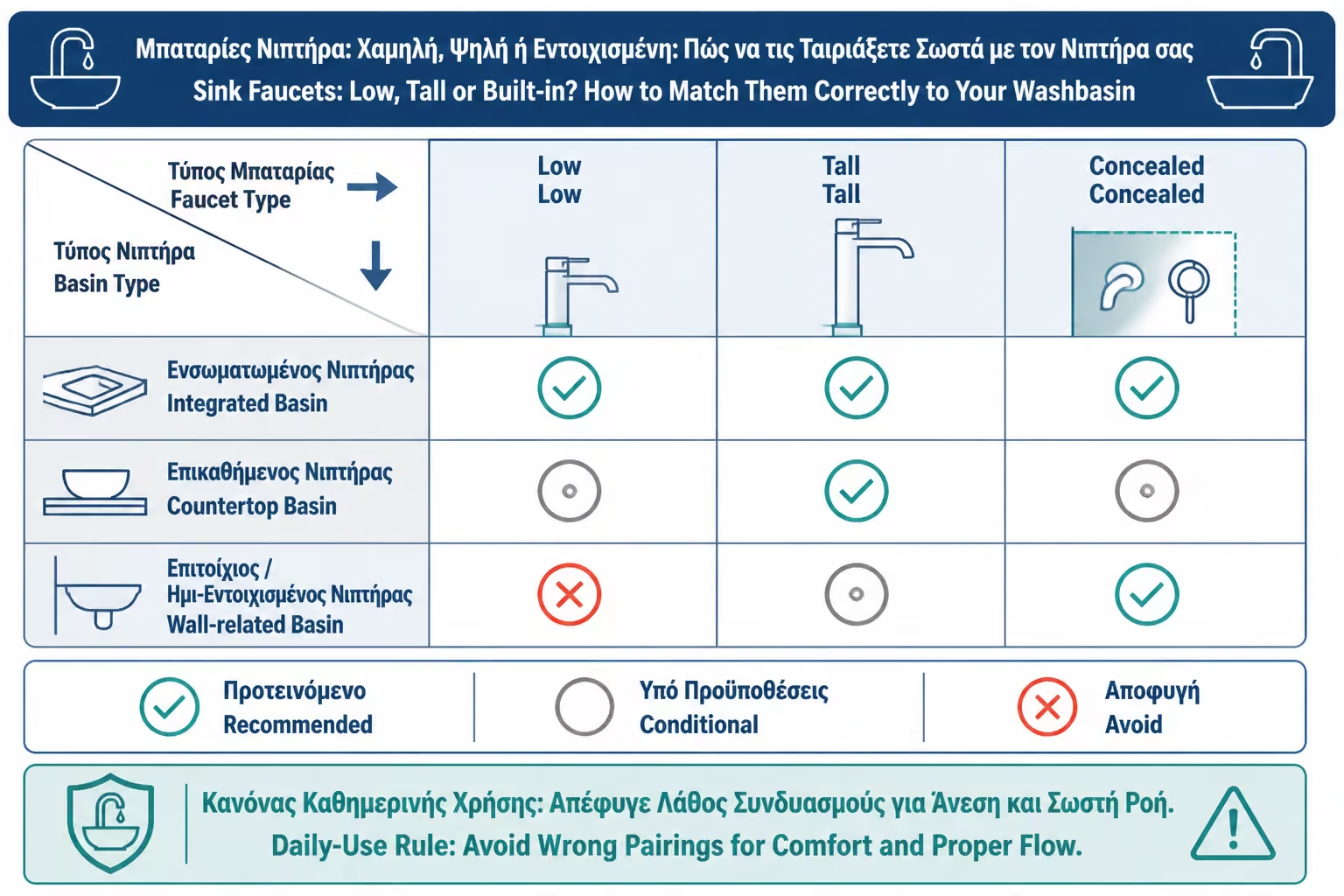
There are three main categories. The low faucets, which are placed on the washbasin or on the counter and are mainly suitable for inset, under-seat or classic washbasins with a hole. The tall taps, mainly used with counter top washbasins. And the built-in wall taps, which hide the body inside the wall and leave only the spout and the handle visible. Each solution can be right or wrong, depending on the sink.
The most practical rule to keep the water from splashing is this: the flow should fall into the trough, near the center or towards the valve, on as flat a spot as possible, not on the lip, and not on a steep side. Sources of purchase and technical selection of faucets mention a similar rule: the spout should reach about the area of the valve/stopper and leave enough room for the hands, without being too close to the edge of the sink.
hansgrohe describes the ComfortZone logic as a combination of faucet height and space between the spout and the basin, aiming for more comfort and less splashing, and has tests of the faucet and ceramic basin combination to ensure correct cooperation. ([hansgrohe.com](https://www.hansgrohe.com/bath/guide/technologies/comfortzone?utm_source=chatgpt.com), [hansgrohe.com](https://www.hansgrohe.com/bathroom/advisor/product-advice/faucet-sink-combination?utm_source=chatgpt.com)) This shows that the faucet and the sink should not be selected separately. They are a couple.
The first mistake is to choose the tap independently of the sink. A tap may be quality, expensive and beautiful, but be wrong for that particular trough. The faucet must "read" the sink: how deep it is, where the valve is, how high the rim is, whether it has a flat bottom or a strong curve, whether it is over-mounted, inset, under-mounted or hanging.
In a deep sink, you can tolerate a little higher flow height. In a shallow sink, the same tap can splash. A counter top basin with a high rim requires a faucet that goes over the rim and drops properly into the trough. In an inset sink with a hole, a low tap is often the safest solution.
The choice must be made with technical data: faucet height, spout height, spout projection, flow angle, mounting position, hole diameter, valve type and available space behind the sink. It is not enough that the color matches the valve or the accessories.
If you buy a sink and faucet from different series or different stores, ask for technical drawings. The photo does not always show the actual view. A tap may look tall and snug, but the spout falls too close to the back of the trough. Or it may look small, but have the right projection and work perfectly.
The rule is simple in wording, but too often ignored: water must fall where the basin can receive it without bouncing out. This usually means near the valve or in the center of the trough, and not on a side wall, not right on the rim, and not from too high up.
Splashing is mainly caused by four factors: too high a drop height, incorrect orifice projection, too strong a flow, and a shallow or steeply inclined trough. If the faucet is high and the sink is shallow, the water falls with more energy and bounces. If the spout is too short, the water hits the back wall. If it's too long, it falls forward. If the flow is strong and without a good aerator, the problem grows.
Faucet selection guides state that spout projection should be calculated based on the size of the sink and that, as a general rule, the larger the sink the larger the projection can be. The same logic appears in practical buying guides: the flow should reach well into the basin, around the area of the tap, and leave room for hands.
So the "absolute" rule is not a specific centimeter for everyone. It is the correct location of the water drop. If the water falls in the right place, with a reasonable height and controlled flow, the sink will work. If dropped wrongly, even the most expensive battery will splatter.
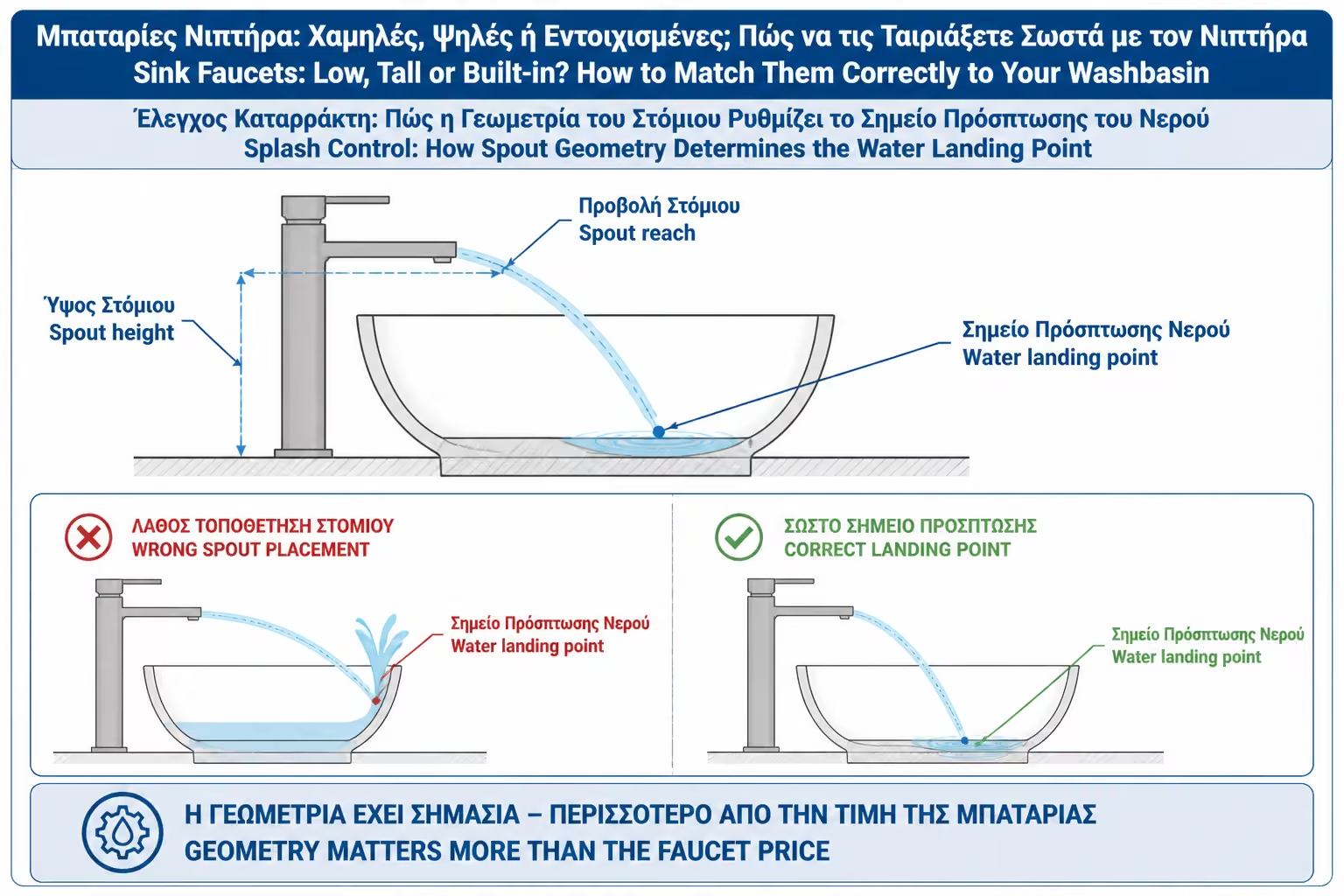
Tap height isn't just how tall it looks. The height of the spout from the point where the water comes out to the bottom or rim of the sink is important. This determines how much room you have for your hands and how strongly the water will fall.
On low taps, the height is small. This reduces splashing and is suitable for classic wash basins, but can be inconvenient if you want to wash your face, fill a container or have more space. On tall faucets, there is more freedom of movement, but the risk of splashing increases if the sink is shallow or if the projection is wrong.
hansgrohe uses the term ComfortZone to describe the space between the spout and the basin, precisely because it is not enough to know the total height of the faucet. We are interested in the actual useful distance for the hands and the object being washed.
The height should be proportional to the trough. Small shallow sink needs a lower and gentler flow. A deep undermount sink can accommodate a taller faucet. Flat modern sink with shallow depth needs very careful selection, because it looks beautiful but splashes easily if the faucet is wrong.
Projection is the distance the spout of the faucet extends above the sink. It is perhaps more important than height. A tap can be the right height, but if the projection is wrong, the water will fall in the wrong place.
If the projection is small, the water falls close to the back of the sink. This can make hand washing difficult and create splashes on the back wall. If the projection is too large, the water falls too far forward, close to the rim or outside the comfort zone of the trough. The ideal location is usually near the valve area or in the center of the useful trough.
In technical guides, projection is defined as the distance of the spout from the center or body of the faucet, and its correct selection depends on the size of the sink. This is critical in sinks without a hole, where the tap is placed on the counter or wall and its position can change.
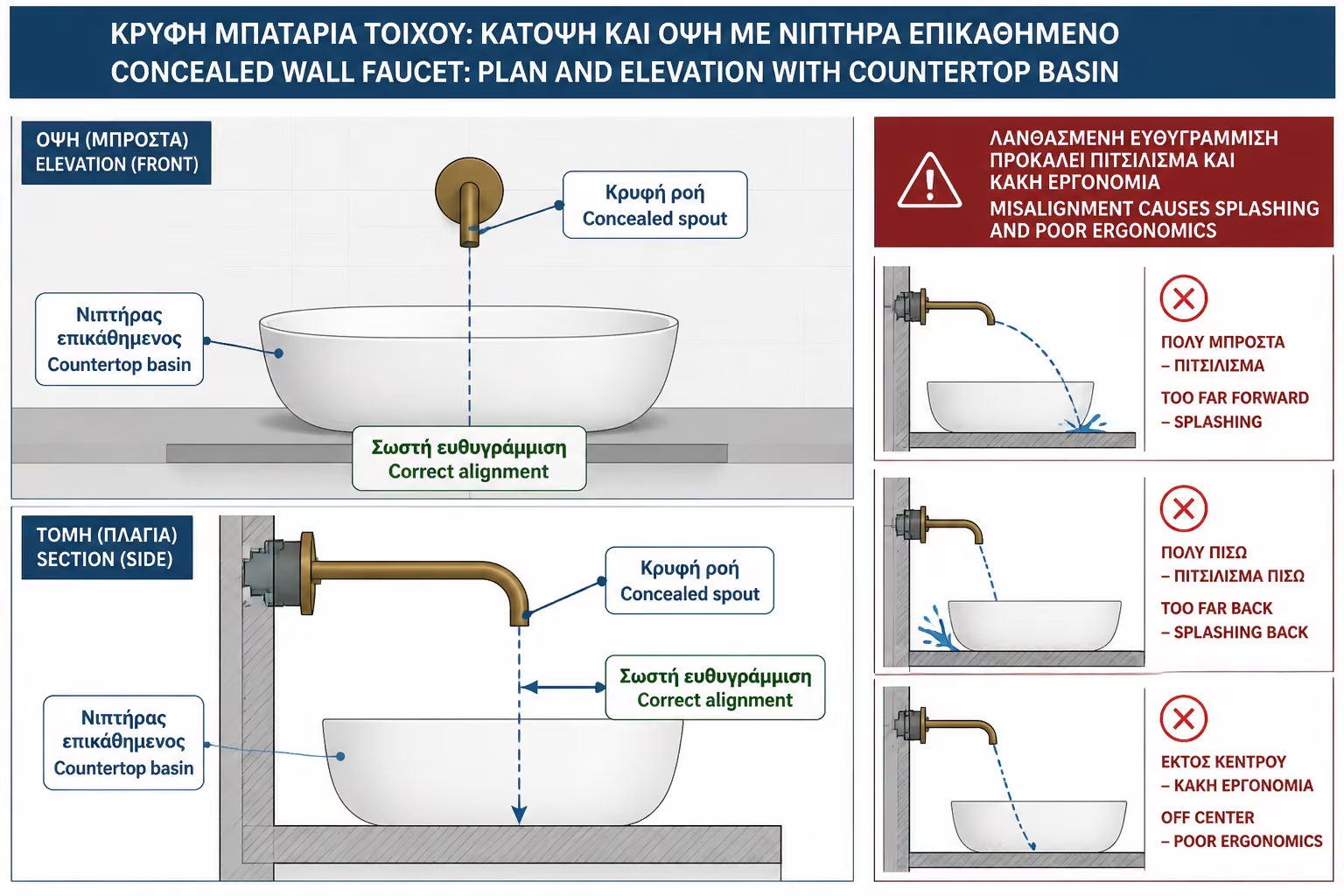
In concealed mixer taps, projection is even more important, because after tiling it is not easily corrected. If the spout is too short or too long for the sink, you can't just move the hole. That is why the washbasin and the built-in faucet must be chosen together.
Low taps are the safest and classic choice for many sinks. They fit sinks with a hole, inset sinks, undermount sinks and several wall mounted sinks. They have a shorter drop height, so they usually splash less. They are practical, economical, easy to install and easy to replace.
In a family bathroom, a good low or medium height faucet often makes more sense than an impressively tall one. Children use it more easily, the water remains more controlled and cleaning is simple. If the sink has a proper trough and the faucet has a good aerator, use is comfortable every day.
The downside is that there may not be enough space under the spout. If you wash your face, fill containers or want more comfortable use, a very low tap can be annoying. Also, on undermount sinks that sit on the counter, the low battery just doesn't reach above the rim.
Low tap is ideal when the sink is designed for it. It should not be used as an "economy solution" in a sit-on bowl that needs a tall or built-in faucet. There it will be functionally wrong.
Tall mixers, often known as vessel mixers or tall basin mixers, are mainly used with countertop washbasins. They are placed on the counter, next to or behind the sink, and the spout goes over the rim of the trough. They are very popular because they give a modern image and match designer wash basins.
Their advantage is aesthetics and freedom of movement. They leave the sink looking like an independent object and can create a very clean effect. GROHE states for high-spout vessel basin faucets that the height and projection of the spout are designed to deliver water in the right place. This sentence sums it up: a tall faucet is not just tall. It must have the correct view.
The downside is splashing. If the faucet is too high in relation to the sink, or if the flow falls on an inclined wall, the water will fly out. Practical guides to choosing vessel sinks point out that the spout should be slightly above the rim but not too high, because the high height increases splashing, and that consideration should be given to where the water hits the trough.
High battery needs test in design. It is not bought on the basis of "it looks good". You need to know sink height, spout height, lip distance and where the flow falls.
The built-in basin faucet is placed on the wall. Its body is inserted into the masonry and the rosette, the handle and the spout are visible from the outside. It is one of the cleanest aesthetic solutions, especially for countertop washbasins, stone washbasins, freestanding/totem solutions or counters that we want to remain free.
The big advantage is cleanliness. There is no battery mount on the counter, so less scale around the hole, less water at the mounting point and easier cleaning. On wood, HPL, marble or quartz countertops, this can be a practical advantage, not just an aesthetic one.
The downside is that it has to be decided early. The concealed mixer tap goes in before the wall is closed. The height and position of the spout are not easily corrected after tiling. Architectural Digest points to insufficient provision for wall-mounted faucets as a common mistake in bathroom remodeling, because the position of the spout in relation to the sink must be carefully determined before the finish surfaces are inserted.
The built-in faucet is great when you have a complete renovation, proper plumbing, technical design of the sink and faucet, and a willingness to decide early. It is risky when it is decided late or when you do not yet know which sink will go in.
The most practical way to choose is to start from the type of washbasin. The sink defines the tap, not the other way around. The table below gives a clear first picture.
| Washbasin type | Better battery | What to watch out for |
|---|---|---|
| Classic pendant with hole | Low or medium | Falling towards the valve, not back to the wall |
| Insert / drop-in | Low or medium bench | Correct projection and enough room for hands |
| Deputy | Low/medium counter top or built-in | The flow should fall into the trough, not over the edge of the bench |
| Overhead bowl | Countertop or built-in | Height above lip, proper projection, splash prevention |
| Shallow modern wash basin | Low/medium or careful built-in | A lot of attention to flow and height |
| Corner small WC basin | Small low or special compact | Gentle flow, small projection, do not throw water |
| Totem / freestanding | Built-in or special floor/built-in | Provisions must be made in advance |
This mapping is not absolute, but it helps to avoid the most common mistakes. For example, a countertop sink should not be combined with a standard low battery. A small WC basin should not take a large tall battery. An undermount sink can work with a bench faucet, but the position of the hole must be calculated in relation to the trough.
The final criterion is always the flow: where the water falls and how much room it leaves for the hands.
The most popular but also the most dangerous combination is the undermount sink with a high counter faucet. He is handsome, but often mistaken. The first issue is height. The faucet should fit comfortably over the rim of the sink, leaving room for hands, but not so high that water falls from a long distance.
The second issue is visibility. The spout should reach well into the trough. If the tap is placed too far back on the counter or if the projection is small, the water will hit the back wall. If the projection is too much, it will fall too far forward. Both create splashes.
The third issue is the trough. A very shallow countertop sink is beautiful, but difficult. It requires a gentle flow and a right angle. If the trough has a flat bottom and enough depth, it is more forgiving. If it is too curved or too shallow, it needs a more careful battery.
The rule of thumb: the spout should go slightly above the rim and pour the water towards the center/valve. If it lands on the curved side, it will splash. If it falls from too much height, too.
The built-in faucet is often aesthetically better than the tall countertop faucet in a free-standing sink. It leaves the counter clean and makes the whole more architectural. But the technical precision is greater. The spout must come out at the correct height and in the correct horizontal position.
The height is calculated from the finished rim of the sink, not just from the floor. If the counter height is changed or a different sink is chosen, the whole relationship changes. That's why we first choose a sink and counter, then we determine the faucet and supplies. Putting the wait "around" at the height that suits the plumber is a recipe for trouble.
The spout projection must also match the trough. In concealed mixer taps there are different spout lengths. If the sink is deeper than the wall, more projection is needed. If he is small, smaller. The principle remains the same: let the water fall in the right place, not on the edge.
Because correcting after tiling is difficult, for concealed mixer taps it is worth making a drawing with actual dimensions. Finished floor height, furniture height, counter height, sink height, valve position, spout projection. These must be in place before the wall is closed.
In small WCs, the tap should be small, gentle and properly adjusted. A very small sink cannot accommodate a large flow or a large projection. If a "normal" tap is inserted into a corner or compact sink, the water can hit the rim and come out.
In such spaces, prefer small low taps, especially models for compact washbasins or taps with limited flow. The aerator matters because it makes the flow smoother. In very small sinks, excessive pressure can create splashes even if the faucet is properly installed.
The tap should not interfere with the use of the trough. If the lever is too long or hits the wall when opening, it will be uncomfortable. If the sink is corner, check which side the lever opens and if there is space.
In guest toilets, the use is hand washing. No need for tap with great freedom of movement. It needs a correct, gentle, clean flow that does not wet the space.
Countertop faucets, low or tall, have a base that rests on the counter or sink. Water, soaps and limescale collect there. In white porcelain this is relatively easy to clean. On a wooden bench, HPL, marble or matte surfaces, the base area needs more attention.
If the bench is sensitive, the tap hole must be properly sealed. Water must not pass into the core. This is especially important in HPL and wood. If moisture remains around the base, blistering or staining may occur. On marble, descalers around the tap can create dullness.
In terms of cleanliness, the concealed mixer tap has an advantage because it removes the base from the counter. But that doesn't mean it's always better. If there is no complete renovation, the bench tap is simpler and easier to service.
In any case, the water around the base of the tap must be wiped off. The right battery reduces problems, but does not replace bench care.
Even correct height and projection can splash if the flow is too strong. The aerator, that is the small part at the outlet of the tap, mixes air with the water and makes the flow smoother. This reduces splashes and consumption.
Many modern taps have water-saving technologies or flow limitation. GROHE mentions in certain models saving technology that reduces consumption by up to 50%, with a flow of 5.7 l/min without compromising the sense of performance. In small or shallow basins, such a controlled flow is often more practical than a very strong one.
If the house pressure is too much, even a good tap can sputter. A pressure regulator or reducer may be required there, depending on the installation. If the pressure is too low, some taps may not work properly or give a weak flow. The tap must also be selected based on the operating pressures.
Don't underestimate the aerator. If it becomes clogged with scale, the flow becomes irregular and may splash. Cleaning or replacing it is small maintenance that makes a big difference.
The finish does not change the function, but affects the daily appearance and maintenance. Chromium is the safest and easiest. It holds up well, is relatively easy to clean and matches most sanitary ware. The black matte is impressive, but shows limescale and rings more. Brushed finishes, such as brushed nickel or gunmetal, hide minor marks better than gloss black or gold.
In a hard water area, black and gold need more care. They should not be cleaned with harsh degreasers or abrasives. If the tap is splashing, the finish will constantly show water. So before you choose a black faucet, make sure that the combination with the sink does not throw water.
The finish must be coordinated with the valve, siphon, accessories, enclosure, cistern board and possible shower mixers. Everything doesn't have to be exactly the same, but there must be intent. In a small WC, a single finish looks cleaner.
Practically, for a bathroom with heavy use, chrome or brushed is more tolerable. For a guest WC or master bathroom, you can go for a more special finish, as long as you accept the maintenance.
The prices vary greatly depending on the brand, type, finish, mechanism, height and if we are talking about a built-in solution. In the Greek market, there are very affordable sink faucets under €30, but for the main bathroom it is usually worth moving to a more reliable category, especially if you want a good lever feel, spare parts and limescale resistance. Comparison platforms show a wide range of prices, from basic models to branded and designer options.
| Tap type | Indicative cost of Greece 2026 | When does it make sense? |
|---|---|---|
| Low single sink faucet | €30–€120 | Economical and practical solution for classic washbasins |
| Best branded low/mid | 100–250€ | Master bath, daily use, best mechanism |
| High tap for sit-down | 100–350€+ | Countertop washbasins, design counters |
| Black/brushed/gold battery | 120–500€+ | When the finish is part of the aesthetics |
| Built-in basin faucet | 150–600€+ | Complete renovation, clean counter |
| Built-in internal body | 70–200€+ | Not always included in the price |
| Installation / relocation of plumbing outlets | Wide variation | Depends on wall, counter and plumbing |
The prices are indicative and are affected by VAT, availability, finish, if a valve is included, if there is a pop-up waste, if the tap is built-in and if hydraulic conversions are needed. Don't just compare the purchase price. A cheap battery that sputters or doesn't have replacements can cost more in the long run.
In small WCs, a moderately priced compact faucet with the right flow is better than an expensive tall one that doesn't fit. In a master bathroom, the investment in a better finish and feel can be worth it.
Choose a low or medium battery when the washbasin has a hole, when it is inset, under-mounted or hanging, and when you want a simple, safe and economical solution. It is the best choice for most family bathrooms and small WCs as long as it has the right view.
Choose a tall faucet when the sink is counter-top and you don't want or can't put in a built-in one. Pay attention to height, projection and flow. The tap must pass the lip but not send the water from too high or in the wrong place.
Choose built-in when you are doing a complete renovation, when you want a clean counter and when you can decide early on the sink, counter and heights. It is the most premium solution, but also the most demanding to install. It is not ideal for simple replacement without opening a wall.
The right choice is not a matter of "which one is better". It's a matter of relationship with the sink. The best tap is the one that leaves room for the hands and pours the water in the right place of the trough.
The first mistake is to buy a tap before choosing the sink. The faucet should follow the sink, not the other way around.
The second mistake is too high a tap in a shallow sink. The result is splashes, water on the counter and daily annoyance.
The third mistake is the small projection of the mouth. The water falls close to the back wall and does not serve the hands.
The fourth mistake is the concealed mixer tap without a technical drawing. If the spigot is inserted incorrectly, correction after tiling is difficult and expensive.
The fifth mistake is the wrong battery in a small WC. Compact washbasins need compact taps with gentle flow.
The sixth mistake is choosing a finish without thinking about maintenance. Black and gold look good, but in hard water they need more attention.
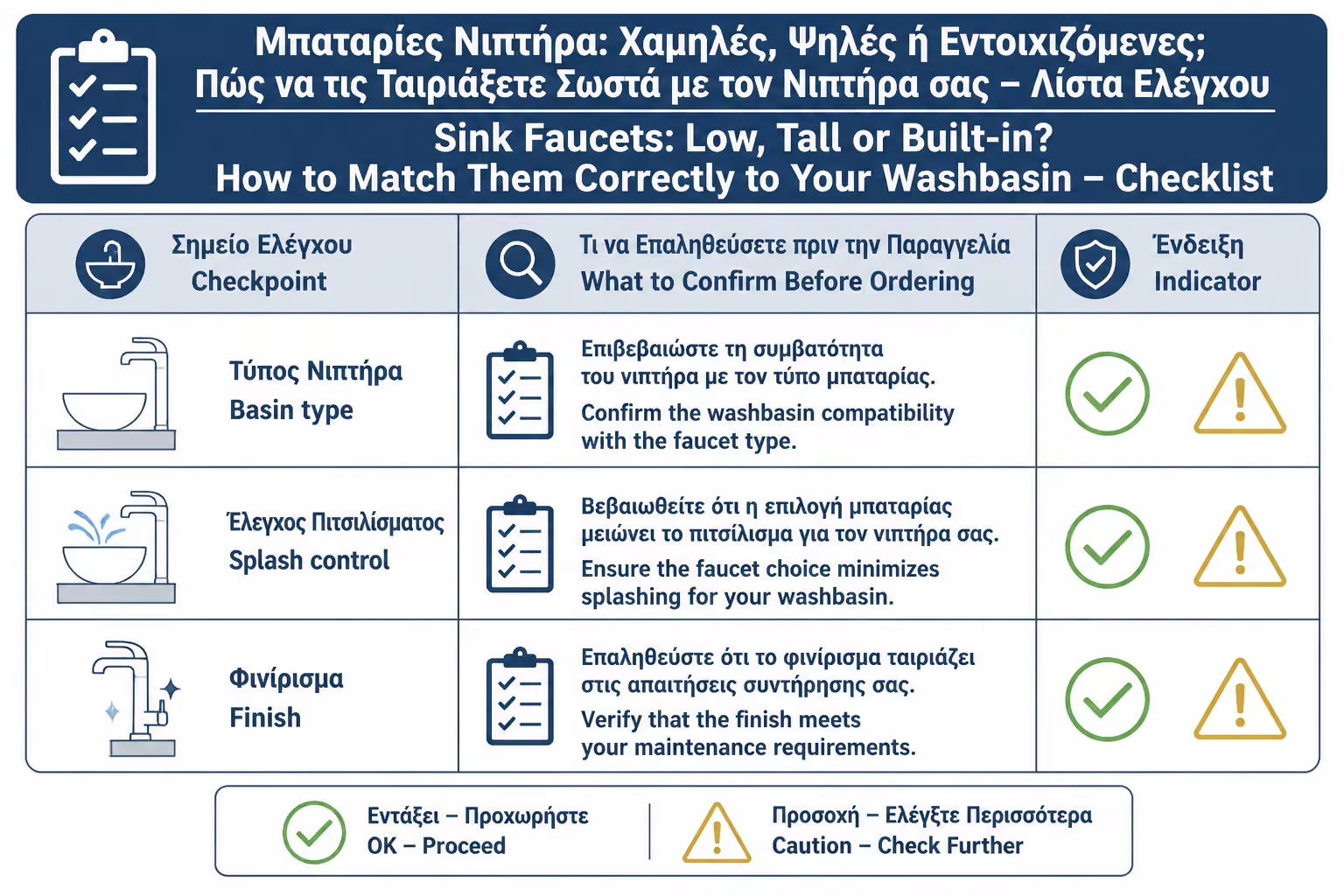
| Inquiry | Yes / No |
|---|---|
| Have you selected the sink first? | Yes / No |
| Do you know if the sink has a tap hole or does it need a counter/wall? | Yes / No |
| Have you measured the height of the rim, if it's flush? | Yes / No |
| Does the spout fit comfortably over the lip without excessive height? | Yes / No |
| Does the orifice projection bring the flow close to the valve or to the center of the trough? | Yes / No |
| Does the flow not fall on a steeply inclined wall? | Yes / No |
| Is the tap vented or flow controlled? | Yes / No |
| Is there space behind the sink for the faucet stand? | Yes / No |
| If it is built-in, has it been decided before the wall is closed? | Yes / No |
| If it's a small WC, is the tap compact and not too tall? | Yes / No |
| Does the finish match the valve, siphon and accessories? | Yes / No |
| Have you calculated battery, valve, siphon and installation costs? | Yes / No |
If you don't know where the water will fall, you are not ready to buy. The right tap is judged on the flow, not just on the image.
If you have to keep only one thing, keep this: to prevent the sink from splashing, we don't first check whether the faucet is low, tall or built-in. We look at where the water falls. The flow should fall into the trough, near the valve or the flattest point, with a reasonable height and gentle flow. If it hits the rim, the back wall, or a sharp curve, it will throw water. Choose faucet and sink together, with technical drawings, not with two separate photos from a catalog.
The sink faucet is a small decision with a big impact on everyday life. A proper battery makes hand washing natural, keeps the counter dry and reduces cleaning time. A wrong faucet can make even an expensive sink look like a bad choice, simply because the water is running the wrong way.
Low taps are the safest solution for classic, inset, undermount and many wall-hung washbasins. Tall faucets are suitable for countertop basins, but need a careful combination of height, projection and trough depth. The built-in ones give the cleanest aesthetic and free up the counter, but they must be decided before the walls are closed and placed with absolute precision.
The rule against splashing is to get the water in the right place. Not too high, not too far forward, not too far back, not on a sloping wall. If the flow falls close to the valve or the flat center of the trough, with a controlled flow, the sink will work properly. If not, the problem will be seen every day.
The best choice is made when the sink, faucet, countertop and furniture height are decided together. Then the result is not only beautiful, but also functional. And in the bathroom, functionality is what is most apparent after the first month of use.
Return to category.
Go to categoryReturn to the central guide.
Go to guide