
Bathroom Fixtures & Water Equipment
Return to category.
Go to categoryThe "rain" type shower head is one of the most popular options in modern bathrooms. The image is enticing: large head, water falling vertically and evenly, feeling of a natural waterfall, less "hard" flow than the classic telephone and a bathroom reminiscent of a spa or hotel. Combined with a walk-in shower, linear spout and hidden lighting, the rain shower head can completely change the shower experience.
But the experience of "rain" does not depend only on the size of the head. It depends on pressure, water flow, pipe cross-section, water heater or boiler, battery, diverter, installation height and shower size. A large 30 or 40cm head can look impressive, but if the mains doesn't deliver enough, the result can be weak, with sparse drops and a disappointing feel. Instead of a waterfall, you get a "drizzle" without force.
The main dilemma is whether the head will be wall-mounted or ceiling-mounted. The wall-mounted solution is usually simpler, especially when talking about a shower column connected to existing facilities. The head comes out of a bracket on the wall and can be combined with a thermostatic mixer and a hand shower. The ceiling-mounted solution is cleaner and closer to the real rain experience, because the water falls vertically from above, but it requires piping in the roof, correct height and much better foresight in the renovation.
The big mistake is to choose the largest head that fits optically, without pressure control. Major manufacturers give flow and minimum or recommended pressure data for each product. For example, a GROHE Rainshower 210 system states a minimum recommended pressure of 1.0 bar, a recommended pressure of 1.0–5.0 bar and a maximum system flow at 3 bar of approximately 16.5 l/min. Correspondingly, there are flow-limiting saving heads, such as the hansgrohe Raindance 260 EcoSmart with a flow of 9 l/min at 3 bar.
In this guide, we will see how to choose the right shower column or rain head, when a wall-mounted solution is worth it, when a ceiling head is worth it, which dimension is realistic for Greek bathrooms, what bar and liters per minute mean, when a thermostatic mixer is needed and why the "big head" is not always better.
The rain head is a large fixed shower head that tries to mimic the feeling of natural rain. Instead of a strong concentrated jet, it gives a wider, even and soft coverage. It usually has a diameter or side of about 20 to 40 cm, while in premium installations it can be even larger.
The feel is different from the classic hand shower. It is not so "targeted". It's more ambient. The water falls on the body more evenly and creates a feeling of relaxation. This is also the reason why many associate it with spas, hotels and master bathrooms. hansgrohe describes technologies such as AirPower, where air mixes with water to create fuller, softer drops.
But "rain" does not necessarily mean more pressure. It often means a larger flow area. If the same amount of water is distributed over a very large head, each nozzle may give less intensity. That is why the combination of dimension and provision is critical.
A smaller good 20–25cm head can give a much better experience than a huge cheap 40cm on a low pressure mains. The right rain shower head is not the one that covers half the sky of the shower. It is the one that suits the supply and the space.
The wall-mounted shower column is the most common and practical solution for renovation. It usually includes a tap, a vertical bar/column, a fixed head above and a hand shower. It can be simple mixing or thermostatic. The head rests on a bracket that protrudes from the column or wall.
The big advantage is that it can often be installed without major hidden work, especially if standard height shower facilities already exist. There is no need for pipework in the roof, nor built-in runs, unless a more complex system is chosen. For many Greek bathrooms, this is the most logical solution: it gives a rain shower experience without increasing the cost and risk too much.
The wall mounted column is also easier to service. If the tap, hand shower, hose or head fails, access is external. If in a few years you want a change, the replacement is simpler than a built-in ceiling head. This makes it suitable for family bathrooms, rentals and renovations where we want practicality.
The downside is that the head doesn't always fall exactly perpendicular to the user. If the arm is short or if the shower is deep, the water falls closer to the wall. Also, the column has exposed bodies, pipes and bar, so it is not as minimal as a ceiling or built-in solution.
The roof head is the solution that comes closest to the feeling of natural rain. Water falls vertically from above, not at an angle from the wall. Aesthetically, the result is very clean, especially when combined with a built-in thermostatic mixer and minimally visible components.
The big advantage is experience. The user stands under the head and the water covers the body more evenly. In a large walk-in shower, this can be excellent. In a master bathroom, a ceiling head of 30 cm or more can give a very premium feel.
The downside is the installation. It needs piping in the roof or false ceiling, proper waterproofing, access to the supply and height study. If there is a concrete slab and we don't want to dig, a false ceiling may be needed. If the bath is low, the head can come too close to the head. If there is an apartment above, it must be carefully considered what is allowed and how the pipes will pass.
Practical sources say that traditional ceiling rainfall heads require pipework in the ceiling and adequate height, while wall-mounted versions are simpler but come out lower and need height control.
The ceiling head mainly deserves a complete renovation. If the bathroom is already finished, the conversion can be disproportionately expensive. In such a case, a good wall column with a large head often makes more sense.
The choice is not only aesthetic. It is a matter of project, cost, pressure, height and maintenance.
For most existing Greek bathrooms, a wall column is the most logical upgrade. For a complete renovation with a walk-in shower, the ceiling head or the built-in wall-mounted head with a long arm is seriously worth it. For a small bathroom, a huge ceiling head can be overkill, especially if there is no proper drainage and space.
The right question is: "what does the installation and pressure allow?" not just "who looks better?".
| Solution | Advantages | Disadvantages |
|---|---|---|
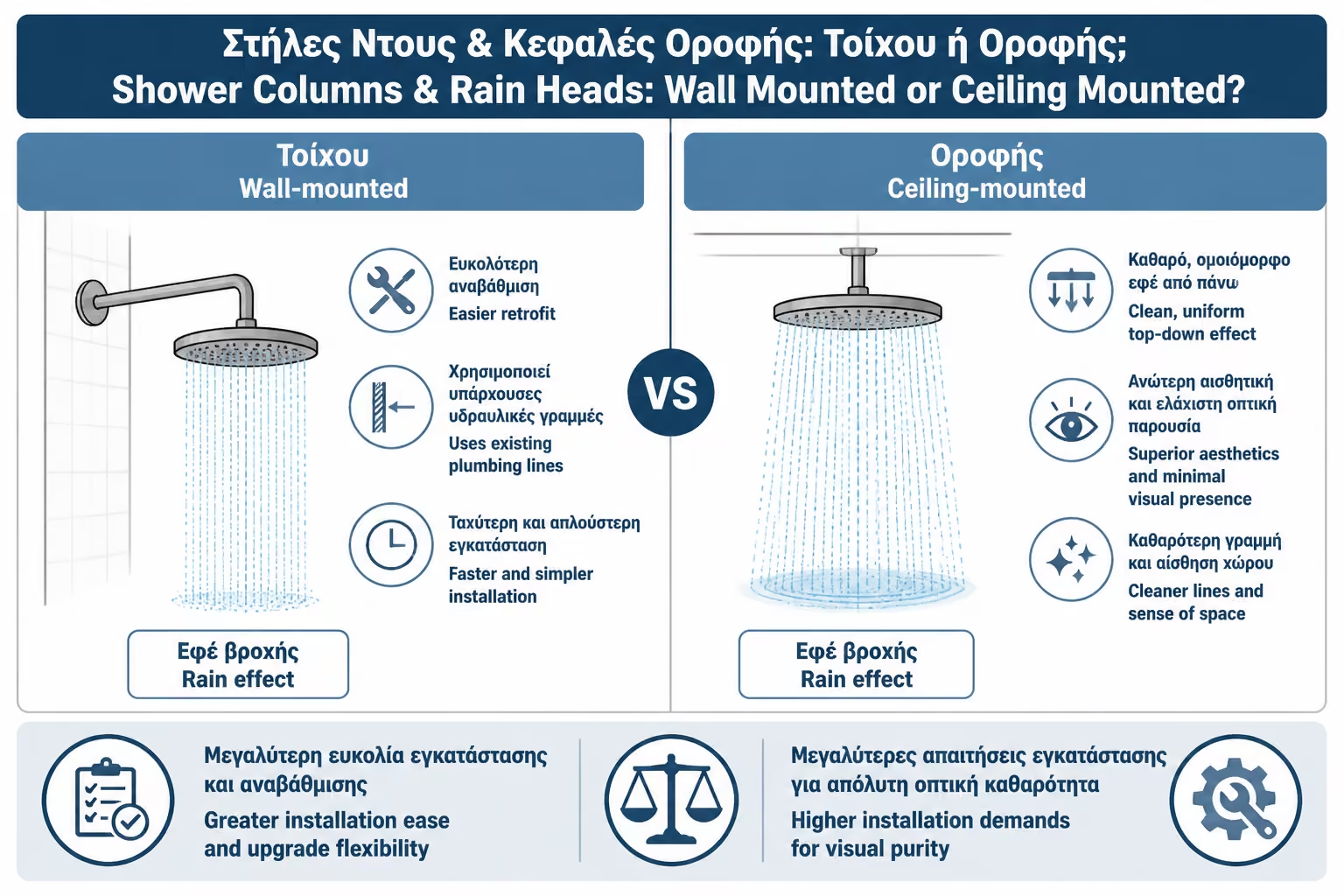
| Wall-mounted shower column | Easier installation, lower cost, easy service, combined with telephone | More visible parts, the head often falls closer to the wall |
| Wall-mounted head with arm | Cleaner than a column, simpler than a ceiling | It requires correct arm length and height |
| Ceiling head | Better rain feel, minimal image, vertical flow | It requires pipework in the ceiling, higher cost, more demanding installation |
| Built-in system with head and telephone | Premium effect, clear image, flexibility of use | It must be designed before the walls are closed |
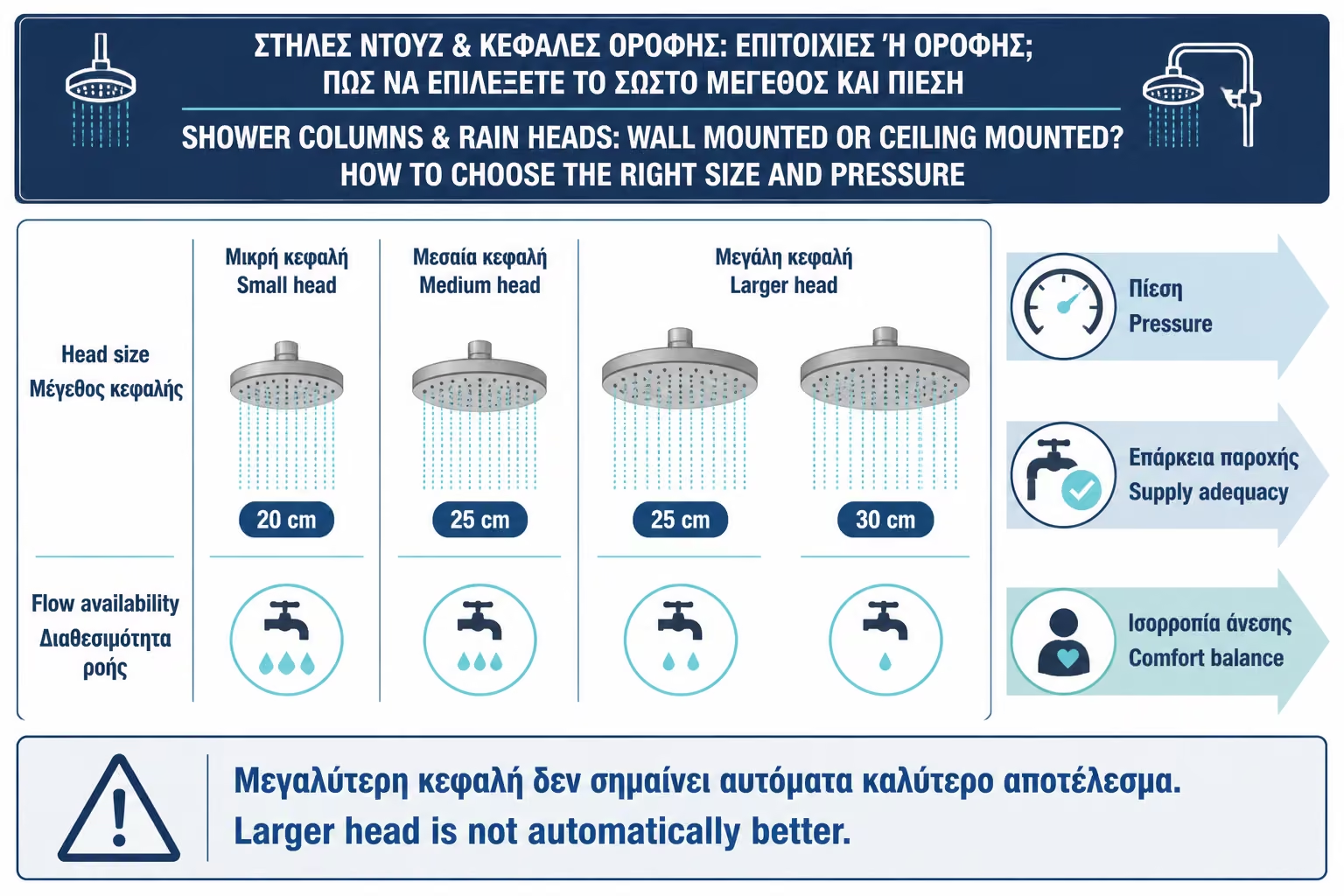
Rain heads start at about 20 cm and reach 30, 40 cm or more. As the head grows, so does the coverage, but so do the supply requirements. A larger head needs enough water to properly fill all the nozzles. If there is not enough supply, the flow is diluted.
For small to medium sized bathrooms, a 20-25cm head is usually a very good balance. It gives a feeling of rain without excessive demands. For a walk-in shower 90 x 120 cm or larger, a 25–30 cm head can work very well. For 35–40cm heads, there must be serious pressure, flow and heater control.
hansgrohe in a guide for professionals emphasizes that there is not always enough pressure for large installations and that the choice of overhead shower should be made on the basis of shower space, water pressure and "throw range", i.e. how the flow is spread. This is exactly the point to keep: the dimension of the head is not decided by itself.
A rule of thumb for Greek baths: In a simple renovation without pressure control, stick to 20–25 cm. In a full renovation with good pressure and a thermostatic system, consider 25–30 cm. For 40 cm and above, ask for a technical inspection before buying.
The large head is impressive, but it can be a trap. If the pressure and flow are not sufficient, the water will come out weakly. If the shower is small, the water may fall out or wet the enclosure and floor more than the drain can handle. If the water heater is small, the higher consumption may run out of hot water faster.
Sources for rain showerheads point out that large heads may require specific plumbing, greater flow and adequate heat capacity, and are often less versatile than a hand shower. That's not to say it's a bad choice. It means you have to know what you are buying.
The rain experience is softer and wider. It is not always ideal for a quick hair rinse, especially if you have long or thick hair. That's why many good installations combine a rain head with a hand shower. The rain head delivers the spa feel, while the hand shower covers everyday practicality.
A moderately sized head with good flow is better than an oversized one with weak performance. In the shower, sensation is not only measured in centimeters of head, but in the right combination of water, coverage and pressure.
Pressure is measured in bars. Flow rate is measured in liters per minute. It's not the same thing. You may have enough pressure but limited flow due to small pipes, filters or constrictions. You may also have low pressure but relatively steady flow at a small head. For rain shower, we are interested in both.
Practical guides to bath pressure state that bath products have minimum pressure requirements, often from 0.1 to 3 bar, and that below 1 bar is generally considered low pressure. Other sources state that good bathroom performance is often seen when the actual flow in taps/showers exceeds about 8–12 l/min under normal conditions.
For a small head, 8–10 l/min may be sufficient. For a large rain shower, especially without a flow restrictor, more may be needed. But many modern heads have energy-saving technologies that limit flow and improve feel with air or special nozzles. hansgrohe states that EcoSmart showers can reduce consumption to around 8 l/min and EcoSmart+ even lower, depending on the product.
Before buying a large head, measure the actual flow. Fill a 10 liter bucket from the existing shower and measure the time. If it fills in 60 seconds, you have about 10 l/min. If it takes 90 seconds, you have about 6.7 l/min. This does not replace a professional pressure measurement, but gives an idea.
A large shower head does not just use more water. It also consumes more hot water. If the head gives 15 l/min and you shower for 10 minutes, the total consumption is high. If the water heater is small or if the hot water production is insufficient, the shower may start fine and cool down quickly.
In homes with an electric water heater, this must be calculated. A small water heater can struggle with a large rain shower, especially if two people are showering in succession. In a gas boiler or heat pump, the hot water supply that the device can provide must be checked. In instantaneous water heaters, compatibility with high flows is critical.
Some heads state that they are suitable for instantaneous water heaters or continuous flow heaters. For example, GROHE Rainshower product states that it is suitable for instantaneous heaters of a certain power, while it also gives a maximum flow of 3 bar. This technical information is important. These are not simple catalog details.
If the hot water is limited, prefer a saving head or a smaller dimension. Feeling like it's raining doesn't have to mean running out of hot water halfway through the shower.
For many homes, the best solution is a wall-mounted shower column with a thermostatic mixer, a large but reasonable head and a hand shower. It combines comfort, safety and practicality without requiring complete installation. The thermostat keeps the temperature more stable, the head delivers the rain effect and the hand shower serves cleaning, bathing children and flexibility.
The thermostat is particularly useful in a rain shower, because large heads make the shower experience more enveloping. If there is a sudden temperature change, the user gets wet across a larger surface. Constant temperature reduces discomfort and increases safety.
If choosing a column, check head height, adjustability, arm length, hose quality, hand-shower type and whether the head has easy descaling. In many models, the nozzles are silicone so they can be cleaned by rubbing them by hand. hansgrohe mentions QuickClean technology to remove scale from silicone nozzles with a simple scrub.
A thermostatic column is often the best value for money for Greek family bathrooms.
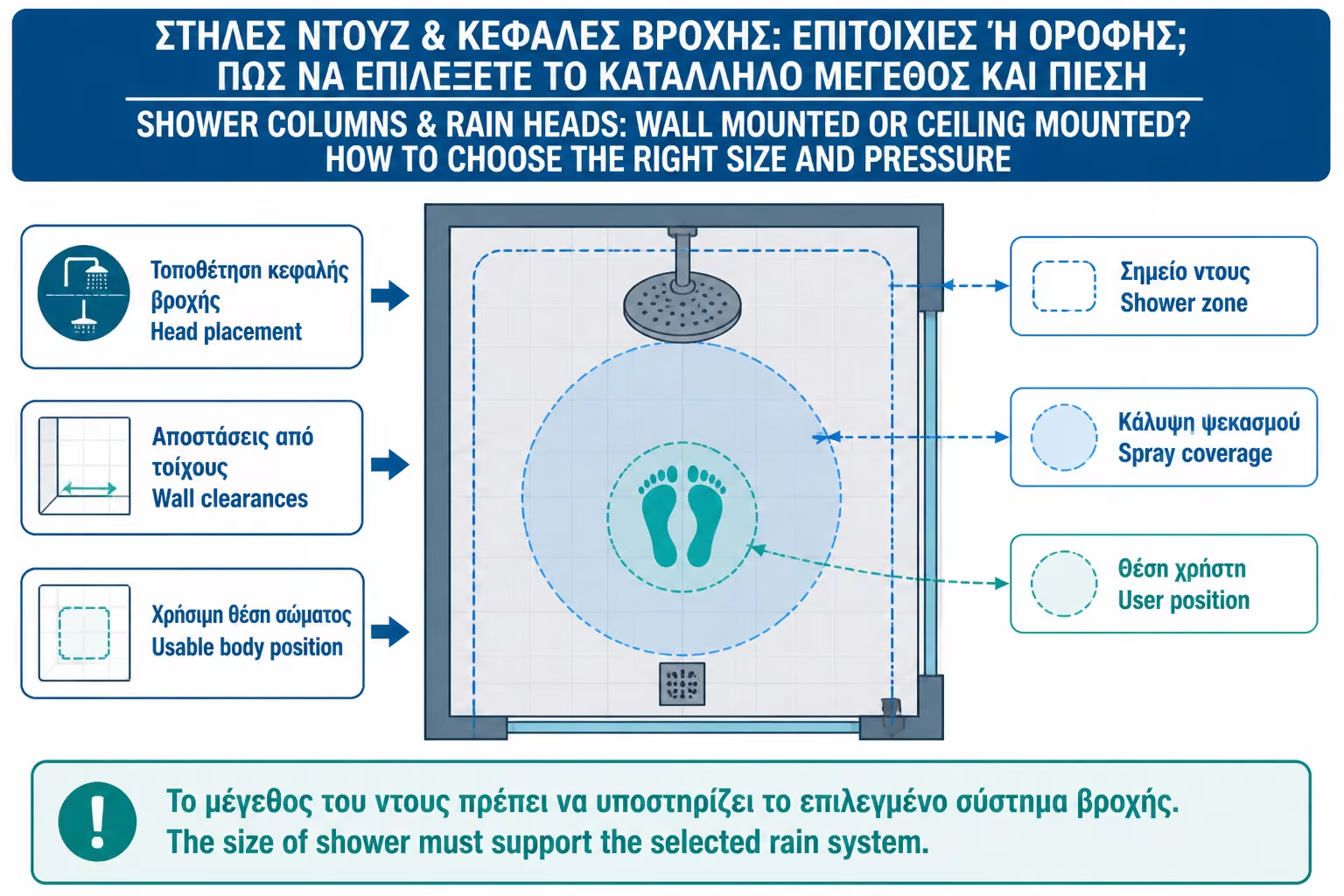
The rain shower needs space. If the head is large and the shower small, the water can fall near the edges of the enclosure or come out, especially in walk-in solutions without a door. In a small 70 x 90 cm shower, a huge 40 cm head might be too much. In a 90 × 120 cm shower, a 25–30 cm head is more reasonable.
The space also affects the feeling. To stand under a rain shower, you need a place where the body is comfortably under the flow. If the head is too close to the wall, the user sticks to the wall. If it is too far ahead, it may rain the entrance. The bracket or ceiling position must bring the flow to the correct point.
In walk-in showers, attention needs to be paid to the direction of the water and the flow of the floor. The rain shower gives wide coverage, so the runoff must be correct. If the floor has a bad slope, the water will spread. If the fixed crystal is small, water may flow into the bathroom.
The rain shower is not independent from the shower. The head, enclosure, siphon and slopes must be designed together.
The height of the head should allow the tallest user to stand comfortably without feeling that the head is too close to the head. In wall-mounted columns, many heads are height-adjustable or have a specific arm height. In ceiling headers, the height depends on the ceiling or suspended ceiling.
If the bathroom has a low ceiling, a large ceiling head can come too low. This is not just an aesthetic problem. It can make cleaning difficult, make the flow too direct and not leave a comfortable position for the user. Conversely, if the head is too high, the drops are dispersed more and the sensation may become weaker or affected by drafts.
For a wall-mounted rain head with an arm, it must be checked that the arm brings the head far enough away from the wall and at the correct height. A system that is too short may deliver water to the shoulder instead of the center of the body. A very low system may bother tall users.
Before the walls are closed or before a column is purchased, mark the final head height on the wall. Stand under the point and see if the position is natural. Photos are not a substitute for real-world testing.
The rain head is great for experience, but not always practical for all uses. The hand shower remains essential in many bathrooms. It helps to clean the shower, wash children, rinse hair, take a quick shower without getting the whole body wet and for use by people who don't always want water on top.
Rain showers review sources point out that one of the disadvantages of rain heads is less flexibility and that it often helps to combine them with a standard or manual head. This is especially true in family bathrooms. The hand shower is not an outdated accessory. It is the practical side of the installation.
In wall-mounted columns, the telephone is usually included. In built-in solutions, a separate outlet and diverter must be provided. If it is forgotten at the piping stage, adding it later is difficult. That's why in a complete renovation, even if you love the ceiling head, also provide for a telephone.
The ideal combination for everyday use is a rain head for comfort and a hand shower for control.
Rain shower heads have multiple nozzles. In hard water areas, scale can clog some of the nozzles and change the flow pattern. The result is crooked drops, uneven rain and reduced feel. That is why ease of cleaning is an important purchase criterion.
Prefer heads with silicone nozzles that can be cleaned by scrubbing. hansgrohe says that with QuickClean, scale is quickly removed by rubbing the silicone nozzles. If the nozzles are difficult to clean, the head can quickly lose its performance.
Large ceiling heads can be more difficult to clean because they are up high. If you choose such a solution, think about how you will maintain it. Need step stool access? Is it easy to remove? Does it have anti-limescale nozzles? Can it be cleaned without harsh cleaners that will ruin the finish?
On black or brushed heads, the limescale are more visible. Proper flushing and proper drying after use help, but maintenance is inevitable.
Prices for shower columns and rain shower systems vary widely. They are affected by brand, whether the system is thermostatic or a standard mixer, head size, finish, whether it is wall-mounted or built-in, whether it includes a hand shower, whether it is ceiling-mounted and whether plumbing alterations are required.
| Solution | Indicative cost of Greece 2026 | When does it make sense? |
|---|---|---|
| Simple replacement rain head | €30–€150 | Minor upgrade of existing shower |
| Wall-mounted shower column simple | €120–€350 | Economical solution with overhead head and hand shower |
| Wall-mounted thermostatic column | 250–800€+ | Family bathroom, constant temperature |
| Large branded rain head 25–30 cm. | 150–600€+ | Complete renovation or premium upgrade |
| Ceiling head with supply/arm | 250–1,000€+ | Walk-in, master bathroom, clean design |
| Built-in multi-outlet system | 800–2,500€+ | Premium solution with overhead head, hand shower and thermostat |
| Plumbing work / false ceiling | Wide variation | Subject to existing facilities and access |
Prices are indicative and depend on VAT, availability, finish, quality, labor and if piping is required. Don't compare a simple replacement head to a complete built-in thermostatic system. They are different projects.
For most Greek bathrooms, the best value for money is found in a good wall mounted thermostatic column with a 20-25cm head and telephone. For a master bathroom, it is worth considering a ceiling head or a built-in solution, as long as there is pressure and a proper hydraulic design.
The rain shower is worth it when the shower is used daily, when you want a more relaxing experience, when there is enough space and when the pressure/supply supports the head. It is especially worthwhile in walk-in showers, master bathrooms and renovations where we want to upgrade the feeling without necessarily changing the entire bathroom.
It is not always worth it in very small bathrooms, in installations with low pressure, in houses with a small water heater or for users who mainly want a quick and powerful rinse. In such cases, a good manual head or smaller overhead head may be more practical.
If you have long hair or want a strong concentrated flow, don't rely on a rain shower alone. Pair it with a hand shower. If you frequently take short showers without wanting to get your hair wet, a ceiling head may be less practical than a wall-mounted adjustable solution.
The rain shower is great when bought realistically. It's disappointing when bought just because it's big.
The first mistake is too big head without pressure control. The result is weak flow and frustration.
The second mistake is the ceiling head in a low bathroom. If the ceiling is low, the installation can become awkward or disproportionate.
The third mistake is the absence of a hand shower. The rain shower is nice, but the hand shower is essential for practicality.
The fourth mistake is the choice without water heater control. High flow means more hot water consumption.
The fifth mistake is bad head position. If the flow falls too close to the wall or too close to the shower inlet, the experience and drainage suffer.
The sixth mistake is the underestimation of limescale. Large head with many nozzles needs cleaning. In hard water, this must be calculated from scratch.
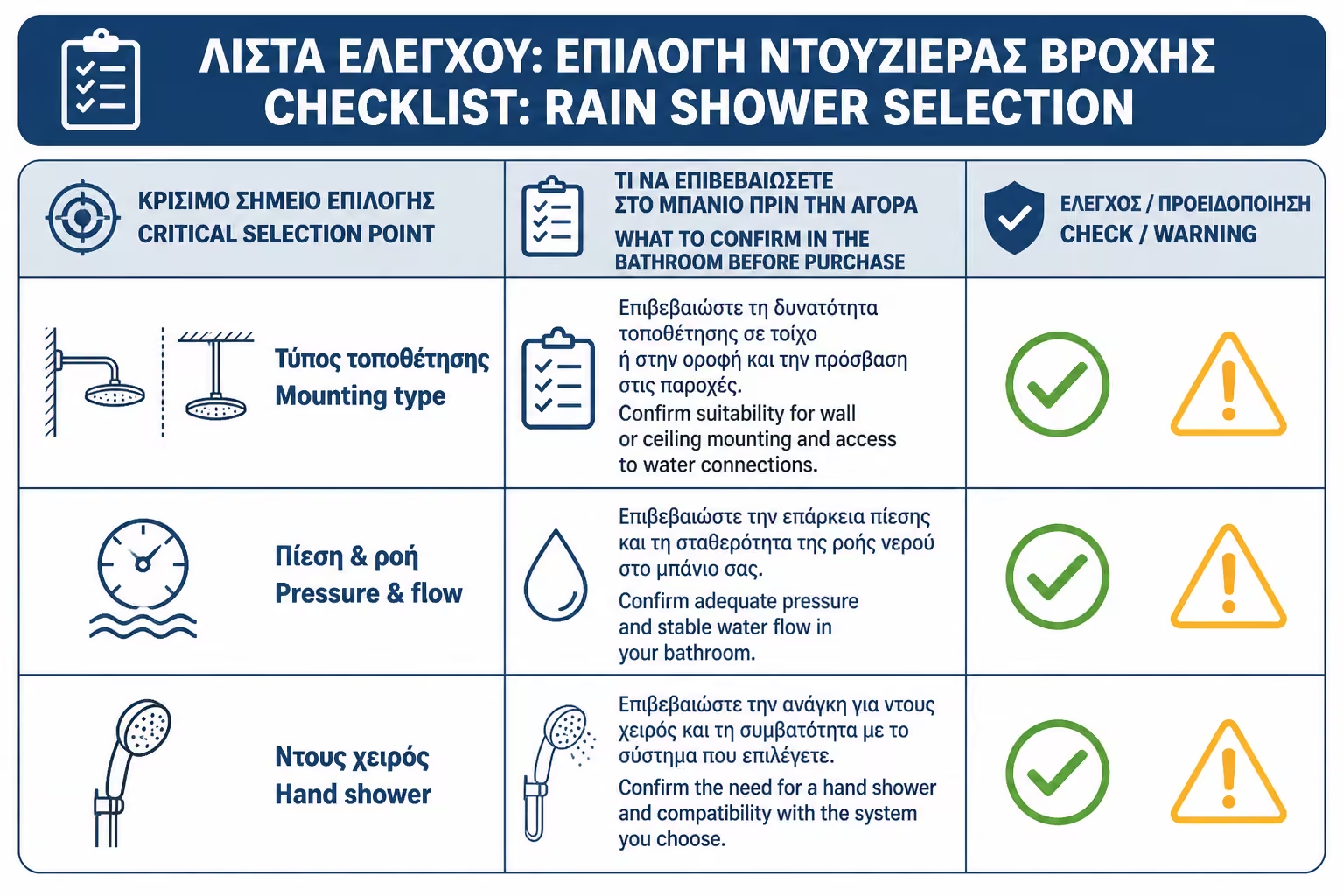
| Inquiry | Yes / No |
|---|---|
| Have you measured the actual water flow in l/min? | Yes / No |
| Do you know the mains pressure or has it been checked by a plumber? | Yes / No |
| Does the head you selected have pressure requirements compatible with the house? | Yes / No |
| Can the water heater or boiler support the flow? | Yes / No |
| Does the head size match the shower size? | Yes / No |
| Is there enough height for a wall or ceiling installation? | Yes / No |
| Is a hand shower provided for practical use? | Yes / No |
| If it is a roof, is piping provided before the roof is closed? | Yes / No |
| If built-in, has the correct internal body and diverter been selected? | Yes / No |
| Can the shower drain and slopes handle the wide flow? | Yes / No |
| Are the nozzles easily cleaned of scale? | Yes / No |
| Does the total cost include head, mixer, hand shower, piping and labor? | Yes / No |
If you don't know pressure and flow, don't buy a big head just from a photo. In rain showers, the network decides as much as the design.
If you have to keep only one thing, keep this: the rain head is not chosen based on the largest diameter, but on the basis of the supply that the house can give. A good 25cm head with the right pressure will give a much better shower than an impressive 40cm that never fills properly. Measure flow, check pressure, see manufacturer's requirements and always keep a hand shower handy. The "waterfall" experience needs water, not just size.
Shower columns and rain heads can transform an ordinary bathroom into a much more pleasant space. The feel of the smooth, wide flow is really different from the classic hand shower and is a great fit for modern bathrooms, walk-in showers and master bathrooms. But success is not judged only by the design of the head.
The wall column is the most practical solution for most bathrooms. It offers a good experience, easy service, lower cost and usually includes a hand shower. The roof head gives a cleaner and more authentic rain feel, but needs full piping provision, sufficient height and proper plumbing. The built-in solution is the most premium, but also the most demanding.
The dimension of the head must match the network. For most bathrooms, 20–25 cm is a safe and practical choice. The 30 million need better supply and proper space. 40 cm and above must be selected only after technical inspection. Pressure, liters per minute, water heater and runoff are just as important as aesthetics.
The best installation is the one that combines a rain shower for enjoyment, a hand shower for practicality, a thermostatic mixer for a constant temperature and a head with easy cleaning of scale. If these are designed correctly, the shower becomes a real upgrade. If ignored, even the most beautiful head can disappoint.
Return to category.
Go to categoryReturn to the central guide.
Go to guide