
Bathroom Fixtures & Water Equipment
Return to category.
Go to categorySaving water in the bathroom is not only done with major interventions. Many times it starts with very small components: a filter on the end of the tap, a flow restrictor, a mechanism that "stops" the lever halfway, or a cartridge that opens first in cold water. These elements are not always visible, but they can significantly reduce water consumption and, indirectly, energy consumption for hot water.
In the bathroom, the biggest waste isn't always because someone leaves the faucet running for hours. It happens in small daily movements: washing hands with too much flow, brushing teeth with an open tap, shaving, quick rinsing, opening the tap to maximum flow for no reason, waiting for hot water to come. If the tap gives 10–12 liters per minute while 4–5 are enough for hand washing, the difference is lost every day without us seeing it.
Aerators, i.e. small air mixers at the tap outlet, are the simplest technology. They mix air with the water, soften the flow, reduce splashing and make it feel more "full" with fewer liters. NEOPERL, one of the well-known manufacturers of such components, describes the aerator as a small component on the end of the tap that regulates the flow, often mixing air, so that the beam is smooth, uniform and with less splash.
At the same time, modern taps use flow limiters and eco-cartridges. The flow restrictor puts an upper limit on liters per minute. The eco-cartridge or two-stage mechanism creates a “click” or resistance in the lever stroke so that the user stays on the economical flow for daily uses and switches to maximum flow only when they really need it. GROHE mentions about saving technologies that a flow limiter can reduce the flow without sacrificing performance or comfort by up to 50%, while hansgrohe mentions that EcoSmart basin mixers reduce consumption to around 5 l/min, or 4 l/min in EcoSmart+ products at 3 bar, enriching the flow with air for a fuller feel. ([grohe.com](https://www.grohe.com/en-ID/learn-discover/news-events/newsroom/sustainability_grohe-water-saving-features?utm_source=chatgpt.com), [hansgrohe.co.uk](https://www.hansgrohe.co.uk/bathroom/planning/technologies/ecosmart?utm_source=chatgpt.com))
But it needs a proper explanation. These systems do not "increase" the actual pressure. They reduce the flow, improve the feel and make the water look good enough to use. The physical flow in liters per minute is one thing and the subjective feeling of pressure is another. A good aerator can make 5L/min seem comfortable for hand washing. But it can't quickly fill a bathtub or replace the supply needed by a large shower head.
The aerator is the small part on the edge of the tap mouth. It usually looks like a small strainer or strainer, but its main function is more than just filtering. It regulates the water jet, flattens it, reduces splash and, in many versions, mixes air with the flow.
This is why when the aerator is removed, the faucet often runs wilder, with a more erratic flow. With the aerator, the flow becomes more uniform. The water does not "burst" as strongly in the sink and the user feels a fuller flow, even if the actual liters are less.
NEOPERL describes three basic beam formats: aerated stream, where air is added for a smooth and rich feel, laminar stream, where the flow is clean and without swirls, and spray stream, with a more atomized form for specific applications. In bathroom faucets, the most common logic is aerated or limited uniform flow.
The aerator is a small component, but it is of great importance. It affects feel, consumption, splash, noise and maintenance. In many cases, an old tap can be improved simply by changing or cleaning the aerator.
The aerator reduces consumption in two ways. First, it restricts or organizes the flow so that excess liters do not pass through. Second, it mixes air with the water, creating a fuller and smoother beam. Thus, the user feels that the tap is giving enough water, although the actual supply is lower.
This is very important for hand washing. To wash hands, you don't need 10–12 liters per minute. You need a comfortable, clean, steady stream that quickly washes off soap and hands. If the flow is good, 4–5 L/min may be sufficient. hansgrohe says that EcoSmart reduces consumption on basin mixers to around 5 l/min and EcoSmart+ to 4 l/min at 3 bar, with air in the flow so that the sensation remains pleasant.
"Without dropping the pressure" must be understood correctly. If you measure with a bucket, you will see fewer liters. So the supply has decreased. What doesn't drop as easily is the sense of comfort because the beam is fuller and more even. In everyday use, this is what the user cares about.
But if you want to fill a bucket or tub, then the reduced supply will show. That's why aerators and flow limiters are ideal for wash basins and multiple shower uses, but not always for places where we want a quick filling of a large volume.
The aerator improves the beam. The flow limiter or flow restrictor puts a limit on the liters per minute. It can be integrated into the aerator, spout, spiral, shower head or inside the faucet. Its purpose is to not allow more than a certain flow, no matter how much you open the lever.
NEOPERL explains that for an aerator to save water, the flow must be regulated and that there are different technical solutions for this. In practice, this means that the economizer is not just “air holes”. It is controlled hydraulic resistance.
Limiters can be static or dynamic. A simple restrictor just makes the cross-section smaller. A more sophisticated flow regulator can react to pressure to keep liters per minute more consistent. hansgrohe states that in EcoSmart showers a precision O-ring reacts to the pressure and regulates the amount of water, so that many hand and overhead showers consume around 8 l/min or even 6 l/min in certain products.
This is useful in homes with high pressure. Without limitation, the tap can over-current. With a restrictor, the flow becomes more controlled. In homes with very low pressure, however, a very tight limiter can make the flow annoyingly weak. That's why you need the right choice.
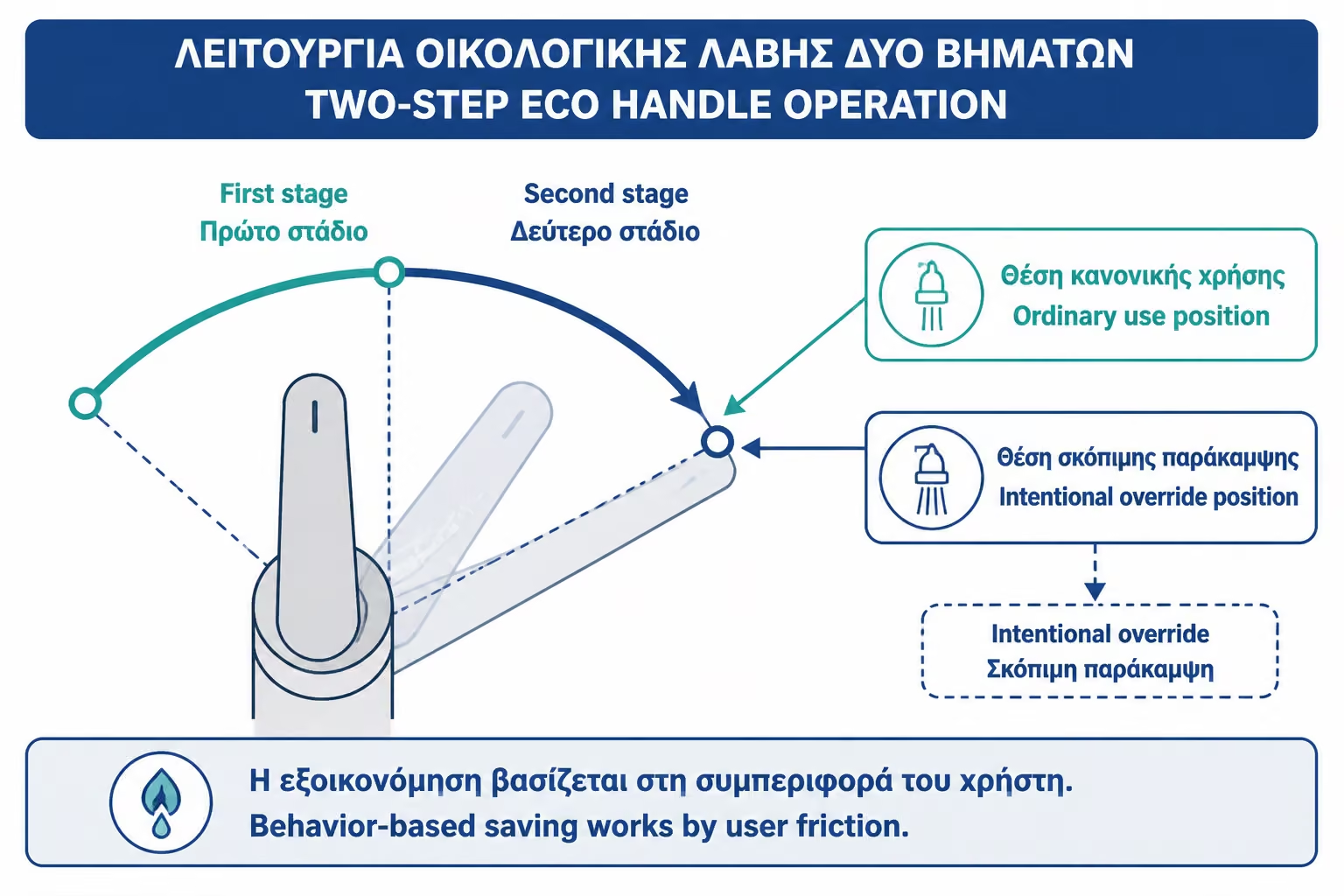
The eco-cartridge is the mechanism inside the tap that helps to not always open the maximum flow. In standard faucets, the user lifts the lever and often turns on more water than necessary. With an eco-cartridge, the travel of the lever has a resistance or "click" in the middle. Until then, the stream is economical. If you want full flow, consciously push past the point of resistance.
This logic is particularly useful in wash basins. For hand washing, half the flow is usually sufficient. To fill a container or wash something quickly, you can open more. So the saving is not because the full flow is "forbidden", but because the user does not unwittingly go to the maximum flow every time.
There are also mechanisms with a cold-start or cool-start logic, where when the lever is in the central position, cold water opens first and not a hot/cold mixture. This reduces unnecessary consumption of hot water, especially when we turn on the tap for a few seconds. hansgrohe states that since 2012 many taps have been equipped with CoolStart technology, while EcoSmart reduces consumption with a flow limiter and aerator.
The eco-cartridge is therefore behavioral technology. It doesn't just change the flow. It changes the way the user opens the tap.
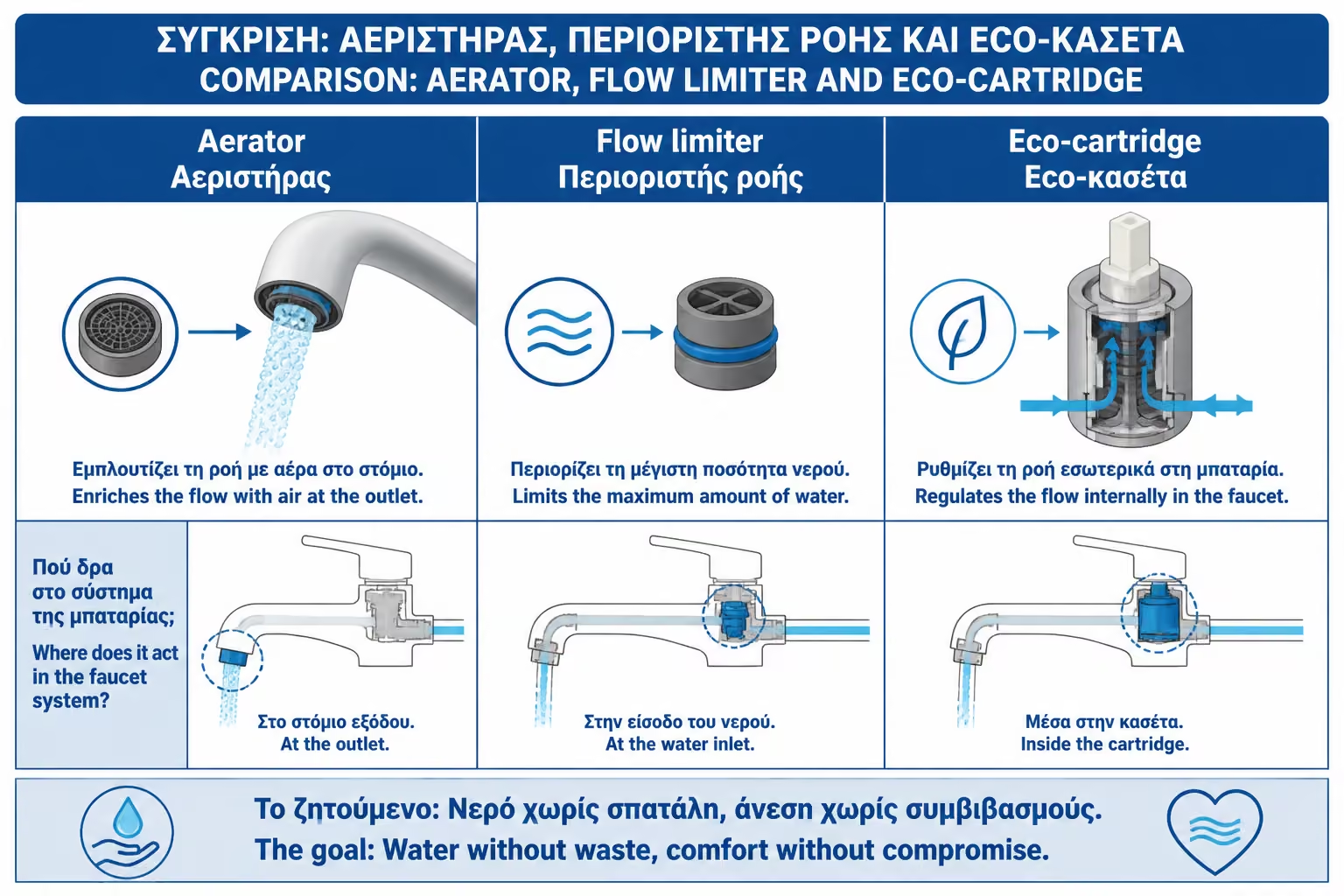
The two-stage mechanism, or click cartridge, has a simple concept: the tap has a first zone of comfortable economic flow and a second zone of maximum flow. The user feels a “click” or resistance in the travel of the lever. For most uses, it stays before the click. If he needs more water, he passes the second ladder.
The advantage is that it requires no training. The user does not need to remember every time to "open it a little". The mechanism drives him of course. In a family bathroom, this is important. Children and adults often turn on the faucet abruptly. The first ladder reduces waste without the need for constant reminders.
The second ladder is also important because it maintains flexibility. We don't want a tap that is permanently weak. We want regular use when needed. The eco-cartridge helps to "default" everyday life, not to punish the user.
In commercial areas or guest WCs, where many users do not pay attention to consumption, two-stage mechanisms or fixed flow restrictors are of great value. In a master bathroom, they offer savings without changing the sense of luxury.
“Up to 50%” sounds impressive, but must be interpreted correctly. The savings depend on what we compare. If an old battery gives 10–12 l/min and a new eco battery gives 5–6 l/min, the reduction can actually be close to 50%. But if the old battery already had a flow limiter at 6 l/min, the difference will be smaller.
GROHE claims EcoJoy can save up to 50% water, while flow limiter technology reduces flow without sacrificing performance or comfort. hansgrohe states for EcoSmart in basin mixers approx. 5 l/min and EcoSmart+ 4 l/min at 3 bar, as well as other material that savings of up to 60% or more can be achieved in specific products. ([hansgrohe.co.uk](https://www.hansgrohe.co.uk/bathroom/planning/technologies/ecosmart?utm_source=chatgpt.com), [hansgrohe.co.uk](https://pro.hansgrohe.co.uk/your-selling-points/technologies/ecosmart?utm_source=chatgpt.com))
So “up to 50%” is realistic when compared to old or non-limited taps. It is not a guarantee that every home will see exactly a 50% reduction in their water bill. The bill is also affected by cisterns, showers, washing machines, leaks, habits and time of use.
The safe message is: aerators and eco-cartridges can significantly reduce consumption, often up to around 50% in appropriate comparisons, without degrading the feeling of daily use. Not that they "always cut the bill in half".
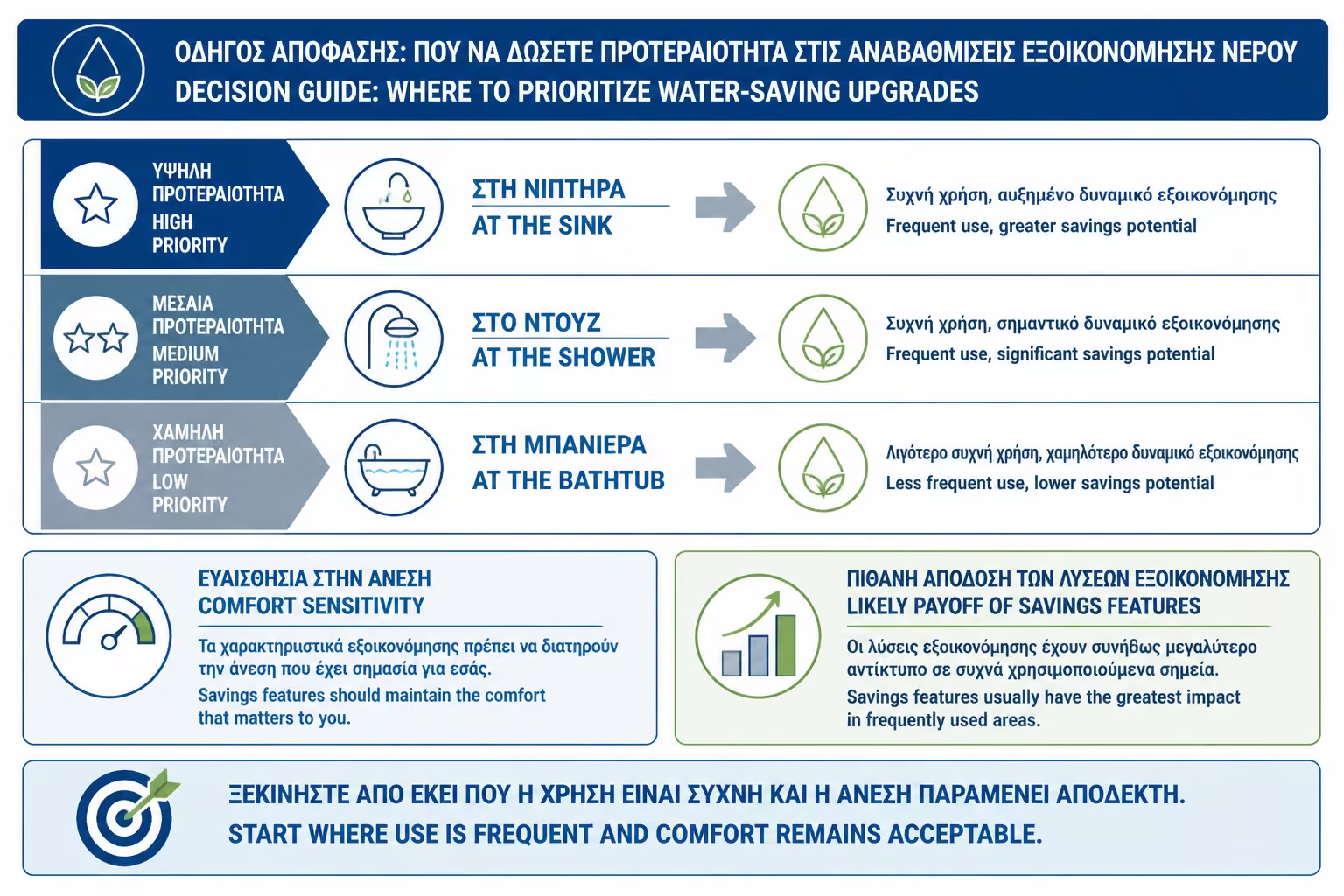
The sink is the ideal place for aerator and eco-cartridge. Its use is frequent and short: washing hands, teeth, shaving, quick rinsing. In all these cases a large supply is not needed. The reduction from 10 l/min to 5 l/min will rarely bother if the beam is correct.
In small WCs, the aerator also helps with splashing. Small sinks are sensitive. If the flow is wild or too strong, the water comes out. A good aerator softens the beam and makes it more controllable. This means less water on the counter, less limescale and cleaner usage.
The cold-start cartridge is also worth using at the sink. Many people open the tap in the center position for 5–10 seconds. On a standard single-lever mixer, this can call for hot water from the water heater even if it never reaches the spout. So energy is spent without actually using hot water. With cold-start, the central position gives cold water, so this unnecessary activation is avoided.
For washbasins, eco technology has the best cost-benefit ratio. Small part, big daily frequency.
In the shower, saving water also means saving energy, because much of the water is hot. A 10-minute shower at 12 l/min consumes 120 liters. If the head gives 8 l/min, the consumption drops to 80 liters. The difference is big, especially in a family.
Modern eco heads and hand showers use flow restrictors, special nozzles and air mixing to keep the sensation comfortable. hansgrohe says that EcoSmart showers can reduce consumption by up to 60%, with many overhead and hand showers at 8 l/min and some at 6 l/min.
However, you need to be careful in the shower. If you have a large rain shower head, too low a flow can make the experience weak. If you have a heater or boiler that needs minimal flow to operate, a very tight restrictor can create fluctuations. If you have low pressure, the eco head must be chosen carefully.
For most bathrooms, 8–9 l/min is a good balance for showers. For very low pressure, a product specially designed for low pressure is needed. For a large rain shower, it should be checked whether the head can give a good feel with the available flow.
In bathtub faucets, very low flow is not always desirable. If you want to fill a bathtub, you need several liters in a reasonable amount of time. A strict flow limiter can make filling slow and frustrating. Also, the water may lose temperature while you wait.
That is why savings must be applied according to usage. In the sink, 5 l/min is often enough. In the shower, 8 l/min can be comfortable. In the tub, if you're filling 180–250 liters, you want a higher flow rate. Saving in the bathtub is more about habit, i.e. less frequent fillings, correct water level and avoiding overflow, not necessarily with a very limited battery.
If a bathtub battery has an eco position, it must also be able to provide full flow when needed. A two-stage mechanism can be useful: economy flow for rinsing or light use, full flow for filling. But if the tap is permanently limited to very low output, it will tire.
The conclusion is that saving water does not mean "cutting off the flow everywhere". It means proper flow for every use.
Before changing the tap or aerator, you can measure the flow. You need a bucket or container of known capacity and a timer. You turn on the tap as you normally use it and count how many seconds it takes to fill, for example, 5 or 10 liters.
If 10 liters are filled in 60 seconds, the flow is 10 l/min. If they fill in 30 seconds, the flow is 20 l/min. If 5 liters are filled in 60 seconds, the flow is 5 l/min. This simple measurement shows whether there is real room for savings.
In a sink, if you see 10–12 l/min, a 5–6 l/min aerator can significantly reduce consumption. In a shower, if you see 12–15 l/min, an 8–9 l/min eco head can save a lot. But if the existing flow is already 5 l/min and bothers you, you don't need a smaller limiter. Need pressure control, clogged aerator or piping.
Measurement is useful because it separates sensation from reality. Many say "it has no pressure" when in fact it has enough pressure but a clogged aerator. Others say it "runs well" while giving way too many liters. With a bucket and a timer, the conversation becomes practical.
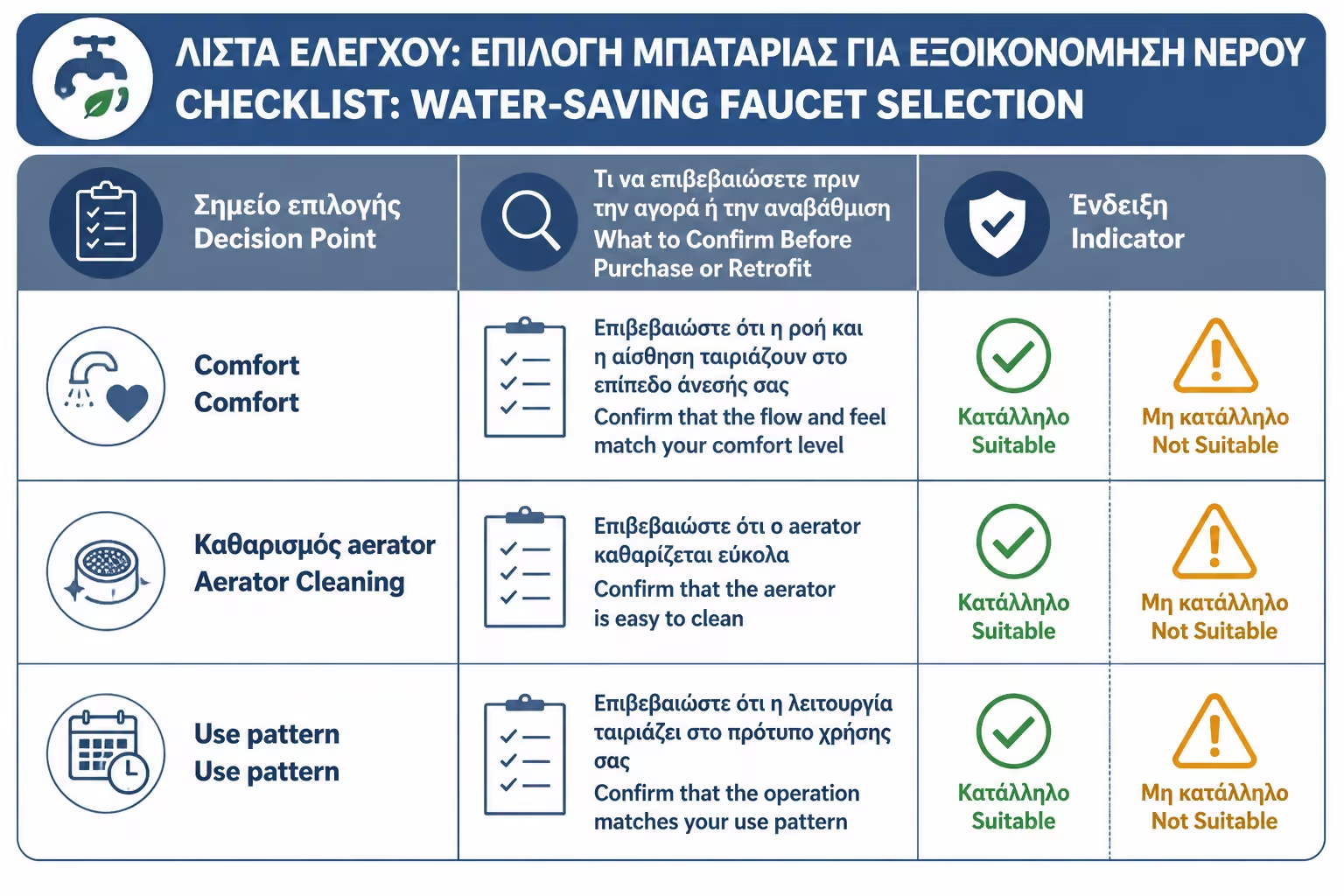
The aerator picks up limescale, small particles, pipe sand and debris. When it clogs, the flow becomes crooked, weak or splashy. Many people think that the pressure of the house has dropped, when the aerator just needs to be cleaned or changed.
The Spruce, in a guide to faucet aerators, states that aerators should be cleaned regularly, about every six months, to remove scale, particles, and debris, and that a bad or clogged aerator can cause low pressure, poor flow direction, or sideways spray.
In areas with hard water, cleaning may be needed more frequently. The aerator usually unscrews from the end of the tap. Care must be taken not to scratch the finish, especially if the tap is black, gold or PVD. We use a soft cloth around the tool and follow the manufacturer's instructions.
If the aerator is very worn, it is replaced. It is an inexpensive part and changing it can make an old battery work much better.
The aerator is not a drinking water filter in the cleaning sense. It can retain small particles due to sieve, but its purpose is not to remove chlorine, limescale or heavy metals. Its purpose is to regulate and format the flow.
This is important because some people think that changing the aerator "filters" the water. It doesn't apply. For drinking water filters, special under-counter, over-counter or central systems are needed, depending on the need. A different treatment is needed for limescale. The aerator can clog with scale, but it does not remove it from the water.
If the water has a lot of limescale, the aerator will need more frequent cleaning. If it has particles from old pipes, it can clog. If there is a frequent problem, an installation check or pre-battery filter may be needed.
So when we talk about an aerator as an “air mixing filter”, we need to explain that it is a flow filter/strainer, not a water quality filter.
Savings should not come at the expense of operation. If the flow is too low, the user will leave the faucet open longer. If the shower is too weak, it will prolong the use. If the bath battery fills too slowly, it will be annoying. So the right choice is balance, not as few liters as possible everywhere.
In wash basins, very low flows below 4 l/min can be annoying in some uses, especially if the pressure is already low. In showers, below 6 l/min the experience can become weak for many users, unless the product is very well designed. In a rain shower, the requirements are greater.
Also, some instant heaters or boilers need a minimum flow to activate. If the eco system restricts the flow too much, hot water fluctuations can occur. This should be checked in homes with such systems.
Saving must be "smart". We cut waste, not usability. This is why good manufacturers give different products and not one flow for all.
The first investment is the sinks. A good aerator or a tap with EcoSmart/EcoJoy/corresponding technology gives immediate savings with little risk. The second investment is the shower, especially if the family takes long showers every day. A good eco head can reduce water and energy.
The third investment is replacing old cisterns or setting up a dual flow, although that is another matter. In many homes, the faucet uses more water than the sink faucet. If you want real bill reduction, look at the bathroom as a whole.
When renovating, request taps with a specific flow in l/min from the beginning. Don't be satisfied with the phrase "it's economical". Ask: how many liters at 3 bar? Does it have an aerator? Does it have a flow limiter? Does it have a two step mechanism? Does it have a cold start? Is the aerator easy to clean?
Water conservation is most effective when it is built into the product selection from the start, not when we try to fix it afterwards with random accessories.
Water saving solutions have a wide range of costs. A simple aerator can cost very little. A branded eco battery or thermostatic shower column with a flow limiter costs more, but offers quality, better feel and support.
| Solution | Indicative cost of Greece 2026 | When does it make sense? |
|---|---|---|
| Simple replacement aerator | €3–€15 | Old battery improvement, splash reduction |
| Aerator with flow limiter | 5–25€ | Sinks with excessive flow |
| Flow regulator / special limiter | €5–€30 | Nozzles, showers, special applications |
| Washbasin faucet with eco-cartridge | 60–250€+ | New installation or replacement |
| Tap with cold-start / eco mechanism | 80–300€+ | Saving water and energy |
| Eco shower head | 30–150€+ | Reduced consumption in the shower |
| Branded thermostatic/eco shower column | 250–800€+ | Family bathroom, comfort and savings |
Prices are indicative and depend on brand, finish, quality, technology, whether battery or accessory only is included, and installation work. The most economical move is often to change the aerator to an old battery. The most comprehensive is the selection of new taps with built-in saving technology.
Don't just buy based on the lowest flow. Buy based on the correct flow for use.
The first mistake is to remove the aerator because it "has no pressure". Many times the aerator is simply clogged and needs cleaning or replacement. If it is removed, the flow becomes wild and the consumption increases.
The second mistake is excessive flow reduction in the shower. If the shower becomes unpleasant, the user will leave it longer or look for a way to remove the restrictor.
The third mistake is using too low a flow rate in a bathtub faucet. The bathtub needs supply, not just economy.
The fourth mistake is buying random aerators without checking the thread and size. There are different dimensions and male/female threads.
The fifth mistake is to consider the aerator a water purification filter. Is not. It is a stream regulator/shaper.
The sixth mistake is the omission of cleaning. In hard water, a clogging eco aerator will give a bad experience and the user will think the technology is at fault.
| Inquiry | Yes / No |
|---|---|
| Have you measured the existing flow in l/min? | Yes / No |
| Do you know if the problem is excessive flow or a clogged aerator? | Yes / No |
| Does the new aerator fit the tap thread? | Yes / No |
| You have selected a stream suitable for use, e.g. sink or shower? | Yes / No |
| Does the tap have a flow limiter or just a simple aerator? | Yes / No |
| Does the eco-cartridge have economy ladder first and full flow second? | Yes / No |
| Is there a cold-start function to reduce unnecessary use of hot? | Yes / No |
| Is the aerator easily cleaned or replaced? | Yes / No |
| Is the shower or head compatible with house pressure? | Yes / No |
| Is the water heater/boiler working with a lower flow? | Yes / No |
| Have you avoided over-restricting a bathtub faucet? | Yes / No |
| Is the selection based on l/min and not just the word “eco”? | Yes / No |
If you don't know the liters per minute, you don't really know what you're saving. Savings should be measured, not assumed.
If you must keep only one thing, keep this: aerators and eco-cartridges do not work magic. They reduce liters per minute, but keep the comfortable flow feeling with better beam, air and mechanical restriction. In wash basins, 4–5 l/min may be more than enough. In a shower, 8–9 l/min is often a good balance. In a bathtub, however, do not cut off the flow too much because it will take time to fill. Measure first with a bucket, select the correct l/min and clean the aerator of scale.
Saving water in bathroom faucets is one of the smartest small investments in a renovation. Aerators improve beam, mix air, reduce splash and make fewer liters seem sufficient. Flow limiters put a real limit on the flow. Eco-cartridges and two-step mechanisms change user behavior so that economical flow becomes the daily default.
"Up to 50% savings" is realistic when compared to old or uncapped taps, but it's not an automatic promise for every home. Actual savings depend on old flow, new flow, length of use and habits. The most correct approach is to measure liters per minute and choose a product with a suitable flow for each point.
In the sink, eco solutions are almost always a good idea. In the shower, a balance between comfort and economy is needed. In the bathtub, very low flow can become a disadvantage. Technology should serve use, not cancel it.
The best solution is one that the user does not feel deprived of. If the flow is pleasant, soft, steady and clear, saving is automatic. If the flow is weak and annoying, the user will try to bypass it. That is why the quality of the aerator, flow limiter and cartridge is so important.
Return to category.
Go to categoryReturn to the central guide.
Go to guide