
Bathroom Fixtures & Water Equipment
Return to category.
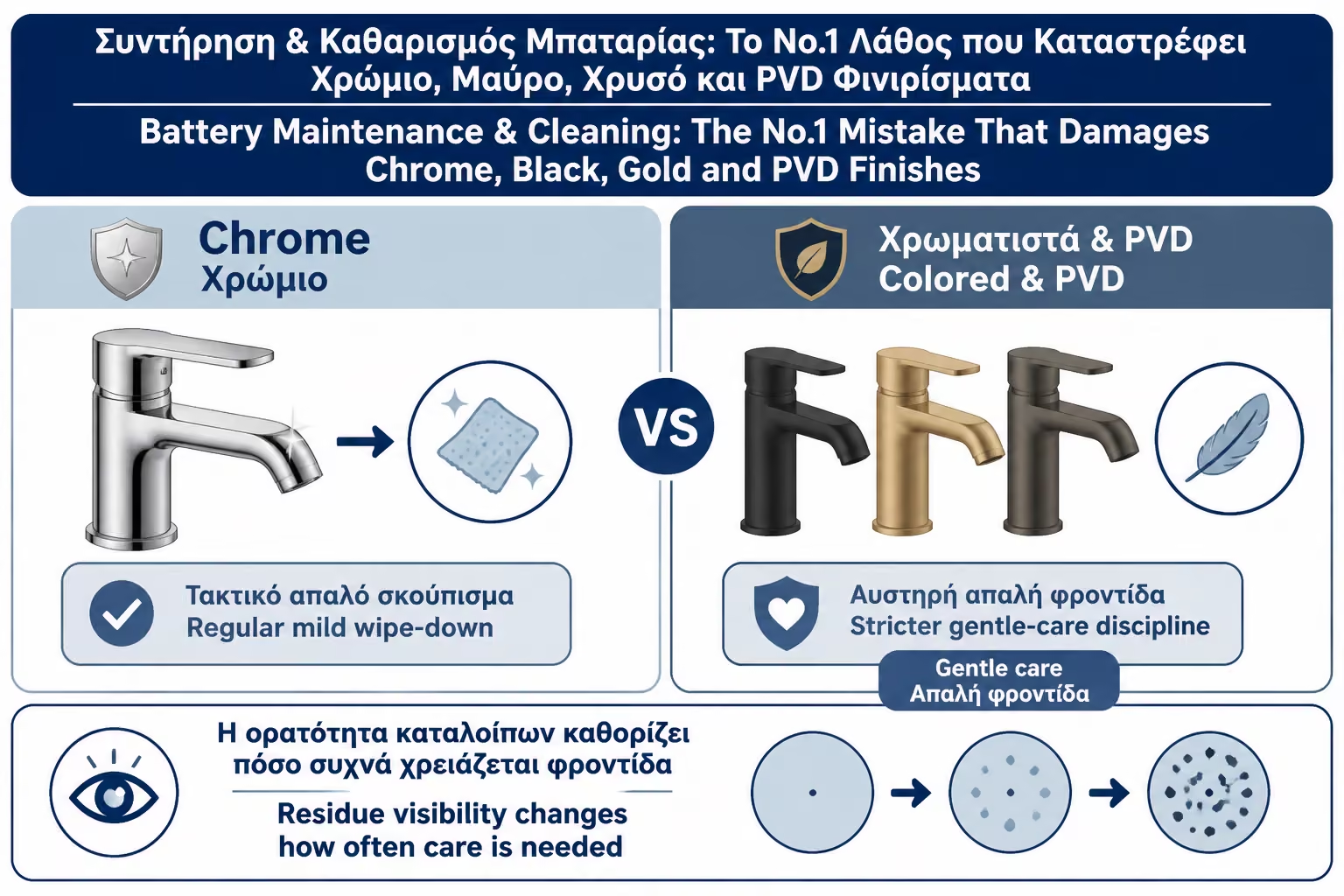
Go to categoryBathroom faucets are among the most exposed parts of the space. They receive daily water, soap, toothpaste, limescale, shampoo, foams, fingers, cleaners and scrubbing. They can be chrome, matte black, gold, brushed nickel, gunmetal or PVD, but they all have one thing in common: their surface can be damaged much more easily by improper cleaning than by normal use.
The No.1 mistake is that we clean the tap as if it were a tile or a basin. We take a strong cleaner for limescale, a little chloride product, kesap, hard sponge or green wire and rub until it shines. The first time it may seem like it "cleaned". But in reality permanent wear may have started: tarnishing of chrome, micro scratches, deterioration of matte black, wear in gold/brushed finish, opening of the surface in cheap coatings or loss of protective layer.
The instructions of the major manufacturers are clear. GROHE warns against using abrasive sponges, scouring agents, cleaners with solvents, acids, limescale removers, vinegar or acetic acid, because they can leave the surface dull and scratched. hansgrohe states that aggressive and abrasive cleaners should be avoided, while for limescale it suggests a mild cleaner based on citric acid, first applied to a cloth and not directly to the tap. Professional instructions from hansgrohe also explicitly state that bleach, formic, acetic and hydrochloric acid, polishes and sponges should be avoided.
That doesn't mean we can't descale. It means we have to do it in a way that is controlled and appropriate for the particular finish. White vinegar, for example, is a well-known natural solution for scale, and several general cleaning instructions use it diluted. Delta recommends a 50/50 solution of white vinegar and water for hard water stains in its own care instructions. But other manufacturers, such as GROHE and hansgrohe in professional instructions, warn to avoid acetic acid/vinegar in taps. So the correct advice is not "put vinegar everywhere". They are: first check the finish and the manufacturer's instructions; if a natural acid solution is used, it is done diluted, topically, for a short time, with a good rinse and drying — never as a general, permanent prescription for every battery.
In this guide we'll look at which chemicals are banned, why bleach and kezap are dangerous to taps, how to properly clean chrome, black, gold and PVD surfaces, how to deal with scale without dulling the finish, and what little maintenance routine keeps your battery looking like new for years to come.
The biggest damage to taps is not done by water alone. It happens when we let water and limescale build up for weeks and then try to aggressively remove them. The longer the limescale sits on the surface, the more it challenges us to scrub hard. That's where the damage starts.
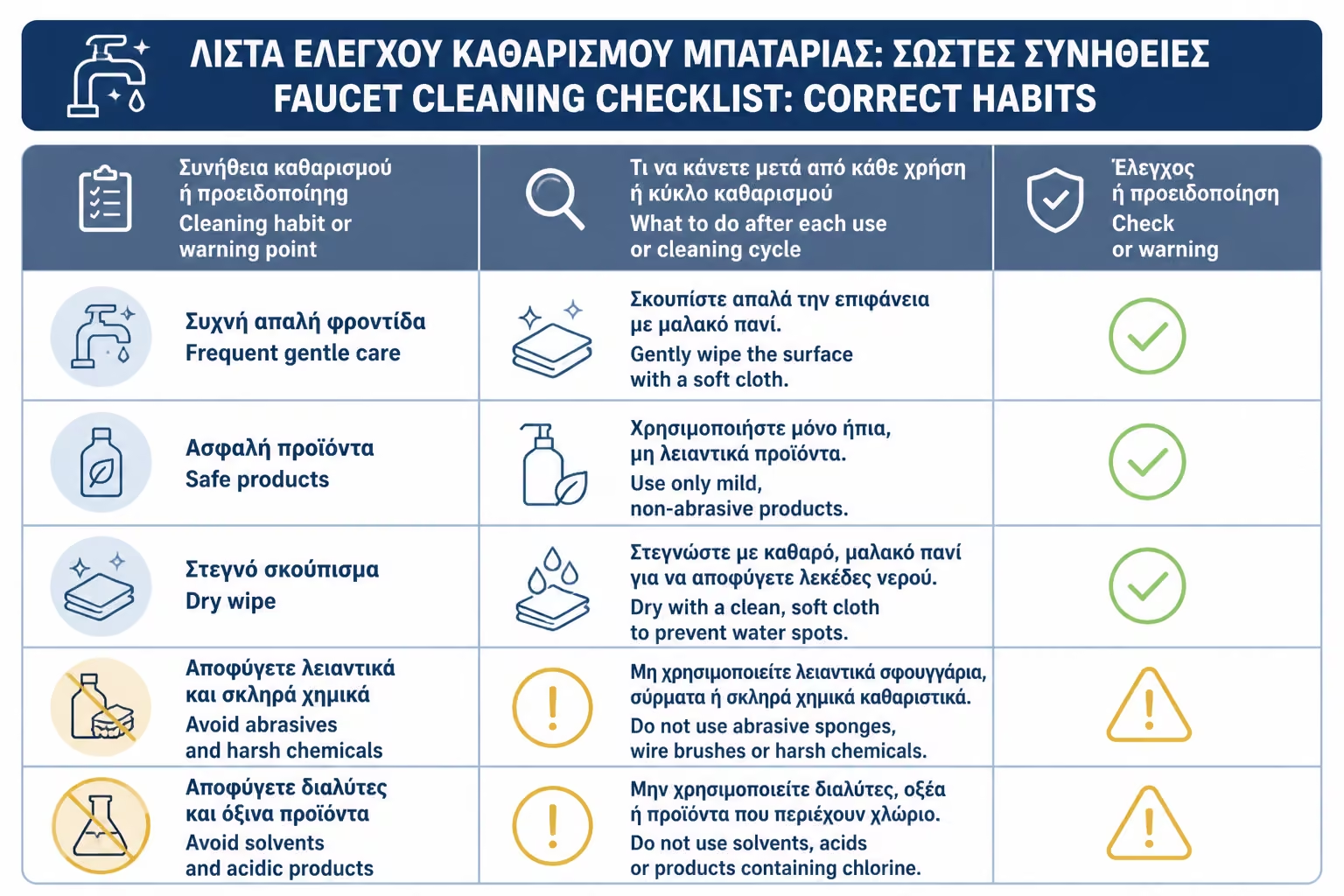
Proper care is just the opposite: little and often. If you wipe off the drops after use, especially on black, gold and brushed taps, the limescale do not have time to become a hard crust. GROHE states that drying the products after each use is the easiest way to prevent scale build-up.
The tap does not need "heavy" cleaning every month. It needs gentle cleaning every week and drying as often as possible. Chrome will stay brighter, black finishes will show less white marks, and gold/brushed finishes won't need dangerous sanding.
In practice, the safest cleaner is often warm water, a little mild soap and a soft cloth. If this is done systematically, strong chemicals are almost never needed.
Tile, especially if it is glossy porcelain or ceramic, can often withstand more aggressive cleaning than a tap. But the tap has a finish: chrome, metallization, PVD, paint, lacquer or brushed surface. This thin final layer is what we see and touch. If it breaks, it is not easily repaired.
The problem is that the limescale collect precisely in the most sensitive places: the base of the tap, around the aerator, on the rosettes, on the joints, on the controls and on the edges. If we spray strong cleaner, it can get into joints and crevices. If it doesn't wash off completely, it stays there and works for a while. Villeroy & Boch states that the cleaner should not be sprayed directly on faucets and fittings, but on the cloth or sponge, so that no spray mist gets into openings and gaps.
This is huge detail in practice. When we spray the tap directly, the cleaner runs into the base, under the lever, around the rosette and behind the body. It doesn't wash off properly there. Over time it can cause dulling, corrosion or discoloration.
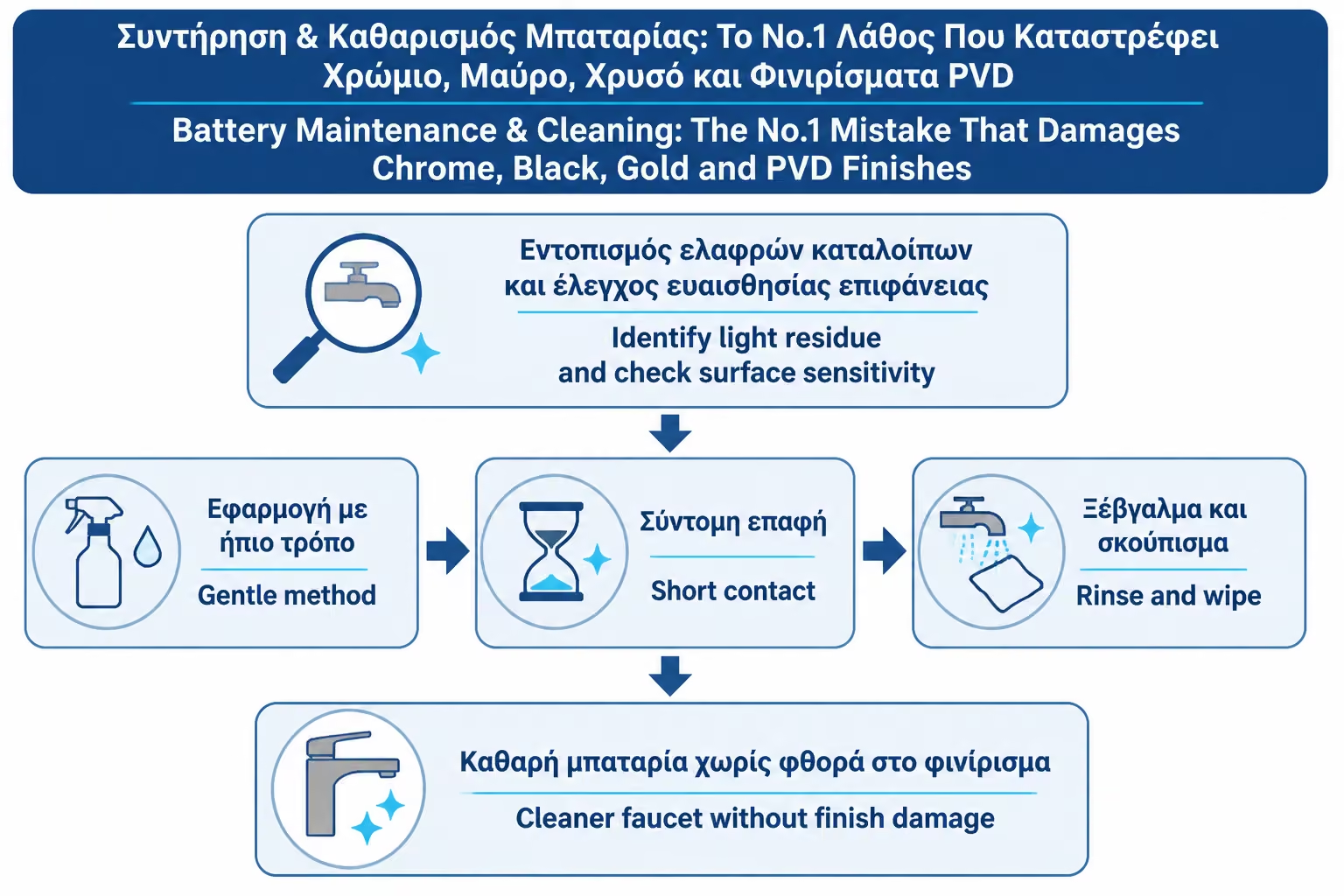
So the correct order is: cleaner on the cloth, not on the tap. Sweep. Rinse with clean water. Drying.
Bleach is very useful in certain disinfections, but is a bad idea for taps. It is an aggressive chemical substance, it can affect metal surfaces, cause dullness, stains, discoloration or deterioration of finishes. In chrome taps it can create permanent blur. On black, gold or PVD surfaces, the risk is even greater.
In maintenance instructions, hansgrohe explicitly states that chlorine bleach should be avoided in taps, along with formic, acetic and hydrochloric acid, abrasives and sponges. If a premium battery manufacturer says “away from bleach”, we take that as a rule of thumb.
Bleach has a second problem: it is often used in the bathroom along with other cleaners. This is dangerous for health, not only for the tap. Never mix bleach with acidic cleaners, vinegar, kezap or ammonia, as dangerous fumes can be produced. Even if the goal is to remove scale, bleach is not a descaling tool.
For taps, the rule is simple: no bleach. Disinfection can be done with much milder methods and always according to the manufacturer's instructions.
Kezap, as used in everyday Greek terminology, usually refers to a strong acid cleaner for limescale, often based on hydrochloric acid or correspondingly very aggressive acids. These products can be effective on tough deposits on some surfaces, but are a destructive choice for taps.
Hydrochloric acid can attack chrome, dull surfaces, alter special finishes, wear away protective coatings and affect metal parts. hansgrohe clearly states that cleaners containing hydrochloric acid or acetic acid should not be used, because they can cause serious damage.
The dangerous thing about kezap is that it "works" quickly. You see the limescale go away and you think you are cleansed. But together the surface may have been dulled. Damage is not always immediately apparent while the tap is wet. Appears when dry: dull spot, unevenness, stain, spots.
In chrome, the kezap can leave a blur. In black or gold, it can alter the color. On cheap finishes, peeling may begin. That is why kezap is strictly prohibited in taps.
White vinegar is a classic natural solution for limescale. It contains acetic acid, which dissolves carbonates. It works well in many household applications: nozzles, showers, ceramics, glass, kettles. The problem is that on taps the vinegar touches the finish, not just limescale.
Here there is a difference in instructions by manufacturer. Delta states that hard water stains can be removed with a 50/50 solution of white vinegar and water. On the other hand, GROHE warns to avoid cleaners with vinegar or acetic acid in its products. hansgrohe in professional instructions also states to avoid cleaners with acetic acid, while it recommends products based on citric acid.
So vinegar should not be presented as a general solution for all taps. It can only be used if the manufacturer allows it or if we are talking about a detachable part, such as an aerator, and with care. Always thinned, not for long hours on battery, not in black/gold/PVD without control, not direct spray, always good rinse and dry.
The safest course of action for battery limescale is mild soap and a cloth first. If not enough, mild citric acid or a product approved by the manufacturer. Vinegar goes in only with knowledge of the finish, not as an automatic recipe.
Citric acid is also acidic, but many manufacturers prefer it for battery desalination, when used properly and in a mild form. hansgrohe recommends a mild cleaner based on citric acid for descaling, applied on a cloth and not directly on the tap. In another guide she says to apply to a soft cloth first, leave for the prescribed time, remove completely with clean water and dry.
This does not mean that we take citric acid powder and make a strong solution without measure. It means we prefer mild, controlled desalination instead of harsh acids. The cleaner should be suitable for taps and should not be left on the surface longer than necessary.
Cloth application is important. We do not spray the entire battery and do not let liquid run into the base. Wet a cloth, apply locally, leave a little, rinse well and dry. If the limescale are heavy, we repeat gently instead of going to a more aggressive product.
In special finishes, even citric acid should be used according to the manufacturer's instructions. The more special the finish, the less we improvise.
Many taps are not destroyed by the cleaner, but by the sponge. Green scouring pads, wires, hard brushes, abrasive sponges and cleaning powders create micro-scratches. At first they don't look strong. Over time, the surface loses its gloss, holds more limescale and dulls.
hansgrohe requests that no scratch sponges, brushes or metal scourers be used. GROHE also warns against abrasive sponges and scouring agents. This is a common line of almost all manufacturers.
In chrome, micro-scratches appear as a blurred surface. In matte black, more polished spots or gray lines may be created. In brushed gold, the brushing direction can be altered. In PVD, the strength is greater, but not infinite. An abrasive sponge can ruin even an expensive finish if used regularly.
The safe choice is soft cotton cloth or very soft microfiber that does not scratch, always clean. If the cloth has sand, dust or residue from other cleaning on it, it can also scratch. Cleanliness of the tool matters.
For taps, especially if they have a chrome, black, gold, brushed or PVD finish, we avoid the following categories:
The general rule is: if the cleaner says it's for basin, joints, heavy duty limescale, cement, rust or oven, don't put it in a tap. The tap needs product for fittings or mild cleaning.
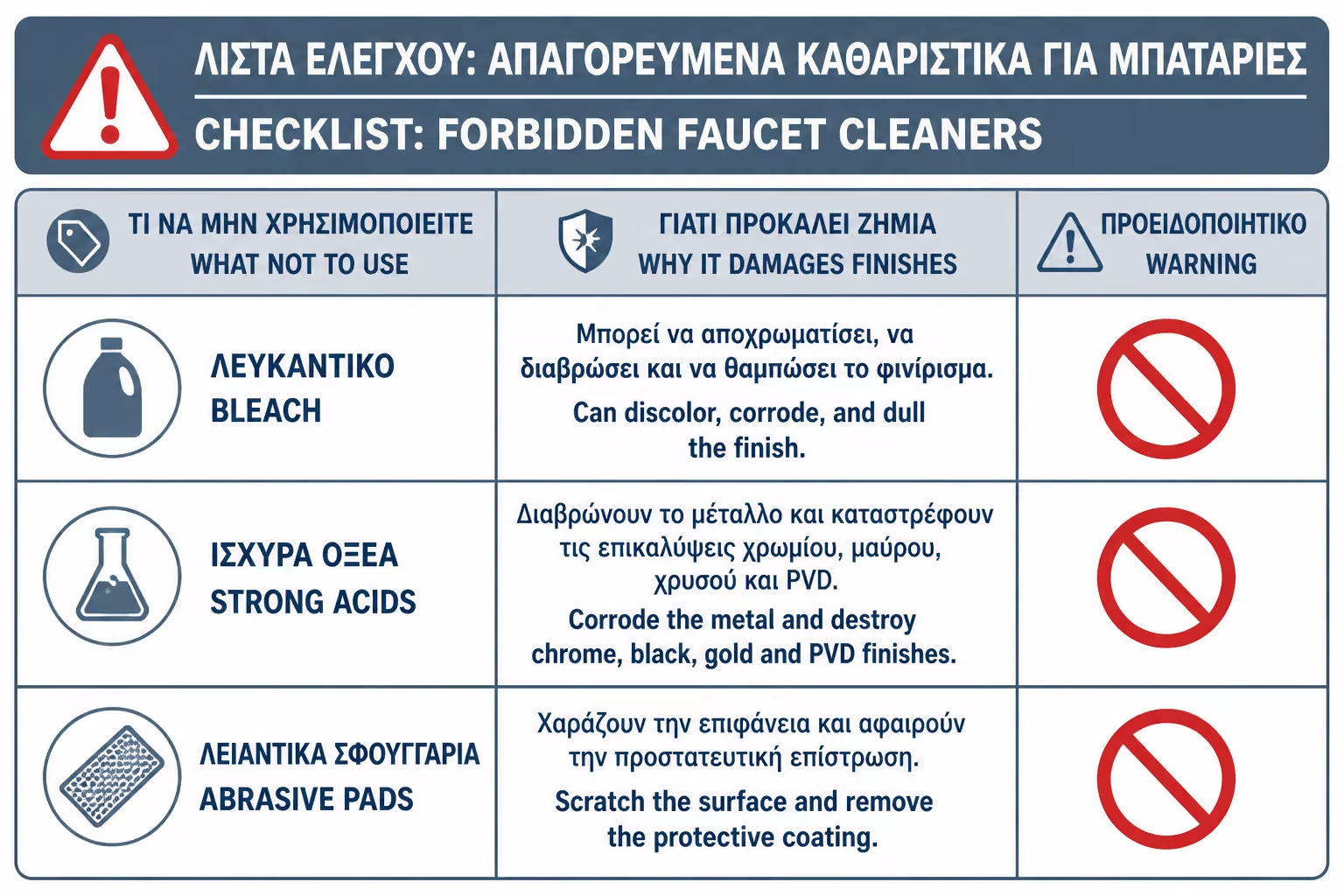
| Substance / product | Why is it a problem? |
|---|---|
| Chlorine / chlorine bleach | It can dull, discolor or corrode surfaces |
| Kesap / hydrochloric acid | Very aggressive on chrome and special finishes |
| Strong descalers of unknown composition | They may contain acids that damage the coating |
| Vinegar / acetic acid | Useful in some cases, but prohibited by several tap manufacturers |
| Ammonia cleaners | May affect special finishes and platings |
| Solvents / acetone / solvent cleaners | Risk of dulling or deterioration of finish |
| Abrasive powders and creams | They create micro-scratches |
| Green sponges / wire / scouring pads | They scratch chrome, black, gold, brushed and PVD finishes |
| Basin cleaners | They are designed for ceramic bowls, not tap finishes |
| Oven cleaners or heavy degreasers | Too aggressive for tap surfaces |
Chrome is the most durable and forgiving finish, but it is not indestructible. The right routine is simple. After use, wipe off the drops as much as possible. Once a week we clean with a soft cloth, warm water and a little mild liquid soap. Rinse with clean water and dry.
If there is light limescale, first try a soft cloth with warm water. If it does not go away, use a mild product that is suitable for taps. If the manufacturer allows diluted vinegar, it can be used locally for a short time. If the manufacturer does not allow it, or if we do not know, we prefer a product with citric acid or a dedicated tap cleaner.
Never leave the tap wet with cleaner. We do not spray directly. We do not rub with force. If it takes a lot of force, it means maintenance is overdue or the aerator needs a removable cleaning.
Chrome can last longer, but if dulled by acid or scratched by a sponge, it is difficult to return to the original gloss.
In special finishes, care must be even more careful. Black shows limescale strongly. Gold shows rings and tarnishes. Brushed can be damaged if rubbed against or with an abrasive. PVD is highly durable, but still needs proper cleaning.
The safest routine is: soft cloth, lukewarm water, mild soap, rinse, dry. For limescale, only product allowed by the manufacturer of the particular finish. No vinegar without confirmation. No bleach. No kezap. No harsh softeners. No sponges.
Villeroy & Boch points out that soap, shampoo and shower gel residues can cause damage and must be rinsed with clean water without leaving any residue. This is very important in black and gold shower columns, where soaps dry on the finish.
With special finishes, drying after use is not an exaggeration. It is basic maintenance. If you're not willing to do that, you're better off going with a more forgiving finish such as chrome or brushed nickel.
Natural limescale removal is possible, but it needs limits. The gentlest start is warm water and a soft cloth. If the limescale do not come off, we can use a mild solution of citric acid or diluted white vinegar only if the finish allows it.
For chrome taps without a special finish, a careful method with diluted white vinegar can be: 1:1 solution with water, apply to a cloth, pass locally on the spot with limescale, wait a few minutes, rinse well and dry. We do not spray directly. We don't leave it for hours. We do not apply it to black, gold, brass, nickel or PVD unless the manufacturer allows it.
For aerator, the process is safer because the part is removed. We carefully unscrew the aerator, soak it in a mild solution suitable for limescale, rinse it, brush it with a soft toothbrush and reinsert it. Delta mentions in the care instructions that for mineral deposits a cloth with white vinegar can be used on the deposits, while for the aerator unscrewing and cleaning is recommended.
In any case, natural does not mean harmless. Vinegar and lemon are acids. They can help with limescale, but they can also damage surfaces. Safety lies in proper dilution, short contact time, rinsing and confirmation of compatibility.
Many times the tap appears to have low pressure or bad flow, but the problem is the aerator. The aerator collects limescale and small particles from the network. When it clogs, the flow becomes erratic, sprays sideways or decreases.
Proper maintenance is to periodically unscrew, clean and reinsert. If it has a lot of limescale, it can be soaked in a mild desalination solution suitable for its material. But be careful with the tool: if you grab the nozzle directly with pliers, you will scratch the chrome or finish. Use a special aerator key or protect with a soft cloth.
If the aerator is old or worn, replace it. It's an inexpensive part and can completely change the feel of the tap. A good aerator reduces spatter, improves the beam and often reduces consumption.
Don't try to solve a flow problem with stronger surface cleaning. First check the aerator.
Shower heads collect scale in the nozzles. In many modern heads, the nozzles are siliconed so they can be cleaned by gently rubbing them with a finger. This is much better than using a brush or hard sponge. The philosophy is to remove the scale frequently before it becomes a hard crust.
If the head is chrome and detachable, it can be cleaned more easily. If it's black, gold or PVD, it needs even more attention. Soaking it in a bag of vinegar for hours may be a classic home recipe, but it's not safe for all finishes. In special colors it can cause dullness or discoloration.
Best practice is frequent nozzle cleaning, mild soap, rinse and dry. For stronger limescale, follow the manufacturer's instructions. If there is an instruction for citric acid, we use it gently and controlled. If it doesn't exist, we don't improvise.
In the shower, ventilation helps a lot. The faster the surfaces dry, the less limescale and soaps remain on them.
If the chrome is tarnished by limescale, it may come back with gentle cleaning and proper drying. But if it has been dulled by a chemical, acid or abrasive sponge, the damage can be permanent. The same applies to black, gold and PVD surfaces. If the finish is damaged, it doesn't just "shine" back by sanding. Rubbing can make it worse.
Do not use metal polishes without instruction. Many polishes are abrasive and can remove or alter finish. In chrome they may help in some cases, but in special finishes they can cause more damage. hansgrohe also warns to avoid polishes in maintenance instructions.
If the tap is expensive or has a special finish, check with the manufacturer or supplier before trying anything stronger. There may be a specific care product or clear instruction for that particular material.
If the damage is superficial from limescale, it is saved. If it's chemical or mechanical wear, often not. That is why prevention is much more important than recovery.
Proper battery maintenance is not expensive. Costs only go up when the damage becomes permanent and battery or parts need to be replaced.
| Energy / product | Indicative cost of Greece 2026 | When needed |
|---|---|---|
| Soft cleaning cloths | 3–10€ | Daily mopping and drying |
| Mild liquid soap / neutral cleaner | 2–8€ | Regular cleaning |
| Replacement aerator | €3–€15 | When it is clogged or worn |
| Special aerator key | 2–10€ | Safe unscrewing without scratches |
| Mild scale cleaner for batteries | €5–€15 | Local desalination, if allowed |
| Manufacturer's special care product | 8–25€+ | Premium or special finishes |
| Replacement spiral / hand shower | 10–60€+ | If it has limescale, leaks or wear |
| Tap replacement due to finish wear | 50–500€+ | When the damage is permanent |
The most economical maintenance is drying. A soft cloth after use protects more than any powerful cleaner. Whether the tap is black, gold or PVD, this simple step makes a huge difference.
The first mistake is bleach. Not suitable for taps and may cause blurring or wear.
The second mistake is kezap or strong acid afalats. They may remove scale, but they can damage the finish.
The third mistake is vinegar without control. It's natural, but it's sharp. It is not safe for all taps and several manufacturers forbid it.
The fourth mistake is the hard sponge. Micro scratches dull the surface and hold more scale.
The fifth mistake is direct spraying. The cleaner gets into joints and gaps, where it doesn't wash off.
The sixth mistake is delayed maintenance. If you leave the scale for months, you will need more aggressive cleaning and the risk of damage increases.
| Inquiry | Yes / No |
|---|---|
| Do you know what finish your battery has? Chrome, black, gold, PVD, brushed; | Yes / No |
| Have you read the manufacturer's cleaning instructions? | Yes / No |
| Do you avoid bleach, kezap and hydrochloric acid? | Yes / No |
| Do you avoid abrasive sponges, wires and abrasive powders? | Yes / No |
| Are you putting cleaner on the cloth and not directly on the tap? | Yes / No |
| Do you always rinse with clean water after the cleanser? | Yes / No |
| Do you dry the tap with a soft cloth? | Yes / No |
| Do you only use vinegar if the finish/manufacturer allows it? | Yes / No |
| Do you periodically clean the aerator of scale? | Yes / No |
| Quickly remove soap, shampoo and lather residue? | Yes / No |
| On black/gold taps do you avoid any aggressive aphthalic? | Yes / No |
| If he is cleaning a workshop, have you given him clear instructions? | Yes / No |
If most of the answers are “no”, the tap is more at risk from cleaning than from use.
If you have to keep only one thing, keep this: the tap does not need "powerful" cleaning. It needs proper cleaning. Chlorine, ketzap, hydrochloric acid, strong descalers, harsh sponges and wires are the fastest way to dull chrome and damaged colored finishes. For limescale, first gentle care and drying. After that, only product compatible with the finish. Vinegar can help in some chrome cases, but it is not a general recipe for all taps. In black, gold, brushed and PVD, we strictly follow the manufacturer's instructions.
Proper battery maintenance is simple, but requires discipline. No need for expensive products or harsh scrubbing. The wrong chemicals should be avoided and gentle care should be taken frequently. Chrome, black matte surfaces, gold finishes and PVD coatings can stay beautiful for many years if we don't destroy them with cleaning.
Bleach, kesap, hydrochloric acid, strong descalers, solvents and abrasive sponges have no place on taps. They may seem effective on limescale, but often leave permanent dullness, scratches or finish deterioration. The biggest mistake is trying to fix months of limescale in one aggressive move.
Natural remedies, such as white vinegar, also need attention. They are useful in some cases, but not safe for all finishes. In chrome they can be used diluted and controlled, as long as the manufacturer allows it. In black, gold, brushed, nickel or PVD finish, they should not be used without clear instruction. Citric acid in a mild form is often more recommended, but this too must be applied correctly: on a cloth, for a while, with rinsing and drying.
The best maintenance is prevention. Wipe up drips, clean frequently with mild soap, rinse, dry and clean the aerator periodically. If you do this, you will never need a kezap on the tap. And that's what will really keep it like new.
Return to category.
Go to categoryReturn to the central guide.
Go to guide