
Bathroom Fixtures & Water Equipment
Return to category.
Go to categoryThe toilet seat is one of those bathroom items that most people notice only when it starts to annoy them. When it slams every time it drops, when it loosens and shifts left and right, when it yellows around the edges, or when it can no longer be cleaned properly around the hinges, it suddenly becomes important. Until then, many people think of it as a simple 20 or 30 euro purchase. In practice, however, the right toilet seat affects hygiene, comfort, the look of the bathroom and even the life of the toilet itself.
In a bathroom renovation, a lot of attention is often paid to the tiles, fixtures, faucets and furniture, but the basin cover is left for last. That's where most mistakes are made. The owner buys a “universal” cap, thinking it fits everywhere, or chooses based on shape and price alone. After installation, however, he may find that the lid does not cover the basin properly, that the bases do not press firmly, that the soft-close mechanism does not work smoothly, or that the material looks cheap and gets dirty easily.
It's not about buying the most expensive cap. The point is to buy the right one for the particular basin, the use of the bathroom and the needs of the house. Another cap needs a small guest WC used a few times a week, another a family bathroom with children, dampness and daily cleaning, and another a rental property where durability and easy replacement are more important than luxury.
In recent years, soft-close and quick-release mechanisms have become almost standard features on many basin lids. The soft-close reduces sudden impact, while the quick-release allows the seat to be removed with a click to better clean the area around the hinges. These features are useful, but not all are created equal. A good mechanism can work quietly for years, while a cheap or poorly fitting mechanism can start to "seize", close unevenly or loosen from the first months.
In this guide we will see how to choose the right basin cap in practice: what Duroplast means, what PP means, when soft-close is worth it, when quick-release is really useful, how to measure the basin, what to look out for in the hinges and what mistakes lead to poor fit or premature wear.
The toilet seat is one of the most frequently used bathroom accessories. It opens, closes, takes weight, comes into contact with water, cleaners, steam and daily mechanical stress. Unlike a decorative detail, it is not there only for appearance. It must last, be easy to clean, sit firmly and match the geometry of the toilet bowl properly.
A bad cap isn't always visible from day one. The first week it may look acceptable. The problem starts when the screws come loose, when the seat moves to the side, when the soft-close loses its balance, or when the surfaces start to dull from the cleaners. In a family bathroom, where use is constant, these small failures quickly become a daily annoyance.
A common example is a seat bought in a hurry under the assumption that "they are all the same". It may seem to fit the toilet bowl, but the front projects too far or the rim is not covered properly. The owner gets used to it until it starts to wobble. Then the screws are usually tightened more than they should be, which can overstress the mounts, distort the hinge or even risk minor damage to the porcelain.
That is why the right choice starts with the basin and not with the lid itself. Material, mechanism and price matter, but only after first making sure that the product fits the dimensions, shape and mounting type of the existing basin correctly.
A toilet seat usually consists of two main parts: the seat ring on which the user sits and the top lid that covers the bowl when closed. These are connected to the toilet bowl through hinges, which may be simple, soft-close, quick-release or a combination of those features.
In practice, the quality of the cap is not only judged by its thickness or weight. Judged by the whole: material, hinges, base stability, adjustability, opening and closing feel, resistance to repeated movements and ease of cleaning. A heavy seat with a bad mechanism can be more annoying than a lighter but properly designed cap.
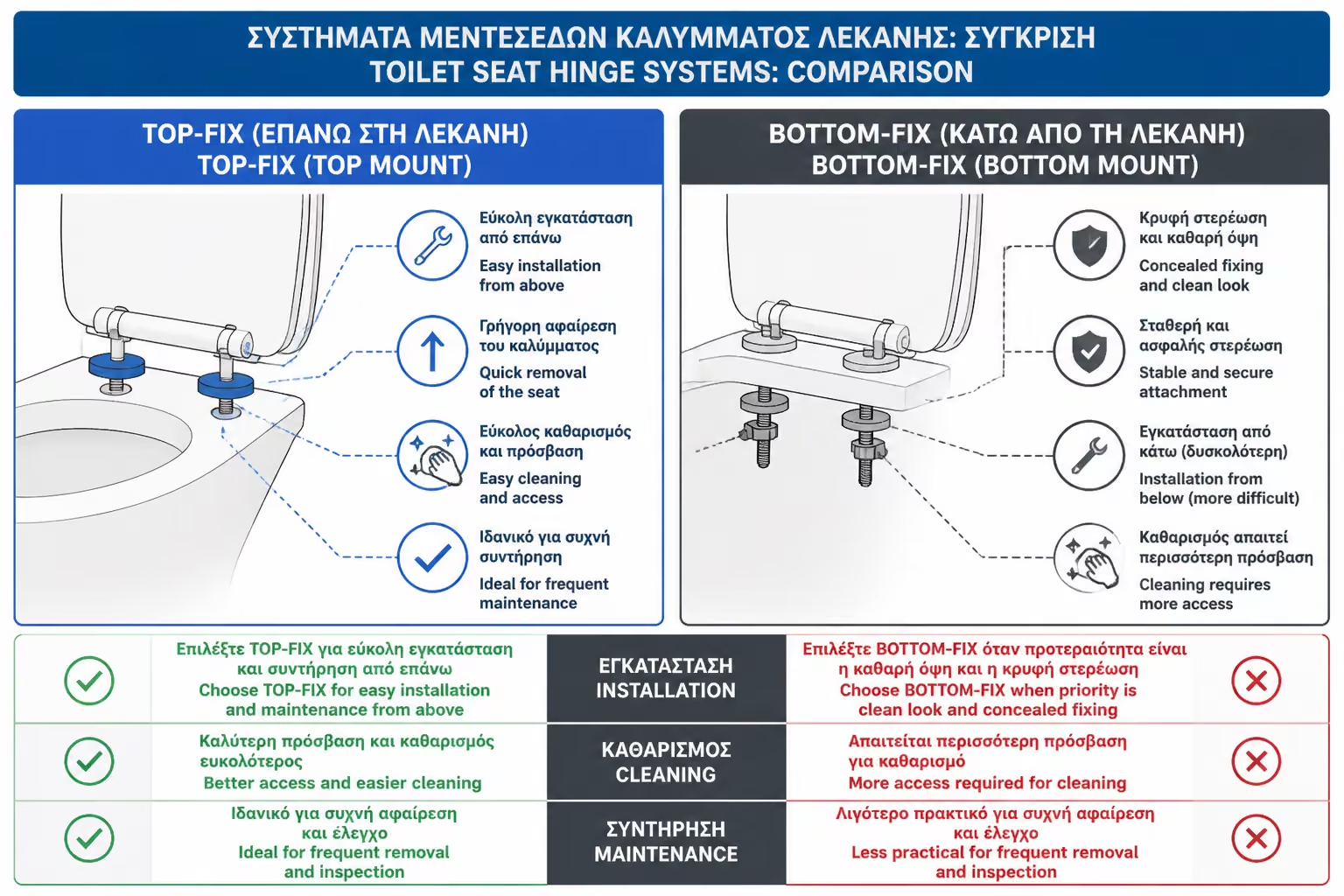
Hinges are especially important. In cheap solutions, the base may loosen easily or fail to allow proper alignment. In better systems, the fixings offer a wider adjustment range, better contact with the toilet bowl and often a top-fix arrangement. This has real practical value, especially in toilets where access from below is difficult or almost impossible.
In older bathrooms, many toilet bowls have limited access behind or below the fixing points. That is where a seat that requires you to reach nuts from underneath becomes disproportionately difficult to install. By contrast, a top-fix system usually allows installation from above, without having to lie down next to the toilet to reach the base.
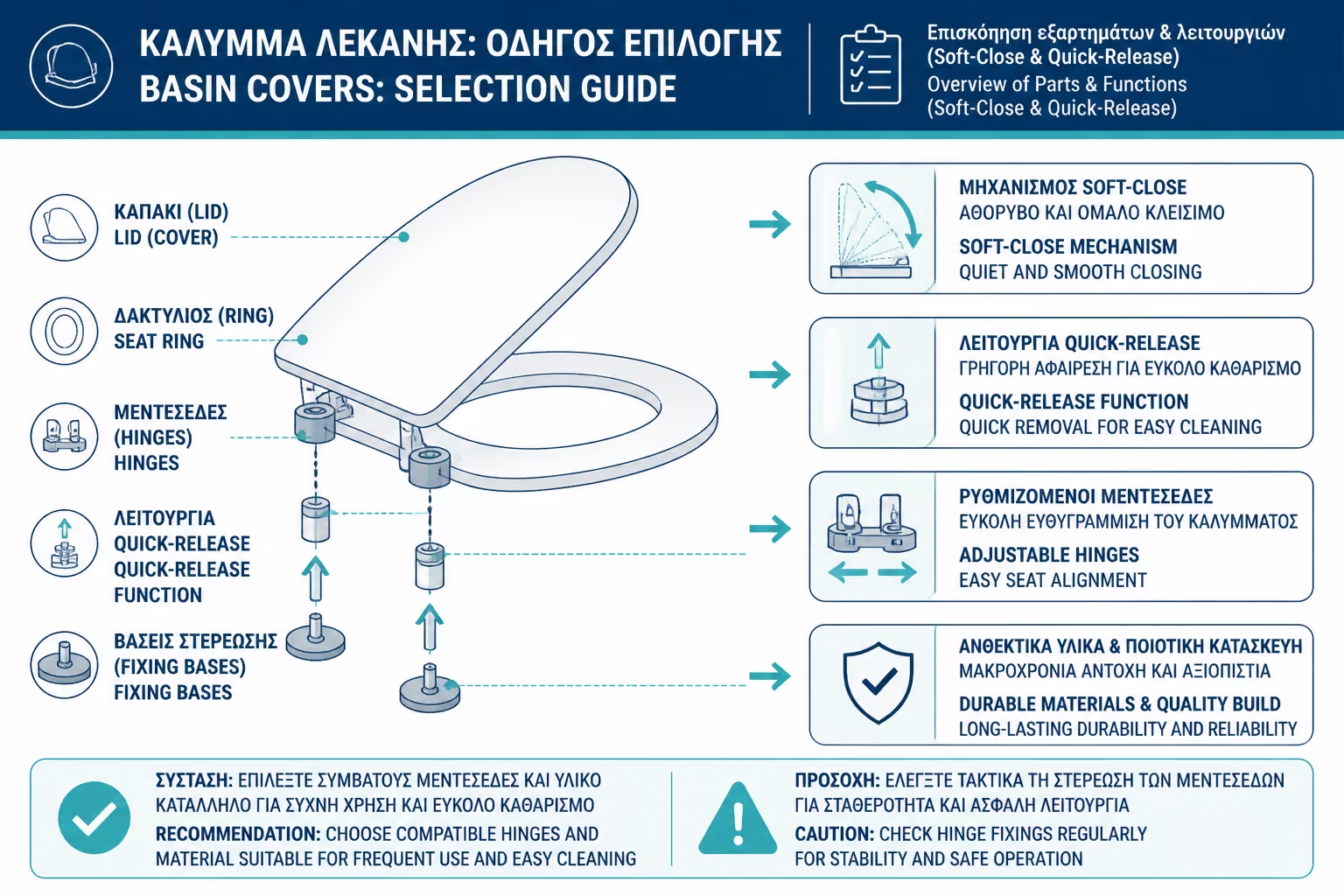
The soft-close mechanism slows down the lowering of the seat and lid, so that they do not fall suddenly on the basin. Its practical value is greater than it seems. It reduces noise, reduces knocks on porcelain and makes use more comfortable, especially in homes with children or in bathrooms near bedrooms.
In an apartment, for example, where the bathroom is next to the children's room or the bedroom, the sharp "bang" of the lid is heard more than we think. Soft-close solves this everyday problem without any changes to the installation. It's not luxury; it's a minor functional upgrade.
However, soft-close does not mean that the lid has to be pressed by hand to close faster. This is one of the most common mistakes. The mechanism is designed to work with controlled motion. When someone pushes it down violently, it puts back pressure on the damper and shortens its life. In homes with children, this should be explained from the start, because many failures in soft-close lids do not come from poor quality, but from incorrect use.
Also, not all soft-closes feel the same. Some close very slowly, some faster, some have a different speed on the seat and the lid. In economic models, it may happen after a while that one segment closes normally and the other falls more sharply. This does not necessarily mean that the product was useless, but it does indicate that the mechanism is a point of wear and should be evaluated along with the quality of the material and hinges.
The quick-release function allows the lid to be removed from the basin easily, usually with the push of a button or a simple pull, depending on the mechanism. The purpose is not only the easiest replacement. It's mostly cleaning.
The area around the hinges is one of the most difficult areas in the bathroom. Salts, moisture, dust, cleaning residue and micropollutants collect there. In a classic non-removable cap, cleaning is done around with a cloth or a brush, but it is rarely really complete. With quick-release, the seat is removed, it is easier to wash in the bathtub or in the shower, and the surface of the basin around the bases is cleaned without obstacles.
This is of particular importance in small bathrooms, guest WCs, homes with children or the elderly, but also in short-term rental properties, where fast and reliable cleaning is a daily need. A quick-release lid can significantly reduce cleaning time and help maintain a better image of hygiene.
But we have to pay attention to something important: quick-release does not always mean robustness. In poor quality products, the removal mechanism may create a small tolerance, i.e. a imperceptible "play" when the user is seated. In well-designed caps, this should not be noticeable. That's why, when we choose a product, we don't only look at whether it says quick-release on the package, but also how the bases are designed, whether there is a correct adjustment and whether the seat clicks firmly.
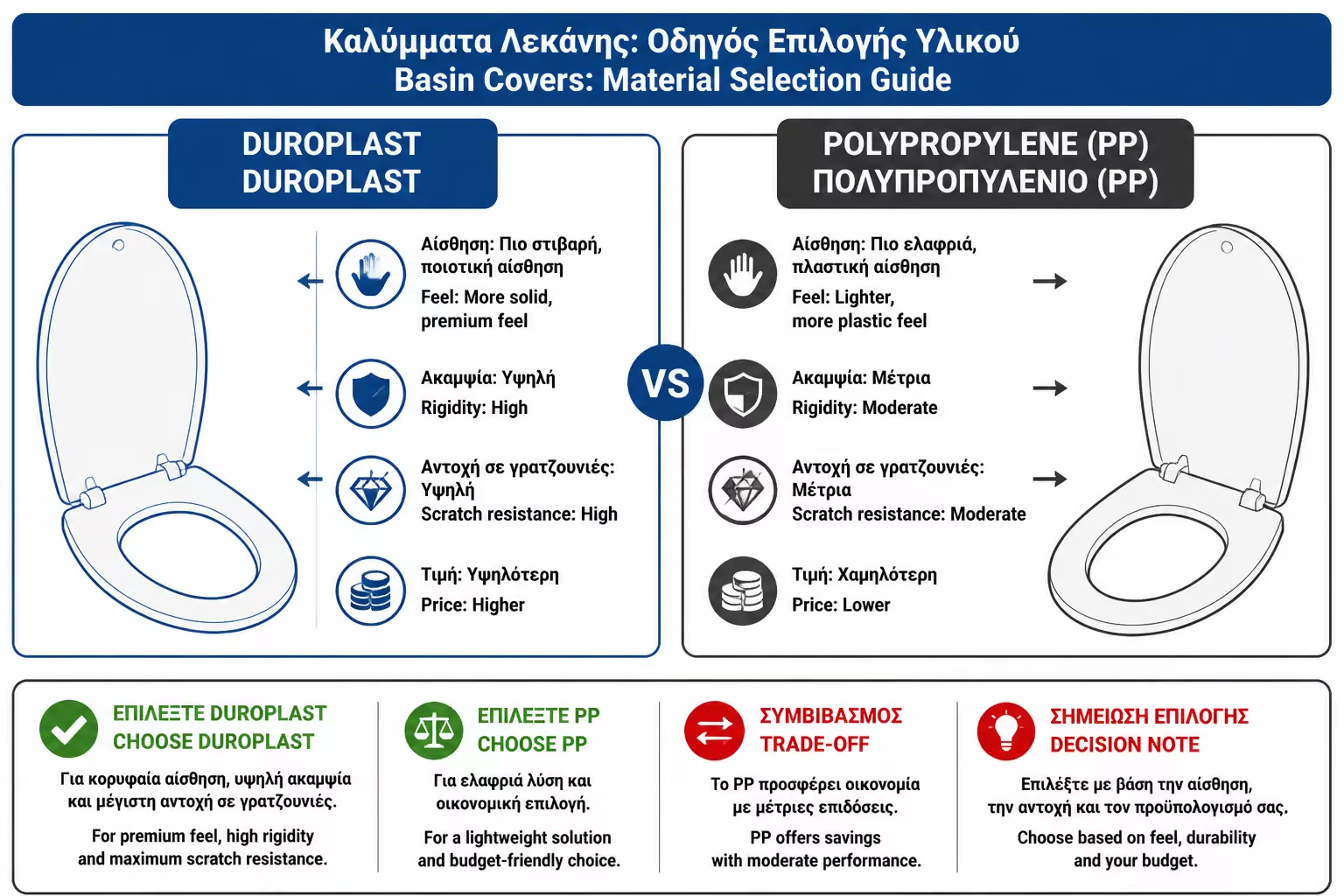
Duroplast is a thermoset plastic material, quite common in quality basin lids. To the touch, it feels more like porcelain or a hard, solid material than simple plastic. It usually has a more robust feel, better surface hardness and a "cleaner" image in the bathroom.
The main advantage of Duroplast is that it looks and feels better. In a renovated bathroom with new tiles, a concealed cistern and a modern toilet, a very light and shiny plastic seat can visually weaken the result. Duroplast usually works better with white ceramic surfaces and gives a cleaner, firmer feel.
It also has good scratch resistance under normal use and is easy to clean when the surface remains in good condition. But that doesn't mean it's indestructible. Strong cleaners, hard sponges, bleaches that stay on the surface for a long time or incorrect use can dull it or affect its appearance. As with all bathroom materials, lifespan depends on use and maintenance.
A common practical scenario is the following: the owner chooses Duroplast for the master bathroom, because he wants a better feel and greater durability in daily use. In the small guest WC, where the use is more limited, he can choose a simpler PP lid of good quality. This is a reasonable choice. Not all purchases need to be premium, but the basic bathroom usually deserves a better cover.
PP, i.e. polypropylene, is also a very common material for basin lids. It is lighter, more elastic and usually cheaper than Duroplast. In many cases it is a perfectly acceptable solution, especially when the request is low cost, easy replacement and use without special requirements.
The advantage of PP is that it does not break as "rigidly" as harder materials. It has a relative elasticity, which can be useful in simple installations or in areas where the lid can take more rough use. On the other hand, this very elasticity can give a cheaper feeling, especially if the material is thin or if the bases are not good.
In a rental apartment, for example, a good PP lid with simple but stable hinges may be a more reasonable choice than a more expensive Duroplast if the owner wants easy replacement and low maintenance costs. But if we are talking about a main bathroom of a house after renovation, where the owner will live with the result every day, the difference in feeling can justify the choice of Duroplast.
The mistake is to think that "PP means bad" and "Duroplast always means good". There are PP caps with decent quality and Duroplast caps with mediocre mechanisms. Material is important, but it is not enough on its own. Fit, hinges and pelvic compatibility are equally critical.
The choice between Duroplast and PP must be made based on the use of the bathroom, the budget and the quality of the specific product. There is no one answer for all cases.
| Criterion | Duroplast | PP |
|---|---|---|
| Feeling in everyday use | More robust, more "ceramic" feeling | Lighter and more flexible |
| Picture in the bathroom | Usually better quality and cleaner | More simply, it depends a lot on the quality |
| Scratch resistance | Usually better in normal use | More susceptible to etching and blurring |
| Weight | Heavier | Lighter |
| Cost | Usually higher | Usually cheaper |
| Suitable for | Master bath, renovated bathrooms, demanding use | Guest WC, rental, financial replacements |
| Attention | Needs good mechanism due to more weight | It needs good foundations so that it doesn't feel unstable |
If we had to put it practically: for a basic bathroom that is used every day, a Duroplast lid with soft-close and quick-release is usually a more complete choice. For a secondary WC, a good PP might be enough. For business use or a property with frequent user turnover, ease of cleaning and replacement may be more important than a luxurious feel.
The most common mistake in buying a basin cover is that the owner does not measure correctly. He sees a photo, reads "universal", roughly compares the shape and buys. But the basins do not all have the same geometry. There are oval, rounded, square, D-shape, slim, compact, hanging and floor. Even two basins that look similar may have different hole spacing or length.
The basic measurements needed are the distance between the mounting holes, the length from the holes to the front edge of the basin and the maximum width of the basin. Many lids have adjustable hinges, but the range of adjustment is not unlimited. If the basin is out of bounds, the lid can be fitted, but it will not sit properly.
A practical problem often occurs in old basins. The owner buys a modern slim soft-close lid, but the basin has a "deeper" old shape. The result is that the lid looks smaller, leaves a visible lip or is not well supported. Accordingly, in modern hanging basins, a classic universal lid can look bulky or not properly follow the line of the porcelain.
The best practice is simple: before buying, we photograph the basin from above, measure the basic distances and, if there is a make or model, look for it. For basins of well-known companies, the safest solution is often the corresponding lid of the model, even if it costs more. For simple or old basins, we only choose universal when the dimensions really match and the hinges have sufficient range of adjustment.
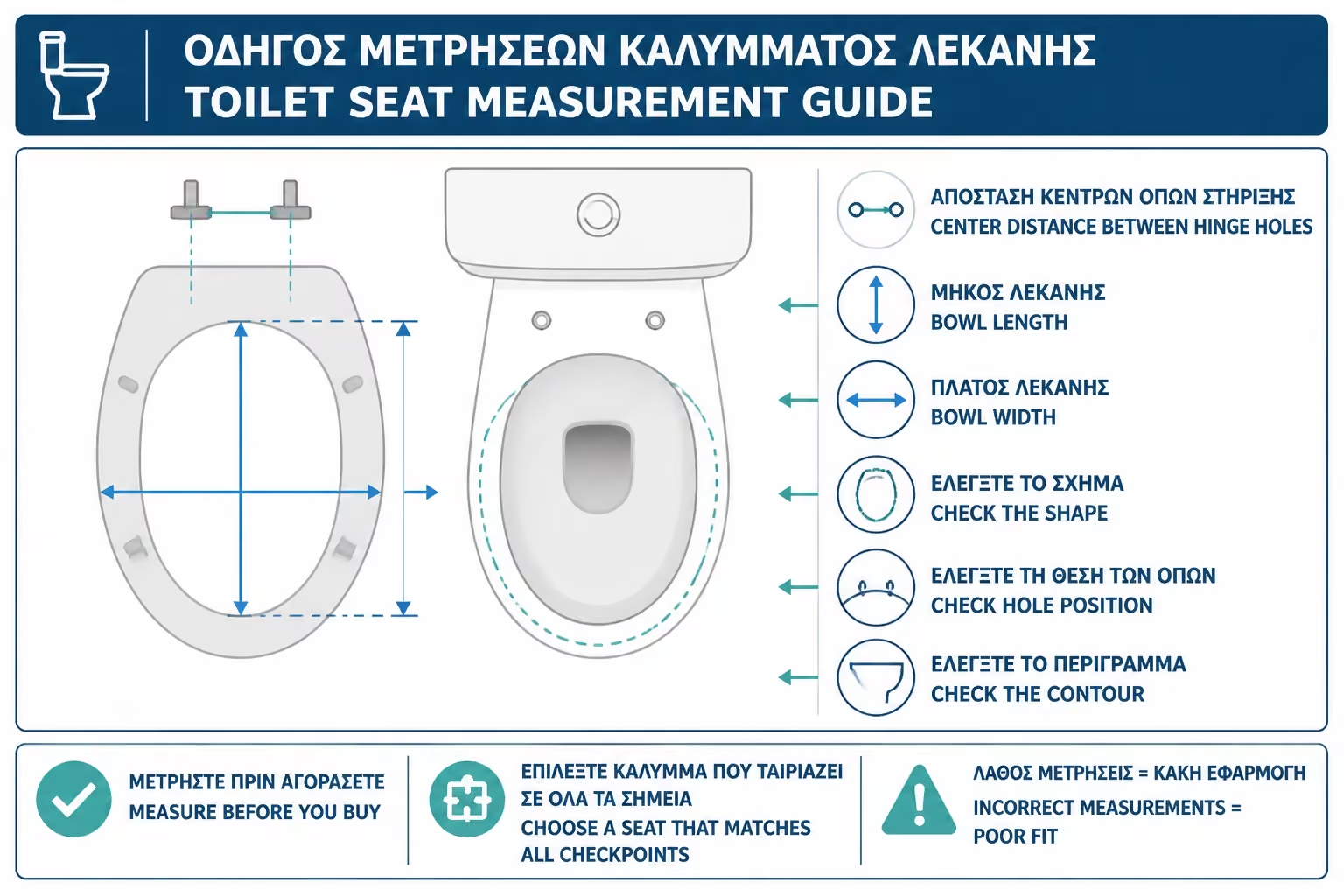
The shape of the lid should follow the basin. This sounds obvious, but in practice it is often overlooked. An oval lid on a more square-lined basin can look "foreign". A square lid on a rounded basin may protrude over the sides or not rest properly. Slim lids, which are slimmer and more modern, aesthetically suit modern basins, but are not always ideal for older models.
The D-shape, i.e. the shape with a straighter back and a rounded front, is common in modern basins. Care must be taken there, because two D-shape caps may have a different curve at the front or a different width at the back. A product photo is not always enough. Dimensions are essential.
In renovations, it is good that the lid is chosen together with the basin and not afterwards. If you are buying a new basin, check if a lid is included, what material it is, if it has a soft-close and if it is available as a spare. Sometimes the basin looks economical, but its replacement lid is expensive or hard to find. This is important for maintenance after a few years.
Hinges are often what separates a good cap from a mediocre one. Two products may look similar in the photo, but one has sturdy metal hinges with good adjustment and the other a simpler mechanism that loosens easily.
Stainless steel or quality metal hinges are usually preferable to very cheap plastic solutions, especially in bathrooms with moisture and frequent cleaning. It does not mean that every metal hinge is excellent, nor that every plastic one is bad. But it does mean that we need to look at the overall construction: how the base sits, if there are washers, if the screws are tightened properly, if there is non-slip contact with the porcelain, and if the seat stays aligned after use.
A cap that moves slightly at first usually doesn't fix itself. On the contrary, with use the problem grows. The user sits, the seat receives lateral force, the mounts work continuously and the screws loosen. If the initial fit is not correct, after a while it will need constant re-tightening.
Special attention is needed in basins with difficult access from below. There, top-fix systems are very practical, because they allow adjustment and maintenance from above. Many modern covers feature quick install or quick release, with top-side installation and push-button removal, which makes both installation and cleaning easier. For example, Duroplast products with soft-close, quick install/release and top-fix hinges are available on the Greek market, characteristics that now show that these functions do not belong only to very expensive options.
The toilet seat lives in an environment with moisture, limescale and frequent cleaning products. This means material quality is not only about whether it will crack. It is also about whether the surface will remain clean, smooth and pleasant to the touch.
Many owners clean the lid with what they use for the basin as well. This is not always correct. Strong acid or chloride cleaners, especially if left on the surface, can affect the material, dull the finish or corrode metal parts. The cap needs a gentle cleaning, a good rinse and drying around the bases.
Quick-release helps a lot here. When the seat can be removed easily, cleaning no longer has to be done blindly around the hinges. The owner can remove the seat, wash it in the tub or shower, clean the toilet bowl around the fixing holes and then reattach it. This is especially useful in bathrooms with hard water, where limescale appears quickly around contact points.
A practical mistake is to use a hard sponge on the underside of the seat. There may be stains or marks there, but rubbing with a rough material creates micro-nicks. Over time, the micro-grooves hold more dirt and the material looks older. Better frequent gentle cleaning than infrequent aggressive scrubbing.
The prices for pelvic covers in the Greek market have a wide range. There are simple lids that start from low amounts, economical soft-close around €20–40, higher quality Duroplast or branded models that move around €40–80, and special lids of specific sanitary ware ranges that can exceed €100. In a price comparison in the Greek market, soft-close options appear from around €20–30 and several branded or Duroplast models around €40–65, while special models from well-known series can go much higher.
| Cap class | Indicative scope of Greece 2026 | When does it make sense? |
|---|---|---|
| Simple PP without soft-close | 10–25€ | Temporary or economical replacement, small-use WC |
| PP with soft-close | €20–€45 | Economical solution with better comfort |
| Duroplast with soft-close | €35–€75 | Master bathroom, daily use, better feel |
| Duroplast with soft-close & quick-release | €45–90 | Family bathroom, easy to clean, frequent use |
| Special basin series lid | 60–130€+ | When you need a perfect fit on a specific model |
| Premium/special design | €100+ | Special series, fine design, special geometry or brand |
These prices are indicative and are affected by the store, the brand, availability, whether VAT is included, transport costs, whether it is a universal or genuine spare part for a specific basin and whether the installation is done by the owner or by a technician as part of other work.
A low price is not necessarily bad. It can make perfect sense for a simple WC or temporary replacement. But when we see very cheap soft-close with quick-release, we have to pay attention to the quality of the mechanism and bases. If the mechanism breaks down quickly or the seat wobbles, the real cost is not just the purchase. It's the time, the inconvenience, and the potential replacement within a short space of time.
Accordingly, an expensive price does not always mean a better choice. It may concern a special model, brand, design or rare compatibility. If the basin is simple and accepts a universal cover of good quality, we do not necessarily have to go to excessive costs. However, if the basin is of a specific series and the lid needs to fit exactly, the genuine or fully compatible product may be a safer choice.
Replacing a sump cover is one of those jobs that many owners can do themselves, as long as there is easy access, the right tools, and no worn screws or difficult old installation. Not comparable to high risk electrical or plumbing work. However, it can become problematic if the old base is caked with salt, if the screws are rusted, or if the basin is placed in a way that does not allow access from below.
The first step is to remove the old cap without excessive force. If the screws do not loosen, no force should be applied to the porcelain. The basin is durable in use, but local pressure with the wrong tool can cause wear or cracking. In difficult cases, especially in old basins, it is preferable to have a technician intervene.
On new installation, the cap must be aligned before the mounts are finally tightened. Many immediately tighten one side, then try to correct the other, and in the end the lid is left slightly crooked. The correct practice is first rough fitting, then checking from above, then fine adjustments and finally gradual tightening.
No need to overtighten. If the bases are correct, the lid should be stabilized without "suffocating" the porcelain with force. Over-tightening can distort plastic parts, make quick-release difficult, or stress the base.
The first mistake is buying without measurement. It's amazing how often a cap is returned or left unused because it doesn't fit in length, width or hole spacing. A photo is not enough, especially when we buy online.
The second mistake is to choose only based on the soft-close function. The owner sees the word soft-close and thinks he got a quality product. But soft-close is a mechanism, not a guarantee of total quality. If the material is too thin or the bases are unstable, use will remain problematic.
The third mistake is underestimating cleaning. In a bathroom that is used every day, the quick-release can be more useful than a more impressive design. The ability to remove with one click is not a small detail when we clean often.
The fourth mistake is choosing a very cheap product for very demanding use. In a home with children, daily baths, hard water and frequent cleaning, a very economical lid can wear out quickly. It doesn't mean we have to buy the most expensive, but a medium Duroplast or a good PP with reliable hinges usually works better.
The fifth mistake is not taking into account the availability of spare parts. In branded basins, especially more modern series, the lid can be special. If it's broken after years, it's good to know if it's still available or if there's a compatible solution.
It is worth paying more when the cap is for the main bathroom of the house and will be used several times a day. There the difference between a cheap and a good cap is quickly seen. It shows in the noise, stability, feel, cleaning and image of the bathroom.
It is also worth it when the basin has a special shape. In such cases, a cheap universal may look "about right" but not really fit. Whether the basin is hanging, modern or of a certain series, the right lid completes the picture and avoids application problems.
The higher price is also justified when it includes good soft-close, reliable quick-release, top-fix mounting and better hardware. These are not decorative features. They are functions that affect everyday life. Conversely, it's not necessarily worth paying more just for a "special" design if the hardware and hinges aren't of the same quality.
A good criterion is to think about the cost per time of use. If a €25 cap breaks or bothers you within a year, it wasn't really economical. If a €60 lid works well for several years, is easy to clean and remains stable, then it may be a better choice.
A simple cap replacement usually does not require a skilled technician as long as the old installation is easily resolved and the new cap is compatible. The owner can install several models himself, following the manufacturer's instructions and without excessive force.
But a professional is needed when the old screws are stuck or rusted, when there is no access from below, when the basin is hanging and the fixing is special, when there is a suspicion of damage to the porcelain or when the lid needs to be installed in the context of a total bathroom renovation. In such cases, the work may seem small, but a mistake can create more damage than the cap value.
In commercial premises or short-term rental properties, it is good to have standardization. That is, to choose caps that are easily found on the market, with simple replacement and stable quality. Over-specification can make maintenance difficult when immediate replacement is needed.
| Inquiry | Yes / No |
|---|---|
| Have you measured the distance between the mounting holes? | Yes / No |
| Have you measured the length from the fixing holes to the front edge of the toilet bowl? | Yes / No |
| Have you checked the maximum width of the basin? | Yes / No |
| Does the shape of the lid really match the basin? | Yes / No |
| Do you need soft-close due to noise, children or daily use? | Yes / No |
| Need a quick-release for easier cleaning? | Yes / No |
| Is the material suitable for bathroom use? | Yes / No |
| Do the hinges have sufficient range of adjustment? | Yes / No |
| Is there access from below or do you need a top-fix system? | Yes / No |
| Have you checked if the lid is universal or specific to a specific basin series? | Yes / No |
| Does the price include VAT and shipping? | Yes / No |
| If a technician installs it, is it agreed if the work is billed separately? | Yes / No |
If the answer to most of these questions is “no”, then the purchase is being made more by luck than by proper selection. And with a toilet seat, as with many small bathroom accessories, that luck usually runs out after installation.
Do not buy a toilet seat just because it says "universal", "soft-close" or "duroplast". First measure the toilet bowl correctly, then check the fixing type, and only after that choose the material and mechanism. For the main bathroom, a duroplast seat with reliable soft-close and quick-release is usually the most balanced solution. For a secondary WC, a good PP seat may be enough. The important point is not to buy the most expensive model, but the one that fits firmly, cleans easily and will stand up to real use.
The basin cap is a small purchase compared to the overall cost of a bathroom, but it disproportionately affects the daily experience. A properly selected cover does not knock, does not move, is easy to clean and aesthetically matches the basin. A wrong cap, on the other hand, can make even a new bathroom look sketchy.
The right choice starts with the dimensions and shape of the basin. Without them, no material and no mechanism can guarantee a good fit. Then the owner must decide based on the use: Duroplast for a better feel and daily durability, PP for a more economical and practical solution, soft-close for comfort and noise reduction, quick-release for hassle-free cleaning.
In the Greek market of 2026 there are options for every budget. The point is not to overpay, but to avoid the market that seems economical only on the first day. A lid that fits correctly, has good bases and withstands use is a small but essential investment in the hygiene, comfort and image of the bathroom.
Return to category.
Go to categoryReturn to the central guide.
Go to guide