
Bathroom Fixtures & Water Equipment
Return to category.
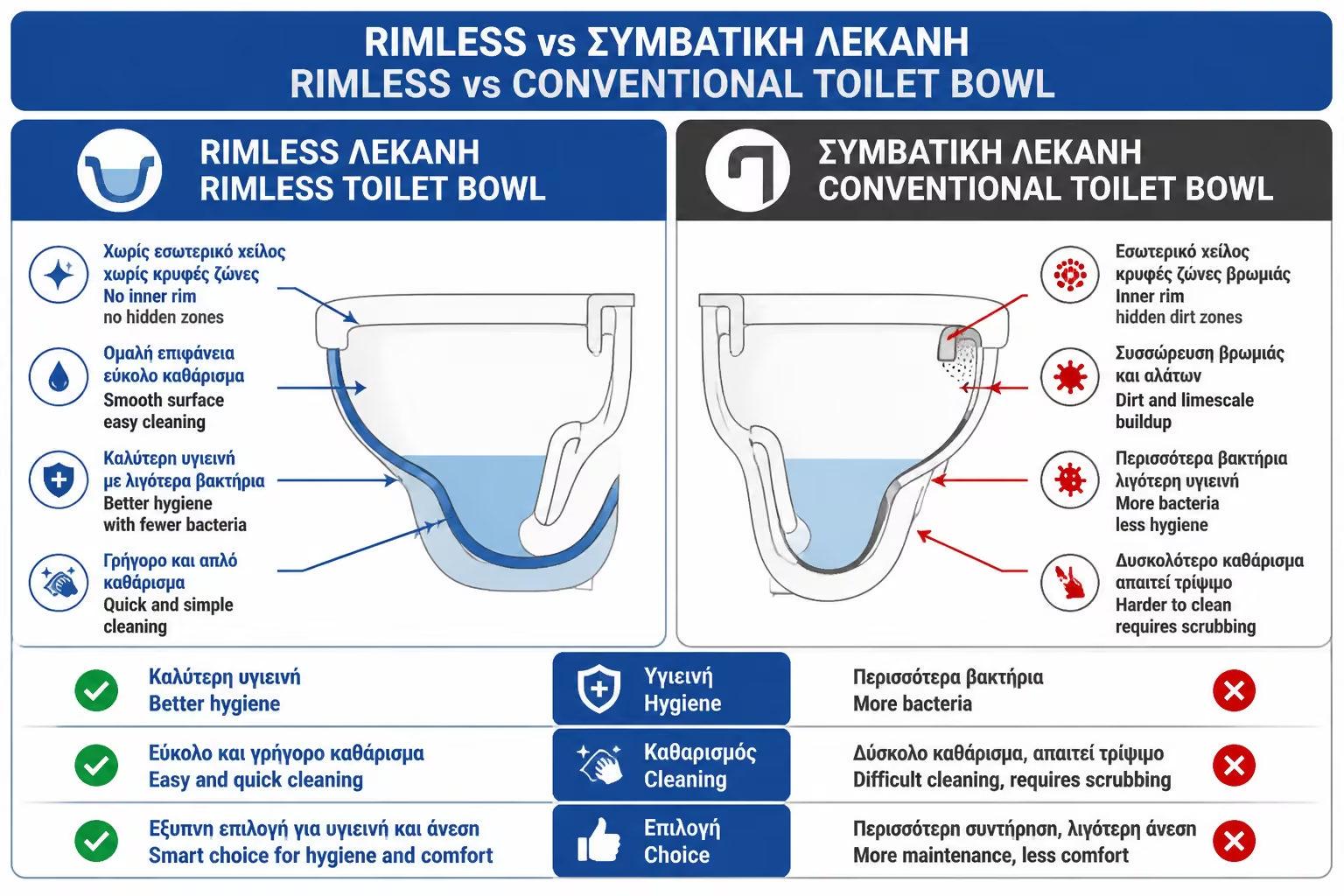
Go to categoryThe toilet bowl is probably the most demanding cleaning point in a bathroom. It doesn't always look dirty, but we all know that there are places that are difficult to clean: under the rim, around the inner curve, behind small flushing holes, in the places where salts and yellowing remain. That's exactly where rimless technology comes in, i.e. the basin without an inner rim.
In the older basins, the flush water passed through a hidden channel under the basin rim. This helped distribute the water around the perimeter, but also created a problem: the rim itself was difficult to clean. It was a hidden zone where salt, debris, micro-organisms and dirt could collect, especially if the water was hard or if cleaning was not done often.
The rimless basin changes this logic. It does not have the classic closed inner lip. The surface is more open and accessible, while the flush water is directed in a different way, usually through a special distributor or channel that directs the flow around the inside of the basin. The result is a basin that is easier and faster to clean because it doesn't have the most annoying hidden spot.
It does not mean that the rimless basin does not need cleaning. It is not self-cleaning. But it means that cleaning becomes more immediate, more visible and more effective. You see the surface you're cleaning, reach there with the sponge or brush, and don't have to scrub blindly under a hidden lip.
The word rimless means "without a rim", i.e. without the classic inner rim of the basin. In a traditional basin, if you look below the top inside border, you will see a hidden channel or recess. The rinsing water circulates from there. This indentation is exactly where it makes cleaning difficult.
In a rimless basin, this closed rim is absent or replaced by more open geometry. The interior is smoother, more accessible and cleaner in form. The water does not "run" through a hidden channel, but is directed in a controlled flow to wash the surface of the basin.
The difference is immediately visible when you clean. In the classic pelvis, the point below the lip takes persistence and you often can't see exactly what you're doing. In rimless, dirt doesn't have a hidden place to stay so easily. This is its biggest advantage.
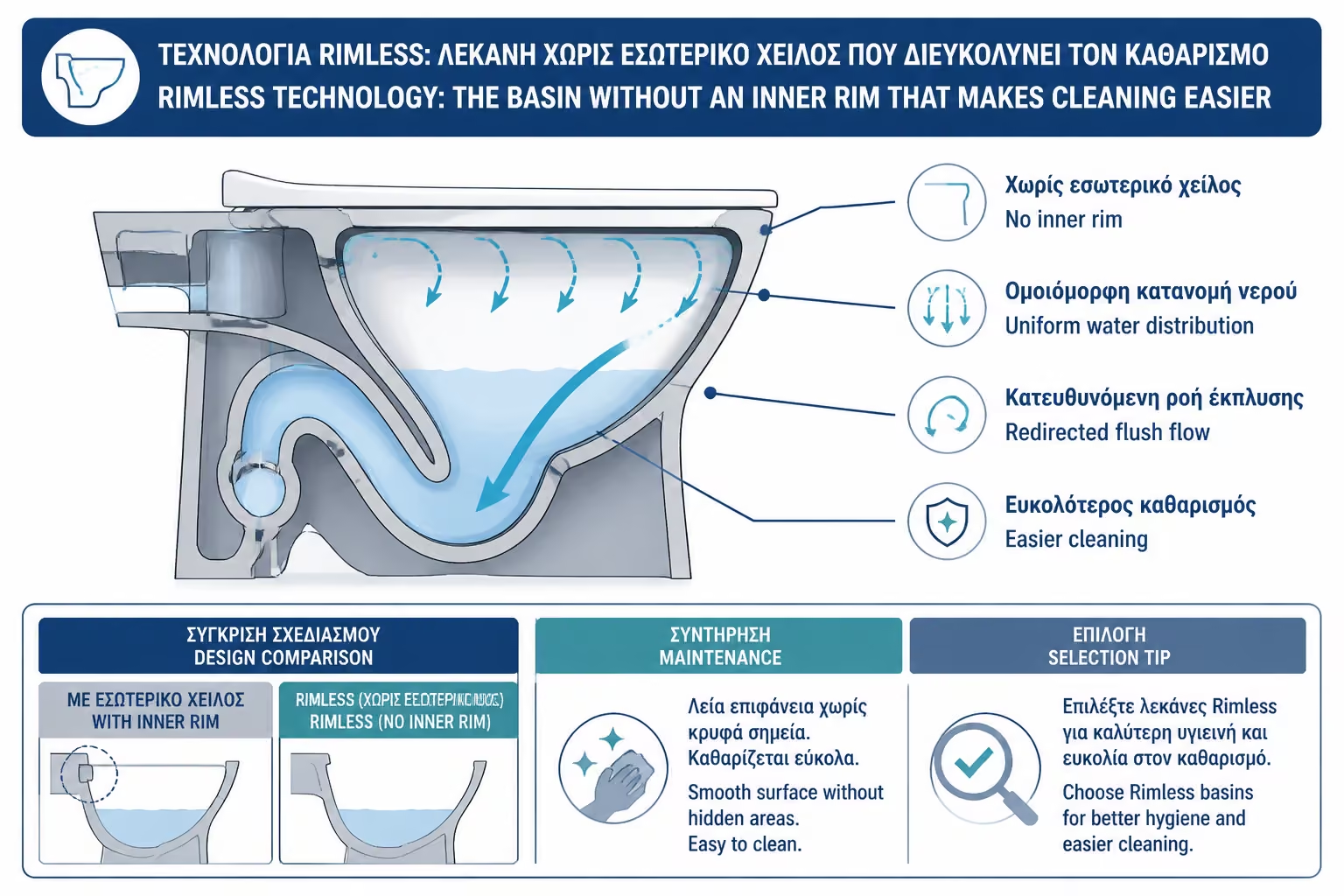
The reasonable question is: if there is no rim, how is the entire basin washed? The answer lies in the way the water is directed. Rimless basins use a special geometry, distributor or flushing channel that sends the water in a controlled direction around the interior.
Instead of water coming out of many small holes under a hidden lip, it comes out in a more organized way and moves in a circle or perimeter around the basin. The goal is to wash the surface effectively without splashing and without needing the old closed rim.
This is where design quality matters. Not all rimless basins are the same. In a good model, the flush is strong, controlled and covers the inner surface well. In a bad model, there may be splashes, insufficient coverage or the feeling that the water does not wash evenly. That's why it's not enough to say "rimless". It must also be properly designed.
The rimless basin is considered more hygienic not because it "kills" bacteria, but because it removes a difficult hiding spot where dirt and scale can collect. Hygiene in the bathroom does not depend only on the material. It also depends on how easily it can be properly cleaned.
In the traditional basin, the inner rim can hide debris. Even if the visible part looks clean, the underside of the rim may have scale or stains. In hard water areas, scale builds up faster, and once it builds up below the rim, it's difficult to remove.
In the rimless basin, because this point is open or absent, cleaning becomes more immediate. See what you're cleaning. There aren't that many hidden recesses. This greatly reduces the areas where dirt can remain. It does not eliminate the need for cleaning, but it makes cleaning more effective.
Salts are one of the biggest enemies of the basin. When water is hard, it leaves a white or yellowish residue. Over time these become "stone", especially in places where water stagnates or passes frequently. In classic basins, the bottom of the rim is such a point.
The rimless basin helps because it doesn't have the same hidden channel. Salts don't disappear, but they don't find a hidden recess to build up as easily. When they do start to appear, they are seen sooner and are easier to clean up. This is a great practical advantage.
In areas with very hard water, rimless technology is no substitute for proper maintenance. If the basin is left for months without cleaning, it will show scale. But with regular use and frequent gentle cleaning, the difference compared to a classic basin is noticeable.
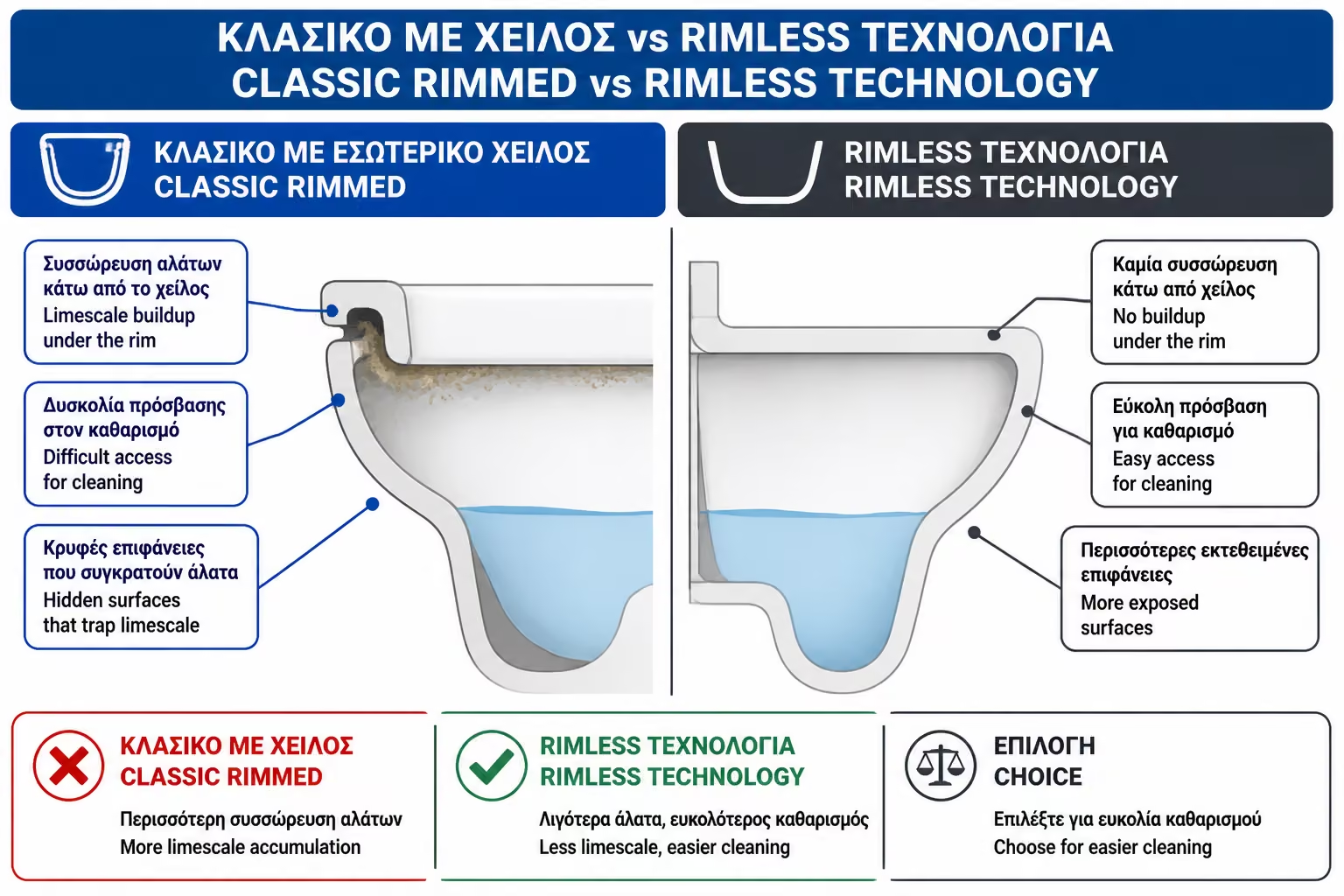
Cleaning a rimless basin is simpler because the internal geometry is more accessible. The brush or cloth reaches everywhere more easily. You don't have to stick under hidden curves, or use cleansers that "sit" under the lip to work.
This has a second benefit: it reduces the need for very aggressive cleaning. When a surface is cleaned easily and often, there is no need to reach for harsh chemicals or excessive scrubbing. This also helps the pelvis itself to be better preserved.
For an owner who wants a bathroom that is easy to maintain, the rimless basin is one of the most practical upgrades. It doesn't look as impressive as a large cabin or an illuminated piece of furniture, but in everyday life it makes a big difference.
Many modern rimless basins are combined with dual flow systems, such as 3/6 liter or similar options, depending on the cistern. The flush geometry is designed to make better use of water. This does not automatically mean that every rimless basin is more economical. Consumption depends on the cistern, the setting, the basin and the compatibility between them.
The important thing is that the basin and the cistern work together. A poorly designed rimless basin or incorrectly combined with a faucet may not flush properly with a small amount of water. Conversely, a good system can provide clean flushing with reasonable consumption.
When choosing a basin, especially a hanging one with a built-in cistern, it is a good idea to check that the products are compatible and recommended for use together.
Rimless technology is not only about hanging basins. There are rimless models in both hanging and floor basins. This means that you can gain easier cleaning even if you do not choose a built-in cistern or a hanging solution.
The cleanest combination is a hanging rimless basin. There you gain two things: a free floor for cleaning under the basin and an open interior without a rim for easy cleaning inside the basin. It is the most modern solution in terms of hygiene and aesthetics.
But if a wall-hung basin is not being done, a rimless floor basin remains a very good upgrade. Especially if it is back-to-wall, with a clean exterior shape, it can give a practical effect without the requirements of hanging installation.
The first thing to pay attention to is the quality of the rinse. A good rimless basin should wash evenly, without splashes and without leaving dirty spots. If possible, see technical videos of the model or ask the supplier for information. Don't choose based on the word “rimless” alone.
The second is compatibility with the cistern. Especially in hanging basins, the built-in faucet must have a correct supply and adjustment. If the flow is too strong or misdirected, it can create splashes. If it is too weak, it may not clean properly.
The third is shape. Rimless basins with very clean internal geometry are easier to clean. If there are odd curves, deep recesses or difficult spots, the advantage is reduced.
Usually modern rimless basins are combined with a thin soft-close and quick-release seat. The soft-close closes slowly and quietly, while the quick-release allows the seat to be easily removed for cleaning. This is important, because pelvic hygiene is not just about the inner bowl. It also concerns the area around the seat hinges.
A quick-release seat can make a big difference in cleaning. In old basins, the areas around the hinges collect dirt and are difficult to clean. In modern models, removing the seat allows the entire surface to be cleaned.
If you are buying a rimless basin, it is worth choosing a good seat. Otherwise, you improve the interior but leave another difficult spot to clean.
Rimless basins have now become much more affordable than they used to be. It's not just a premium option anymore. There are budget models, mid-range and expensive branded solutions. The difference lies in the quality of the ceramic, the flush design, the seat, the finish and the compatibility with faucets.
| Selection | Indicative cost |
|---|---|
| Rimless single class floor basin | €150–€350 |
| Best rimless floor / back-to-wall basin | 300–700€+ |
| Hanging rimless basin | 200–700€+ |
| Premium rimless model | 700–1,500€+ |
| Soft-close / quick-release seat | often included or +50–200€ |
| Built-in cistern for hanging solution | 180–500€+ |
| Place | depending on basin type and project |
The prices are indicative for Greece 2026. The final cost depends on the brand, type of basin, cistern, board, installation, VAT and whether it is a simple replacement or a complete renovation.
| Criterion | Rimless basin |
|---|---|
| Cleanliness | Much easier due to the absence of a hidden lip |
| Hygiene | Fewer hidden spots for dirt and scale |
| Salts | They are easier to clean if regular maintenance is done |
| Flushing | It needs a good design so it doesn't splash |
| Cost | Slightly higher than plain old models, but now affordable |
| Aesthetics | More modern and clean |
| Maintenance | Easy, especially with a quick-release seat |
Rimless technology has significant advantages, but it does not mean that every rimless model is automatically good. The design quality of the flush is the point to check.
The first mistake is to think that the rimless basin does not need cleaning. Needed, just easier to clean. If left unattended, it will pick up scale and stains like any sanitary item.
The second mistake is choosing a very cheap model without flushing control. If the water flow is not properly designed, it may splash or not clean evenly. The absence of a lip must be accompanied by good hydraulic geometry.
The third mistake is not paying attention to the seat. A bad seat without easy removal can trap dirt around the hinges, negating some of the practical upgrade.
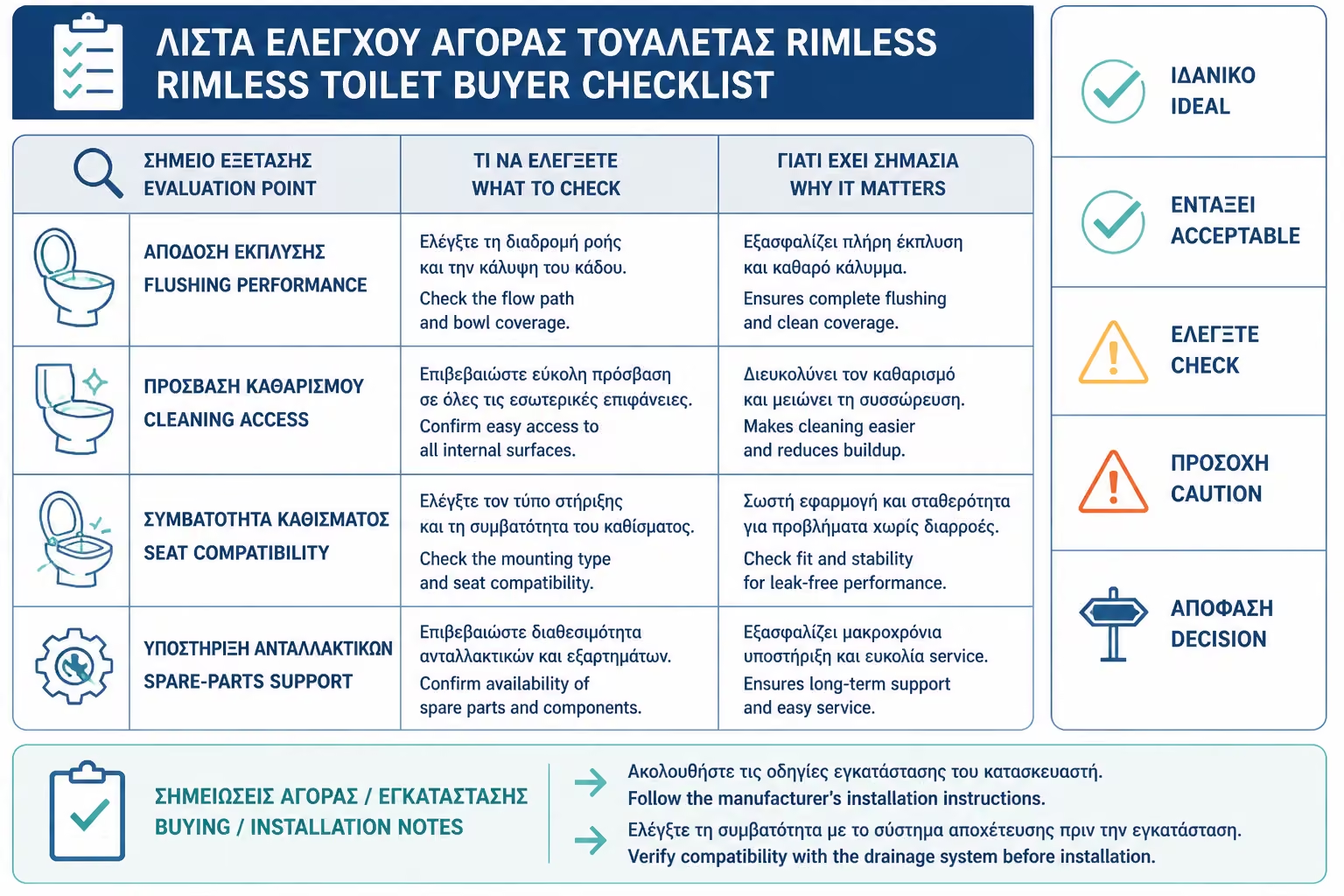
| Inquiry | Yes / No |
|---|---|
| Is it really rimless and not just a modern shape? | Yes / No |
| Does it rinse well without splashing? | Yes / No |
| Does it work properly with the cistern? | Yes / No |
| Does it have a soft-close seat? | Yes / No |
| Is the seat quick-release for easy cleaning? | Yes / No |
| Is the interior surface easily accessible? | Yes / No |
| Is there hard water in the area? | Yes / No |
| Will there be regular gentle cleaning? | Yes / No |
| Does the basin match the drain and layout? | Yes / No |
| Does the total cost include seating and fitting? | Yes / No |
In a small contemporary bathroom with a hanging basin, the rimless option is almost self-evident. The floor is easily cleaned under the basin and the inner bowl has no hidden lip. Daily maintenance becomes much simpler.
In an old bathroom where only a floor basin is being replaced, a rimless back-to-wall basin can significantly upgrade the hygiene and image without requiring a complete renovation. If the drain fits and the placement is done right, it's a very practical upgrade.
In a home with very hard water, rimless technology helps because there is no hidden rim where scale builds up. But if regular cleaning is not done, the stone will appear again. Technology reduces the problem, not eliminates it.
If you are replacing your toilet today, a rimless model is seriously worth considering. It is not just a fashion trend; it is a real improvement in daily cleaning. Still, do not expect the toilet to clean itself. The real benefit is that there is no hidden inner rim where limescale and dirt collect. Pay attention to flush quality as well. A good rimless toilet should wash evenly without splashing. If you can, pair it with a quick-release seat to make cleaning around the seat much easier too.
Rimless technology is one of the most essential upgrades in modern toilet bowls. It's not just a cosmetic change. It removes the hidden inner lip, i.e. one of the most difficult places to clean, and makes hygiene simpler and more immediate.
A basin without a rim does not mean a basin without cleaning. But it does mean fewer hidden spots, less dirt build-up and easier scaling. Combined with a proper flush, a good faucet and a quick-release seat, it can make the bathroom much easier to maintain.
If you are doing a complete renovation or changing the basin, the rimless option is worth it. Especially in a hanging basin, where the floor is left free, the result is one of the cleanest and most practical you can achieve.
The best basin isn't just one that looks pretty. It is the one that is easily cleaned every week and remains hygienic in daily use.
Return to category.
Go to categoryReturn to the central guide.
Go to guide