
Bathroom Fixtures & Water Equipment
Return to category.
Go to categoryBathroom faucets are no longer just functional accessories. They have become part of the aesthetic identity of the space. Where chrome used to be almost a one-way street, today we see matte black, brushed gold, brushed brass, champagne, copper, gunmetal and bronze options. In a modern bathroom, a black faucet on a white sink or a golden detail on marble can change the whole picture.
This trend is not accidental. Alternative finishes add character. The black matte makes the space more linear and modern. Gold and brushed brass add warmth and a sense of luxury. Bronze gives a more earthy, boutique aesthetic. In combination with a corresponding valve, siphon, cistern board, accessories and enclosure, the bathroom looks much more thought out.
But there is an important pitfall here. Alternative finishes are more demanding than classic chrome in everyday appearance and cleaning. Salts are more visible in black. Rings look easier on shiny gold. Brushed finishes can dull if rubbed with the wrong sponge. Copper and brass elements, depending on whether they are plated, varnished or natural, may change appearance over time. Their beauty needs proper care.
The most serious mistake is the use of harsh cleaning and abrasive sponges. Major manufacturers give very clear instructions: GROHE states that abrasive sponges or cleaners with solvents, acids, defatters, vinegar or acetic acid should not be used, as they can leave the surface dull and scratched. hansgrohe recommends a soft cotton cloth, avoiding scratch sponges, brushes and in some instructions even avoiding microfibers, while for limescale it recommends a mild cleaner based on citric acid, applied first to a cloth and not directly to the tap.
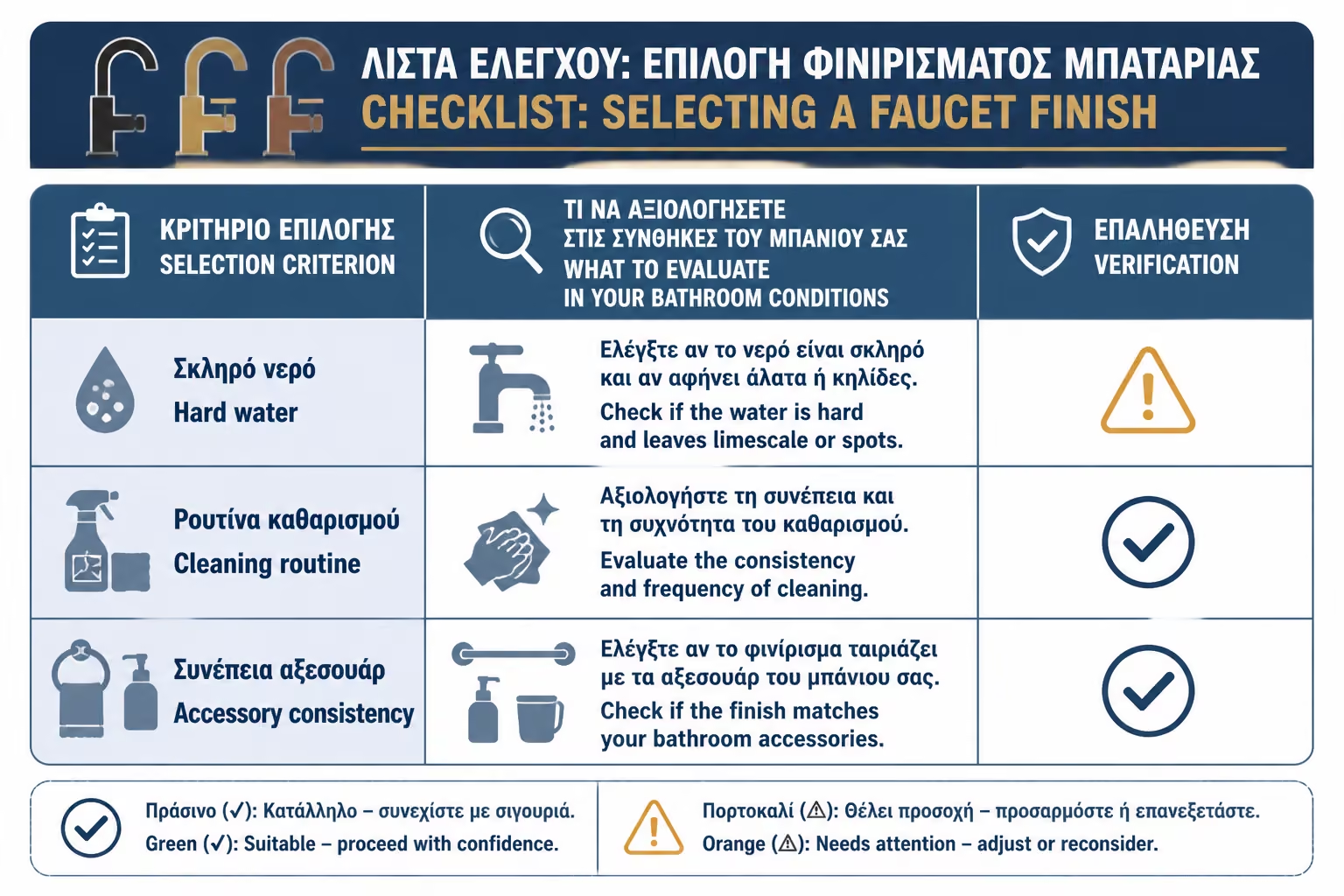
This means that before choosing a black, gold or copper faucet, you need to know how it will live in the real bathroom. Do you have hard water? Will you be wiping it down after use? Do you use strong decongestants? Does the bathroom have children? Will a crew clean that may use the wrong chemicals? If the answer is yes to all, the finish must be chosen very carefully.
Chrome remains practical and timeless, but it doesn't always give the personality that modern bathrooms demand. The new finishes work like "jewels" of the space. It doesn't take much. A black battery, a black cab profile and a black sump board can instantly give a more architectural look. A brushed gold faucet, lamp and mirror can make a simple beige bathroom look warmer and more premium.
The trend is also linked to the rise of natural materials. Stone-look tiles, marbles, beige/greige shades, wooden furniture and matte surfaces call for warmer metals than cold chrome. Brushed brass and champagne go well with these materials. Matte black, on the other hand, contrasts strongly with white sanitary ware and light-colored walls.
There is also the need to diversify. Many bathrooms have similar tiles and similar sanitary ware. Finishing the faucets is a way to give the space character without changing the entire structure. The same composition can look completely different with chrome, matte black or brushed gold.
But the question is not whether they are beautiful. It is whether they can withstand the way the bathroom will be used. And that's where the technical discussion begins.
Matte black is probably the most popular alternative finish. It gives clean lines, strong contrast and goes well with white porcelain, gray tiles, beige microcement, wooden furniture and minimal mirrors. In small WCs it can become the main design element. In the shower, it gives a more industrial and modern feel.
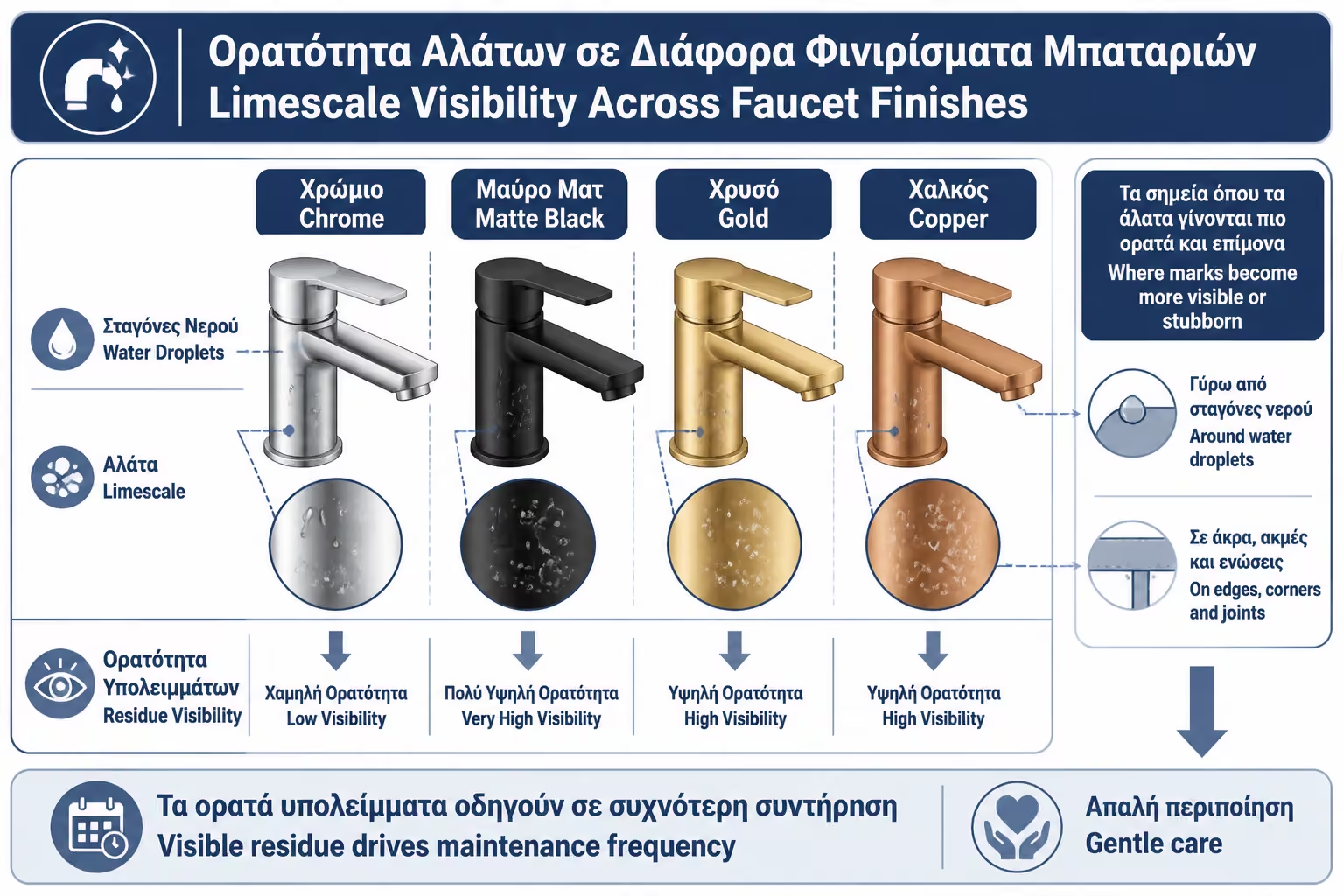
Its big disadvantage is that it shows a lot of limescale. Hard water leaves white spots. In chrome, these are visible but often "lost" in the reflection. In matte black, the contrast is sharp. A drying drop may leave a clean white outline. If water stays on the tap every day, the picture gets tired quickly.
The solution is not a stronger cleaner. The solution is prevention and gentle care. Mira Showers, in a guide to black bathroom fixtures, stresses that prevention is better than cure for scale and that regular cleaning is the best way to keep scale from building up.
So matte black is great for an owner who is willing to wipe down surfaces often and use mild cleaners. It is not ideal for a bathroom where everyone leaves water, where a harsh descaler is used or where it is hurriedly cleaned with a hard sponge.
Gold taps are back in full force, but in a more modern form. We're not just talking about shiny classic gold. There are brushed gold, champagne, brushed brass, warm gold and satin brass finishes. These are calmer, less "flashy" and go well with marble, travertine, beige tiles, wood and white sanitary ware.
Brushed gold has an advantage over shiny gold because it hides fingerprints and micro-scratches somewhat better. The brushed texture breaks up the reflection. However, limescale and the wrong cleaners can dull or alter the surface. If a hard sponge is used, the direction of the brush may be damaged or local glosses may be created.
Many gold taps are not solid gold or natural metal. It is a surface finish on brass or other body, with PVD, electroplating or other technology. The quality of the finish is extremely important. A cheap "gold" can wear out faster, especially if it is cleaned with the wrong products.
Gold faucets are particularly valuable in master bathrooms and guest WCs, where use is more controlled. In a family bathroom with children and intense cleaning, they must be chosen with more care and preferably in a durable brushed finish from a reliable company.
The copper, copper and bronze finishes give a more earthy and special aesthetic. They match natural stone, green tiles, terracotta, dark woods and boutique aesthetics. They are not as neutral as black or brushed gold. They have character and therefore must be used consciously.
Here the first question is what exactly are you buying. Is it real copper? Is it brass with a copper finish? Is it PVD bronze? Is it a varnished surface? Is it a "living finish" that will fade over time? Each category behaves differently. Some natural or unlacquered finishes change appearance, darken or acquire a patina. Others have a protective coating and must remain stable.
If you want a completely stable image, ask for a finish that does not chip easily and has specific care instructions. If you like the natural patina, you have to accept it as part of the character. It is not possible to want natural copper and at the same time it always remains like the first day without any care.
On copper and brass finishes, harsh cleaners can cause tarnishing, discoloration or removal of the protective layer. Recent care instructions for brass fittings emphasize the avoidance of harsh chemicals and abrasive materials, and the daily removal of soap residue and moisture with a soft cloth.
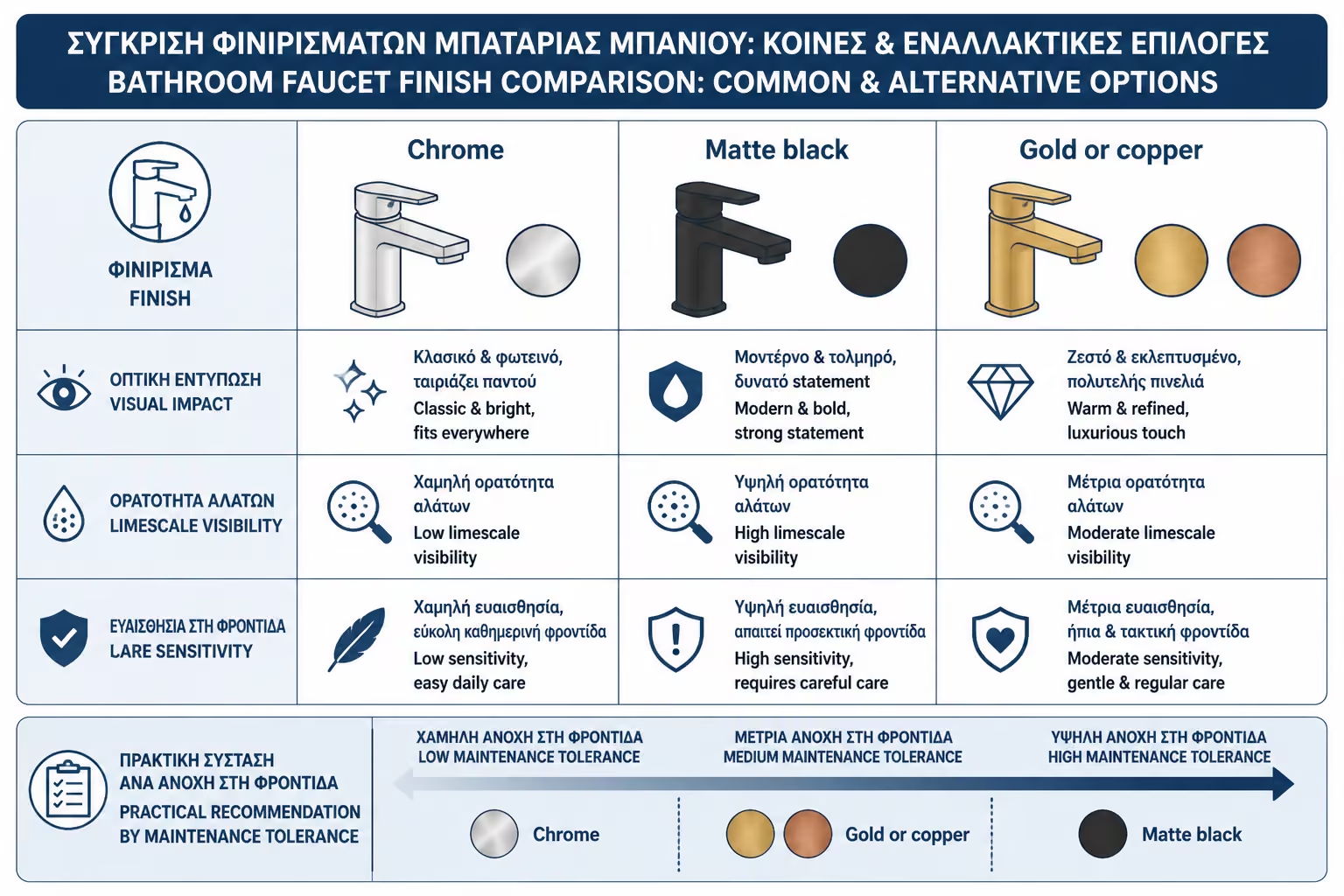
Chrome remains the safest finish for heavy everyday use. It doesn't mean it doesn't scratch or scale, but it is more forgiving. Alternative finishes give greater aesthetic value, but require more careful use. The table below gives a practical comparison.
For a family bathroom with hard water, chrome or a quality brushed nickel/gunmetal may be a more practical choice. For guest WCs where use is limited, black or gold is easier to maintain. For a master bathroom, anything can work as long as you accept the care.
It's not that alternative finishes "don't hold up". It's that they don't stand up to abuse and the wrong cleaners as forgivingly as chrome.
| Finish | Aesthetic effect | Limescale / water marks | Maintenance | Appropriate use |
|---|---|---|---|---|
| Chrome | Timeless, neutral, bright | Moderately visible | Easier | Master baths, rental, family use |
| Black matte | Modern, strong contrast | Highly visible | Needs frequent wiping | WC, master, modern bathrooms with careful use |
| Brushed gold / brass | Warm, premium | Moderately to highly visible | Gentle care, avoid chemicals | Master, guest WC, boutique aesthetic |
| Shiny gold | Luxurious, more intense | Shows fingerprints/water | More demanding | Areas of lower use |
| Copper / bronze | Earthy, special | Depends on finish | Needs finish-specific care | Designed bathrooms with patina/care acceptance |
| Gunmetal / brushed nickel | Modern, softer than black | Conceals marks better | More tolerant than black | A good middle-ground option |
In Greece, hard water is a frequent problem. Limescale leaves white marks on faucets, shower heads, valves, siphons and glass enclosures. In alternative finishes, the problem is more visible. It looks stark white on black. It can leave dull spots on gold. In a brushed finish it can build up in the fine lines of the texture.
The natural temptation is to use a strong descaler. But this may be exactly the mistake. Many descalers contain acids that can attack the finish, especially if left on the surface or sprayed directly. GROHE expressly warns against using descalers, vinegar or acetic acid cleaners on fittings, because they are aggressive to the surface.
The best strategy is not to let the limescale build up. Wiping with a soft dry cloth after use, especially on the sink and shower mixer, greatly reduces the problem. GROHE states that drying the products after each use is the easiest way to prevent scale build-up.
For more difficult limescale, we follow the instructions of the manufacturer of the specific finish. We don't improvise with vinegar, lemon, bleach or harsh cleaners.
Hard sponges, scouring pads, metal brushes and abrasive cloths can scratch the surface. In chrome, a small scratch may be less visible. In matte black or gold, it can be seen immediately. In brushed finishes, it can alter the direction of the brush and create a polished spot.
Moen warns that many green fibrous pads/sponges contain tiny mineral particles that can scratch the tap's finish. hansgrohe also says not to use scratch sponges, brushes or metal scourers, recommending a soft cotton cloth.
The problem with scratches is not only aesthetic. On plated or painted finishes, surface wear can make the material more vulnerable to scale, tarnish and further wear. Especially on cheap finishes, the damage can be permanent.
The rule is simple: soft cloth, mild detergent, light pressure. If a power scrubbing is required, there is likely a buildup of limescale that should have been addressed earlier, or a manufacturer approved product is needed.
In alternative finishes we generally avoid harsh descalers, bleach, acid cleaners, solvents, cleaning powders, abrasives, oven cleaners, toilet cleaners and any product not specifically intended for taps. We also avoid spraying directly on the tap, because the liquid can get into joints, joints or behind rosettes.
hansgrohe recommends, for scale, a mild cleaner based on citric acid, first sprayed on a cloth and not directly on the tap, then a good rinse with clean water. This logic is safer: the cleaner is controlled, does not run out of control and does not stay longer than necessary.
Villeroy & Boch states in care instructions to use suitable cleaners, not to leave them to act longer than necessary, to wipe water drops with a soft cloth after use and not to spray cleaner directly on the taps.
This is especially important for gold and black finishes. Many damages do not occur because the product was of poor quality, but because it was cleaned like a tile or a basin. The tap is not cleaned with the same chemicals that are used for the limescale on the tile.
Daily care is simple but requires consistency. After use, especially on sink and shower faucets, wipe the drops with a soft dry cloth. This drastically reduces limescale. For regular cleaning, use warm water and mild soap or manufacturer approved cleaner. Wipe with a soft cloth and dry.
For light limescale, we only use mild method allowed for that particular finish. Some instructions, such as hansgrohe's, refer to a mild cleaner based on citric acid on a cloth. In others, such as GROHE, there is a stricter recommendation to avoid acids and use a special company product. So we always follow our own battery manufacturer, not generic recipes from the internet.
Do not let cleaner "sit" on the tap. We do not wrap the tap with a cloth soaked in vinegar, unless expressly permitted by the manufacturer. We do not rub persistently with a hard sponge. We do not use the same sponge that we cleaned joints, basin or tiles.
If the tap is in a workshop cleaning house, give written instructions. A lot of damage to black and gold finishes is done by cleaners who use strong abrasives to get a quick finish.
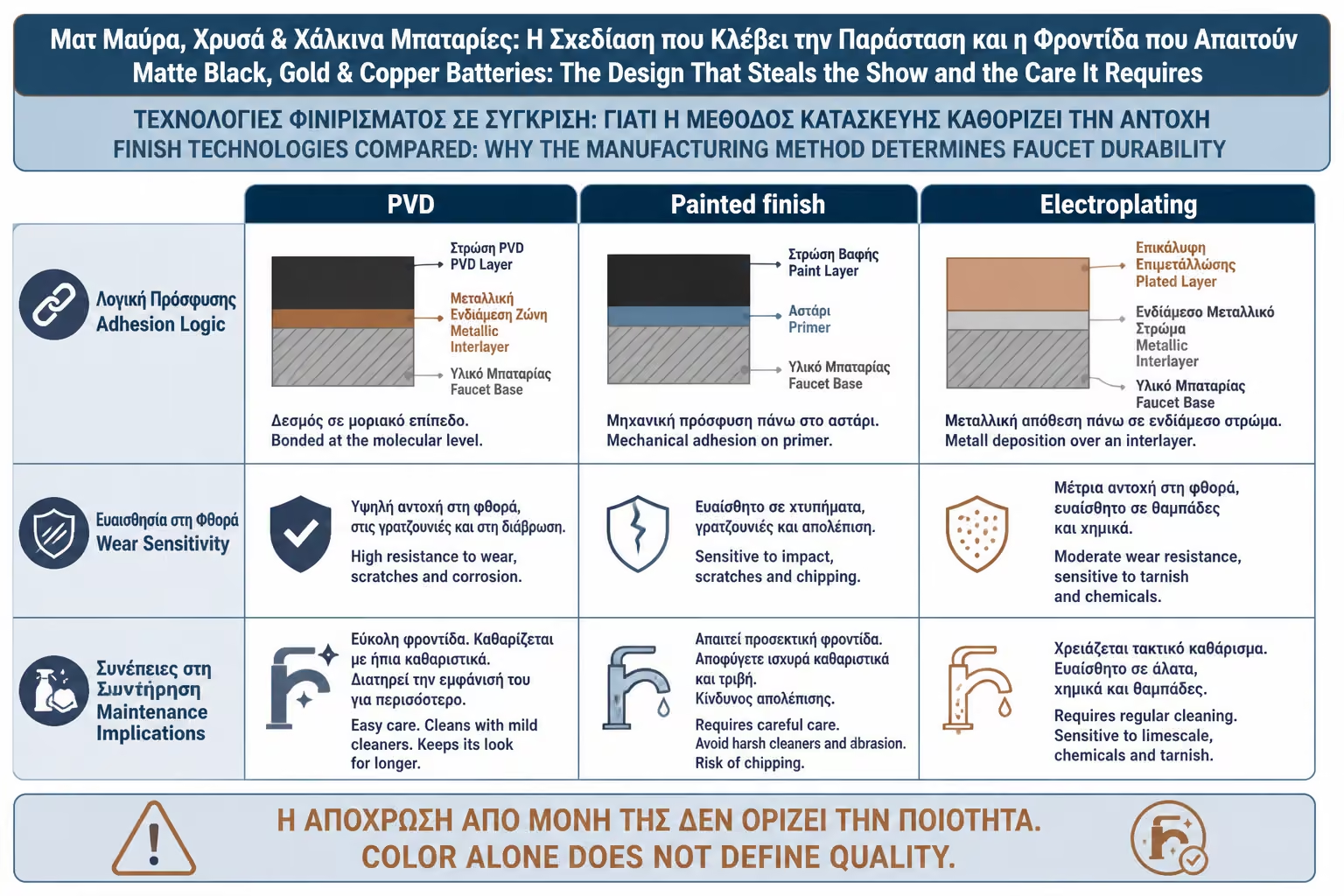
Not all black or gold finishes are the same. The same color can result from different technologies: PVD, electroplating, powder coating, lacquer, coating or other processes. The technology affects resistance to scratches, chemicals and wear.
PVD is generally considered a more durable technology than simple paints, because it creates a thin and hard coating on the surface. Many major manufacturers use corresponding technologies for special finishes. But this does not mean that the product is indestructible. Even a durable finish can be damaged by the wrong cleaners or abrasives.
Very affordable taps in black or gold may have a more delicate finish. It doesn't necessarily show on day one. It shows after months of use, cleaning and scaling. Therefore, in alternative finishes, choosing a reliable company is more important than in chrome.
Ask what finish technology the tap has, if there are cleaning instructions, what the warranty covers, and if the finish is covered against wear or just the mechanism. The warranty on special finishes often has exclusions for incorrect cleaning.
Whether you choose a black, gold or copper battery, you need to think about the whole. Washbasin valve, faucet, shower head, telephone, column, cistern board, towel rail, paper holder and enclosure profiles must tie together. They don't all have to be from the same company, but they should match visually.
There is a catch here: "gold" is not a color. Another brushed gold, another champagne, another polished gold, another brass, another bronze. If you combine different shades, it can look uncoordinated. The same goes for matte black and satin black. They may look different side by side.
The safest solution is to choose products from the same series as much as possible, or at least see samples together. If buying from different companies, ask for a physical sample or compare in real light. Pictures online are often misleading.
In the bathroom, metals act as a design line. If the line is consistent, the result looks expensive. If each part has a slightly different gold or a slightly different black, the result looks sketchy.
In the shower, the matte black gets more stress than in the sink. The tap, the column, the head, the spiral and the phone get wet for a longer time. Drops dry on surfaces. Salt collects in the nozzles and joints. If the water is hard, the image can deteriorate quickly.
The black shower head needs special care. The nozzles must be cleaned of scale frequently. If they are rubbed with a hard sponge, the finish around the holes may be damaged. If strong descalers are used, the surface may become dull.
In the shower, it is very useful to have good ventilation and to remove water from surfaces. It is not realistic to wipe the entire column every time, but the longer the water remains, the more strongly the limescale are visible. In areas with very hard water, a brushed gunmetal or brushed nickel may be more practical than absolute matte black.
If you love black, go for a quality product, easy-to-clean nozzles and clear care instructions. The cheap black shower can show tired faster than you expect.
Gold works great as a detail. It can give a very warm effect on a sink faucet, valve, lamp and mirror. In a shower, a gold column or head can be impressive, but it increases the need for consistency with the rest of the elements. If the enclosure has a chrome profile and the tap is brushed gold, the result can be confused.
In a sink, gold is easier to maintain, because the surface gets wet less time than the shower column. In a guest WC it is an even safer choice, because the use is limited. In a master shower, especially with hard water, more care is needed.
Brushed gold is usually more practical than polished gold. It hides small fingerprints better and doesn't show micro scratches as much. If you want gold for everyday wear, the brushed/satin version is often better than mirror.
Gold looks best when it is not overloaded. It doesn't have to be all gold. A few correct details are enough.
Not a good choice for every home. If the water is very hard, if there is no desire to wipe frequently, if the bathroom is cleaned with strong degreasers, if we are talking about a rental where you do not control the use or if the bathroom is heavily used by children, the special finishes need attention.
On Airbnb, for example, guests don't know how to take care of black or gold taps. The cleaner can use a strong product to quickly remove the scale. In such use, chrome or brushed nickel may be a safer choice. If you want design, choose a more durable brushed finish from a branded range and give clear cleaning instructions.
In a main family bathroom, matte black is not prohibitive, but you have to be realistic. Water will be visible. It will need wiping. Hard sponges should be avoided. If this bothers you, choose a more forgiving finish.
If the budget is very limited, prefer a good chrome battery to a cheap black or gold one. In special finishes, the quality of the surface is of great importance. The cheapest design can be expensive if it wears out quickly.
Black, gold and copper faucets usually cost more than their chrome counterparts, especially when it comes to name brands and durable finishes. The price difference depends on the brand, the surface technology, the type of battery and whether we are talking about a washbasin, a shower or a built-in system.
| Category | Indicative cost of Greece 2026 | Practical observation |
|---|---|---|
| Economical black sink faucet | €50–€120 | Needs attention to finish quality |
| Branded black/gold basin mixer | 120–350€+ | Best choice for daily use |
| Brushed gold / brass basin faucet | 150–500€+ | Premium aesthetics, more demanding care |
| Black or gold shower column | 200–800€+ | High exposure to limescale, choose a quality product |
| Built-in black/gold system | 400–1,500€+ | High cost, requires consistency in all components |
| Set of accessories with the same finish | 80–400€+ | Valves, siphons, paper cases, towel rails |
Prices are indicative and are affected by VAT, availability, finish, surface technology, whether a valve or siphon is included, and whether we are talking about a simple or thermostatic mixer. Don't just compare color. Also compare technology, warranty, parts and care instructions.
In special finishes, quality is worth paying for. The difference is not only visible in the showroom. It looks like after two years of cleaning.
The first mistake is to buy only from a photo. Gold and black look different in every lighting. Must see sample or actual product.
The second mistake is mixing different shades. Brushed gold, brass and champagne are not always the same. The same goes for matte black and satin black.
The third mistake is the use of hard softener. The scale goes away, but so can the shine or dull the finish.
The fourth mistake is the hard sponge. A small scratch on a black or gold tap can be seen permanently.
The fifth mistake is choosing a cheap special finish in a heavy-use bathroom. If the surface is not durable, it will tire quickly.
The sixth mistake is not giving instructions to a cleaning crew. Whoever cleans the bathroom should know that these taps are not cleaned like tiles.
| Inquiry | Yes / No |
|---|---|
| Have you seen the finish on a real sample and not just a photo? | Yes / No |
| Does the shade match the valve, siphon, plate and accessories? | Yes / No |
| Do you know if the finish is PVD, paint, plating or natural metal? | Yes / No |
| Are there official cleaning instructions from the manufacturer? | Yes / No |
| Does the water in the area leave excessive limescale or do you accept frequent wiping? | Yes / No |
| Will you avoid abrasive sponges, scouring pads and metal brushes? | Yes / No |
| Will you avoid degreasers, vinegar, bleach and acid cleaners unless the manufacturer allows them? | Yes / No |
| Isn't the bathroom a very heavy use area without cleaning control? | Yes / No |
| Are there spare parts or products of the same series for future replacement? | Yes / No |
| Have you calculated costs for all parts of the same finish? | Yes / No |
| If cleaning workshop, will clear care instructions be given? | Yes / No |
| Do you agree that appearance needs more care than chrome? | Yes / No |
If most of them are "no", maybe the special finish will tire you in practice. If most of them are "yes", it can give an excellent result.
If you have to keep only one thing, keep this: matte black, gold and copper taps don't go bad because they're “bad” as an idea. They deteriorate when cleaned like chrome or tile. No abrasive sponges, no metal brushes, no strong descalers, no vinegar without manufacturer's instructions, no spraying directly on the tap. Soft cloth, mild detergent, rinse and dry. If you are not willing to do this care, go for chrome or brushed nickel. If you do, special finishes can take the bathroom to the next level.
Matte black, gold and copper faucets have changed the way we see bathroom design. They are no longer simple details, but essential elements of character. They can make a bathroom more modern, warmer, more luxurious or more boutique. In the right combination with a sink, tiles, mirror and accessories, they give a result that chrome can hardly achieve.
But the choice must be made realistically. Special finishes show more scale, fingerprints and wrong cleaning movements. The black matte is impressive but demanding in hard water. Gold and brushed brass are warm and premium, but require gentle care. Copper and bronze can have a natural development or patina, depending on the product. In all, the quality of the finish and the manufacturer's instructions are of great importance.
For family bathrooms and rentals, chrome or a durable brushed finish may be more practical. For master bathrooms and guest WCs, black, gold and copper solutions can give an excellent aesthetic result, as long as they are properly cleaned. If there is hard water, daily drying is not an exaggeration; it is basic maintenance.
The best choice is not the most impressive finish. It is what suits the design, use and care you are willing to do. If you choose it with this logic, the tap will not be just a colorful detail. It will be the element that ties the whole bathroom together.
Return to category.
Go to categoryReturn to the central guide.
Go to guide