
Bathroom Fixtures & Water Equipment
Return to category.
Go to categoryBlack, gold, bronze and gunmetal faucets have changed the image of the modern bathroom. It's not a small detail anymore. It is a key design element. But when the owner starts to compare prices, he sees something that raises a question: two taps may look almost the same in a photo, but one costs €70 and the other €250 or €400. Often the difference is hidden in the finish and especially the PVD technology.
PVD, from Physical Vapor Deposition, is a coating method where the final finish is not applied as a simple paint to the metal. It is created in a controlled vacuum environment, where materials are vaporized or ionized and deposited on the surface as a very thin but strongly adhered layer. In practical terms, this means that the surface can be made much harder, more wear-resistant and more color-stable than simple, lower-quality coatings. General technical guides for PVD state that these coatings add hardness, wear resistance, chemical resistance and corrosion resistance to industrial components.
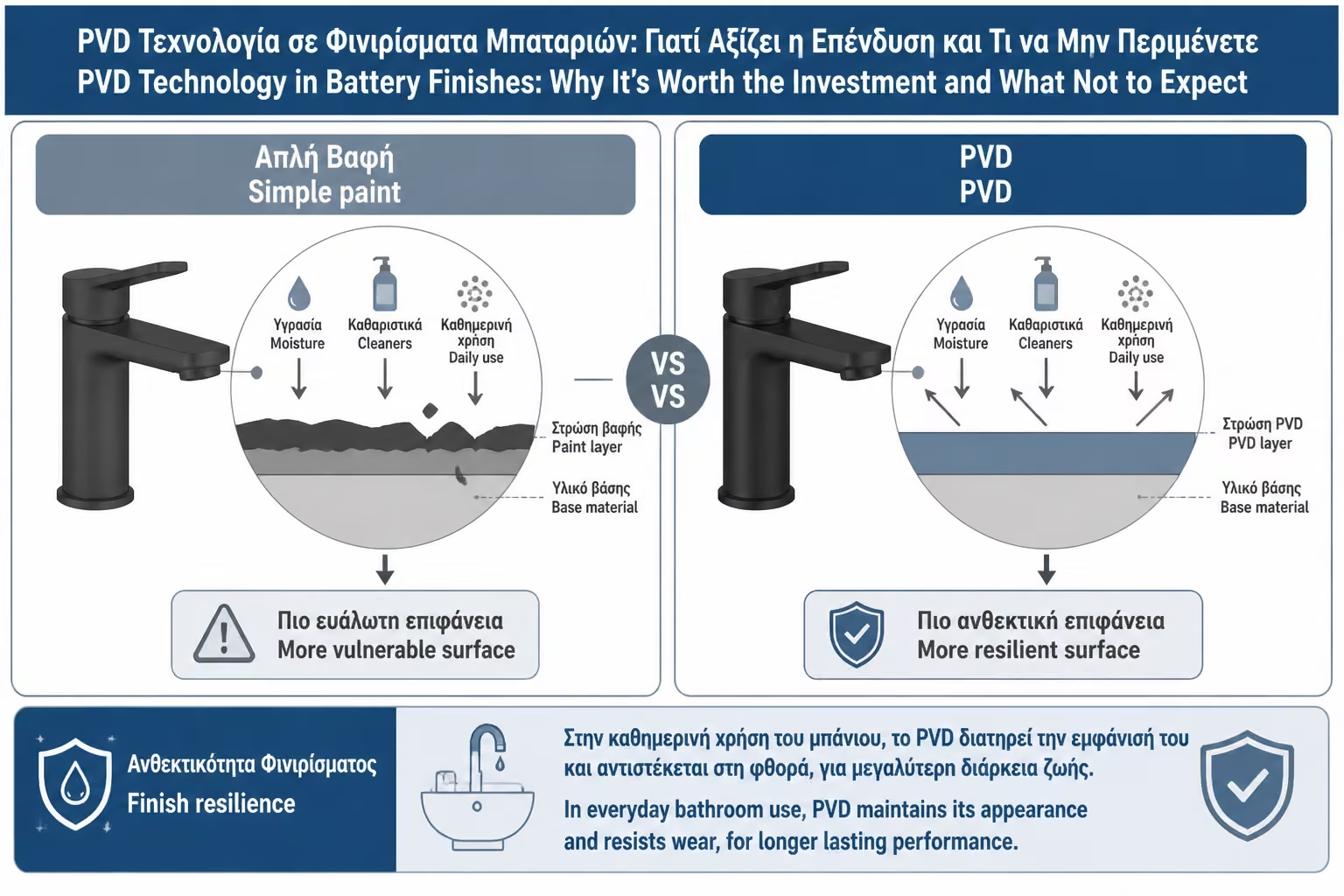
In bathroom faucets, PVD is of particular value because the component lives in a harsh environment. Water, limescale, soaps, cleaners, fingers, sponges, steam and daily use constantly test the surface. A simple painted black or gold finish may look beautiful on day one, but wear, dull or peel if the adhesion and durability of the coating is poor. PVD greatly reduces this risk.
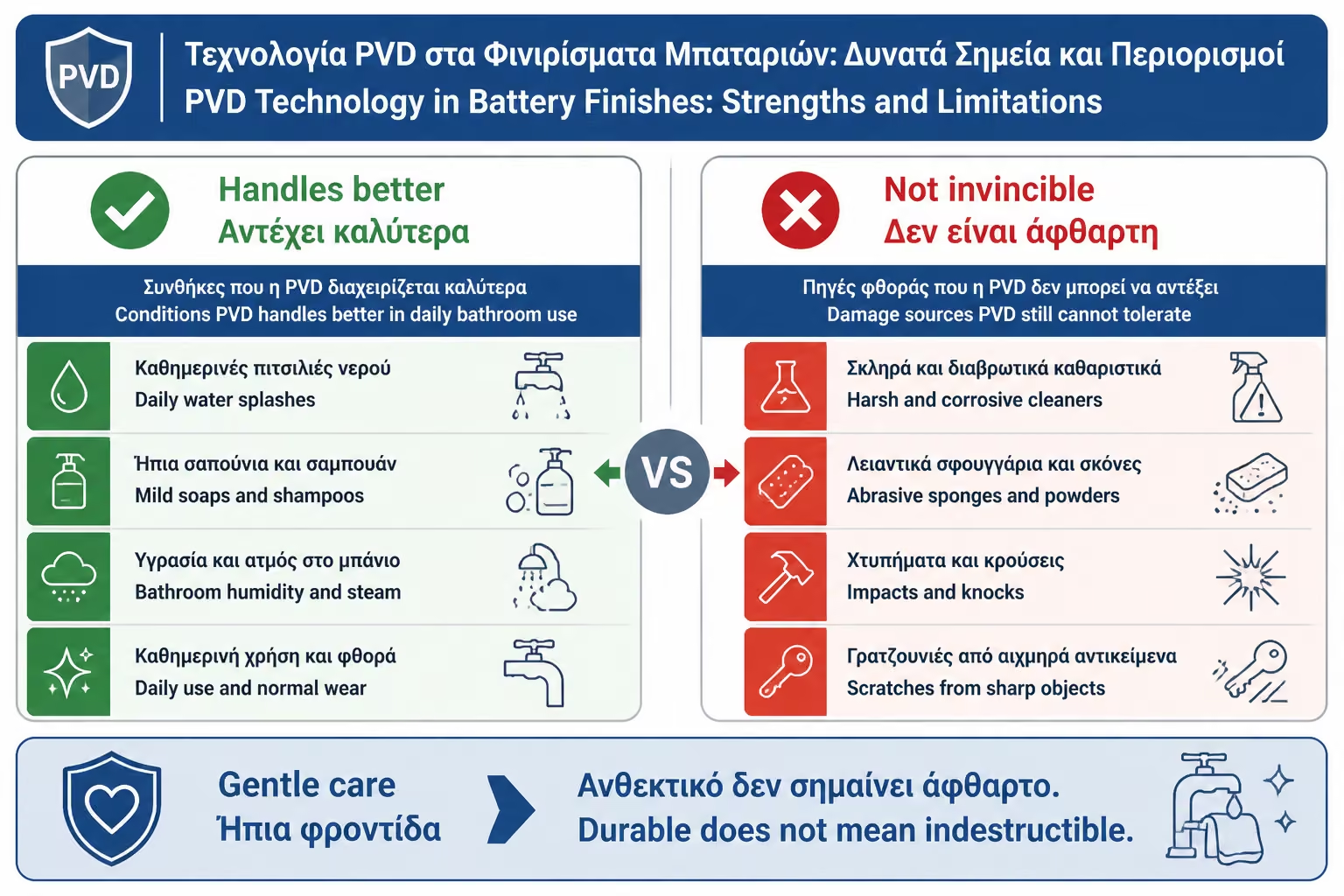
But here you need to pay attention to the wording. A PVD tap is not indestructible. It doesn't mean that it can never be scratched, that it can't be dulled by the wrong chemicals, or that it can be cleaned with a metal sponge. Serious manufacturers talk about increased resistance to scratches, adhesion and wear, not absolute immortality. GROHE, for example, states that its PVD surfaces are more uniform, ten times more scratch-resistant and three times harder than standard electro-plated stainless steel in its related material. hansgrohe says that PVD retains its color and scratch-resistant design, and shows testing with 3M Scotch-Brite sponges under pressure 300 g for 500 cycles, where the PVD surface remained intact compared to standard finishes.
So the correct message is: PVD is worth it because it is much more durable than simple paints and cheap coatings, especially in black, gold, brass and gunmetal. But it still needs proper cleaning and realistic use. In this guide, we'll look at how it works, when it's worth the investment, how to tell true PVD from just 'color', what it holds up to, what it doesn't hold up to, and what to ask before paying for a more expensive battery.
Physical Vapor Deposition is a surface coating technology. In very simple terms, the topcoat material is converted into vapor or ionized particles in a vacuum chamber and "sits" on the object, creating a thin, hard and well-adhered surface. It's not just paint that dries on metal. It is a deposition technique.
This matters because the finish of a tap should not only look good. It must stick well to the body, resist minor knocks, not wear out quickly from cleaning and not lose its color easily. The better the adhesion and hardness, the lower the risk of peeling or premature wear.
In taps, PVD is mainly used for special finishes: brushed gold, brushed brass, hard graphite, warm sunset, gunmetal, black chrome, bronze and other shades. It's not just about the color, it's also about the durability of the color. This is why you often see PVD in more expensive ranges rather than very affordable taps.
Technology alone does not guarantee that every product is perfect. Base preparation, metal, manufacturing quality, inspection and care instructions all play a role. But, when properly applied by a reputable manufacturer, PVD is clearly a superior class of finish to simple paints.
Peeling usually occurs when the coating does not adhere well to the substrate or is vulnerable to mechanical/chemical stress. In simple paints or low-quality plating, the surface can act as a thin "film" that with time, impacts or chemicals begins to open. Once an edge or small failure is created, water and cleaners accelerate wear.
In PVD, the coating has a much stronger bond to the surface. GROHE claims for its own PVD process that the adhesion of the coating is six times greater than a conventional electro-plated surface. This is the technical point that makes the difference in practice: the coating does not just "sit" on the tap, but connects much better.
This is not to say that there can never be wear and tear. If it is hit with a hard metal object, if it is systematically cleaned with abrasives or if it receives inappropriate chemicals, it can be damaged. But the risk of premature peeling is much less than a simple painted finish.
That's why PVD is especially valuable in black, gold and brushed finishes. These surfaces show wear very easily. If the finish starts to open, the tap immediately loses its aesthetic value. With PVD, the chance of it remaining beautiful for many years is much higher.
Accuracy is needed here. No bathroom faucet should be presented as absolutely impossible to scratch. The truth is that PVD finishes have a much higher scratch resistance than simple coatings or paints. This is important, but it does not mean that you can rub them with metal wire.
GROHE states that its PVD surfaces are ten times more scratch-resistant and three times harder than standard electro-plated stainless steel. hansgrohe reports a test with Scotch-Brite sponges for 500 cycles where the PVD finish remained intact compared to a standard finishes. These are strong indications of increased durability.
In everyday use, this means that PVD is more forgiving: rings, fingernails, gentle contact with objects, frequent cleaning with a soft cloth and normal use. It does not mean that if you persistently scrub with a green hard sponge, if you use a wire or if you hit the tap with a metal tool, nothing will show.
The right promise to the customer is not "never scratch". It is "much more resistant to wear and micro-scratches than budget finishes". This difference is enough to justify the investment in several bathrooms.
Simple painting can give a beautiful result at first, especially in matte black. The problem is durability. If the paint doesn't adhere well or if it's softer, it can be chipped, scratched, flaked at the corners, or dulled by cleaners. This is particularly pronounced in shower faucets, where the surface is constantly wetted and cleaned.
PVD is a more technical and durable solution. The surface is not just painted. It is coated with a higher strength process. That's why good black, gunmetal or brushed PVD taps cost more. You don't just pay for the color. You pay for the durability of the paint.
In a low-use guest WC, an economical painted mixer can perform satisfactorily if used sparingly and cleaned carefully. In a master bathroom, shower or family use, PVD is much more valuable. There, the tap receives daily water, soaps, cleaning and limescale.
The rule of thumb: the darker or more special the finish and the more intense the use, the more PVD is worth. Cheap black may be tempting, but if it wears out in two years, the economy is lost.
Electroplating is a traditional method of creating a metallic surface, such as chrome or other finishes. It can be very good when done right. It's not bad technology in and of itself. But PVD offers a different level of control, hardness and durability in special finishes.
In GROHE material it is stated that the PVD coating is more uniform, ten times more scratch-resistant and three times harder than standard electro-plated stainless steel. This does not mean that all electroplating is unsuitable. It means that in premium special colors, PVD gives a technical advantage.
Electroplating can give a nice surface, but its durability is highly dependent on thickness, preparation, chemistry and manufacturing quality. PVD, when done correctly, has a very strong adhesion and hardness, which is why it is preferred in products that need to keep a special color for many years.
In practice, the end user does not need to become an expert in metallurgy. He needs to know that when he buys a special finish, technology matters. "Gold look" does not mean "PVD gold". “Black finish” does not mean “PVD black”. Ask clearly.
In chrome, minor wear and tear is often hidden by gloss and reflections. In matte black, brushed gold or gunmetal, the wear is more pronounced. A scratch, dull spot or flaking interrupts the uniformity of the surface. That is why finishing technology is more important in alternative colors.
On black taps, PVD or a strong equivalent technology reduces the risk of color fading at the edges or contact points. In brushed gold and brass, it helps to keep the shade stable and not tarnish easily. In gunmetal and hard graphite, it gives the feeling of a premium metal surface instead of a simple paint.
GROHE links PVD surfaces to its range of colours, such as Hard Graphite, Warm Sunset, Cool Sunrise and Brushed options, precisely because the technology allows more durable production of special shades. hansgrohe respectively presents FinishPlus surfaces with PVD for a more durable and color stable result.
So PVD is not just a "technical extra". It is the reason that a special color has a chance to stay beautiful in a real bathroom.
PVD stands up much better to everyday mechanical wear and tear. That is, in contact with hands, water, mild cleaning, micro-abrasion and frequent use. If you have a sink faucet that is used several times a day, a PVD surface is a better investment than a cheap specialty finish.
It also withstands moisture better. The bathroom is a wet environment and the taps constantly receive drops. A good PVD coating has a high resistance to corrosion and surface deterioration if properly cleaned. General technical sources for PVD cite resistance to wear, chemical attack and corrosion as key advantages.
It also stands up better to frequent cleaning with the right media. Soft cloth, mild soap, rinsing and drying are no problem. On the contrary, they help to keep the surface clean and prevent scale build-up.
What needs to be emphasized is that the durability of PVD is seen over time. On day one, a cheap black battery and an expensive PVD black may look similar. After two years of cleaning, watering and daily use, the difference can be very big.
PVD does not take abuse without limits. It should not be cleaned with wire, metal brushes, abrasive sponges, abrasive creams or powders. It should not accept strong acids, bleach, caustic cleaners or products not intended for taps. Chemicals should not be left on the surface for a long time.
This is critical because many people buy an expensive PVD battery and then treat it like a tile. GROHE in the care instructions warns against using abrasive sponges/scouring agents and cleaners with solvents, acids, limescale removers, vinegar or acetic acid, because they are aggressive and can leave the surface dull and scratched. hansgrohe also asks for a soft cloth and avoiding scratch sponges, brushes and metal scourers.
Also, PVD does not eliminate scale. If water dries on the tap, it will leave marks. PVD helps the finish last, but does not make the water soft. In black or brushed gold, the limescale are still visible. So it needs wiping and proper cleaning.
The correct phrase is: PVD is very durable, but no excuse for incorrect cleaning.
In hard water areas, PVD has a double value as well as a double requirement. It has value because the surface is more resistant to frequent contact with limescale and cleaning. It has a requirement because, especially in dark or brushed finishes, the limescale are visible and must be removed properly.
The ideal is prevention. We wipe up the drops after use, especially on sink faucets and visible shower areas. We don't let the limescale build up. GROHE states that drying after each use is the easiest way to avoid scale build-up.
If scale builds up, we don't treat it aggressively. We use a gentle method that the manufacturer allows. hansgrohe recommends for taps a mild cleaner based on citric acid, applied to a cloth and not directly to the tap, with rinsing afterwards. Other manufacturers may have different instructions, so we always follow the manual.
In very hard water, it may be worth considering a filter or a more general water softening/scaling solution for the entire bathroom. It not only protects the tap, but also shower heads, faucets, water heaters and glass surfaces.
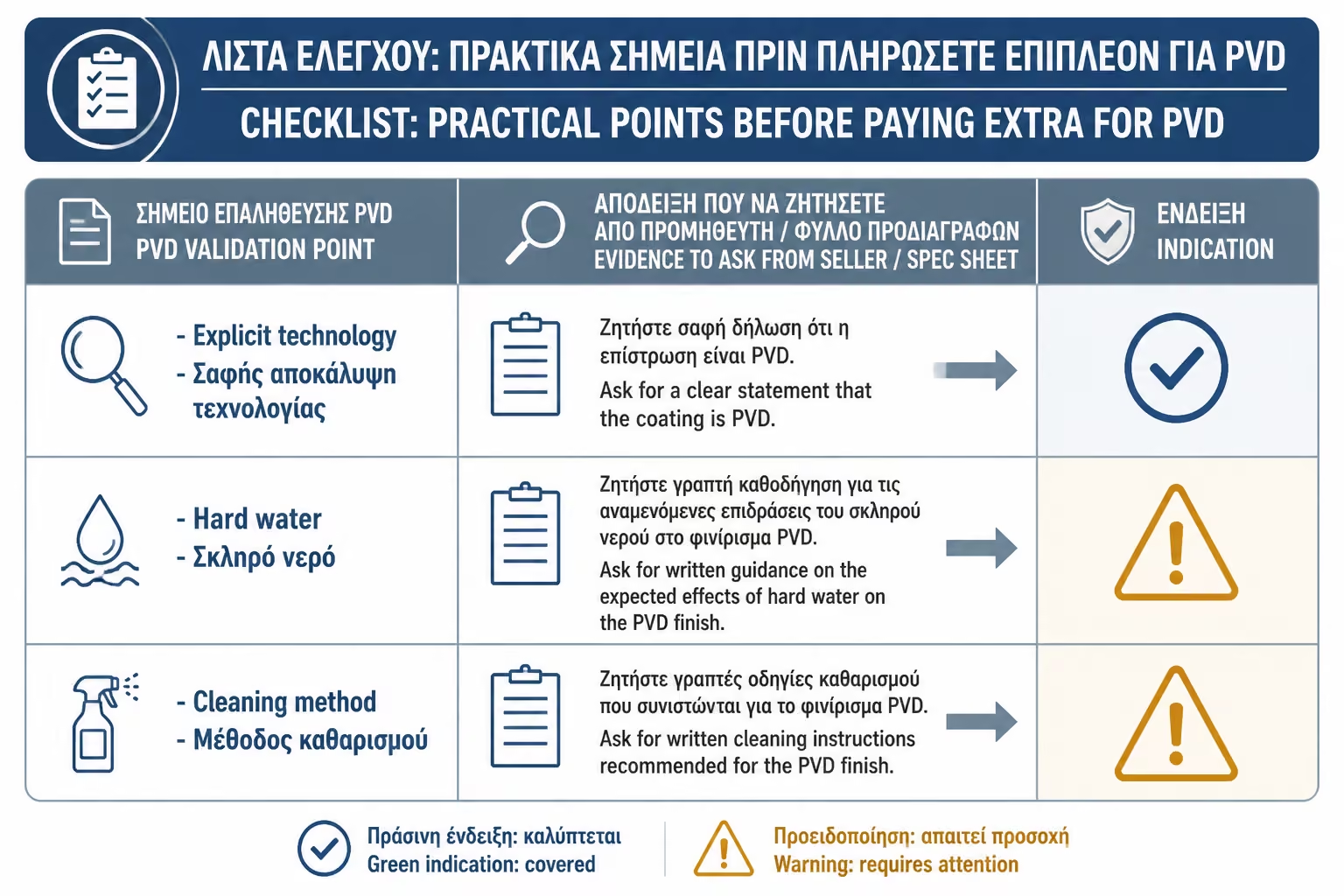
Before paying a more expensive battery due to PVD, ask to find out what the warranty covers. Does it cover only the mechanism or also the finish? For how many years? Does it cover discoloration? Does it cover peeling? What uses are excluded? What is considered improper cleaning?
Many specialty finish warranties exclude damage from abrasives, acids, bleach, professional cleaners, descalers or misuse. This makes sense, but you should be aware of it. If the bathroom is cleaned by a workshop that uses strong chemicals, PVD will not save you from incorrect maintenance.
Also ask if there are spare parts in the same finish: valve, siphon, rosettes, telephone, spiral, head, sump board or accessories. If you buy a PVD brushed gold battery but do not find a corresponding valve or siphon, the result may not stick.
In premium finishes, the choice of series and company is of great importance. You don't just pay for the surface. You pay for color consistency, parts, instructions and support.
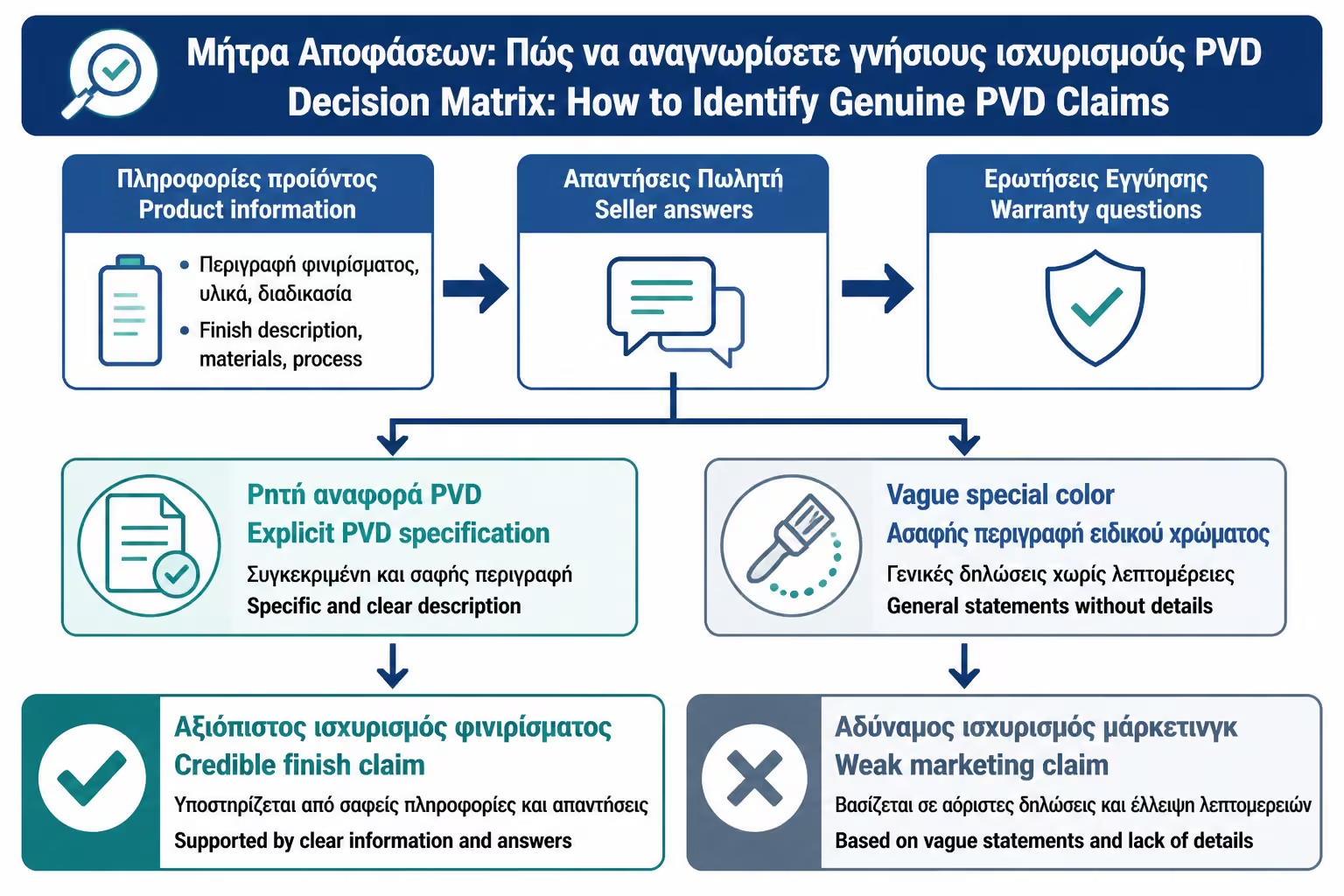
The answer should be found in the technical details of the product, not in the description “black”, “gold” or “luxury finish”. Ask for PVD, Physical Vapor Deposition, or the manufacturer's trade name corresponding to PVD technology to be explicitly mentioned. If it's not mentioned anywhere, don't assume it.
Also look at the brand, warranty and care instructions. Serious manufacturers usually explain the finishing technology and give instructions. If a product is very cheap, has a special color but has no technical description, it is probably not a premium PVD coating.
PVD doesn't just mean high price. There are expensive taps without PVD required and there are products that use other technologies. But if the seller uses PVD as an argument, ask for documentation. "It's like PVD" is not a technical answer.
In a refurb quote, ask for the exact battery and finish code to be written. So you can check if the version is indeed PVD or just the same series in a special color.
PVD is worth more when the tap will be used daily, when the finish is special and when the bathroom has aesthetic value that you want to keep. In a master bathroom with black or brushed gold faucets, the PVD coating makes a lot of sense. The finish will accept water, cleaning and limescale every day. That's where the endurance shows.
Also worth in the shower. The column, head and hand shower receive more moisture and limescale than the basin mixer. If you choose a black or gold shower system, PVD or other similar premium technology is almost essential if you want durability.
It is worth it in guest toilets of high aesthetics, not because the use is heavy, but because the finish is part of the image of the space. There, a premium tap can keep the look going for years with minimal wear and tear.
It is not always worth it in very economical renovations, low budget rentals or spaces where you do not control the cleaning. If the user or cleaner will use harsh degreasers, the investment is at risk. If the budget is small, better a good chrome battery than a cheap special shade without PVD.
PVD may not be worth it if you choose chrome. Chrome, when it is of good quality, is already very durable and practical. The big difference of PVD is most visible in the special colors. If you want a simple, timeless and economical bathroom, a good chrome faucet from a reliable company can be enough.
It may also not be worth it if the bathroom is temporary or if the residence will be rented out without a maintenance check. A PVD brushed gold on Airbnb may look great, but if it is cleaned every week with a strong descaler, the plating is not protected. A more forgiving finish might be preferred there.
Not worth it if the rest of the system is low quality. An expensive PVD faucet on a bad sink, wrong countertop or bad installation does not save the bathroom. PVD is part of quality, not a substitute for proper design.
Finally, it's not worth it if it's bought just to say "it's PVD", without caring about the special finish. Technology must serve a real use and aesthetic need.
Care is simple, but must be done correctly. After use, wipe off the water with a soft dry cloth. For regular cleaning, use a mild soap or a product approved by the manufacturer. Rinse and dry. Do not leave cleaners on the surface longer than necessary.
Do not spray cleaner directly on the tap, especially on joints, rosettes or joints. Better to spray the cloth and then wipe the surface. This is also recommended by manufacturers to protect finishes. Villeroy & Boch, for example, advises not to spray cleaner directly on the taps and to wipe water drops with a soft cloth after use.
For limescale, follow the instructions of the specific company. You don't automatically use vinegar, lemon or strong degreasers because they "seize". They may catch on the limescale but damage the surface. And definitely don't use abrasive sponges.
If you want PVD to stay beautiful, care should be gentle and frequent, not rare and aggressive.
PVD taps are usually in a higher price category than the plain chrome or painted versions. The price is affected by brand, battery type, finish, mechanism, whether it is thermostatic, built-in or simple, and whether there are corresponding accessories.
| Category | Indicative cost of Greece 2026 | When does it make sense? |
|---|---|---|
| PVD basin mixer with special finish | 150–500€+ | Main bathroom, guest WC, premium design |
| PVD tall tap for countertop | 200–600€+ | When the tap is a highly visible element |
| PVD built-in basin faucet | 300–900€+ | Clean bench, high aesthetics |
| PVD column or shower system | 400–1,500€+ | Great exposure to water and limescale |
| PVD thermostatic system | €600–€2,000+ | Premium showers, family comfort |
| Same PVD finish accessories | 100–500€+ | For consistency in valves, siphons, accessories |
Prices are indicative and depend on VAT, availability, series, country of origin and whether internal bodies, valves or additional components are included. Do not compare a PVD tap with a simple "black" one without checking technology, warranty and care instructions. In the showroom they may look alike. In use they are not the same.
The investment is worth it when the finish is a key part of the design and you want durability. Not worth it if you're buying it just for the tag or if the usage/cleanliness of the area won't protect it.
The first mistake is over-promising. PVD is very durable, but not indestructible. If we present it as "never scratched", we create the wrong expectation.
The second mistake is the use of harsh cleaners. Even a PVD finish can dull or wear if cleaned with the wrong chemicals.
The third mistake is not asking for documentation. If the product only says “black finish” or “gold finish”, it does not necessarily mean PVD.
The fourth mistake is mixing different PVD shades from different companies. Brushed gold is not always the same as brushed brass. Hard graphite is not the same as gunmetal.
The fifth mistake is the expensive PVD tap without a corresponding valve, siphon or accessories. The result looks disconnected.
The sixth mistake is to place PVD in an environment where it will be cleaned aggressively, such as a rental without instructions. Technology helps, but does not negate the need for care.
| Inquiry | Yes / No |
|---|---|
| Does it specifically state that the finish is PVD or Physical Vapor Deposition? | Yes / No |
| Is there a technical description or official manufacturer page? | Yes / No |
| Does the warranty cover the finish as well or just the mechanism? | Yes / No |
| Are there cleaning instructions for this particular finish? | Yes / No |
| Are there matching valves, siphons and accessories in the same color? | Yes / No |
| Have you seen the finish on a physical sample and not just a photo? | Yes / No |
| Does the bathroom have a use that warrants premium durability? | Yes / No |
| Is the water in the area hard and do you accept frequent mopping? | Yes / No |
| Will you avoid abrasive sponges, wires and abrasives? | Yes / No |
| Will you avoid strong descalers, vinegar and acid cleaners unless approved by the manufacturer? | Yes / No |
| If a third party cleans, will they have written care instructions? | Yes / No |
| Does the price compare to another product of the same technology and not just the same color? | Yes / No |
If you can't answer "yes" to the first four, don't pay a premium just because the salesperson said "it's a good finish." Ask for proof of technology and instructions.
If you have to keep only one thing, keep this: PVD is worth it because it protects the most vulnerable point of special finishes — the surface. It's not a magic shield, but it's a huge difference to just paint or a low quality coating. In black, brushed gold, gunmetal or bronze, go for PVD from a reputable company, especially for master baths and showers. But take care of it properly: soft cloth, mild detergent, rinse, dry. No abrasive sponges, no strong degreasers, no "I'll rub it off". The durability of PVD shows when you use it properly.
PVD technology is one of the main reasons that modern black, gold, brass and gunmetal taps can have a real life and not just an impressive first image. Creates a harder, more durable and better adhered surface than simple paints or economical coatings. That's why good PVD taps cost more and that's why the difference is mainly visible after years of use.
PVD significantly reduces the risk of peeling, scratching and premature wear, especially on special finishes where every mark is visible. It is particularly useful in master bathrooms, showers and areas where the faucet is a key design element. In such cases, the investment is often worthwhile, because it protects the aesthetic value of the renovation.
But it should not be presented as indestructible. PVD does not allow abrasive sponges, wires, strong acids, bleach or descalers without control. It does not eliminate the limescale and does not save a product from poor maintenance. Proper care remains essential: soft cloth, mild detergent, rinse and dry.
The best option is to pay for PVD when the finish is of real importance to the design and lifespan of the bathroom. If you want chrome and low cost, a good conventional tap may suffice. Whether you want black, brushed gold, bronze or gunmetal that stays beautiful, PVD is not a luxury. It is the technical basis that makes the special finish reliable.
Return to category.
Go to categoryReturn to the central guide.
Go to guide