
Bathroom Fixtures & Water Equipment
Return to category.
Go to categoryThe bidet spray, also known as shattaf, hygienic shower or WC spray, is one of the most practical and economical solutions for personal hygiene in the WC. Instead of installing a separate classic bidet, which requires space, drainage and plumbing work, the small spray handset is placed next to the toilet and connected to the water supply. The user uses it manually, with controlled flow, to wash after using the toilet.
This solution has become very popular in small bathrooms and guest WCs because it solves a real problem without requiring a second type of hygiene. In Greek apartments, where the bathroom is often 3–5 sq.m. and the WC even smaller, the classic bidet just doesn't fit. The shattaf can provide much of the functionality of the bidet, at a lower cost and taking up much less space.
Its use is not limited only to personal hygiene. It can help clean the basin, flush the WC, quickly wash small items, clean the baby potty or even maintain the area around the basin. But it must be used correctly, because we are talking about water under pressure next to basins, floors, siphons and many times electrical bathroom installations.
The important thing is that it is not just "a spray handset we screw in anywhere". It needs a proper valve, a quality hose, a secure mounting point, pressure control, possibly a reducer or special shut-off, and attention to backflow and mains-contamination issues. In countries with strict water regulations, bidet sprays and hose handsets are treated as high-risk points for backflow. Water Regs UK states that bidets with an ascending spray or hose handset must be supplied with suitable category 5 fluid protection, such as a break tank with a Type AB air gap.
In Greece, the owner does not need to know the details of foreign regulations, but must keep the principle in mind: the connection of a bidet spray to the drinking-water network should not be done casually. The plumber must consider the correct arrangement, possible check valve, isolation, pressure and location of the spray handset. Just because it's sold as a small budget component doesn't mean the installation is unremarkable.
In this guide we will see when a bidet spray is worth it, how it is placed next to the toilet, what the basic components are, what cold-only or hot/cold water means, what you should watch with the shut-off valve, why it should not be left permanently under pressure without safeguards, what the most common mistakes are and when an electronic bidet seat or a classic bidet is a better solution.
A shattaf is a small hand shower, usually with a trigger or button, placed next to the toilet. It is connected to the water supply through a hose and a valve. When the user pulls the trigger, water comes out in a directed stream. When he lets go, the flow stops.
We find it under different names: shattaf, hygienic shower, hand bidet, bidet sprayer, douche spray, bidet spray or WC shower. The logic is the same. It is a portable, hand-held washing solution next to the toilet. It is not a separate bidet and it is not an electronic bidet seat.
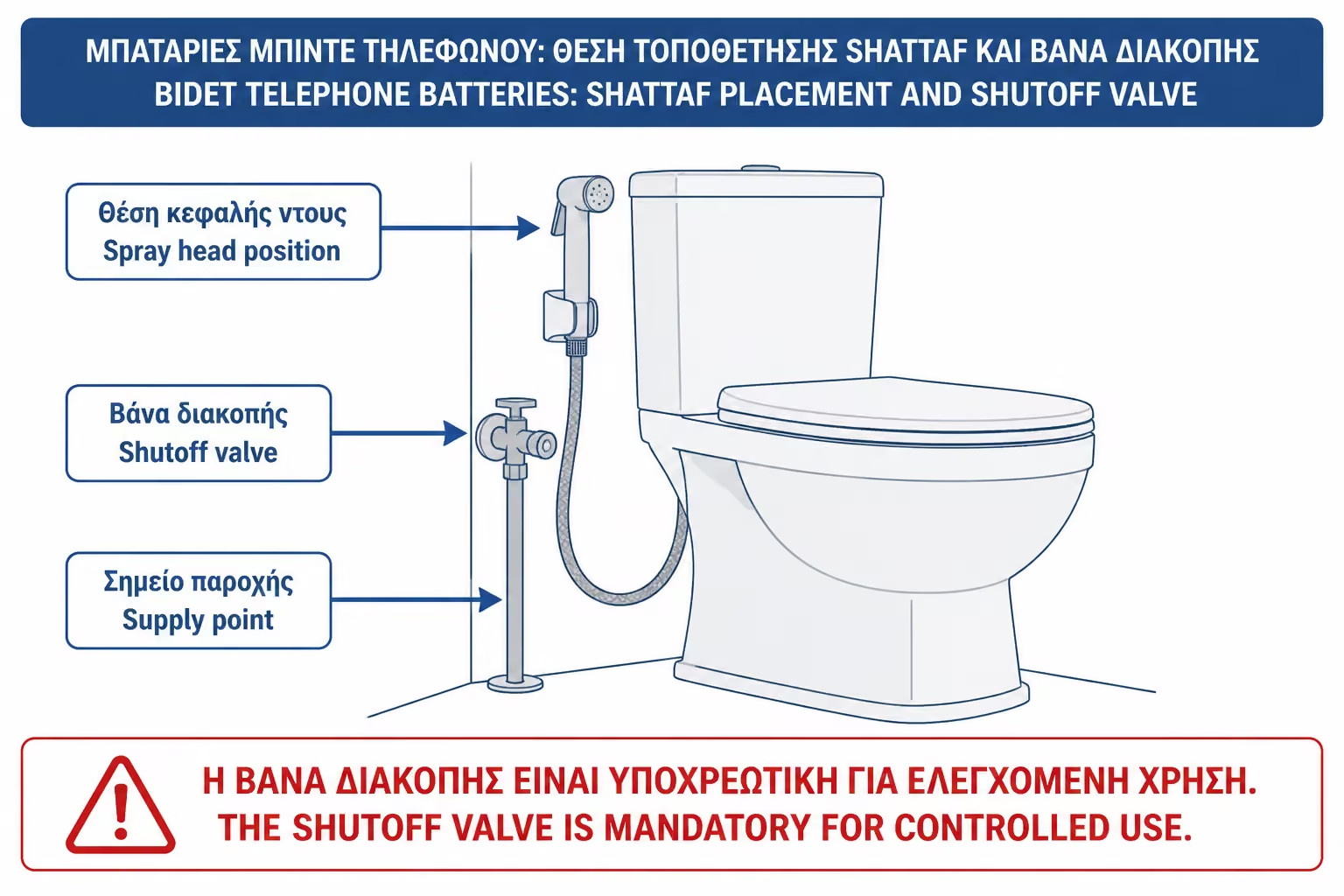
It is usually placed on the wall to the right or left of the toilet, at a height that the seated user can reach. There are sets that include the spray handset, hose, bracket and mixer or shut-off valve. In simpler installations, it is connected with a T-valve to the cistern supply. In more correct or custom installations, a separate supply with its own valve is provided.
In the Greek market there are very affordable bidet sprays, even as simple spare parts for a few euros, but also complete wall-mounted sets in black, gunmetal or brushed gold with prices that can exceed €180. ([rellosgreen.gr](https://rellosgreen.gr/en/003850000001-thlefono-lefko-bide-novara.html?utm_source=chatgpt.com), [watermart.gr](https://watermart.gr/en/product-category/banio/eidi-ygieinis/toualeta/thlefona-mpinte/?srsltid=AfmBOorBcchUuMEUT-uRtPDDL34I13SlgLFN1s-rIW4PJAP6h1PylOKB&utm_source=chatgpt.com)) This shows that we are not talking about a single product quality. One thing is a simple plastic spray head, another is a full metal kit with valve, support and finish.
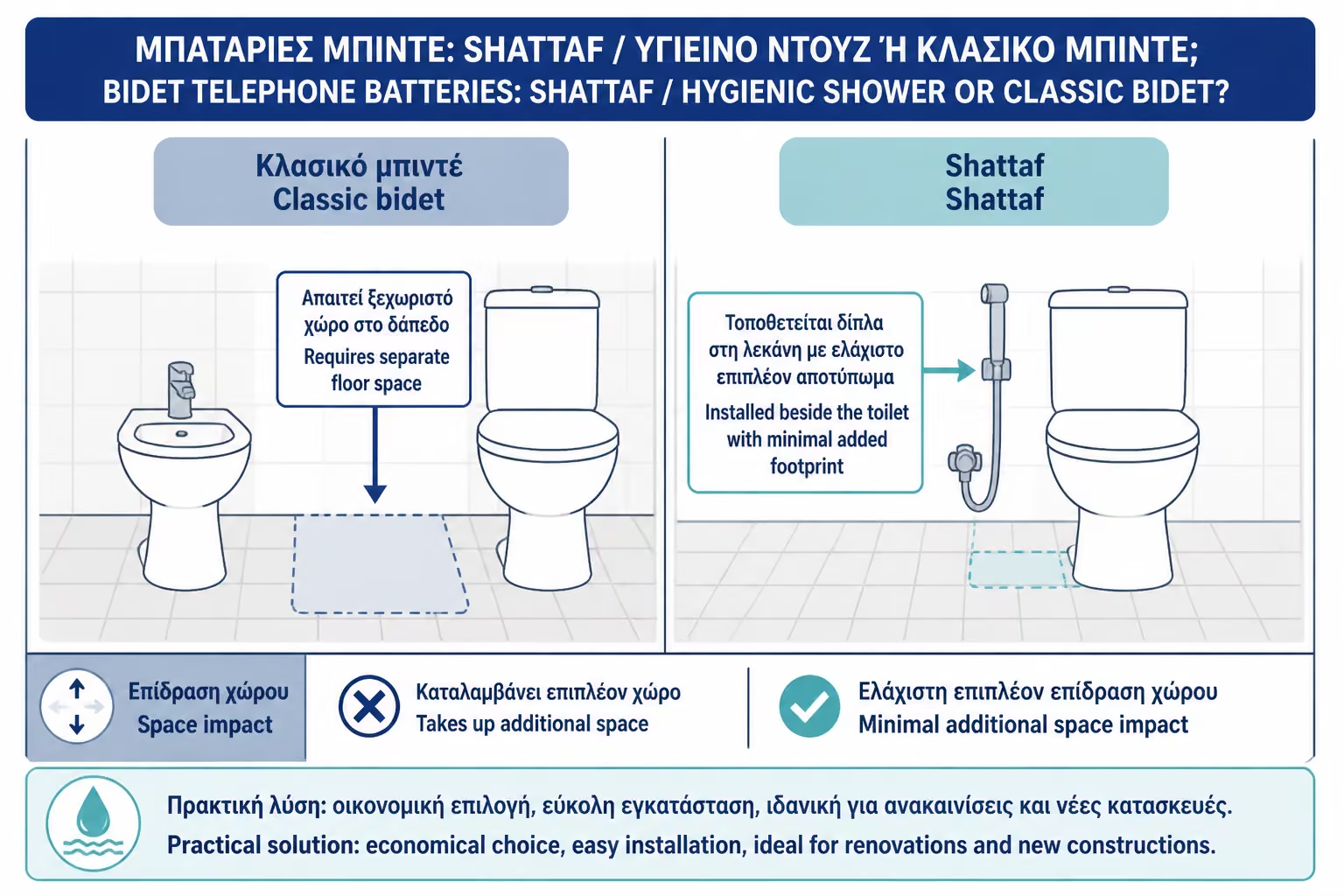
The classic bidet needs space. It requires its own place next to the basin, water supply, drainage, siphon and cleaning. In a large bathroom it can be a comfortable and very practical solution. In small Greek bathrooms, however, there is often not the required width. If we try to fit a bidet where it doesn't fit, we sacrifice circulation, storage or the shower.
Shattaf needs minimal space. The spray handset and bracket project only a few centimeters to the wall. It doesn't need a separate basin, it doesn't need a drain and it can even be installed in a 1–2 m2 WC, as long as there is a proper supply and location. This makes it particularly useful in renovations where we want better hygiene without changing the whole layout.
The cost is also much lower. A classic bidet requires the purchase of a sanitary fixture, mixer, drainage, plumbing work and labor. A bidet spray can start from a few euros as a simple accessory and reach higher quality sets of €50–€200+, depending on material and finish. For example, a Greek store presents a complete bidet sprayer set for WC at €59 including VAT, while premium wall-mounted sets with special finishes can be around €185. ([e-bath.gr](https://e-bath.gr/en/online-store/basin-faucets/mpataries-mpinte/miktis-mpinte-316-317-318-354-leptomeries.html?utm_source=chatgpt.com), (watermart.gr)
However, the economy should not lead to a hasty settlement. The bidet spray may be cheap as a product, but a leak from a bad hose or permanently pressed trigger can cause many times the value of damage. "Smart economy" is a cheap system with correct hydraulic logic, not the cheapest component without a valve and without control.
The location of the bidet spray should be easily accessible from a seated position. It usually fits to the right of the toilet for right-handed users, or to the left if space dictates. The user must be able to pick it up, use it and put it back without twisting the body uncomfortably.
The installation height is usually close to the height of the toilet or slightly higher, so that the user can reach it but the hose does not touch the floor. If placed too low, the spray head may hit the floor or get wet. If placed too high, it becomes uncomfortable. The hose should be long enough to use but not so long that it hangs loose or tangles.
The paper case must also be considered. In small WCs, the bidet telephone and the paper holder often compete on the same side of the basin. If both get in the wrong place, they will be annoying. The correct arrangement is usually: paper holder in an easy-to-reach position and bidet spray slightly further back or lower so that they do not collide.
Before drilling tiles, sit in the basin and rehearse. Where does the hand reach? Where does the knee not hit? Where does the door not fit? Where does the basin lid not bother? In such a small component, ergonomics can be seen in action.
Most simple shattafs are connected to cold water only, usually from the cistern supply. It is the simplest and most economical solution. It does not require a small mixer, just a supply, valve and spray handset. In many homes, this is enough.
The downside is the temperature. In winter, cold water can be unpleasant. For more comfortable use, there are solutions with hot and cold water, i.e. a small bidet/hygienic shower mixer that mixes the two supplies. This is more comfortable but clearly more demanding to install, because it also needs a hot supply near the basin.
If there is a complete renovation, it is worth thinking about whether you want hot and cold water in the future. Planning the plumbing outlets is then relatively easy. If the bathroom is already finished, bringing hot water next to the toilet can be disproportionately difficult and expensive.
Attention is also needed to the safety temperature. If hot water is connected, there must be a control so that excessively hot water does not come out in a sensitive area. In such solutions, the plumber must evaluate whether thermostatic mixing or temperature limitation is needed. The simplicity of cold water also has a safety advantage.
One of the most important points is the isolation valve. The bidet spray should not be left permanently under full pressure with only the trigger controlling the flow. The trigger is not designed to function as a single long-term safety valve. If it breaks, if it is left slightly open or if it is pressed accidentally, it may leak.
The correct logic is to have a valve before the hose, so that after use the user can turn off the supply. Many complete sets include a shut-off valve or mixer that interrupts the flow. In simple installations, an angle switch or T-valve with isolation capability can be installed.
This is especially important in apartments. A small leak next to the basin can seep onto the floor, run downstairs or cause damage to furniture, doors and baseboards. The cost of a good valve is very small compared to the damage it can prevent.
The practical instruction to the user is: use the phone, release the trigger, close the valve. If this seems tiring, go for a higher quality product with a secure switch, but don't rely on a cheap plastic phone that is constantly under pressure.
Shattaf is used in sensitive area and needs controlled flow. If the mains pressure is high, the water can come out very strongly. This is unpleasant and can result in splashes on the floor, wall or out of the basin.
The volume depends on the mains pressure, the diameter of the phone, the type of trigger and the valve. On some phones, the flow is too sharp. On better models, the trigger allows for more progressive control. If there is too much pressure, the plumber may consider a pressure reducer or adjustable valve.
In small WCs, excessive pressure is even more annoying because water can splash out and wet the floor. Also, if the hose or spray handset is of poor quality, high pressure increases the stress on the connections.
The right feeling is not a “powerful shower”. It is a controlled, clear flow. If the user is afraid to pull the trigger, the product or pressure is not set correctly.
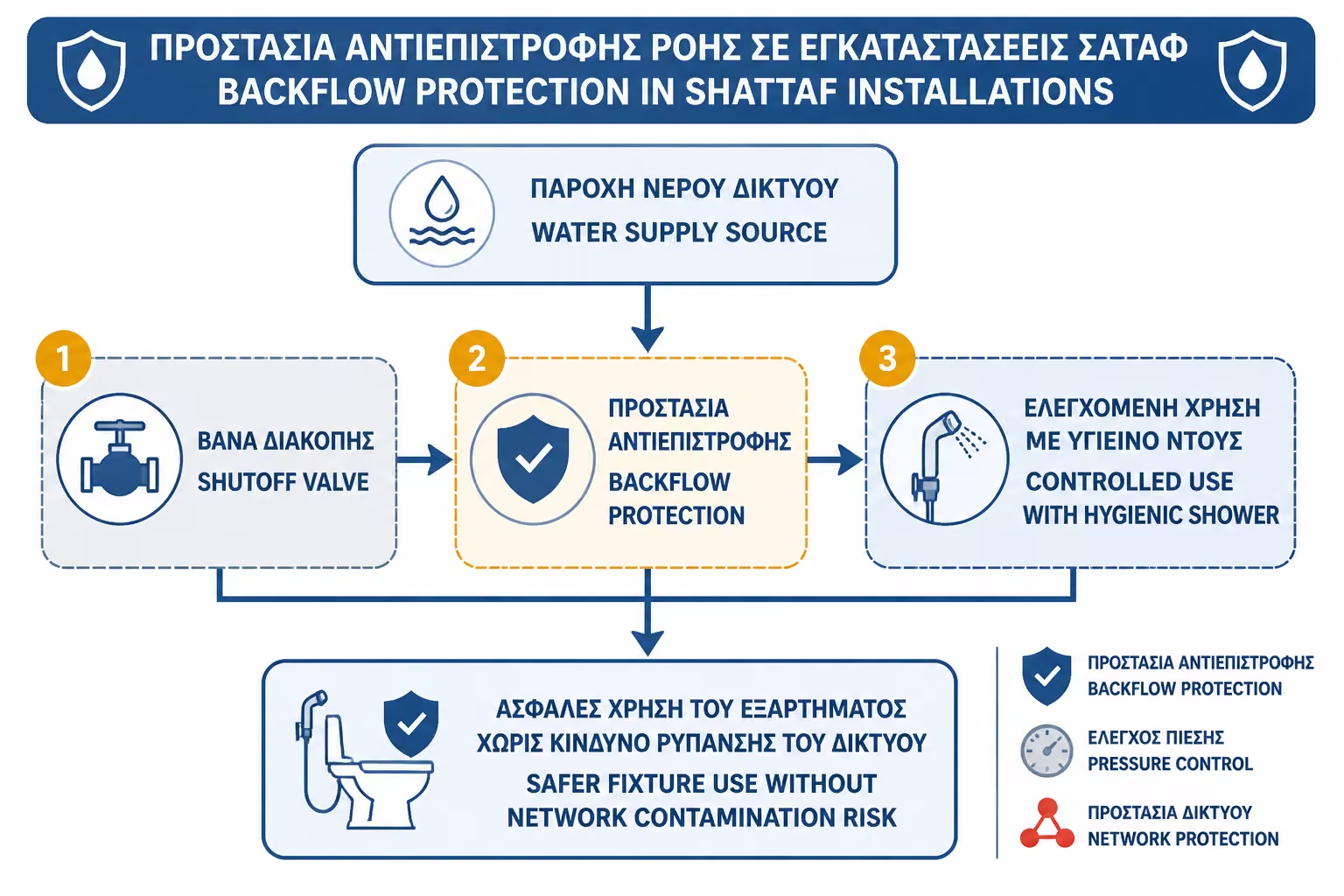
The bidet spray is located next to the toilet. If the nozzle falls into the bowl or comes into contact with contaminated water, there is a theoretical risk of contaminated water returning to the water supply in case of underpressure or other conditions. That is why in several countries bidet sprays are treated as high-risk points for backflow.
Water Regs UK states that bidets with a hose handset or ascending spray belong to a category that needs appropriate fluid category 5 protection, such as a break tank with a Type AB air gap. APHC has also published guidance on the safe installation of toilet and bidet douche sprays, noting that questions about the correct installation of these devices have increased.
We are not mechanically transferring British regulations to Greece, but the technical principle applies: the plumber must ensure that there is no risk of contaminated water returning to the network. This may mean a suitable non-return valve, shut-off, correct spray position, avoiding contact with the bowl and solutions according to local practice and regulations.
The owner should not buy a T-piece and casually connect the spray because it “works”. The fact that there is pressure and water comes out does not mean that the installation is hygienically and hydraulically correct.
In existing WCs, the most common solution is to connect to the supply that feeds the cistern. A T-valve or special shut-off is usually placed between the corner switch and the cistern tube. From there it spirals towards the bidet spray. This solution is fast, economical and does not require opening walls.
The advantage is obvious: it is easily installed in many existing bathrooms. The disadvantage is that it usually only gives cold water and depends on the quality of the connections. If cheap fittings are used, bad PTFE sealing, worn hoses, or if there is no good isolation valve, the risk of leakage increases.
There must also be enough space around the supply. In many Greek WCs, the cistern supply is very close to the wall, low or behind the basin. If protruding tuff is inserted, it can be annoying or unsightly. In built-in cisterns, the supply may not be accessible in the same way. A different prediction is needed there.
If a renovation is being done, the best solution is often a separate supply for the bidet spray, in the right place and with its own valve. It's cleaner and more secure than rough connection afterwards.
If the bathroom is being completely renovated, you can provide a wall-mounted set with a special battery or switch for a hygienic shower. This gives a cleaner result than simply connecting to the cistern. Supplies come out in the right place, the spray handset has its own stand and the faucet/mixer is aesthetically integrated.
In this case you can also choose hot-cold if you want. The finish can also match the rest of the components: chrome, matte black, brushed gold, gunmetal. On the market there are complete wall-mounted bidet sets in special finishes, which shows that the solution is no longer just a handy accessory but part of the bathroom design.
The crucial thing is to decide before the walls close. The position of the supply, the height, the side of the basin and the relation to the paper tray must be planned from the beginning. If you remember it after the tiles, the solution will either be external or require breaking.
For more premium renovations, the wall-mounted set is the best aesthetic solution. For a simple upgrade of an existing WC, the connection to the cistern is more economical, as long as it is done correctly.
The main use is personal hygiene after using the toilet. The user directs the flow into the basin, uses the water, and then dries with paper or a small towel, depending on habits. The advantage is that the need for intensive paper use is reduced and the sense of cleanliness is improved.
Use should be done with low to medium pressure. No need for strong streaming. At first the user should test carefully to understand the intensity. If the phone has a trigger with a sharp opening, it needs attention. Better products have a more controlled flow.
The phone should always return to its stand and not be left on the floor or in the basin. This is a matter of health and safety. Also, the valve should be closed after use, especially in simple systems.
In families with the elderly or people with reduced mobility, the shattaf can significantly help autonomy, as long as its position is ergonomic and the pressure is controlled. In such cases, installation must be done even more carefully so that awkward body rotation is not necessary.
The bidet spray is also very useful for cleaning. It can rinse the bowl, clean places that are hard to reach, help wash the toilet, wash sides or clean children's items. In small WCs, this practicality is important.
But it should be used in moderation. If the pressure is high, water may be thrown onto the floor, wall or furniture. If the floor does not have a siphon or proper flow, the water will remain. In a WC without a floor drain, it should not be treated as a mini-washing machine. It is a controlled rinsing tool, not a cleaning hose.
If it is used frequently for cleaning, make sure there is good ventilation and the area around the basin is dry. Water behind the basin or around the base can create limescale, odors or damage to silicones and joints.
The correct use is to keep the flow in the basin or where it drains. If every cleaning wets the entire WC, then the pressure, position or use is not correct.
Very inexpensive bidet sprays can be plastic. They are light and cheap, but do not always have the best durability. For occasional use they may be sufficient. For a main bathroom, it is better to choose a metal spray head, a quality hose and a sturdy mixer.
The hose is a critical point. It must withstand pressure, movement and bending. A cheap hose may leak or break. Prefer good-quality hoses, suitable for mains pressure and with correct connections. Check periodically for moisture on the edges.
The support base must also be sturdy. If the spray head is dropped, hits tiles or left on the floor, it will wear out and create a hygiene problem. The base must be properly bolted, with suitable plugs for tile/wall, and in a place where it will not receive shocks.
In special finishes, such as black or brushed gold, prefer better quality and gentle care. Inexpensive colored sets can show scale or wear quickly, especially near the toilet where use is frequent.
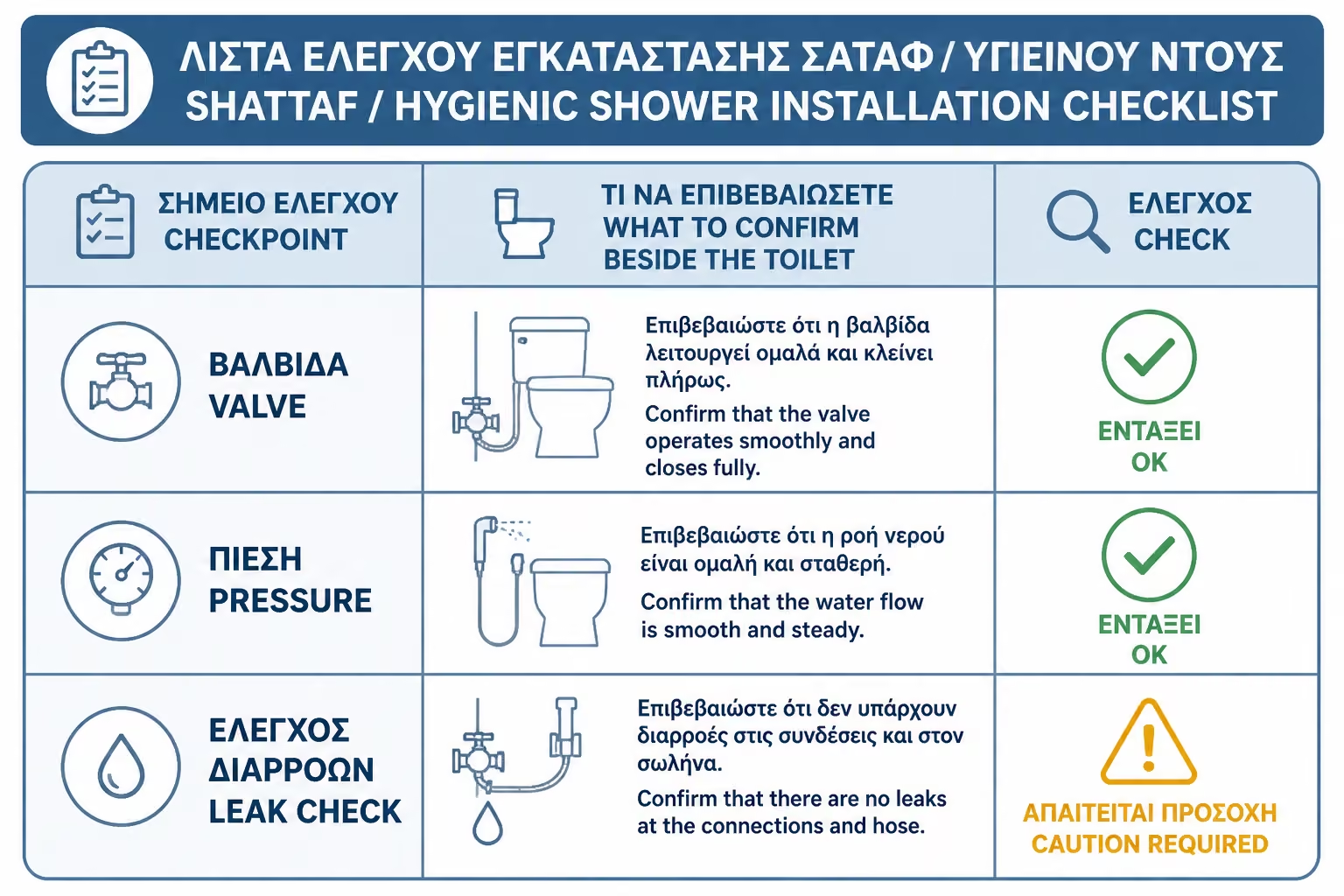
The bidet spray should be checked periodically. See if the trigger is dripping, if the hose has moisture at the ends, and if the valve closes properly, if there is scale in the nozzle, and if the bracket remains firm. A small drop should not be ignored, because it is in a place where it can wet the floor without you immediately realizing it.
Clean the nozzle gently. If it gets clogged with scale, the flow can become crooked and splash. Do not use abrasive sponges or strong degreasers on special finishes. Follow the manufacturer's instructions, especially on black, gold or brushed product.
If the spray remains permanently under pressure and begins to drip, close the valve immediately. If there is no valve, this is an indication that the installation needs an upgrade. You should not wait for it to "stop on its own".
In apartment buildings, even a small leak can cause a problem downstairs. Maintenance of a shattaf is simple, but should not be neglected.
The bidet spray is extremely practical, but it is not always the best solution. The classic bidet is more comfortable when there is space. It offers a stable position, hot/cold water, more controlled use and less risk of getting the floor wet. If the bathroom is large and used daily, the bidet remains a very good choice.
The electronic bidet seat or shower toilet seat is another category. It offers washing with an integrated nozzle, often with heated water, a seat, settings and, in premium models, drying. Geberit says that bidet functions can be added to an existing basin with a special shower toilet seat, often without structural measures, depending on the case.
The disadvantage of electronic seats is the cost, the need for an electrical supply and compatibility with the pelvis. In many Greek WCs, there is no socket near the basin or the electrical installation must be done with care due to bathroom zones.
shattaf is the simplest, cheapest and most flexible solution. The bidet is more comfortable if there is space. The electronic seat is more premium but requires budget and infrastructure.
The cost depends on whether we are talking about a simple spray head, a complete set, a wall-mounted tap, a special finish or a hot/cold installation. Prices vary widely.
| Solution | Indicative cost of Greece 2026 | When does it make sense? |
|---|---|---|
| Simple replacement spray head | 3–20€ | Replacement of existing, very economical solution |
| Simple spray set + hose + bracket | 20–60€ | Basic installation with cold water |
| Complete bidet sprayer set with switch | €50–€120 | A more correct and clean solution |
| Special black/gunmetal/gold finish | 100–250€+ | When we want it to match the design |
| Hot/cold bidet faucet with telephone | 120–400€+ | Complete renovation, greater comfort |
| Electronic bidet seat / shower toilet seat | 300–1,500€+ | Premium solution, needs water and electricity |
| Plumbing work | Wide variation | Subject to existing plumbing outlets and required alterations |
Prices are indicative and are affected by VAT, material, hose quality, finish, whether a valve is included, whether a T-valve or new supply is needed, and whether hot water will be added. Don't just judge the price of the spray head. The valve, hose and correct installation are equally important.
As a simple upgrade, a good €50–100 set with the right valve often makes more sense than the cheapest spray head on the market. In a complete renovation, it is worth providing a clean wall-mounted supply with a proper finish.
The first mistake is not having an isolation valve. The spray is permanently under pressure and if the trigger breaks, there is a risk of leakage.
The second mistake is the casual connection with a cheap T-fitting. If the connections are not of good quality, they may drip behind the basin, where it is not easily seen.
The third mistake is the wrong position. If the spray is too far back, too low, or on the opposite side of physical use, it will be uncomfortable.
The fourth mistake is excessive pressure. If the water comes out too strong, it will splash and be unpleasant.
The fifth mistake is ignoring feedback. The connection to the water supply network must be made with hydraulic logic and not just "to draw water".
The sixth mistake is to use it to wash the entire WC without a floor siphon. If the floor does not drain, water will remain and cause problems.
| Inquiry | Yes / No |
|---|---|
| Is there a water supply available near the basin? | Yes / No |
| Is an isolation valve provided before the hose? | Yes / No |
| Is the spray position accessible from a seated position? | Yes / No |
| Does the hose avoid touching the floor or stretching too much? | Yes / No |
| Does the paper holder avoid clashing with the bidet spray? | Yes / No |
| Is the water pressure controlled and not too strong? | Yes / No |
| Does the spray head have a quality trigger and avoid dripping? | Yes / No |
| Is the hose good quality and suitable for mains pressure? | Yes / No |
| Has the issue of backflow from a plumber been considered? | Yes / No |
| Can't the nozzle easily fall into the basin? | Yes / No |
| If you want hot water, are facilities provided before the walls are closed? | Yes / No |
| Does the solution fit aesthetically with taps, accessories and board? | Yes / No |
If there is no valve, proper position and pressure control, don't just put a spray head in because it's cheap. The right installation is what makes the solution really smart.
If you must keep only one thing, keep this: the shattaf is a great solution for small bathrooms, but it should not be permanently pressurized without a proper valve. The cheap spray head isn't the problem; the sloppy connection is. Ask the plumber for proper flow, isolation valve, quality hose, pressure control and backflow protection where required. Done right, it's one of the most economical and practical personal hygiene upgrades. If done carelessly, it can become a source of leaks.
Bidet sprays, shattaf systems and hygienic shower sets are a smart and economical alternative to the classic bidet. They offer better personal hygiene, reduce the need for a large second toilet and can even fit into very small WCs. For Greek bathrooms where space is limited, it is often the most realistic solution.
However, their success depends on the correct installation. They need an isolation valve, a quality hose, proper location next to the toilet, controlled pressure and hydraulic provision for backflow. They should not be treated as a simple accessory that is casually attached to a T-piece. Just because it's small and inexpensive doesn't mean it can't cause a leak or sanitary problem if installed incorrectly.
For a simple upgrade of an existing WC, a good set with cold water and a proper valve is often enough. For a complete renovation, it is worth providing a separate wall supply, possibly with hot/cold water, a better finish and a clean aesthetic integration. For greater comfort and budget, electronic bidet seat or shower toilet can be the next category.
The best solution is one that is easy to use, does not splash, does not drip, is easy to clean and closes securely after use. If these are observed, the bidet spray is one of the most practical small investments you can make in a bathroom.
Return to category.
Go to categoryReturn to the central guide.
Go to guide