
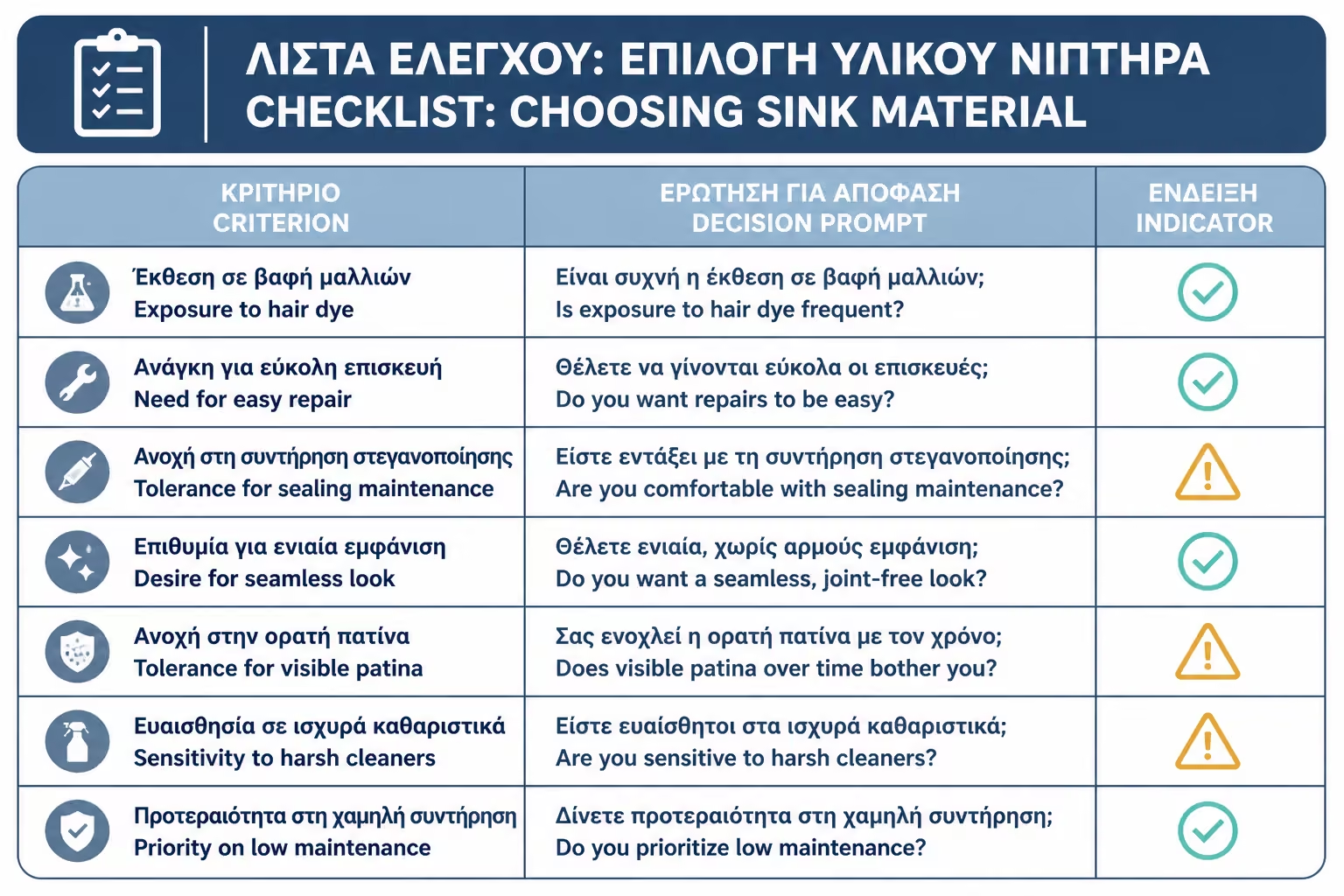
Bathroom Fixtures & Water Equipment
Return to category.
Go to categoryThe sink is not only tested by water. It is tested by soaps, toothpastes, shaving foams, salts, cosmetics, cleaners, hair dyes, acetone, hard sponges and everyday rush. That is why the choice of material is not just a matter of aesthetics. It's a matter of durability, maintenance and realism.
At bathroom shows, all materials look beautiful. Porcelain shines clean, Corian and solid surfaces look modern and uniform, natural stone gives a feeling of luxury, while the concrete or concrete-look washbasin brings a more architectural, industrial image. But the question is not how they look on the first day. The question is how they behave after months of use.
A wash basin in a guest toilet can accept light use: hand washing, a little soap, a little water. A sink in a master family bathroom holds much more. Hair dye will fall there, straighteners or razors will touch, toothpaste will be left, it will be hastily cleaned with whatever is in the cupboard and it will fill with salts if the water in the area is hard. The same material that's great in a guest WC can be tiresome in a heavy-use master bathroom.
The big mistake is that many owners choose material based on the photo and then expect it to behave like white porcelain. This is not always the case. Natural stone can stain or scratch if not protected. Concrete needs sealing. The solid surface can be scratched, but is often repaired. Porcelain is the safest everyday choice, but it can break or "bang" if hit by a strong object.
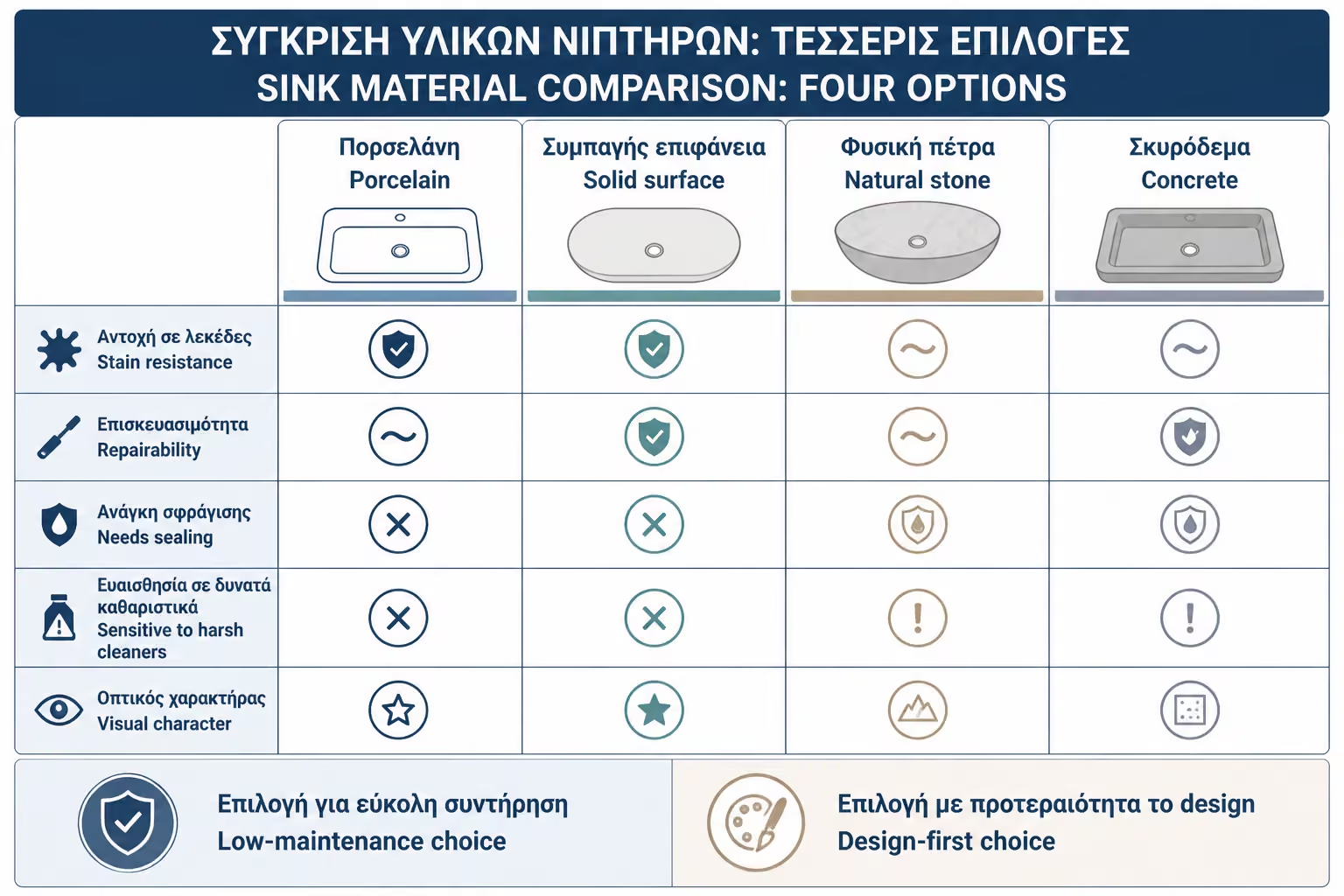
In this guide we will compare the basic washbasin materials found in Greek renovations: porcelain, Corian or more generally solid surface, natural stone and concrete. We will see what resists stains better, what scratches easier, what is easier to clean, which material is more suitable for hair dyes and which needs more maintenance to stay beautiful.
In bath products, over-promising is common. "It doesn't stain", "it doesn't scratch", "it doesn't hurt", "it's forever". In practice, all materials have limits. The difference is what limits they have and how easily they are overcome by daily use.
Porcelain holds up very well to common cleaners and everyday stains, but it can be dented. Corian and solid surfaces give a uniform, modern look and can in many cases be repaired or sanded, but they don't like strong abrasions, high heat or stubborn paints that stay for a long time. Natural stone has a unique look, but is often porous and sensitive to acids. Concrete has a very special aesthetic, but its durability largely depends on the sealer, i.e. the sealing of the surface.
That's why there is no "best material" in general. There is better material for a specific use. Other hardware needs a children's bathroom, another boutique WC, another Airbnb, another adult master bathroom and another bathroom where hair dyes are done at home.
A practical example: a black stone washbasin can be impressive in a guest WC. But if he enters a bathroom where hair is dyed every month and cleaned with strong acids for salts, he can tire quickly. Conversely, a good white porcelain can look plainer, but hold up much better to heavy everyday use.
Porcelain remains the benchmark in bathroom sinks. It's no accident. It is hard, smooth, hygienic, easy to clean, widely available and available in many prices, shapes and sizes. For the average homeowner who wants a material without special requirements, porcelain is usually the safest choice.
Its great strength is the surface. Good ceramic surfaces are dense and smooth, which helps them not hold dirt easily. Villeroy & Boch states for bathroom ceramics that daily care can often be done with clean water and a fresh cloth, while water marks, greasy residues and soaps can be removed with a bathroom cleaner or a mild descaling product, always according to the instructions for use.
This means that porcelain is tolerable in real life. If toothpaste falls and stays for a while, it's usually not a problem. If a common bathroom cleaner is used, it does not require the same care that natural stone would. If there are salts, they can be cleaned more easily than porous materials.
But she is not invulnerable. Harsh abrasives, wire sponges, cleaning powders and very aggressive products can dull or scratch the surface over time. Villeroy & Boch warns to avoid very harsh cleaners and products that can scratch ceramic surfaces or affect special coatings such as CeramicPlus.
For most Greek bathrooms, especially master family bathrooms, rentals and residences where practicality comes first, porcelain is the least risky solution.
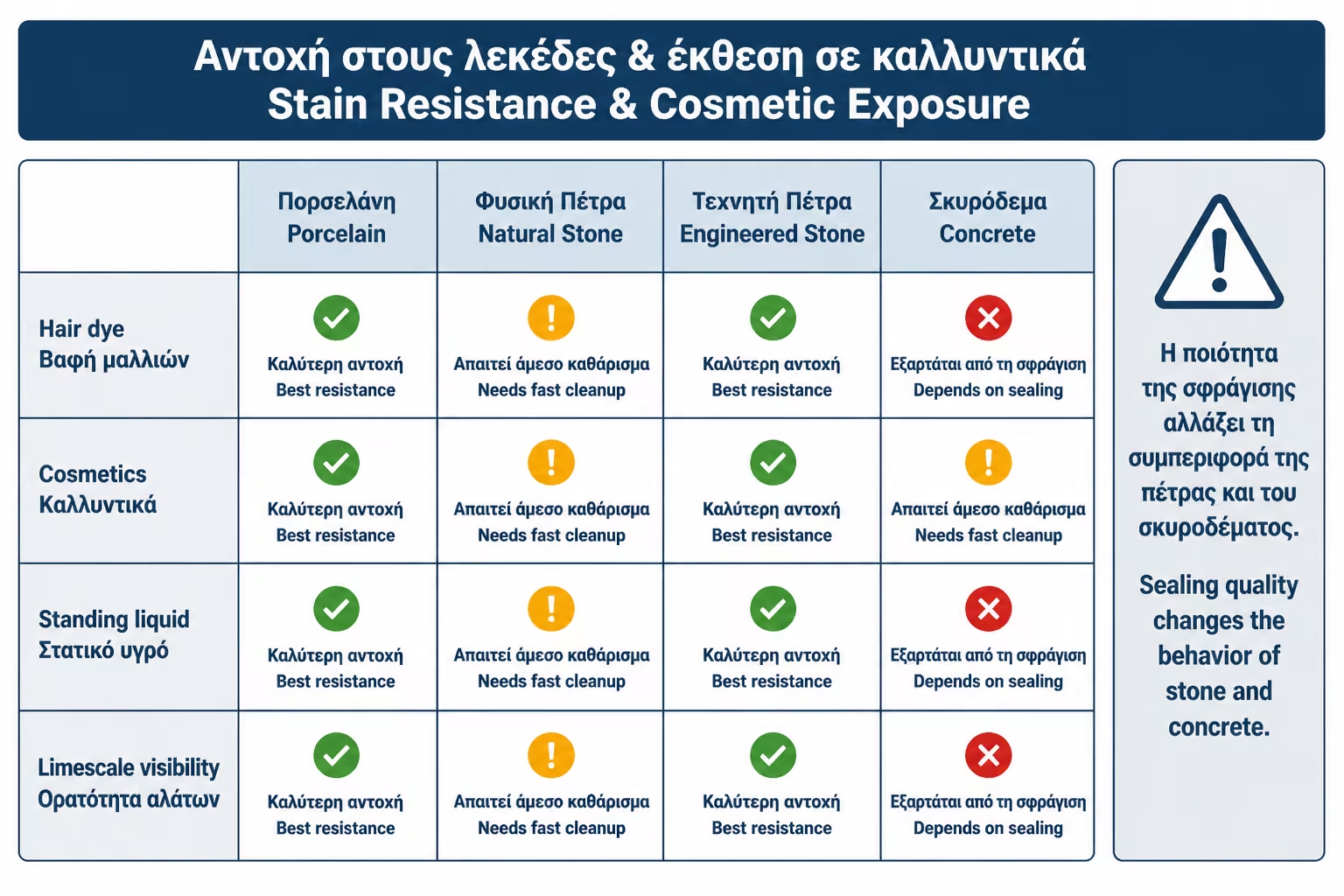
Hair dyes are among the most difficult tests for a sink. It's not just soap. They are pigments that can leave strong marks, especially if left on the surface. On white porcelain, if the paint is cleaned off immediately, there is usually a good chance that it will not leave a permanent mark. But if it stays for a long time, especially in places with small scratches or a worn surface, it can become difficult.
The advantage of porcelain is that, because its surface is smooth and non-absorbent in good condition, it does not "suck" stains like a porous material. This helps her in dyes, cosmetics and everyday products. But the immediate reaction remains important. The paint must be removed immediately, without rubbing with a hard sponge.
A practical scenario: in a home where hair coloring is often done in the bathroom, porcelain is safer than natural stone or concrete. If paint is spilled, wash it off quickly, wipe with a mild cleaner and soft cloth, and avoid leaving paint on the lip, valve or around the overflow. If the sink is black or colored, the stains may look different, but the main issue remains the surface and not just the color.
If hair dyeing is a frequent task at home, the most practical combination is good quality white or light porcelain, not a porous material and not a matte surface that you do not know how it will react to chemicals.
Corian is a trade name for a well-known solid surface material, but in the everyday market the term is often used generically for similar acrylic or composite materials. In this article, when we talk about Corian/solid surface, we mean the solid synthetic surfaces used in countertops and sinks, often with a matte or satin finish and the possibility of single forms.
The big advantage is aesthetics and repairability. Solid surfaces can provide uniform surfaces, fine lines, modern shapes and, in many cases, minor scratches can be reduced or repaired with proper sanding by a technician. This makes them particularly popular in more modern bathrooms.
But it is not porcelain. They are more susceptible to scratches from hard objects, intense heat and some stubborn stains if not cleaned quickly. The Corian manufacturer states in the care instructions that, for most everyday situations, cleaning with soapy water or common ammonia cleaners and good drying help to prevent film or marks, while for more stubborn stains there are specific procedures depending on the type of surface.
The advantage of repair is important, but it should not lead to negligence. Just because a material can be sanded or restored doesn't mean it should be abused. In a heavily used bathroom, scratches around the valve, marks from metal objects and cosmetic stains can appear more quickly than on porcelain.
Hair dyes need special attention on solid surfaces. If they are wiped immediately, there is usually a better chance of cleaning. If left, especially on a matte or more porous textured surface, they can leave a shadow or coloring that needs more special treatment.
The good thing about solid surfaces is that many surface damages can be treated with a special process. The downside is that this process isn't always something the owner can do themselves without instructions. If sanded locally with the wrong sandpaper or sponge, it can create an uneven finish. In glossy or semi-gloss finishes, unevenness is more visible.
For bathrooms where hair is frequently dyed, the solid surface is not prohibitive, but it is not the most "careless" choice. It requires immediate cleaning, surface protection and knowledge of the manufacturer's instructions. If the owner wants a material that requires no thought, porcelain is usually safer.
A practical example: in a master bathroom with a single counter and solid surface sink, the image can be excellent. But if the same surface is used for hair dyes, make-up, acetone and metal tools, there must be a protection routine: towel or protector under products, immediate wiping of pigments and avoiding strong cleaners without control.
Natural stone is one of the most impressive options for a sink. Marble, granite, travertine, onyx, basalt, stone bowls and carved troughs give the feeling of a unique object. No piece is exactly the same as another. This is the charm of the stone.
But this same uniqueness is accompanied by practical requirements. Stone is not a single material with stable behavior. Marble is another, granite is another, travertine is another, limestone is another. Some stones are more porous, some harder, some more sensitive to acids. The Natural Stone Institute recommends cleaning natural stone with a neutral cleaner, special stone soap or a mild liquid detergent with warm water, a good rinse and drying with a soft cloth.
The main problem with stone in the bathroom is that many common cleaners do not suit it. Vinegar, lemon, strong descalers and acidic cleaners can chemically etch or "burn" special marble and limestone materials. This phenomenon is called etching and it is not a stain in the simple sense. It is an alteration of the surface. Natural stone care sources warn against acidic DIY cleaners like lemon or vinegar, especially on marble, because they can cause tarnishing or etching.
In a bathroom where the owner wants easy maintenance, stone needs a second thought. In a guest WC or design bathroom for adults, it can be wonderful. In a children's bathroom or an area with hair dyes and strong cleaners, it is more risky.
Natural stone can stain if it is porous or if it is not properly sealed. Hair dyes, oils, cosmetics and some cleaners can penetrate the surface or leave a mark. How easily this happens depends on the type of stone, the finish, the sealer and how long the stain is left on.
Marble, for example, is beautiful but sensitive to acids and stains. Granite is usually more durable, but it also needs proper sealing and care. Travertine and other porous stones can be even more demanding. In stone sinks, the inner trough is constantly receiving water and products, so protecting the surface is critical.
If hair dyeing is done in the bathroom, natural stone is not the safest choice for the basic sink. A paint stain on porous stone can be difficult or impossible to completely remove without professional intervention. Even if removed, a difference in finish may remain.
For owners wanting stone, the most realistic advice is to use it in a guest WC or low-stress bathroom, choose a stone suitable for wet areas, ask for clear sealing instructions and avoid hair dye, acetone and acids on the surface.
Washbasins made of concrete or concrete-look materials became popular due to the industrial and minimal aesthetics. They have a matte texture, natural imperfections, earth tones and often look very architectural. In combination with black batteries, wood or large tiles, they can give an excellent result.
But concrete is a porous material. Its practical strength depends largely on the sealing of the surface. If the sealer is good and maintained, the surface resists water, soaps and stains better. If the sealer wears off or is not properly protected, the concrete can absorb liquids and stain. Concrete basins care sources state that the protective seal is what provides a barrier against stains and moisture, and that over time it needs resealing depending on use.
Concrete can also develop a patina. For some that's part of its beauty. For others it is a flaw. Before choosing it, you need to know if you want a material that changes slightly over time or if you want a surface that stays the same as long as possible. If you want absolute uniformity, concrete can stress you out.
In a heavy-use master bathroom, the concrete sink needs attention. In a guest WC or bathroom with careful use, it can be very successful. The crucial thing is not to treat it like porcelain. It requires gentle cleaning, drying, avoidance of aggressive chemicals and periodic maintenance of the sealer.
In concrete sinks, hair dyes and strong cosmetics are high risk. If the material is properly sealed and the stain is cleaned immediately, no mark may remain. But if the paint remains, if the sealer has worn off or if there is a micro-scratch, the material can absorb paint.
Concrete basins care guides state that signs of mineral deposits or cosmetics may appear, with general cleaning using mild liquid soap and a damp cloth, while for greasy stains a careful use of baking soda paste can help, noting that soda is slightly abrasive and should be used sparingly.
This shows something important: concrete is not a material for aggressive sanding. If the owner starts scrubbing stains with hard sponges or strong cleaners, it can wear down the sealer. When the sealer wears off, the material becomes more vulnerable to new stains. Thus a vicious circle is created.
If hair dyes are done at home, concrete is not the most practical choice for the basic sink. If it is chosen for design reasons, a clear rule is needed: dyes, strong coloring products and acetone are not used directly on the sink and are cleaned immediately if they fall.
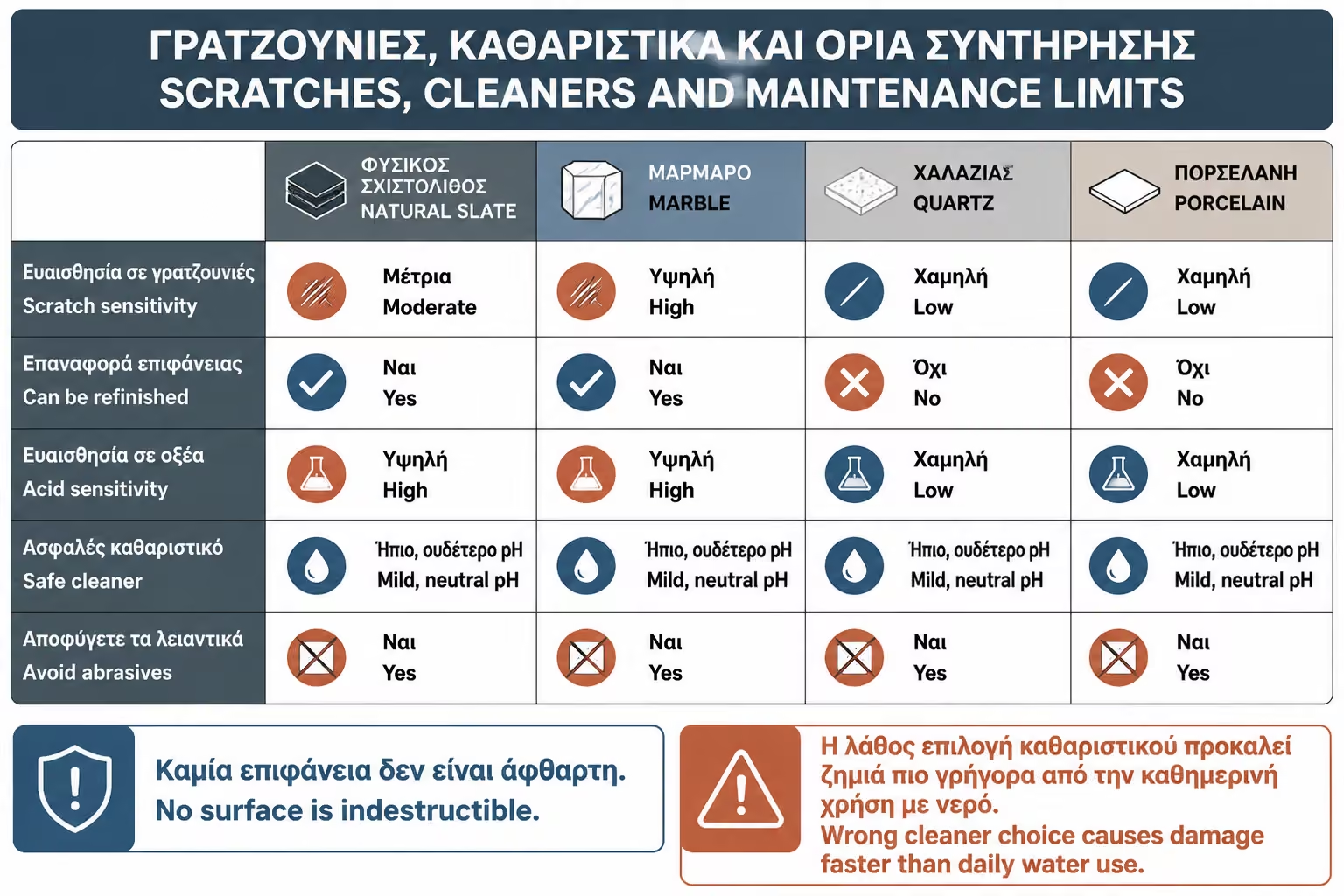
Scratch resistance depends on the material, finish and how it is used. Porcelain is generally very good in everyday use. It doesn't mean it never scratches, but it holds up better than many matte or synthetic materials. The solid surface can be scratched more easily, but has the advantage of being often repaired. The stone depends on its type. Marble is more sensitive than granite. Concrete is very sealer and finish dependent.
| Material | Scratch resistance | Practical interpretation |
|---|---|---|
| Porcelain | High in daily use | Avoid abrasive powders and wire sponges |
| Corian / solid surface | Medium | Scratches, but often repaired or sanded |
| Marble / soft stone | Lower to medium | Sensitive to etching, acids and incorrect cleaners |
| Granite / hard stone | Better than marble | Needs sealing and pH-neutral cleaning |
| Concrete | It depends on the sealer | The sealer protects; if it wears down, the risk increases |
In practice, most scratches on the sink are not caused by water. They are made of jewelry, watches, metal cosmetics, razors, hard sponges and cleaning powders. On matte surfaces, even small scratches can be more visible because the texture changes.
If you want a material that will forgive hard daily use, porcelain is usually the safest. If you want repairable material, solid surface has an advantage. If you want a natural look, stone and concrete require more attention.
For common bathroom stains, porcelain is again the safest overall choice. It has a smooth, non-absorbent surface and is relatively easy to clean. Solid surfaces are good for everyday marks, but strong pigments and strong products need to be cleaned quickly. Stone and concrete depend on sealing and maintenance.
| Material | Soap / salt stains | Hair dye stains | Comment |
|---|---|---|---|
| Porcelain | Very good behavior | Good if cleaned immediately | The safest for heavy use |
| Corian / solid surface | Good with proper cleaning | Moderate risk if paint remains | It may need special rehabilitation |
| Natural stone | Depends on stone/sealer | High risk on porous stones | Avoid dyes and acids |
| Concrete | It depends on the sealer | High risk if the sealer wears out | It needs immediate wiping and maintenance |
Hair dyeing is a special case. If this is a frequent use, it is best not to choose a porous or sensitive material for the basic sink. If you absolutely want stone or concrete, use them in a second bathroom or guest WC where no such work will be done.
Also, beware of acetone and nail polish removers. They can affect some synthetic surfaces, finishes and sealers. They should not be considered harmless because they are used "in the bathroom".
Porcelain needs gentle but not overly sensitive cleaning. Clean water, a soft cloth, common bathroom cleaner and a mild descaler when needed, always with a rinse, are usually enough. Avoid wire sponges, abrasive powders and very hard products.
Corian and solid surfaces require regular cleaning with soapy water or mild detergents and good drying so that no film remains. For more stubborn stains, follow the manufacturer's instructions depending on the finish. We don't improvise with harsh chemicals or topical scrubbing that can change the texture.
Natural stone needs a neutral pH. The Natural Stone Institute recommends a neutral cleanser, stone soap or mild detergent, a good rinse and drying. Vinegar, lemon, acid softeners, harsh cleaners and abrasives are avoided. For stains, a special stone product or poultice is often needed, not a random cleaner.
Concrete needs cleaning that protects the sealer. Mild soap, soft cloth, rinse and dry are the basics. Some concrete basin guides recommend daily or frequent rinsing with hot water to keep soaps and residue from building up, without harsh chemicals. Periodic resealing may be necessary, depending on product and use.
In Greece, salts are a real issue in many areas. Hard water leaves white marks around the valve, trough, lip and around the battery. They are less visible on white porcelain and are relatively easy to clean. On a black solid surface, stone or concrete, they can be seen much more.
Porcelain has an advantage because it better withstands mild desalination. Natural stone has a disadvantage because many descalers are acidic and can damage it. Concrete also needs attention, because strong products can affect the sealer. Solid surface is somewhere in the middle: it can be cleaned, but it needs the right product and not aggressive scrubbing.
If the house has very hard water and the owner does not want daily wiping, porcelain is the most practical solution. If he wants stone or concrete, he must accept more frequent drying and gentler cleaning. If he wants a black or dark finish, he should be aware that the salts will be more visible.
A practical criterion: look at today's faucet and shower glass. If they build up within a few days, a dark porous sink will require more care than you might expect.
The bathroom sink is not a lab bench. Nevertheless, it accepts many products that can affect surfaces: hair dyes, oxygen, acetone, make-up, oils, perfumes, cleaners, and even hot hair tools that touch accidentally.
Porcelain holds up well to most everyday products, but can be hit by heavy objects. The solid surface can be affected by heat or solvents depending on the product. The stone can be stained by oils and chemically etched by acids. Concrete can be affected if the sealer is exposed to strong chemicals or heat.
In a bathroom where cosmetics and paints are often used, practicality is of great importance. It is good to have a tray, guard or work surface that is not the trough itself. Many problems come not from washing, but from using the sink as a paint, make-up and tool counter.
If there is frequent use of acetone or dyes, avoid materials of uncertain durability or ask the supplier for written maintenance instructions. The phrase "easy to clean" is not enough. Ask specifically about hair dyes, acetone and softeners.
The prices vary greatly depending on the size, brand, material, finish, type of installation and whether the washbasin is a finished product or custom made. In Greece, porcelain remains the most affordable and wide choice, while solid surface, natural stone and concrete often move higher, especially when we talk about countertop or custom washbasins.
| Material | Indicative cost of Greece 2026 | What to watch out for |
|---|---|---|
| Porcelain | €50–€250 for many simple/medium options | The safest everyday solution |
| Colored / matte porcelain | 120–350€+ | More aesthetics, probably more care |
| Corian / solid surface | 180–600€+ | Repairable, but beware of scratches and stains |
| Natural stone / marble | 250–800€+ | Weight, sealing, acid sensitivity |
| Concrete basin | 200–700€+ | Sealer, maintenance, possible patina |
| Custom single counter-sink | Wide variation | It depends on design, craftsman, material and cuts |
Prices are indicative and are affected by area, VAT, transport, thickness/weight, special installation, need for furniture reinforcement, battery, valve, siphon and labour. A stone or concrete sink can cost extra due to weight and the need for a sturdier piece of furniture or countertop. A solid surface sink may need specialized installation or a specialist technician for future restoration.
Don't just compare the purchase price. Compare lifetime costs: cleaners, maintenance, possible resealing, scratch repair, replacement if stained and care time.
For a main family bathroom, porcelain is usually the most practical and safe choice. If you want something more modern but still relatively controlled, a good solid surface can work, as long as you accept that it needs more careful use and possible restoration in the future.
For guest toilets, you can take a bigger aesthetic risk. There natural stone, concrete, black or matte finishes can give a very nice result, because the use is less and the stains are more limited. This does not mean that they do not need care, but the strain is less.
For Airbnb or rental, porcelain remains the most durable option in terms of the risk of use by people who do not know the maintenance instructions. If stone or concrete is chosen in such a space, there must be a very clean cleaning process by the workshop.
For a bathroom where hair is dyed, porcelain is the most logical solution. If the owner insists on a solid surface, stone or concrete, there must be a clear habit of immediate cleaning and protection of the surface. For stone and concrete, the recommendation is even stricter: avoid using them as a "painting bench".
The first mistake is choosing a natural or matte material without reading the cleaning instructions. If the material cannot withstand the cleaners you are already using, there will be a problem.
The second mistake is underestimating hair dye. Many consider it "a bathroom product", but it is one of the most difficult stains. If frequent dyeing is done, avoid porous or sensitive materials in the base basin.
The third mistake is to rub hard. On stone, concrete, matte solid surface or special finishes, the wrong sponge can do more damage than the stain itself.
The fourth mistake is choosing concrete without asking about the sealer. When was it implemented? Want a repeat? What cleaning agents are allowed to clean it? What if it stains? If there are no answers, the choice is risky.
The fifth mistake is choosing a stone because "it is natural and therefore durable". Physical does not automatically mean practical for bathing. Some stones are wonderful but demanding.
| Inquiry | Yes / No |
|---|---|
| Will the sink be used in a master bathroom or guest WC? | Yes / No |
| Do you often dye your hair or heavily use cosmetics at the sink? | Yes / No |
| Does the water in the area leave strong salts? | Yes / No |
| Have you read the cleaning instructions for the specific material? | Yes / No |
| Does the material withstand the cleaners you already use at home? | Yes / No |
| If it is stone or concrete, is it properly sealed? | Yes / No |
| Do you know when it needs resealing or special maintenance? | Yes / No |
| If it is a solid surface, is it possible to have it repaired by a technician? | Yes / No |
| Can the furniture or bench support the weight of the material? | Yes / No |
| Is the surface suitable for a matte or dark finish with the salts in your area? | Yes / No |
| Have you specifically asked about hair dyes, acetone and softeners? | Yes / No |
| Does the total cost include sink, installation, care and possible maintenance? | Yes / No |
If you can't confidently answer the questions about cleaning, painting and sealing, it's premature to buy. The material of the washbasin must suit not only the design but also the habits of the house.
If you keep only one idea from this article, make it this: the more unusual the basin material is, the more you need to understand its cleaning and maintenance before you buy it.
For heavy daily use and things like hair dye, porcelain remains the safest choice. Corian and other solid-surface materials give a beautiful contemporary look and can often be repaired, but they mark more easily.
Stone and concrete can look exceptional, but they need sealing, mild cleaners, and real attention to staining. Do not choose a material that demands care you already know you will not give it.
The choice of washbasin material is a daily decision, not just an aesthetic one. Porcelain remains the most tested and practical solution for most Greek bathrooms. It holds up well to regular use, is easy to clean and more forgiving of salts, soaps and minor accidents.
Corian and solid surfaces offer a modern, clean look and restorability, but require more careful use around scratches, heat and strong pigments. Natural stone gives a unique effect, but requires neutral cleaners, sealing and avoiding acids. Concrete has a strong design identity, but it depends a lot on the sealer and whether the owner is willing to maintain it.
If the bathroom is family, if it is heavily used or if hair is dyed, practicality should come first. If we are talking about a guest toilet or a low-use bathroom, you can move more freely in stone, concrete or special finishes. The right material is one that will stay beautiful with the care you can actually give it, not the care the catalog promises.
Return to category.
Go to categoryReturn to the central guide.
Go to guide