
Bathroom Fixtures & Water Equipment
Return to category.
Go to categoryThe built-in cistern is one of the options that scares many owners before renovation. The most common question is simple: "If it breaks, should we break the wall?" The concern is reasonable. When the mechanism is hidden behind tiles, plasterboard or built construction, the owner imagines that a small damage can become a major repair, dust, breakage, tiles not found again and unpredictable costs.
In practice, on correctly installed branded concealed cisterns, the main maintenance work is done through the opening behind the flush plate. The plate is removed, the service opening is exposed and the technician can then reach the fill valve, flush valve, filters, adjustment points and accessories. No digging is required for routine descaling, a normal fill-valve replacement or a common repair involving water running into the toilet bowl. Geberit, for example, documents compatible fill and flush valves for concealed cisterns across several generations and explains how components can be removed and adjusted through the service opening.
But the crucial thing is the word "correct". If the cistern has been installed according to the instructions, if the flush plate has not been trapped by tiles or adhesives, if a known system with spare parts has been chosen and if no improvised solution has been used, then service is much simpler than people fear. But if an unknown cistern was installed with no spare parts available, if the flush plate is jammed, or if the lining has closed the opening incorrectly, then even a small fault can become difficult.
The built-in cistern is not maintenance-free. It still has water, mechanical parts, seals, floats, valves and scale buildup. What changes is that maintenance is done from the front, through the flush plate, instead of by lifting an obvious lid as in a classic exposed cistern. The owner needs to know what can go wrong, what signs point to a fault, what can be checked easily and when to call a plumber.
The purpose of this guide is to set the record straight. We will look at which faults are common, what it means when water keeps running into the toilet bowl, how access works through the flush plate, what the float and flush valve do, when scale becomes a problem, what can be cleaned and what should be replaced. Above all, this article should dispel the myth that every built-in cistern fault means breaking open the bathroom.
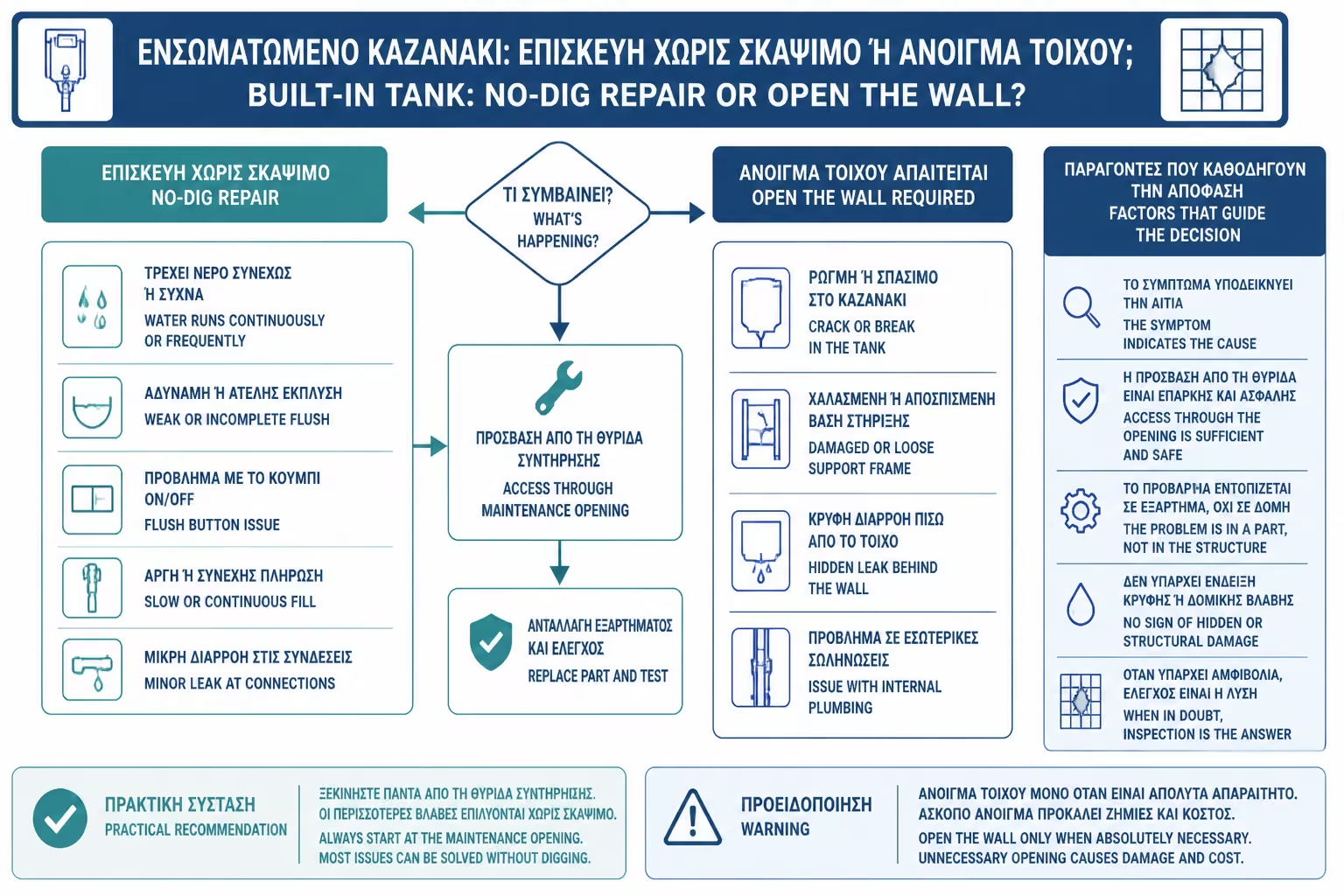
The fear of demolition is the main reason many homeowners hesitate to install a built-in cistern. The picture in their head is simple: new tiles, a hidden mechanism and one day water starts running. The owner assumes the wall must be opened to reach the problem.
In the right systems, that is not how ordinary failures are handled. The flush plate is not just a button. It is also the service access point. Behind it there is an opening through which essential components can be removed or adjusted. GROHE, for example, has official maintenance material showing how the flush valve in a Rapid SL concealed cistern can be cleaned or replaced through the plate opening, without opening the wall.
This is not to say that there are never cases where more severe surgery is needed. If the frame is installed incorrectly, if there is a leak in a pipe behind the wall, if a connection outside the sump is broken, or if the installation was done sloppily, then we are talking about another kind of problem. But these are not the usual failures of the mechanism. They are structural or plumbing problems of the installation.
For the owner, the key distinction is this: servicing the cistern mechanism is one thing, while a leak inside the wall is another. The first is usually handled through the flush plate. The second requires technical investigation and should never be diagnosed by guesswork.
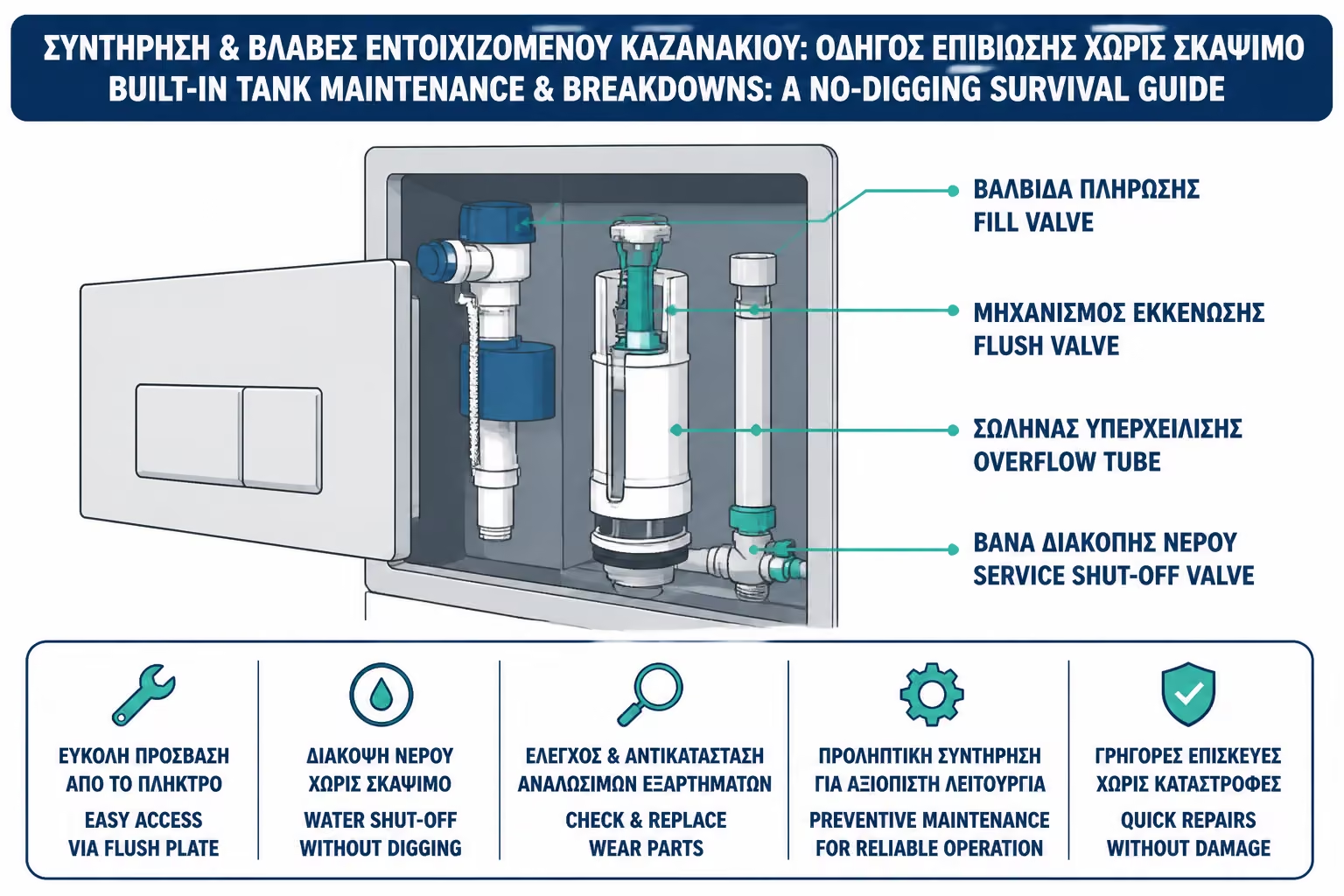
Behind the flush plate is the service opening of the built-in cistern. From there the technician gains access to the inside of the cistern. Depending on the model, they can see or remove the plate support, the actuation rods, the fill valve, the flush valve, the inlet filters and the dual-flush adjustment parts.
The process varies from brand to brand, but the logic is the same: the flush plate is removed, then the support frame or service guard is removed, and the technician works through the opening. Geberit publishes official material explaining that the fill and flush valves are designed to be installed and removed easily because of their compact dimensions, while the small and large flush volumes can be adjusted on the mechanism itself.
Here it is important to understand something: the opening behind the plate may seem small to the owner, but it is designed for service. A technician familiar with the system knows the correct removal sequence. Many tasks that look impossible at first are straightforward once the support, guides and plastic protectors are removed in the right order.
This is also why improvised shortcuts have no place in the installation. If someone reduces the opening, cuts the tile incorrectly, jams the flush plate or blocks the service opening with adhesive, they cancel one of the system's main advantages.
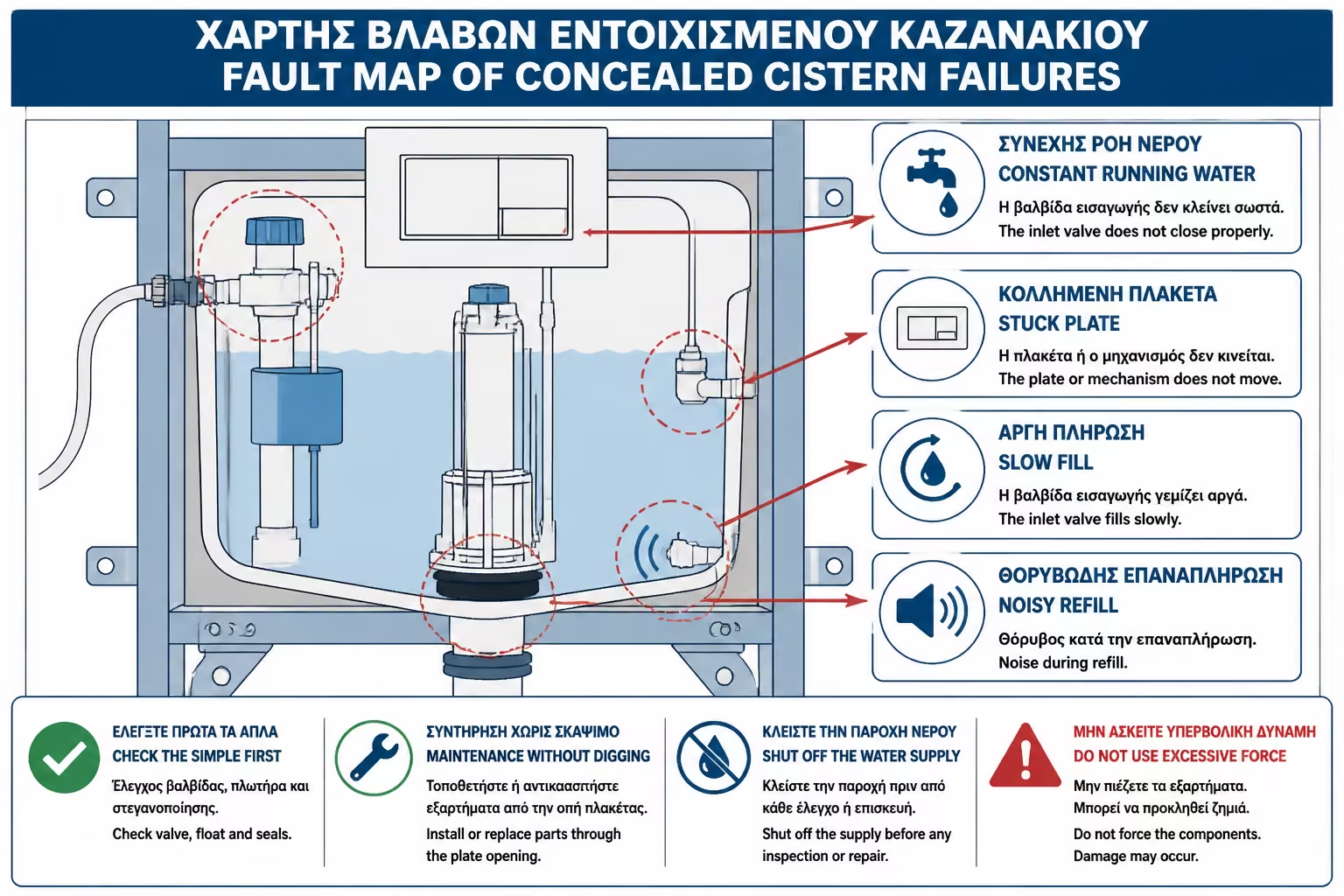
Built-in cisterns suffer much the same functional wear as exposed cisterns. The difference is that the mechanism is not visible. The most common faults usually involve the fill valve, the flush valve, the sealing rubbers, scale buildup, water-volume adjustment and the flush plate mechanism.
The most common symptom is a constant trickle of water into the toilet bowl. It may appear as a thin line down the porcelain or as the sound of the cistern refilling itself from time to time. This usually means the flush valve is not sealing properly or the water level is rising too high and spilling into the overflow. It does not automatically mean there is a hidden leak inside the wall.
Another common problem is slow refilling. You flush the cistern and then it takes too long to fill back up. This may be due to a clogged filter, scale on the fill valve, low supply pressure or wear in the valve itself. In hard-water areas, scale can gradually reduce the flow.
There can also be issues with the button. The flush plate may not press properly, may stick, may fail to trigger the small or large flush, or may have a loose connection with the actuation rods. This is not always a cistern failure. It can simply be a flush-plate setup issue or a repositioning error after cleaning.
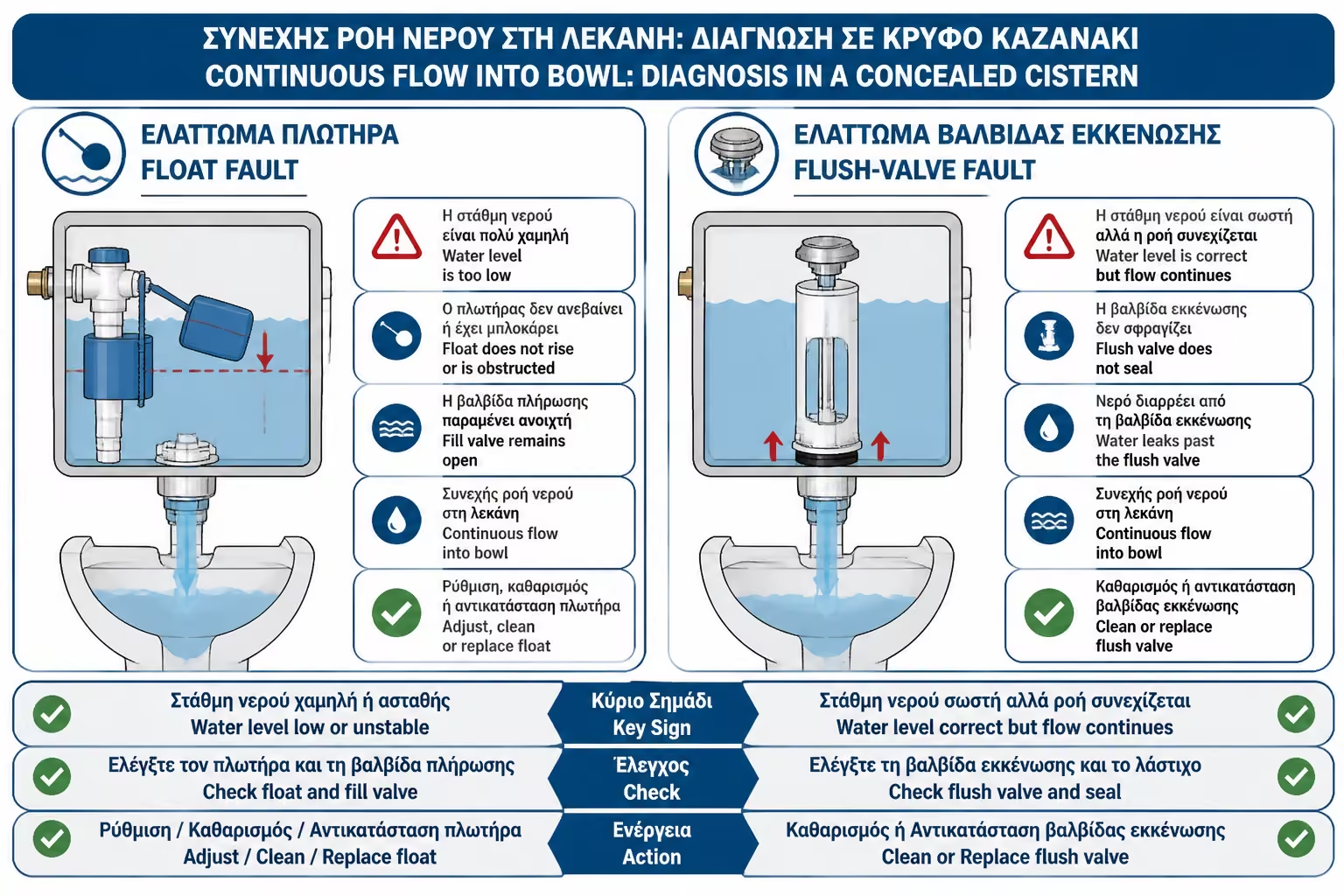
The constant running of water is the fault that bothers the most and costs the most in consumption. It may be so small that it is not easily seen, but enough to gradually empty the cistern and force it to refill. If you intermittently hear a short fill without the board being pressed, there is probably water loss to the sump.
The two main causes are usually the drain valve or the float. If the drain valve is not seated properly on its base, water flows into the basin. This can be due to worn rubber, scale, small debris or mechanical wear. If the float does not properly stop the filling, the water rises too high and leaves the overflow.
An owner can understand this in a simple way: if water keeps running into the toilet bowl and the cistern refills itself repeatedly, the problem should not be ignored for weeks. The water loss can be far greater than it looks, and as long as the problem remains, scale keeps building up and the fault tends to become more persistent.
The correct treatment is control from the board. The technician removes the button, shuts off the cistern supply from the internal switch where present, checks the float, cleans or replaces the drain valve and checks the level. In most known systems, this work is done without digging.
The float, or more properly the filling valve, is the part that fills the cistern and stops the supply when the level reaches the correct height. If it is working properly, the cistern fills with a steady flow and stops cleanly. If it has a problem, it may fill slowly, make noise, not close properly, or allow water to rise excessively.
In saline areas, the float can be affected by deposits or small particles. Sometimes a change is not needed immediately. It is enough to clean the filter or remove scale from parts of the mechanism. Other times, especially on old parts, replacement makes more sense than attempting to repair.
Changing a floater to a built-in cistern does not mean breaking. It is done through the hole in the board, as long as the system is installed correctly and a compatible part is available. The technician removes the filling valve with a specific movement, disconnects the supply inside the cistern, installs the new one and adjusts the level.
The mistake is to enter any "general" float without checking. Each system has specific components or compatible ranges. Geberit, for example, lists compatible valves for very old and newer cisterns, which shows how important it is to find the right part and not just a look-alike part.
The drain valve, which many technicians call a bell, is the part that opens when you step on the board and allows water to drain to the basin. Then it must be closed properly so that the cistern fills up again and holds the water.
If the valve does not press well, water constantly flows through. This can be from a worn rubber, from scale on the base, from small debris that prevents the seal, or from mechanical wear. In many cases, the owner hears the cistern filling every half hour or sees constant moisture in the basin without understanding where it is coming from. The cause is often the drain valve.
The valve can often be removed through the flush-plate opening, cleaned, checked and reinstalled. If the rubber has hardened or deformed, replacement is usually safer. GROHE has official training material showing how the flush valve in a concealed cistern can be cleaned or replaced without opening the wall.
In an old bathroom, the valve may have operated for many years without being checked. If it starts to leak, there is no point in pressing hard on the board or trying to "unstick" it. This usually does not solve the problem. Needs opening from the board, cleaning or replacement.
In Greece, hard water is a frequent problem in many areas. Scale does not appear only on the sink tap or the shower glass. It also forms inside the cistern, on valves, seals, filters and moving parts. Over time, it can make a component harder to move, prevent it from sealing properly or slow down refilling.
Salts do not always cause immediate harm. They often create gradual degradation. First, the cistern takes a while to fill. Then a small noise is heard. Then a thin run appears in the basin. The owner ignores it, until the water consumption or noise becomes apparent.
Descaling must be done carefully. We do not blindly pour harsh chemicals into the cistern, because they can damage seals, plastics and mechanisms. The correct practice is to remove the problematic component, clean it in a mild and suitable way, and then check whether the function has been restored. If the rubber has hardened or the plastic is worn, replacement is usually the better solution.
In homes with very hard water, preventive maintenance can make sense. There is no need to overdo it, but if scale appears frequently on taps and showers, it also makes sense to check the cistern mechanism when the first symptoms appear. Maintenance through the flush plate is much easier when it happens before the problem becomes severe.
Most modern built-in faucets have double flow, i.e. small and large flush. This operation depends on the cooperation of the board, the rods or actuators and the discharge valve. If something moves, if the board doesn't press properly, or if the valve has scale, the low or high flow may not work properly.
A common symptom is that pressing the small button leaves too much water or, on the contrary, does not rinse sufficiently. Another symptom is that one button doesn't feel good or stays slightly pressed. In such cases, the problem may be an adjustment and not necessarily a component failure.
Geberit says that on some valves the low and high flush can be adjusted with sliders on the valve, and there are also flow settings to prevent splashing in ceramic basins. This shows that dual flow is not just two buttons on the board. It is an adjustable system inside the cistern.
In renovations, it is a good idea for the plumber to test both the small and the large flush before handing over the bathroom. If the toilet is rimless, has a special bowl geometry or receives a strong flush, the settings can affect both cleaning performance and splashing.
The flush plate is the most visible part of the system, but it can also create operational problems. If a button sticks, if one side does not return properly, if excessive force is needed, or if the flush does not activate correctly, it does not necessarily mean the cistern is broken. There may be a rod misalignment, scale buildup or a problem in the plate itself.
In many cases, the problem occurs after removing and reinserting the board. If someone took it out for cleaning or to see what's behind it and didn't reattach it properly, the keys may not click like before. That is why the removal must be done carefully and according to the method of each manufacturer.
A problem can also be created by an incorrect thickness of lining. If the board is too far out or too in in relation to the mechanism, the actuators may not travel properly. This is usually a setup issue and not a usage fault.
In any case, we must not press hard on the board to "catch". Excessive force can break plastic parts, warp guides, or create a bigger problem. If the pressure has changed, it needs to be checked.
Slow filling usually indicates a problem with the fill valve, filter or supply. It may sound like a hissing sound, a continuous fine noise, or an intermittent flow. If the cistern takes a long time to refill, the next use becomes problematic and the owner starts repeatedly stepping on the board, which does not solve the cause.
Inlet filters can pick up particles or scale. In old apartment buildings, after network work or water interruptions, small particles can pass through and affect the valve. This is not rare. Sometimes cleaning the filter is enough. Other times the valve is worn out and needs to be replaced.
Filling noise can also indicate high pressure, a worn float, or misadjustment. If the noise appeared suddenly, it is worth checking. If it was there from the beginning after installation, the pressure may need to be adjusted or treated differently.
The important thing is not to treat the noise as "normal because it is built-in". A properly adjusted cistern should fill in a controlled manner, without annoying sounds and without continuous running after filling.
There are simple checks that the owner can make without interfering with the mechanism. It can notice if water is running in the basin, if the cistern is refilling itself, if the board is sticking, if there is a change in the sound, or if the pressure of the small and large flow is different than usual. It can also clean the outer board in a gentle way, without harsh cleaners that will spoil the finish.
What he should not do without experience is pull parts blindly, unscrew mechanisms without knowing how to put them back together, pour strong chemicals down the drain or try to "fix" the board by force. The service hole is designed for access, but space is limited. If a small plastic part breaks or a piece falls into the cistern, the job can be unnecessarily difficult.
The plumber should handle fill-valve replacement, flush-valve cleaning or replacement, level adjustment, pressure checks, hose replacement, diagnosis of continuous running and any case where a leak behind the wall is suspected. Especially if the concealed cistern is old or from an unknown brand, experience helps avoid the wrong moves.
The right cooperation is simple: the owner notices the symptoms in time and calls a technician before the minor damage becomes a permanent nuisance. The technician opens from the board, checks mechanism and spare parts, and unnecessary interventions are avoided.
In concealed cisterns, spare parts are critical. A branded system with available fill valves, flush valves, seals and flush plates is much safer than an unknown or ultra-cheap system with no support. The difference is not visible on installation day. It appears after five, ten or fifteen years, when the system needs service.
Geberit says it has compatible fill and flush valves even for old cisterns, citing systems that are several years old. This is important for the owner, because it shows that maintenance depends not only on the initial quality, but also on the availability of spare parts.
In Greek renovations, where the budget is often pressed, the built-in cistern is not the point where it is worth chasing the most unknown cheap solution. If a part breaks and you can't find a replacement, the problem becomes disproportionately large. You might not need to dig for a name brand system, but you can be in a lot of trouble if you don't have the right part.
Always keep the cistern, board and frame code. Take a photo of the label before the wall is closed, save the documents and note the order of the mechanism. This information can save hours of searching in the future.
Although the usual mechanism failures are done from the board, there are cases where opening may be necessary. This needs to be stated clearly, because the "never dig" promise is not technically correct for every possible scenario. That's right: for typical float, valve and adjustment failures, no digging is required. For construction problems or leaks outside the mechanism, investigation may be required.
There is a real risk if a supply or drainage connection behind the wall has failed, if the frame has not been properly supported, if there is a crack in the body of the cistern, if there has been poor installation, or if the wall has been closed in such a way as to block the service opening. These cases are not everyday injuries, but they should be treated seriously.
Signs that need immediate attention are damp in the wall, swelling of tiles or joints, water on the floor with no apparent source, a smell of damp behind the basin or a pressure drop with an unexplained leak. If there is such an indication, it is not enough to change the float. It needs a diagnosis.
Proper installation greatly reduces these risks. That is why in the renovation we do not only look at which cistern will go in, but who installs it, how it is supported, how it is connected, how it is tested before the wall is closed and whether the access of the board remains free.
You don't have to open the built-in cistern every few months "for better or for worse". Excessive intervention without reason can create problems where none exist. What makes sense is observation and timely reaction.
If the board is pressed normally, the cistern fills in normal time, it doesn't sound like it is refilling by itself, and no water can be seen running into the basin, there is no reason for it to keep opening. But if there is a change in the sound, slow filling, difficulty in pressing or thin water flow, then it is good to have a check before the wear and tear increases.
In areas with very hard water, a preventive cleaning may make sense when the first symptoms appear. Not with aggressive chemicals in the cistern, but with proper removal and cleaning of the parts. The technician can also check filters and seals.
Preventive maintenance is not expensive when done in a timely manner. Negligence becomes expensive when a small water run stays for months, increases the bill, fills the basin with salt and eventually requires more replacements.
The cost to service a built-in cistern depends on the brand, fault, access, area, whether parts are available, whether the work is done as a single visit or as part of larger works and whether VAT is included. The following ranges are indicative for the Greek market in 2026 and do not replace a technical offer.
| Labor / spare part | Indicative cost 2026 | What affects the price? |
|---|---|---|
| Simple board or flow control/adjustment | 30–60€ | Area, minimum visit fee, working time |
| Cleaning of scale in mechanism / filter | 40–80€ | Scale, access, if necessary remove parts |
| Change float / filling valve | €60–130 with labor | Part brand, availability, difficulty of access |
| Discharge valve / bell replacement | €70–€160 with labor | Type of mechanism, compatibility, and rubber if needed |
| Board change | 50–200€+ | Plain plastic or special finish, compatibility, brand |
| Diagnosis of possible leakage behind a wall | Wide variation | If a thermal camera is needed, opening, hydraulic intervention |
In simple failures, the cost is usually manageable and does not compare to the cost of breaking and repairing tiles. The big difference comes when parts are not available or when the installation does not allow proper access.
Beware of very low prices without a clear description. Another "I'll come and see it" and another "includes part, labor and adjustment". Ask to know if the quote is for labor only or labor plus part, if the part is genuine or compatible, and if VAT is included.
When you call a plumber for a concealed cistern, it helps a lot to give the right information. Tell them the brand and model if you know them, send a photo of the flush plate, describe the symptom, and mention whether water is constantly running, whether refilling is slow, or whether the button is not pressing properly.
A good technician will not start with the phrase "we have to break" for a simple mechanism failure. First he will remove the board and check the mechanism. If after the inspection there are signs of leakage outside the cistern, then he will explain what is needed and why.
Also ask to be shown the worn part if a replacement is made. This is not a question of distrust. It's a way to understand what happened. If a float changes, ask if the filter has been cleaned and the level adjusted. If a drain valve is changed, ask if the base and hose have been checked. If dual streaming is set up, test both keys before the technician leaves.
In a complete renovation, request from the beginning a branded cistern with available spare parts and a clear service plate. This is more important than saving a few euros on the hidden accessory that will serve the bathroom for many years.
| Inquiry | Yes / No |
|---|---|
| Is water constantly running in the basin? | Yes / No |
| Does the cistern sound like it is refilling itself without being stepped on? | Yes / No |
| Is the cistern filling too slowly? | Yes / No |
| Does the board stick or does it need more force than before? | Yes / No |
| Do the small and large keys work differently? | Yes / No |
| Is there limescale where the water lands in the toilet bowl? | Yes / No |
| Do you know the make and model of the water tank? | Yes / No |
| Do you have a picture of the board or internal mechanism? | Yes / No |
| Is there moisture on the wall or floor around the basin? | Yes / No |
| Does the board remove freely or does it seem trapped by tile/grout? | Yes / No |
| Has it been serviced or a part changed in recent years? | Yes / No |
| Do you have the system documents or codes available? | Yes / No |
If the problem is continuous running, slow charging or a board that sticks, we usually talk about servicing the mechanism from the board. If there is moisture on the wall or floor, then a more serious check is needed and a hasty diagnosis should not be made.
In a properly installed branded concealed cistern, the common faults do not require demolition. The fill valve, flush valve, scale-related issues, dual-flush settings, and many flush-plate problems can be handled by opening the plate and servicing the mechanism from the front.
Do not let a running toilet go unchecked for months, but do not let anyone jump straight to breaking the wall before the service opening has been used and the mechanism has been inspected.
Opening the wall should be the exception for real construction failures or hidden leaks behind the lining, not the default service approach.
The built-in cistern is not as "dangerous" to maintain as many owners fear. Its basic philosophy is that the mechanism is hidden, but not lost. Access is from the board and most common tasks can be done from there: float change, filter cleaning, descaling, drain valve replacement, level adjustment and dual flow control.
Proper installation and choosing a branded system with spare parts is the best insurance. If the concealed cistern is installed correctly, the flush plate is not jammed and the parts are available, service is usually a straightforward technical task rather than a bathroom disaster. Very cheap or unknown systems can cause serious difficulties when even a small part is needed.
The owner should watch for the first signs: water running into the basin, slow filling, noise, a board sticking or a cistern that fills itself. These should not be ignored, because they increase water consumption and burden the mechanism. A timely check from the board can solve the problem quickly and economically.
The correct conclusion is not that "it will never break". It will need maintenance, like any water mechanism. The important thing is that a maintenance method has been provided without opening the wall. And this, when the system is chosen and installed correctly, is precisely the advantage of the built-in cistern.
Return to category.
Go to categoryReturn to the central guide.
Go to guide