
Bathroom Surface Materials & Finishes
Return to category.
Go to categoryMarble has always been synonymous with luxury. In bathrooms, kitchens, entrances and large open spaces, the image of white marble with gray or gold veins immediately gives a sense of purity, brightness and nobility. It is no coincidence that names such as Calacatta, Statuario, Carrara, Arabescato and Nero Marquina have passed from the world of natural stone to the world of interior design as aesthetic codes.
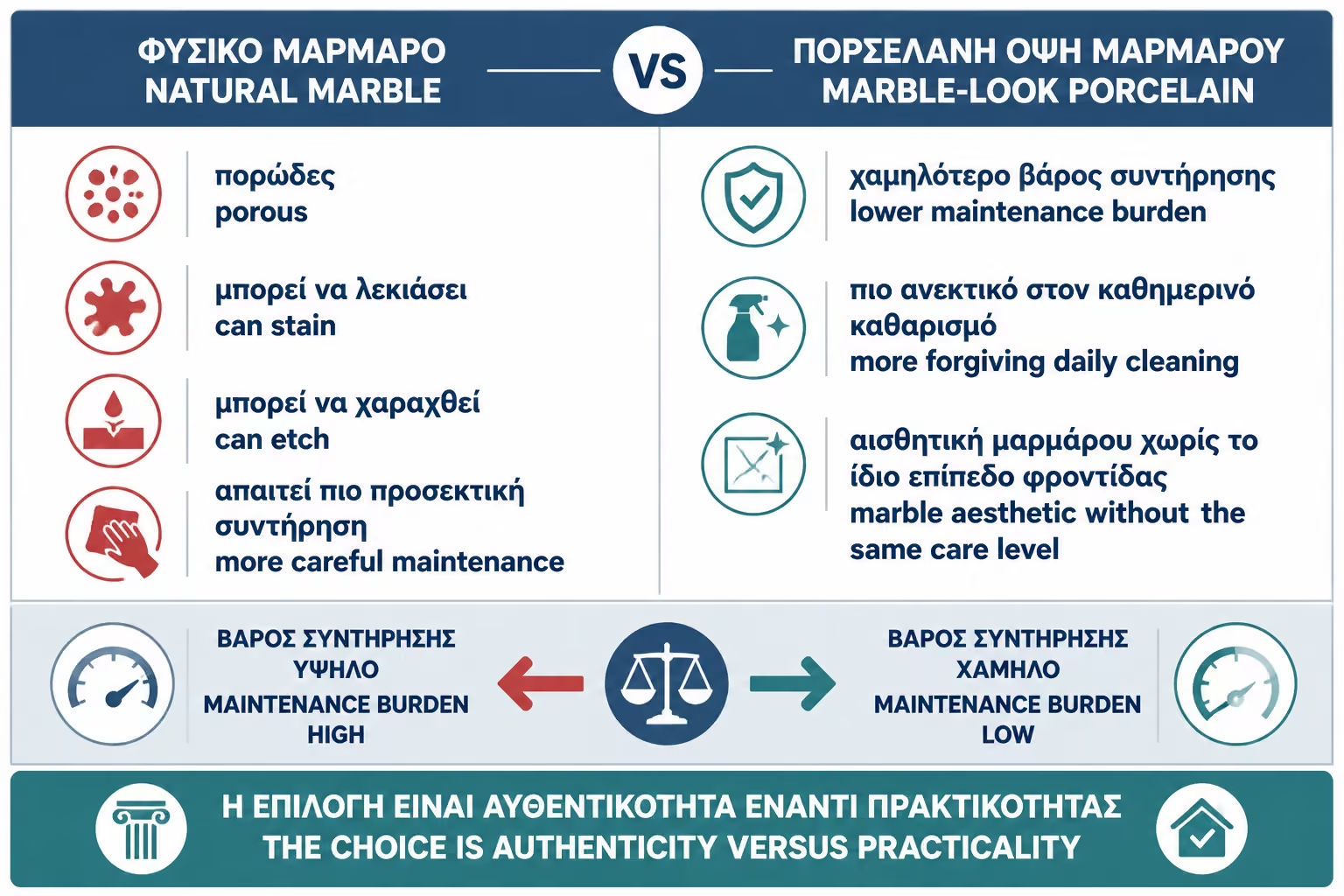
In practice, however, natural marble is not an easy material for every home and every bathroom. It is porous, can stain, is affected by acidic cleaners, needs sealer and careful maintenance. In a daily use bathroom, with water, salts, soaps, hair dyes, cleaners and steam, this care is not a detail. It's part of the choice.
It is here that marble-look tiles have taken over. Modern marble look porcelain tiles, mainly porcelain, offer the aesthetics of marble without most of the practical disadvantages of natural stone. They do not need a sealer like natural marble, have very low absorbency, are easier to clean and are available in large dimensions that imitate the feel of a marble slab. The low absorbency of porcelain, usually classified as low as 0.5%, is one of the reasons it is considered so suitable for wet areas such as bathrooms and kitchens.
Their success is not only due to endurance. It is also due to technology. Modern high-resolution printing, different design "faces", glossy, lappato or matte finishes and large slabs have made good marble look tiles much more convincing than the old imitations. We are no longer just talking about "tile that has a marble pattern". We are talking about complete series that study the veins, the depth, the nuances and the natural movement of the rock.
This guide explains why marble look porcelain has become so popular, what their real advantages are, where they excel compared to natural marble, where they fall short, what to look for in Calacatta and Statuario designs, how to choose a finish and joint, and how to avoid the wrong result that looks "fake" instead of luxurious.
Marble look tiles are ceramic or porcelain tiles that mimic the look of natural marble. At their best, they don't just copy a generic white background with gray lines. They try to reproduce specific marble families such as Calacatta, Statuario, Carrara, Arabescato, Travertino look, Nero Marquina or more modern versions with golden, beige, brown or bold veins.
In the market we find them mainly as porcelain tiles. This is important because porcelain has a very dense body, low absorbency, and good performance on floors, walls, and wet areas, as long as the product is suitable for the intended use. In bathrooms and kitchens, this technical behavior is one of the main reasons they are preferred over natural marble.
Marble look tiles can be glossy, lappato, satin, matte or anti-slip. It may be small in size, but the trend is clearly towards large formats: 60×120, 80×160, 120×120, 120×240 or even slabs. The larger the dimension and the fewer the joints, the closer the image of a natural slab.
Marble look tiles took over because they answered a very practical problem: owners want the look of marble, but not always the care of marble. They want a bright bathroom, a luxurious shower wall, a floor that looks expensive, but they don't want to think about whether the descaler will dull the stone or if they need a repeat sealer.
Porcelain gives more predictability. It does not have the natural variations that a batch of marble can have. There is no need to sort tiles in the same way. It does not stain easily like natural stone and is easier to clean in everyday life. Compared to natural marble, porcelain is generally more stain resistant and is not affected in the same way by common household substances or acidic contact, while marble is vulnerable to both staining and etching.
A second reason is cost. Natural marble can become expensive not only as a material, but also in cutting, sorting, transporting, laying, polishing, sealing and maintenance. A good marble look porcelain is not always cheap, especially in a large dimension, but it usually offers a more manageable budget and simpler use.
The third reason is aesthetic convenience. Today one can find Calacatta with a strong golden vein, Statuario with a thinner gray line, Carrara with a soft water color or dramatic marble look in dark shades. That is, he can choose exactly the intensity he wants, without depending on the natural sorting of the stone.
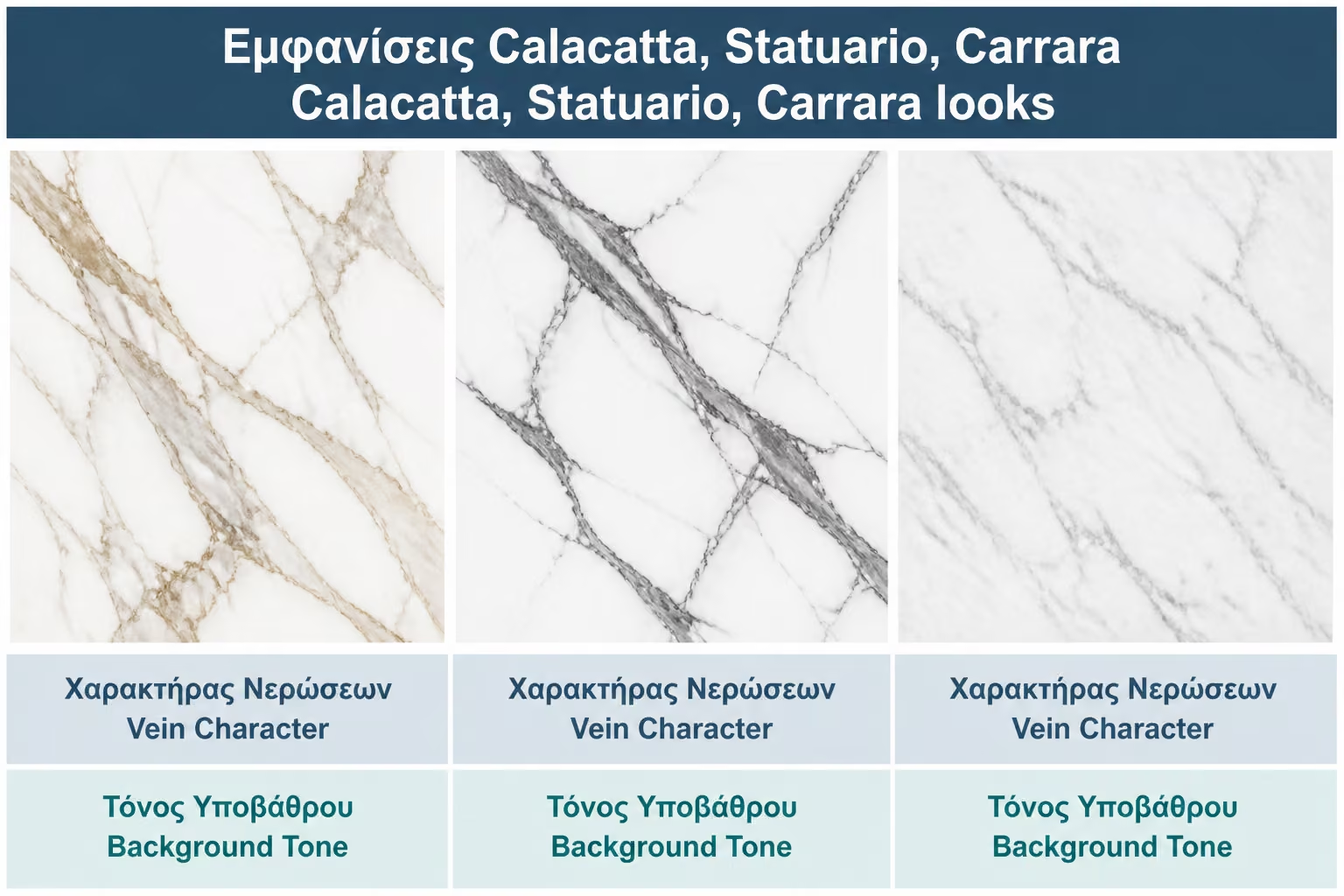
The terms Calacatta, Statuario and Carrara are very often used in marble look tiles. It does not always mean that the tile faithfully replicates a particular quarry or stone. It mainly means that it follows an aesthetic family.
The Carrara look usually has a softer gray undertone, a softer background and more subtle movement. It is safer for bathrooms that we want to look calm and bright. It does not attract too much attention and is easily combined with wood, white, gray or black details.
The Statuario look is usually a purer white, with bolder but elegant gray veins. It looks more premium than plain Carrara and fits well in bathrooms where we want pure luxury without exaggeration. It is one of the most popular choices for bathroom walls, large slabs and minimal spaces.
The Calacatta look is usually more dramatic. It has more intense veins, often warmer tones, gold or beige tones and more movement. It can show impressiveness, but it needs moderation. If he goes everywhere in a small bathroom, he can get tired. If used on a feature wall, it can give a great result.
Natural marble needs care. It needs a suitable sealer, attention to cleaners, avoidance of acidic products and regular inspection. Marble look porcelain does not meet these requirements to the same extent. It doesn't need sealing like natural stone, it doesn't have the same porosity, and it won't etch because an acidic cleaner fell on it like marble might.
This is a huge advantage in a bathroom. An owner can have the image of marble in the shower without thinking every time whether the water, shampoo or cleaner will leave a mark on the stone. In family bathrooms, rental apartments, Airbnbs, hotel rooms or high-use residences, this practicality is often more important than the authenticity of the natural material.
This does not mean that porcelain does not need cleaning or proper placement. Joints, silicones, salts and surfaces still need care. It's just that the care is closer to the logic of a good tile and not to the logic of natural stone.
The bathroom is a space with water. That's why absorbency is critical. Porcelain tiles have a very low absorbency, usually up to 0.5%, which makes them particularly suitable for wet areas, unlike more porous materials.
In natural marble, the stone can absorb liquids, depending on its structure, finish and sealer. This creates the possibility of stains. In porcelain, the surface and body of the tile are much more stable against water. That's why marble look porcelain tiles are so popular in showers, bathroom floors and walls.
But an important distinction must be made. The tile may have low absorbency, but the bathroom does not automatically become watertight. Water can get through joints, bad silicone, wrong drain connection, cracks or insufficient waterproofing under the tiles. Marble look porcelain solves the issue of the behavior of the material, not all the issues of construction.
One of the main reasons owners choose marble look porcelain is the ease of cleaning. Compared to natural marble, it is much more tolerant of daily use. You don't need the same fear of cosmetics, soaps, toothpaste, cleansers or hair products.
This is especially important around the sink and in the shower. On natural marble, a perfume, an acidic cleaner or a hair dye can create a serious mark. In porcelain marble look, the risk is much lower, although the manufacturer's cleaning instructions should always be followed and extreme chemicals or abrasives should be avoided.
The salts, of course, are still visible. Especially on glossy marble look tiles with dark veins or a very white background, the drops can leave marks if not cleaned. The difference is that we are usually talking about surface cleaning, not a stain that has penetrated the stone.
Old marble imitations often looked fake because they were small in size and had a repetitive pattern. When a 30×60 tile repeated the same vein every few pieces, the eye immediately knew it was a print.
Large formats have changed the image. A 60×120 or 120×240 marble look porcelain gives room for the design to develop. The veins look more natural, the joints are reduced and the surface is more like a marble slab. With slabs, the effect can become even more impressive, especially on a shower wall, behind a sink or on a large floor.
But large format requires technical discipline. The larger the tile, the flatter the substrate must be, the more demanding the cuts become, and the more important the layout study is. An expensive Calacatta slab can look cheap if it is clumsily cut around the sink or if the veining is interrupted without logic.
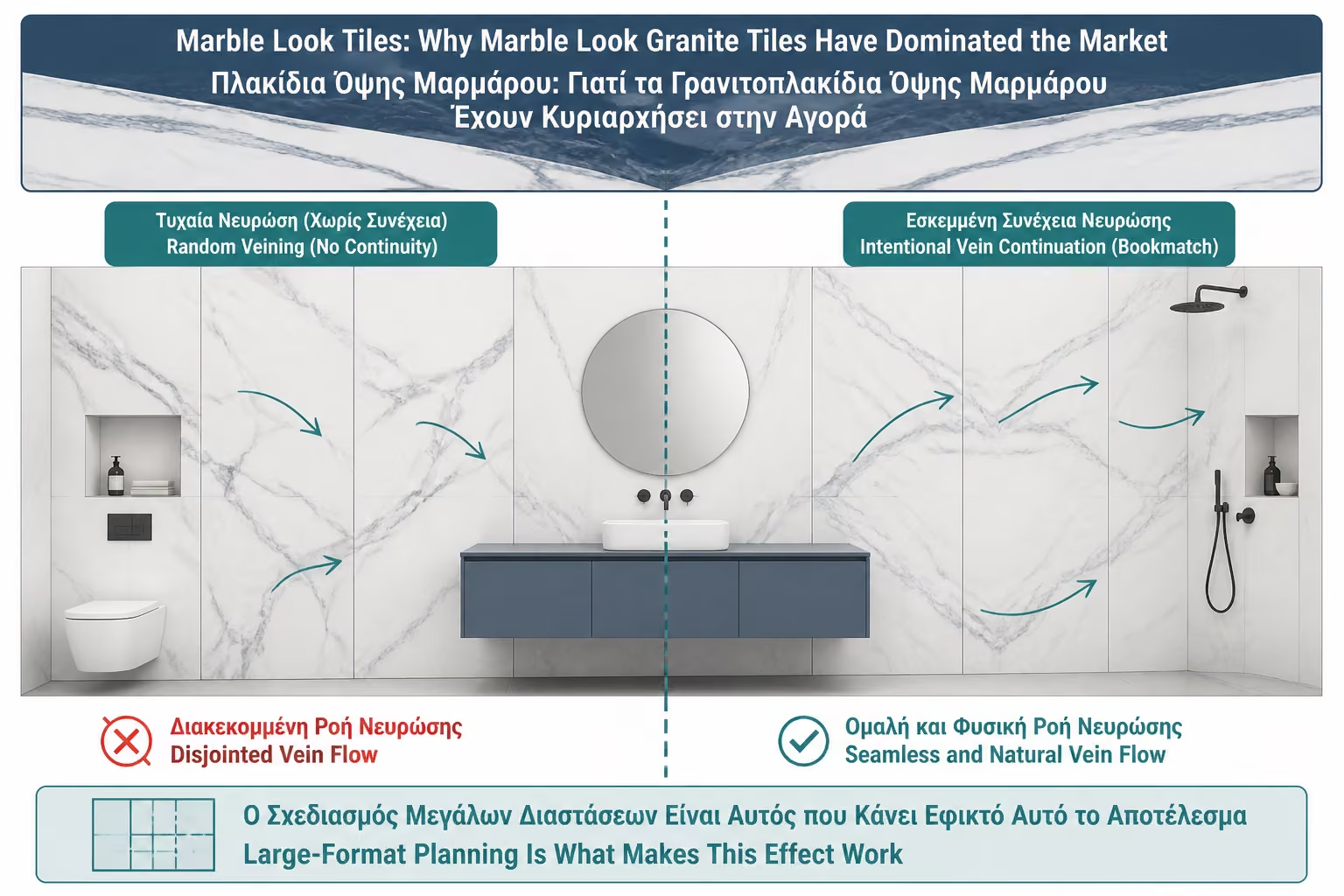
In many premium marble look series there are tiles that allow bookmatch or continuation, i.e. the veins continue from one tile to another or open symmetrically like a book. This creates a very impressive effect, especially on large walls or behind a free-standing bathtub.
But bookmatch is not for every project. It requires careful ordering, correct numbering of pieces, layout planning, and an experienced installation team. If the tiles are placed in the wrong order or if cuts are made without respecting the pattern, all of its value is lost. It also creates more waste, because offcuts cannot always be reused where we want.
In a small bathroom, it is often better to avoid overly dramatic bookmatch and to keep the marble look in a more calm application. In a large master bathroom, however, a properly designed bookmatch wall can become the strongest element of the space.
The glossy marble look is the one most reminiscent of polished marble. It highlights the veins, reflects light and gives a strong sense of luxury. It is excellent for bathroom walls, guest toilets, linings behind sinks and areas where we want shine. On a bathroom floor, however, it needs attention due to its slipperiness.
Lappato is an intermediate solution. It gives a subtle sheen without becoming fully mirror-like. It is very popular in marble-look porcelain because it keeps a sense of luxury with a softer effect. However, on wet floors it should not be chosen without checking slip resistance.
The matte marble look is more contemporary, calmer and often more practical for flooring. It is not so reminiscent of the classic polished marble, but suits a more minimal or spa aesthetic. In bathrooms with children, the elderly or frequent use, a matte or satin marble look on the floor is usually a more sensible choice than a highly polished one.
In the bathroom, the marble look tiles can be used throughout the space or selectively. The most impressive application is a large wall behind the sink or inside the shower. There the vein is visible, the material acts as a decorative plate and the space immediately acquires character.
On the floor, the marble look gives a clean and luxurious image, but the right finish must be chosen. For a bathroom floor, especially if it gets wet often, attention needs to be paid to anti-slip. A glossy Calacatta might be great on the wall, but not necessarily right on the floor.
In a shower, marble look porcelain is more practical than natural marble. However, the choice should be made based on the usage. On the walls of the shower, large glossy or lappato tiles can look impressive. On the floor of the shower, it needs a non-slip surface and correct slopes. Aesthetics should not come before safety.
The big risk in marble look tiles is bad imitation. A cheap design with few faces, strong repetition and unnatural veins can look fake. This is especially visible on large surfaces, where the same pattern is repeated.
Before buying, ask to see how many different faces the series has. The more different patterns there are, the more natural the result looks. In good marble look tiles, the veins have different intensity, are not mechanically repeated and have depth. The digital printing on quality porcelain has been greatly improved, with more detail, layers and more natural veins.
Also, avoid putting too much bold design everywhere. If the walls, floor, counter and shower all have dramatic veins, the space is tired. Marble, even as an imitation, needs to "breathe". A protagonist and calm accompanying surfaces usually give a more expensive result.
In marble look tiles, the joint should usually be as discreet as possible. If the tile is white with gray veins, a very white joint may look clean at first but stain more easily. A very dark gray joint can create a strong mesh and spoil the marble slab feel.
The safest option is a joint close to the main tone of the background, slightly "broken" so that it does not look sterile white. In warm-veined Calacatta, an off-white, ivory or very light greige joint can match. In Statuario with cooler white and gray veins, a light gray or off-white joint may work best.
The width of the joint depends on whether the tile is rectified, the dimension, the application and the manufacturer's instructions. On large rectified marble look tiles, a thin joint of 1.5–2 mm can give a very nice result on interior walls and floors with the right substrate. In outdoor areas or moving surfaces, a larger joint may be needed.
The marble look is excellently combined with wood. Marble gives brightness and luxury, while wood warms the space. A bathroom with a Calacatta wall, natural oak floor or walnut furniture can look very balanced, as long as the tones don't clash.
With black details such as batteries, cabin profiles and accessories, the marble look becomes more modern and linear. However, care must be taken not to make the contrast too strong in a small bathroom. Black on white marble writes very loudly.
With beige, greige and warm stone shades, the marble look becomes softer and more spa. This is ideal if we want luxury without coldness. With gold or bronze details, especially in Calacatta Gold, the effect can show premium, but it needs moderation so as not to become ostentatious.
Before you review the table, keep the following points in mind:
| Space / Application | Good choice | What to watch out for |
|---|---|---|
| Washbasin wall | Glossy or lappato Calacatta/Statuario | Do not load with many strong veins around the mirror and lighting |
| Shower walls | Large format marble look porcelain | Salts, proper sealing behind the tiles, proper silicone |
| Bathroom floor | Matte or satin marble look with suitable anti-slip | Avoid a very shiny surface if it gets wet often |
| Shower floor | Non-slip marble look or different safe tile | R-rating, barefoot suitability, slopes towards drain |
| Small WC | Glossy marble look on one or more walls | Don't overdo it if the design has very strong veins |
| Large master bathroom | Slabs, bookmatch, Calacatta or Statuario | Layout study, waste allowance, expert installation |
| Kitchen/backsplash | Marble look slab or large tile | Correct joint, degreasing, joint protection |
The table shows that the same aesthetic material should not be used in the same way everywhere. Wall, floor and shower have different requirements.
In the Greek market of 2026, marble look tiles exist in a wide range of prices. Budget options can start around €15–25/m2, but often have a smaller variety of designs, less natural print or simpler dimensions. Good porcelain series in 60×120 or corresponding large dimensions often move around 25–50€/m2, while premium series, slabs, bookmatch applications, lappato or special finishes can go much higher.
The installation cost depends on the size, the substrate, the cuts, and whether special layout planning is needed. A simple installation can have a realistic base of around €10-15/sq.m. on easy surfaces, but large rectified marble-look tiles, slabs, many cuts, showers, and demanding walls raise the price. That is not an exaggeration when the work requires precision, two people, special tools, and better preparation.
Waste allowance must also be calculated. On simple surfaces it can be around 10%. With large tiles, bookmatch layouts, many cuts, or small bathrooms with difficult geometry, 12-15% or more may be needed. If the design has veining that needs to continue across pieces, the quantity should be calculated through a layout study, not by rough estimate.
The choice is not only financial. It's a lifestyle thing. Natural marble has authenticity, uniqueness and depth. No porcelain is real stone. If the owner loves naturalness, patina and uniqueness, marble has value.
Marble look porcelain, however, is more practical. It doesn't need a sealer like marble, doesn't stain easily, isn't affected by acidic products in the same way, and is more suitable for everyday use. For family bathrooms, commercial spaces, rental properties and owners who want easy maintenance, it is often the best choice. Many comparisons of natural stone and porcelain come down to exactly this distinction: natural stone gives authentic beauty, while porcelain excels in practicality and lower maintenance for demanding spaces.
A smart solution is the combination. Natural marble on a counter or special detail, and marble look porcelain on a floor or shower. So we keep luxury where it makes sense and durability where there is use.
The first mistake is choosing a very bold design for a small space. A Calacatta with large veins can be great on a large wall, but in a small bathroom of 3 sq.m. it can become overwhelming. Statuario or a milder Carrara look might be better suited there.
The second mistake is poor veining layout. If the veins are cut randomly at the corners, if continuity is lost, or if the slabs are placed without planning, the result looks careless. Especially on large tiles, the layout should be studied before installation begins.
The third mistake is the wrong joint. Too much joint makes the marble look look like a grid. Too much white grout on a floor can get dirty quickly. The right joint should support the image of the plate, not cut it.
The fourth mistake is using a glossy marble look on a floor that gets wet without slip control. Luxury should not come before safety.
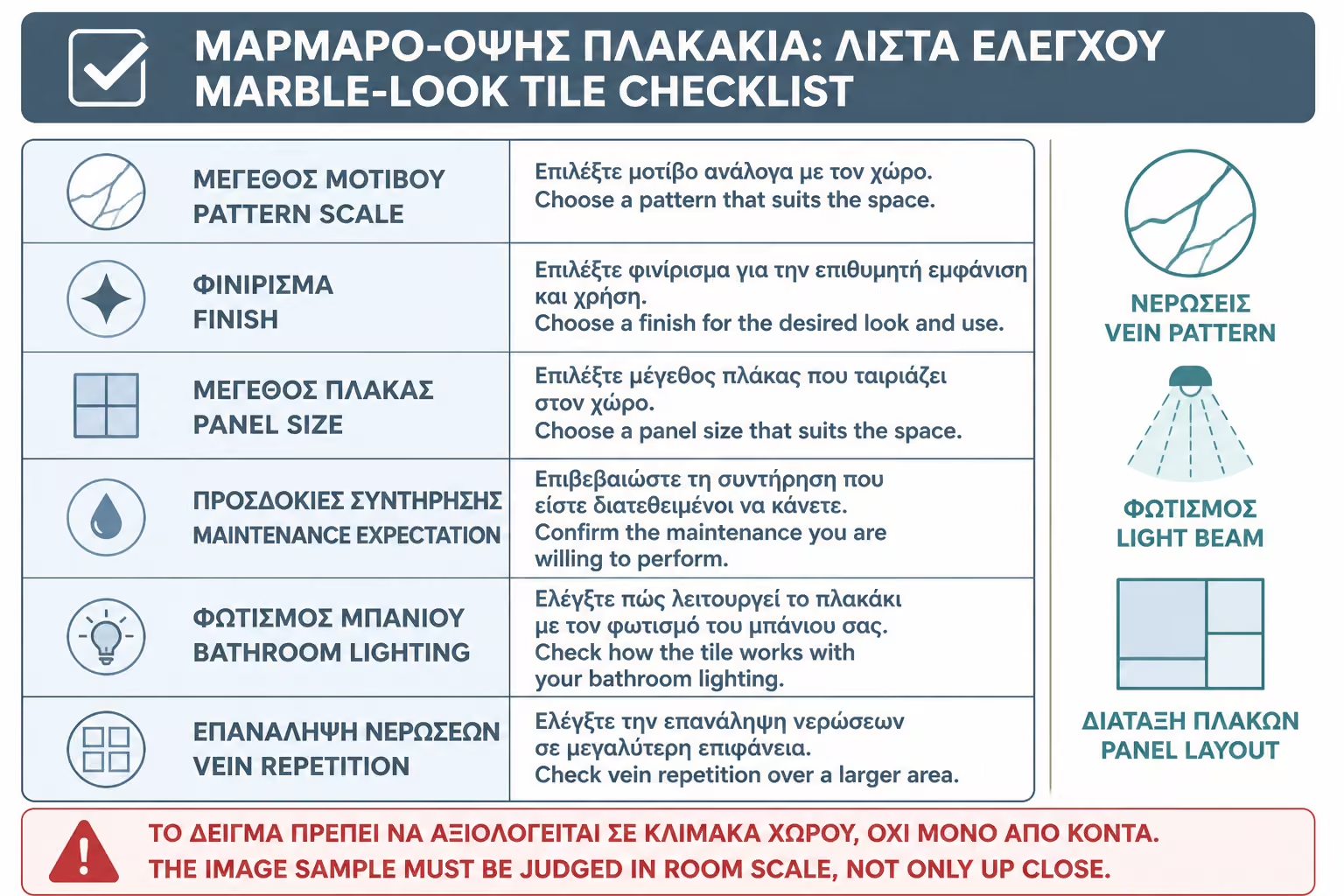
Before you review the table, keep the following points in mind:
| Question | Yes / No |
|---|---|
| Have you decided if you want mild Carrara/Statuario or more intense Calacatta? | Yes / No |
| Have you seen how many different faces the series has? | Yes / No |
| Have you checked if the tile is porcelain and suitable for the space? | Yes / No |
| For bathroom floor have you checked non-slip? | Yes / No |
| Have you avoided high gloss flooring in a wet zone? | Yes / No |
| Has an incision plan been made so that the veins are not badly missed? | Yes / No |
| Does the joint color match the tile background? | Yes / No |
| Has it been calculated for cuts and possible continuation of the plan? | Yes / No |
| Does the craftsman have experience with large rectified tiles or slabs? | Yes / No |
| Have you compared marble look porcelain with natural marble in terms of maintenance? | Yes / No |
If the answers are unclear, don't buy just because the sample looks impressive. Marble look tiles look expensive when they have the right design, right dimension, right joint and right placement.
If you want the aesthetic of marble without the maintenance of natural stone, a good marble look porcelain is often the most logical choice for a bathroom. But don't just look at the photo. Ask to see how many different designs the range has, choose the right wall or floor finish, pay attention to the joint and draw the veins before installation. A good marble look looks luxurious when it is treated as a large patterned surface, not as a simple tile haphazardly inserted into the wall.
Marble-look tiles have dominated because they offer a very powerful combination: the aesthetics of marble with the practicality of porcelain. For bathrooms, kitchens and modern renovations, this combination is hard to ignore. The owner can achieve a bright, luxurious and timeless effect without the same anxiety about porosity, sealers, stains and acidic cleaners that come with natural marble.
This does not mean that all marble look tiles are the same. The quality of the print, the number of different faces, the dimension, the finish, the joint and the placement determine whether the result will look expensive or fake. A good Statuario in large format can make a small bathroom look clean and bright. A properly placed Calacatta slab can become an impressive feature wall. A bad design with the wrong joint can spoil the whole picture.
The right choice is to treat the marble look as an architectural surface, not as a simple pattern. Choose veining intensity according to the size of the room, choose glossy or lappato for walls and a safer finish for floors, take care of the placement and do not underestimate the joint. So you get the best of both worlds: the look of marble and the everyday convenience of porcelain tile.
Return to category.
Go to categoryReturn to the central guide.
Go to guide