
Bathroom Surface Materials & Finishes
Return to category.
Go to categoryThe choice of tile does not end with the size, the color or whether it is porcelain. One of the most critical features, often underestimated, is the surface finish. The same design can look completely different if it is matte, glossy or lappato. It can change the feeling of brightness of the bathroom, how "luxurious" the floor looks, how strongly the salts look, but also whether the tile becomes dangerous when wet.
At the tile show, gloss usually impresses. It reflects light, makes colors look deeper and gives a sense of clarity. Matte looks calmer, more natural and often more architectural. The lappato, which is something in between, catches the eye because it has subtle sheens without being a full mirror. But we see all this in ideal conditions: clean exposure, proper lighting, dry surface and no daily use.
At home, things change. In the bathroom there is water, steam, soaps, salts, cleaners, wet feet and places that are not always wiped immediately. In the kitchen there are grease, splashes, shoes and frequent mopping. On the balcony there is rain, dust and sun. So the finish is not only an aesthetic choice. It is a choice of use.
A glossy tile on the bathroom wall can be a great solution. The same shiny tile on the shower floor can be wrong. A matte tile can hide footprints better, but if it has strong micro-roughness it can hold salt. A lappato can add an elegant glow to the living room, but on a wet bathroom floor it must be carefully checked for slip resistance.
The point is not to say that one finish is always better than the others. Is not. The goal is to understand where each one fits, what risks it has, and what questions a homeowner should ask before purchasing tiles they will see and walk on every day for many years.
The finish is the final feel and look of the tile surface. It can be matte, glossy, satin, lappato, structured, grip, polished, honed or textured, depending on the manufacturer's terminology. In practice, the owner is interested in three main things: how much it reflects light, how smooth or rough it is to the touch, and how it behaves in use.
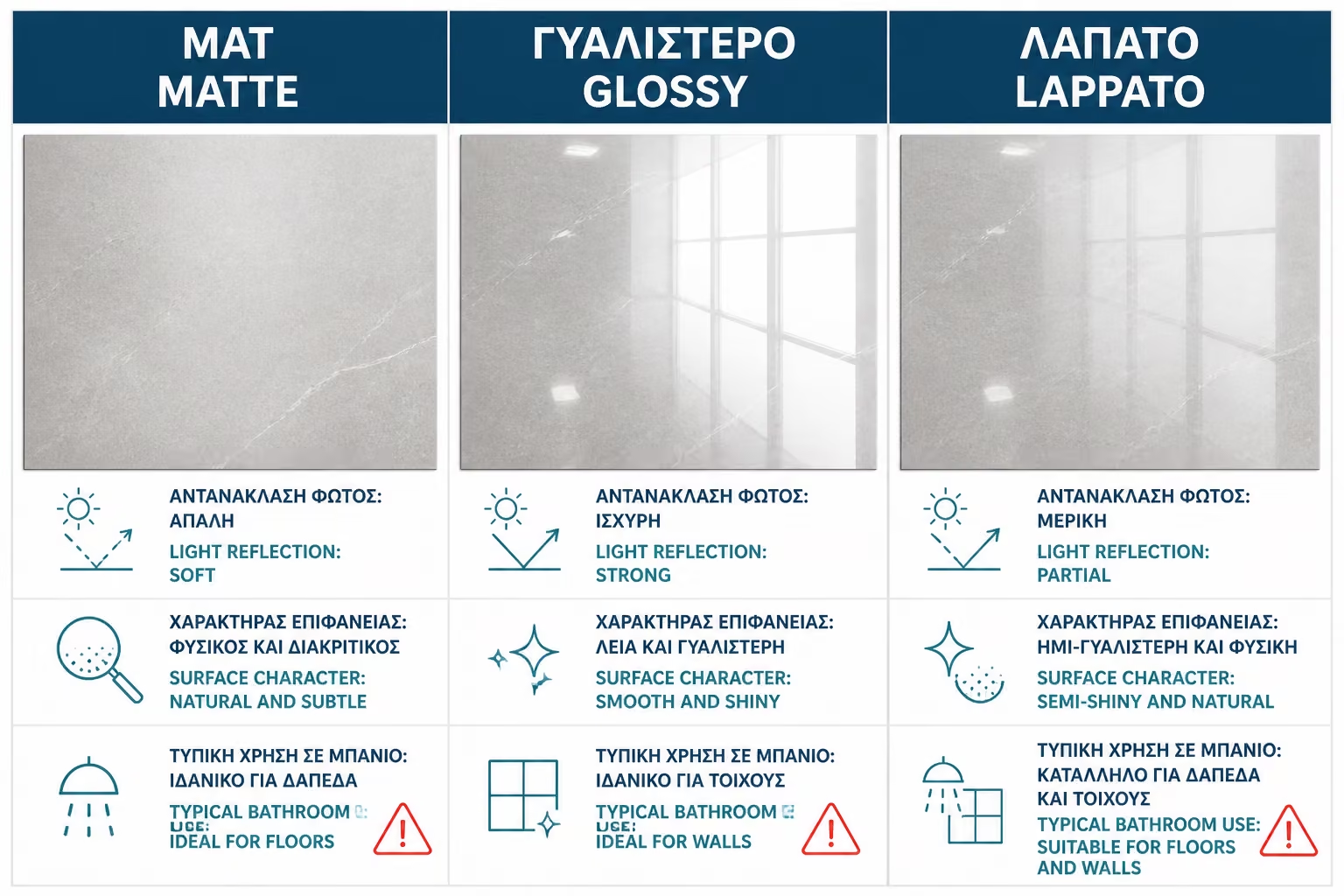
The matte finish has low glare. It does not shine brightly, it gives a calmer and more natural image and usually suits modern minimal or earthy aesthetics. The glossy or polished finish reflects much more light and gives a brighter, cleaner and often more luxurious image. Lappato or semi-polished lies between the two: it has a subtle sheen, but not a full mirror finish. It is often described as a semi-polished or semi-polished finish, with a softer sheen than fully polished.
The important thing is that the finish does not only change the "look". It changes how dirt looks, how the tile cleans, how it reacts to water, and whether it's suitable for floors or walls only. That is why it should not be chosen from a small sample in hand, but based on the space where it will be placed.
Matte tiles have become very popular in recent years, especially in bathrooms, kitchens and residential floors. They give a more natural effect, do not reflect light strongly and match very well with imitations of stone, cement, concrete, wood and natural materials. In a space that we want to look calm, warm and not overly "polished", matte is often the safest aesthetic base.
Practically speaking, matte tiles hide small footprints, dust, smudges and everyday wear better than high gloss tiles. It doesn't mean they don't get dirty. It means that dirt doesn't "write" as strongly, because the surface doesn't act like a mirror. This makes them particularly useful in floors, family bathrooms, kitchens and high traffic areas.
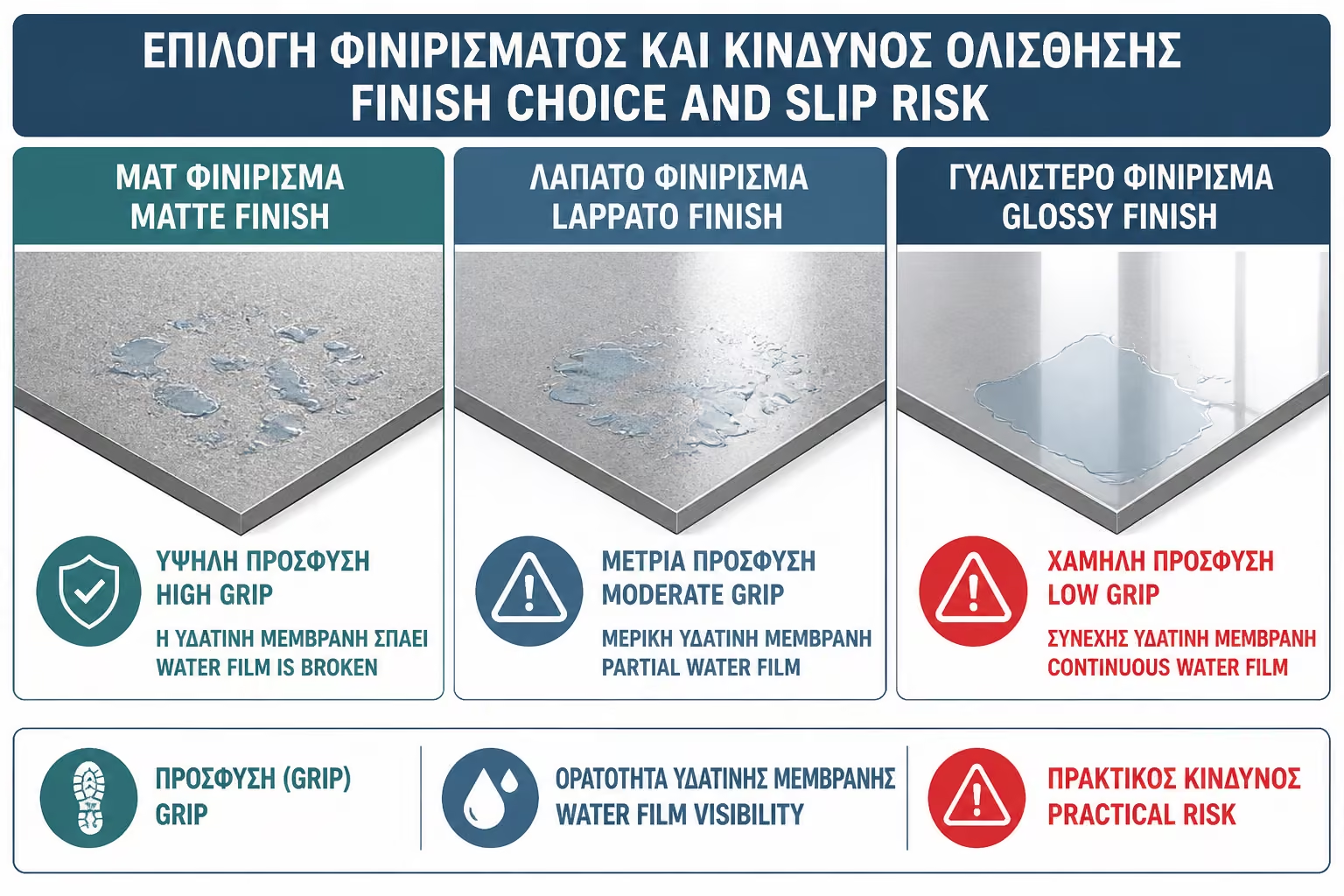
In terms of safety, matte finishes usually offer a better base than high gloss ones because they have lower sanding and often more microtexture. Many manufacturers and technical guides report that matte or textured finishes offer better anti-slip behavior than fully polished surfaces, especially in wet areas.
The downside is that not all mats are the same. A very "closed" mat is easy to clean. A heavily textured or grip mat may be safer, but hold more salt, soap or dirt. So we have to distinguish the simple mat from the rough anti-slip mat.
Glossy tiles have one big advantage: they give light. In small windowless bathrooms, dark hallways or kitchen walls, the glossy surface can make the space look brighter and cleaner. It reflects lighting, enhances colors and often creates a sense of luxury.
On walls, this is usually a positive. A glossy tile on the bathroom wall is easily cleaned of soaps and steam, as long as no salts remain for long periods of time. On a kitchen backsplash, too, the smooth surface helps clean up grease and splashes. That's where the glossy finish can be very practical.
On the floor, however, things change. The same smooth surface that is easy to clean can become more slippery when wet. Fully polished or highly polished tiles may not be suitable for bathrooms, showers or outdoor areas because moisture reduces adhesion. Technical guides for polished porcelain point out that smooth polished surfaces can become slippery when exposed to moisture, while unpolished or textured surfaces offer better slip resistance.
Another practical point is that glossy tiles show water, fingerprints, scale, mop lines and micro-scratches more easily. This is especially noticeable on dark glossy surfaces. On display they may look impressive. In everyday life they may need much more frequent cleaning to look like the first day.
Lappato is a finish between matte and glossy. It is often described as semi-polished, honed or semi-polished, depending on the manufacturer. The surface has discrete areas of shine and gives a more "lively" effect than a simple matte, without becoming a full mirror. According to supplier descriptions, lappato is achieved with more limited surface grinding than fully polished, creating a softer sheen.
Aesthetically, the lappato is very attractive. It gives depth to marble, stone or cement imitations and can make a floor look more expensive without the intense sheen of polished. In living rooms, bathroom walls, linings and areas with controlled use it can be an excellent choice.
The pitfall is that many automatically consider it safe because it's "not completely shiny". This is not enough. Lappato may feel better than a fully polished tile, but it remains smoother than many matte or grip finishes. For a bathroom floor, shower or outdoor area, the actual anti-slip index must be checked and not just the lappato name.
In practice, lappato is a nice choice when we want a bit of shine without overdoing it. However, it is not "the solution for everything". In wet zones, technical suitability precedes aesthetics.
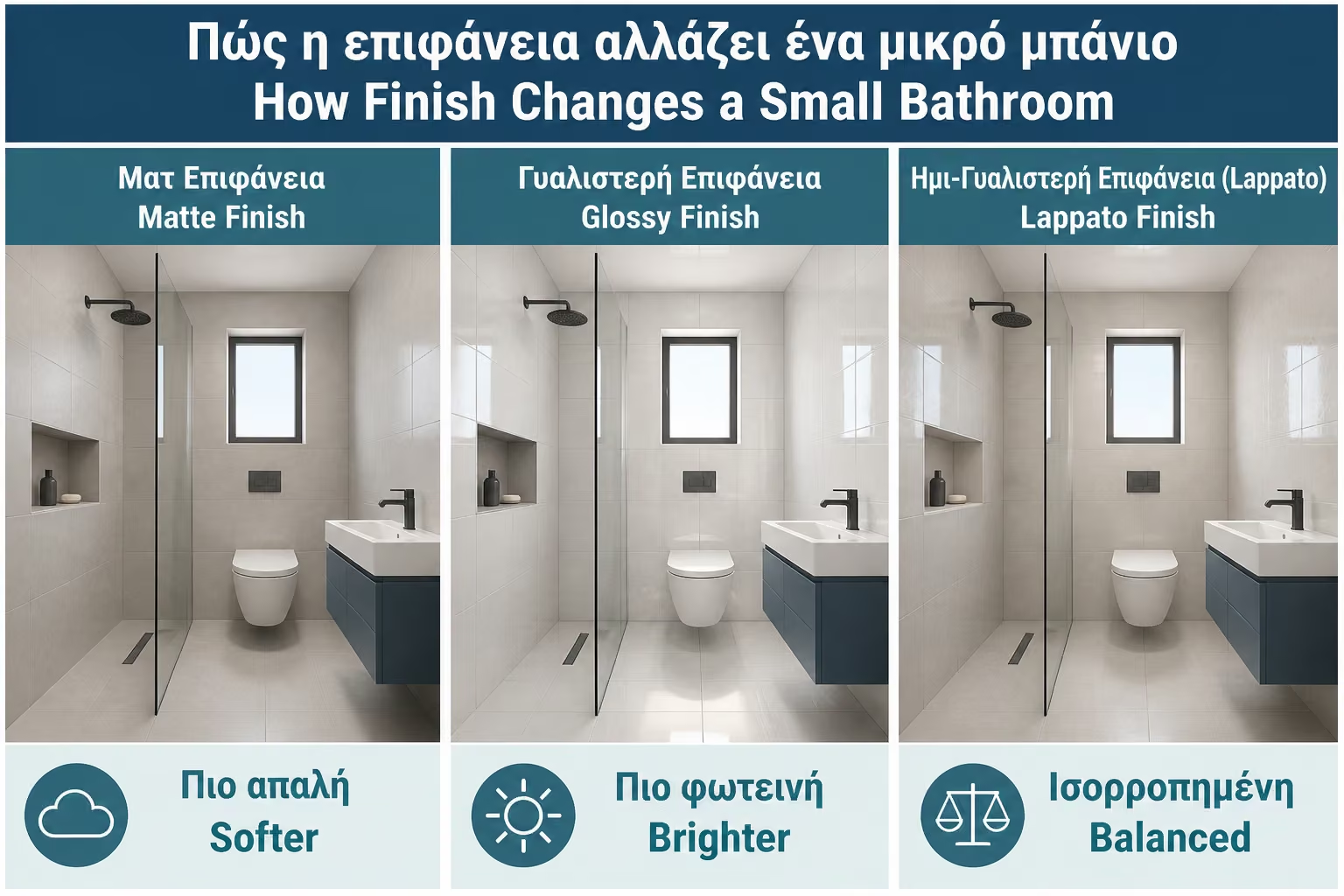
The finish affects the way light "reads" the surface. A glossy tile reflects light strongly and can make a small space appear brighter. In a bathroom without natural light, this can be important. A wall with a glossy white or light-colored tile can visually open up the space and reduce the feeling of a closed room.
Matte, on the contrary, absorbs more light and gives a calmer feeling. It does not create strong reflections, does not tire the eye and is better suited to more natural or minimal compositions. On large surfaces, especially in gray, beige, stone or concrete shades, matte can appear more serious and more architectural.
lappato works in between. It gives small glimmers, especially in side lighting, and can make a tile look "richer" without having the reflective intensity of polished. It is a good choice when we want to avoid the complete dullness of the matte but are afraid of excessive gloss.
A practical example: in a small guest WC without a shower, a glossy wall tile can give light and clarity. In a family bathroom where the floor gets wet every day, the same glossy effect on the floor can be a mistake. The same aesthetic can be achieved with a glossy wall and a matte or R10 floor.
Salts are one of the biggest practical issues in Greek bathrooms. In many areas the water is hard, so when it dries on the surface it leaves white marks. How visible they are depends on the color, finish, frequency of cleaning and how much water remains on the tile.
On dark glossy tiles, the salts show strongly. The contrast between the dark color and the white residue makes each drop more visible. Also, the glossy surface shows blurs and water more clearly. This does not mean that dark gloss is prohibited. It means it needs more frequent sweeping and cleaning.
On light matte tiles, scale is usually less visible, but if the surface is rough it can hold residue. In lappato, the salts can be seen in the shiny areas, especially when the light falls sideways. In other words, lappato is not necessarily "easier" than mat. It depends on the design and microtexture.
The most practical choice for a hard water bathroom is often a medium color, not too dark and not completely white, with a matte or satin finish that is easy to clean. Tiles with a light water color, stone texture or subtle pattern hide everyday marks better than completely plain ones.
There isn't one answer. Gloss is easy to clean because it's smooth, but shows water and dullness more easily. Matte shows less marks, but if it's too rough it can hold dirt. Lappato is in between, but may require careful cleaning to keep the shiny areas from dulling.
In general, for the daily maintenance of porcelain tiles, it is recommended to gently clean with a neutral or suitable cleaner, avoid harsh chemicals and regularly remove dust or debris so that the surface is not scratched or dulled. Recent porcelain tile cleaning guides emphasize using a pH-neutral cleaner and a soft mop or cloth to protect the finish.
In the bathroom, it is advisable to avoid the frequent use of very aggressive acid cleaners, especially without manufacturer's instructions. They can affect joints, metal parts, silicones or sensitive surfaces. For salts, a suitable cleaner is needed, but always with a small spot test and rinsing.
The most practical advice is simple: before you buy, ask to see the tile not only clean in the exhibition, but also in natural light. Touch the surface. If it has strong roughness, think about how it will be cleaned. If it's a mirror, think about how the drops will look.
Slipperiness is where the finish becomes a safety issue. A smooth glossy surface can be very beautiful but unsuitable for a bathroom floor, especially if it gets wet often. The same applies to showers, outdoor floors and kitchens where water or oil can get in.
For bathroom floors, it's a good idea to ask for a specific anti-slip index, such as an R-rating, rather than just the description “matte” or “non-slip”. As we have analyzed in a related guide, R10 is often a reasonable practical basis for a bathroom floor, while for a tiled shower or walk-in solution, R11 is often preferred and, where available, a suitable barefoot classification.
Matte doesn't always mean safe. There are smooth matte tiles that can be slippery when wet. Glossy doesn't always mean no-go on every floor, but it definitely needs technical control. lappato should not automatically be considered an "average security solution". It needs a real technical feature.
On a practical level, for walls we can be freer aesthetically. For floors, especially in the bathroom and outdoors, slip resistance should come first.
Before you review the table, keep the following points in mind:
| Criterion | Riot police | Polished | Lappato / Semi-polished |
|---|---|---|---|
| Visual effect | Calm, natural, modern | Bright, shiny, luxurious | Discreet shine, intermediate feel |
| Space brightness | Lower reflection | High reflection | Moderate reflection |
| Footsteps / waters | They are less visible, depending on the color | They seem easier | They look mediocre, especially in side light |
| Salts | Less visible in medium shades, but can be held in a rough texture | Highly visible on dark or reflective surfaces | Visible in shiny areas |
| Cleaning | Easy if it's smooth matte, more difficult if it's textured | Easy to wipe, but needs frequent polishing/drying | Moderate difficulty, depends on the microtexture |
| Slippery | Usually a better base, but needs an R-rating | Increased attention to wet floors | Intermediate behavior, requires control |
| Ideal use | Floors, bathrooms, kitchens, minimal spaces | Walls, WC, backsplash, decorative surfaces | Living rooms, walls, soft floors, areas with controlled humidity |
The table shows the general direction. It does not replace the technical characteristics of the specific product. Two matte tiles can have a completely different texture. Two lappatos may behave differently in the water. That is why the selection must be made per product, not just per category.
On bathroom walls, slipperiness is not a problem. So you can pay more attention to aesthetics, light and cleaning. Glossy tiles on walls can add brightness and are easy to clean from soaps, especially around a sink or bathtub. In small bathrooms without a window, it can be a very good choice.
Matt tiles on the walls give a more calm and modern effect. They are ideal for spaces that we want to look less "clinical" and more natural. If combined with wood, black batteries or warm shades, they create a more architectural feeling.
Lappato on the walls can be very elegant, especially in marble or stone imitations. It gives depth without the excessive reflection of polished. On the shower wall, however, we have to think about the salts. If water falls on the surface every day and is not wiped off, shiny areas can look dull faster.
For bathroom flooring, practicality and safety come first. The most common direction is matte or satin porcelain with an appropriate anti-slip index. We want a surface that doesn't slip easily, cleans without excessive rubbing and doesn't show every drop.
Glossy bathroom floors need a lot of attention. They may look luxurious, but with soap and water the risk increases. If the space is used by children, the elderly or people with reduced mobility, it is best to avoid them. They also show more intense footprints and water.
The lappato on the bathroom floor can only be used if it has a suitable anti-slip surface for the area. It is not enough that we like the texture. We need to know the index. In many cases, a better solution is lappato or glossy on the wall and safer matte on the floor.
The shower is the strictest zone. There it is not enough that the tile is beautiful or easy to clean. It should be safe with bare feet, soap and water. For a shower floor, a high gloss surface is usually the wrong choice.
In a built-in shower or walk-in solution, matte, structured or grip surfaces are preferred, with an appropriate anti-slip classification. If possible, it is advisable to request a barefoot classification for wet use with bare feet. The choice must be combined with correct slopes and drain, because even the best tile does not solve the problem of stagnant water.
On the shower walls you can use gloss or lappato if you like it aesthetically, but you have to consider the salts. If you don't want frequent wiping, avoid very dark, monochromatic, shiny surfaces in the zone where water constantly falls.
In the kitchen, the wall above the counter has different requirements than the floor. For backsplashes, glossy tile is often very practical because it is easy to clean from grease, sauces and splashes. A glossy subway tile, for example, can be both timeless and easy to maintain.
For a kitchen floor, however, the gloss needs attention. The kitchen has water, oils and frequent traffic. A matte or satin porcelain with a good surface is usually more practical. It doesn't necessarily have to be very rough, but it should not become dangerous with water.
Lappato in a kitchen can look beautiful in an open space with a living room, but it needs to be checked for footprints, mop lines and slipperiness. In open kitchens where aesthetics are important, it can be a good intermediate solution, as long as safety is not sacrificed.
In living rooms, dining rooms and open spaces, lappato can be an excellent choice. It gives a more vibrant surface than matte and a softer shine than full gloss. If the space has good natural light, lappato can create interest without becoming overwhelming.
Glossy living room floors look luxurious, but are more demanding. They show dust, footprints, mop lines and micro-scratches, especially in dark colors. If the house has children, pets or frequent use, they may get tired of maintenance.
Matte floors are quieter and everyday. They don't give the same sense of luxury as a polished marble-look porcelain, but they are more practical. In homes where use precedes 'showcase', it is often a wiser choice.
On balconies, patios, terraces and external stairs, the finish should be chosen based on safety and maintenance. Glossy tile is not a suitable choice for exterior flooring that gets wet. The lappato also needs great care, unless the product is expressly suitable for outdoor use and has the correct anti-slip category.
Usually in outdoor areas matte, structured or grip porcelain tiles are preferred, with R10, R11 or higher depending on exposure, slope and use. If there is an external staircase or ramp, slip resistance becomes even more important.
But we also have to think about cleaning. Very rough surfaces on shaded balconies can hold dust, greens and dirt. So we want a surface that is safe but not too difficult to maintain for real home conditions.
The finish affects the price, but usually not by itself. The final price depends on whether the tile is ceramic or porcelain, the dimension, the brand, the design, whether it is rectified, the slip resistance and the order. In general, simple matte or glossy ceramic wall tiles can be found at budget to mid-range prices, while floor porcelain, lappato, large-scale polished or special surfaces raise the cost.
For a practical picture of the Greek market, simple wall tiles can be around €10–25/sq.m., while good floor porcelain in a matte or satin finish is often around €15–35/sq.m. Lappato, polished, rectified and large format tiles can often range from €25–45/sq.m. and higher, depending on the series and quality.
Installation costs do not always change due to finish, but do change due to dimension, requirements and surface area. Large glossy or lappato tiles need more careful handling to avoid being scratched or stained with adhesives and grouts. If the tile is large format or rectified, the installation requirements increase. In a typical home, labor for simple installation can have a realistic base of around €10–15/m2, while demanding applications, many cuts, large tiles, showers or difficult substrates increase the price.
The first mistake is to choose a glossy bathroom floor because it "looks clean". Clean on display is not the same as safe and practical in everyday use. With soap and water, the glossy surface can become problematic.
The second mistake is to think that the mat does not stain. All tiles get dirty. Matte just hides certain marks better. However, if it has a strong texture, it may need more cleaning than a smoother satin tile.
The third mistake is to choose lappato as a "safe middle" without a technical check. The lappato is aesthetically intermediate, but not necessarily non-slip intermediate in a way that is sufficient for a bath or shower.
The fourth mistake is the choice of a very dark tile in an area with salts without the desire for frequent wiping. Dark gloss or dark lappato in the shower can look great the first week and tiresome after a few months.
Before you review the table, keep the following points in mind:
| Question | Yes / No |
|---|---|
| Will the tile go on a wall or a floor? | Yes / No |
| If it goes on a floor, do you know the slip index? | Yes / No |
| If it goes in the shower, is it suitable for wet use with bare feet? | Yes / No |
| Have you thought about whether the salts are strongly visible in the space? | Yes / No |
| Is the paint too dark or too shiny for a wet area? | Yes / No |
| Have you seen the tile in natural light and not just on display? | Yes / No |
| Is the surface easy to clean or is it rough? | Yes / No |
| Does the finish match the use of the space and not just the photo? | Yes / No |
| Have you asked if the same range is available in another floor/wall finish? | Yes / No |
| Has the technician seen the tile before installation? | Yes / No |
If most of the answers are unclear, don't buy based on the sample alone. The finish is something you will see and clean every day. Worth checking before installing.
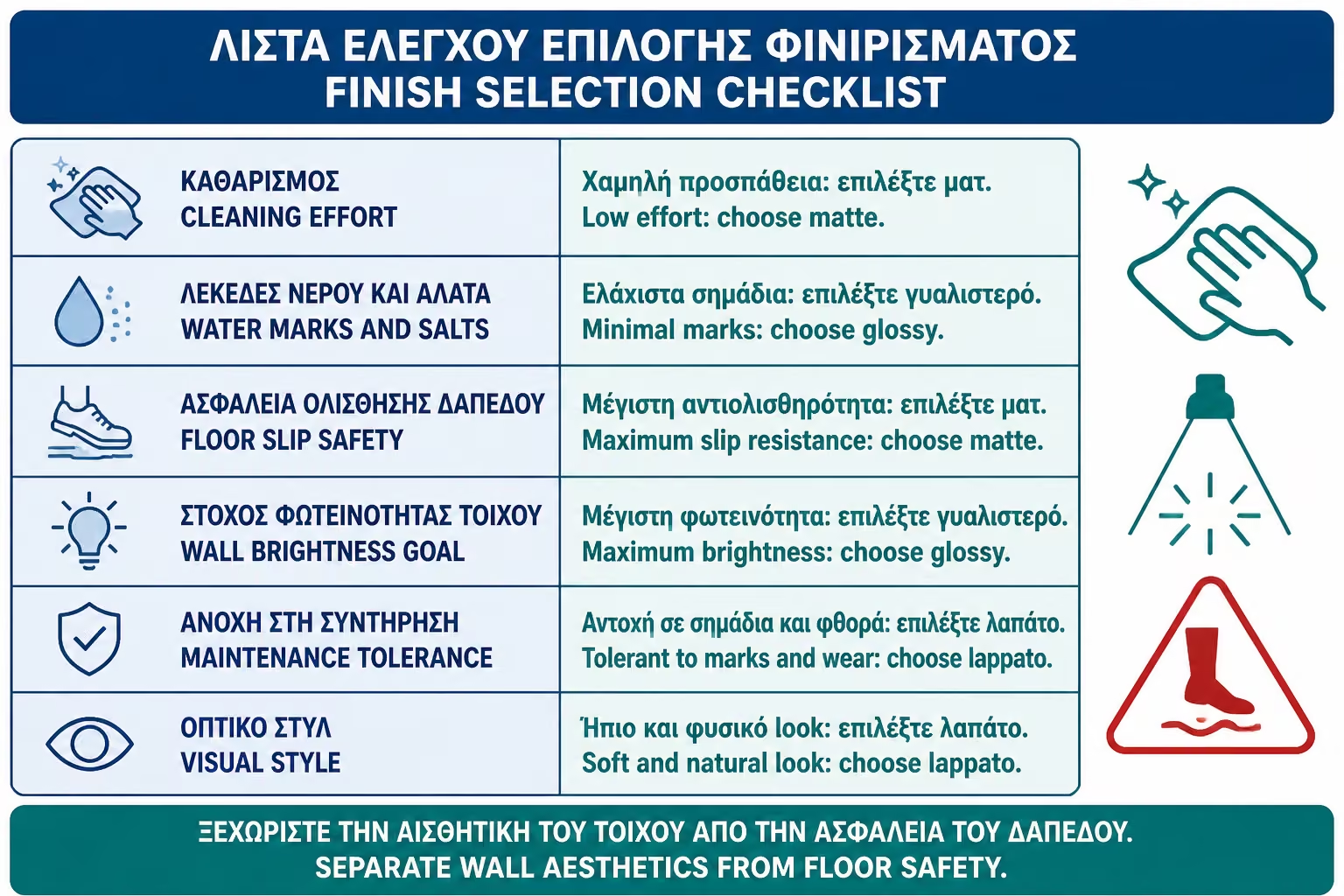
If you have to keep one practical tip, it is this: another finish for the wall, another for the floor and another for the shower. Glossy can be great on a wall, but dangerous on a wet floor. Matt is usually a safer base for flooring, but if it's too rough it can hold scale. Lappato gives a beautiful intermediate shine, but should not be chosen for showering without checking slip resistance. Don't buy a finish from a photo; buy it based on use, water, cleaning, and who will be stepping on it.
Matte, glossy and lappato are not just three aesthetic options. There are three different ways in which the tile behaves to light, water, dirt and pressure. The right finish can make a space brighter, calmer, more luxurious or more practical. The wrong finish can create a permanent cleaning nuisance or even a safety issue.
For walls, you can move more freely. Glossy, lappato or matte can work, depending on style and lighting. For floors, especially in bathrooms, kitchens and outdoor areas, slip resistance and maintenance should come before appearance. For a shower, the choice must be even stricter.
The best solution is often not to put the same tile everywhere. It can be glossy or lappato on the wall, matte non-slip on the floor and a special grip or suitable barefoot tile in the shower. This way you keep the aesthetics you want, without sacrificing practicality and safety.
Return to category.
Go to categoryReturn to the central guide.
Go to guide