
Bathroom Surface Materials & Finishes
Return to category.
Go to categoryWood is one of the most loved materials in a home because it brings warmth, naturalness, and a sense of comfort that is hard to achieve with colder surfaces. In the bathroom, however, real wood is always a more demanding choice. Moisture, steam, splash water, cleaners, and movement can damage it if those conditions are not properly anticipated. That is why wood-look tiles have become so popular: they offer the visual warmth of wood, but with the performance of a ceramic surface or, even better, porcelain.
Their great value is not only that they "look like wood". It's that they can completely change the feel of a bathroom. A bathroom with gray cement tiles can look modern but somewhat cold. If an oak-type floor is added or a zone behind the washbasin with a wooden texture, the space is immediately softened. It becomes warmer, friendlier, closer to the feeling of a spa or a modern hotel bathroom.
But wood-effect tiles are not automatically a successful choice. If they are chosen in the wrong shade, with too much pattern repetition, with the wrong grout color, or with a weak layout, they can look fake. If they are installed in a pattern that does not suit the dimensions of the space, the result can feel forced. If they are chosen for a shower floor without checking slip resistance, they can be impractical no matter how attractive they look.
In the Greek market, most quality wood-look tiles are porcelain tiles with very low absorbency. This makes them suitable for wet areas such as bathrooms and kitchens, as long as a product suitable for the specific use is always chosen. Wood-look porcelain is generally considered a good solution for wet areas because it combines low porosity, durability, and easier cleaning than real wood.
In this guide we will look at how to choose the right wood-look tiles for the bathroom, where to install them, what joint color to choose, what patterns work best, how to combine them with marble, cement or plain tiles and what mistakes to avoid so that the result does not look cheap or boring.
Wood look tiles are ceramic or porcelain tiles that mimic the look of wooden boards. Their surface is printed and often textured to reproduce wood grain, rosettes, natural color variations and plank lines. The best series don't have a repeating pattern, but many different faces so that the effect looks more natural.
They are usually available in long narrow dimensions, such as 15×60, 20×90, 20×120 or 30×120, to resemble a floorboard. But there are also more special versions, such as chevron, herringbone, small "strips" or large slabs with a wooden texture.
The important technical difference from real wood is that tile does not swell and warp with moisture in the way wood flooring or unsuitable laminate can. This does not mean that the bathroom automatically becomes watertight. It means that the tile itself tolerates moisture far better than wood. Waterproofing, grout joints, silicone, and floor slopes still depend on the installation system.
The bathroom is often dominated by cold materials: sanitary ware, glass, mirrors, metals, tiles, stone or concrete surfaces. Wood, even as an imitation, acts as a "counterweight". It brings visual warmth without having to put real wood material in a damp space.
This is especially useful in small apartment block bathrooms. A bathroom 4–5 sq.m. with white and gray tiles it can look clean but lifeless. If the floor is made in a natural oak tone or if the back of the washbasin is covered with a wood effect tile, the space acquires a more livable feel. It doesn't just look like a "wet space", but a part of the house.
Wood-type tiles also help to aesthetically connect the bathroom with the rest of the house. If the house has a wooden floor or laminate in warm tones, a bathroom with wood effect porcelain can continue the same feeling, without risking moisture in the real wood.
For a bathroom floor, porcelain is usually the best choice. It has very low absorbency, greater density, and better overall performance in wet, heavily used areas. Wood-look porcelain is particularly popular because it combines the appearance of wood with the durability and ease of cleaning of porcelain tile.
For walls, good wood-type ceramic tile can also be used, as long as it is suitable for the application. But since most wood effect tiles are designed as floorboards, we often find them in porcelain. This is positive for durability, but also means more weight, more difficult cuts and increased demands on the glue and substrate.
If it is going to go into a shower, bathroom floor or an area that gets wet often, the phrase "it's a porcelain tile" shouldn't be enough. It must be checked whether it is suitable for flooring, what slip-resistance rating it has, and whether its texture can be cleaned easily of limescale and soap.
Wood-look tiles can be used in many ways, but they don't always have to go everywhere. Sometimes the most elegant effect is obtained when the wood effect is used on certain surfaces and combined with calmer tiles.
The most common application is on the floor. A wood-type floor makes the bathroom warmer and is easily combined with white, beige, gray or stone walls. It gives the feeling of a wooden floor without the fear of moisture.
A second very good application is on an accent wall. For example, behind the sink, behind the hanging basin or inside the shower zone. There, the wood effect works as a decorative surface, without filling the entire bathroom with "wood".
A more daring solution is to cover both the floor and a wall with the same wood effect tile, creating a continuity like a "box" or paneling. This can look very beautiful, but needs attention to nuances and layout, so that it does not become heavy or fake.
On the floor, wood effect is one of the most successful applications because it follows the natural place of wood in a home. The eye is already used to reading plank patterns across a floor, so wood-look tile in that position tends to feel believable and relaxed.
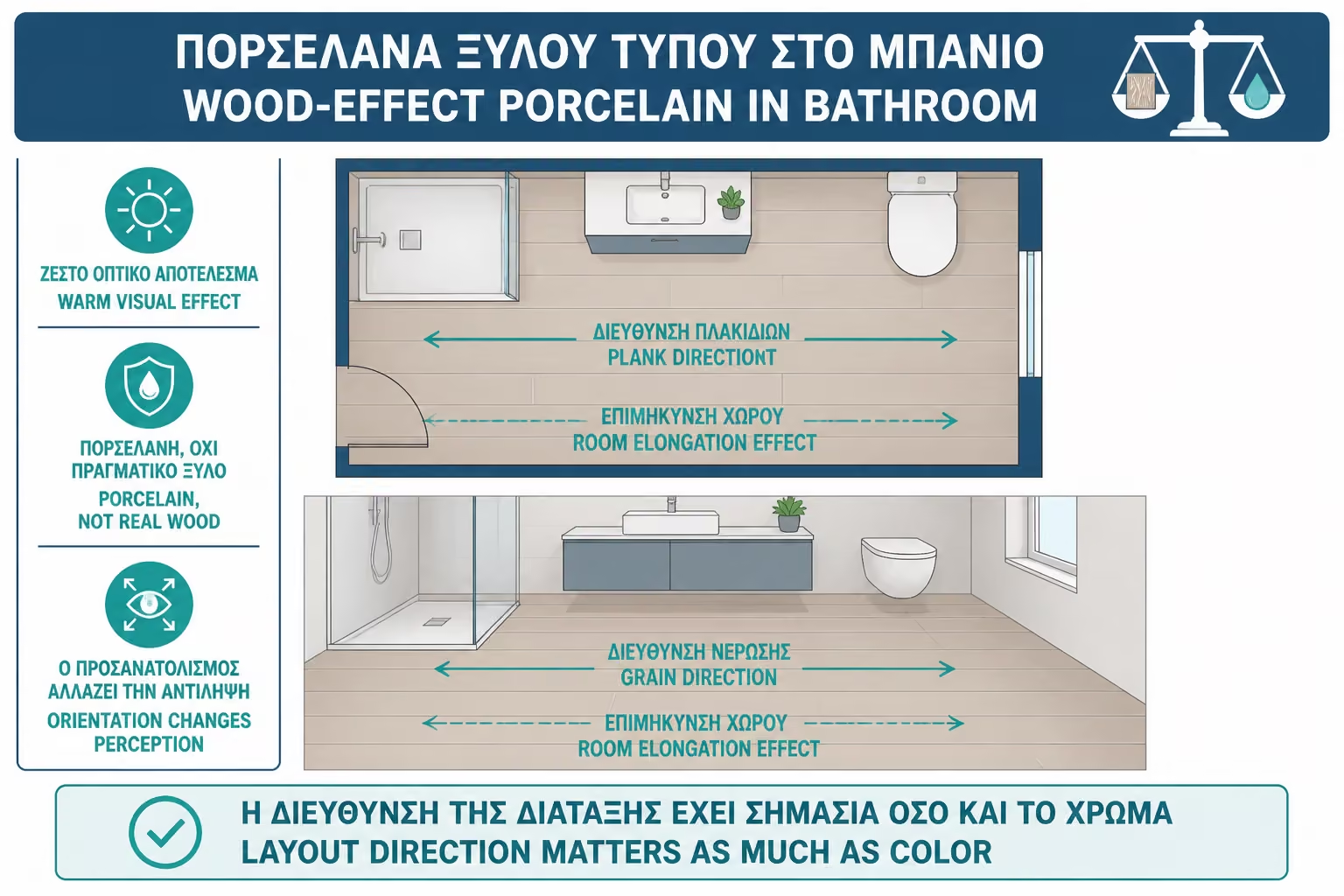
In a small bathroom, long narrow boards can help visually. If placed along the longest dimension of the space, they usually make it appear longer and more organized. If placed vertically in a narrow bathroom, they may "cut" the space. There is no absolute rule, but the direction of the board should be decided before purchase and installation.
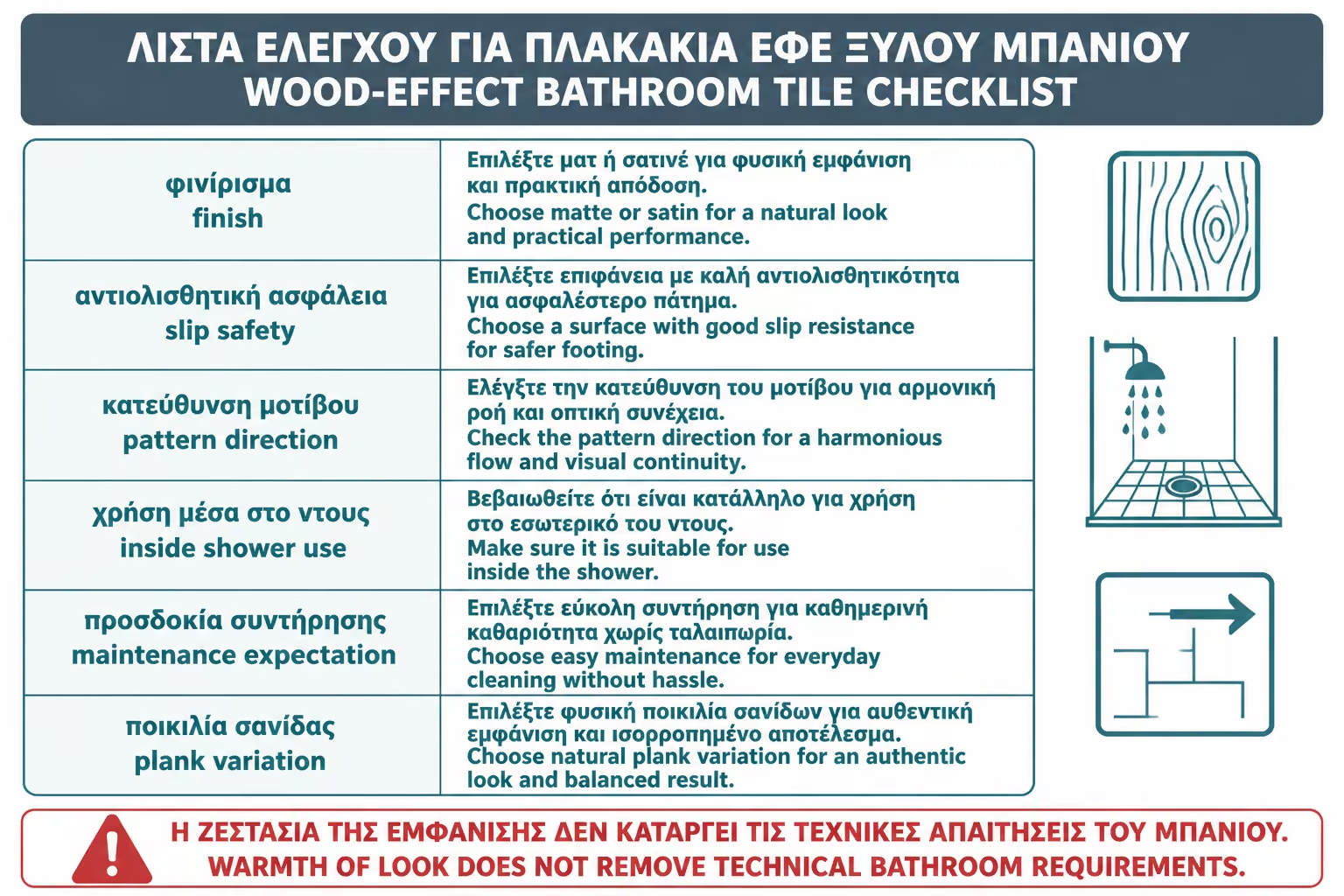
Practically, for a bathroom floor it is good to choose a matte or satin texture, not too shiny. Wood as a material has a naturally matte feel, so an overly glossy wood effect often looks less authentic. In addition, on a bathroom floor, gloss can increase slipperiness and show water more easily.
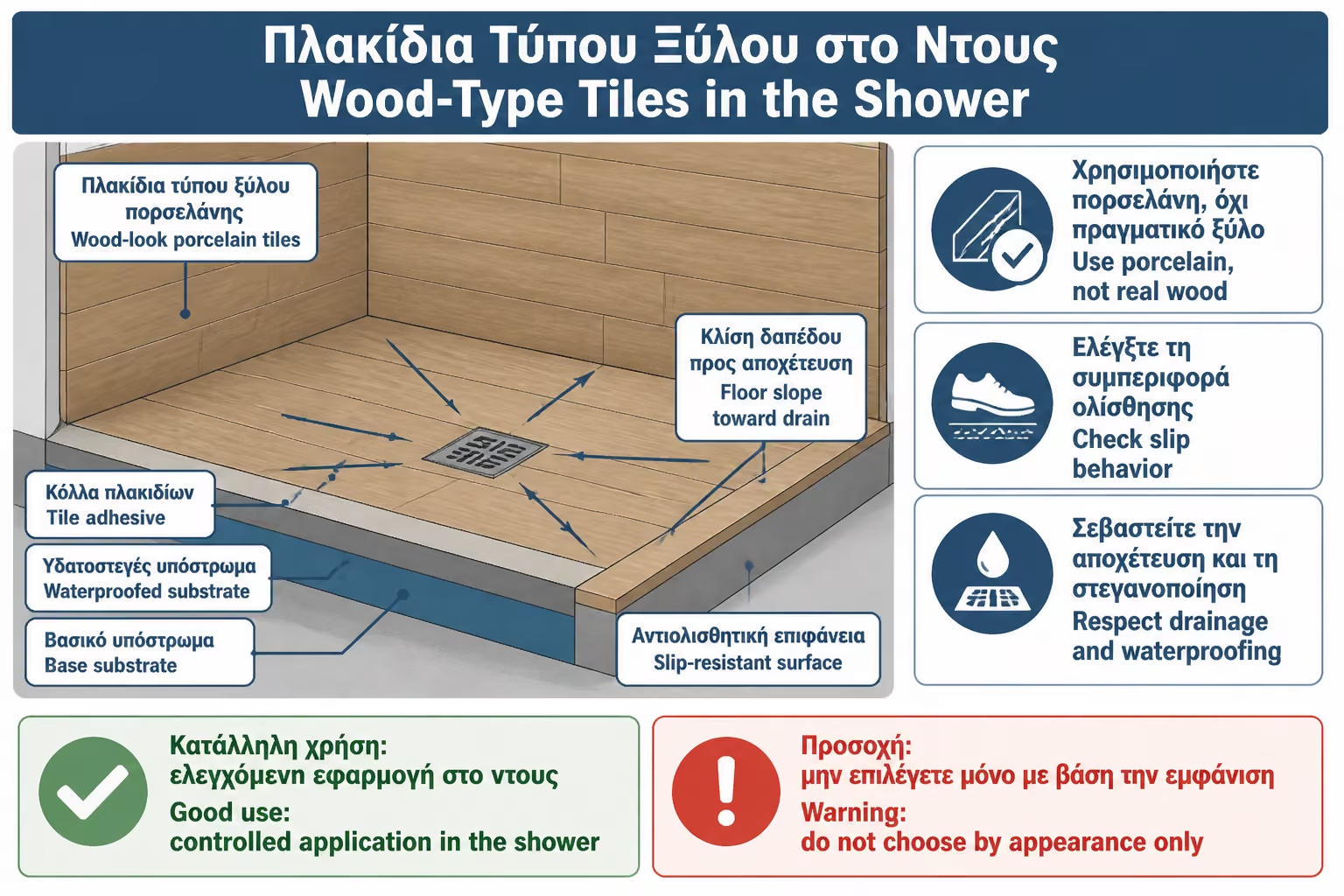
The shower is the most demanding zone. If you want wood-look tile on the shower floor, you need to check three things: slip resistance, floor slopes, and cleaning practicality. It is not enough that the tile is porcelain and looks like wood.
The texture should feel safe under bare feet in wet conditions. A very smooth wood-look tile may look natural, but it may not be appropriate once soap and water are involved. For a tiled shower, especially a walk-in, it is wise to look for higher slip resistance and, where available, a barefoot wet-area rating.
Dimension also plays a role. Long narrow planks can make the floor slopes harder to form if there is a central drain. With a linear drain, the wood effect can work better, because the slope can be done in one direction. Even so, careful layout planning is needed so that the cuts do not spoil the image.
On the walls of the shower, the wood effect is technically easier than on the floor. There is no pressure there, so slip resistance is not a concern. But we are concerned with salts, joints and cleaning. A very dark brown tile inside the shower may look great but show white scale marks if not wiped frequently.
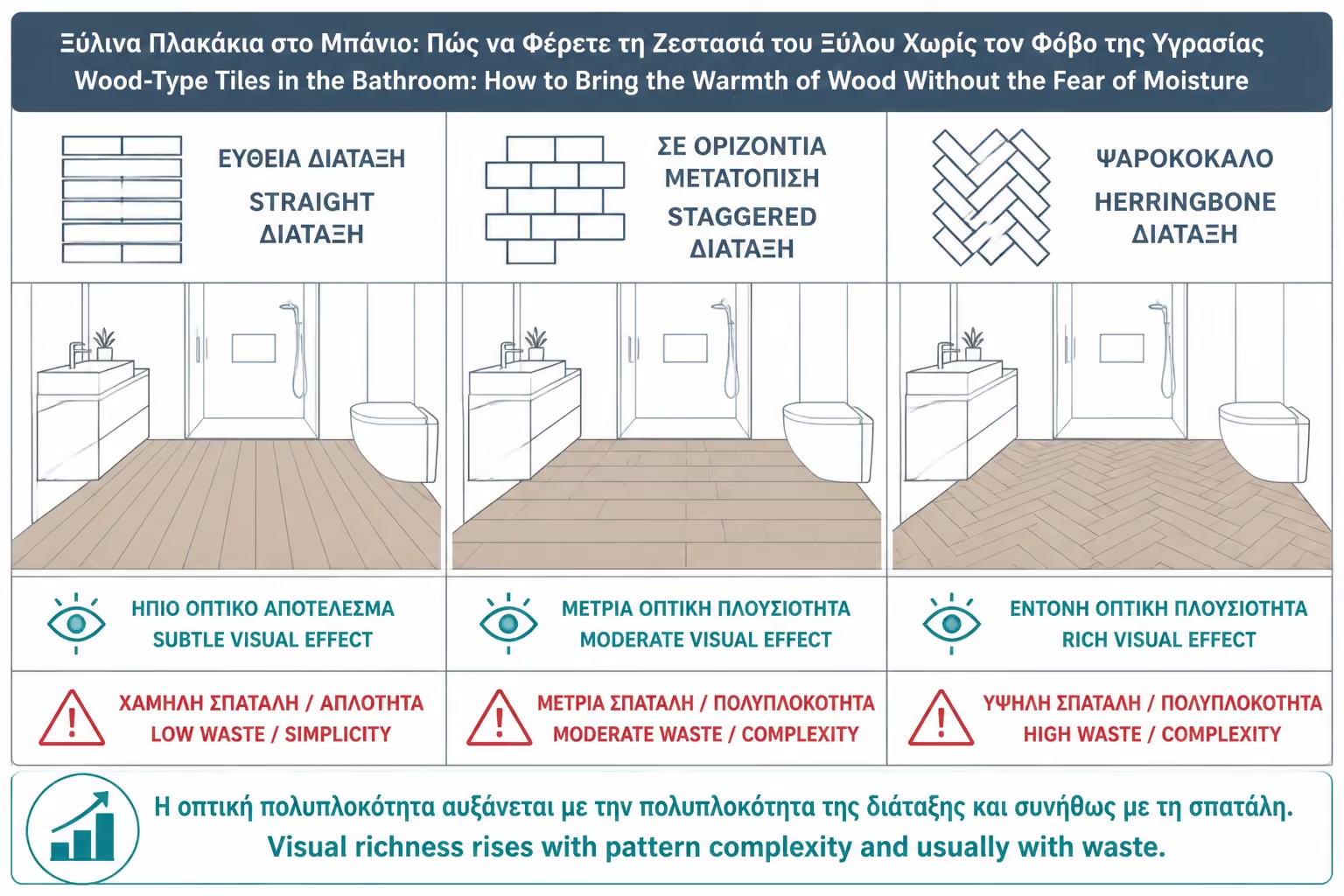
The installation pattern often determines whether wood-look tile feels natural or artificial. The simplest and safest solution is a straight plank layout with staggered joints instead of every joint lining up in the same place. That usually feels closer to a real wood floor and is easier on the eye.
Very common is placement with displacement, i.e. one row starts further forward or further back than the previous one. Care needs to be taken here. On long narrow tiles, the 50% offset can create lippage if the tile has a slight curvature, which is often the case with plank type tiles. This is why many craftsmen prefer an offset of about 1/3 instead of an absolute half, to reduce the risk of the highest point of one tile lining up with the lowest point of the next.
Herringbone gives a very impressive effect, but it does not suit every bathroom. In small spaces it can become too "crowded" if the tile is large or if the wood grain is intense. It requires more cuts, more waste, and a more experienced installer. Chevron, where the edges are cut at an angle to form a clean V, is even more challenging and usually more expensive.
There are also deck-type layouts, vertical installation on a wall, horizontal installation as a cladding or combination with large slabs in another material. The right way depends on the dimension of the bathroom, the direction of entry, the light and where we want to draw the eye.
In a narrow bathroom, the direction of the wood-look tiles can change the visual perception. If the planks run lengthwise, the eye follows the line and the space appears longer. If they run crosswise, it can look wider but also more segmented. There is no one-size-fits-all solution, because it depends on the floor plan.
On the walls, the horizontal placement creates a calmer and more natural feeling. Vertical placement can add height, especially behind the sink or in the shower. But if used vertically everywhere, it can become intense. In low-ceilinged bathrooms, a vertical layout can help. In very narrow bathrooms, the horizontal can visually open the wall.
A practical example: in a 1.50x2.70 m bathroom, if the floorboards are inserted along the 2.70 m length, the bathroom will look deeper. If the accent wall behind the sink has vertical boards, it can give height and create a point of interest without burdening the entire space.
The color of the grout joint is probably the most underrated point in wood-look tiles. If the joint color is wrong, the result immediately looks fake. Unlike a white tile where the joint can become a design element, with wood effect we usually want the joint to visually recede as much as possible.
The safest choice is a joint close to the midtone of the tile, not necessarily the lightest or darkest. If the tile has a lot of water, we choose a color that blends with the overall impression. For oak or natural wood, beige, light brown or greige joints are often suitable. For a darker walnut, brown or charcoal-brown may be needed. For gray wood, the joint should go towards grey-beige or grey, not pure white.
White grout is rarely a good choice in wood-effect flooring. It creates strong lines, breaks the illusion of a plank, and gets dirty easily. Too dark a joint can also make the tile look like a grid, especially if the surface is light in color.
For rectified wood effect tiles, a thinner joint can be used, usually around 2–3 mm, depending on the manufacturer's instructions and the quality of the substrate. On unground tiles or more demanding surfaces, the joint may need to be larger. Technical guides for joints often state that rectified tiles allow for smaller joints, while non-rectified tiles need more room for tolerances.
In wood effect tiles the owner often requests a very small joint, to look more like a wooden board. This makes sense aesthetically, but it has to be done right. Tile is not wood. It needs a joint to function, absorb tolerances and fill properly.
In internal bathrooms with rectified porcelain and a good substrate, a 2 mm joint can give a very clean result. On longer boards, however, especially if they are not perfectly flat, an overly narrow joint can make lippage or small deviations more apparent. In outdoor spaces or surfaces with temperature changes, a more comfortable joint is usually needed.
The goal is not to make the joint disappear, but to make it unobtrusive. This is achieved more through the right grout color and a well-planned layout than through making the joint too narrow. A proper 2.5-3 mm joint in the right color can look better than a poorly executed 1 mm joint.
Real wood has variation, but not mechanical repetition. One of the problems with cheap wood-effect tiles is that they come in only a few different faces. If the installer does not mix them properly, the same pattern repeats every few planks and the eye notices it. Then the result looks obviously printed.
Before installation, it is advisable to open several boxes and mix the pieces. The craftsman must see the layout and avoid putting two identical or very similar designs side by side. This is especially important in small bathrooms, where you can see the entire surface at a glance.
The second point is the shade. Too orange or too red woods can look old or heavy unless they match a certain style. For modern bathrooms, safer choices are natural oak, light beige-grey shades, calm walnut and warm neutral shades. Very gray woods, which were popular in the past, today often look colder and less natural.
Wood-type tiles combine very well with materials that have a clean and calm base. The safest option is the combination with white or off-white tiles. Wood warms the space and white keeps it bright. This solution works particularly well in small bathrooms.
A second very good choice is the combination with beige, greige or stone shades. There the result becomes more natural, more spa and less intense. A natural oak type floor with walls in light stone or beige cement can appear warm and timeless.
Gray concrete with wood is also popular, but needs the right balance. If the gray is too cool and the wood too warm, there may be a clash. Warm grays, greige and soft concrete surfaces work best.
Paired with marble, wood effect can give an excellent result as long as the two patterns do not compete. If the marble has strong veining and the wood also has a pronounced texture, the space starts to feel busy. It is better for one of the two to be the protagonist and the other to stay quieter.
Before you review the table, keep the following points in mind:
| Wood effect shade | Best paired with | Attention |
|---|---|---|
| Natural oak | White, off-white, beige, greige, light gray | It should not come out too yellow with warm lighting |
| Light beige wood | Minimal white, stone, black details | It can look dull if everything is too open |
| Walnut | Beige, cream, marble, bronze or black details | It can darken small bathroom |
| Gray wood | Cool gray, white, industrial style | It can look cold or outdated if it's too gray |
| Dark brown | Large bathrooms, warm stone, low spa lighting | It shows salts more easily in the shower |
| Rustic wood with strong veining | Calm monochrome walls | It's tiring if it gets everywhere |
The table helps as a starting point. The final choice must be made with a sample in the actual lighting of the bathroom, because the same tile can appear yellower, grayer or darker depending on the light.
In a small bathroom, the wood effect should be used sparingly. If it goes on all the walls and the floor, it can look like a "box" and visually make the space smaller. Usually a better solution is the wooden effect on the floor and calmer walls, or a single accent wall.
If the bathroom does not have a window, prefer light or medium shades of wood. Very dark walnut can be stylish, but it needs good lighting and the right combination to keep it from going dark. In small spaces, natural oak, light beige wood and calm greige woods are safer choices.
Lighting plays a big role. Warm lighting can make the wood more yellow or orange. Cold lighting can make it more gray and lifeless. That's why it's good to examine the sample with the lighting that the bathroom will actually have, not just under the exhibition lights.
If you have wood-type tile and wood-colored bathroom furniture, care is needed. Trying to match exactly two different "woods" is difficult. If they are not the same series or the same material, it will usually look like they "almost match but not exactly".
A safer solution is either to have a clear contrast or to keep one of the two neutral. For example, if the floor is wood effect in natural oak, the furniture can be white, beige, charcoal or black. If you also want wood furniture, choose a shade that is related, but not competing. A piece of furniture in a slightly darker or calmer tone can work better than an almost identical shade.
A very beautiful combination is wood effect tile with monochrome furniture and counter/washbasin in white or stone. So the wood remains the warm element and there is no confusion from many different waters.
Wood effect porcelain tiles are generally easier to clean than real wood because they do not require oils, varnishes or special wood maintenance. Regular cleaning with a suitable mild detergent and water, according to the manufacturer's instructions, is usually sufficient.
In the bathroom, however, the issue is not only dirt. It's the salts. If the tile is too dark, the salts show up more strongly. If it has a very strong texture, it can hold soap and residue. If the wood grain has many nicks and grooves, these may require more careful cleaning.
For hard water areas, medium wood tones and textures that look natural but are not overly rough are more practical. In the shower, if there is no mood for frequent wiping, avoid very dark wood on surfaces where water falls every day.
In the Greek market of 2026, wood-type tiles exist in a wide price range. The most affordable options can start around €15–20/sq.m., while good porcelain ranges with more natural print, quite different faces and better texture often move around €25–45/sq.m. More branded ranges, rectified edges, large dimensions or special patterns such as chevron and herringbone can go quite a bit higher.
Placement is affected by dimension and pattern. A simple straight installation on a floor can be more reasonable. But if a herringbone, multiple cuts, a wall arrangement, a shower with slopes or a combination with other tiles is requested, the work increases. In typical simple installations, a realistic labor base can be around €10–15/m2, but in special patterns or demanding bathrooms the cost can go up.
The heat must also be calculated. For simple installation, about 10% can be calculated. For herringbone, chevron, multiple cuts, or a small bathroom with multiple angles, 12–15% or more may be needed. If the design has a strong current or specific waters must be matched, the fly should not be underestimated.
The first mistake is the wrong shade. A very orange wood can show older than the owner expects. A very gray wood can make the bathroom cold. The safest base is natural, calm shades.
The second mistake is the white or strongly contrasting joint. This makes the tile look fake, because instead of reading as a board, it reads as a grid of tiles.
The third mistake is repeating the same designs side by side. If the pieces from different boxes are not mixed, the result can look mechanical.
The fourth mistake is the wrong application in the shower. Just because a tile looks like wood and is porcelain doesn't mean it's suitable for a shower floor. It needs anti-slip, correct slopes and practical texture.
Before you review the table, keep the following points in mind:
| Question | Yes / No |
|---|---|
| Is porcelain tile also suitable for bathroom flooring? | Yes / No |
| Have you checked the slip resistance for the floor or shower? | Yes / No |
| Have you seen a sample in real bathroom lighting? | Yes / No |
| Is the joint color close to the mid tone of the wood? | Yes / No |
| Has the white joint on the floor been avoided? | Yes / No |
| Has the direction of the board been decided before installation? | Yes / No |
| Has it been calculated for cuts and pattern? | Yes / No |
| Will the craftsman mix tiles from different boxes? | Yes / No |
| If it goes into a shower, have the faucet and slopes been checked? | Yes / No |
| Does it go well with furniture, sanitary ware and other tiles? | Yes / No |
If most of the answers are unclear, it's a good idea not to make the purchase just based on a nice photo. The wood effect tile looks really good when it has the right shade, the right direction, the right joint and the right technical application.
If you want wood-type tile in the bathroom, don't treat it as a simple decorative option. First choose suitable porcelain for a wet area, check the slip resistance if it is going into a floor, and decide in advance the direction of the board and the color of the joint. The joint should approach the midtone of the tile, not starkly contrast. And in the shower, don't get carried away by the image of wood: safety, slopes and cleaning are more important than design.
Wood-type tiles are one of the most practical solutions to bring warmth to the bathroom without the fear of moisture that comes with real wood. Especially when they are porcelain, they offer resistance, low absorbency and easier maintenance, while aesthetically they can transform a cold space into a more natural and welcoming environment.
But success is judged in the details. The shade should match the lighting, the arrangement should respect the geometry of the space, the joint should not draw the eye and the placement should not create mechanical repetition. The floor must be checked for slip resistance. In the shower, inclinations and safety must come first. In the combinations, the wood effect needs calm "teammates" to show naturalness.
The best solution is not always to put wood effect everywhere. Often, a wood-type floor with calm walls, or an accent wall with proper lighting, gives a more elegant and timeless effect. When the wood effect is used in moderation and with the right technical thinking, it can give the bathroom the feeling of wood without the practical problems of wood.
Return to category.
Go to categoryReturn to the central guide.
Go to guide