
Bathroom Surface Materials & Finishes
Return to category.
Go to categoryMosaics have a special place in the bathroom. They are not just small tiles. It is a material that can provide detail, texture, color, luxury and technical flexibility where a large tile struggles. They can turn a plain shower wall into a point of interest, dress up a curved surface, create a decorative zone behind the sink or practically solve the difficult issue of the shower floor.
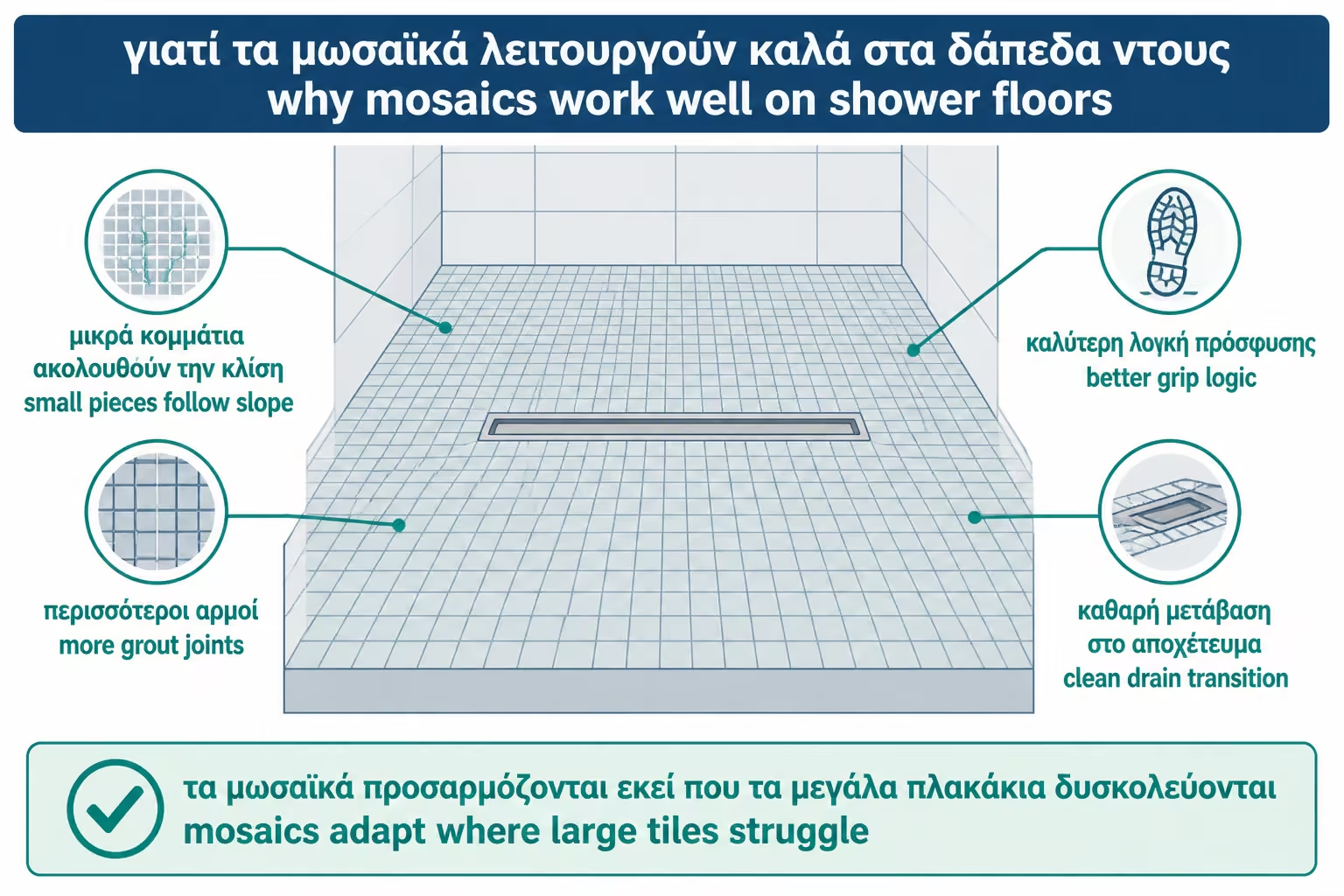
Their most important technical property, however, is not always apparent at first glance. Because they are made up of many small pieces, they have a much higher joint ratio than a large tile. This means that on the floor of the shower they offer more "lines" of traction for the foot, so they can significantly help with anti-slip. At the same time, because small pieces follow gradients more easily, they are often an ideal solution for showers with a central spout or multi-faceted flow.
This does not mean that every tile is suitable for every use. A glass mosaic on the wall, another ceramic on the floor, another natural stone in the shower has a different behavior. The choice should not be made just because "it looks nice" or because it "matches the tile". We need to look at material, texture, joint, cleaning, absorbency, substrate, adhesive, grout and use.
In the Greek reality, where many bathrooms are small, with difficult slopes, limited lighting and often hard water that leaves salts, mosaics can be a very practical choice but also a source of problems if they are inserted incorrectly. The many joints help with pressure, but also mean more points that need proper fitting and cleaning. Natural stone looks luxurious, but needs a sealer. The glass shines, but may be slippery or show scale. Ceramic tile is often more balanced, but must be suitable for flooring.
In this guide we will see what tiles are, what categories there are, why they are considered such a good solution for the shower floor, where they should be avoided, how we choose grout and glue, what costs to expect and what mistakes to prevent before installation begins.
Mosaics are small pieces of glass, ceramic, porcelain, natural stone, metal or combinations of materials, usually glued onto sheets of mesh or paper. This allows the craftsman to fit many small pieces together instead of putting them one at a time. Common dimensions can be 1×1, 2×2, 2.5×2.5, 5×5 cm or long narrow small pieces, depending on the design.
The big difference from a simple tile is that the mosaic acts as a "flexible" surface. Because the pieces are small and separated by joints, they can more easily follow small slopes, curves and level changes. This makes them very useful in showers, counters, alcoves, rounded surfaces, hammams, swimming pools and decorative zones.
But this flexibility comes with an increased need for precision. If the sheet is not placed correctly, lines may appear between the sheets. If the joint is not filled properly, it can collect dirt. If the glue comes out between the tiles, cleaning becomes difficult. So mosaics are not an "easy fix" because they are small. It is a special application that needs careful placement.
The shower floor is one of the most difficult areas in a bathroom. It has water, soap, bare feet, slopes to a drain and often a small surface where the user moves, turns and steps at different angles. There, security is not a decorative detail. It is a basic technical issue.
Mosaics help for two reasons. First, the many joints increase traction. The tread does not step on one large smooth surface, but on many small pieces interrupted by joint lines. These lines act as small grip zones and reduce the feeling of sliding, as long as the joint is correct and the surface is not too smooth.
Second, mosaics follow gradients more easily. In a shower with a central spout, the floor should fall from several sides to the point of drainage. A large tile may struggle to follow these patterns without cutting. The mosaic, on the contrary, can smoothly "break" the surface and follow the slope without creating sharp edges.
This is why we often see mosaics in built-in showers, walk-in areas and floors with central drains. It's not just a matter of aesthetics. It is a practical technical choice.
The increased joint ratio is the biggest advantage and at the same time the biggest disadvantage of tiles. On the shower floor, the many joints help with slip resistance. In cleaning, however, they mean more lines that can pick up soap, scale and dirt if not applied properly.
That's why the grout on the mosaics is critical. It must be fully filled, suitable for wet areas and easy to clean. In showers, where there is constant moisture, better quality grouts are often considered, even epoxy in demanding applications, because they have lower absorbency and better stain resistance than simple cementitious grouts. They are not always necessary in every home, but they are worth discussing when talking about a shower floor with multiple joint lines.
A common mistake is to assume that because the tile is small, placement is easier. In fact, the craftsman must achieve uniform joints between the sheets, correct level, clean surface and complete filling. If the sheets look "square" after placement, the result looks sketchy and difficult to correct.
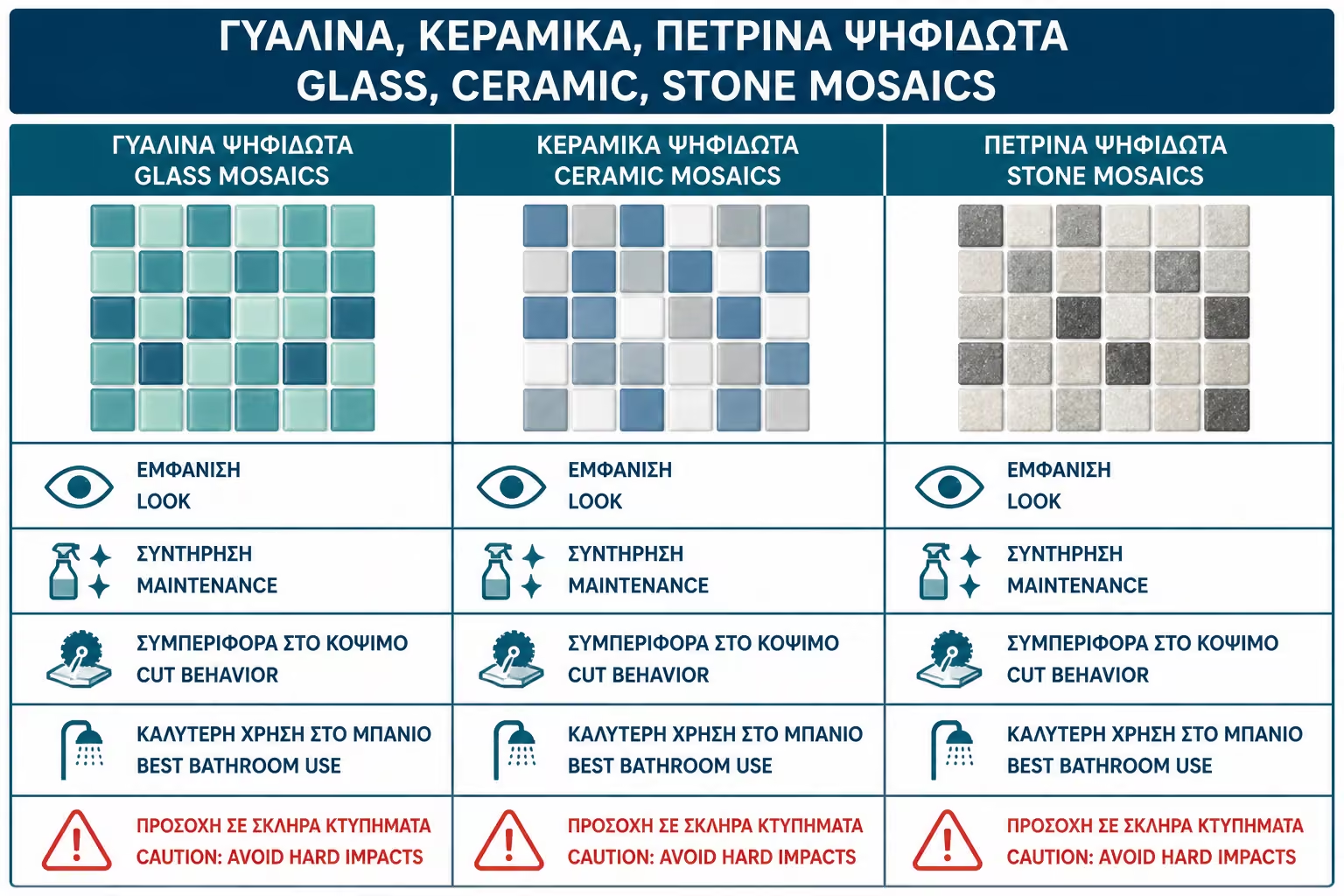
The glass mosaics are impressive. They reflect light, give depth and can make a small bathroom look brighter. They are often used on shower walls, decorative zones, alcoves, behind sinks or in places where we want intensity and shine.
Their great advantage is aesthetics. They have a clarity, color and gloss that is difficult to achieve with other materials. In bathrooms without natural light, a glass mosaic can "enliven" the surface. In small doses it can look very elegant.
On the floor, however, it needs attention. Not all glass tiles are suitable for pressing. Some are for wall only. Some may be very smooth or scratch more easily. On a shower floor, it must be explicitly confirmed that the product is suitable for floor use and for wet use. The beauty of glass is not enough.
Also, glass mosaics show salts. In hard water areas, especially if they are dark or very shiny, they may need more frequent wiping to maintain their original shine.
Ceramic and porcelain tiles are often the most practical choice for a bathroom. They can have a matte, satin, glossy or anti-slip finish, are available in many colors and are easily combined with larger tiles of the same series. Many companies even offer the same tile in a large dimension and in mosaic, so that the large slab can be used on the walls and the mosaic on the floor of the shower.
This is very practical. An owner can choose a marble look porcelain 60×120 for the walls and the corresponding mosaic on the shower floor. Thus it maintains aesthetic continuity, but better solves the issue of tilting and anti-slip.
For a shower floor, matte or slightly textured porcelain tiles are usually a safer choice than highly polished ones. It does not mean that every matte tile is suitable. Use must be confirmed by the manufacturer or supplier. But as a general direction, porcelain tiles give a good balance between durability, cleaning, low absorbency and aesthetics.
Stone mosaics, made of marble, pebbles, travertine, slate or other natural stones, have a special beauty. They give naturalness, texture and spa feeling. A shower floor with pebbles or stone mosaics can look very warm and relaxing.
But natural stone in the bathroom needs attention. It is porous to varying degrees, it can stain, retain salts and require a special sealer. Do not clean with any anti-salt cleaner, because many acidic products can affect the stone, especially if it contains calcareous elements such as marble or travertine.
In the shower, the stone mosaic is an option for an owner who accepts more care. It's not "set and forget". It needs proper sealing, suitable grout, careful cleaning and periodic inspection. If the bathroom is used daily by a family, with hard water and common detergents, perhaps a porcelain mosaic that imitates stone is a more practical solution.
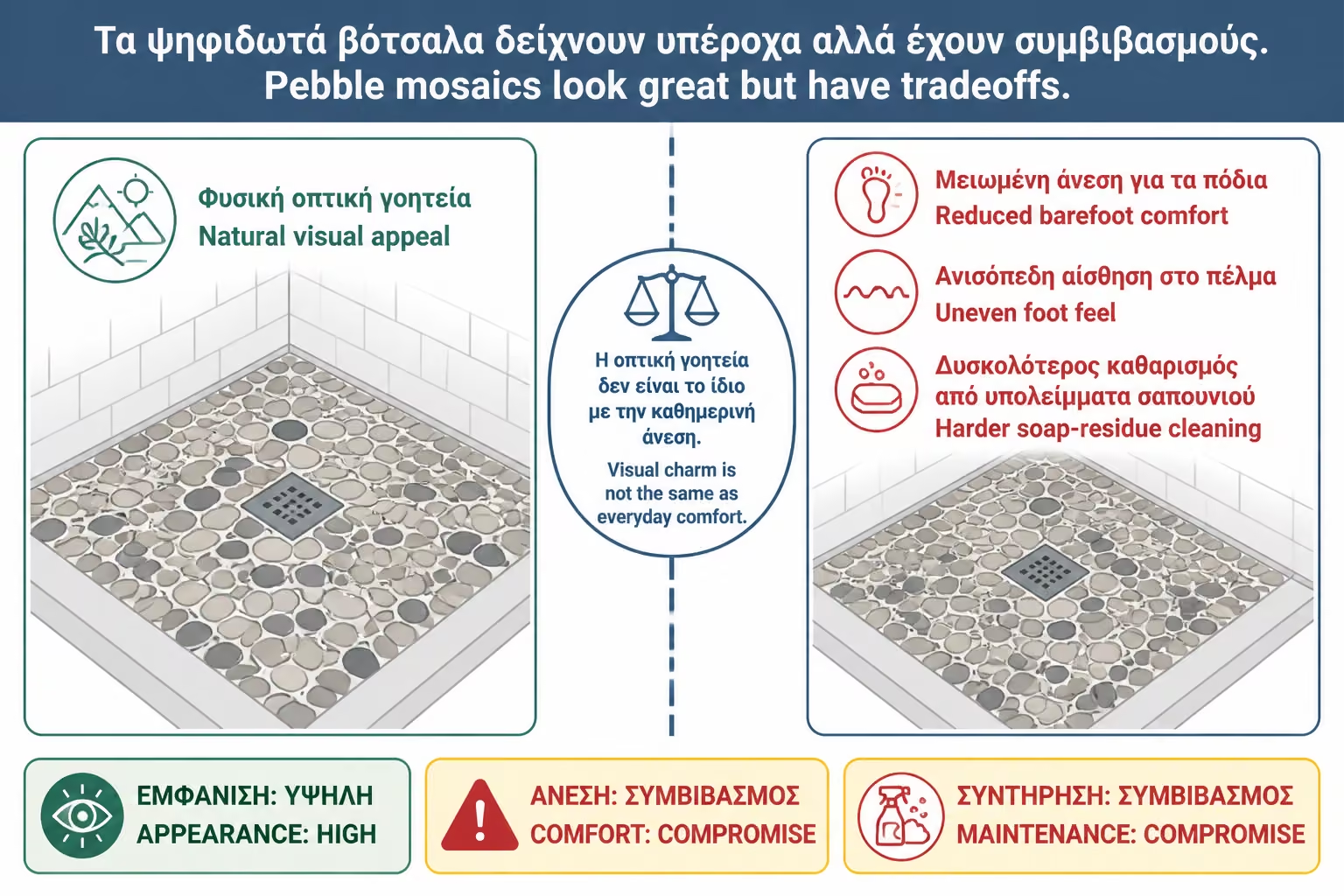
Pebble type tiles are very popular in spa style showers. They feel natural and, due to their shape, offer enough grip. But they are not always comfortable for everyone. Some find them pleasant on the foot, others find them tiring, especially if they have a strong relief.
Also, the hollows between the pebbles create more areas where soaps, salts and water can remain. If the slopes are not correct, water can pool in small places. If the joint is not properly filled, black spots or difficult cleaning can occur.
Pebble mosaic is a beautiful choice, but should be tested to the touch and discussed with the craftsman. It's not enough to look good in a photo. It must be practical for the particular bathroom and the people who will use it.
On walls, mosaics can give a very beautiful effect when used sparingly. A shower wall, alcove, strip behind the sink or a zone around a mirror can add interest without overwhelming the entire bathroom.
The mistake is to insert tessa everywhere for no reason. Because it has many lines and little pattern, it can be visually tiring, especially in small bathrooms. If the rest of the surfaces already have bold tiles, marbles, water or patterns, the mosaic can make the space look chaotic.
The most elegant use is usually the targeted use. For example, large calm tiles on most walls and mosaic only inside the shower niche. Or simple floor and mosaic on the wall of the sink. The mosaic should act as an uplifting detail, not as noise.
Mosaics are ideal for special applications because they adapt best to small and difficult surfaces. A shower niche, for example, has small depths, corners and cuts. If a large tile is used, the cuts may look sloppy. With mosaic, the surface is more easily dressed and the detail becomes a decorative element.
The same goes for curved benches, rounded showers, built-in seats, steam rooms or small decorative elements. There the mosaic can follow the geometry better than a large tile. This is also the reason why we often see it in swimming pools and spas.
But the special application also needs a special design. Corners should finish cleanly, joints should continue logically, and cuts should not appear haphazard. In alcoves, in particular, a proper slope must be provided on the bottom shelf so that no water remains.
Most mosaics come glued to sheets, usually 30x30 cm. This makes installation easier, but creates a risk: if the craftsman is not careful, after grouting, the edges of the sheets may look like square meters. That is, instead of the surface looking uniform, it looks divided into mosaic "plates".
This happens when the distances between the cards are not the same as the distances between the tiles of each card. It can also happen if the sheets are not pressed properly, if the substrate is not flat, or if the glue pulls unevenly.
Correct placement takes time. The craftsman must adjust the distances between the sheets, constantly check the alignment and make corrections before the glue dries. If the mistake is seen after grouting, correction is difficult and often requires stripping.
The mosaic needs an appropriate adhesive for its material and substrate. Glass mosaics, for example, often require white glue or a special adhesive, because the glue can affect the final shade or show through the glass. Natural stones may require a stone-grade adhesive to prevent staining or discoloration.
The substrate must be clean, stable, level and properly prepared. In the shower there must be waterproofing under the finished surface. The mosaic is not waterproofing. Nor is the grout itself a waterproofing solution. If water gets through joints or failures and there is no proper system underneath, moisture problems can arise.
In a shower floor, the slopes must be properly shaped before installation. We should not try to "fix" the patterns with only the mosaic glue. If the base is wrong, the tessellation will follow the mistake.
Cementitious grout is the usual and most economical solution. In good quality, with proper application and proper maintenance, it can work well in many residences. But in a tiled shower floor, where there is a lot of jointing and constant moisture, the requirements are increased.
Epoxy grout has greater stain resistance, lower absorbency and better performance in wet areas. But it is more expensive, more demanding to apply and needs a craftsman who knows how to work on it. If applied incorrectly, it can leave smudges or hard-to-remove residue.
For a simple decorative mosaic on a wall, usually no exaggeration is needed. For a shower floor, especially in daily use, it is worth serious discussion. The choice should be made based on usage, budget and the experience of the workshop.
In mosaics, the joint is much more visible than in large tiles, because it is everywhere. So its color determines the final result. If we want a calm surface, we choose a joint close to the tone of the mosaic. If we want the pattern to be emphasized, we choose contrast. In the bathroom, however, practicality must go together with aesthetics.
White grout looks clean at first, but on a shower floor it can stain and yellow more easily. A very dark joint can indicate soaps and salts, especially in hard water areas. Medium tones such as light gray, greige, beige or tones close to the material are often more practical.
In glass mosaics, the joint also affects the depth of the color. A white joint can make the effect brighter. A dark one can give contrast and intensity. In stone mosaics, the joint must blend with the naturalness of the stone and not look like a foreign mesh.
The tiles in the bathroom need cleaning. The many joints and small surfaces mean that soaps, salts and residues can settle more easily. That doesn't make them a bad choice. It means choosing the right materials and realistic maintenance.
On a shower floor, it helps a lot to rinse the surface after use and not have soaps left behind. In hard water areas, frequent descaling is important. If the mosaic is a natural stone, we do not use acidic anti-salts without control, because it can affect the stone.
In glass and ceramic tiles, cleaning is usually simpler, but the joint remains the sensitive point. If a good grout is used and applied correctly, maintenance is much easier. If the joint is porous, poorly filled or cracked, it will inconvenience the owner.
Mosaics are most valuable where they offer something that a large tile cannot easily provide. On the shower floor, they offer anti-slip and easy inclines. In niches, they offer clear detail. In curves, they follow the geometry. In accent walls, they give texture and depth.
They are not always worth using on large surfaces just because they are beautiful. An entire wall of very small and bold mosaics can become tiresome. An entire tiled bathroom is expensive, difficult to install and demanding to clean. There are cases where it can be impressive, but it is not the most practical solution for the majority of homes.
The smartest use is usually targeted: shower floor, alcove, a zone, a small wall or detail that upgrades the whole.
In the Greek market of 2026, tiles have a wide price range. Economical ceramic or simple glass tiles can start at around €20–35/sq.m. as a material, while better porcelain, premium glass, metal or stone mosaics can range from around €40–80/sq.m. or even much higher, depending on material, series and design.
Installation is usually more expensive than simple tiling, because it requires more care, more grouting and correct alignment of sheets. In simple applications there may be a reasonable charge, but in showers, niches, curves, special designs or epoxy grout, the cost rises significantly.
It should also be taken into account that the grout is much more than with large tiles, because there are many joints. If epoxy grout is used, material and labor costs increase. So a small area of mosaic may make economic sense, but an entire mosaic bathroom can become quite expensive.
The first mistake is choosing a wall tile for a shower floor. Not all tiles are suitable for stepping on or wet floors. Use must be confirmed.
The second mistake is the wrong placement of the sheets. If the squares of the sheets are visible after grouting, the result immediately loses its quality.
The third mistake is the wrong grout. In a shower floor, the joint is a large part of the surface. If it is of poor quality or incorrectly applied, it will create cleaning and moisture problems.
The fourth mistake is natural stone without sealer. Stone tiles in an unprotected bathroom can stain, dull or suffer from cleaning agents.
The fifth mistake is overdoing the design. The mosaic already has a strong presence due to a small pattern. If combined with many more bold materials, the bathroom can look busy.
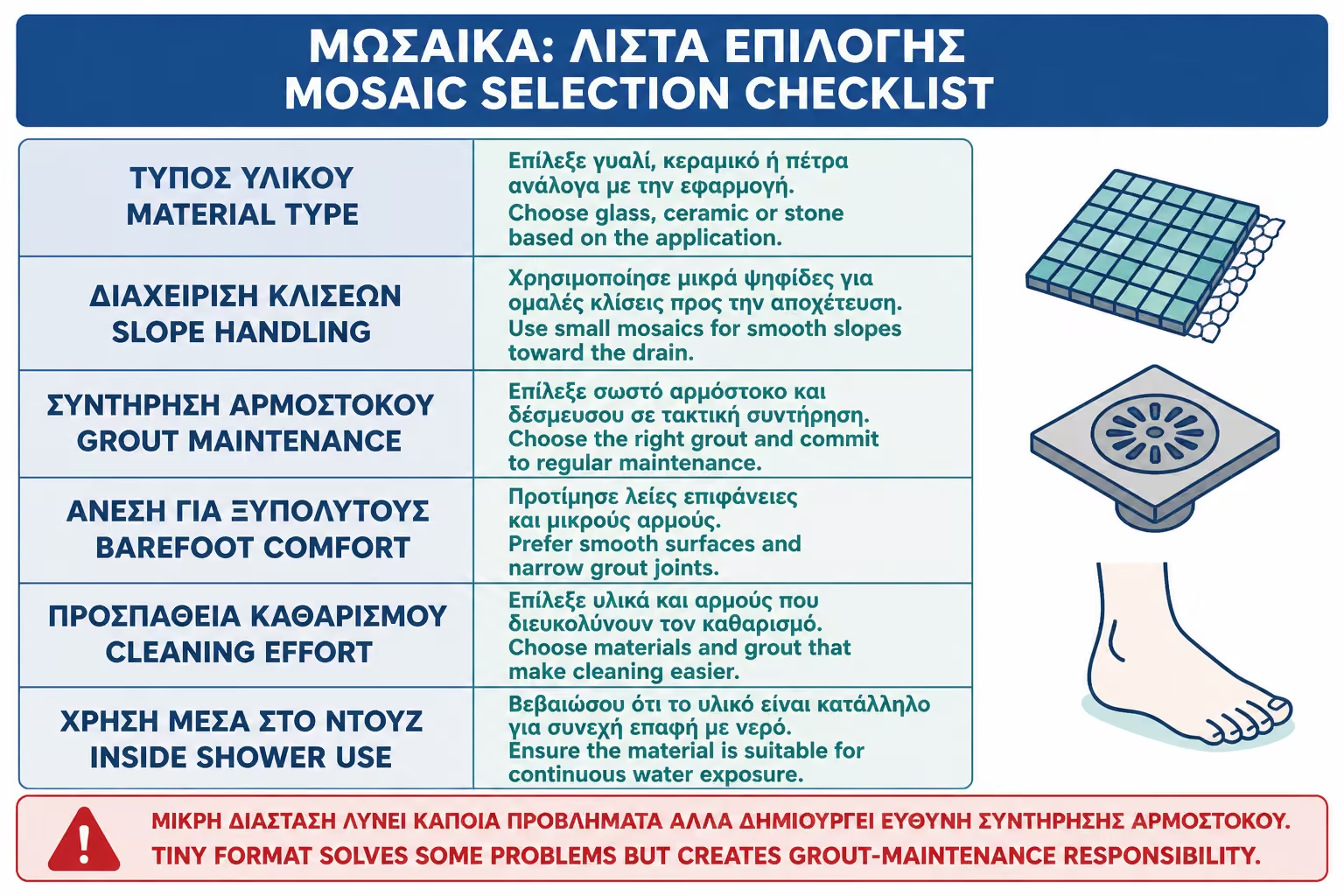
Before you review the table, keep the following points in mind:
| Question | Yes / No |
|---|---|
| Is the mosaic suitable for floor or wall only? | Yes / No |
| If it goes in the shower, has it been non-slip tested? | Yes / No |
| Is the material glass, ceramic, porcelain or natural stone? | Yes / No |
| If it is stone, is a sealer provided? | Yes / No |
| Has a suitable grout been selected for a damp area? | Yes / No |
| Has it been discussed if epoxy grout is needed? | Yes / No |
| Is the joint paint practical for salt and cleaning? | Yes / No |
| Does the craftsman have experience with mosaic sheets? | Yes / No |
| Have the shower slopes been checked before installation? | Yes / No |
| Has excessive use of mosaic throughout the bathroom been avoided for no reason? | Yes / No |
If several answers are “no”, the choice needs to be reconsidered. Mosaics can give a great effect, but they are not a material that should be entered casually.
If you're considering tile for a shower floor, don't just think of it as a decorative element. Its great value is that the many joints help the grip and the small pieces follow the gradients to the drain better. But precisely because it has many joints, it needs the right grout, good application and easy cleaning. Prefer a product suitable for flooring, ask for technical confirmation for wet use and do not underestimate the quality of the grouting. In mosaic, the joint is not a detail; it is a large part of the system.
Mosaics are one of the most useful and versatile materials in the bathroom. They can offer decoration, texture, color and luxury, but also a real technical solution in difficult places such as the shower floor. The increased joint ratio makes them particularly practical for anti-slip and sloped surfaces, especially where a large tile would struggle to follow the flow properly.
But their success depends on the right choice. Glass tiles for shine and walls, ceramic or porcelain for more balanced use, stone for natural luxury but with greater maintenance. Not all are suitable for floors, not all clean the same and not all should go in the shower.
The right tile, with the right glue, the right grout, the right placement and the right slopes, can solve practical and aesthetic problems. The wrong tile, with a sloppy application, can create permanent difficulty in cleaning and a low quality image. As with all bath materials, the best choice is not the most impressive on the sample. It is the one that withstands use, cleans reasonably and works properly in the real bathroom.
Return to category.
Go to categoryReturn to the central guide.
Go to guide