
Bathroom Surface Materials & Finishes
Return to category.
Go to categoryThe terrazzo, or as we have known it for decades in Greece, the mosaic, has made a strong comeback. For many it reminds of an old apartment building, a school, a public building or the classic entrance floor that stood up to everything. For the new generation of design, however, terrazzo is no longer just "old mosaic". It is one of the most versatile materials for modern bathrooms, because it combines color, texture, depth and a very interesting balance between retro and modern.
His return is no accident. In recent years, bathroom renovations have been filled with marble look tiles, concrete shades, wooden textures and minimal white surfaces. Terrazzo offers something different: a surface with "grain", with small or large fragments, with color movement without necessarily being chatty. It can show playful, serious, Italian, Mediterranean, retro or completely modern, depending on the color, the size of the aggregates and the way it will be combined.
In the bathroom it is of particular interest because it can break the coldness of plain tiles. A white bathroom with a terrazzo floor takes on character. A small WC with a terrazzo wall behind the sink looks designed without the need for expensive marble. A bathroom with beige cement tiles and terrazzo details can appear warmer, more natural and more modern.
But the terrazzo is not the only solution. There is cast terrazzo, which is made on site or in special prefabricated elements, and there is terrazzo tile or terrazzo look, which imitates the image of mosaic with easier installation. There are also natural cement terrazzo tiles, porcelain terrazzo look tiles, large slabs, mosaics, countertops, sinks and special decorative applications. Each option has different costs, different requirements and different behavior in use.
In this guide we will see what terrazzo is, what are the main differences between cast and tile, how it is integrated into modern bathrooms, where it is worth using, what to pay attention to in cleaning, stains, joints and anti-slip, as well as which color combinations work best in the Greek residence.
Terrazzo is a material created from small or larger fragments of stone, marble, granite, glass or other aggregates, which are incorporated into a cement or resin base and then smoothed to reveal the characteristic "split" pattern. In the Greek experience, the closest material is the classic mosaic that we see in old apartment buildings, entrances, stairs and old floors.
The difference is that today's terrazzo has a much greater aesthetic variety. It is not limited to the gray floor with small black and white mosaics. It can have a white, beige, green, pink, black or warm gray base. Fragments can be small and subtle or large and intense. It can resemble natural stone or have an almost graphic, playful look.
This makes it ideal for a bathroom, because it allows for many different directions. If we want a calm spa effect, we choose a light beige base with small natural aggregates. If we want a more retro-modern aesthetic, we can go for a white base with colored mosaics. If we want a more serious and architectural effect, a gray or charcoal terrazzo with a fine grain can give depth without drawing too much attention.
Terrazzo is back because it answers two needs of modern decor: the need for texture and the need for personality. After years of absolutely minimal surfaces, many homeowners want bathrooms that are clean and modern, but not cold. Terrazzo adds interest without the need for bold design, decoration or many different materials.
It also has something timeless about it. It's not a pattern that suddenly came out of fashion. It is found in old houses, public buildings, Italian palazzi, Mediterranean structures and Greek apartment buildings. Its modern version simply brings it back with better colors, larger dimensions and a more refined aesthetic.
In the bathroom, terrazzo works very well because it can hide small signs of wear better than a completely plain surface. A completely white floor shows every hair, drip and speck of dirt. A fine-grained terrazzo is more "forgiving" visually. That doesn't mean it doesn't smudge, but everyday use doesn't show with the same intensity.
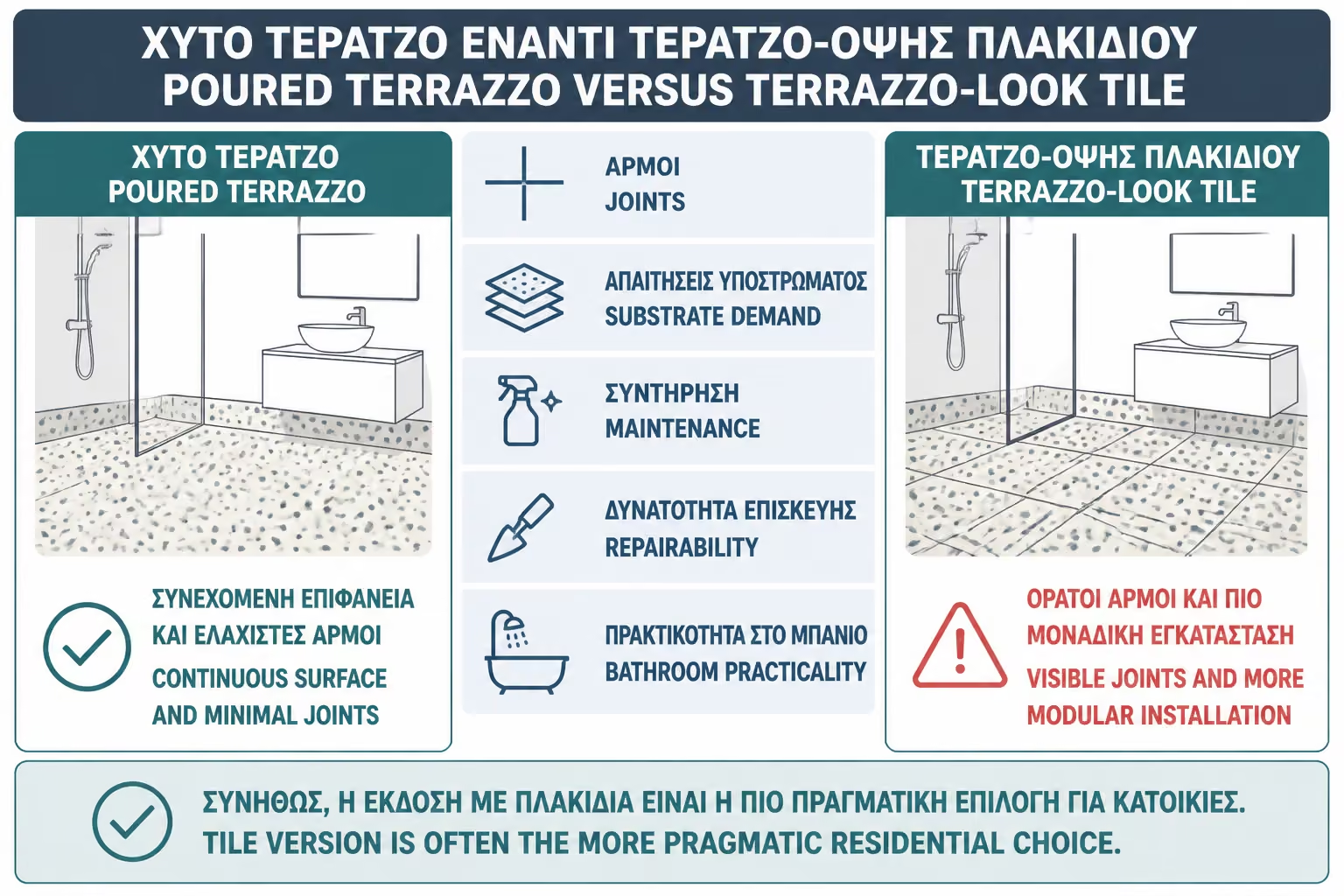
Cast terrazzo is the most authentic form. It is manufactured as a single surface, with a base and aggregate mixture that is applied, cured, sanded and polished or milled. Its great advantage is continuity. It can create flooring without typical tile joints, with a unified feel, custom color and real materiality.
In a large bathroom or a high aesthetic space, cast terrazzo can be excellent. It can create floors, countertops, sinks, and even single surfaces with great detail. But it is demanding material. It takes a skilled crew, proper substrate, moisture control, time, sanding, sealing and careful maintenance.
In the Greek home, especially in small apartment bathrooms, cast terrazzo is not always the most practical or economical solution. The small size of the space, the many corners, the piping, the slopes and the need for a quick renovation make it difficult to implement. It may be worth it in premium projects, but it should be done with a full technical study and not as a simple tile alternative.
For the majority of renovations, terrazzo or terrazzo look tile is the most practical solution. It comes ready-made, lays like a tile and gives the look of mosaic without the requirements of cast material. It can be real cement terrazzo tile or porcelain tile that mimics the look of terrazzo.
The porcelain terrazzo look is particularly popular because it has low absorbency, good durability and easier maintenance. For bathrooms, kitchens and residential floors, it is often the most balanced solution. It does not have the same authentic materiality as cast terrazzo, but it is more predictable, more cost-effective and easier to apply.
Cement terrazzo tiles have a more authentic feel, but can be more porous and require a sealer. So, before choosing, it must be clarified what exactly we are buying: real terrazzo tile or porcelain terrazzo look. The appearance may be similar, but the maintenance and absorbency differ significantly.
The main difference is continuity, technical difficulty and maintenance. Cast terrazzo gives a truly uniform surface and can be adapted almost completely to the project. Terrazzo tile gives an easier and more standardized application, but has joints and dimensional limitations.
Before you review the table, keep the following points in mind:
| Criterion | Cast terrazzo | Terrazzo tile / terrazzo look |
|---|---|---|
| Aesthetics | Authentic, uniform, custom | Very good, but with joints |
| Application | Specialized, demanding | Simpler, like a tile |
| Cost | Usually higher | Wider price range |
| Project time | More, due to application and sanding | Usually faster |
| Maintenance | It depends on the base and sealer | Porcelain: easier, cementitious: needs attention |
| Joints | Minimal/special expansion joints | Regular tile joints |
| Suitable for a small bathroom | It needs careful evaluation | Usually more practical |
If the owner wants the ultimate, custom, uniform effect and has the budget, cast terrazzo is a special choice. If he wants the aesthetics of terrazzo at a more reasonable cost and simpler to use, the porcelain terrazzo look is often the best solution.
The floor is probably the most natural place for terrazzo. Historically we have associated mosaic with floors, so the eye accepts it easily. In a bathroom, a terrazzo floor can give character without burdening the walls. If the walls remain calm, the floor becomes the element that gives identity.
For bathroom floor, we need to pay attention to the surface and anti-slip. A glossy terrazzo look can look impressive, but it's not always right for a floor that gets wet. A matte or satin porcelain terrazzo with an appropriate slip index is usually a more practical choice.
The size of the "tiles" in the design also plays a role. Very large pieces of color may look impressive in the sample, but in a small bathroom they can be overdone. A milder grit is usually safer for small spaces. In a large bathroom, we can move more boldly.
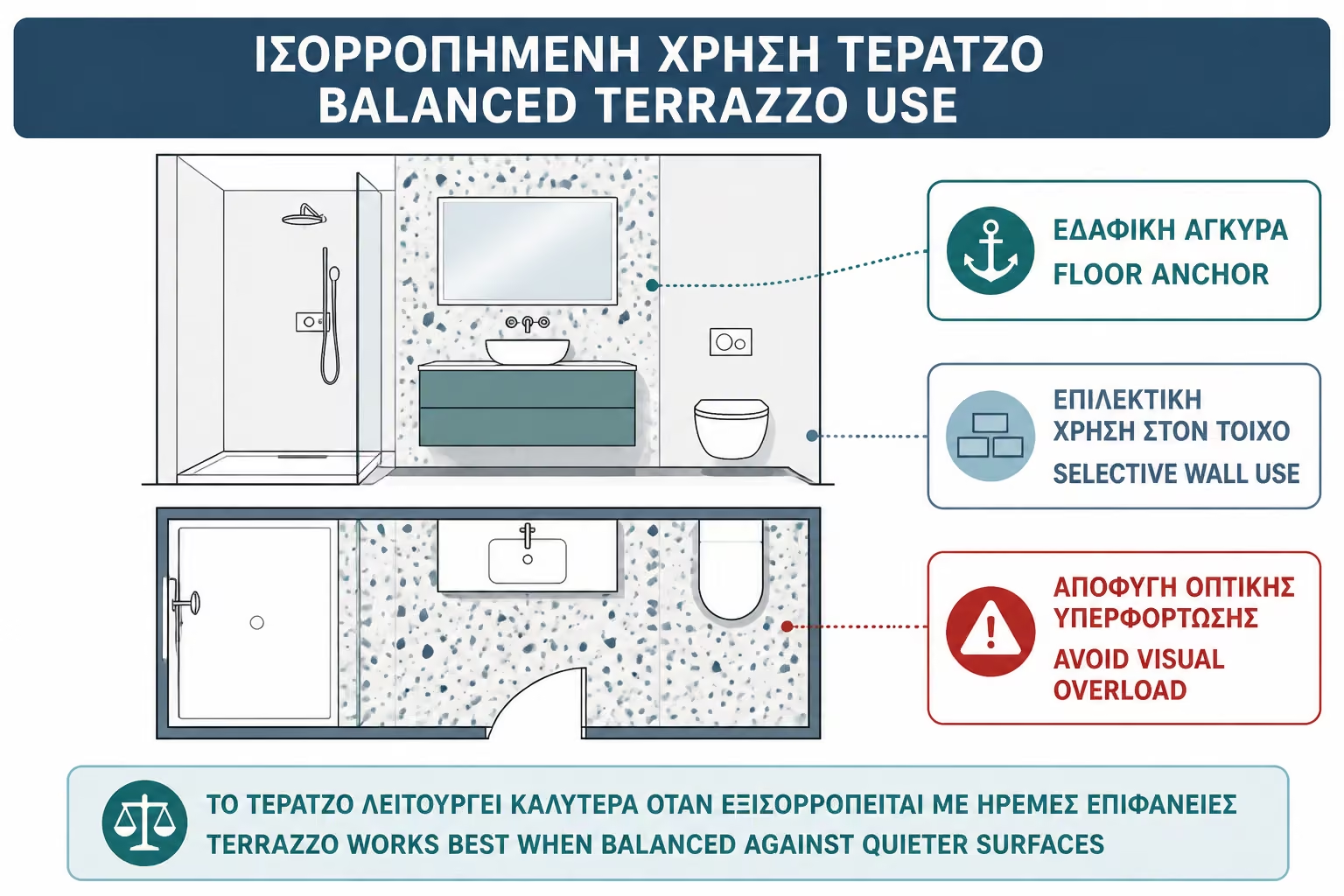
On the walls, terrazzo needs moderation. Because it has visual movement, if it goes everywhere it can get tiring. A bathroom with terrazzo all over the walls and floor can look very interesting in a professional photo shoot, but in everyday life it can be quite stark, especially if the space is small.
The safest solution is selective use. A wall behind the sink, a zone in the shower, the floor alone, or the counter together with plain walls. Thus, terrazzo has a leading role without occupying the entire space.
In small guest WCs, it can be used more boldly, because the space has a shorter duration of use and functions more as a statement. In a daily use master bathroom, it is usually better to keep a balance between terrazzo and calm surfaces.
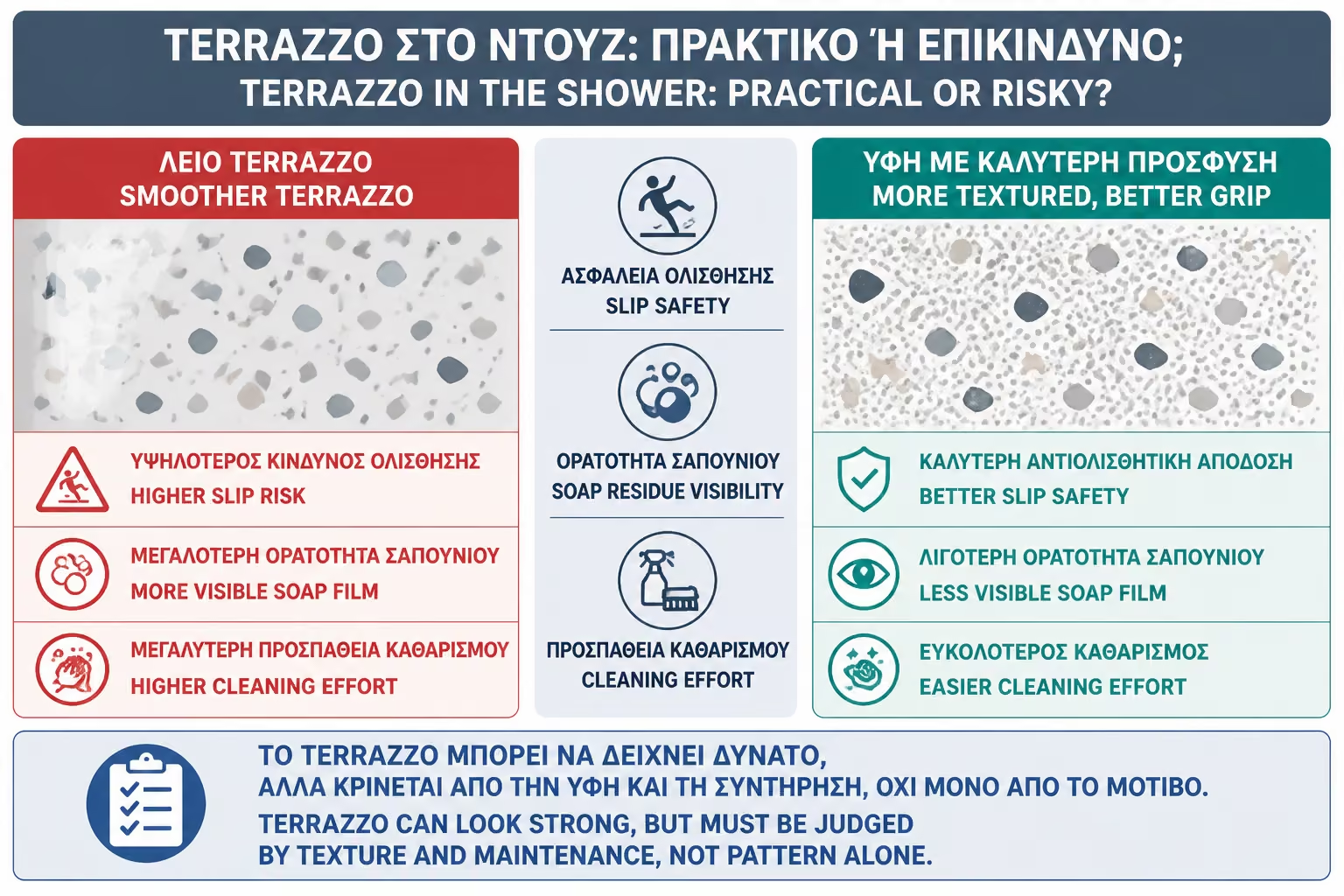
In the shower, the answer depends on the type of terrazzo. A porcelain terrazzo look on shower walls can be a very practical and beautiful choice. It has low absorbency and is easier to clean than natural or cement-based materials, as long as it is properly installed and there is proper sealing from behind.
Cast or cement terrazzo in the shower is more demanding. May need sealer, proper stain protection, attention to cleaners and very good technical application. The shower is a space with continuous water, soaps and salts. So it is not a point for experimentation without a specialized workshop.
On the shower floor, special attention needs to be paid to anti-slip and slopes. Large terrazzo tiles can make flushing difficult if there is a central drain. Smaller dimensions or matching terrazzo tiles may work better. If there is a linear drain, a larger tile may be easier, but the surface should still be checked for slip resistance.
Terrazzo is not limited to floors and walls. It can be used on counters, sinks, shelves, furniture covers and special elements. A terrazzo bench with plain white walls can become the focal point of the bathroom. A terrazzo washbasin can give boutique character even to a small WC.
But here the material must be clarified. If it is real terrazzo or cementitious material, it may need sealer and attention to stains. Around the sink are soaps, cosmetics, perfumes, toothpastes and cleaners. If the material is porous, these may leave marks.
If the goal is easy use, there are also porcelain slabs or compact surfaces with a terrazzo look that offer a more practical behavior. If the goal is authenticity and a custom effect, real terrazzo has more value, but also needs more care.
Terrazzo already has a lot of color in it, even when it's subtle. For this the remaining surfaces must be chosen with care. The safest rule is to "pull" one of the aggregate colors and use it on the remaining surfaces.
If the terrazzo has a white base with gray, beige and black fragments, you can combine it with off-white walls, black details and wooden furniture. If it has a beige base with warm brown and cream pieces, it matches with natural oak, bronze faucets and warm lighting. If it has pink, green or colorful elements, it is good that the rest of the surfaces remain calmer.
The mistake is to combine strong terrazzo with a strong marble look, strong wood, colorful tiles and black contrasts all together. Terrazzo wants partners, not competitors. If we give it a calm background, it looks more expensive.
Before you review the table, keep the following points in mind:
| Terrazzo type | It suits me | Avoid |
|---|---|---|
| White base with grey/black chips | White, light gray, black details, natural wood | Very bright colors everywhere |
| Beige base with warm chips | Greige, oak, bronze, cream, natural stone | Cold gray that "kills" the warmth |
| Gray base with small grain | White, charcoal, inox, minimal style | Very dark bathroom with no lighting |
| Pink or terracotta terrazzo | White, beige, brushed brass, light wood | Red/orange elements without control |
| Green terrazzo | White, natural stone, wood, black details | Other bright colors that compete |
| Colorful terrazzo | Simple monochrome walls | Bold patterns in second material |
The table acts as a guide, not as a strict rule. The final result must be tested with real samples, because terrazzo changes a lot depending on the light and the size of the surface.
In a small bathroom, terrazzo can be excellent, but it needs control over the intensity. A terrazzo floor with calm walls can increase the sense of space, because it creates interest below without burdening the walls. A wall behind the sink can also work well, especially if the rest is left white or beige.
If the bathroom is too small, avoid terrazzo with excessively large and colorful chips on all surfaces. In the sample it may seem cheerful, but in a small space it can become noisy. Prefer a smaller grain or a calmer color base.
In a guest WC, you can be more daring. There, terrazzo can make a statement, because the space is used less and allows more design intensity. In a master bathroom, especially if it is used daily, timelessness is more important.
In a large bathroom, terrazzo can be used more generously. It can cover a floor, continue on a shower wall, appear on a counter or create a single zone around a bathtub. There is room for the pattern to "breathe".
In a large master bathroom, a cast terrazzo or a large format terrazzo look porcelain can give a very impressive result. If combined with simple white or beige surfaces, good lighting and quality batteries, it can look very premium without needing natural marble.
But even the large bathroom needs moderation. If the terrazzo has a large, bold grain, it does not need to go into every surface. It can be the floor and repeat in a small detail. Repetition in small doses gives coherence without exaggeration.
In terrazzo look tiles, the joint is of great importance. If the tile has a strong pattern, the joint can either be lost or cut badly. We usually choose a joint near the base of the chip, not the sharpest chip. If the base is beige, the joint should be beige or greige. If the base is gray, light gray or medium gray. White grout on a bathroom floor can stain more easily, while too dark can make the pattern look like a grid.
Dimension affects the image. Large tiles, such as 60x60 or 60x120, reduce joints and make terrazzo look more uniform. Smaller tiles give a more classic feel, but have more joints. If we want it to resemble an old mosaic, smaller dimensions can work. If we want a modern effect, the larger formats are usually more successful.
In cast terrazzo, the joints are not the same as tile joints, but there are technical needs for expansion joints or breaks depending on the surface and substrate. This should be studied by the applicator.
Maintenance depends on the type of terrazzo. The porcelain terrazzo look is cleaned like a good porcelain tile, with mild cleaners and without special need for sealer. It is the easiest solution for daily bathing.
Cast terrazzo or cementitious terrazzo tiles may be more porous and require sealing. If not properly protected, they can absorb stains or be affected by cleaning agents. In a bathroom, where there are soaps, salts and personal care products, this is important.
Salts look different depending on the color. On dark terrazzo they may write more strongly. In an open and "split" pattern they hide more, but they do not disappear. The right choice for a daily use bathroom is a surface that is easy to clean and does not retain too much micro-roughness.
Terrazzo on the bathroom floor should also be evaluated for slip resistance. Classic polished mosaic can be slippery when wet, especially if it has a very smooth surface. The same applies to glossy terrazzo look tiles. The image may be beautiful, but the bathroom needs security.
For bathroom flooring, look for a matte or satin finish with an appropriate slip resistance rating. For a shower floor, the requirements are higher. There, a smaller dimension, anti-slip finish or a special solution with more joints may be needed, depending on the drain and slopes.
If the terrazzo is only used on a wall, slip resistance is not a concern. If it enters the floor, it is a basic technical criterion. Don't choose a bathroom floor based on looks alone.
In the Greek market of 2026, the cost depends a lot on whether we are talking about porcelain terrazzo look, real terrazzo tile or cast terrazzo. Simple terrazzo look porcelain tiles can start at around €18–30/sq.m., while better series, large formats or more special designs can go for around €30–60/sq.m. or even higher.
Real cement terrazzo tiles or special series can cost more, especially if they have special aggregates, thicknesses or special finishes. Cast terrazzo is usually in a higher cost category because it involves specialized application, sanding, finishing and protection. In small bathrooms, the cost per square meter can be high due to small surface area, many details and minimal workshop fees.
In the works, the simple laying of tiles can have a realistic basis of around €10–15/sq.m. on easy surfaces, but large terrazzo look tiles, special cuts, showers, built-in elements or cast terrazzo raise the price. The offer must clarify whether it includes VAT, adhesives, grouts, substrate preparation, sealer where necessary and any finishing.
The first mistake is exaggeration. Because terrazzo already has a pattern, if it goes everywhere and is combined with many more bold materials, the bathroom can become boring. It needs balance.
The second mistake is the confusion between real terrazzo and porcelain terrazzo look. They look similar in the picture, but do not have the same maintenance. If you buy cement terrazzo thinking it behaves like porcelain, you may be disappointed.
The third mistake is the wrong use in the shower. What looks beautiful on the wall is not necessarily right for a shower floor. That's where slopes, anti-slip and proper waterproofing are needed.
The fourth mistake is the wrong joint. A joint that contrasts too much can cut through the pattern and make the surface look cheaper. The joint should support the terrazzo, not compete with it.
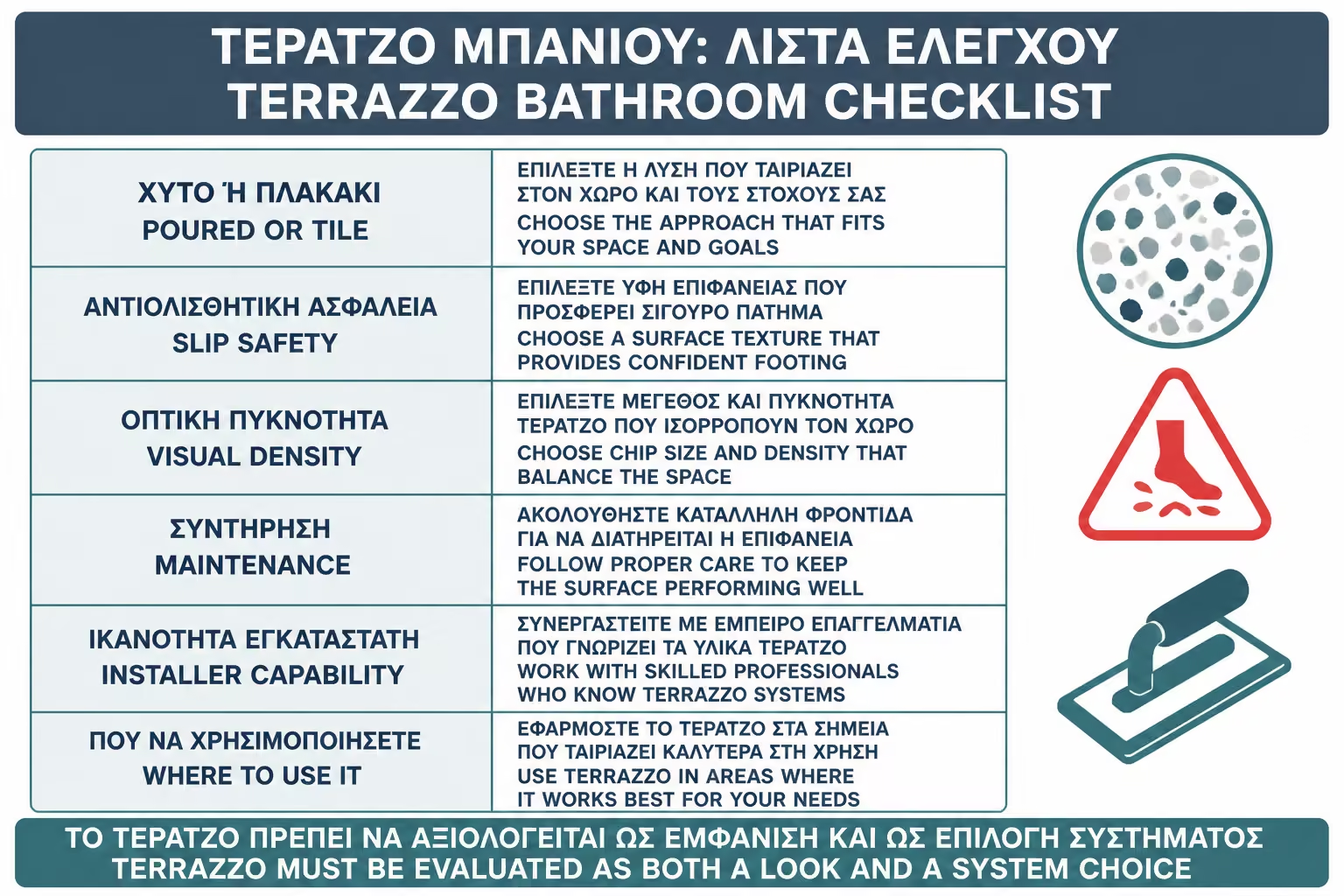
Before you review the table, keep the following points in mind:
| Question | Yes / No |
|---|---|
| Do you know if it is cast terrazzo, real tile or a porcelain terrazzo look? | Yes / No |
| If it is a porous material, is a sealer provided? | Yes / No |
| Have you decided whether the terrazzo will be a star or a detail? | Yes / No |
| Does the grain size fit the bathroom size? | Yes / No |
| Has the bathroom floor been non-slip tested? | Yes / No |
| For shower, have slopes, drain and cleaning been checked? | Yes / No |
| Does the joint color match the terrazzo base? | Yes / No |
| Are the other surfaces calm enough to not overload the space? | Yes / No |
| Have you seen a large sample and not just a small piece? | Yes / No |
| Does the quote clarify materials, application, VAT and maintenance? | Yes / No |
If the answers are unclear, don't just choose from a photo. The terrazzo changes a lot when spread over a large surface and when seen with the actual lighting of the bathroom.
If you want terrazzo in the bathroom, start with the type of material, not the color. Cast terrazzo is one thing, cement tile is another, and terrazzo-look porcelain is another. For an everyday residential bathroom, terrazzo-look porcelain is often the most practical choice because it gives you the aesthetic with less maintenance. Keep terrazzo as the main element on one or two surfaces and leave the rest of the materials calmer. That way it will look modern and timeless, not overloaded.
Terrazzo has made a comeback because it offers something missing from many modern bathrooms: character without exaggeration, texture without necessarily bright color and a bridge between classic mosaic and modern aesthetics. It can show retro, minimal, Mediterranean, playful or premium, depending on the grain, base and combinations.
The most practical solution for most bathrooms is the porcelain terrazzo look, because it offers the image of terrazzo with easier maintenance and simpler installation. Cast terrazzo remains the most authentic and impressive option, but it requires specialized application, a larger budget and proper technical study. Cement terrazzo tiles are somewhere in between, with beautiful materiality but a greater need for protection.
Proper use is a matter of balance. In small bathrooms, a terrazzo floor or an accent wall can give the space all the personality it needs. In large bathrooms, it can become a more central element, even on counters or special surfaces. The important thing is not to lose control: right material, right joint, right finish, calm combinations and realistic maintenance.
When these are done right, terrazzo doesn't look like an old mosaic that just came back into fashion. It looks like a material that has always had a reason to exist: durable, expressive, lively and ideal for bathrooms that want character without losing practicality.
Return to category.
Go to categoryReturn to the central guide.
Go to guide