
Bathroom Surface Materials & Finishes
Return to category.
Go to category3D and embossed tiles are among the options that can instantly change the image of a bathroom. Where a plain wall would appear flat and uninteresting, a three-dimensional texture can create depth, shadow, movement and a sense of architectural design. A wall behind the mirror, a surface behind the sink or an accent wall in the shower can acquire character without bright colors or expensive natural materials.
Their great advantage is that they play with light. A white embossed tile can look completely different in the morning, afternoon and evening, depending on the lighting. Shadows created by curves, lines or geometric patterns bring life to the space. That's why we often see 3D tiles behind mirrors with hidden lighting, in guest toilets, on sink walls and in boutique aesthetic bathrooms.
But, as with many impressive materials, the photo doesn't tell the whole truth. Embossed tile is not just "prettier tile". It is a surface with protrusions, recesses, small grooves and spots that can retain water, salts, soap and dust. What is ideal behind a mirror can become tiresome in the shower. What looks impressive in the right lighting can look dirty if water gets on it every day and is not easily cleaned.
The right choice, then, is not "put 3D tile because it's trendy". It's deciding where it goes in, how intense the relief is going to be, how it's going to be lit, whether it's going to get wet, how easily it's going to be cleaned, and whether the crew can fit it right. Especially in the shower, where there are salts, shampoos, soaps and daily humidity, the use of embossed tile needs very careful thought.
In this guide we will see where 3D and embossed tiles are really worth it, how they can be used in accent walls, what to look out for behind the mirror and sink, why the shower is the most difficult zone, which finishes are easier to clean and which mistakes make a spectacular material become a daily hassle.
3D or embossed tiles are tiles with a surface that is not flat. They may have undulations, lines, geometric patterns, ridges, bumps, indentations, honeycomb forms, or textures reminiscent of stone, fabric, cement, or a hand-made ceramic surface. Embossing can be very subtle or very bold.
There are ceramic embossed tiles, porcelain embossed tiles, glossy, matte, satin, ribbed, wavy and three-dimensional decorative elements. Some are designed for wall use only. Others can also be used in special applications, but not necessarily on the floor or shower. This is the first point to be clarified: just because a tile is suitable for a bathroom does not mean that it is suitable for every part of the bathroom.
In practice, 3D tiles are mainly used on walls. Their texture can be seen there, they receive light and are not stepped on. They are used much less often on the floor, because strongly embossed surfaces can be uncomfortable, difficult to clean or unsuitable for proper walking.
The power of 3D tiles lies in the play of light and shadow. A plain white wall can look flat. But if the surface has embossed ridges or waves, the light creates shadows and the wall acquires depth. Thus, even without a strong color, the space looks more worked.
This is especially useful in bathrooms where we don't want to load the space with a lot of materials. Instead of a bold marble look, mosaics, colors or decorative bands, we can use a plain 3D tile and let the texture do the work. The result is quieter but not boring.
In small guest WCs, a textured wall behind the sink can give a sense of hotel design. In a master bathroom, a large 3D wall behind the mirror or bathtub can act as an architectural backdrop. The secret is not to use it everywhere. The relief needs space to be seen.
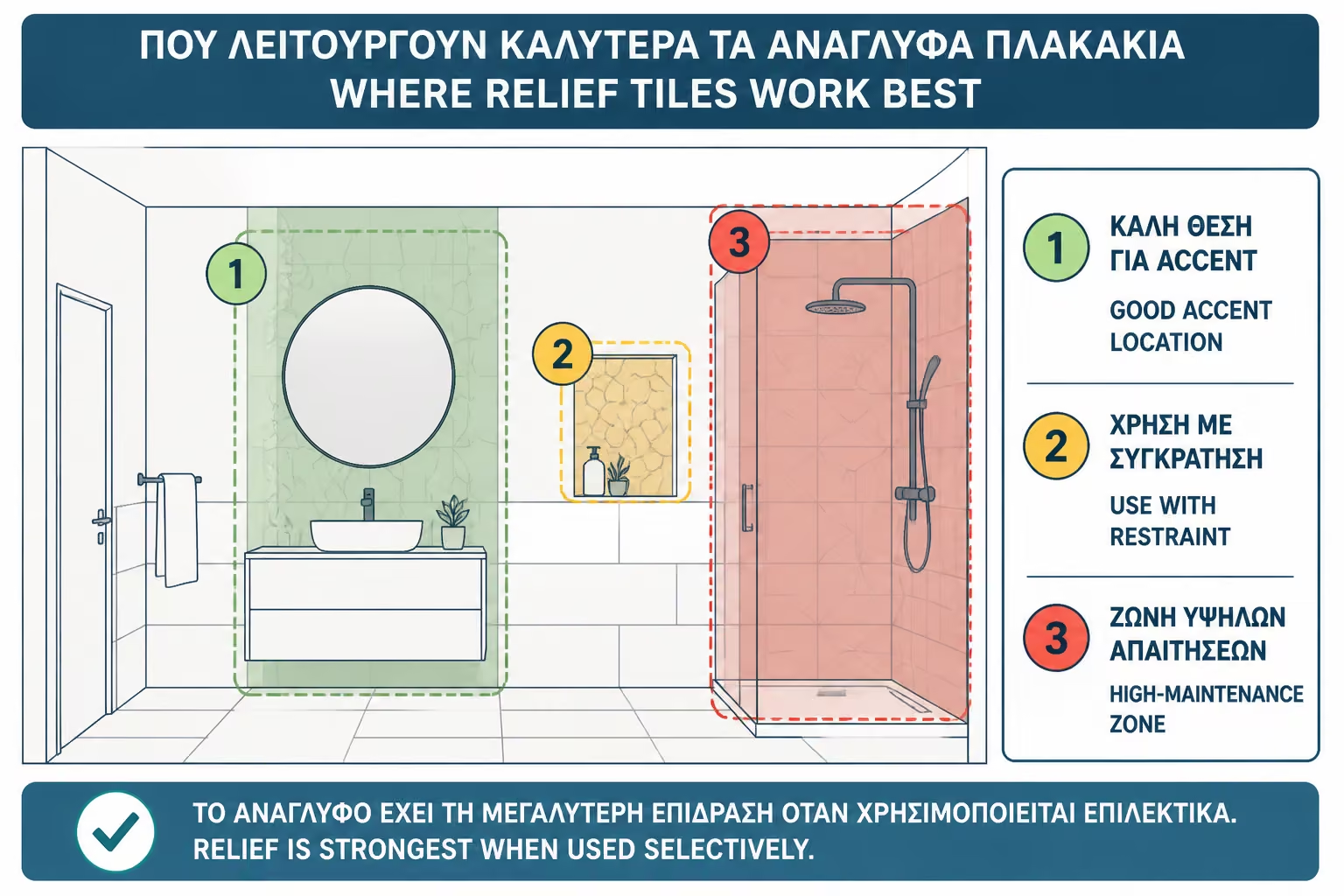
The safest use of 3D tiles is on an accent wall. This can be the wall behind the sink, behind the mirror, behind the bathtub, or a wall that is immediately visible when the door is opened. There the relief becomes a design element without overly affecting the function of the bathroom.
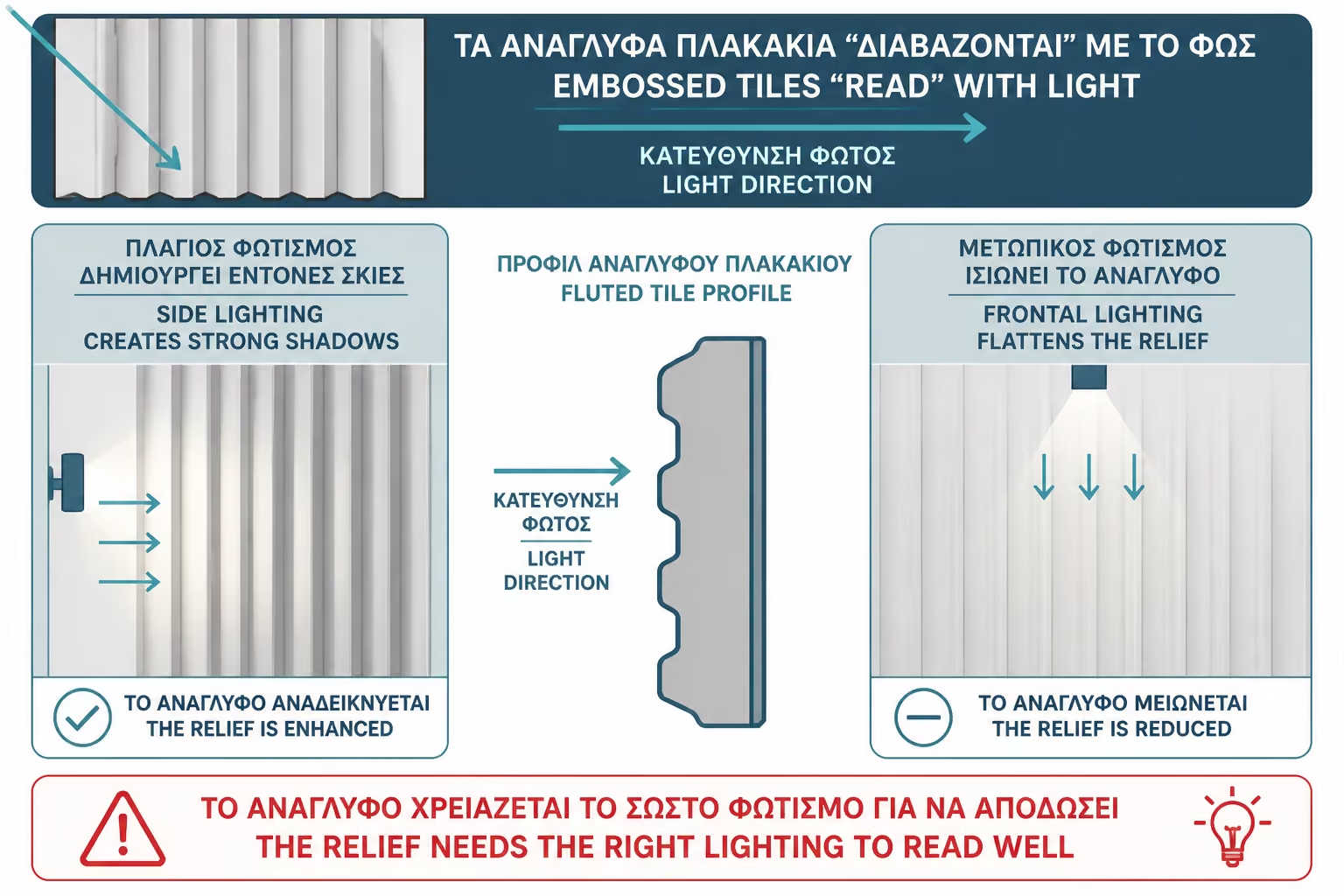
Behind the mirror, 3D tiles work particularly well when there is proper lighting. A mirror with a hidden LED can highlight the relief and create soft shadows. If the light falls completely flat from above, the texture can be lost. If it falls too heavily from the side, it can overemphasize any placement imperfection.
A vanity wall with an embossed tile can also hide the need for a lot of decorations. The space gains interest without shelves, frames or bright colors. But care is needed around batteries, mirrors, sockets and lighting. Cuts on a textured surface are more obvious and more difficult than on a plain tile.
The wall behind the mirror is probably the best spot for 3D tiles. It doesn't get as wet as the shower, it doesn't get stepped on, it doesn't receive immediate heavy use and it's in a place where it can be seen every day. There the texture can be highlighted with lighting and give a premium image.
But it must be designed properly. If the mirror covers a large part of the wall, it may not show enough of the texture. If the relief is too sharp, placing a mirror on it can become more difficult. In some cases a flat support belt or careful mounting method is needed so that the mirror will press properly and securely.
The same applies to sockets, lamps, wall-mounted batteries and accessories. On a textured tile, a socket may not seat properly if it lands on a sharp ridge. That is why the location of the electrical and hydraulic elements must be studied before installation, not after.
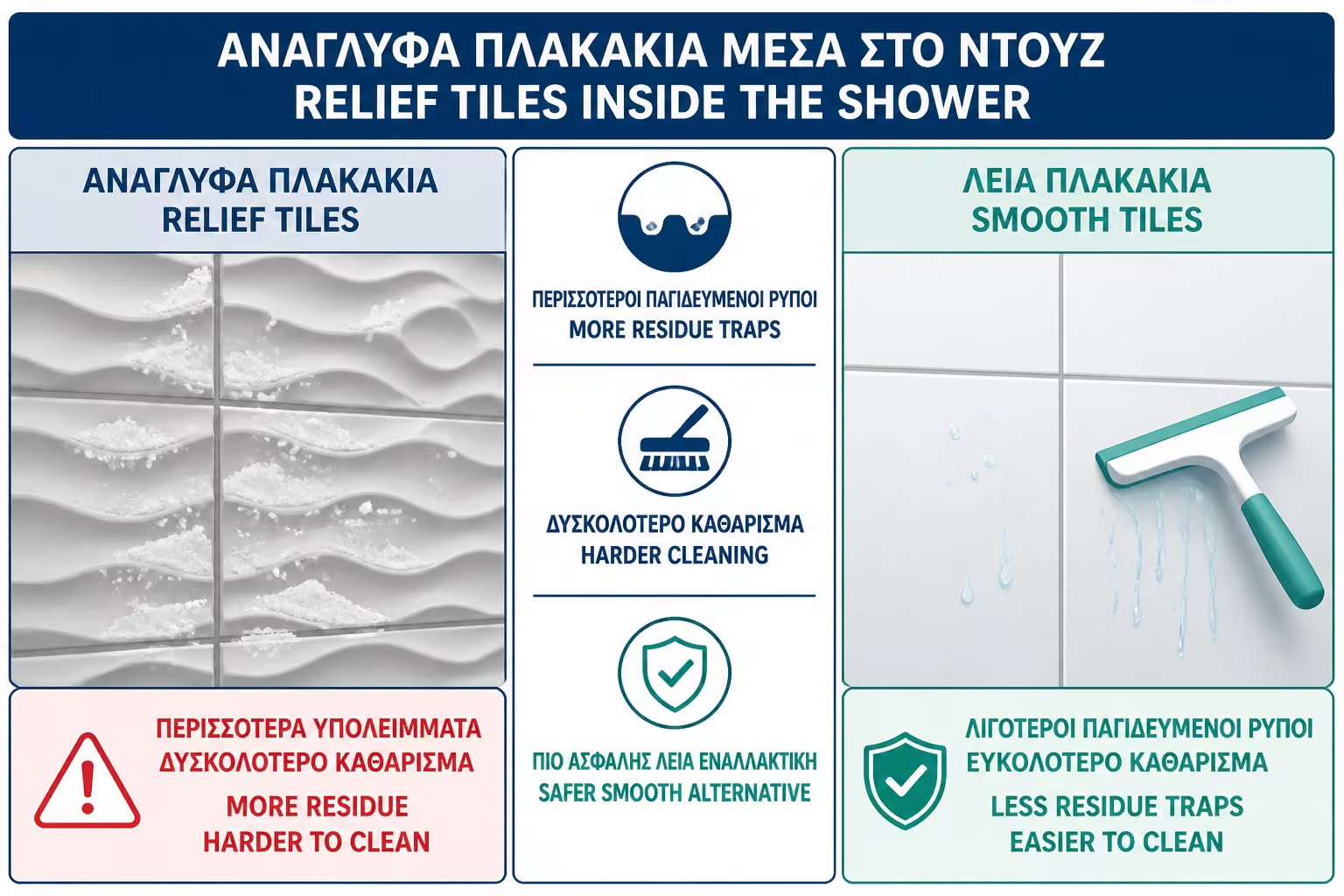
The shower is where textured tiles become more problematic. There is constant contact with water, shampoo, foam baths, salts and cleaning agents. If the surface has indentations and protrusions, the water does not always drain away easily. It can stay in the fine lines, dry and leave white scales.
This is especially pronounced in hard water areas. On a white textured tile, the salts may be less visible at first, but over time they can dull the texture. On a dark textured tile, the salts show up almost immediately as white lines or prints in the recesses. On glossy relief, drips and smudges can write even more strongly.
The problem is not only aesthetic. If soaps and moisture remain in the recesses, cleaning becomes more difficult. It needs more frequent scrubbing, a soft brush or special cleaners. If the owner is not willing to clean often, the impressive 3D tile in the shower can become a permanent nuisance.
Salts appear when water evaporates and leaves behind metallic residues. On a smooth surface, these can be wiped more easily. On a textured surface, however, debris sits in the recesses, around the lines, and in the low spots of the texture.
The more pronounced the relief, the more small holding points there are. A gently wavy tile is easier to clean than a tile with deep ridges. A 3D geometric tile with lots of angles and recesses can be very impressive on the wall of the sink, but boring in the shower.
A homeowner might see a dark striped tile on display and imagine it on the shower wall. The first week it looks great. After a few months, if not wiped after each use, the ridges may become filled with white lines of scale. The problem is not that the tile is of poor quality. It's that the usage doesn't match the texture.
The glossy embossed tile gives a very intense play of light. On a wall behind a mirror or in a guest WC it can look great, because it reflects the lighting and highlights the curves or lines. In a small space without natural light it can add brightness.
In the shower, however, the gloss needs attention. Glossy textures show drips, smudges and salts more easily. If the tile is dark, the problem becomes even more obvious. If it is white, it may look cleaner, but the deposits are still there.
Matte relief is calmer and often more modern. It doesn't reflect light as strongly and can look more architectural. But if the texture is rough, it can hold dust, soap and salts. So it's not just matte or glossy. It's how deep and complex the texture is.
For an everyday bathroom, the most practical solution is usually a soft relief on a wall that doesn't get wet all the time, with an easy-to-clean finish. For a shower, the simpler the surface, the easier the maintenance.
Striped tiles, with vertical or horizontal lines, are among the most popular 3D options. They give rhythm, height and architectural feeling. If they go vertically behind the sink, they can make the wall look taller. If combined with hidden lighting, they create beautiful shadows.
But the ridges are also holding points. In a dry or semi-dry wall, this is not a big problem. In a shower, every streak can hold drops. If the water is hard, the salts will follow the lines and appear as white vertical or horizontal lines.
If you want ribbed tile in the shower, go for a softer texture, a lighter color and an easy-to-clean surface. Avoid very deep, narrow grooves, especially in dark shades. And above all, accept that it will need regular cleaning.
Embossed tiles need lighting to be seen. If the lighting is flat and weak, the texture is lost. If it's too hard and slanted, it can overemphasize small imperfections in the placement. The right lighting should highlight, not expose.
Behind a mirror, hidden LED lighting can give a very nice effect, as long as the relief is not so intense that it casts harsh shadows on the face. In a bathroom, the mirror is not only a decorative element. It is used for shaving, makeup and daily care. If the light behind the mirror creates strong shadows from the relief, it may be beautiful but not practical.
In an accent wall that does not have a functional role, we can be more free. There a side beam of light can bring out the texture. On a shower wall, however, lighting must also be combined with cleaning. Sidelight will show both shadows and highlights.
3D tiles are more difficult to cut than flat tiles. When a relief pattern is cut, the interruption can look abrupt. At corners, edges, sockets, mixer points, and mirrors, that becomes highly visible. If the layout is not planned correctly, we can end up with awkward cut projections in the most visible parts of the wall.
That is why layout planning is so important. Before installation begins, we need to know where the cuts will fall, how the tile will finish at the corners, whether profiles are needed, how the sockets will fit, and whether the pattern continues correctly from tile to tile.
On tiles with a strong geometric relief, the slightest discontinuity can be seen. In wavy or more organic patterns, small deviations are more forgiving. So the stricter the design, the more careful the placement.
Before buying embossed tile, ask how it is cleaned. This sounds simple, but is often overlooked. The report shows the tile clean, lighted and dry. The house will show it with steam, soaps and daily use.
If the tile has deep indentations, try running your hand over it. If the texture feels like it's holding onto your finger, it's probably holding dirt too. If it has a very rough surface, it may be more difficult to clean. If it is glossy with a strong texture, it will show dullness more easily.
On walls outside the shower, cleaning is simpler. Periodic wiping of dust and water vapor is usually sufficient. Inside the shower, however, it needs more frequent cleaning. There you have to decide if the aesthetics are worth the extra maintenance.
3D tiles are worth more in places where they are exposed a lot and get a little wet. The wall behind the sink is ideal. So is a guest WC, where the use is milder. A wall behind a free-standing bathtub can also work very well, especially if it doesn't receive daily water like a shower.
They are also worth it in small zones where we want texture without exaggeration. A vertical strip, alcove or section of wall can add interest without making the entire bathroom difficult to clean. On large surfaces, strong embossing should be used sparingly, as it can be tiring.
They are not always appropriate in the shower, especially if the bathroom is used daily, if the water is hard or if the owner wants easy maintenance. There it is often better to put plainer tile in the wet zone and keep the 3D for the sink wall.
Before you review the table, keep the following points in mind:
| Application | Suitability of 3D tiles | What to watch out for |
|---|---|---|
| Behind a mirror | Very good choice | Mirror support, sockets, lighting |
| Washbasin wall | Very good choice | Splashes, cleaning around battery |
| Guest WC | Ideal application | Bolder design can be used |
| Wall behind bathtub | Good choice | Be careful if it gets wet often |
| Shower walls | With care | Salts, soaps, deep recesses |
| Shower floor | Usually not | Comfort, cleaning, anti-slip, slopes |
| Niches | Good choice in small dose | Cutting, cleaning, correct slope on the shelf |
| Full bathroom | Usually excessive | Visual fatigue and increased cleaning |
The table shows the point: 3D tiles are excellent when used in the right place. It is not necessary that they enter the entire bathroom to give an impressive effect.
Embossed tiles need calm combinations. Since they already have a strong texture, it is good that the rest of the ingredients are simpler. A 3D white wall can be combined with a matte gray floor, wooden furniture and simple black or chrome details. A striped beige tile can work very well with natural wood and stone tones.
If they are combined with a marble look, moderation is needed. The marble look already has veins and movement. If a bold 3D geometric tile is placed next to it, the space can become busy. It is better if one of the two is the protagonist and the other more calm.
With wood effect tiles, 3D can give a very nice effect, especially if they are monochromatic. The wood provides warmth and the textured surface provides an architectural texture. In a small bathroom, however, balance is important: lots of wood and intense 3D together can be tiring.
In the Greek market of 2026, 3D and embossed tiles have a wide price range. Simple ceramic embossed wall series can start around €18–30/sq.m., while higher quality porcelain, large formats, special textures or branded series can move around €35–70/sq.m. or even higher.
Installation can cost more than a simple flat tile, mainly due to cutting, alignment and attention to detail. If there are sockets, mirrors, corners, alcoves or lamps, the craftsman needs more time. On simple tiling, labor can realistically be around €10–15/m2, but on textured tiles with difficult cuts, small surfaces or special details, the price can go up.
It must also be calculated. On a plain wall about 10% may be enough, but on bold patterns, niches, lots of cuts or designs that need to continue, more may be needed. If the tile has a specific direction, it must be calculated even more carefully.
The first mistake is placing it in the shower without thinking about the salts. A textured tile can look great in the showroom and become difficult to maintain on a daily basis when constantly wet.
The second mistake is overuse. If 3D tiles are put on all the walls, the space can become visually boring. The texture works best when faced with calm surfaces.
The third mistake is the wrong location of sockets, mirror and accessories. On a textured surface, the support and cut details are more visible. They must be planned in advance.
The fourth mistake is the wrong lighting. If the light doesn't bring out the texture, you're paying for a result that doesn't show. If the light is too slanted, it can show every little imperfection.
The fifth mistake is the choice of too dark embossed tile in a wet zone. The salts appear more intense and the maintenance becomes more demanding.
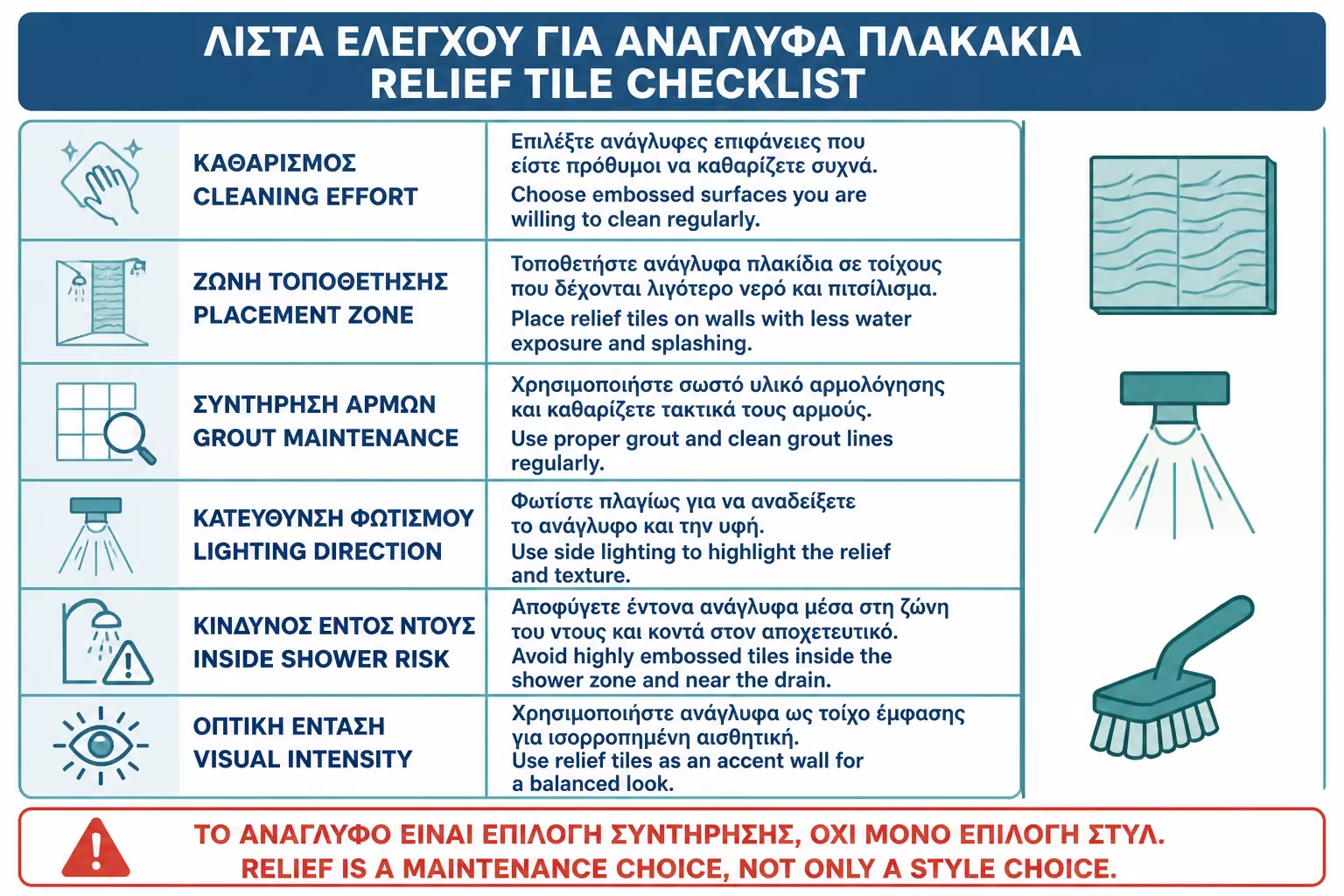
Before you review the table, keep the following points in mind:
| Question | Yes / No |
|---|---|
| Will the tile go on dry wall or inside the shower? | Yes / No |
| Have you checked how easy the texture is to clean? | Yes / No |
| Does the relief have deep recesses that may hold salts? | Yes / No |
| If it goes behind a mirror, is proper support provided? | Yes / No |
| Have sockets, lighting and plumbing fixtures been studied? | Yes / No |
| Is there proper lighting to bring out the texture? | Yes / No |
| Has excess on many walls been avoided? | Yes / No |
| If it goes in the shower, have you accepted increased maintenance? | Yes / No |
| Has the craftsman seen the tile before giving a final price? | Yes / No |
| Has extra charge been calculated for cutting and pattern wear? | Yes / No |
If most of the answers are "no", it is better not to make the choice based only on the image. 3D tiles are impressive, but they need proper placement and proper use.
If you want 3D tile in the bathroom, use it where it will be visible a lot and get a little wet. The wall behind the mirror or sink is usually a much better choice than the inside of the shower. Inside the shower, recesses and ridges hold salt and soap, especially in areas with hard water. If you nevertheless choose it for a wet zone, prefer a soft relief, a lighter color and a surface that is easy to clean. The texture should highlight the bathroom, not become a daily hassle.
3D and embossed tiles can give a bathroom character, depth and a sense of modern design. They are ideal for accent walls, for the wall behind the mirror, for guest toilets and for places where we want to create an impression without bright colors or many different materials.
But their success depends on the right position. On dry or semi-dry walls, they can work great. Inside the shower, especially with hard water and daily use, the recesses can hold salts, soaps and moisture, making cleaning more challenging. There they must be selected with great care or replaced by a smoother and more practical surface.
The best approach is to use the relief as an architectural detail, not as a blanket covering all over. A properly lit 3D wall behind the sink can look more expensive and cleaner than an entire heavily textured shower that needs constant scrubbing. In the bathroom, real quality is not only visible on the first day. It shows after months of use, cleaning, steam and water.
Return to category.
Go to categoryReturn to the central guide.
Go to guide