
Bathroom Surface Materials & Finishes
Return to category.
Go to categoryGrout is one of the materials that seems small in the overall project, but has a huge impact on the final image of the bathroom. It can make an expensive tile look clean and well-made or spoil it with stains, uneven color, holes, cracks and white "whites". It is also the material that lives daily with water, soap, cleaners, water vapors and salts. That is why its selection and application should not be treated as a simple detail at the end of the paving.
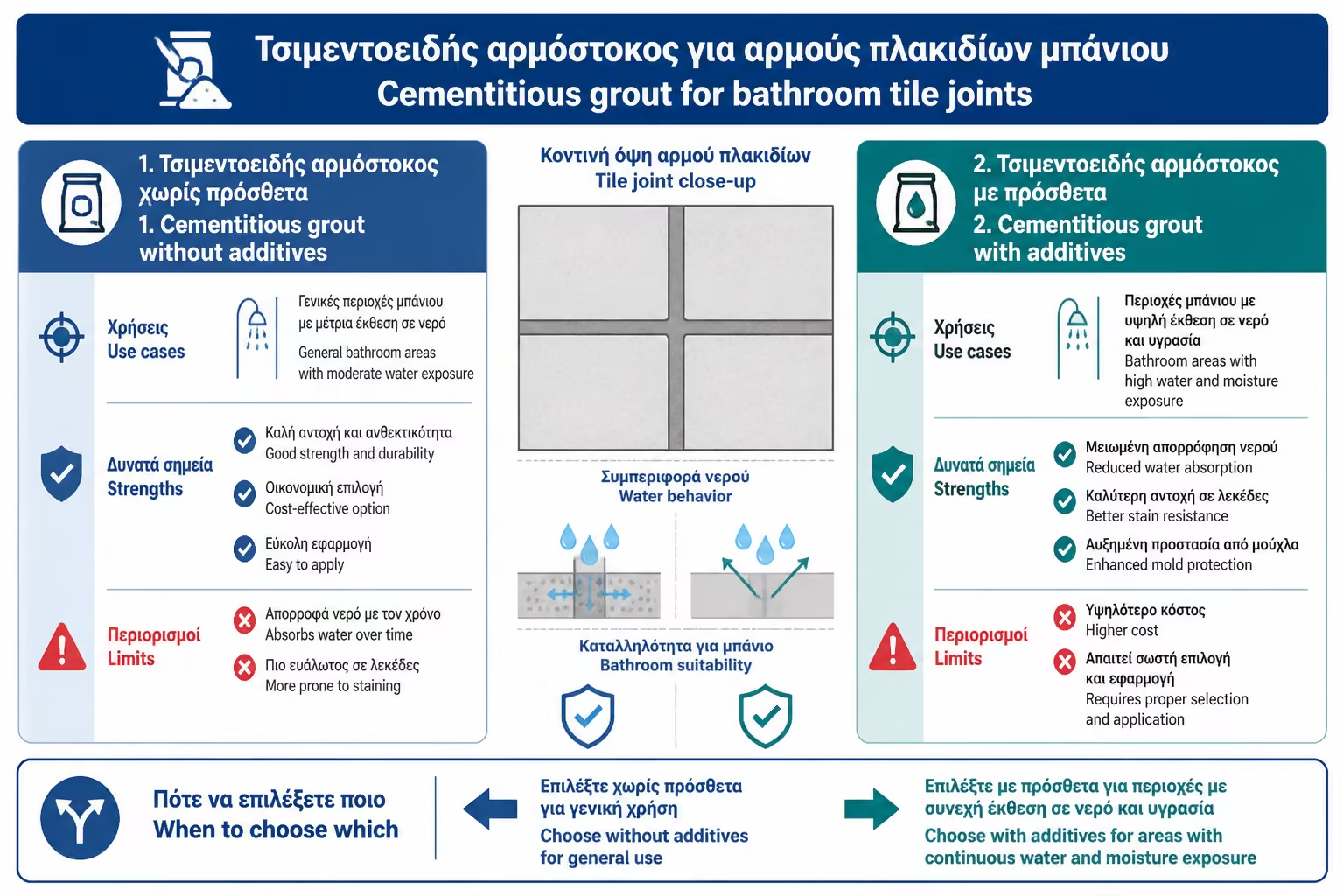
Cementitious grouts are the classic choice. They have been used for decades on floors, walls, kitchens, bathrooms, balconies and professional spaces. They are relatively economical, easy to apply for the experienced craftsman, available in many shades and suitable for most common tile applications. Today, however, we are not only talking about "white or gray joints". There are simple and improved, fast-setting, water-repellent, polymer-modified, anti-mold grouts, for narrow or wide joints, for floors, walls, swimming pools and demanding applications.
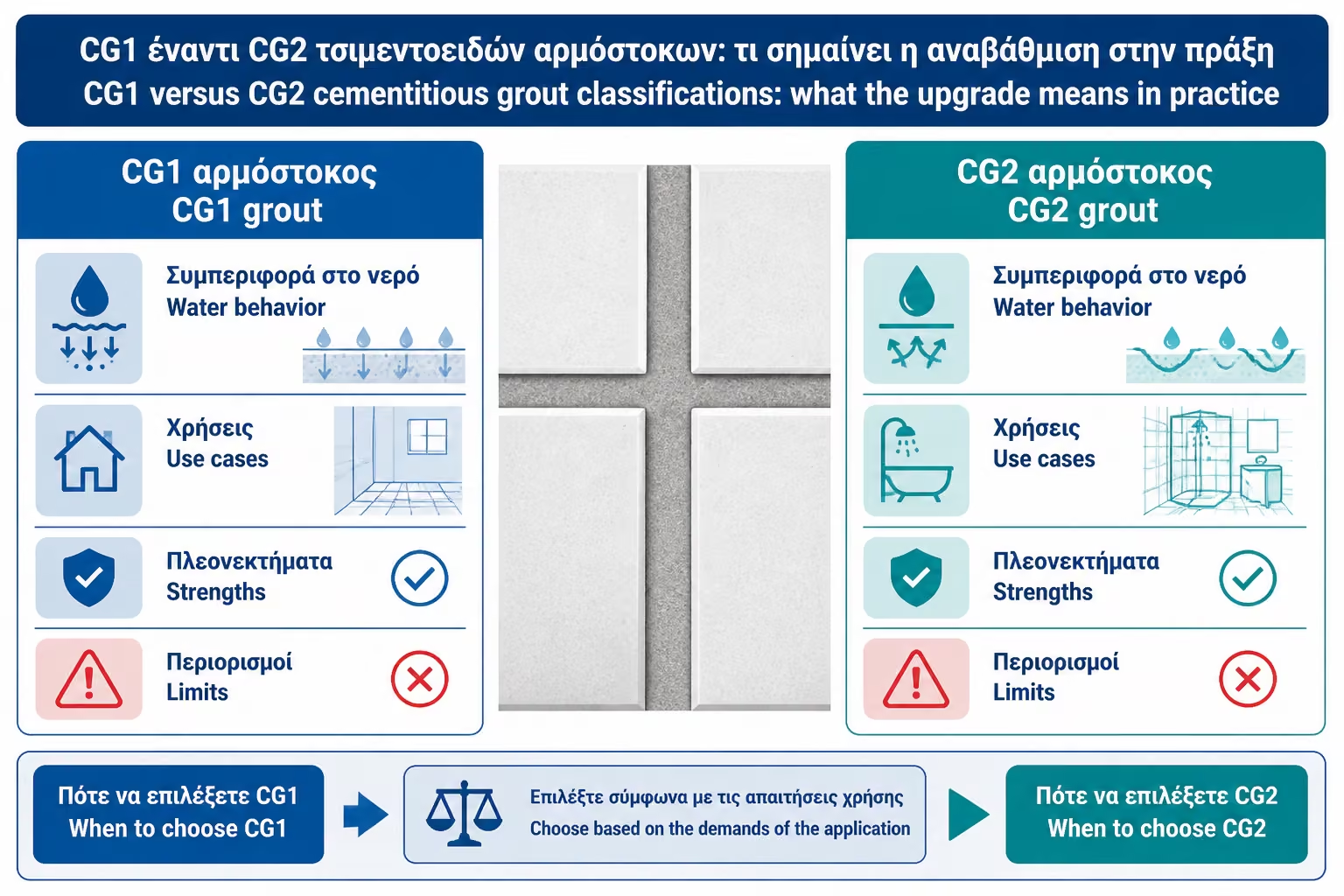
The basic European classification for tile grouts is EN 13888. There, cementitious grouts are designated with the letter CG, while resin / epoxy grouts with RG. Cementitious are divided into CG1 and CG2, where CG1 is the normal class and CG2 the improved class. Additional indices such as W and A denote reduced water absorption and high abrasion resistance respectively.
In the modern market, a good bathroom grout is often referred to as CG2 WA. This means an improved cementitious grout with reduced water absorption and increased abrasion resistance. It does not mean that it is completely sealed, nor that it does not need cleaning. It means that it behaves better than a simple grout, especially in wet areas and daily use. Some market guides explain that the EN 13888 Class CG2 WA designation indicates high-performance cementitious grout with enhanced water and abrasion resistance.
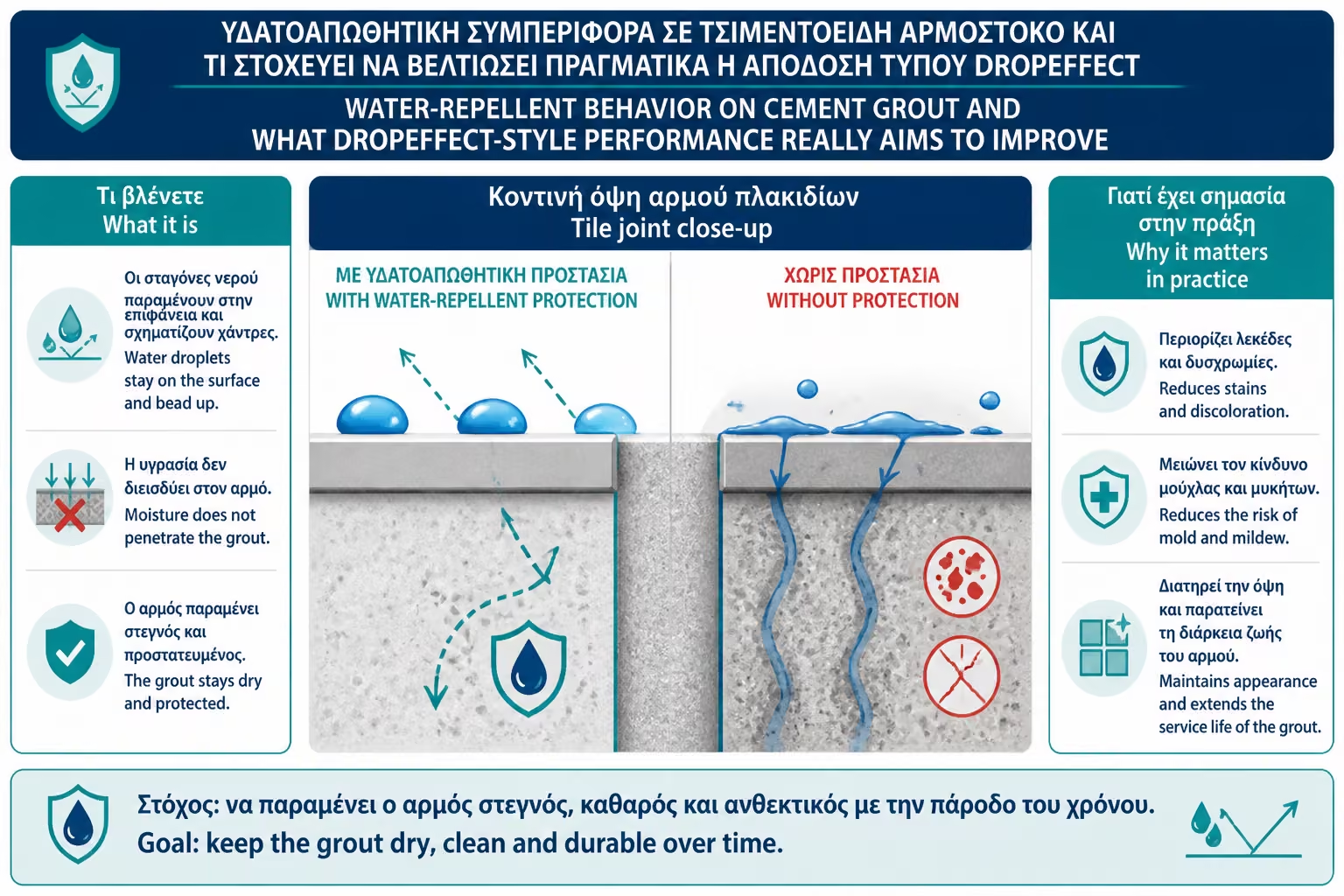
Technologies such as DropEffect®, found in Mapei products, are included in the same context. The logic is water repellent: water tends to form droplets on the surface of the joint and is not easily absorbed. Mapei describes, for example, products such as Keracolor FF as polymer-modified cementitious grouts with water-repellent DropEffect® technology, while Ultracolor Plus is described as a fast-setting and drying cementitious mortar for joints up to 20 mm, with water-repellent and easy-to-clean behavior through DropEffect® and anti-exfoliation technology for uniform color.
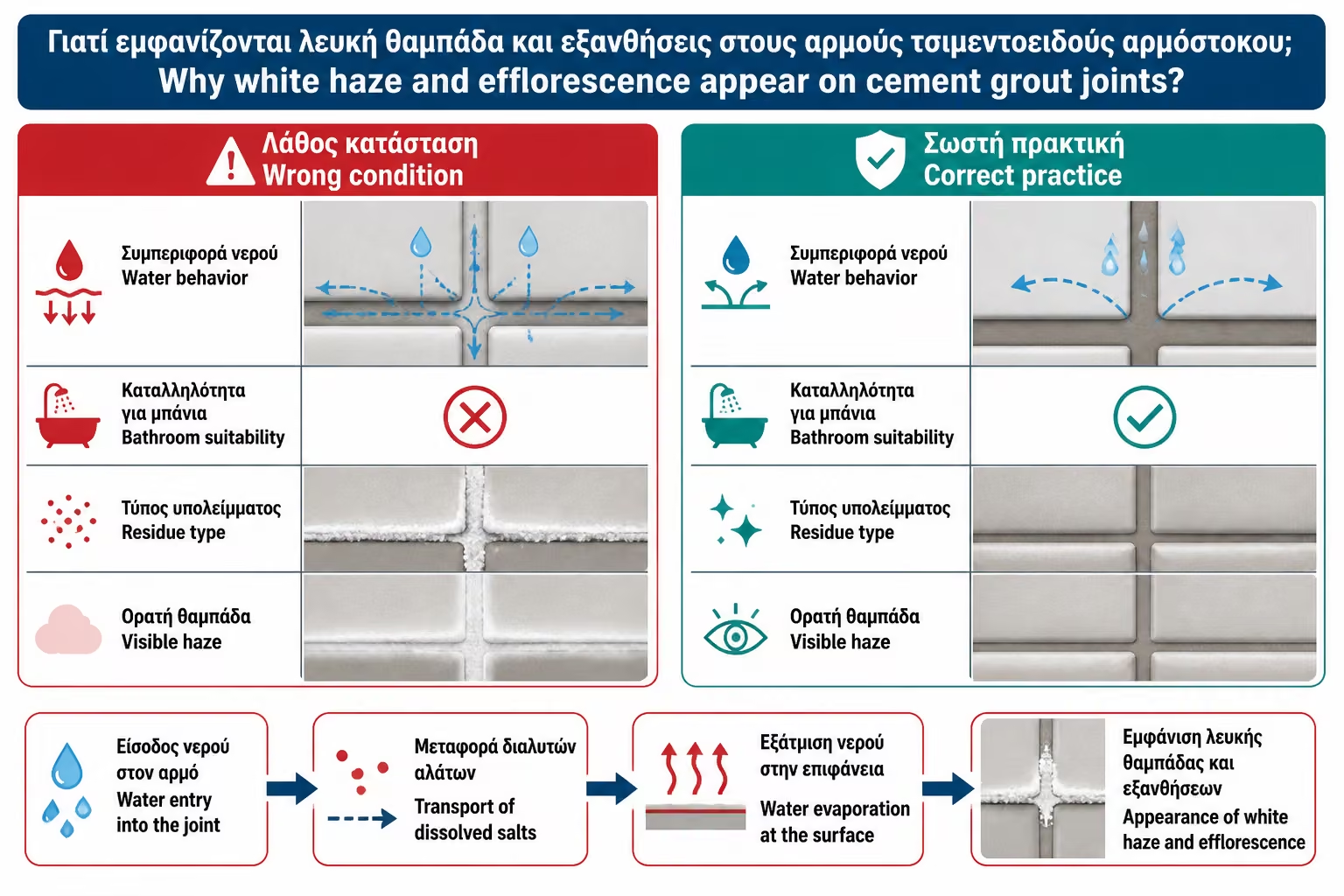
The other big issue is "aspriles", i.e. rashes or efflorescence. These are white spots, dust or dullness that appear on the joint and make the color look faded or uneven. It's not always just a stain. It is often associated with moisture carrying salts from the substrate, adhesive or cement joint itself to the surface. Weber explains that salts that cause efflorescence can come from the substrate, mortar, adhesive or grout, while prolonged moisture and delayed drying are common factors.
Cementitious grout is a powder mortar, based on cement, aggregates, additives and pigments. It is mixed with water and used to fill the gaps between the tiles. Once applied, it sets and creates a hard joint that visually and functionally stabilizes the paving.
Its role is not only aesthetic. The joint absorbs small dimensional tolerances, covers the joints, protects the sides of the tiles and helps the surface behave correctly. Without a joint, the tiles would touch each other, small expansions would create stresses and the installation would be much more vulnerable.
Unlike the glue, which is under the tile, the grout is visible and accepts daily use. In the bathroom, especially, it accepts water, soaps, shampoos, salts and cleaning agents. That is why it should be chosen based on the space and not just based on the color.
The symbol CG stands for cementitious grout. CG1 is the normal class. CG2 is the improved class, with better performance in specific features. When we additionally see the letters W and A, these denote reduced water absorption and increased abrasion resistance respectively.
For a simple, dry, interior environment, a basic grout may be sufficient. For bathroom, floor, shower or frequently cleaned surfaces, an improved CG2 WA grout is a much more sensible choice. It's not an exaggeration. It is a better technical base for water and friction space.
In practice, when you ask for a bathroom grout, it's best not to be satisfied with the phrase "a good grout". Ask to see the product category. If it says CG2 WA, you know we're talking about an improved cementitious grout with reduced absorption and better abrasion resistance.
The main advantage is that they are tested. Artisans know them, they come in many qualities and colors, they are relatively easy to apply compared to epoxy and they are more economical. For most residential bathrooms, a good cementitious grout can work great if applied correctly.
They are also more "tolerable" in application than an epoxy grout. The craftsman usually has a more familiar working time, cleans the surface more easily and can achieve a beautiful result without the pressure of a resin product. This is important in large bathrooms, tiles with a textured surface or natural shades where cleaning must be done carefully.
Another advantage is the aesthetic range. There are dozens of colors, from white and gray to beige, charcoal, brown, terracotta and special shades. The joint can be "lost" next to the tile or become a design element, as in subway tiles with a dark joint.
The main drawback is porosity. Even an improved cementitious grout is not the same as an epoxy grout. It may absorb moisture to some extent, become dirty, darken, scale or require cleaning. Water-repellent technologies reduce the problem, but do not eliminate it.
The second disadvantage is application sensitivity. If too much water gets into the mixture, if the joint is over-sponged, if the adhesive underneath is not dry, if there is moisture on the substrate, or if an inappropriate cleaner is used, the color may come out uneven. "White spots" are often not due to the grout as a product, but to the process.
The third disadvantage is that it is not waterproof. This is very important for the bathroom. Grout fills the joints, but does not replace the waterproofing under the tiles. If a shower is not properly waterproofed, the best cement joint will not save the structure.
Water repellency means that the joint better resists water penetration. Water tends to sit on the surface or form droplets, rather than being absorbed quickly. This aids cleaning, reduces the rapid penetration of dirt and makes the joint more practical in wet areas.
Technologies like DropEffect® work exactly in this logic. Mapei states that products such as Keracolor FF are water-repellent cementitious mortars with DropEffect® technology, while Ultracolor Plus is presented as a water-repellent, easy-to-clean and anti-efflorescence cementitious mortar for joints up to 20 mm.
But we must say it clearly: water repellent does not mean waterproof. If the water stays for hours in the joint, if there are cracks, if the joint is poorly filled or if the shower has a bad slope, the problem will appear. Water repellency is an improvement, not a license for poor construction.
DropEffect technology is a trade name for water repellent behavior in the joint. In practice, the owner realizes this from the fact that the water is not "sucked" so easily into the joint and cleaning becomes simpler. In a bathroom, this is important, especially on floors, shower walls and areas with frequent contact with water.
But it should not be translated as "will never turn black" or "needs no cleaning". The joint still accepts soaps, salts and organic residues. If the area is not ventilated, if water remains or if the wrong cleaners are used, there will be damage to the image.
The value of the technology is that it gives better behavior in everyday use than a simple joint. For private bathrooms, especially when we don't want to go to epoxy grout, a good CG2 WA with water repellent technology is often a very good balance.
"Aspriles" are the white blur, powder or spotting that appears on the surface of the joint. Technically, it is often associated with the phenomenon of rashes, or efflorescence. Soluble salts move with moisture to the surface. When the water evaporates, it leaves behind a white residue. CTaSC describes grout turning white as a possible result of efflorescence, where calcium from water, concrete or mortars moves through the porous cementitious joint to the surface.
Sometimes the “whiteness” is not a real deep rash, but haze from poor grout cleaning on the tile or from too much water in the final wash. Other times it is a symptom of more serious dampness underneath. This matters, because not all are treated equally.
If the joint turned white because it was washed too much at the time of application, the problem is mainly application. If it turned white because there is ongoing moisture from the substrate or poor drainage in the shower, then the white mark is a symptom of a bigger problem.
Rashes need three things: soluble salts, moisture to carry them, and a path to the surface. In tiles, salts can come from the cement mortar, the adhesive, the grout, the substrate or even the mixing water. The moisture moves the salts upwards and when it evaporates, the white crust or powder remains.
Weber cites prolonged moisture, delayed drying, excessive moisture during application, and general salts that can come from render, screed, adhesive or grout as causes of efflorescence. The Ceramic Tile Education Foundation also emphasizes that in a true efflorescence problem the source of the moisture must be identified and resolved, otherwise the phenomenon may return.
In the bathroom, the most common practical causes are: grouting before the adhesive dries, too much water in mixing, too much sponging, poor drainage in the shower, dampness in the substrate, insufficient ventilation and use of unsuitable cleaners.
In cementitious grouts, the water must be as specified by the manufacturer. If the craftsman adds more water to make the mix easier, it may temporarily improve the application but spoil the final quality. The joint may become weaker, more porous, lighter in color or more prone to white spots.
The same applies to cleaning. If the sponge is too wet and constantly washes the fresh joint, it washes fine-grained materials, pigments and cement from the surface. The result can be a joint with uneven color, white spots or lower ultimate strength.
Correct application requires controlled water: correct mixing ratio, correct curing time of the mixture where provided, correct joint filling, and cleaning with a well-drained sponge. This is simple in theory, but in practice it is one of the most common causes of poor results.
Another common mistake is haste. If the adhesive under the tiles has not dried or cured enough, moisture can move towards the joints. This increases the risk of uneven color and rashes. On large porcelain tiles, the drying of the adhesive can be delayed because the tile is almost non-absorbent.
The waiting time before grouting must follow the technical brochure of the adhesive and the site conditions. In low temperature, high humidity, large tiles or thick layer of glue, it may take more time. If the space is pressed for time, it is better to use a quick coagulation system from the beginning, not to rush the process.
Grouting is the final visible step, but should not be done before the substrate is ready. Many "whitewashes" start from impatience.
Whiteheads are more visible on dark joints. An anthracite or black joint that gives off white salts immediately looks problematic. On light gray or beige joints, the same effect may be less obvious. This does not mean that it does not exist, but aesthetically it is less disturbing.
If you choose a dark joint in a bathroom, the application must be even more careful. It needs correct water dosage, clean washing water, minimal moisture in the sponge and good drying conditions. Also, dark colors can show salt more easily than water, especially in hard water areas.
In a shower floor or an area with a lot of salt, a very dark cement joint needs maintenance. If the owner wants deep black grout with minimal maintenance, perhaps epoxy grout or another more durable solution should be discussed.
Not all joint fillers work for all joint widths. Some are for very thin joints, others for 2–20 mm, others for larger widths or special applications. For example, Mapei lists Ultracolor Plus as a cementitious mortar for joints up to 20 mm, while other products such as Keracolor FF are listed for thinner joints up to 6 mm.
In rectified tiles with a narrow joint, we want a grout that can fit properly in a small width and give a smooth surface. In rustic tiles, stone, exterior floors or pebbles, a grout may be needed for wider joints, with different grain size and strength.
If the wrong grout is used for the width of the joint, it can crack, not fill properly, or be difficult to clean. Joint width is not only an aesthetic decision. It is also a technical parameter for product selection.
In the shower, grout gets the toughest use. Water, soap, shampoo, temperature changes, cleaning agents and daily moisture. A good CG2 WA with water repellent technology can work well in a private bathroom as long as there is proper waterproofing underneath, proper slopes and good ventilation.
But in high-use showers, hotels, commercial spaces, pools, spas, or floors with lots of small elements like tiles and pebbles, epoxy grout can be a more durable choice. It does not mean that epoxy should always be chosen. It means that usage must be evaluated.
Most importantly, the cement joint is not a waterproofing. If the shower is not properly waterproofed, water can pass through micro-cracks, edges or joints and reach the substrate. The joint is a final filling, not the bathroom's main defense against leakage.
Cementitious grout is more economical, more familiar and easier to apply. It is a very good choice for most bathrooms, especially when using improved class CG2 WA. Epoxy is more stain, water and chemical resistant, but costs more and requires more expert application.
In a typical domestic bathroom, a good cementitious grout is often sufficient. In a mosaic shower floor, in very dark joints, in heavy use or in areas where we want maximum stain resistance, epoxy is worth considering.
The choice is not ideological. It's practical. If we want easy application and a good cost-performance ratio, cementitious. If we want higher chemical resistance and less absorption, epoxy. In both cases, application counts.
Use the table below as a quick reference for the key points of this section.
| Category | What does it mean? | Where does it fit? |
|---|---|---|
| CG1 | Normal cementitious grout | Simple, less demanding applications |
| CG2 | Improved cementitious grout | Bathrooms, floors, more demanding uses |
| CG2 W | Improved with reduced water absorption | Wet areas, bathrooms, kitchens |
| CG2 A | Improved with increased abrasion resistance | Floors and surfaces with use |
| CG2 WA | Improved with reduced absorption and high friction | The most secure foundation for many modern bathrooms |
| RG | Resin / epoxy grout | High demands on water, stains, chemicals |
The table helps decode the label. It does not replace the technical datasheet, but it gives a quick understanding.
Avoidance begins before the sack is opened. The substrate must be dry and the adhesive sufficiently mature. The mixing water must be clean and in the correct quantity. The mixture must be worked as the manufacturer says. The joint should be completely filled and cleaned with a well-drained sponge, not drowned in water.
After application, the area must dry naturally. No excessive water, no abrupt use, no moisture closing. In a shower, it should not be used before the time given by the manufacturer has passed. If it gets wet too soon, the risk of discoloration, weakness and rashes increases.
If the bathroom has poor drainage, stagnant water or moisture underneath, the problem is not solved only with "better grout". The cause of the damp must be solved. CTEF emphasizes that to prevent efflorescence from reoccurring, the source of the problem must be identified and corrected.
First we need to understand what it is. If it is surface haze from poor cleaning, it can be removed with a suitable cement residue cleaner, always following the tile and grout instructions. If the tile is natural stone or a sensitive surface, great care is needed, because acid cleaners can damage it.
If it is a true efflorescence, it can be cleared temporarily, but if the moisture continues to rise, it will return. In a shower, this can indicate a drainage problem, poor slope, moisture in the substrate or faulty construction. CTaSC points out that excessive efflorescence can be a symptom of excess moisture, e.g. if the water is not properly removed from the shower pan or if the membrane is not properly inclined towards the drain.
If white spots persist, do not scrub haphazardly with harsh cleaners. You may damage the joint or the tile. Need a diagnosis: surface residue, water salts or actual moisture rash?
In the Greek market of 2026, cementitious grouts have a wide price variation depending on the category, color, joint width and the technologies they have. A simple grout is economical, but in a bathroom it is usually worth moving to an improved class CG2 WA, especially if the surface receives water or frequent cleaning.
The cost difference between plain and good cement grout is small compared to the total cost of tiles, glue and labor. In a typical bathroom, choosing a better grout usually doesn't change the budget dramatically, but it can greatly improve the final performance.
Epoxy grout is more expensive in both material and labor. That's why it doesn't have to go everywhere. For most residential applications, a good cementitious water-repellent grout is the balanced solution. For special high stress areas, epoxy is considered.
Use the table below as a quick reference for the key points of this section.
| Question | Yes / No |
|---|---|
| Have you chosen a grout suitable for the width of the joint? | Yes / No |
| Is the category at least CG2 WA for bath or shower? | Yes / No |
| Has the adhesive under the tiles dried sufficiently before grouting? | Yes / No |
| Will the mixing water be metered according to the manufacturer's instructions? | Yes / No |
| Will the cleaning be done with a well-drained sponge? | Yes / No |
| Has excessive washing of the fresh joint been avoided? | Yes / No |
| Is there a proper slope and drainage in the shower? | Yes / No |
| Has waterproofing been done under the tiles where necessary? | Yes / No |
| Do you know which cleaners are allowed for grout and tile? | Yes / No |
| Have you considered epoxy grout if the use is too demanding? | Yes / No |
If the answers are unclear, grouting should not be treated as a simple last step. It is a technical stage with a great influence on the final quality.
For a modern bathroom, don't choose a grout based on color alone. Ask for category CG2 WA and, where there is frequent contact with water, prefer a product with water-repellent technology. But remember: cementitious grout is not waterproofing. The shower must have proper waterproofing underneath, proper slopes and good ventilation. To avoid "white spots", measure the water correctly, do not rush to grout before the glue dries, and do not wash the fresh joint with too much water. Most joint failures start with the process, not the color.
Cementitious grouts remain the classic and most popular choice for tiles, and not by chance. They are economical, practical, available in many shades and suitable for most domestic applications. Modern improved categories, such as CG2 WA, with water-repellent technologies such as DropEffect, offer much better behavior in bathrooms compared to simple traditional joints.
However, we must deal with them realistically. They are not epoxy, they are not a full seal, and they are not invulnerable to a bad fit. They want correct water dosage, correct waiting time before grouting, careful cleaning, good slopes, dry substrate and compatible cleaners. If these are followed, they can keep a beautiful and clear image for many years.
"Whites" are not just an aesthetic accident. It is an indication that something in the moisture, application or cleaning did not work properly. It can be a superficial residue, but it can be a real moisture rash. Proper prevention is always better than correction. In the bathroom, a good joint is not a detail; it is part of the technical reliability of the entire investment.
Return to category.
Go to categoryReturn to the central guide.
Go to guide