
Bathroom Surface Materials & Finishes
Return to category.
Go to categoryCleaning up after grouting is one of the stages that separates neat installation from "somewhat done". The tiles may have been installed correctly, the joints may be straight, and the color may have been carefully chosen, but if grout smoke, haze or epoxy film remains on the surface, the final result will look sketchy. The tile loses its luster or matte clarity, the surface looks "dirty" from day one and the owner often thinks that the tile is to blame, when in fact the cleaning is to blame.
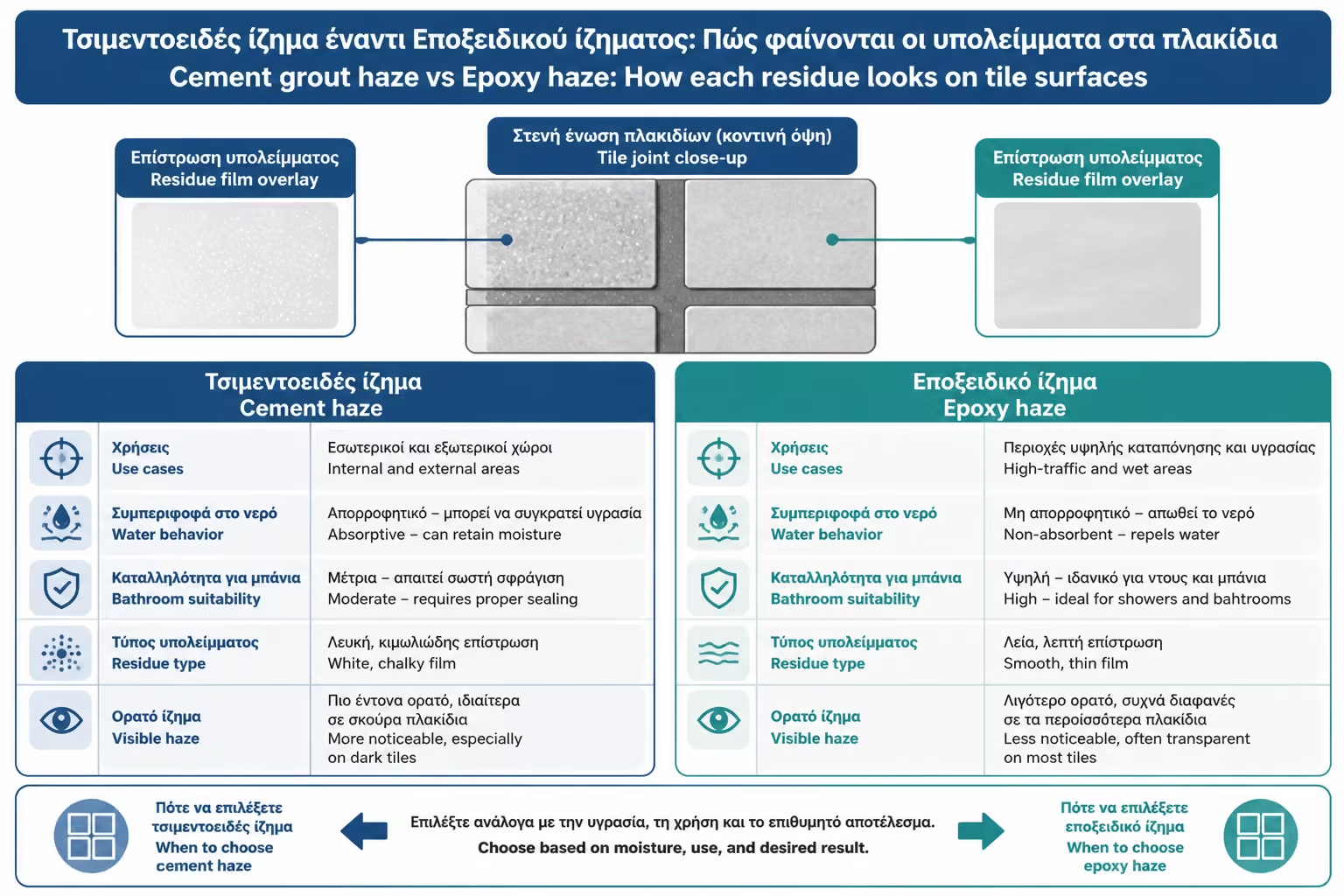
The "smoke" of the cement joint, also known as cement grout haze, is a thin surface film of cement, salts, pigments and fine-grained grout residues that remains on the tile after washing. It usually appears as a graying, white blur or faint veil that is more visible when light falls from the side. On glossy tiles it looks like a blur. On matte tiles it can make the surface look dusty. On embossed tiles it can stay in the texture.
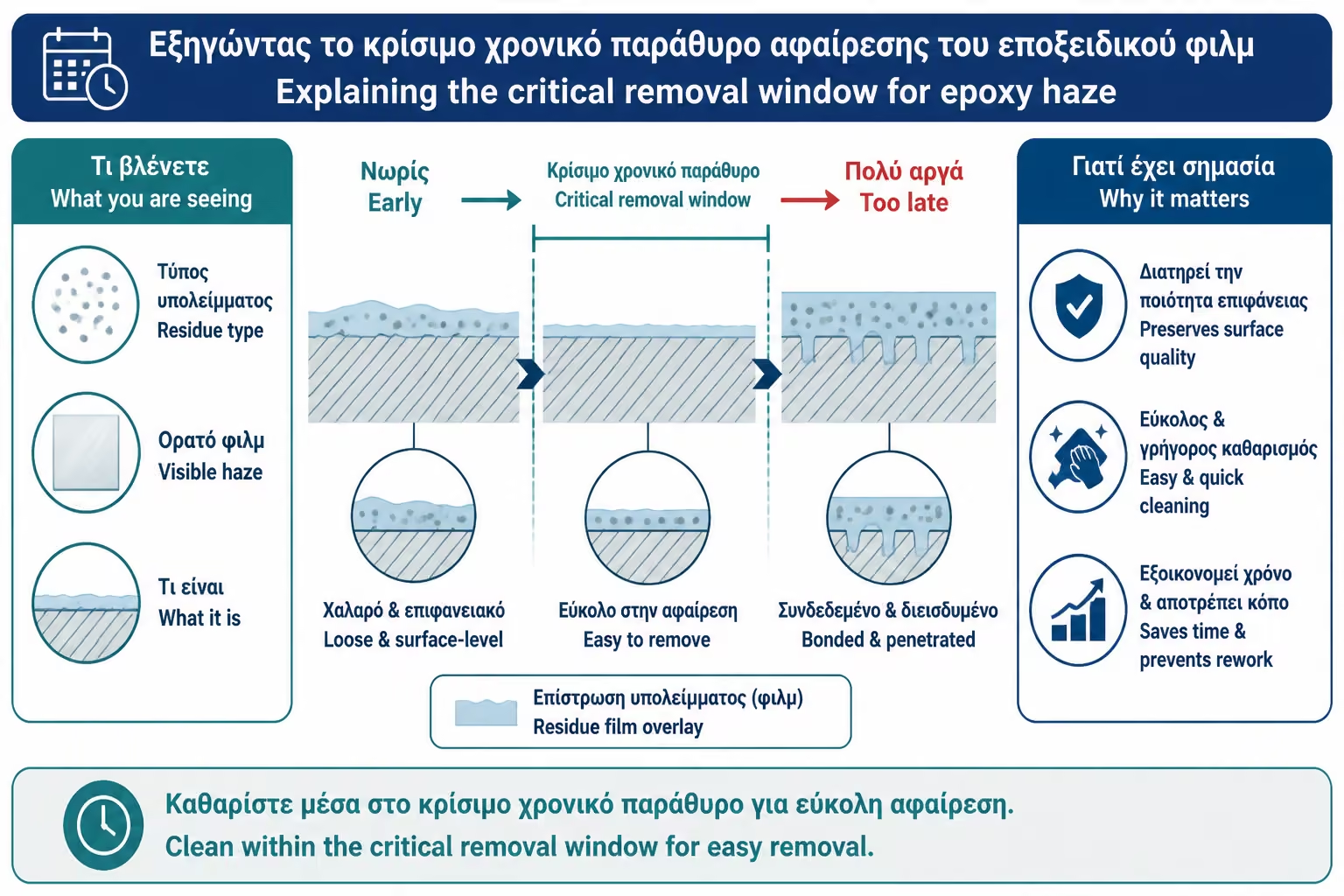
Epoxy haze is different and usually more difficult. It comes from a two-component epoxy grout. If not properly cleaned at the time of application, it leaves a thin resinous film on the tile. This film is not removed with the same cleaners that remove cementitious tobacco. Mapei emphasizes that in cleaning epoxy grout haze "time is of the essence": the longer it stays on the tile, the more time and stronger product is needed to remove it. For residues over seven days a stronger stripper/coating remover is recommended.
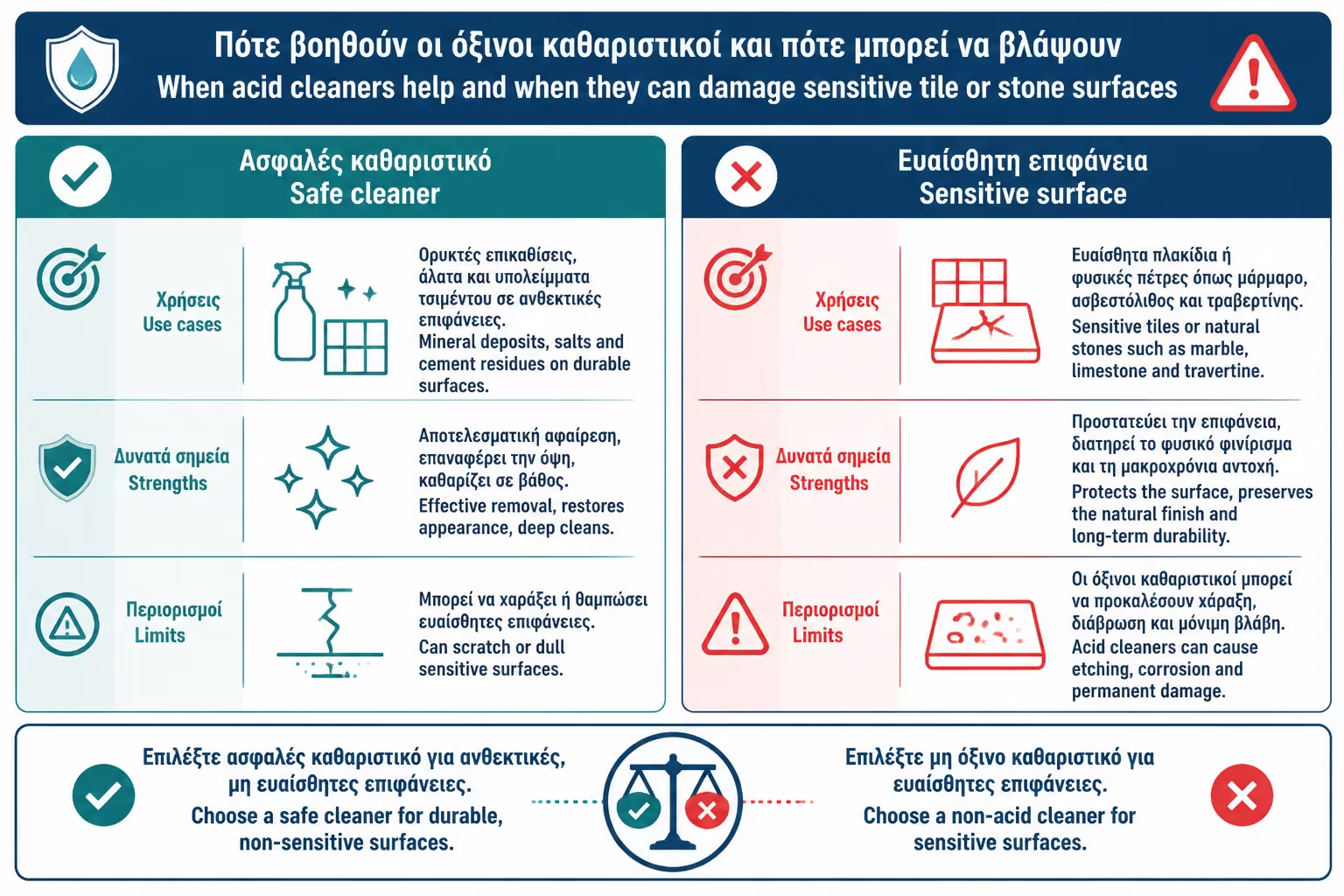
The most important thing is to distinguish from the beginning what kind of residue we have. Cementitious smoke needs another chemistry, epoxy haze another, acrylic/urethane residue from ready-made grouts another, salts from hard water another and the actual dirt of use another. If we use the wrong cleaner, nothing can be done or, worse, we can damage the surface. Acidic cleaners that help with cement fume can damage marble, limestone, travertine, pumice stone, and other limestone stones. FILA, for example, states for final site cleaning cleaner that it should not be used on polished marble and acid-sensitive materials and that it should be tested on a small spot.
In this guide we'll look at how to identify the type of residue, when to first clean, how to remove cement fumes, how to clean epoxy film, what to look out for in natural stone and matte/embossed tiles, and what common mistakes builders and homeowners make after grouting.
Grout fume is the fine residue left on the tile after the first grout wash. The grout is spread diagonally with a spatula and then cleaned with a sponge. No matter how well the first cleaning is done, usually a very thin film remains. When it dries, it looks like a blur.
On glazed ceramic or porcelain tiles, this smoke can be cleaned relatively easily if treated early. In matte, structured, non-slip or embossed tiles, residues enter the micropores and textures. Cleaning is more difficult there. In natural stone, things are done even more carefully, because the cleaner that dissolves the cement can also damage the stone.
Cemented tobacco should not be left for days with the logic "it will clear eventually". The harder it gets, the harder it gets. It can also attract dirt and make the tile look permanently dull, especially in bathrooms with moisture and salt.
Epoxy haze is the thin resinous film left by epoxy grout. Unlike cementitious tobacco, it is not primarily a cementitious residue that dissolves with an acidic cleaner. It is resin. When it matures, it sticks much more tenaciously to the surface.
If the epoxy grout is properly cleaned during application, the problem is limited. However, if a film remains, especially on matte or embossed tiles, a special epoxy grout haze remover may be needed. LATICRETE states in a technical data sheet for epoxy grout haze removal that the best way to avoid haze is thorough cleaning and inspection on the same day of installation.
Epoxy haze is often visible from side light. It may not be visible when the tile is wet, but once dry a dull, "oily" or glossy film appears. On dark tiles it can appear as a dull gray. On whites it can look like invisible dirt that won't go away with simple mopping.
Before any cleaner is used, three questions must be answered: what grout was used, what tile we have, and how many hours or days have passed since the application. If the joint was cement, we probably have cement grout haze. If it was epoxy, we have epoxy haze. If it was ready acrylic or urethane grout, another product may be needed.
The second question is the surface. One cleans glazed porcelain, another matte anti-slip tile, another polished marble, another pomerite, another terrazzo, another glass mosaic. Acidic cleaners are useful on cementitious fumes on acid-resistant tiles, but are dangerous on acid-sensitive stones. Mapei points out that acid-based cleaners are ideal for cement grout haze, but only on acid-resistant surfaces, because acids dissolve calcium residues.
The third question is time. Fresh residue is easier to clean. Aged residue requires more special product, more contact time and mechanical action. In epoxy haze, this difference is even more pronounced.
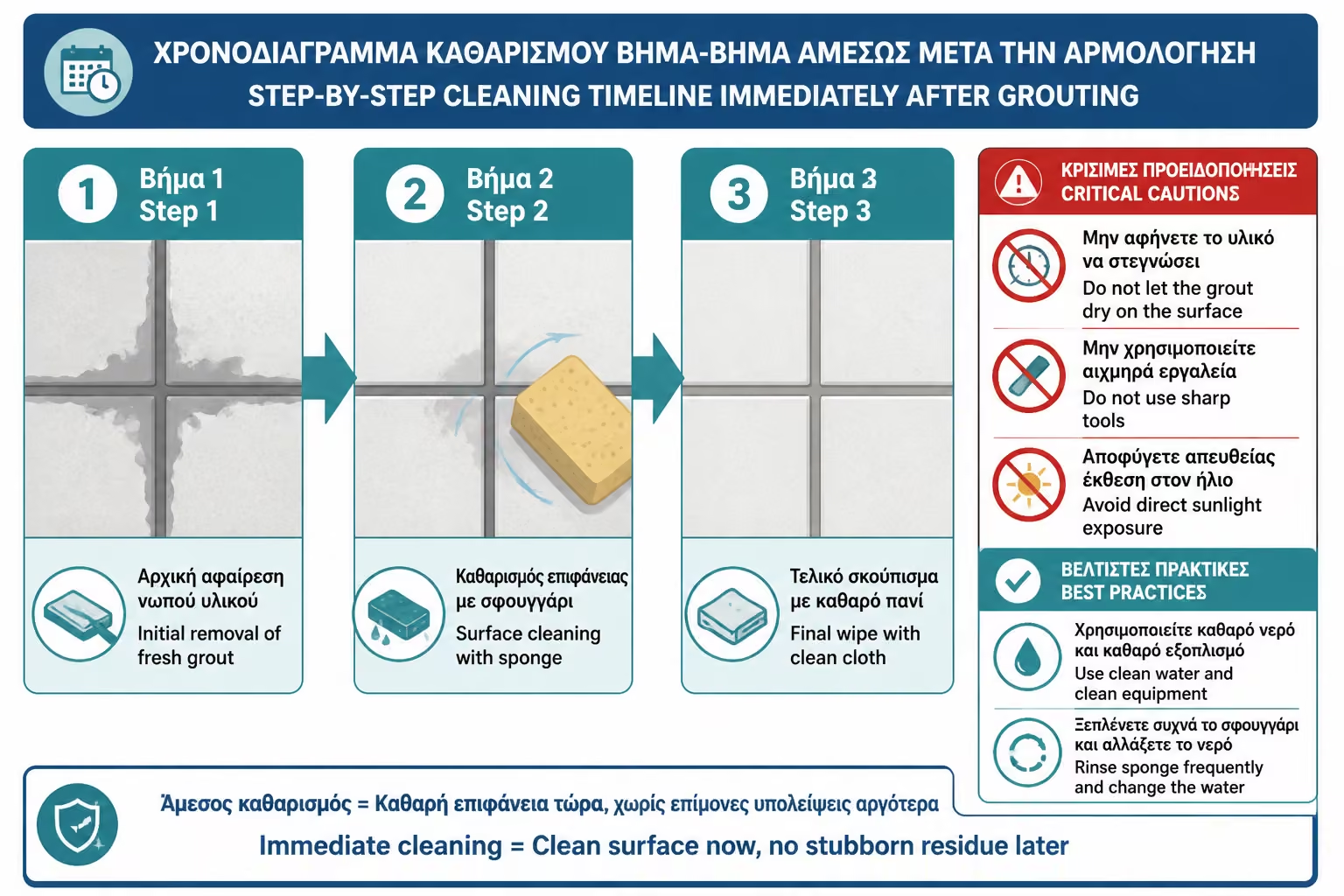
Proper cleansing begins at the time of application, not the week after. With cementitious grout, after filling the joints, the excess is removed with a rubber spatula diagonally to the joints. Then, when the joint starts to pull, it is washed with a well-drained sponge. We do not flood the surface with water, because we may wash away the joint, change the color and increase the risk of rashes.
With epoxy grout, cleaning should be done even more organized. We usually work on small surfaces. First cleaning is done with a suitable sponge/pad and water or a special cleaner, depending on the product, and then a second cleaning for the film. The craftsman should check the surface with a side light before leaving.
The big mistake is to consider cleaning a "job of the end". In grouting, especially with epoxy, the end of application and cleaning are the same stage.
For light cement tobaccos, we always start soft. First we try clean water and microfiber or light scrubbing with a suitable white pad in a small area. In fresh tobacco, this may be sufficient. The surface needs to dry to see if it has really been cleaned, because when it is wet it hides the dullness.
If the smoke remains, we switch to a special cleaner for cement grout haze. These are usually acidic products or products designed to dissolve cementitious residues. They should be applied as directed, left on for the prescribed time, and then washed off very thoroughly. Do not let the cleaner dry on the surface.
In any case, a small, inconspicuous spot is tested. This applies even to porcelain, but is absolutely necessary on natural stones, matte tiles, metal inlays or special finishes.
Acidic cleaners are among the most effective for cementitious fumes because they attack the calcium residues in the cement. But that is exactly why they are dangerous on natural limestone stones. Marble, limestone, travertine, pumice stone and some terrazzo can dull, burn or get permanent acid marks.
FILA warns that products such as DETERDEK PRO should not be used on polished marble and acid-sensitive materials, while a small area test should always be performed. This caveat is critical for bathrooms where marble look porcelain is often combined with real marble on countertops or natural stone in decorative elements.
On natural stone, cement haze cleaning should be done with stone-safe products or by a professional. "A little vinegar" or a strong de-salting agent can cause permanent damage. Vinegar is also an acid and is not a safe solution for natural stone.
Epoxy haze is resinous. It does not clean effectively with simple soap or acid cement haze remover. A special product is needed for epoxy grout haze or coating residue. Mapei has UltraCare Epoxy Grout Haze Remover and states that for best results the surface should be swept or vacuumed of loose debris, pre-wet the surface and always test in inconspicuous areas.
LATICRETE also has special products, such as STONETECH Epoxy Grout Haze & Coating Stripper, described as a water-based gel for dissolving epoxy grout haze and other coatings on vertical and horizontal surfaces. The data sheet states action in 10 minutes or less for epoxy haze and various coatings.
The important thing is that the epoxy haze should not be allowed to fully cure. If it stays for many days, it does not mean that it is never cleaned, but the process becomes more difficult, more expensive and more dangerous for sensitive surfaces.
The ideal is that it doesn't stay at all. The technician must do the cleaning and inspection on the same day. If a slight film is visible after drying, it must be dealt with quickly, usually within the time window given by the manufacturer. The earlier, the milder the operation can be.
If the epoxy haze has been left for more than a few days, a stronger remover or stripper may be needed. Mapei states that for epoxy haze that has remained on the surface for more than seven days, UltraCare Heavy-Duty Sealer & Coating Stripper may be needed instead of a simple epoxy haze remover.
This is practically very important in project procurement. The owner must inspect the tiles with a side light before considering the job finished. If weeks pass, the problem becomes more difficult and responsibility more blurred.
Matte and anti-slip tiles are more difficult to clean residues, because they have micro-roughness. Tobacco and resin enter the small cavities. On R10, R11 tiles or structured surfaces, the simple sponge is often not enough. You need a suitable pad, brush and product, always without scratching the tile.
In embossed tiles the problem is even greater. The grout can get trapped in the textures and change their color. That is why on strongly textured tiles it is worth doing a grouting test on a piece before the full application. In some cases grout release is needed before grouting.
A recent guide to grouting points out that natural stone and unglazed porcelain should be pre-protected with grout release before grouting to reduce haze adhesion to the surface and make it easier to clean afterwards. This is even more true when the grout is dark or epoxy.
In natural stone, the cleaning of joint residues must be done with great care. The stone can be porous, acid-sensitive or already sealed with a sealer. The wrong cleaner can remove sealer, dull the stone or cause permanent etching. Acidic solutions on marble, limestone, travertine and pumice stone are particularly dangerous.
Before grouting natural stone, pre-sealing or grout release is often needed. After grouting, we clean with products allowed for natural stone. If cement haze is present, we do not automatically use cement haze remover with acid. We ask for a stone-safe solution or professional cleaning.
An epoxy joint on natural stone must be tested. Epoxy can stain or leave a film on a porous surface. If the stone is expensive, the trial cost is insignificant compared to the damage cost.
The glass mosaic shows haze easily, especially epoxy haze. Because the surface is glossy, every film looks like a blur. Also, because there are many joints, the amount of grout worked onto the surface is large. This increases the risk of residues.
On glossy tiles, cleaning is usually easier than matte, but haze is more visible. Needs a good second microfibre cleaning and side light check. If an epoxy film is left on a glossy tile, it can look like an oiled surface.
On a glass mosaic, the cleaners and pads must be compatible so as not to scratch the surface. We do not use hard abrasives without instruction.
For cement grout, the basic tools are clean sponges, buckets of clean water, microfibers, white or unscratched pads, a brush for textured surfaces, and special cement grout haze remover where needed. The water should be changed frequently. If we clean with dirty water, we just spread the tobacco again.
For epoxy haze, special pads, epoxy sponges, microfibers and special epoxy grout haze remover are needed. In more difficult cases, gel stripper or coating remover is used, according to instructions. Protective equipment is essential: gloves, goggles and good ventilation. Technical data sheets for epoxy haze cleaning products mention the use of protective gloves and goggles and an SDS check before use.
But the most important tool is time. If cleaning is done at the right time, fewer chemicals are needed. If it's too late, even the best products struggle.
First, let the joint cure as recommended by the manufacturer before using a strong cleaner. We do not pour acid cleaner on a fresh joint because there is dullness. We may alter the joint. Initially, gentle cleaning is done with water and microfiber. If haze remains after drying, proceed to a special product.
The cleaner is applied to a small surface, after a previous test. In many products it is recommended to pre-wet the surface, so that the cleaner acts on the residue and is not absorbed uncontrollably. Let it act as the manufacturer says, rub with a suitable pad or brush and then rinse very well.
The final rinse is critical. If cleaner is left, it may continue to work, affect the joint or leave a new stain. Then we dry and check with a side light. If necessary, repeat gently, not with excessive concentration.
In epoxy haze we start with the special product recommended by the grout or system manufacturer. We first clean dust and loose residues. We often pre-wet the surface, apply the remover, let it act for the prescribed time and rub with a suitable pad. Then remove the dissolved residues and rinse well.
Mapei, in a technical data sheet for UltraCare Epoxy Grout Haze Remover, gives as initial preparation sweeping or vacuuming to remove loose debris, pre-wetting for better results and testing in discreet places before use. These instructions show that this is more than just mopping. It is a controlled chemical process.
If the haze is old or very hard, a stripper may be needed. STONETECH Epoxy Grout Haze & Coating Stripper is a gel product that dissolves epoxy haze and coatings, but such products need attention, ventilation and testing. On sensitive surfaces, it is better to have it done by a professional.
Do not use vinegar, lemon or strong acidic cleaners on natural stone. Do not use wire sponges on tiles, glass or polished surfaces. Do not use hard pads without testing. Do not mix cleaning agents together, especially acidic with bleach or ammonia. This can be dangerous.
Do not attempt to remove epoxy haze with cement haze remover. It usually won't work and may damage the surface. Do not allow cleaner to dry on the tile. Do not rub too much in one spot, as this may result in glossiness, dullness or an uneven texture.
Do not clean fresh grout with too much water. This can create a weak or discolored joint. Cleaning should be enough to remove debris, not so strong that it washes out the joint.
Use the table below as a quick reference for the key points of this section.
| Residue | Usual solution | Attention |
|---|---|---|
| Light cement tobacco | Water, microfiber, soft pad | Check after drying |
| Intense cement grout haze | Special cement grout haze remover | Only on acid-resistant surfaces |
| Epoxy haze fresh | Special epoxy grout haze remover | Fast action, small surfaces |
| Epoxy haze old | Stronger epoxy/coating stripper | Testing, ventilation, protection |
| Acrylic/urethane residue | Special cleaner for organic/urethane residues | It does not clean like cement |
| Salts from water | Surface compatible scale cleaner | Not on acid-sensitive stone |
| Natural stone with haze | Stone-safe cleaner / professional | Avoiding acids |
The table shows that the right product depends on the residue and the surface, not just how "strong" the cleaner is.
Use the table below as a quick reference for the key points of this section.
| Surface | Cleaning hazard | Comment |
|---|---|---|
| Glazed ceramic | Lower | It is usually easy to clean |
| Porcelain matt | Medium | Micro roughness keeps haze |
| Non-slip R10/R11 | Higher | It needs a pad/brush and a good rinse |
| Embossed / 3D tile | High | Residues remain on textures |
| Glass mosaic | Medium to high | It looks a lot like epoxy haze |
| Marble / limestone / travertine | Very high | Acidic cleaners are prohibited |
| Porolithos / natural porous stone | Very high | It needs a pre-seal and stone-safe process |
| Metal inserts | High | Acids and strong cleaners can affect them |
The more porous, matte or textured the surface, the more we have to prevent the problem and not fix it afterwards.
Prevention starts before grouting. In porous, textured or natural materials, a test is carried out and, where necessary, a grout release or pre-sealer is applied. The surrounding surfaces are protected. The crew works in small zones, cleans in a timely manner and leaves no residue to dry.
In the cement joint, the right amount of water and a well-drained sponge reduce smoke. In epoxy, proper organization reduces haze. In any case, the final cleaning the same day or the next, depending on the product, is much easier than the restoration after weeks.
Tile and Stone Journal points out that prompt removal of grout residue is essential to avoid haze, dullness and surfaces that attract dirt and are harder to clean. This is probably the most practical tip: don't turn a 30-minute stage into a days-long problem.
In the Greek market of 2026, joint residue cleaning can be a small cost if done promptly and correctly, but a significant cost if the problem remains. A special cement haze or epoxy haze cleaner can cost much less than restoring a large surface that has been hazed. But the labor is what drives up the cost: sanding, testing, repeated passes, rinsing and protecting sensitive materials.
In epoxy haze that has been left for several days, the cost increases because stronger products are needed, longer waiting times and perhaps professional intervention. In natural stone, the cost can become even higher if re-polishing, re-sealing or etching restoration from the wrong cleaner is needed.
This is why cleaning should be included in the quote as part of the grouting job, especially with epoxy grouts. The phrase "will be cleaned later" is not enough. It must be clear who is cleaning, when and with what product.
The first mistake is not checking with a side light on the day of grouting. Haze looks better this way.
The second mistake is to use an acidic cleaner on marble or limestone. The damage can be permanent.
The third mistake is to clean up epoxy haze like cement smoke. He wants a special product.
The fourth mistake is excessive water in the fresh cement joint. It can weaken or discolor the joint.
The fifth mistake is to leave the epoxy haze for weeks. Then removal becomes much more difficult.
The sixth mistake is using hard abrasives that scratch or change the gloss of the tile.
Use the table below as a quick reference for the key points of this section.
| Question | Yes / No |
|---|---|
| Do we know if the joint is cementitious, epoxy or ready acrylic/urethane? | Yes / No |
| Has the first cleaning been done at the right time? | Yes / No |
| Has there been a second cleaning/check after drying? | Yes / No |
| Has the surface been side-light tested? | Yes / No |
| Is the cleaner compatible with the tile? | Yes / No |
| Has it been tested on a small inconspicuous spot? | Yes / No |
| If there is natural stone, have acid cleaners been avoided? | Yes / No |
| If there is epoxy haze, is a special epoxy remover used? | Yes / No |
| Is the surface thoroughly rinsed after the cleaner? | Yes / No |
| Has it been agreed who is responsible for final cleaning? | Yes / No |
If several answers are “no”, cleaning risks becoming a problem after delivery, when it will be too late.
Do not leave the cleaning of the grout for "later". Cement tobacco is easier to clean while fresh, while epoxy haze becomes much more difficult as it matures. First identify the residue and the surface: one product for cement haze, another for epoxy residue, another for natural stone. On marble, travertine, limestone or pumice stone, avoid acidic cleaners unless they are completely compatible. And always test on a small spot. Proper cleaning after grouting is not cleaning; it is part of the installation technique.
The cleaning of joint residues is a critical step for the final quality of the paving. Cementitious smoke can make even an expensive tile look dull and dirty. Epoxy haze can leave a persistent resinous film that won't come off with simple mopping. In both cases, time is of the essence: the sooner the problem is detected and treated, the easier and safer the solution.
The right process begins with a diagnosis. What grout was used? What surface do we have? Is the residue cementitious, epoxy, acrylic or salts? Only then is a cleaner selected. Acidic products are useful for cement grout haze on durable surfaces, but dangerous on natural stone. Epoxy removers are essential for resinous residues, but require testing, protection and proper use.
The best solution is prevention: proper grouting, small work surfaces, immediate first and second cleaning, inspection with side light and use of grout release or pre-sealer on sensitive materials. A bath is not delivered when the joint is just "in". It is delivered when the surface is really clean.
Return to category.
Go to categoryReturn to the central guide.
Go to guide