
Bathroom Surface Materials & Finishes
Return to category.
Go to categoryJoints are one of the most vulnerable parts of a bathroom. Tile, especially if it is granite or glazed ceramic, can be very low absorbency and easy to clean. But cementitious grout is a different material. It has a more porous structure, accepts water, soaps, salts, cleaners, dust, hair, cosmetics and daily friction. This is why we often see bathrooms where the tiles remain beautiful, but the joints grey, darken, yellow or look permanently "dirty".
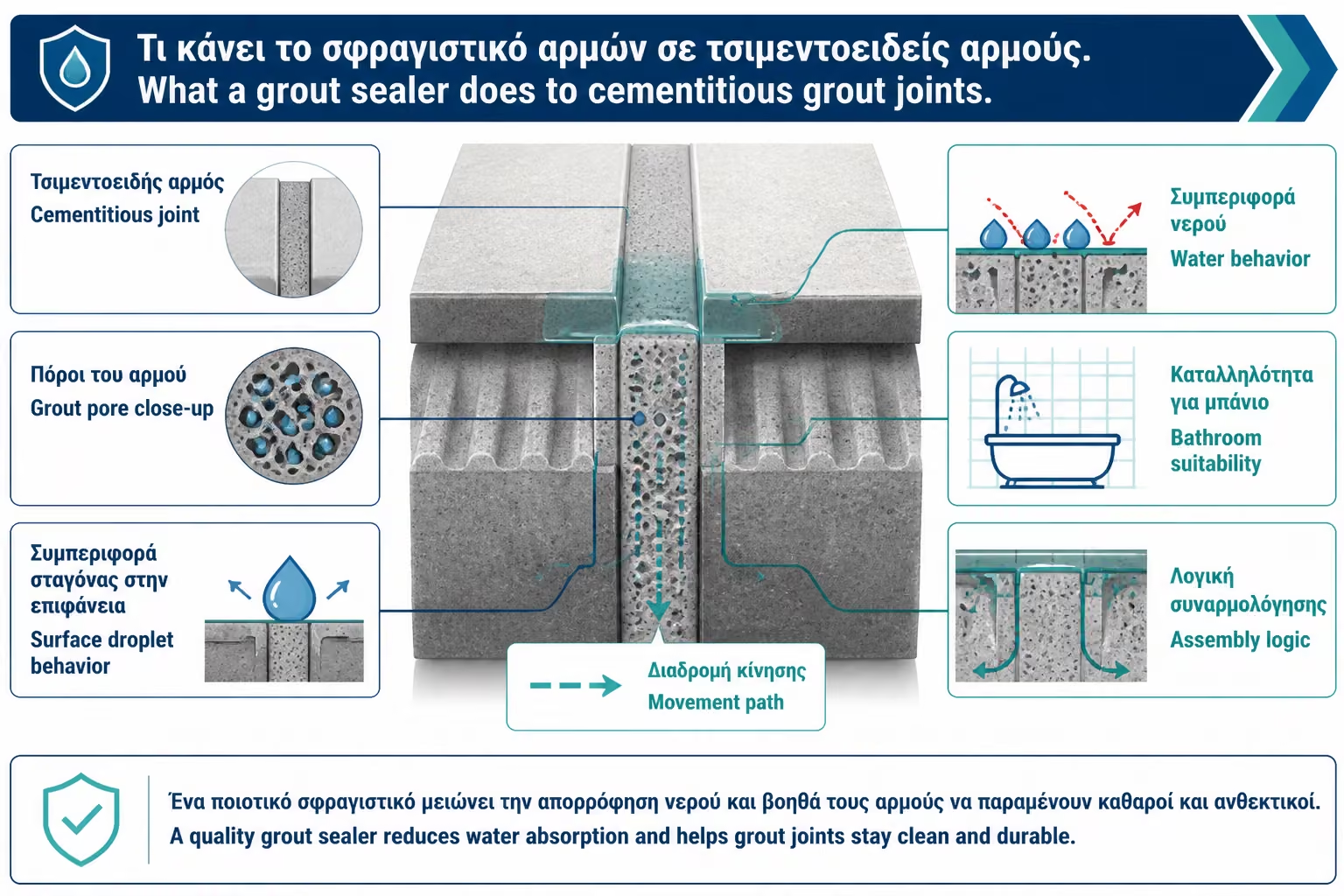
This is where grout sealers come in, i.e. special joint protection liquids. These are usually transparent, penetrating or surface protectants applied to cementitious joints to reduce water and dirt absorption. They do not necessarily change the appearance of the joint, do not act as varnish in all cases and do not replace grouting. It is maintenance and protection. Mapei describes UltraCare Grout Sealer as a water-based penetrating sealer that protects sanded and non-sanded cement grout joints from the most common stains and can also be used as a pre-grouting sealer.
Their main value is that they extend the life and clean image of cement joints. FILA Grout Sealer is listed as a product that seals and protects all joints, prevents water and stain absorption, does not alter the color of the joint and is suitable for indoor and outdoor use. This is especially useful in bathrooms, kitchens, floors, showers, mosaics and places where the cement joint has daily contact with moisture.
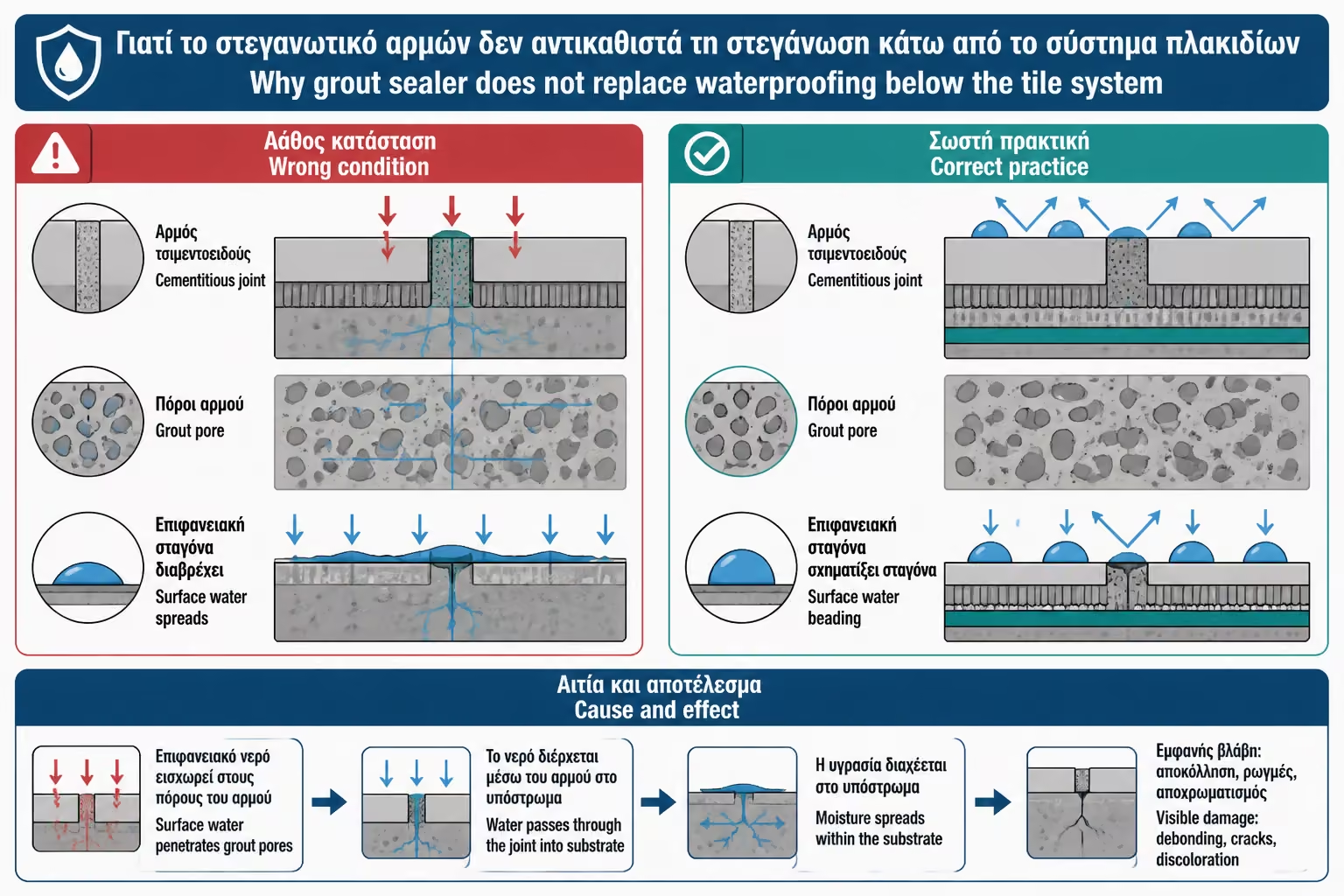
But a critical clarification is needed: grout sealer does not make the joint "absolutely waterproof" in the sense of waterproofing. It significantly reduces absorption and makes the joint more resistant to stains, water and dirt. It does not replace the waterproofing under tiles, it does not repair cracks, it does not close open joints, and it does not convert a cement joint to an epoxy. Miracle Sealants, for example, describes tile, stone & grout sealer as an invisible water-based sealer that resists water absorption and provides basic stain protection, but this remains a surface/pore protector, not a complete waterproofing system.
In this guide we will look at when grout sealer is needed, which joints should be sealed, which should not be sealed, how to apply it correctly, when to reapply, what to look out for in natural stone and why proper joint maintenance is often cheaper than repairing them.
Grout sealer is a protective liquid for joints. It is applied after the cementitious grout has fully cured and penetrates its pores or creates a thin protective zone on the surface, depending on the type. Its aim is to reduce the absorption of water, stains and dirt.
Most modern grout sealers are transparent and do not noticeably change the color of the joint. There are water-based, solvent-based, penetrating, impregnating and topical products. For bathrooms, penetrating or impregnating products that do not create a shiny film on the surface are usually preferred, because the joint must remain natural and not peel off.
The important thing is that the sealer works on a healthy joint. If the joint is cracked, loose, deeply blackened or has gaps, it is first repaired or replaced. The sealer is not putty and does not fill damage.
Cementitious grout, even when of good quality, has a porous nature compared to tile. This means that it can accept moisture and dirt. In a bathroom, these loads are everyday: water from the shower, soaps, shampoos, salts, cleaners, steam and dust.
When the joint absorbs water, it not only gets dirty more easily. It can also stay wet longer, which favors dirt and surface mold, especially in poor ventilation. Sealer reduces this absorption, so the joint dries more easily and cleans up faster.
Not all modern grouts need to be sealed. Some CG2 WAs already have water-repellent technology. But on floors, old joints, showers, light colored joints or joints that get dirty easily, sealer can give a great practical improvement.
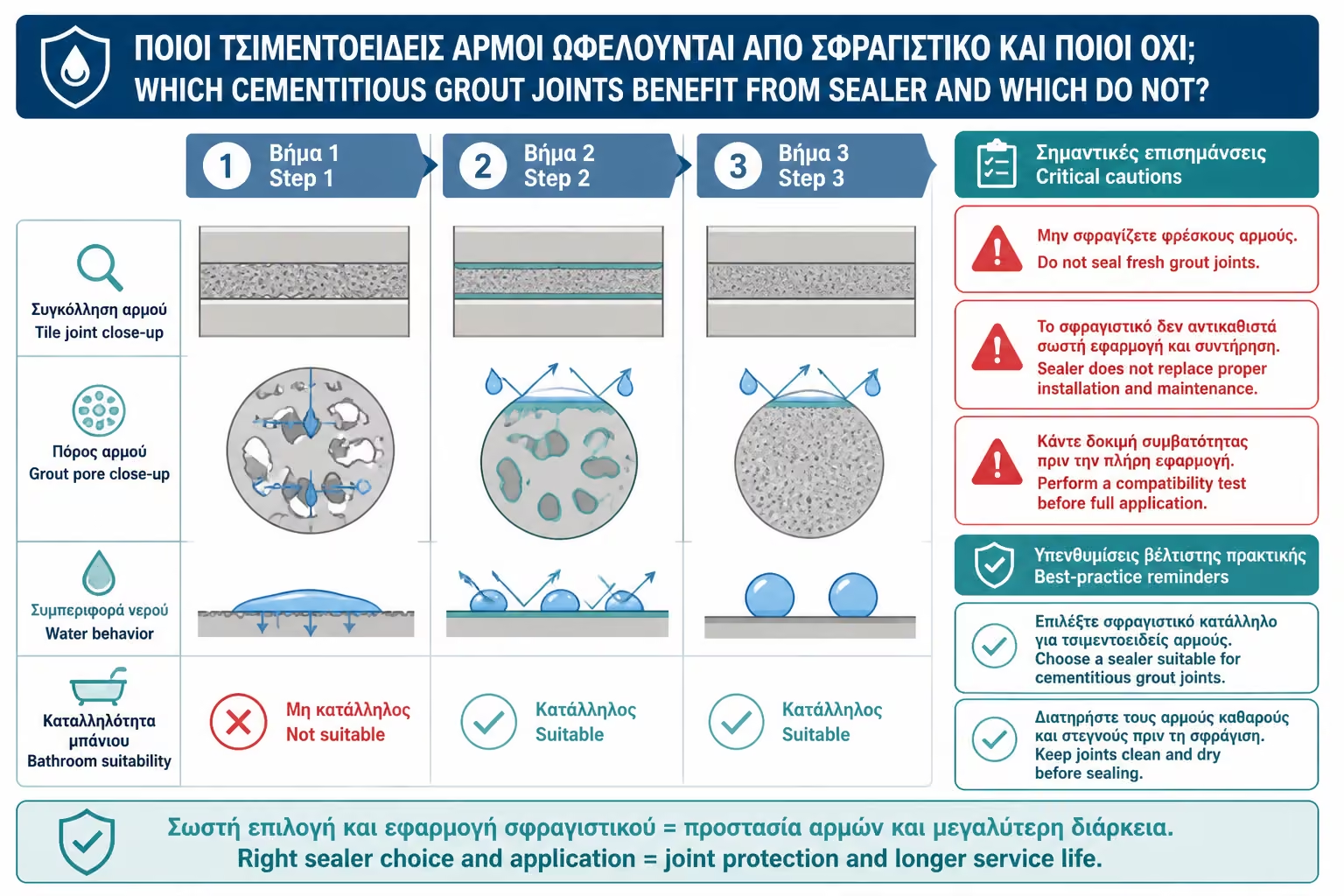
Cementitious joints are prime candidates for sealer. Especially older or plain grout, light colored joints, floor joints and shower joints can benefit greatly. Sanded and non-sanded cementitious grout joints are specifically mentioned as an application for products such as UltraCare Grout Sealer.
Joints in kitchens, especially near counters, sinks and floors, also benefit because they accept oils, foods and cleaners. Outdoors, the sealer can reduce water and dirt absorption, although its lifespan is more affected by sun, rain and temperatures.
In a bathroom, the most critical zones are the floor, the shower, the area around the bathtub, the light colored joints and the mosaics, where there is a much larger total joint surface.
Epoxy grouts do not usually require a grout sealer. They are already very low absorption and non-porous compared to cementitious ones. If you apply sealer over an epoxy joint, it probably won't absorb properly and may leave a film.
Also, some modern high-performance cementitious grouts with water-repellent technology may not require direct sealing or may only require it in special applications. This must be confirmed by the technical brochure. If the manufacturer says no sealer is required, we don't automatically put it on.
We also do not seal dirty joints. If the joint has stains, mold or salts, it is first cleaned and dried. If you seal the dirt in, you trap it and it can become permanent.
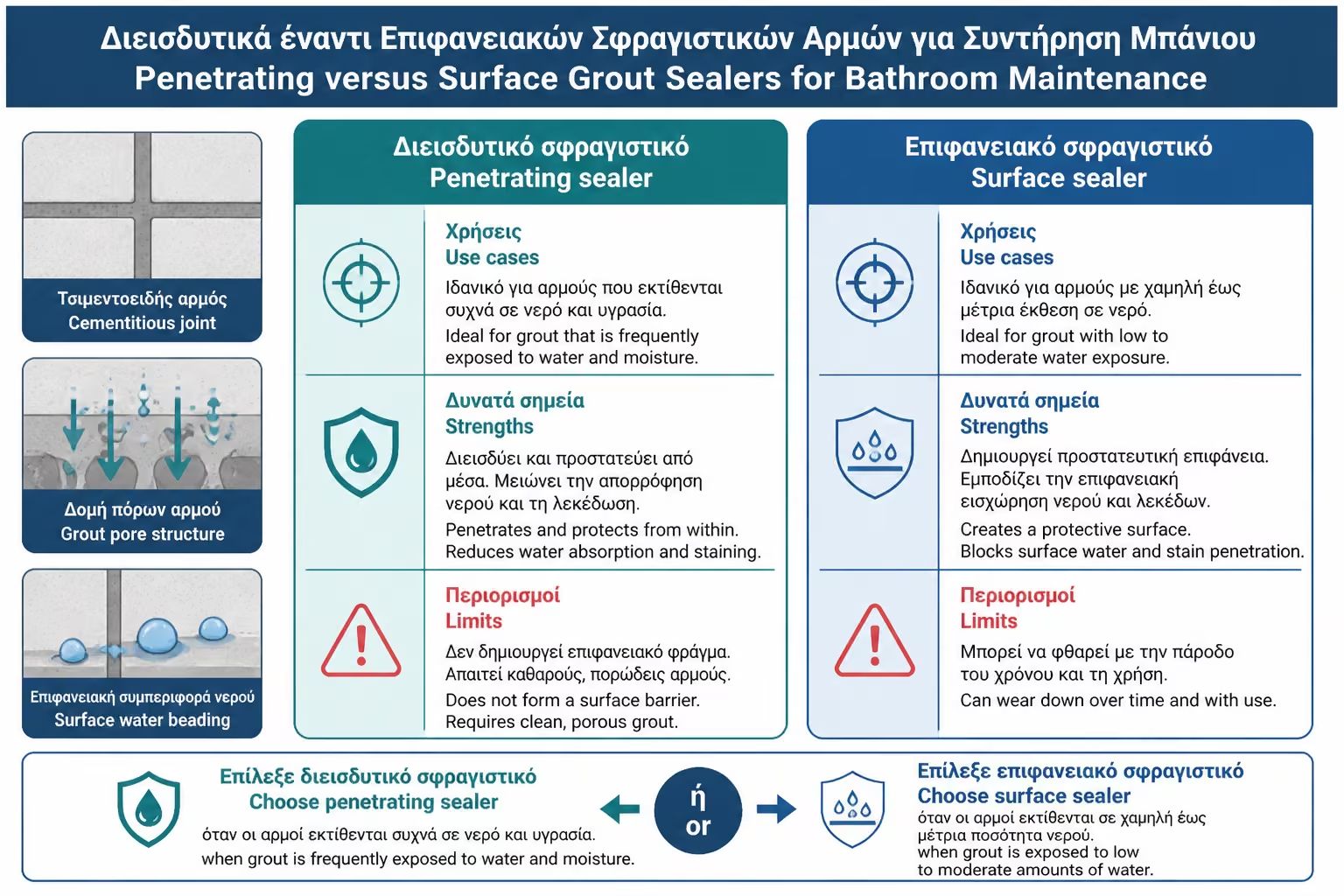
Penetrating sealers enter the pores of the joint and reduce absorption without creating a visible layer on the surface. They usually leave a natural look and are a good choice for bathrooms, floors and joints that we don't want shiny.
Surface sealers create more film. They can give intense protection in some applications, but in the bathroom they can peel, trap moisture or change the texture of the joint if they are not suitable. For this, in bathroom joints, we usually prefer breathable penetrating sealers.
Mapei states for UltraCare Penetrating Plus Stone, Tile & Grout Sealer that it leaves the surface unchanged in appearance, is breathable and does not peel or darken the tile or joint. This logic is especially useful when we want protection without visible change.
Water-based sealers have lower odor, easier application and are often friendlier for indoor use. It is a very common choice for domestic bathrooms and concrete joints. Mapei's UltraCare Grout Sealer, for example, is a water-based penetrating sealer.
Solvent-based sealers can penetrate deeper into some materials or behave differently on natural stone, but they have a stronger odor, require better ventilation and more care. They are not necessarily best for every bathroom. It depends on the joint, the tile and the use.
In a residential home, especially a small bathroom without a good window, a good water-based sealer is usually a more practical choice, as long as it is suitable for the joint and the level of protection we want.
This is perhaps the most important point. Grout sealer reduces joint absorption. Does not seal the shower. It is not a substitute for cementitious waterproofing, membrane, corner tapes, proper siphon connection or proper construction behind tiles.
If a shower has poor waterproofing, water can pass through corners, cracks, silicones, gaps, siphons or minor failures. Sealer can delay absorption in the joint, but does not make the construction safe. It is maintenance protection, not technical waterproofing.
If there is an active leak, mold behind tiles, swollen plaster or moisture in an adjacent room, it is not solved with a sealer. Needs diagnosis and repair.
In a new cement joint, the sealer is applied only after the joint has fully cured according to the manufacturer's instructions. If applied too early, it may trap moisture, affect ripening, or not absorb properly.
Waiting time varies by product and conditions. Some guides report that the joint may need anywhere from 48 hours to several days or weeks before sealing, depending on the grout and sealer. In general tile maintenance guides it is pointed out that the grout must cure before sealing and that the time may vary by manufacturer.
Practically, we don't grout today and hastily seal tomorrow without knowing the instructions. We wait, clean any joint smoke, let the surface dry and then apply sealer.
In an old joint, cleaning is done first. Soaps, salts, grease, mold, old cleaners and possible coatings are removed. The joint must be dry and clean before sealing. If it has stains, these must be treated first. If the joint is loose, it must be removed and redone.
After cleaning, let the joint dry thoroughly. In a shower that is used daily, this may mean not using it for several hours or more, depending on the humidity. If you seal a joint that is still wet, the sealer will not work properly.
Sealer on an old joint can make a big difference in the ease of cleaning, especially if the joint is still healthy but has started to absorb water and dirt.
The water droplet test is a simple way to see if a joint is absorbent. Pour a few drops of clean water on the joint. If the water is absorbed quickly and the joint darkens, it needs protection or repeat sealer. If the water remains as a drop on the surface for a sufficient time, the protection works.
The Spruce's general guide states that if a few drops of water cause the joint or tile to darken or change color, it's probably not sealed; if they stay the same, there may already be sealer.
This test is not a scientific measurement, but it is very useful for owners. It can be done once a year on a shower or bathroom floor to see if the protection needs renewal.
The application is done on a clean and dry joint. The sealer is applied with a brush, special applicator, sponge, fine roller or spray, depending on the product. Some products are specifically for spraying, such as aerosol grout sealers. Others want a more controlled application on the joint line.
The critical thing is not to let excess dry on the tile, especially if the tile isn't absorbent. Aqua Mix, in a penetrating sealer application guide, states that you should always test on a small area, apply the sealer with a suitable applicator, leave the surface wet for a few minutes and then wipe completely dry with a clean towel or microfibre, without allowing the sealer to dry on the surface.
If the sealer dries on glazed or porcelain tile, it can leave a dullness or film that needs special cleaning. That's why we work in small zones and wipe up the leftovers immediately.
Many grout sealers are applied in one or two coats, depending on the absorbency of the joint. If the joint absorbs quickly, a second application may be necessary. If the first coat sits on the surface and is not absorbed, a second coat may be unnecessary and leave a film.
The decision is made based on the product instructions and the water drop test after ripening. We don't put a lot of hands with the logic "the more the merrier". Too much sealer can create a sticky or dull surface, especially if the joint does not absorb it.
In very porous old joints, two hands may be useful. In modern CG2 WA joint, less amount may be needed. Absorbency determines the application.
There is no fixed answer. Duration depends on product, cleaning, use, water, chemical exposure and whether the area is a shower, floor or plain wall. On floors and showers, the check should be done more often. On walls away from water, the duration may be longer.
Practically, in a domestic bathroom it makes sense to check once a year. If the water starts to absorb and the joint darkens, it needs renewal. If the water remains on the surface, the protection still works.
Renewal should not be done on a dirty joint. First cleaning, then complete drying, then sealer. If we simply apply new sealer over old soaps and salts, we close the dirt.
The shower is the most demanding application. There, the joint gets wet every day, receives hot water, soaps and salts. A grout sealer can go a long way in protecting cement joints, but it must be combined with proper waterproofing, proper slopes and good ventilation.
Sealer should not be applied to a shower that has an active moisture problem or black joints without cleaning. First we check the situation. If the joint is loose or has cracks, it is rejoined. If the silicones in the corners are blackened or open, they are replaced. Then the healthy joint is protected.
On a tile or shingle shower floor where there is a lot of jointing, sealer can make a big difference, but maintenance is more frequent.
If the bathroom has natural stone, the matter becomes more complex. Not only the joint but also the stone may need sealer. Marble, travertine, limestone, porolite and natural pebbles are porous or sensitive materials. In such cases we choose stone, tile & grout sealer compatible with natural stone.
Mapei recommends UltraCare Penetrating Plus Stone, Tile & Grout Sealer for cement-based grouts, porous natural stone, clay tile, cement-based tile, quarry tile, brick and polished porcelain, with a natural appearance and breathable behavior.
A test should always be done on natural stone, because some sealers may slightly darken the stone or change the appearance. Also, on stones that already have a sealer, compatibility must be checked before adding a new product.
A good sealer should not change the color of the joint, unless it is a colour-enhancing type. Most bathroom grout sealers are designed to leave a natural look. FILA Grout Sealer mentions as an advantage that it does not change the color of the joint.
However, testing should always be done. In very light or very dark joints, even a small change can be seen. On old joints, the sealer can make the surface appear temporarily darker during application, but after drying it usually returns if the product is natural looking.
If the goal is to renew the color of an old joint, sealer is not the right solution. There are grout colorants or re-grouting. The sealer protects, not stains.
After sealer application, the joint is easier to clean, but it needs proper cleaners. Very aggressive or acidic products may reduce the duration of protection. Daily maintenance should be done with mild cleaners suitable for tiles and joints.
In natural stone, we avoid acidic cleaners, vinegar and harsh anti-salts if they are not stone-safe. On porcelain tiles, things are easier, but the joint and sealer can be affected by frequent use of strong chemicals.
The correct practice is gentle cleaning often, not infrequent aggressive scrubbing. The sealer helps the dirt not go deep, but does not make the joint self-cleaning.
Use the table below as a quick reference for the key points of this section.
| Case | Does it need a sealer? | Comment |
|---|---|---|
| Simple cement joint in a bathroom | Usually yes | Improves resistance to water and dirt |
| CG2 WA water repellent joint | It depends | May not be needed immediately, check brochure |
| RG epoxy joint | Not usually | It is already very low absorption |
| Light colored floor joint | Yes, often useful | Keeps a clearer image |
| Shower joint | Yes, if it is cementitious | It does not replace waterproofing |
| Joint in natural stone | Usually yes | The stone may also need sealer |
| Old stained joints | Only after cleaning | Do not cover stains with sealer |
| Loose / cracked joints | Not before the repair | First reassembly |
The sealer is only applied to a healthy and clean joint.
Use the table below as a quick reference for the key points of this section.
| Step | what are we doing | Why |
|---|---|---|
| 1. Joint check | We see if it is healthy, without cracks | Sealer does not repair damage |
| 2. Cleaning | We remove salts, soaps, mold, dirt | We don't seal dirt |
| 3. Drying | Let the joint dry completely | Moisture reduces effectiveness |
| 4. Testing | We apply in a small spot | We check color and compatibility |
| 5. Application | Apply sealer with an applicator or brush | Controlled quantity at the joint |
| 6. Waiting | Let it penetrate as much as the manufacturer says | To protect resources |
| 7. Wipe off excess | Do not let sealer dry on the tile | Avoid film/fog |
| 8. Second hand if needed | Only if the absorbency requires it | Do not over apply |
| 9. Ripening | We do not rain before the instruction time | To develop protection |
If the excess is omitted, a new problem can arise: dullness on the tiles.
In the Greek market of 2026, grout sealers are relatively affordable materials in relation to bathroom renovation costs. The price depends on the brand, the packaging, whether it is water-based or solvent-based, whether it is only for grout or for stone, tile & grout, and consumption. For a typical bathroom, the amount required for joints is usually not large, unless there are many mosaics or small tiles.
Work can be more important than material. Proper cleaning, drying, precise application and wiping off excess takes time. On old joints, cleaning before the sealer can cost more than the application itself.
However, periodic protection is often much cheaper than a complete reassembly. If the joints are still healthy, sealer is cost-effective preventive maintenance.
The first mistake is to apply sealer on a dirty joint. This is how we close the dirt.
The second mistake is to use sealer as a solution to cracked or loose joints. It needs repair there.
The third mistake is allowing excess sealer to dry on the tile. May create blur.
The fourth mistake is to seal natural stone without testing. The appearance may change.
The fifth mistake is the belief that the sealer seals the shower. He doesn't.
The sixth mistake is to never renew. The protection wears off with use and cleaning agents.
Use the table below as a quick reference for the key points of this section.
| Question | Yes / No |
|---|---|
| Is the joint cementitious and not epoxy? | Yes / No |
| Is the joint healthy, without cracks and gaps? | Yes / No |
| Has it been cleaned of salts, soaps and mold? | Yes / No |
| Is it completely dry before application? | Yes / No |
| Is the sealer suitable for cement grout? | Yes / No |
| If there is natural stone, is it compatible with stone surfaces? | Yes / No |
| Has it been tested on a small spot? | Yes / No |
| Will the excess be wiped off the tile? | Yes / No |
| Will the curing time be met before water falls? | Yes / No |
| Do you know when the water drop test will be rechecked? | Yes / No |
If the answers are “yes”, grout sealer can work properly as a preventive protection.
Joint sealer is an excellent maintenance tool, but only on a clean, dry and healthy cement joint. Do not use to hide mold, cracks or loose joints. Clean first, let dry, test and always wipe off the excess before it dries on the tile. In a shower, sealer helps keep the joint from absorbing water and dirt, but does not replace sealing under the tiles. It's maintenance, not leak repair.
Maintaining and waterproofing cement joints with grout sealers is a practical way to extend the life and clean image of the bathroom. Sealers reduce the absorption of water, stains, oils, soaps and dirt, making joints easier to clean and less susceptible to dark spots.
But it's not a magic seal. They don't repair cracks, fix loose joints, replace epoxy grout, or fix shower leaks. To work properly, they need a clean and dry surface, proper application, wiping off excess and periodic inspection.
For the homeowner, the smartest strategy is prevention: good grout from the start, proper cleaning, sealer where needed, and an annual check with a few drops of water. Thus the joints do not become the weak point of the bathroom, but remain functional, clean and aesthetically correct for much longer.
Return to category.
Go to categoryReturn to the central guide.
Go to guide