🌊 Path of least resistance
The law of fluid dynamics is clear: water always follows the path with the least friction. In an unregulated network, water floods the first radiators and starves the last ones dry.
The boiler is running, the circulator is pumping - but the radiator in the back bedroom stays lukewarm while the one in the living room is scalding hot. The culprit isn't the boiler; it's a fundamental law of fluid mechanics.
Hydraulic Balancing is the art (and science) of forcing water to distribute evenly to every radiator, eliminating cold rooms, fuel waste and annoying whistling noises.
Imagine the circulator pushes 100 litres of water into the network. Radiator 1 (closest to the boiler room) has a short pipe and low friction - 50 litres immediately rush in. Radiator 5 (15 m of pipe, 10 elbows, massive friction) receives just 5 litres.
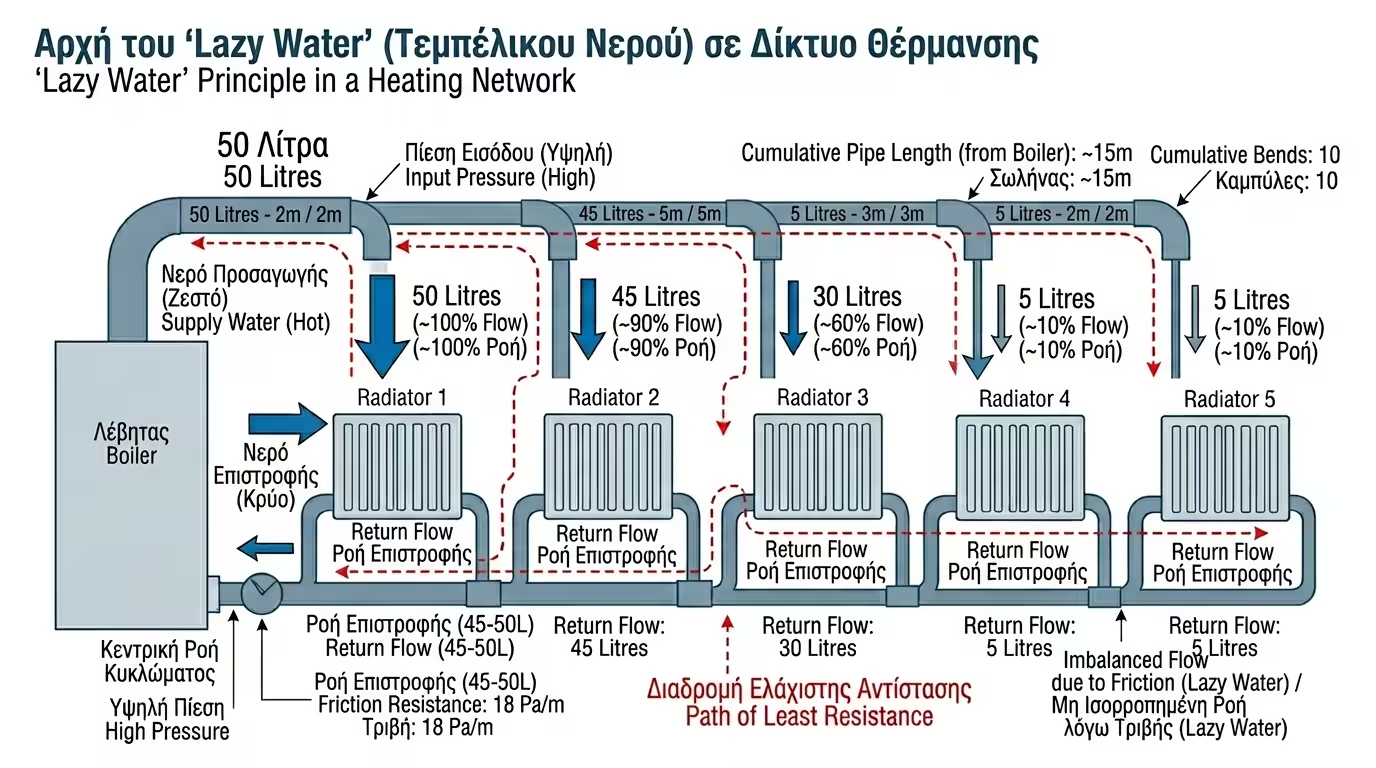
The law of fluid dynamics is clear: water always follows the path with the least friction. In an unregulated network, water floods the first radiators and starves the last ones dry.
Every metre of pipe, every elbow and every T-piece adds pressure drop. The furthest radiator sees enormous total resistance while the nearest sees almost none - with disastrous distribution consequences.
In a typical house with 5 radiators: 1st = 50 L, 2nd = 30, 3rd = 10, 4th = 5, 5th = 5. The thermostat in the living room (1st) sees warmth, shuts the boiler off, and the child's room at the back is still freezing.
This condition is called an unbalanced network. It's not the boiler's fault, nor the circulator's - it's physics. The answer isn't more powerful equipment, but proper regulation.
The logic is brilliantly simple: since water "wants" to rush to the nearest radiator, we deliberately make it difficult. We throttle flow on the closest radiators and leave the furthest ones wide open. Result: equal resistance everywhere, even distribution.
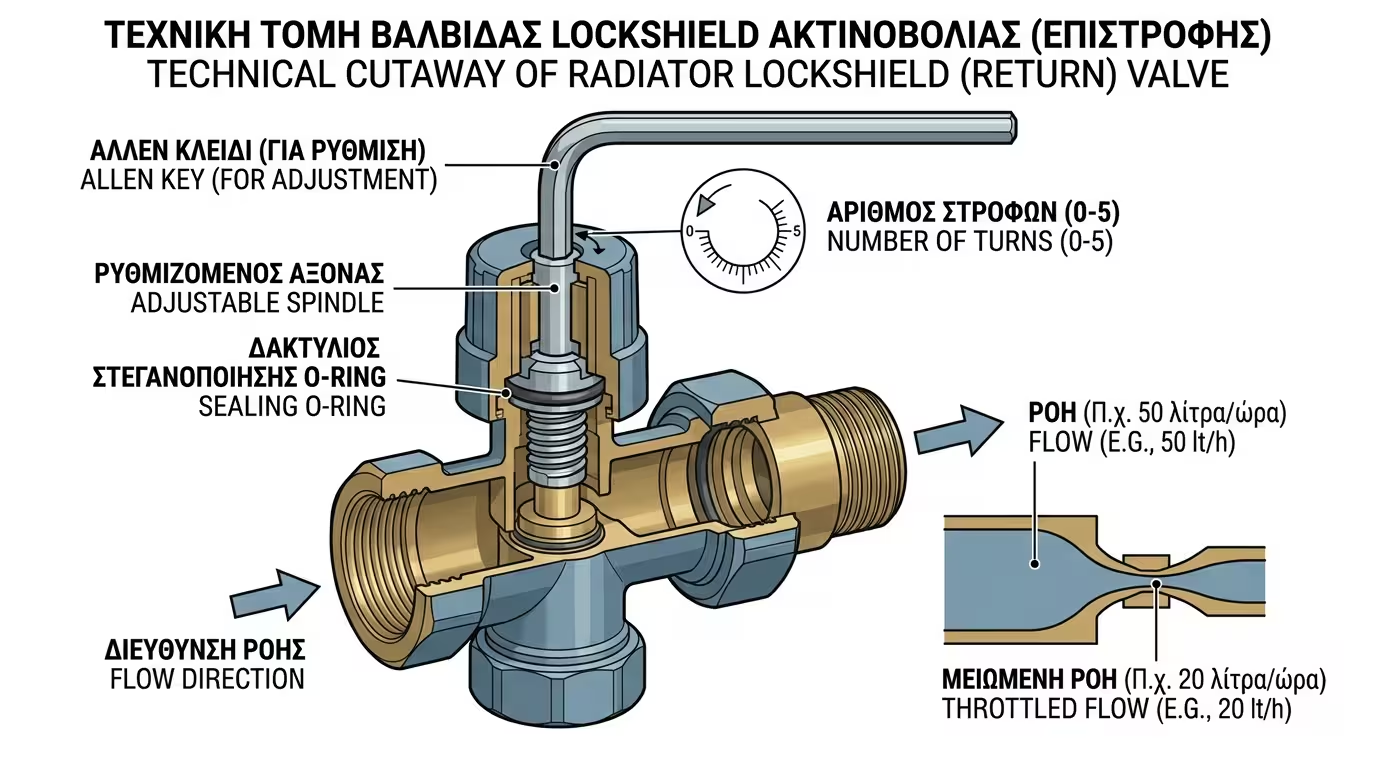
Every panel or column radiator has a lockshield valve (return valve) at the bottom. Using an Allen key, the plumber throttles the nearest radiators a few turns while leaving the furthest ones fully open.
By adding resistance to the 1st, less to the 2nd and none to the 5th, we artificially equalise all resistances. Water, now seeing identical difficulty everywhere, is forced to share evenly across every room.
In hospitals or hotels with hundreds of fan coil units, specialised PICV valves regulate flow automatically and dynamically - regardless of network pressure changes, with zero human intervention required.
After balancing, every radiator receives exactly the litres it needs. The entire house heats up simultaneously, the thermostat operates correctly and the boiler stops at the right moment.
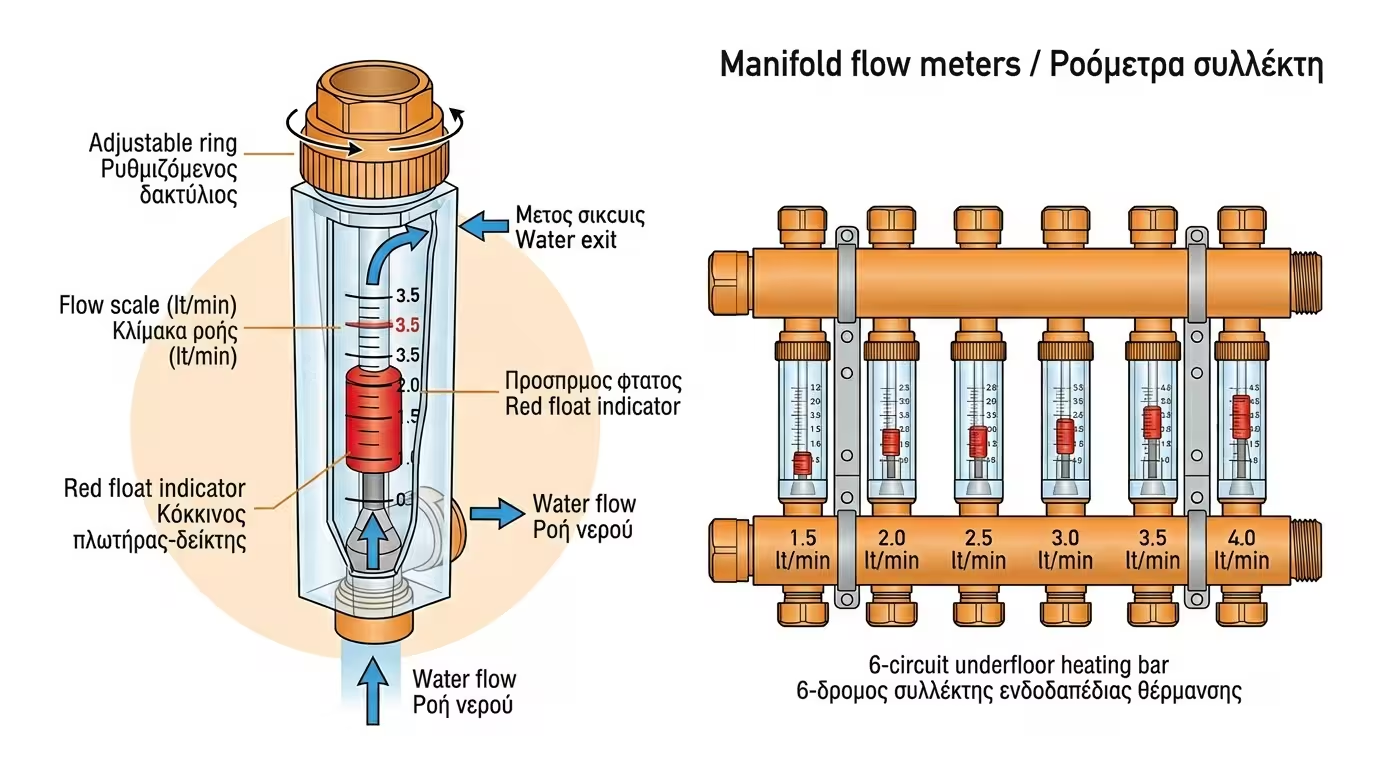
In modern systems (especially underfloor heating), regulation is no longer done blindly. On the manifold, each loop has a flow meter (rotameter) - a small transparent tube with a red float that displays in real time how many litres per minute are flowing.
When heating starts, the red float is pushed down. The scale shows exactly how many lt/min enter each room: 3.5 lt/min for the living room, 1.5 lt/min for the small bathroom. You see everything in real time!
If the engineer sees the bathroom stealing 4 lt/min instead of 1.5, they simply turn the plastic ring by hand. The float rises, flow decreases, and the surplus water automatically redirects to the remaining rooms.
Unlike the empirical "blind" adjustment (Allen key on the lockshield), rotameters provide measurable, repeatable and visual hydraulic balancing - the standard in every modern system.
In underfloor heating, each room has a different loop length (e.g. 50 m for the living room, 20 m for the WC). Without rotameters, balanced distribution is practically impossible - making them indispensable.
An unbalanced network doesn't just mean one cold room. You're losing significant money every month, prematurely wearing out equipment and living with annoying noises. Balancing solves all three simultaneously.
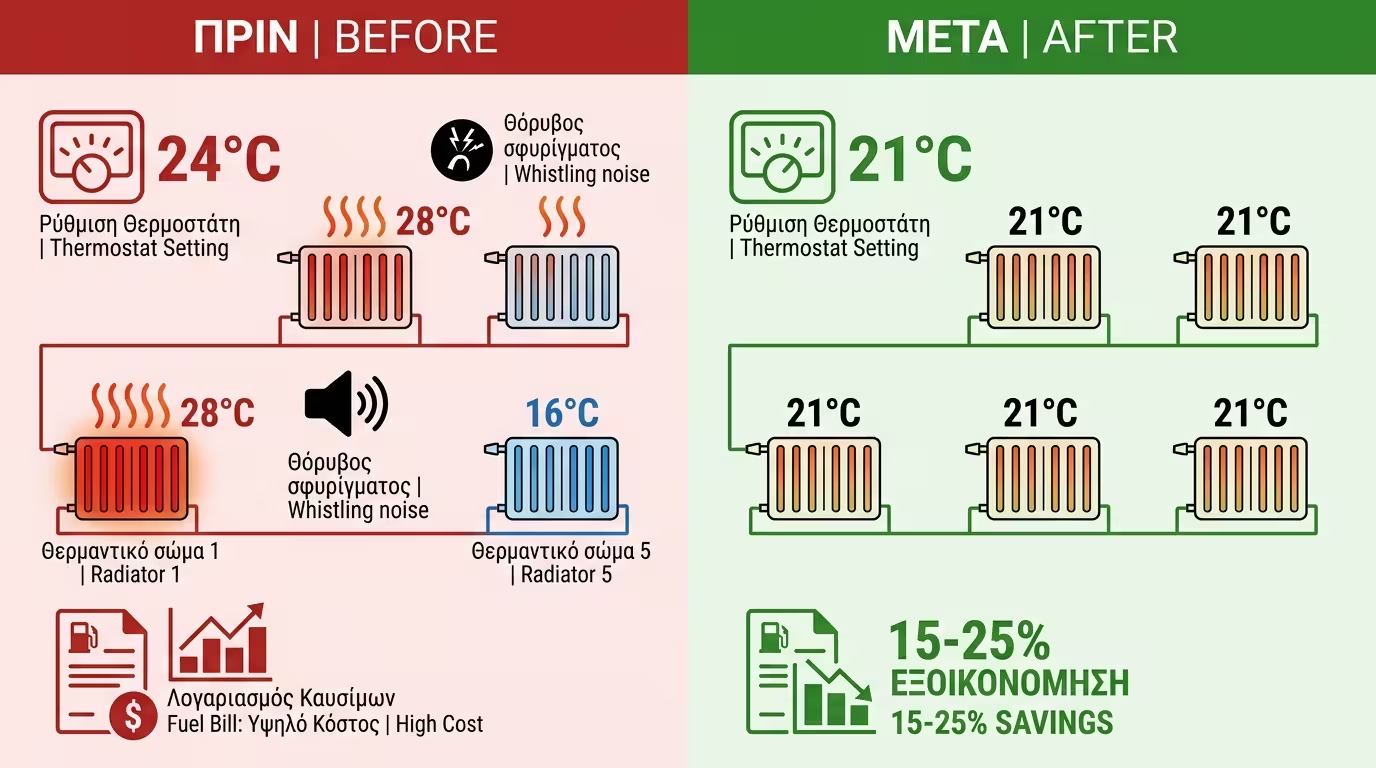
To warm the cold child's room, you push the thermostat to 24°C - overheating the living room needlessly. Balancing eliminates this waste, reducing your heating bill by 15-25%.
When 80% of water forces through the nearest radiator, velocity skyrockets. The result: an annoying whistling inside the radiator. With proper balancing, flow calms down and the noise disappears completely.
A circulator running outside its optimal operating point (sharp pressure drop from excessive near-side flow) consumes more electricity and drastically reduces its lifespan.
If you have rooms that take ages to warm up, don't replace the boiler. Ask your plumber for a basic balancing of the lockshield valves. The comfort difference will be noticeable from day one.
💡 Only hydraulic balancing can make a "mediocre" boiler perform like a top-tier one. Conversely, even the best boiler fails if the network behind it isn't balanced.
Return to category.
Go to categoryReturn to the central guide.
Go to guide