🔴 Supply bar
Hot water from the heat pump or boiler enters here and distributes to each loop through independent outlets. Each outlet corresponds to a single room or zone.
In modern homes, heating operates on an "octopus" system: a central artery delivers hot water to a single point, and from there independent, uninterrupted pipes run to each room separately.
This "power strip" for water - the Manifold (Collector) - is not just a pipe with holes. It's a micro-regulation tool that transforms heating from guesswork into precise science.
Open the metal cabinet in your hallway and you'll see two horizontal metal bars (headers): the Supply Bar (red - hot water enters here) and the Return Bar (blue - cooled water returns here).
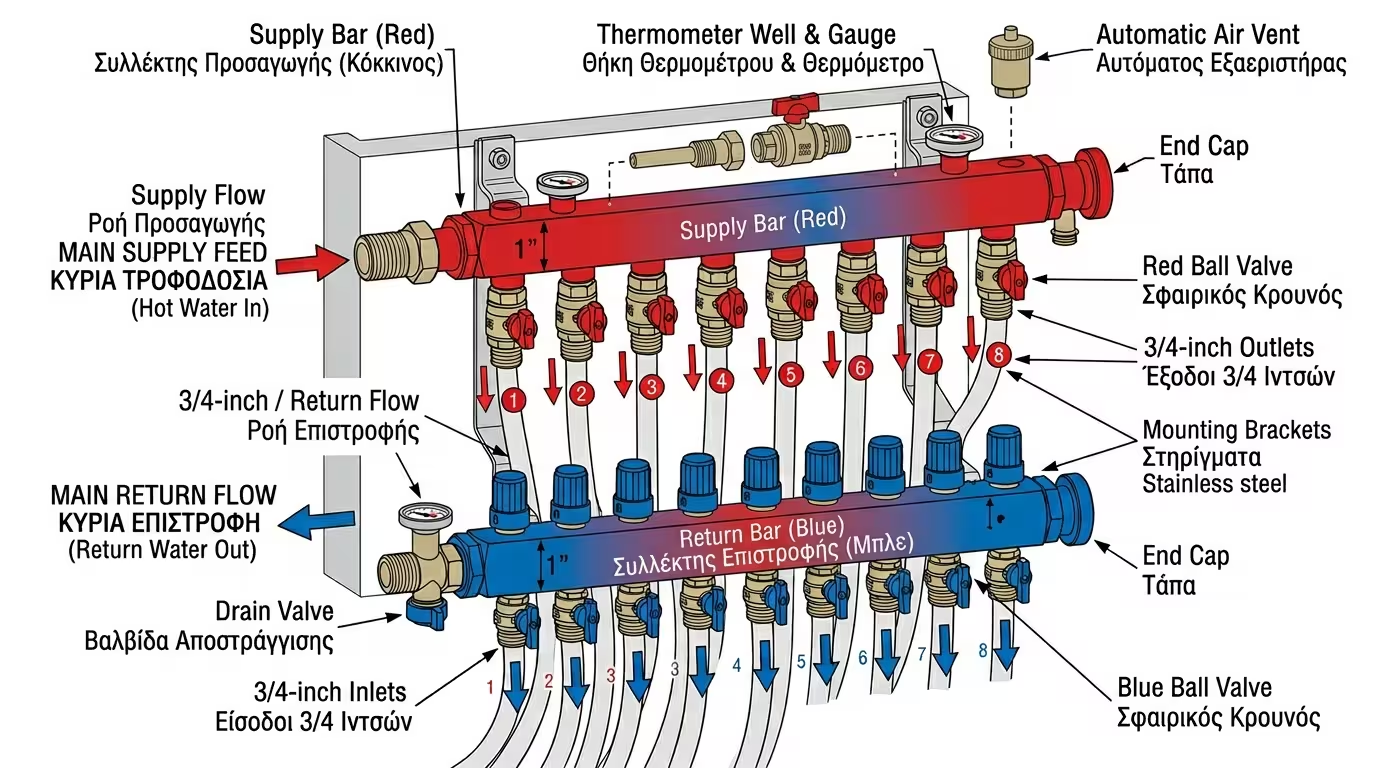
Hot water from the heat pump or boiler enters here and distributes to each loop through independent outlets. Each outlet corresponds to a single room or zone.
Cooled water returns here after releasing its heat inside the rooms. All returns merge into a single artery and head back to the heat source for reheating.
Each bar carries isolation valves, drain taps and - mandatory - automatic air vents at the ends where trapped air accumulates.
The octopus layout eliminates hidden junctions inside walls. Every pipe runs unbroken from the manifold to the room, drastically reducing leak risk at concealed points.
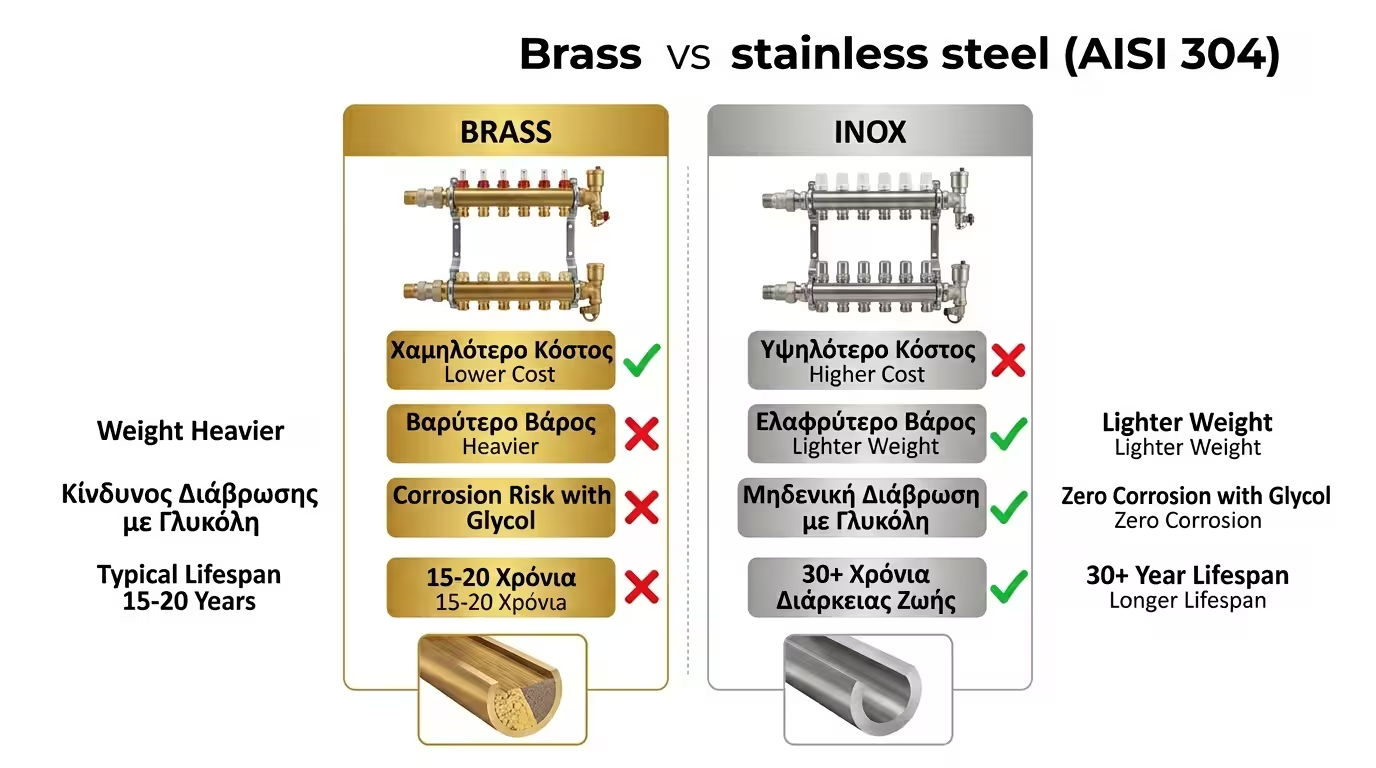
When it's time to buy, you'll face two main options: traditional brass and modern stainless steel (Inox). The difference goes far beyond appearance.
Proven over decades and relatively affordable. Being cast in moulds, it has thicker walls and a smaller internal bore. Handles pressure well, but is heavier.
Thin walls of hard-grade steel = larger internal diameter. Carries more water with less resistance - ideal for heat pumps and underfloor heating that demand very high flow rates.
Brass costs 30-40% less upfront. However in a heat-pump system, Inox's larger bore reduces pressure drop, saving circulator electricity over the long term.
For underfloor + heat pump: Inox without hesitation. For a conventional radiator system with an oil boiler: brass works fine - as long as it has flow meters.
With old radiators we balanced "blindly" using an Allen key. In modern systems, engineers use manifolds with flow meters: a transparent tube with a red float for each loop.
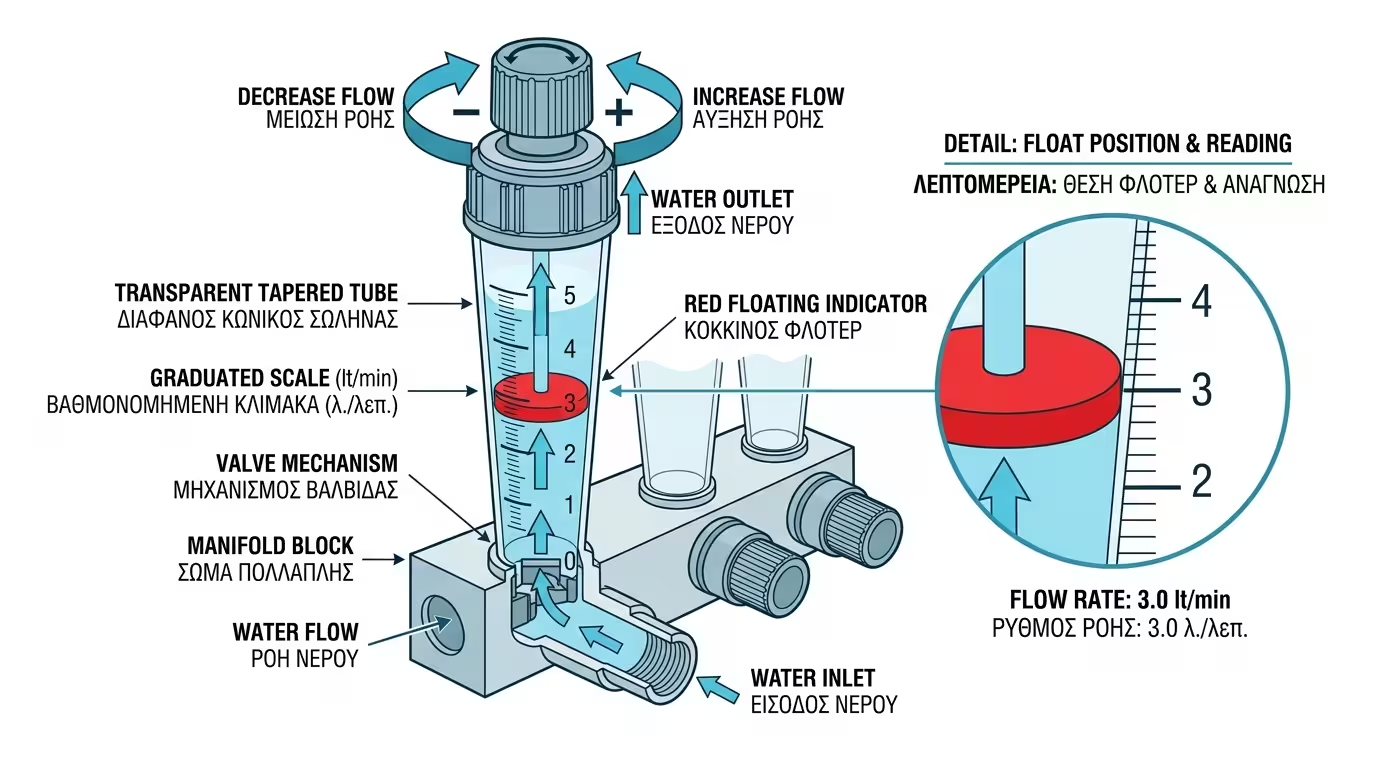
When water flows, the float is pushed down. The scale reads in lt/min exactly how much water enters each room - in real time. You instantly spot any loop "stealing" flow.
Turning the plastic ring throttles the flow for one loop. The float rises, the reading drops. Surplus litres redirect automatically to the other loops - perfect balancing.
Flow meters turned heating regulation from sensory experience into numerical science. The engineer sets the exact lt/min prescribed by the study - no guessing involved.
A manifold with rotameters costs marginally more than one without. But the ability to visually tune each loop saves hours of technician time and guarantees correct operation for life.
If you're supervising a renovation or new build, there are critical checkpoint items for manifold placement. A single installation error can mean kinked pipes, impossible maintenance, or trapped air.
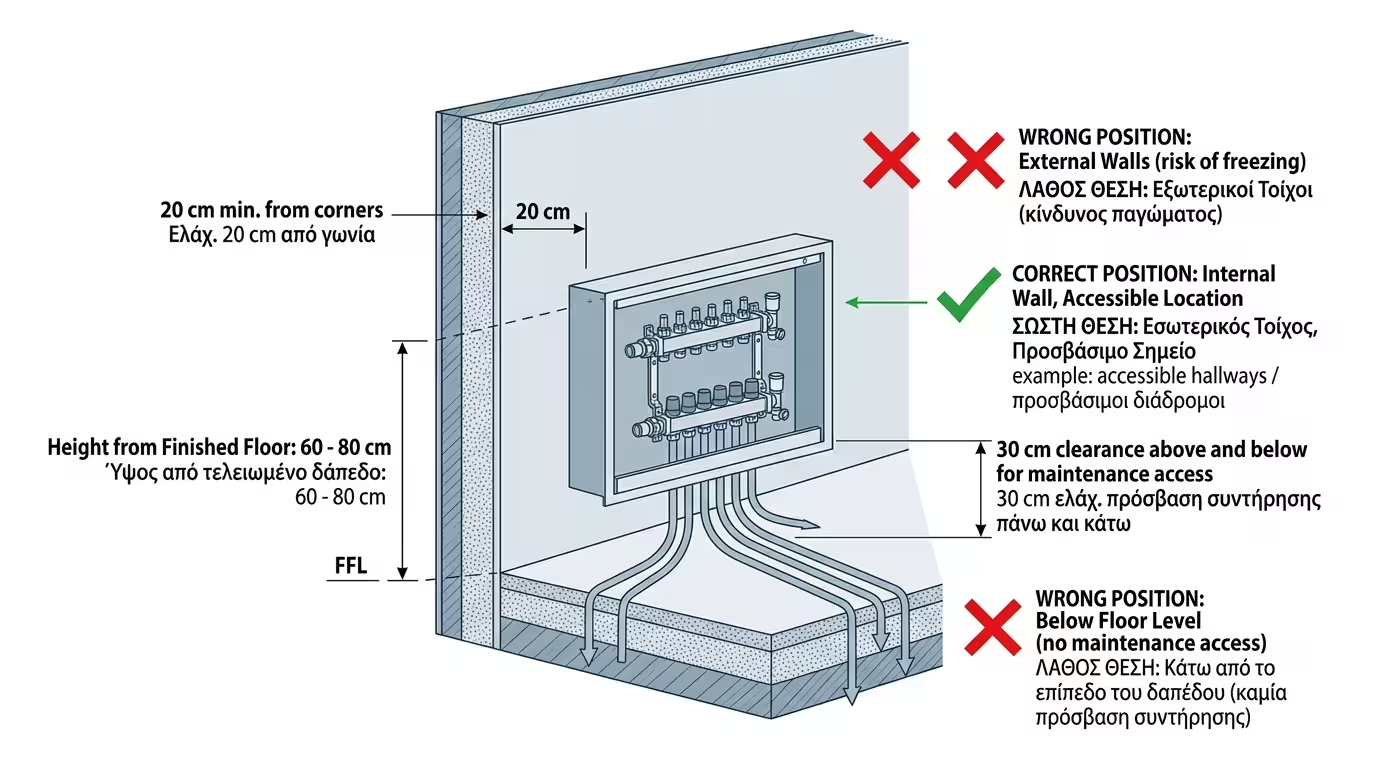
The cabinet must not sit flush with the floor. Leave at least 30-40 cm clearance (after tiling). If too low, PEX pipes can't bend properly to connect - they'll kink.
The two bars (red, blue) need adequate gap between them. If touching, a technician cannot fit a wrench or replace a valve without dismantling the entire manifold.
An automatic air vent is mandatory at each bar end. The manifold is the highest point of the horizontal network - that's where trapped air collects.
The cabinet door must open fully, unobstructed by room doors or furniture. Every year the technician needs access for bleeding, draining, or replacing thermostatic heads.
💡 Whether you choose Inox or brass, having flow meters on your manifold is the best investment. It guarantees that every room receives exactly the heat you're paying for.
Return to category.
Go to categoryReturn to the central guide.
Go to guide