📐 The problem
In a direct-return layout, the nearest radiator has a short circuit (there and back) while the furthest has a massive one. This inequality demands balancing valves - meaning time, cost and maintenance.
What if you could achieve hydraulic balancing without valves, without adjustments, without rotameters - just through the way you design the pipework?
That's the Tichelmann principle (Reverse Return): a geometric trick that automatically equalises the pipe lengths of every circuit - and with them, the resistances.
In a conventional system, the supply starts at the boiler, passes radiator 1, then 2, then… The return starts from radiator 1 back to the boiler. Result: radiator 1 sees 2 metres of pipe (closest) while radiator 5 sees 20 metres.
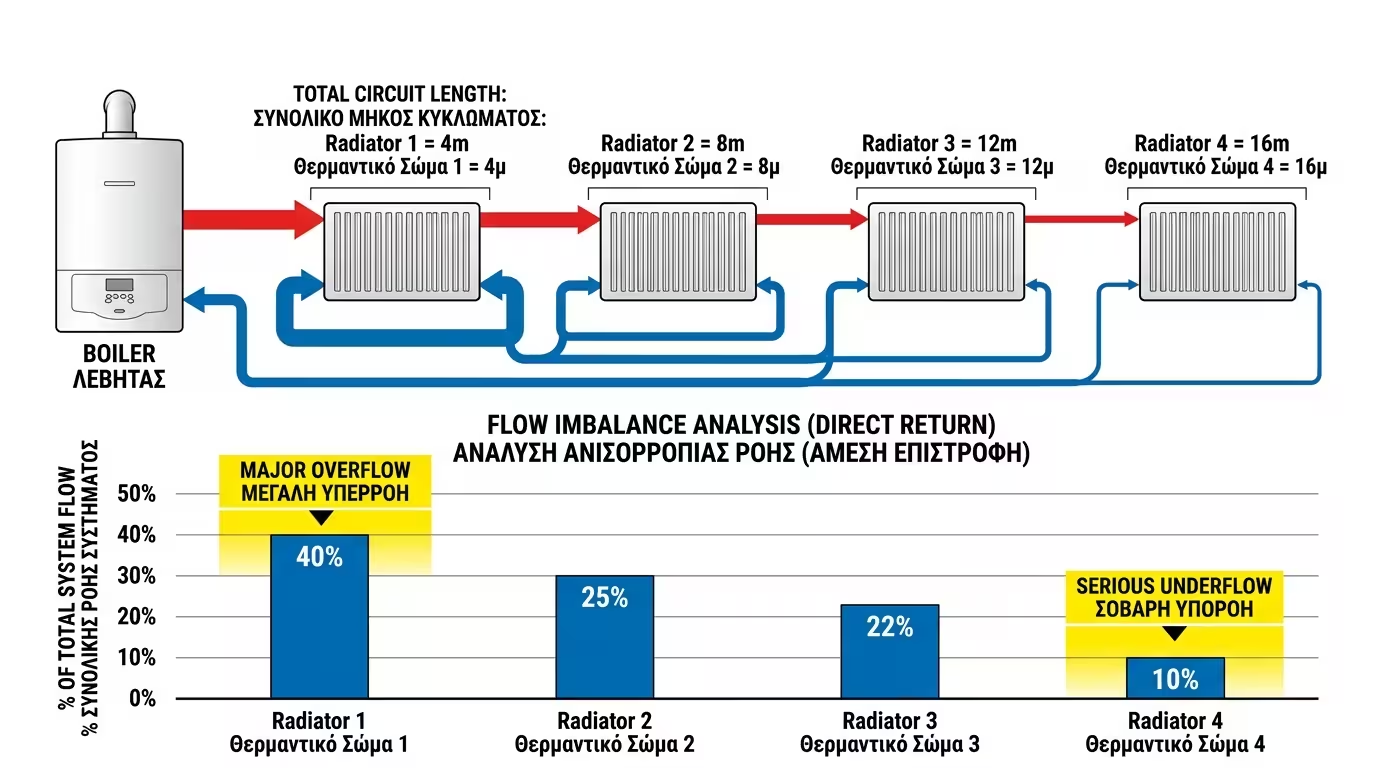
In a direct-return layout, the nearest radiator has a short circuit (there and back) while the furthest has a massive one. This inequality demands balancing valves - meaning time, cost and maintenance.
Radiator 1: circuit 4 m. Radiator 2: 8 m. Radiator 3: 12 m. Radiator 4: 16 m. Resistance grows linearly - flow drops exponentially. Without regulation, impossible to share evenly.
In every conventional network, the engineer must regulate each radiator individually: heavy throttling on the 1st, minimal on the last. If anything changes, the whole process starts over.
What if we could make all circuits geometrically equal? Would we still need valves? The answer is: barely. That's what Tichelmann does.
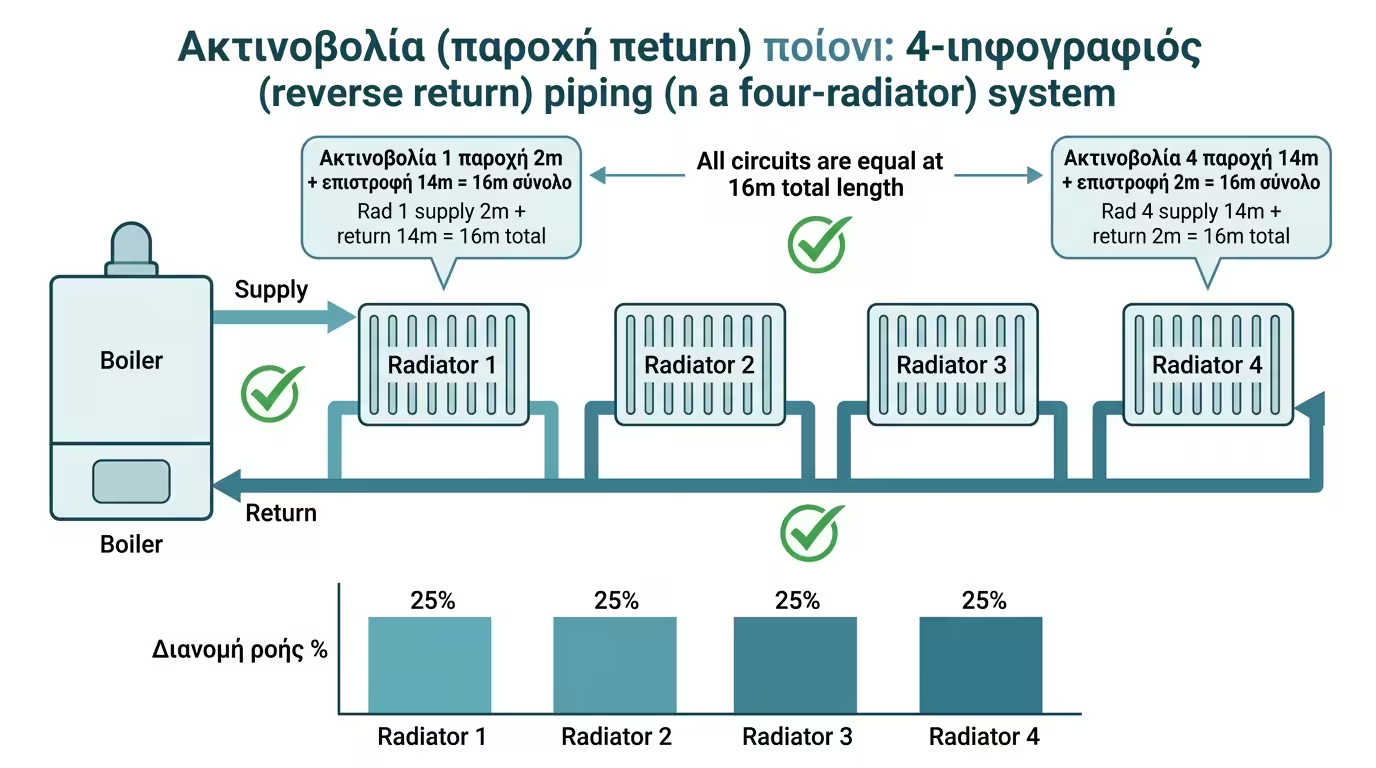
In the Tichelmann system, the return doesn't start from the 1st radiator - it starts from the last. The return pipe runs in reverse: the last radiator is the first to return water.
Radiator 1 (first on supply) = last on return. Radiator 4 (last on supply) = first on return. Result: short supply + long return = same total length.
Radiator 1: supply 2 m + return 14 m = 16 m. Radiator 4: supply 14 m + return 2 m = 16 m. Equal circuit length for every radiator!
Since each circuit "sees" the same pipe length (= same friction), water automatically distributes equally without balancing valves. Geometry does the work on its own.
Even heating in every room, no commissioning needed, no balancing equipment, no future detuning. The balance "lives" inside the design itself.
Tichelmann isn't limited to radiators. It's used in any system where multiple elements connect in parallel and need equal flow - from solar panels to boiler cascades.
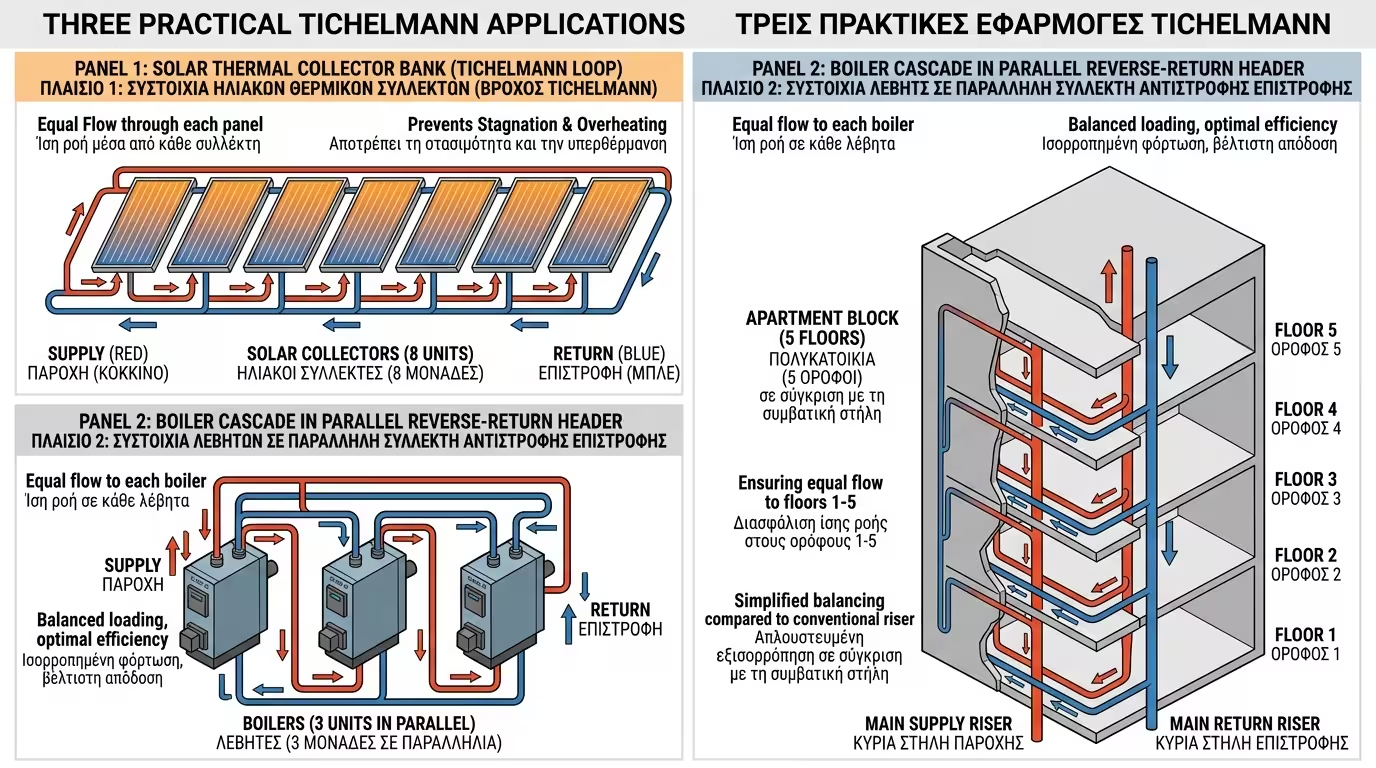
In a bank of 8 solar collectors in series, Tichelmann ensures equal flow through each panel. Without it, central panels starve and overheat (stagnation).
In a plant room with 3-4 boilers in parallel, Tichelmann ensures equal flow to each boiler. It prevents overloading the nearest one while the furthest underperforms.
In central heating for a block of flats, Tichelmann on the vertical risers ensures the 5th floor isn't flooded while the ground floor freezes - without balancing valves.
In a production line with 20 cooling heat exchangers, Tichelmann eliminates all balancing troubles - every exchanger receives exactly the same flow with zero intervention.
Tichelmann isn't a cure-all. It requires more pipe (the return must reach the last radiator instead of heading straight back). That means higher material and labour costs.
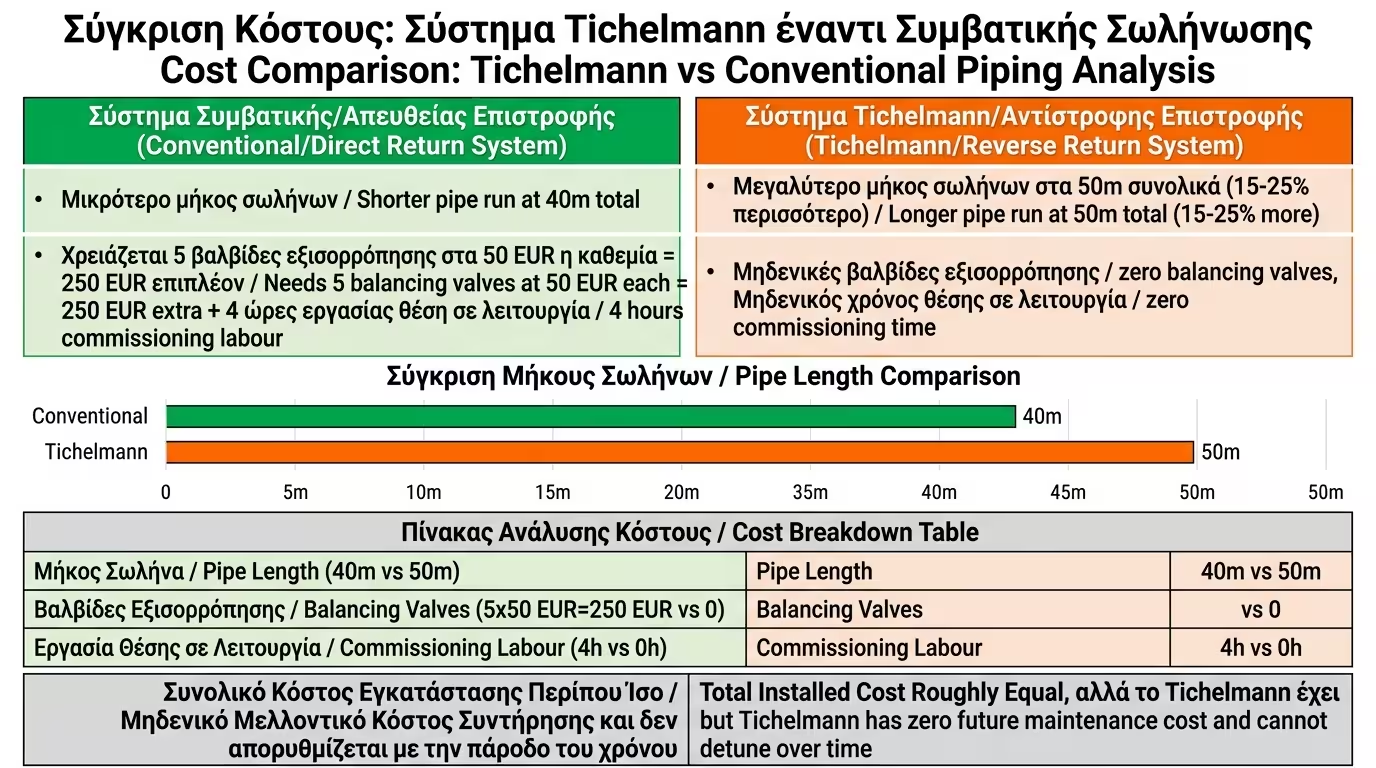
In a typical house with 5 radiators, Tichelmann requires 15-25% more return pipe. In cash terms: 10-20 extra metres of multilayer + installation labour.
It doesn't always work in renovations: it needs a loop layout (the return pipe must "travel" to the last radiator). If the house geometry doesn't allow it, Tichelmann can't be applied.
Tichelmann equalises pipe lengths, not flow rates. If radiators have very different capacities (e.g. 2 kW vs 8 kW), some supplementary balancing will still be needed.
In new construction, always consider Tichelmann first. If the house geometry permits, it saves thousands of euros long term - preventing future balancing headaches entirely.
💡 Tichelmann doesn't reduce balancing valves - it eliminates them. The balance is "baked" into the design, instead of being patched on afterwards.
Return to category.
Go to categoryReturn to the central guide.
Go to guide