Network Certification (Fluke Testing): How Engineers Check Losses,
Crosstalk, and Cable Length
You've run the correct pure copper Cat6a cable, maintained clearances
from power, and terminated the outlets. You plug the cable into the
laptop, the light turns on and you have internet. Job done, right?
For an amateur, perhaps. For a telecommunications engineer, the job
isn't over until the measuring instruments talk. The fact that a network
"plays" at 100 Mbps today does not mean that it can carry 10
Gbps without losing data packets, nor that it will safely handle the
power (PoE) requirements of new Access Points.
This is where Network Certification comes into play, popularly known in
the trade as the Fluke Test (after the leading instrument manufacturer).
Let's see why the cheap €15 tester is not enough, what exactly the
engineers measure, and why a "PASS" paper is the absolute
guarantee of your renovation.
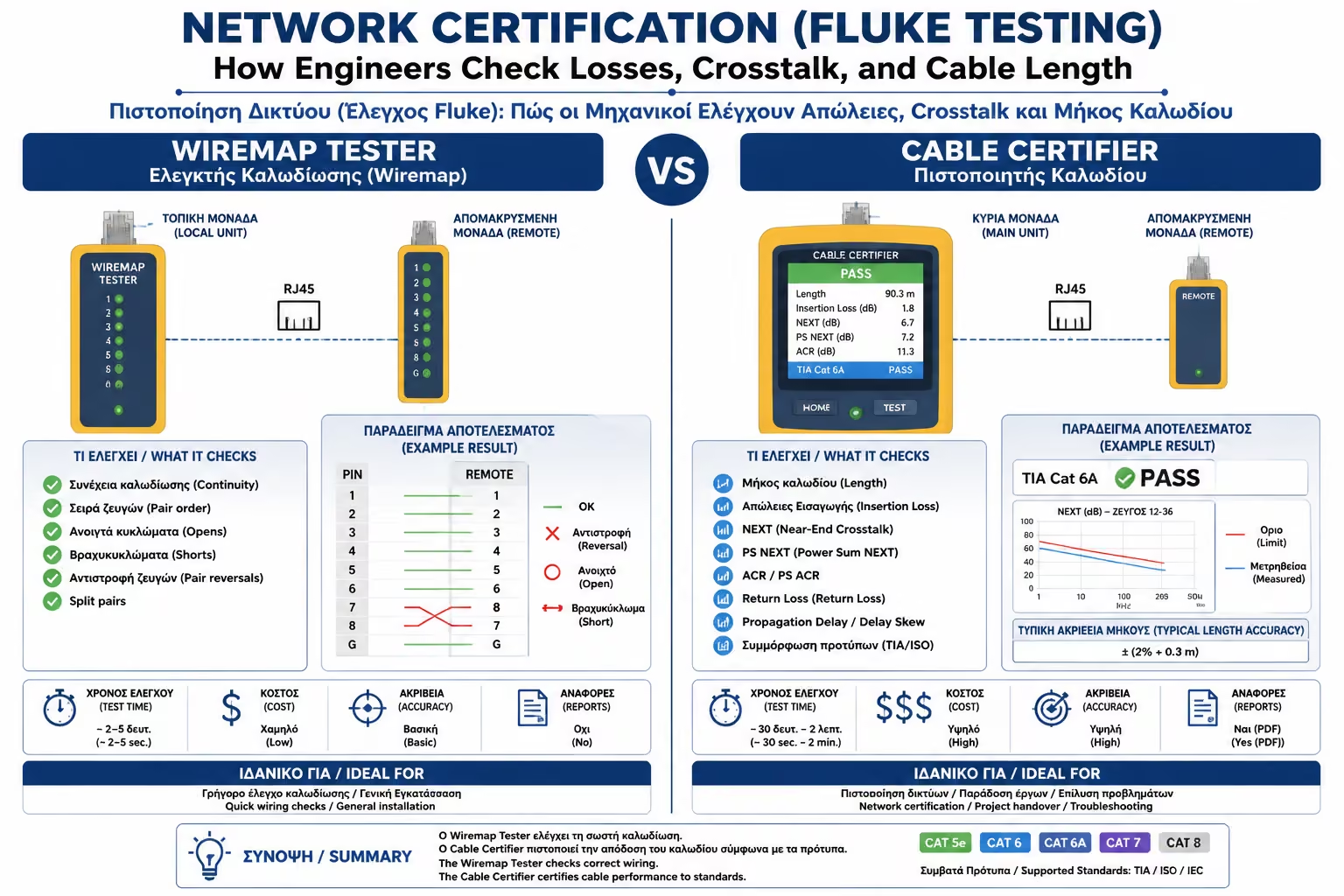
1. The "Liar" (Simple Tester) vs. The "Judge"
(Cable Certifier)
The tool most electricians use is a simple Wiremap Tester. It has 8
LED lights. All it does is send a little current from one end to the
other to confirm that the orange wire connects to the orange
connector. That is, it tells you if there is electrical continuity.
The Cable Certifier (such as the Fluke DSX series, which often costs
over €10,000) is an electronic RF computer. It doesn't just look to
see if the wires come together. It transmits signals at extremely high
frequencies (eg 500 MHz for Cat6a) and "stresses" the copper
to its limits to see how the physics of the cable behaves under
conditions of maximum load (Traffic).
2. What exactly does the Fluke Test measure? (The 4 Critical Sizes)
When the instrument is connected to both ends of a wall outlet and
Patch Panel, it performs dozens of complex checks in seconds. The most
important parameters that determine whether the network will pass the
tests are the following:
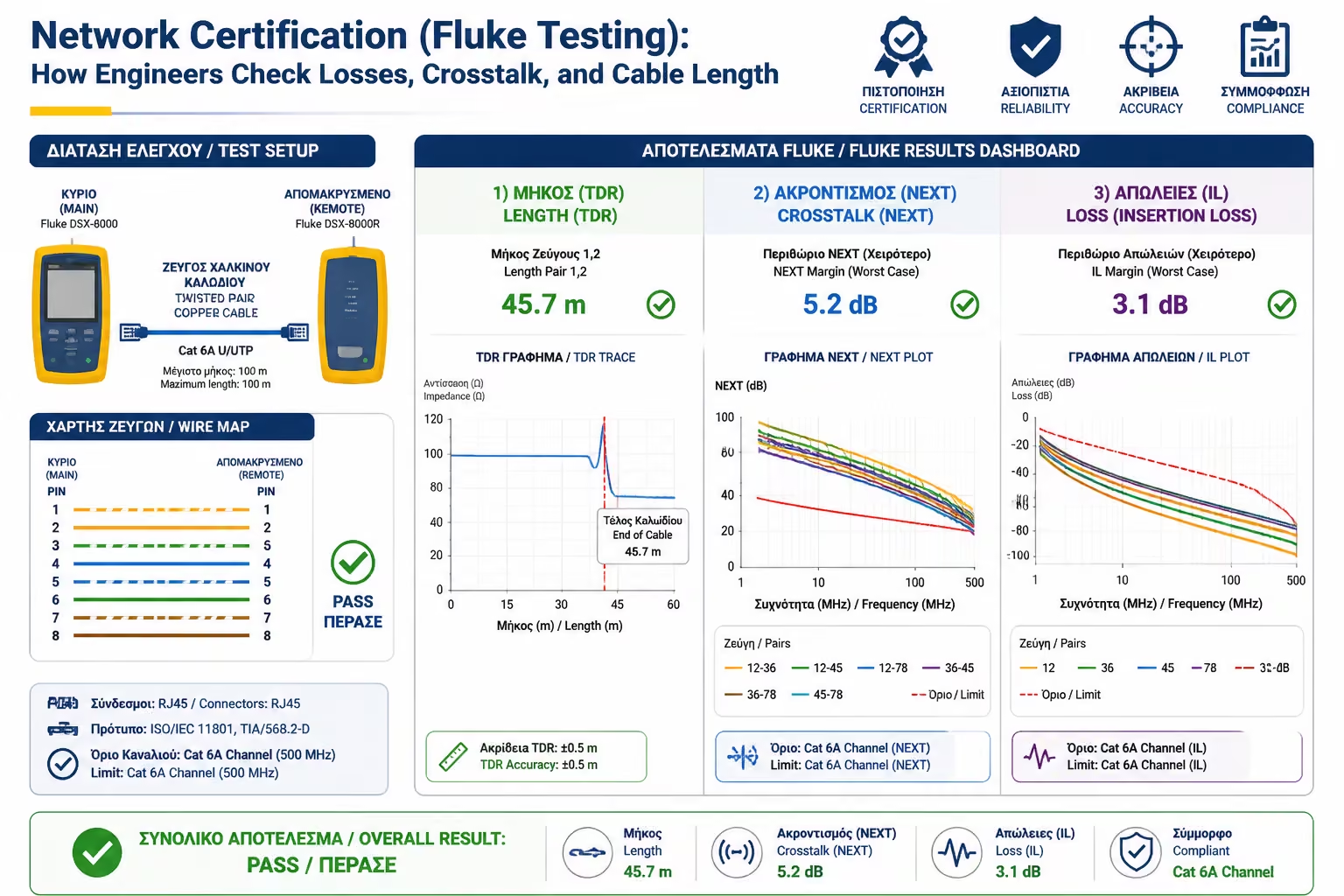
A. Length (TDR)
The Ethernet protocol allows a maximum permanent link length of 90
meters (plus 10 meters for patch cords, total 100). The instrument
sends out a pulse, measures the time it takes to bounce back (Time
Domain Reflectometry), and tells you with centimeter accuracy how
long the cable is hidden inside the wall, even pinpointing exactly
where there is a kink!
B. Crosstalk (NEXT & FEXT)
This is the number one reason a certification fails. As we have
seen, the cable has 4 pairs. When one pair emits a strong signal, it
creates a magnetic field that "overflows" and
"taints" the adjacent pairs.
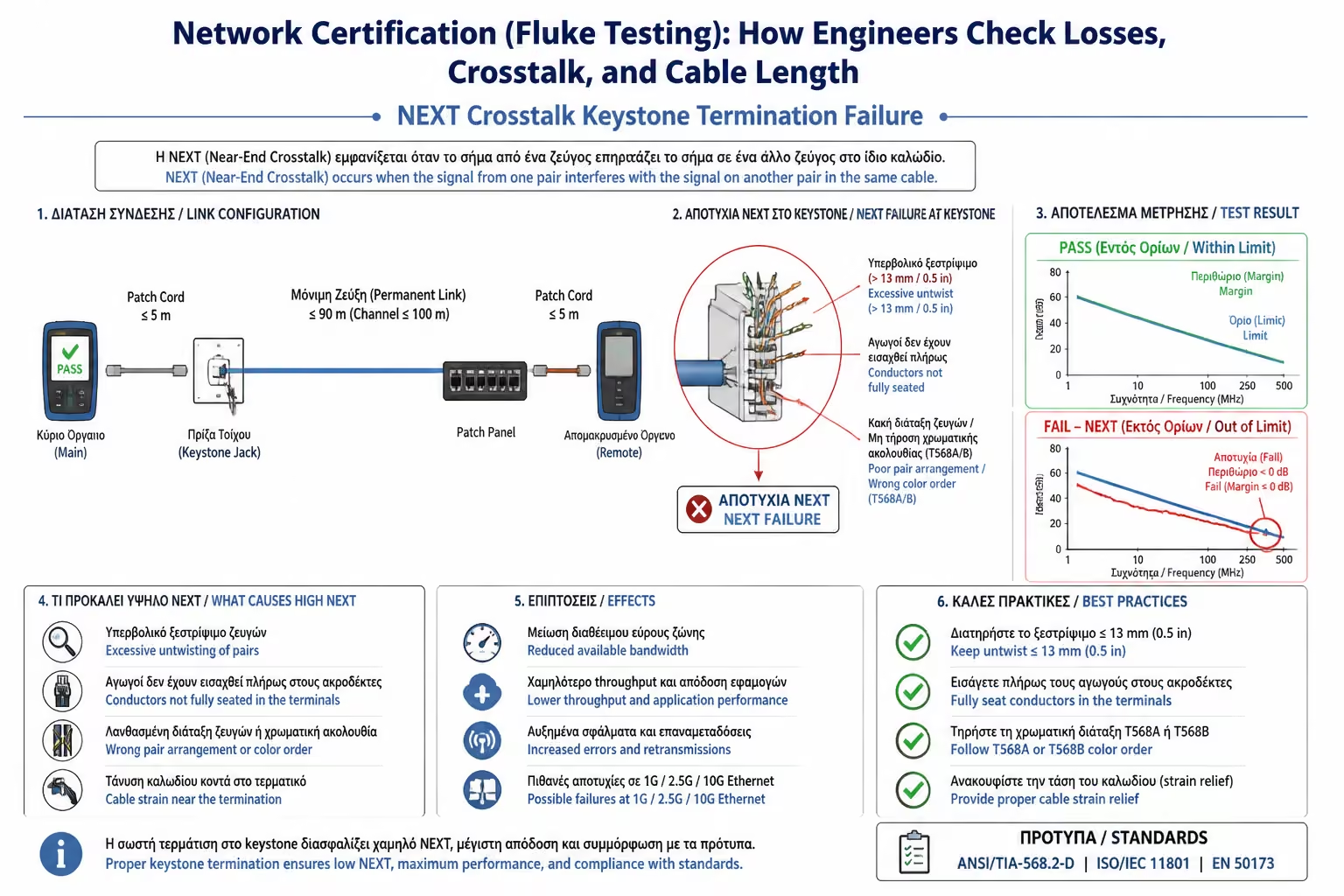
NEXT (Near-End Crosstalk): Measures the interference that occurs
at the end of the cable, usually on the socket itself (Keystone).
Cause: If the installer untwisted the conductors too much while
fitting them into the socket, Crosstalk rises sharply and the
instrument immediately returns a "FAIL" result.
C. Insertion Loss / Attenuation
As the signal travels through the copper, it gradually loses its
energy (fades) due to the natural resistance of the metal.
Reason: If the cable is CCA (aluminum) instead of pure copper, or if
the ambient temperature is too high, the insertion loss becomes
excessive and the signal arrives effectively "dead" at the
other end.
D. Return Loss
Think of the signal as light traveling down an optical tube. If the
tube is bumped or kinked, some of the light is reflected back to the
source.
Cause: Bad termination in the socket, a factory defect in the cable,
or an electrician pulling the cable through the conduit with
excessive force and distorting its geometry.
3. Why request Certification in your home or office?
Many people think that the Fluke Test is only for Data Centers and
banks. In fact, it is your "insurance policy".
Manufacturer's Warranty (25 Years): Major structured cabling
manufacturers (such as CommScope, Panduit, or Legrand) provide a
25-year factory warranty on the network. But in order to give you
this warranty certificate, they require the digital Fluke Test files
to be sent to them from the installer for each individual outlet!
Future-Proofing: Your network today can function satisfactorily at 1
Gbps. But if it is not certified, when in 3-4 years you buy Wi-Fi 7
devices that require 10 Gbps pure bandwidth, the network may
collapse due to high Crosstalk (noise) that went unnoticed at low
speeds.
Proof of Good Workmanship (For contractors): When you pay for a
major renovation, the certification paper is the only, hard,
scientific proof that the electrician did his job right, used
quality materials (not aluminum), and didn't break the wires pulling
on them.
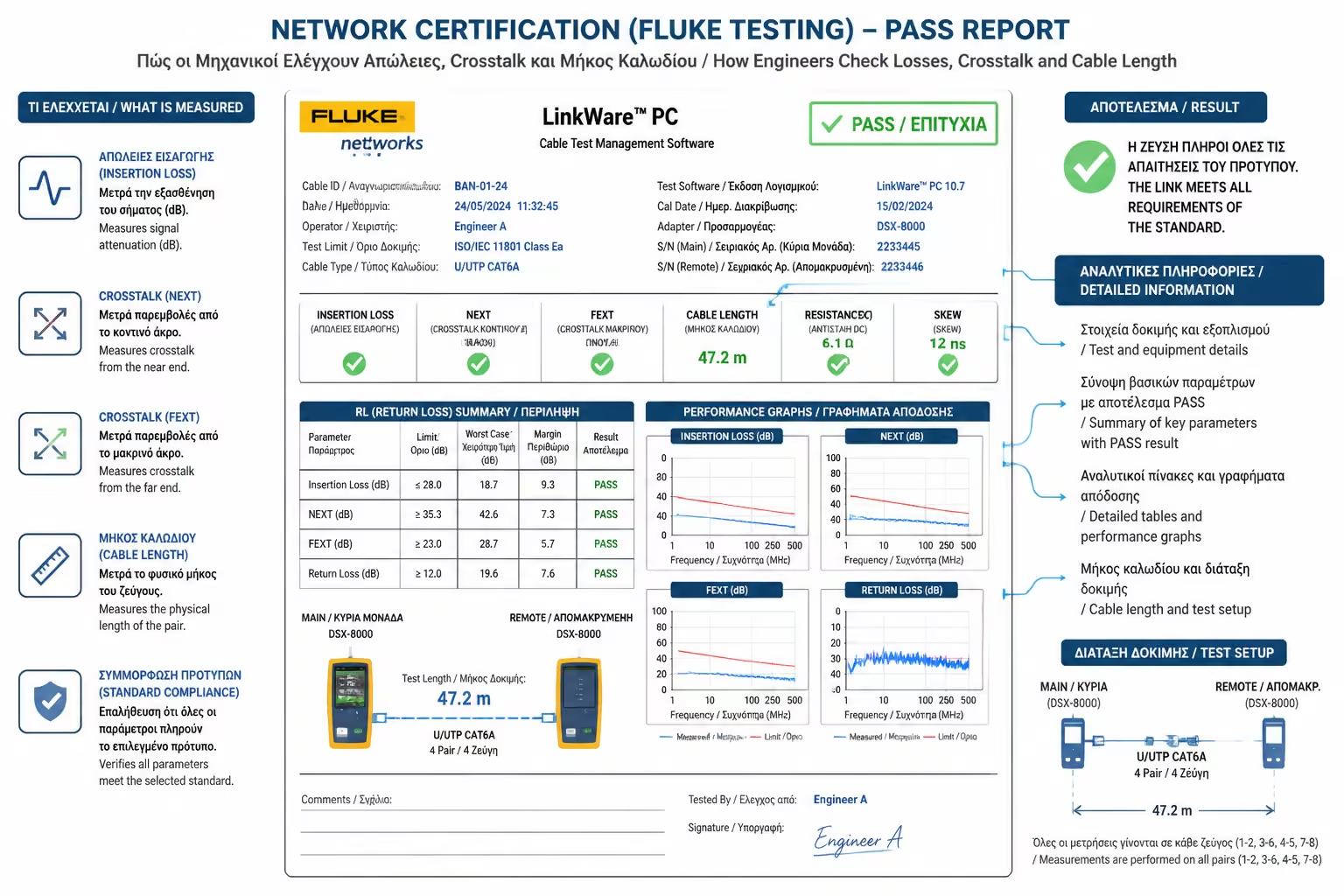
4. The Final Deliverable (The Report)
At the end of the work, the engineer doesn't just tell you "it's
ok". Exports a detailed PDF (or hard copy) from the instrument.
There you will find a chart for each outlet in your home (eg
"Living Room Outlet 1"). If the measurement is within
international permissible limits, a large green PASS is displayed. If
there is a problem, a red FAIL is displayed with the exact reason (eg
"NEXT problem on Pair 3.6 at 15m distance"). The installer
cuts the outlet, rewires it properly, and repeats the test until it
gets the green light.
Summarizing Category A
Structured copper cabling is the backbone of the smart building. By
choosing Cat6a from 100% pure copper, maintaining the correct distances
from the power cables (230V), using quality Keystones in a Star topology
and "locking" the installation with an official Fluke
certification, you have created a technological infrastructure that will
survive and support every future generation of computers and devices.
End of Class A: We have completed the internal wiring of the house with
copper.
Next Step: Copper is perfect for inside the home, but how does
super-high speed get from your telco to your doorstep?