E
Our goal at Lux (see below).
We leave the elegance of retail and step into raw, industrial power. Lighting a warehouse, factory or indoor gym is perhaps the greatest challenge for an electrical engineer.
The problem here is not aesthetics, but Geometry. When the ceiling is 8, 10, or 12 meters high, whatever you put on the ceiling, the light tends to get "lost" into the air before it even reaches the floor. At the same time, industrial buildings are huge consumers of energy, so a wrong system can skyrocket the operating costs of the business.
The solution to this problem is High-Bay Lighting (Industrial Bells). Let's see what these lighting "monsters" are, how they direct the light and how you can calculate for yourself how many Lumens you need to pass the work inspection.
High-Bay luminaires are exclusively designed for spaces with a ceiling height of more than 6 meters. In the LED market, two forms dominate:
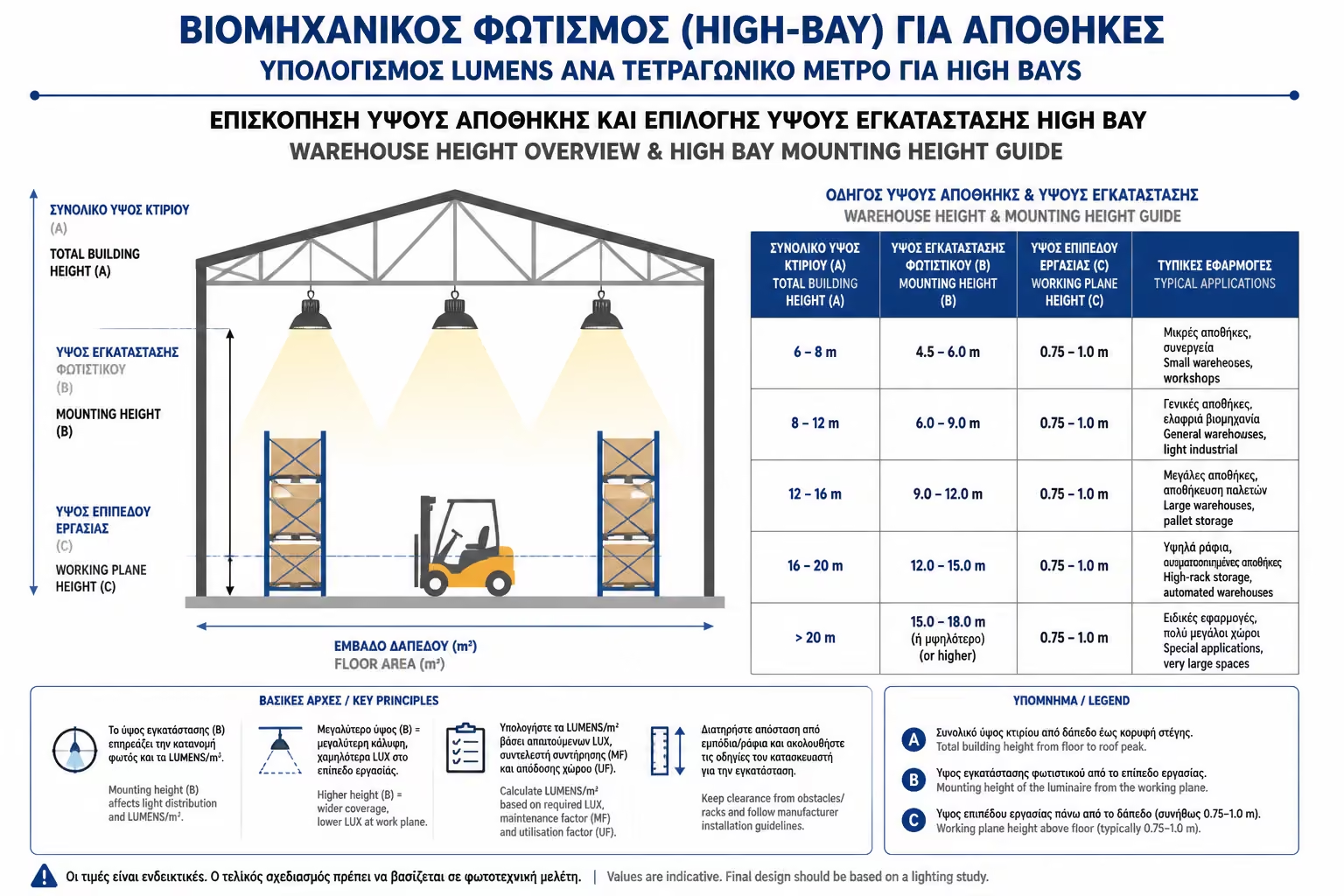
Many people confuse these two sizes. To calculate the space correctly, we need to distinguish them:
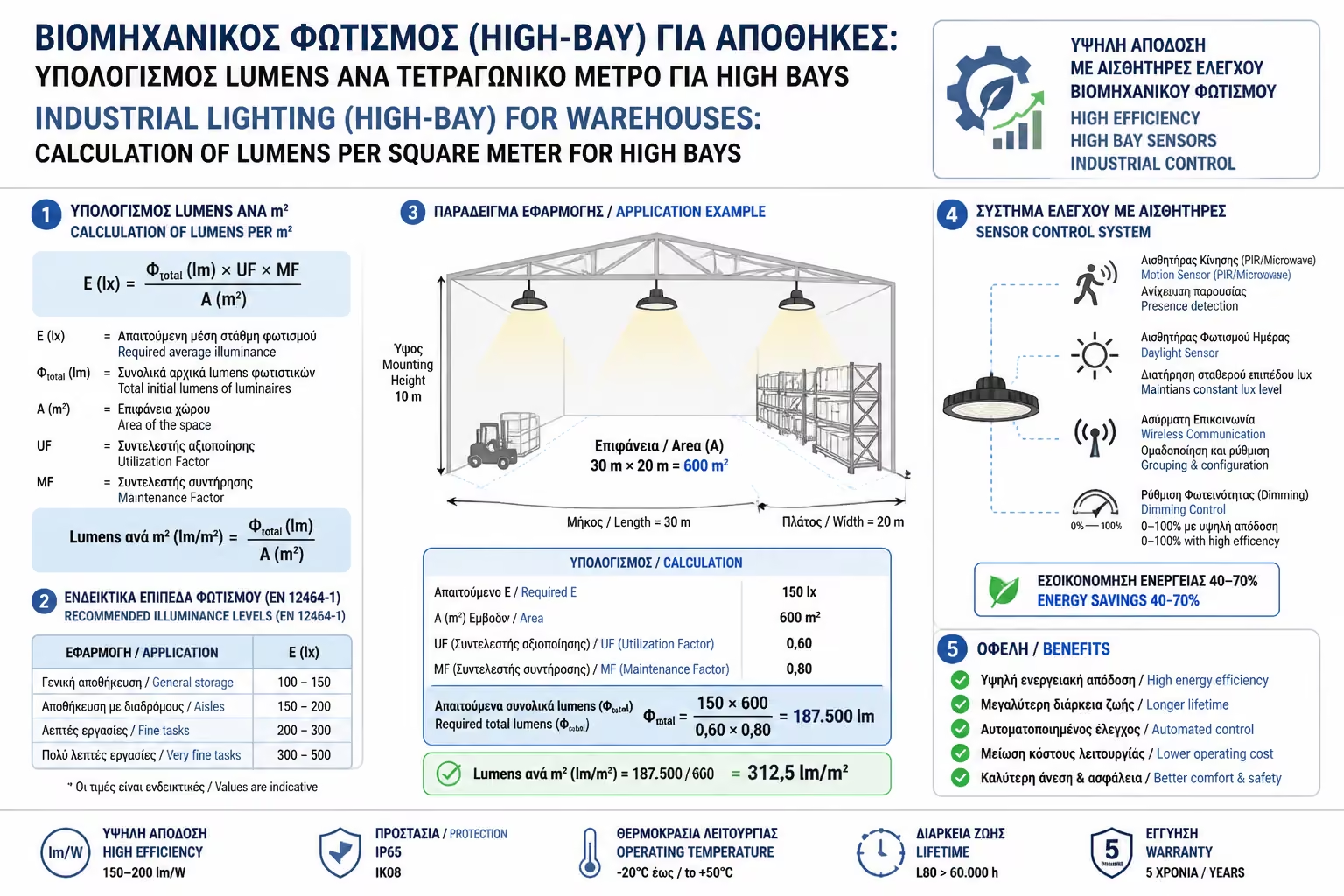
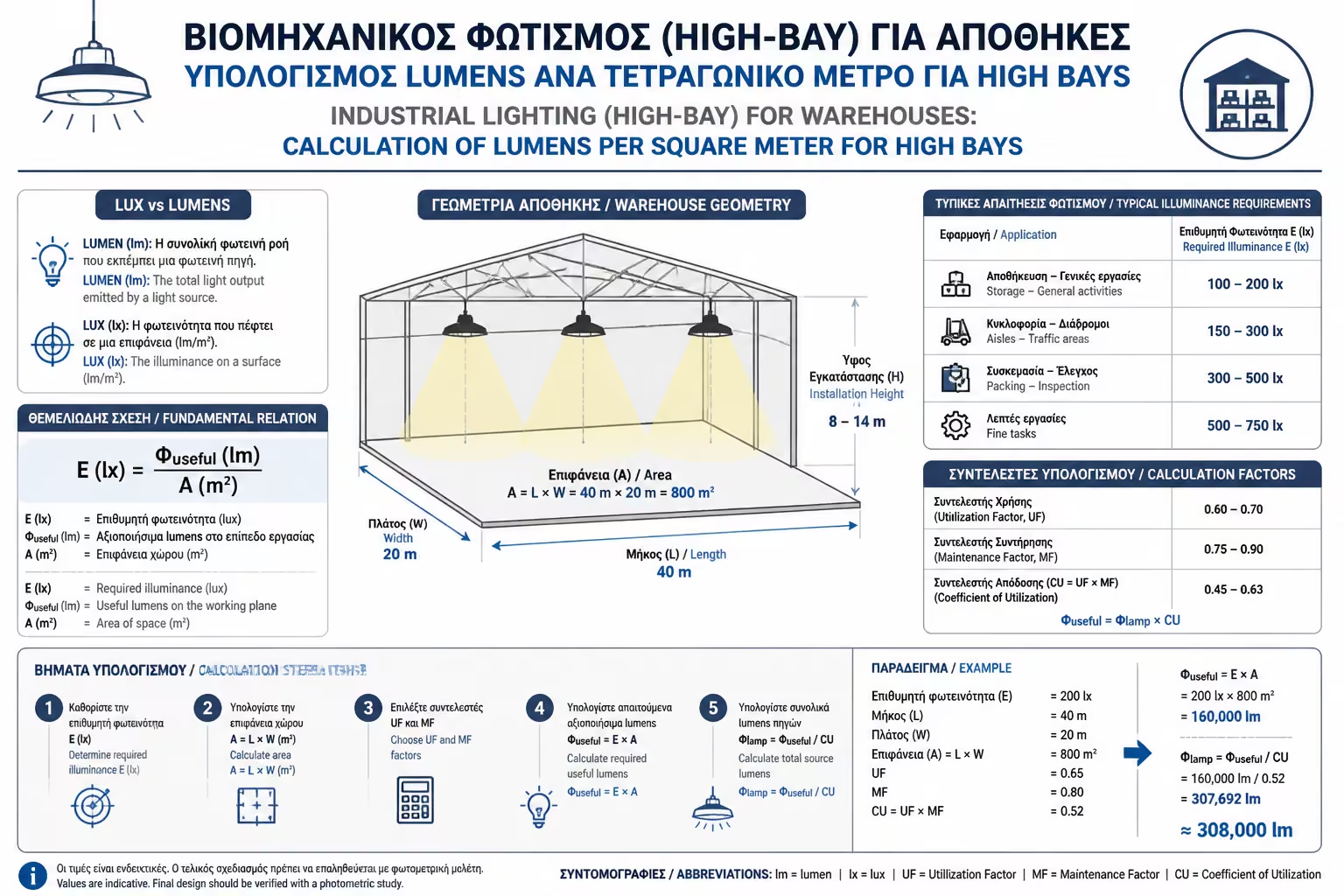
To find the total Lumens (Phi) we need to buy, engineers use the following lighting equation:
Phi = fracE cdot AUF cdot MF
Where:
Rule of thumb (Simplified): Because light loses power as it "travels" 10 meters down, you need about 2 to 2.5 Lumens at the source, for every 1 Lux you want on the floor.
Our goal at Lux (see below).
The area of the warehouse in square meters (m^2).
Utilization Factor (Depends on the lamp lenses and wall reflections. In tall warehouses it ranges around 0.6).
Maintenance Factor (Because the lamps up high collect dust, we calculate a loss, usually putting a value of 0.8).
The European standard (EN 12464-1) defines the minimum limits (Lux) depending on the type of work to avoid accidents:
100 Lux.
150 - 200 Lux (Good visibility is a matter of life and death).
300 Lux (For workers to read barcodes and labels).
500 Lux (So that they don't make mistakes in the machines).
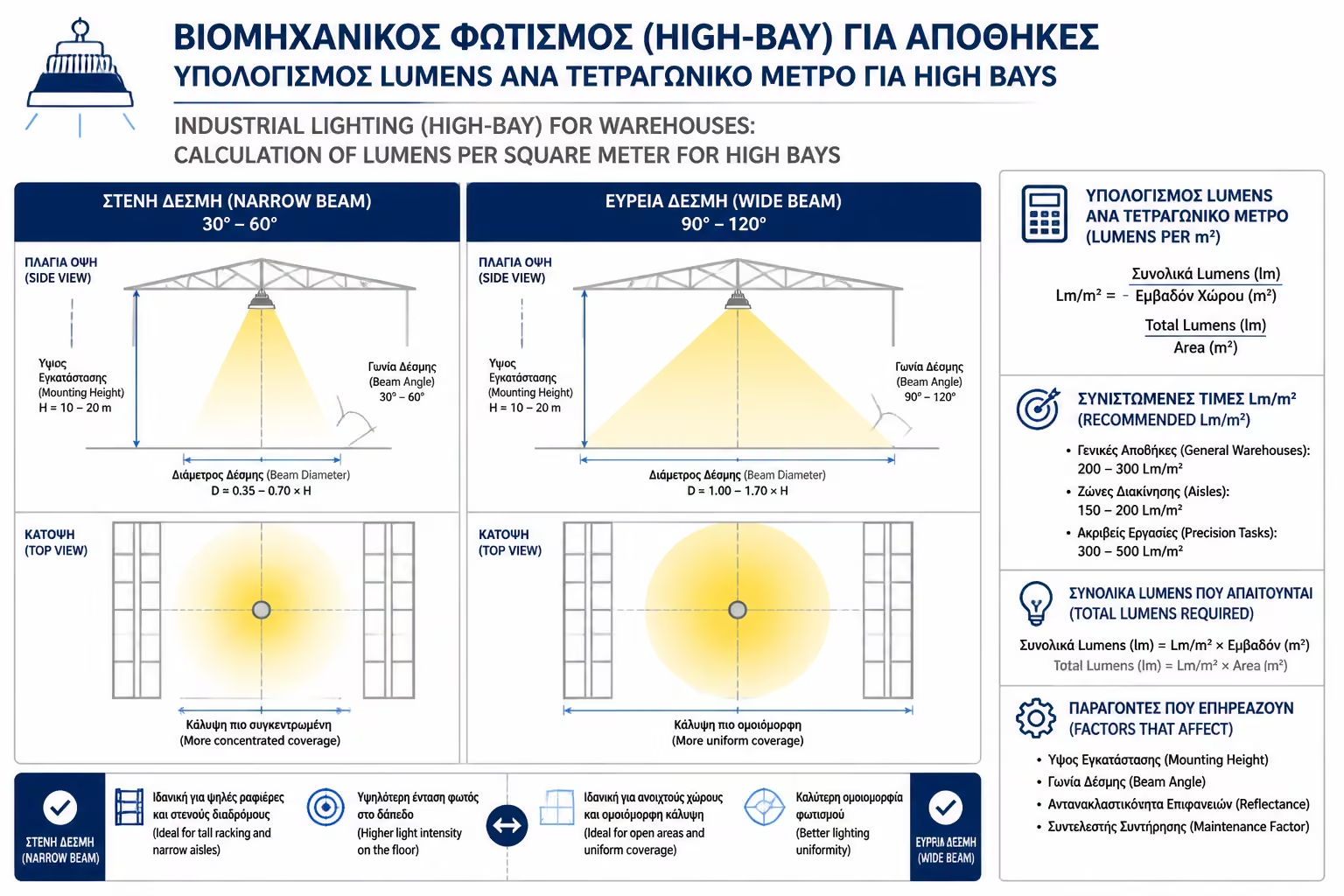
This is where the most costly mistake is made in pallet racking. If you buy a classic round UFO High-Bay with a 120 degree beam angle and hang it 10 meters above the warehouse aisle, what will happen? The light will open like a huge umbrella. 70% of the light will "hit" the ceilings of the shelves (where no one needs it) and only 30% will manage to reach the floor of the corridor. You will have spent electricity to illuminate the... dust on the shelves.
The Solution: Quality High-Bay luminaires have polycarbonate lenses that collect the beam.
90° or 120° beam.
Luminaires (usually linear) with a narrow beam (eg 30° or 60°) or an asymmetric/elliptical beam (eg 30° x 90°) are required. This lens pushes all the light vertically down like a "knife", perfectly illuminating the merchandise on the shelves down to the floor, without loss.
When we are talking about hundreds of 150W or 200W lamps burning 12 hours a day, the quality of the LED counts in hard money. Don't just look at the purchase price of the lamp, but the Efficiency Quotient (Lumens per Watt - lm/W). A cheap High-Bay puts out 100 lm/W. A top professional puts out 160 to 190 lm/W. This means it produces the same light, burning 40% less electricity!
Finally, because in the warehouse the workers are not everywhere at the same time, it is now mandatory to install Motion/Presence Sensors (Microwave Sensors) on the lighting fixtures. If a corridor is empty, the light automatically dims to 20% (dimming via DALI or 1-10V) and "gasses up" to 100% only when the clerk turns in.
Industrial lighting is strictly mathematics. Before you hang the first light fixture on your warehouse ceiling, you need to know the target (Lux), the height, the type of shelves and the appropriate beam angle. A phototechnical study by an engineer using special programs will save you from bad fines, work accidents and exorbitant electricity bills.
Next Step: We talked about safety at work. But what if... the power goes out? How will 500 workers get out safely from a darkened factory or customers from a shopping mall? Continue to our critical guide: Security (Emergency) Lighting & Exit Signs: What Fire Legislation Says for Public Buildings.
Return to category.
Go to categoryReturn to the central guide.
Go to guide