✅ When it works
In homes with plastic corrugated or rigid conduits, limited bends and reasonable route lengths. In those cases a draw wire and good technique are often enough.
The idea of a full electrical renovation worries many owners not only because of cost, but because of the disruption. Dust, wall chasing, repairs and the impact on everyday life make many people look for a smarter route that avoids opening every wall.
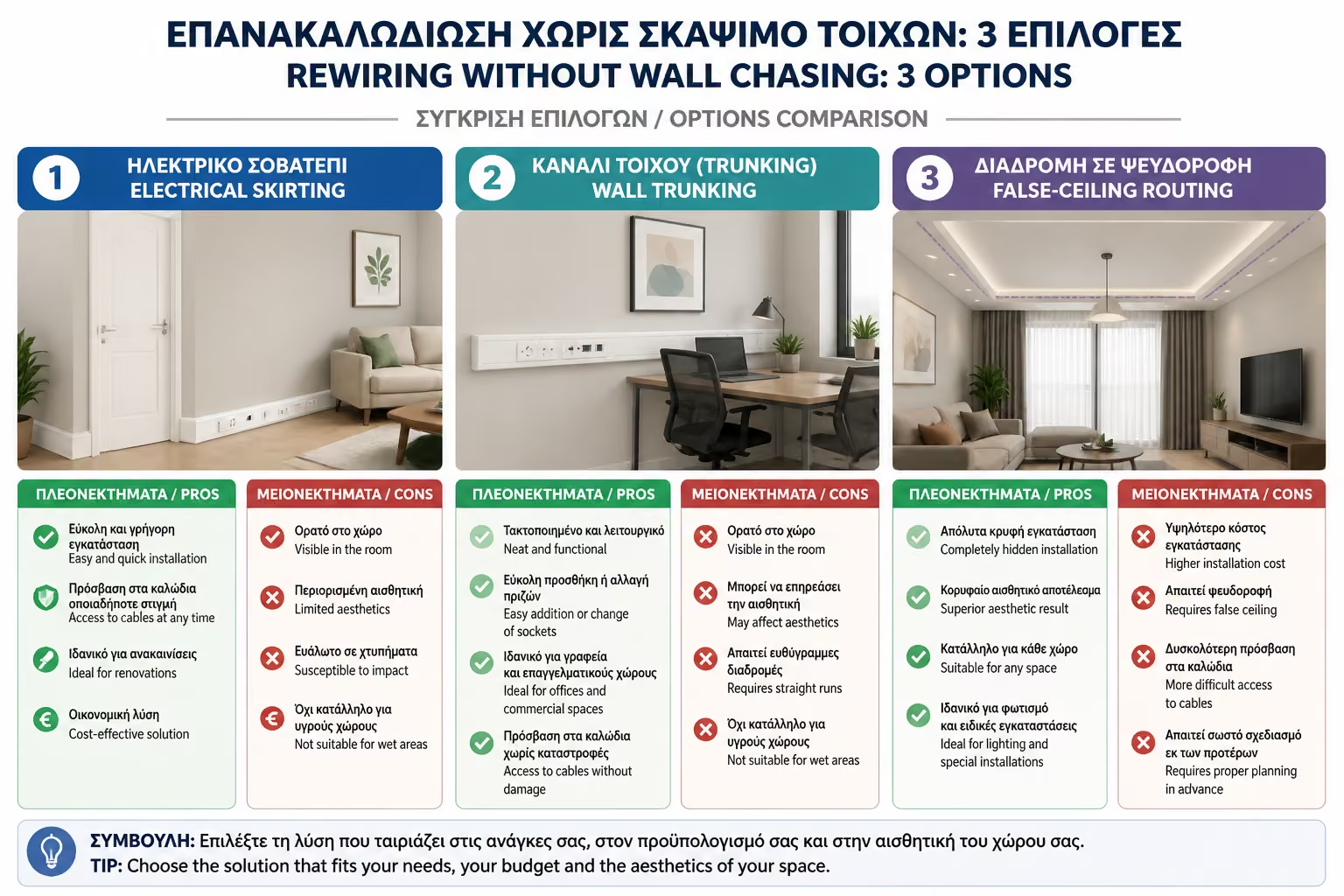
Sometimes that is feasible, but not always. In some homes the old infrastructure is cooperative enough to accept new conductors. In others you need alternatives such as electrical skirting, suspended ceilings or surface-mounted routes. The key is knowing which option is technically honest and which one is only a temporary patch.
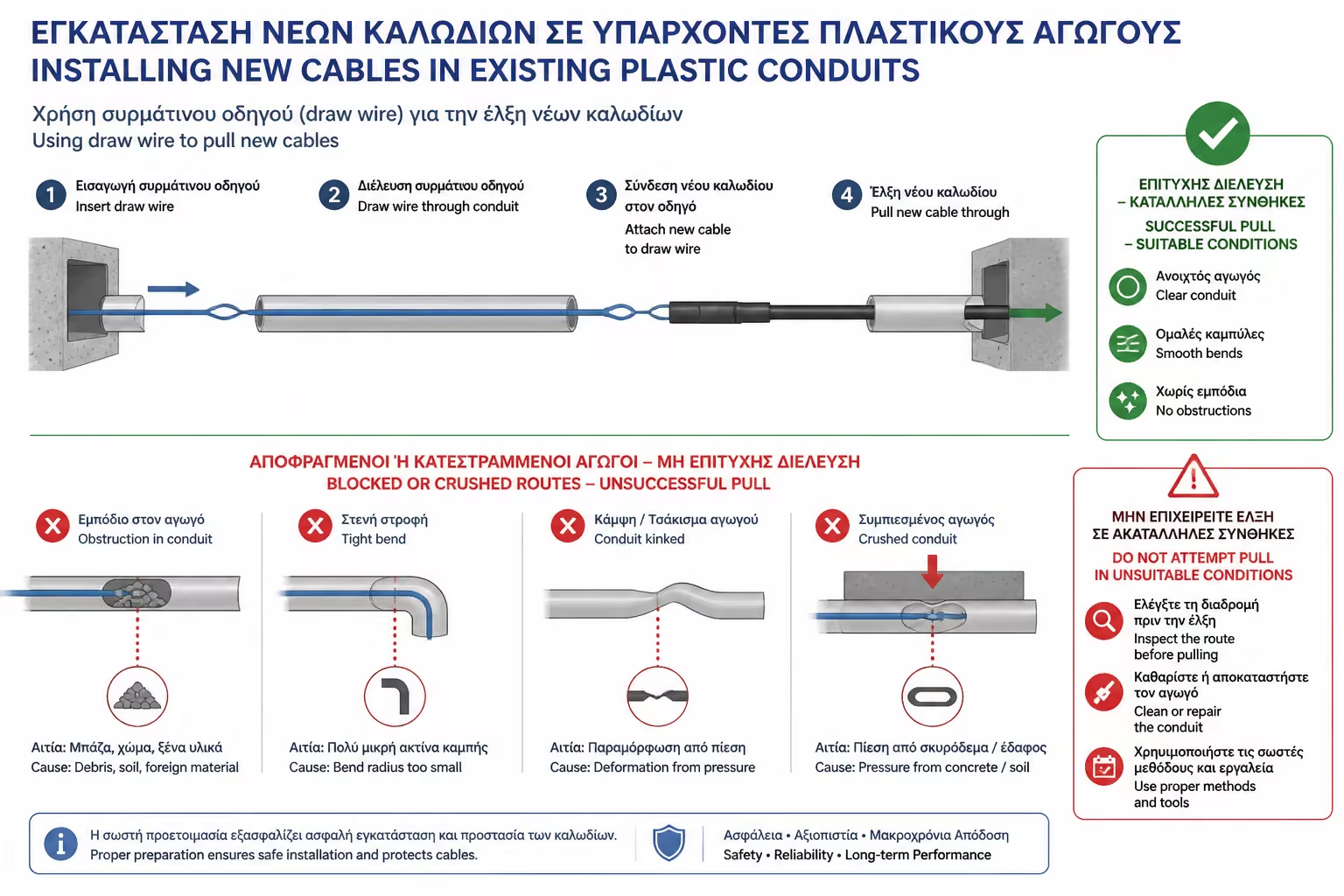
This is the cleanest and most elegant approach, but it works only when the old installation has usable plastic conduits, sensible routing and no permanently jammed or damaged conductors inside them.
The electrician needs to test whether the conduits are open, whether there are severe kinks and whether the available space allows a new pull. If the routes are blocked with plaster, crushed or based on old Bergmann tubes, this solution collapses immediately.
In practice, that means testing with a draw wire and often opening selected boxes to understand the real condition. The assumption that “it will probably pass” is a poor basis for a decision.
In homes with plastic corrugated or rigid conduits, limited bends and reasonable route lengths. In those cases a draw wire and good technique are often enough.
When conduits are kinked, broken by later building work or already overcrowded. Then the new cable jams and the process stops.
You retain a concealed installation without major making-good work, preserving both the appearance of the house and the owner’s daily routine.
When the old conduits cannot be reused, that does not automatically mean that every wall must be chased. There are milder strategies that relocate the new routes into other architectural layers of the building.
This is an excellent option for occupied homes under renovation. It conceals horizontal routes low down, allows future additions and dramatically reduces dust.
It suits offices, storage rooms and utility areas more than living rooms. Technically it is valid, but aesthetically it rarely satisfies in the main areas of a home.
A new suspended ceiling can carry horizontal routes above and then drop locally where needed. It is often the smartest choice when the ceiling or lighting is being renovated anyway.
A living room with strong visual requirements needs a different approach from a corridor, workshop or storage room. The correct alternative should be selected per space, not generically for the whole house.
In some spaces, surface conduits are not a compromise at all but a deliberate design choice. The industrial look in lofts, studios and workspaces can turn a technical constraint into a visual feature.
At the same time, for certain functions such as two-way switching or new controls, wireless devices and smart relays can solve the problem without wall chasing. You just need to remember that these technologies do not replace proper power wiring where real electrical load is involved.

If you choose a surface installation, the materials must be robust, aligned and intentionally detailed. Improvised conduits and crooked runs make the result look cheap and unsafe.
They can add control without a new switch wire, especially where a supply already exists but a second switching point is missing.
A smart device that solves lighting control does not solve the need for a new 2.5mm² socket circuit or a dedicated washing-machine supply. Real load still needs real wiring.
Smart devices can replace a control method or scene logic, but not the physical need to deliver electrical power. Keeping that distinction clear avoids many wrong expectations.
The technically correct option depends on what you actually need: new power capacity, new outlet locations, new switching logic or simply less disruption. The worst outcome is choosing a “no demolition” solution for the wrong problem and paying twice.
That is why priorities have to be separated clearly. Appearance, convenience and genuine new power demand are not the same thing. Once they get mixed together, people choose solutions that feel tidy at first but do not solve the real technical issue in the room.
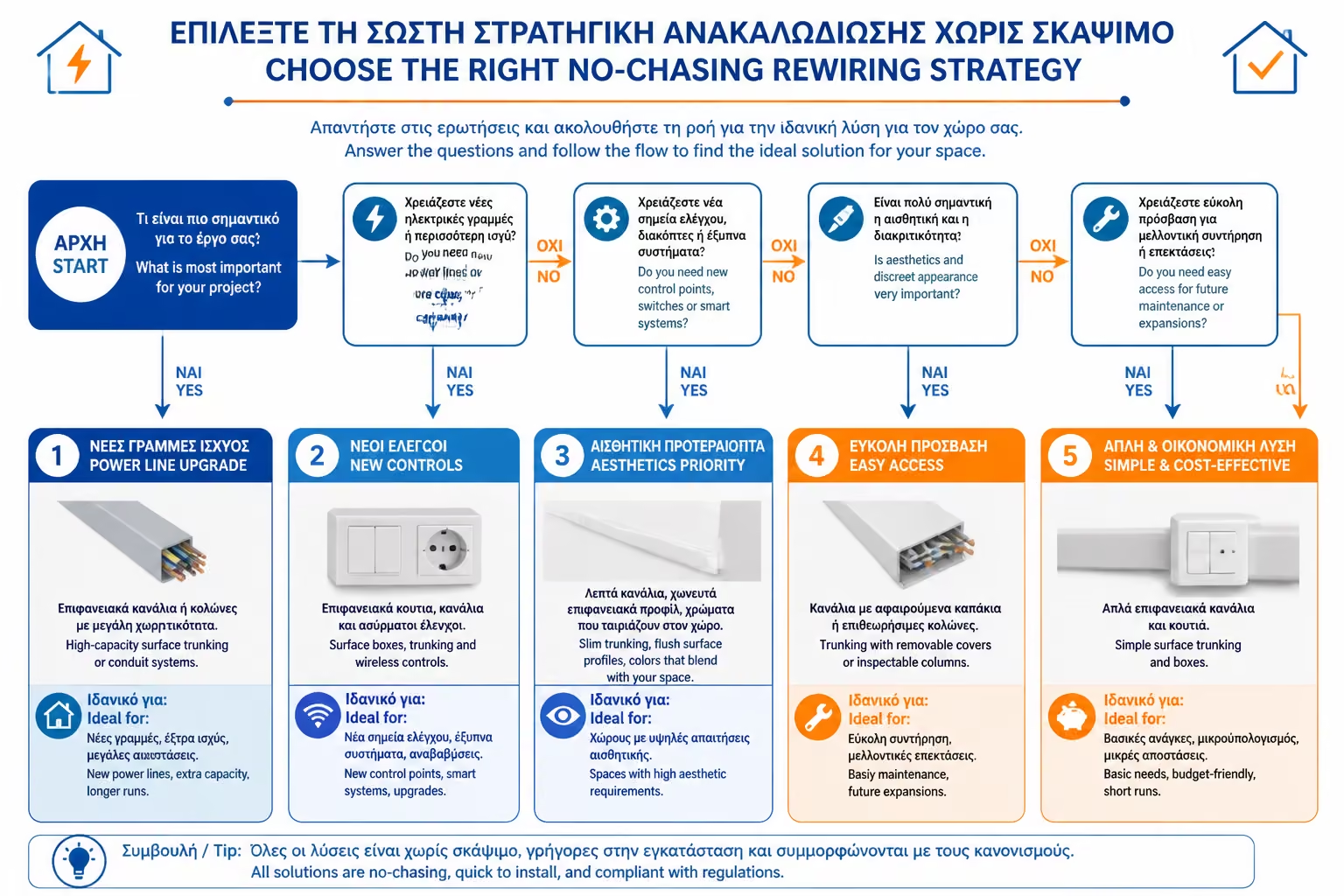
If the existing conduits are usable, that is almost always the first choice.
Electrical skirting and false ceilings usually suit residential spaces far better than visible trunking in every room.
For minor usability improvements a smart solution may be enough. For new power demand or a heavy appliance, you still need a proper new circuit.
A good professional will tell you which parts of the work can genuinely be done without demolition and which cannot. If someone promises that everything can be solved cheaply and invisibly, they are usually only postponing the problem.
💡 “Without demolition” is not the goal by itself. The real goal is a safe, functional and maintainable result with the least disruption possible.
Return to category.
Go to categoryReturn to the central guide.
Go to guide