Bathroom Electrical Installation: Safety Zones and IP Ratings

The bathroom is the most dangerous room in the house because it is where the two biggest enemies of electrical safety meet: water and electricity.

When the human body is wet, electrical resistance drops dramatically, so a leakage current that might only give a mild shock elsewhere can become fatal in a bathroom. That is why ELOT 60364 defines strict safety zones and specific IP requirements.

1. The 3 Safety Zones in a Bathroom

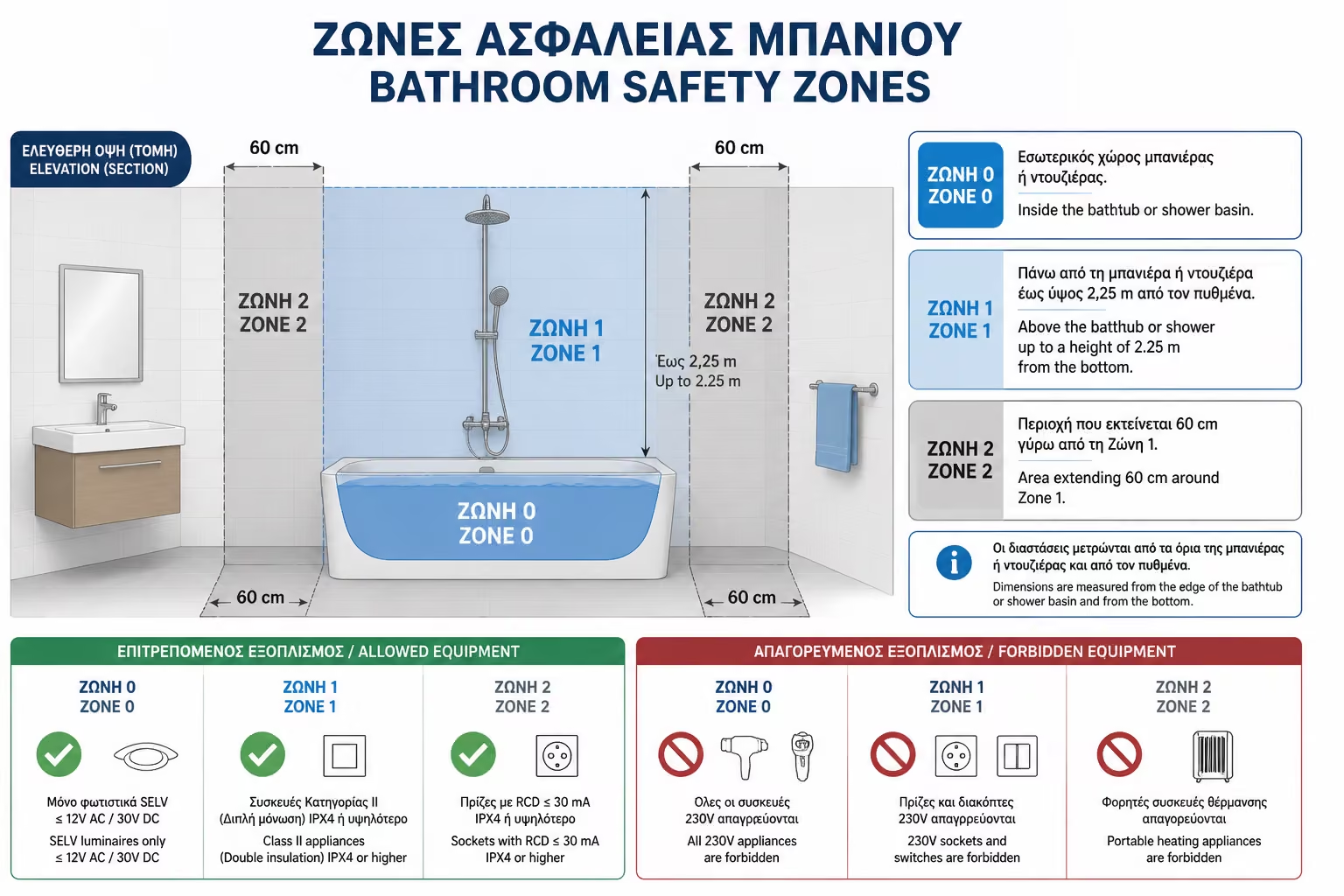
Bathroom safety zones 0, 1 and 2

Imagine the bathroom divided into invisible areas according to proximity to water. Each zone has its own rules about what is allowed and what is forbidden.

This is not bureaucracy for its own sake but basic physics: the closer a fitting is to direct splash, standing water or a wet human body, the stricter the protection requirements must become.

🛁 Zone 0

This is the inside of the bathtub or shower base. Only extra-low-voltage SELV equipment up to 12V AC with at least IPX7 is allowed. Standard outlets, switches and 230V luminaires are strictly forbidden because this is the area of direct contact with water and often direct contact with the human body.
🚿 Zone 1

This area extends directly above Zone 0 up to 2.25m high. Equipment with IPX4 protection, or IPX5 where water jets are present, may be used, but ordinary 230V switches and sockets are not allowed. In practice this is the area where splashing is assumed rather than merely possible.

📏 Zone 2

This is the 60cm safety strip around Zone 1 up to the same height of 2.25m. IPX4 fittings and certain isolated shaver supplies are permitted here, but ordinary Schuko outlets and unsuitable switches are not. In many small Greek bathrooms, that clearance consumes almost the whole available wall.

🏠 The rest of the room

The old “Zone 3” term is no longer formally used, but in practical terms anything more than 60cm away from the shower can accept outlets and switches only if protected by an RCD. The label may have changed, but the need for caution has not.

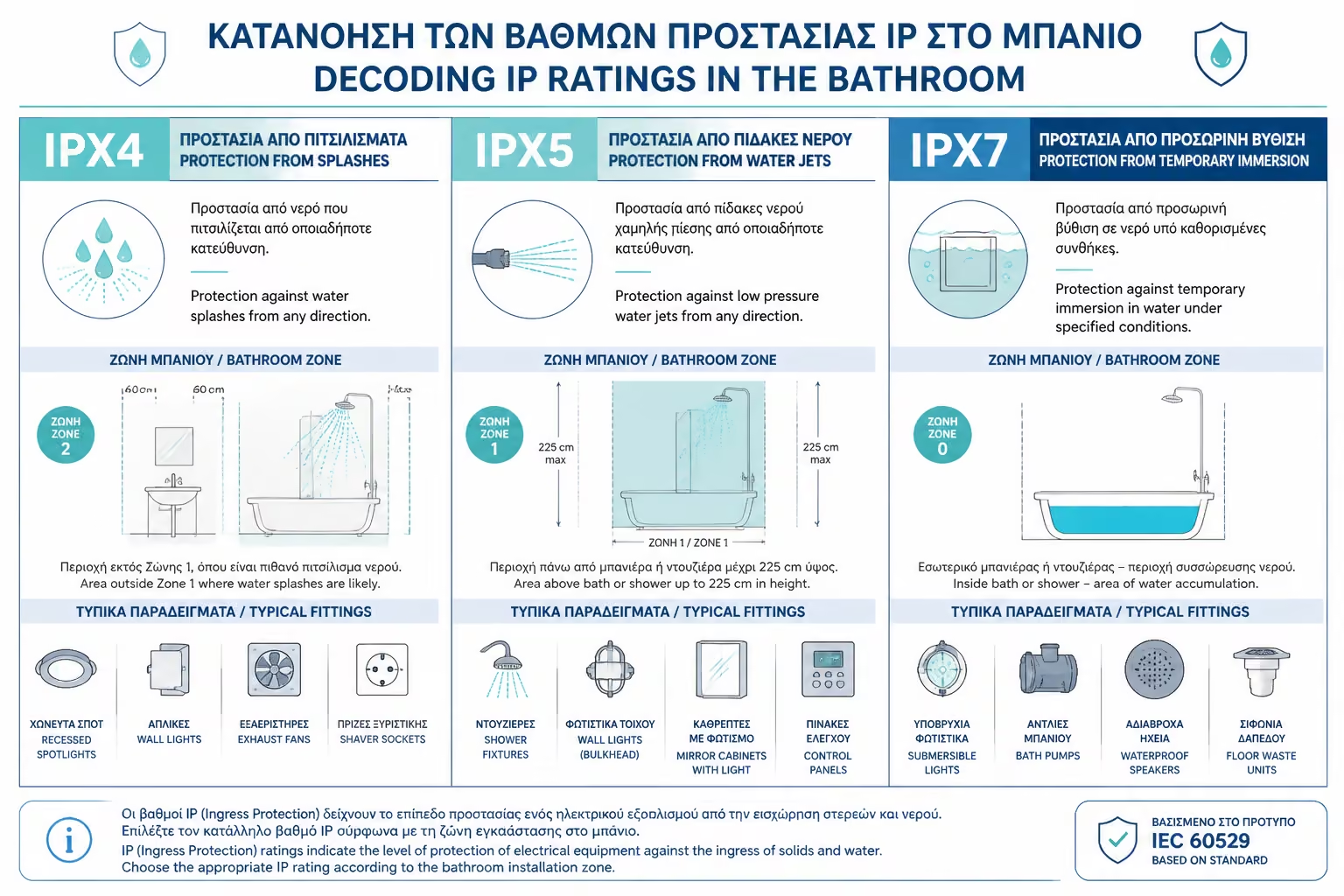
2. What Is an IP Rating?

IP stands for Ingress Protection. The first digit describes protection against solids and dust, while the second describes protection against water. In bathroom design, the second digit is usually the critical one.

That is why two fittings that look nearly identical on the shelf may behave very differently when installed beside a shower, a mirror or an area with persistent steam.

Meaning of IP44, IP65 and IPX7 in bathrooms

💧 IPX4

Protected against splashing water from any direction and the minimum level typically required in Zones 1 and 2.

💦 IPX5

Protected against water jets, which is useful where strong spray or frequent wash-down conditions exist.

🫧 IPX7

Protected against temporary immersion and therefore only relevant to equipment permitted inside Zone 0.

3. Sockets and Switches: The Golden Rule

Most Greek bathrooms are small, which makes compliance with clearances more difficult and even more important.

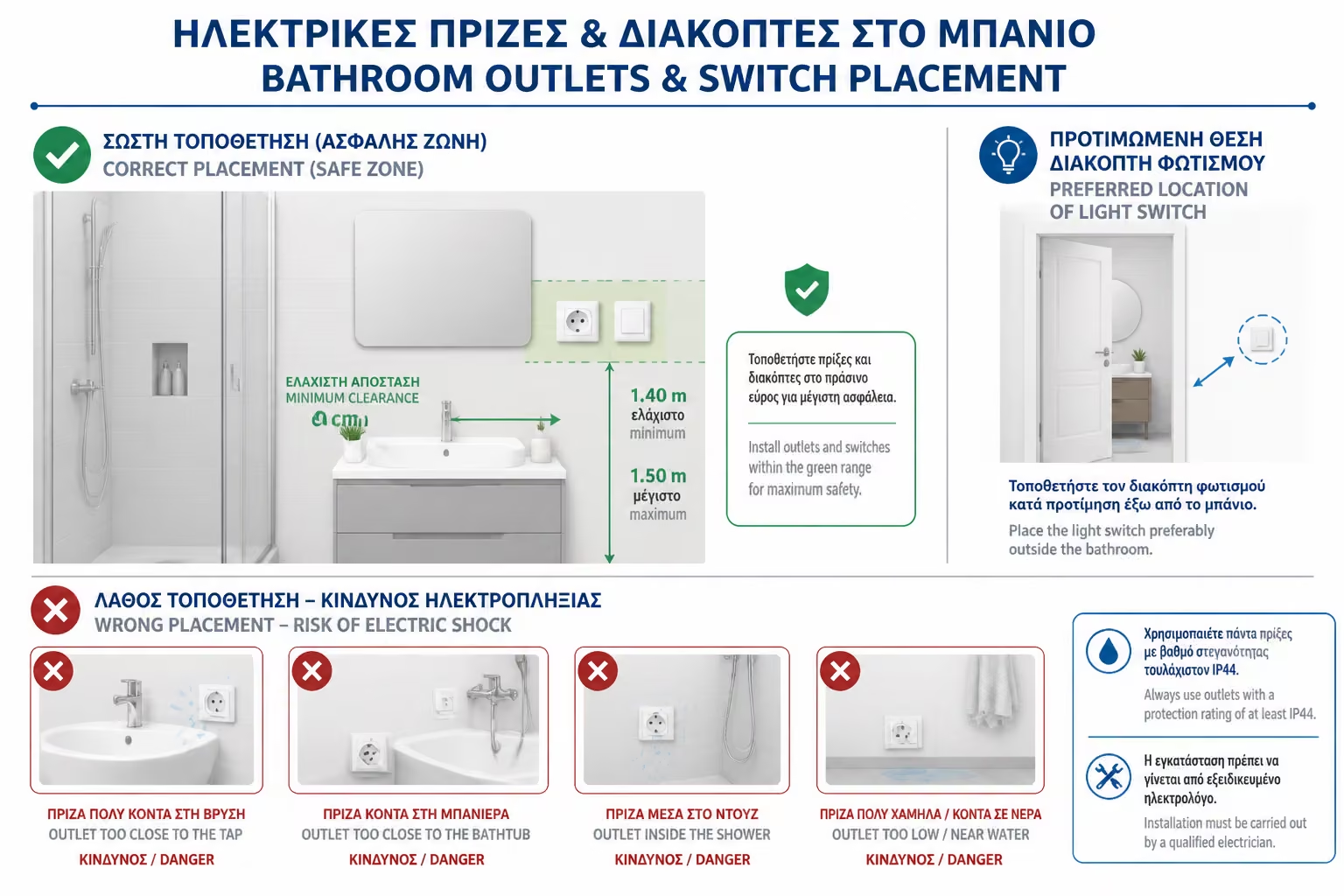
Safe positions for bathroom sockets and switches

📐 Distance from the basin

Although the formal rules focus on the bath and shower, good practice requires sockets near the basin to remain at least 60cm away from the tap and always use a sealed protective cover.

⬆️ Mounting height

Bathroom outlets are installed high, commonly around 1.40m to 1.50m, to reduce contact with standing water or splash risk in a fault situation. That height also makes mirror-area use easier without leaving cords hanging down into riskier positions.

🚪 The light switch

The safest option is to keep it outside the bathroom. If it remains inside, it must stay outside Zone 2. That reduces the chance of someone touching it with wet hands immediately after stepping out of the shower.

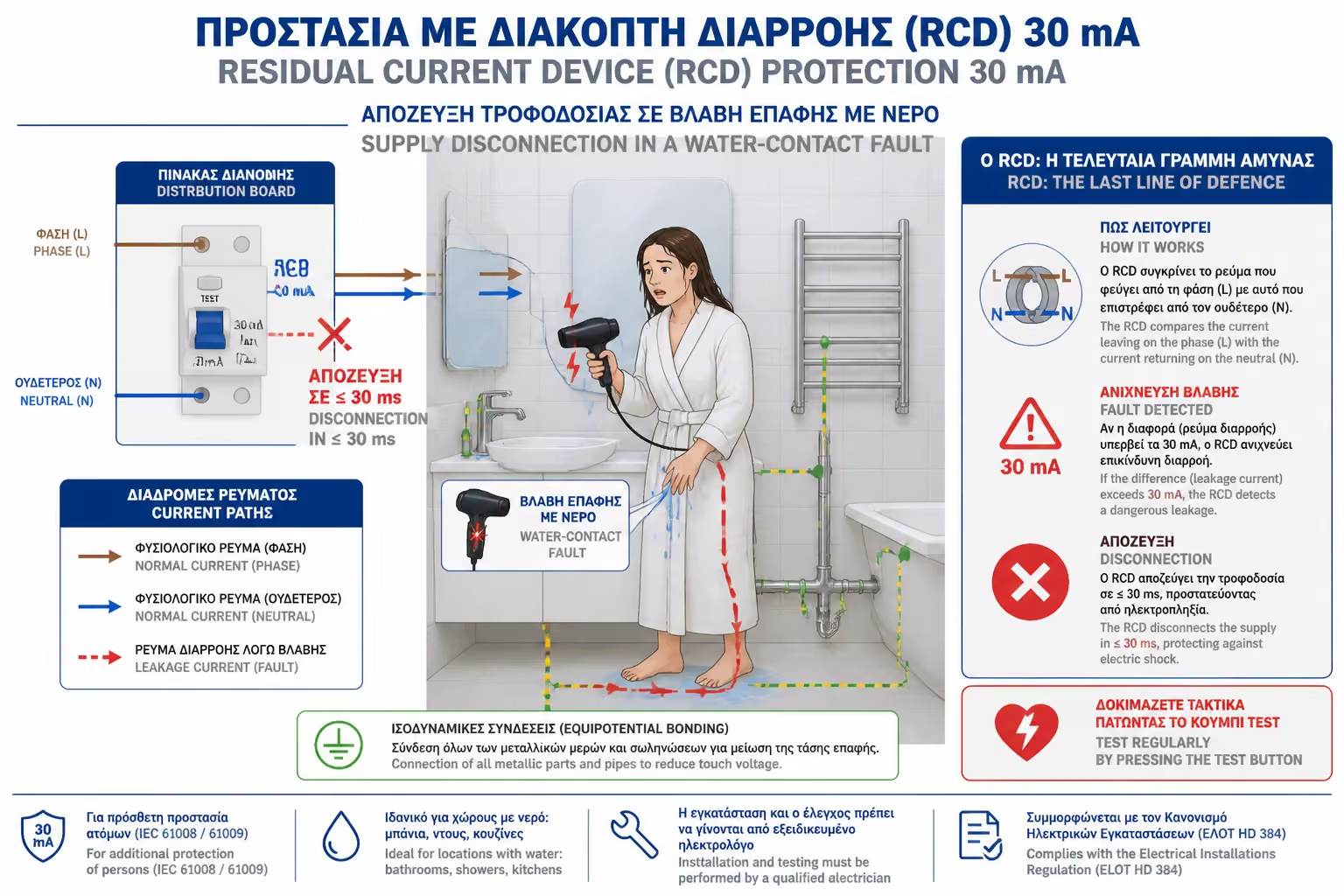
4. The Residual Current Device (RCD): Your Safety Guardian

No matter how good the sockets or fittings are, nothing replaces an RCD. By law, all bathroom circuits should be protected by a 30mA residual current device.

An RCD does not replace correct earthing, correct clearances or suitable materials. It is the last line of defence when something fails and the current must be disconnected immediately.

Bathroom protection with a 30mA residual current device

🛡️ How it saves lives

If an appliance such as a hair dryer comes into contact with water, the RCD disconnects the power in fractions of a second and prevents a potentially fatal electric shock. That is why every bathroom renovation should include a board-level protection check, not just new sockets and lights.

5. Tips for a New Bathroom Installation

🚫 Avoid extension strips and portable multi-outlets

They have no place in a bathroom, whether temporarily or permanently.

🌍 Check supplementary bonding

Ask for all metallic parts such as pipes, frames and tubs to be connected to the installation earth so dangerous voltage differences cannot develop. This matters because a person can touch two different metal elements at once without realising they have drifted to different potentials.

💡 Choose the right mirror lighting

Use luminaires with at least IP44 because steam gathers in that area and can corrode connections over time.

⚠️ Bathroom electrical work is not a place for improvisation. Safety zones and correct IP ratings are literally a life-and-death issue.

Related Articles

Preview