🪞 The mirror position defines the supply point
The height, width and furniture type directly affect where the cable should emerge from the wall.
The bathroom is probably the room where owners most often realise too late that “we should have passed one more cable.” Once the new tiles are installed, every missing provision turns immediately into costly remedial work, dust and frustration.
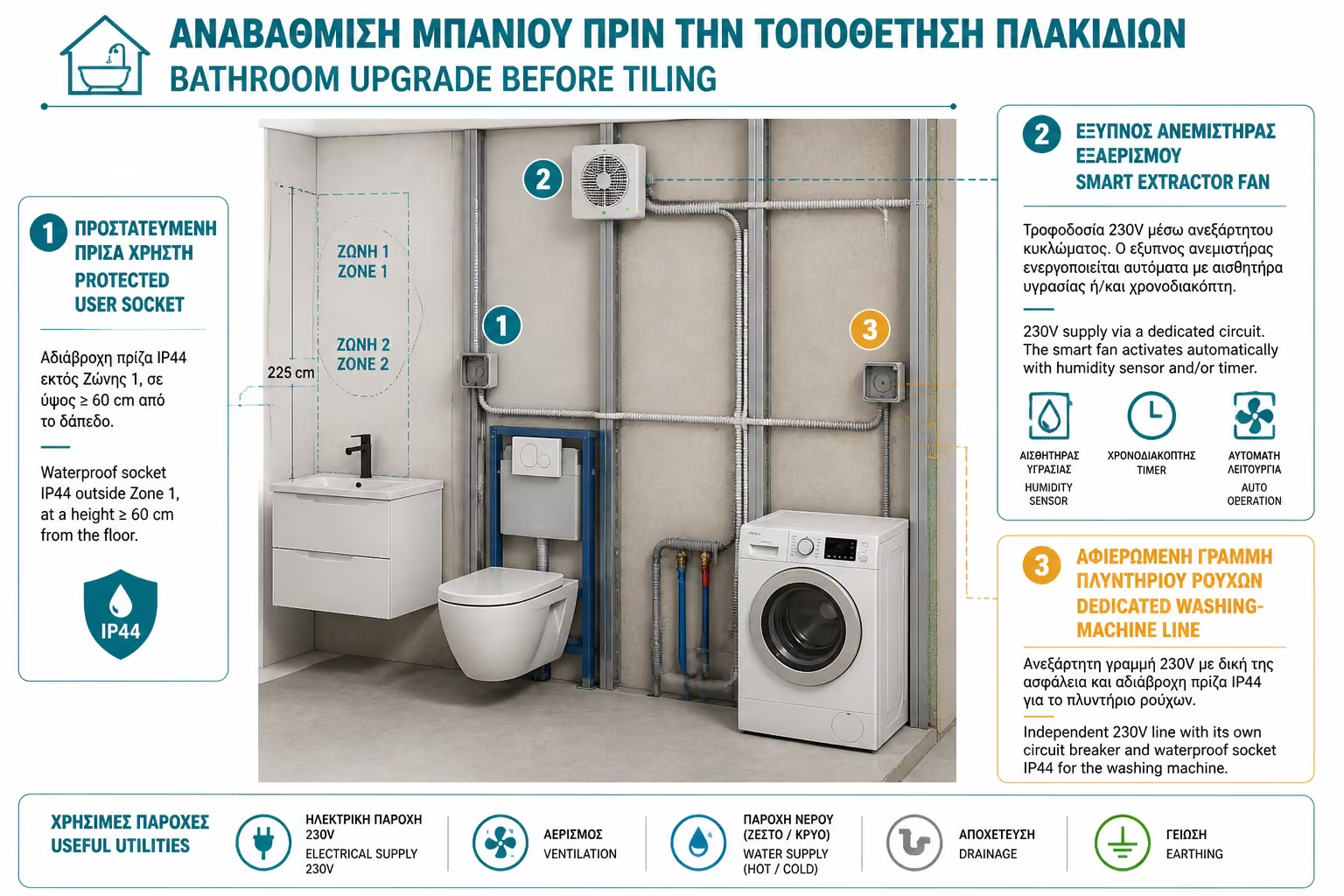
That is why the electrical part of a bathroom renovation must be resolved before the finishes go on. It is not enough to choose sanitaryware and taps. You also need timely provisions for the mirror, lighting, protected outlets, ventilation, washing-machine supply, heated accessories and equipotential bonding.
A modern bathroom mirror often includes perimeter LED lighting, anti-fog function or a lit cabinet. That means the electrical provision is not always just a simple 230V point in the middle of the wall.
You need to know where the mirror will sit, how it will be supplied and where the driver will be concealed if one is required. If you postpone those decisions until after tiling, you usually end up with a visible cable or no proper maintenance access.
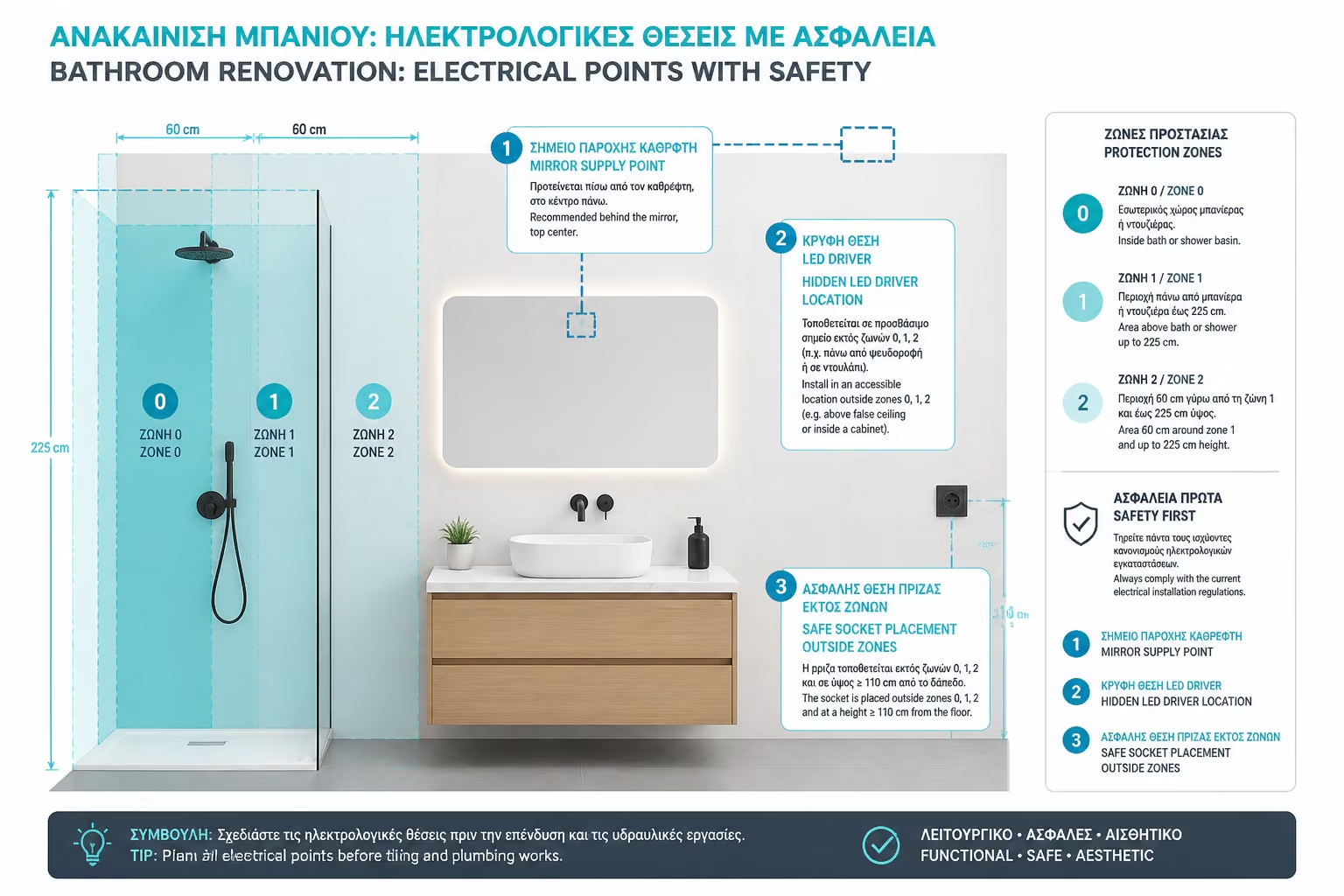
The height, width and furniture type directly affect where the cable should emerge from the wall.
A socket for a hairdryer or shaver should not be placed wherever it looks nice, but where the safety zones actually allow it.
If the mirror or fitting needs a driver, provide a safe concealed location with access rather than trapping it permanently inside the wall.
Even if you install a simple mirror today, a well-positioned supply can let you upgrade later to a lit or smart mirror without reopening the wall.
During many renovations the bathroom gains new functions: a timed extractor fan, a washing machine inside the room, an electric towel rail or other comfort devices. All of these need dedicated planning before the walls are closed up.
A proper extractor fan needs not only power but often a dedicated switched signal or permanent live, depending on how it will operate.
A washing machine should not be treated like a random small appliance. It deserves its own correctly protected circuit.
If you want a heated rail or bathroom radiator, the supply point and control position must be defined now so that cables do not remain visible later.
Everything added to a bathroom should not only work today but also be replaceable in a few years without destroying the new finishes again.
In the bathroom, water, metal parts, humidity and electrical devices all coexist. Supplementary equipotential bonding is a basic safety measure, especially in older apartments where the original earthing quality may be questionable.
Relevant extraneous conductive parts need to be identified and correctly bonded so that, in the event of a fault, dangerous voltage differences do not develop between pipework, radiators and appliances.
It is one of those measures that remain invisible once the renovation is finished, yet become far more valuable than many visible finishes if a real fault ever occurs.
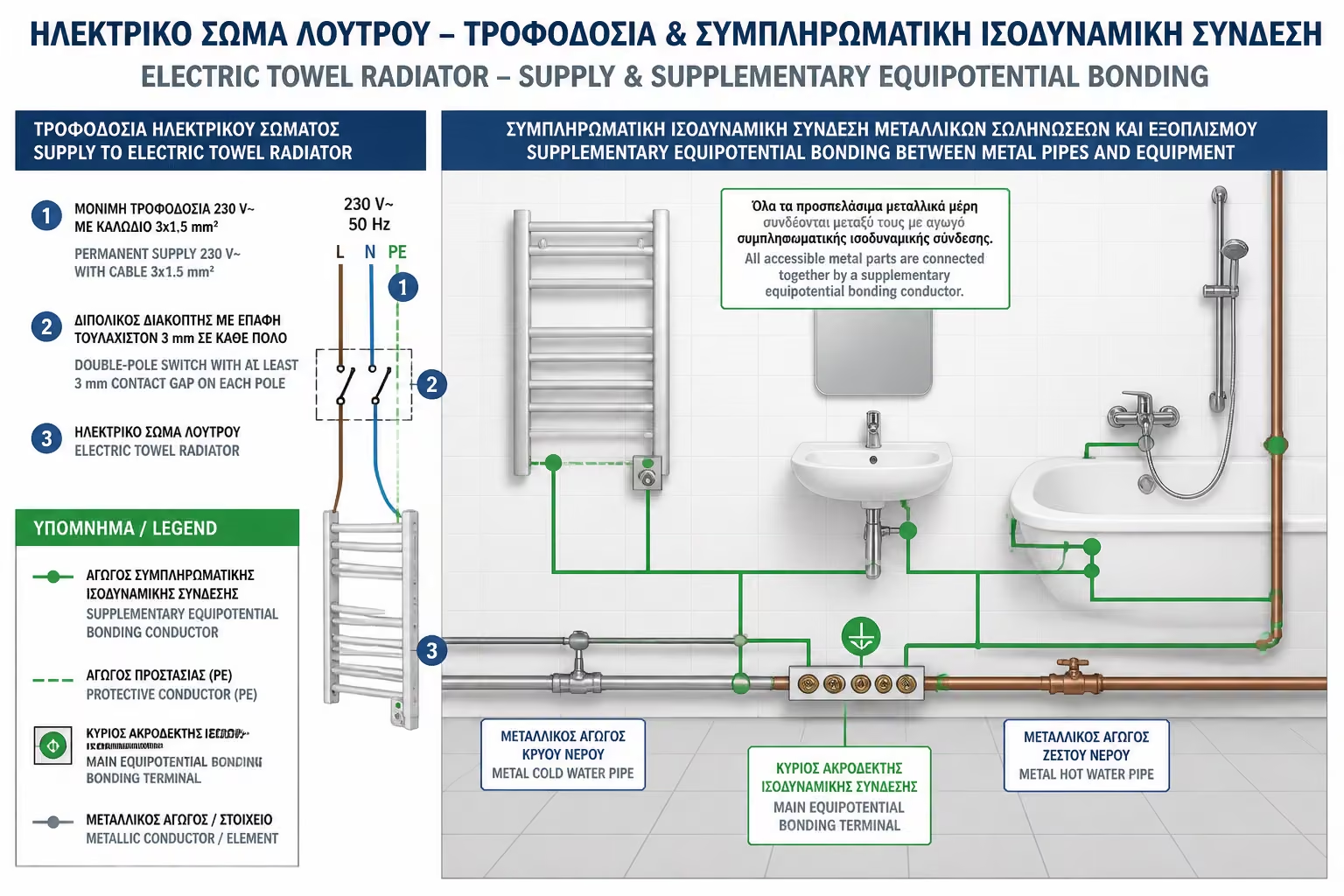
Equipotential bonding is a practical protection measure, not a theoretical luxury.
If you remember it only after the tiles and furniture are installed, access becomes much more difficult.
Bathroom safety is a system. One isolated measure is never enough without the rest of the protective strategy.
Before the tiler begins, run a complete point-by-point check. This is the last moment when omissions can still be corrected easily and at relatively low cost.
A bathroom is small in area but dense in technical requirements. Lighting, water, safety zones, ventilation, appliances and metal parts all coexist in a very tight space. That is why the final pre-tiling review is not a formality but a real quality-control stage.
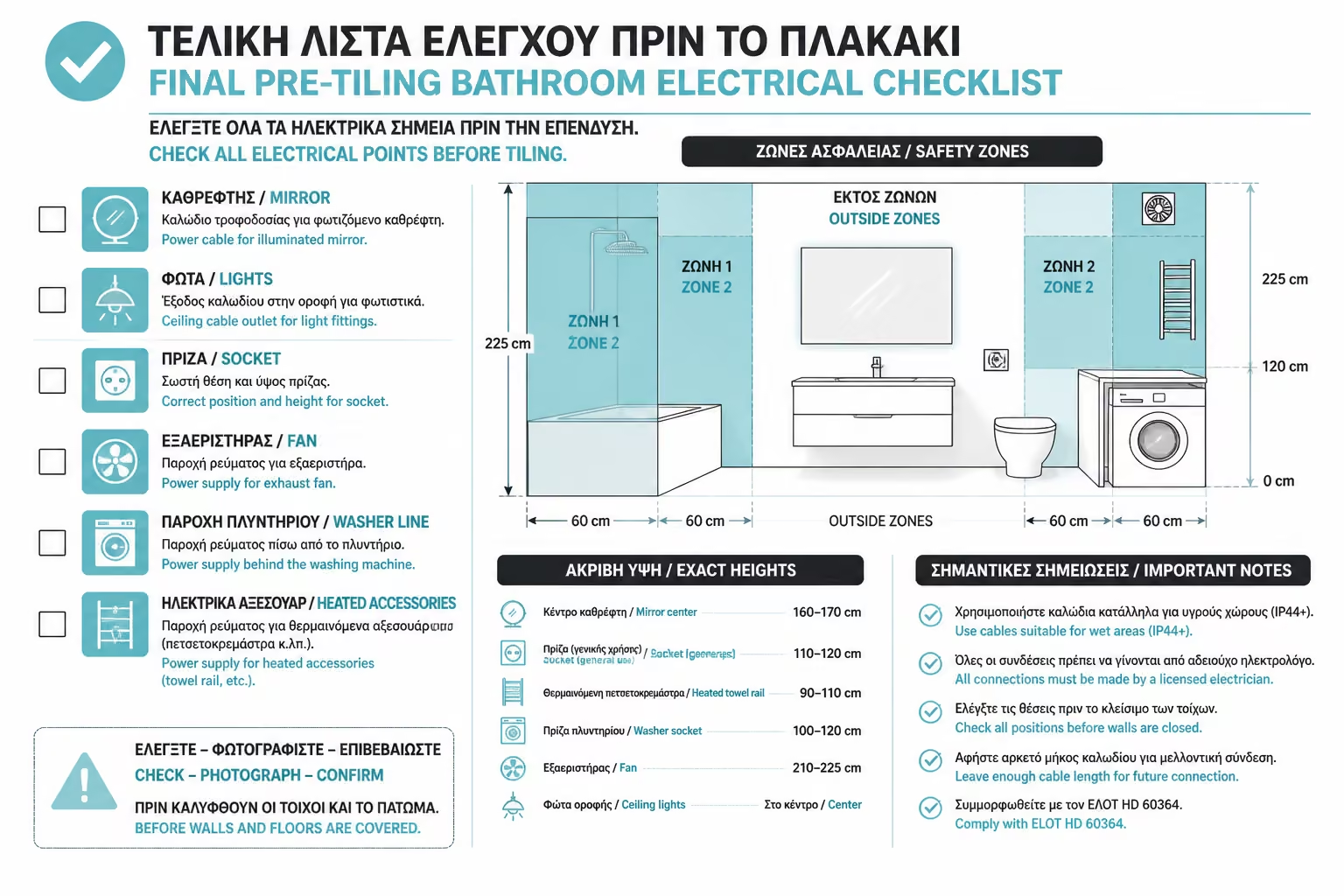
Mirror, lighting, socket, fan, washing machine, heated accessories and anything else that will later be connected.
Even good drawings fail if a socket ends up behind the mirror or a switch is blocked by furniture.
A photo record helps during every later drilling job, mirror replacement or future upgrade.
Before the tiler starts, ask the electrician to confirm circuit logic, protection and exact positions. It is the last inexpensive moment for corrections.
The mirror, hairdryer, toiletries, fan and access to the supply points all need to work comfortably in daily life, not only look acceptable on paper. A truly successful bathroom feels well-planned every day after handover.
💡 In a bathroom, “we will sort it out later” almost always means “we will break it again later.”
Return to category.
Go to categoryReturn to the central guide.
Go to guide