Neutral everywhere
It opens the door to reliable relays and smart switches without awkward workarounds.
The most expensive smart-home upgrade is usually the one decided too late. Once the house is finished, even a small automation feature may require new cabling, repairs and far more disruption than the result is worth.
Proper future-proofing does not mean committing to a brand or platform today. It means installing the basic infrastructure that will let you choose tomorrow without tearing the house apart.
Several of these steps cost very little now but preserve a disproportionate amount of flexibility and value later.
The main trap is believing that batteries and Wi-Fi will solve everything later. Those solutions are useful, but they do not easily replace proper infrastructure when you want serious automation and a clean final result.
In many conventional installations, the switch box contains only live and switched live. That is enough for a mechanical switch, but not enough for many smart relays and smart switches that need permanent power.
Without a neutral at the switch location, future options become limited, more expensive or dependent on compromise no-neutral products with restrictions.
Adding a blue neutral conductor to every switch box costs very little during first installation and completely changes your automation flexibility later.
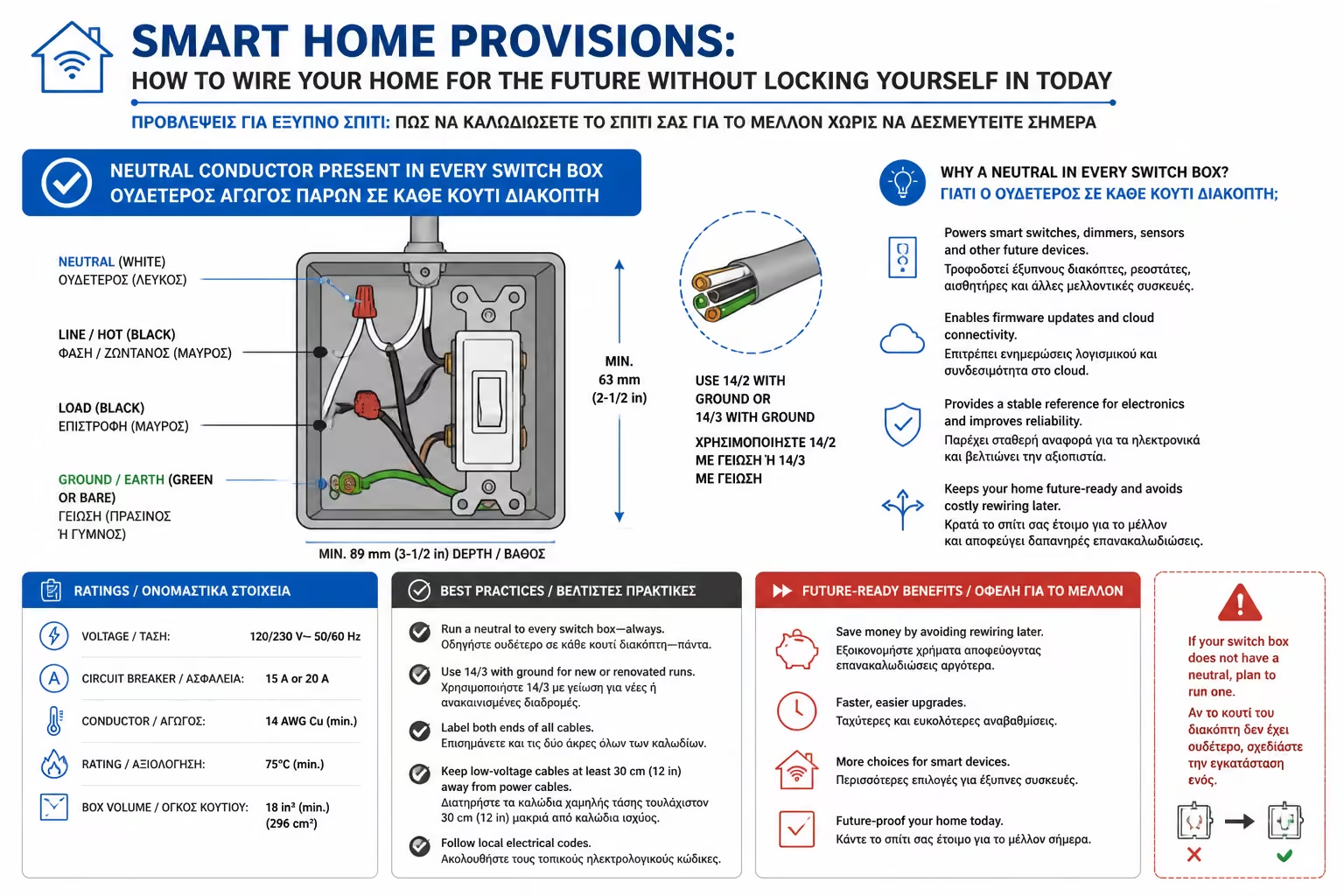
It opens the door to reliable relays and smart switches without awkward workarounds.
Emergency solutions often come with limitations or strange behaviour on LED loads.
The extra conductor is easy to include while the installation is still open.
It preserves options regardless of the platform you eventually choose.
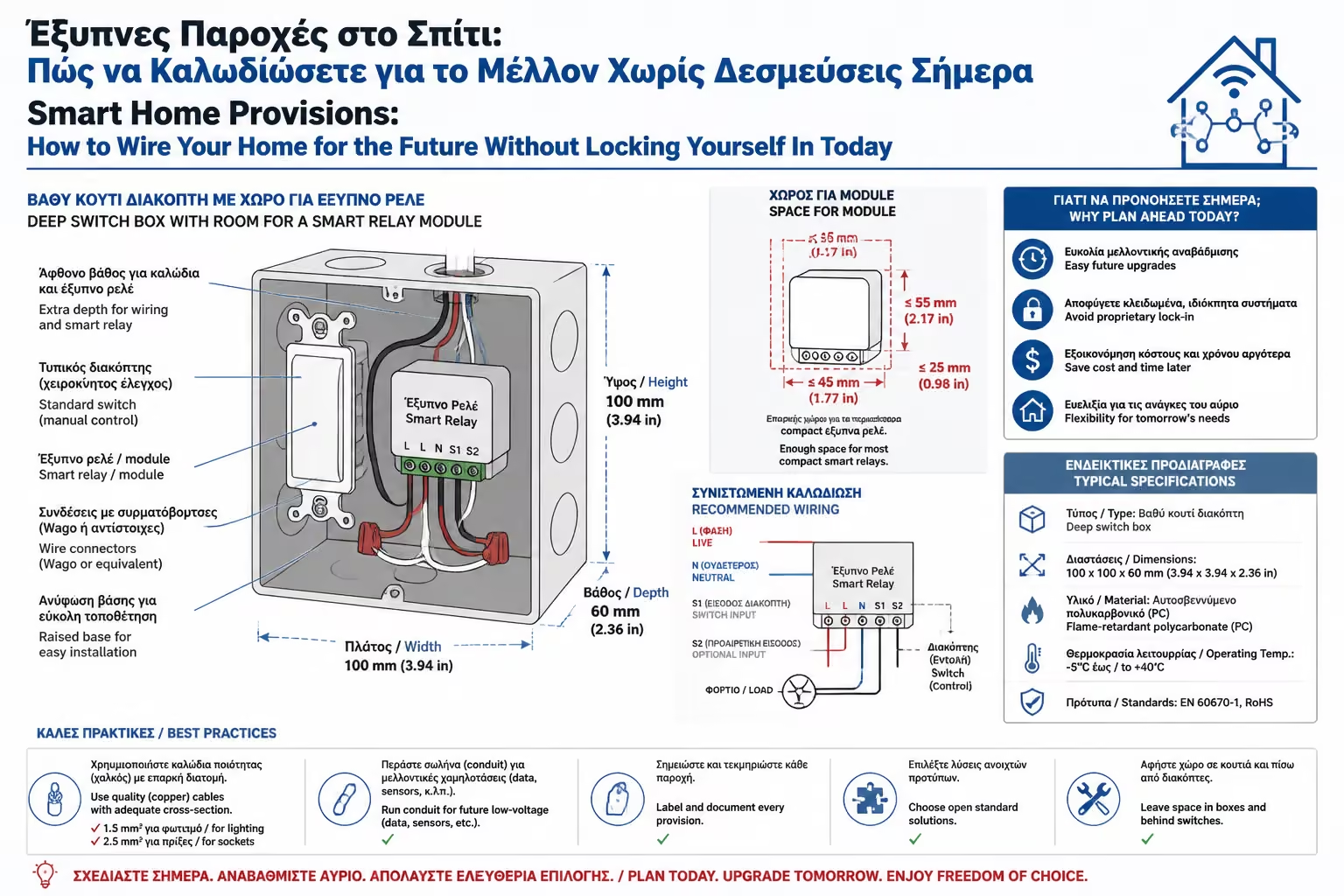
Smart relays, dimmers and micro-modules usually sit behind conventional devices. If the box is shallow and already packed with conductors, there is no real room for anything else.
Deep 50-60 mm boxes provide the breathing space needed for both today's wiring and tomorrow's automation module. This matters even more in multi-gang frames and more complex control points.
That makes a cheap structural-stage provision far better than breaking finished walls later just to gain a little extra depth.
They create room for current wiring and future automation hardware.
Without it, installing and servicing a smart module becomes miserable.
Living rooms, bedrooms, corridors and service spaces can all become automation zones later.
Box depth is one of the classic smart-home retrofit pain points.
If the project may one day move toward a more serious wired automation system, provision for green KNX bus cable in strategic points is extremely valuable. It does not force you to activate the system today, but it keeps the possibility alive.
At the same time, structured UTP wiring for televisions, access points, cameras and central-control points provides a much more mature backbone than relying on Wi-Fi for everything.
A smart home becomes reliable when the wiring leaves room for both hard-wired and hybrid architectures.
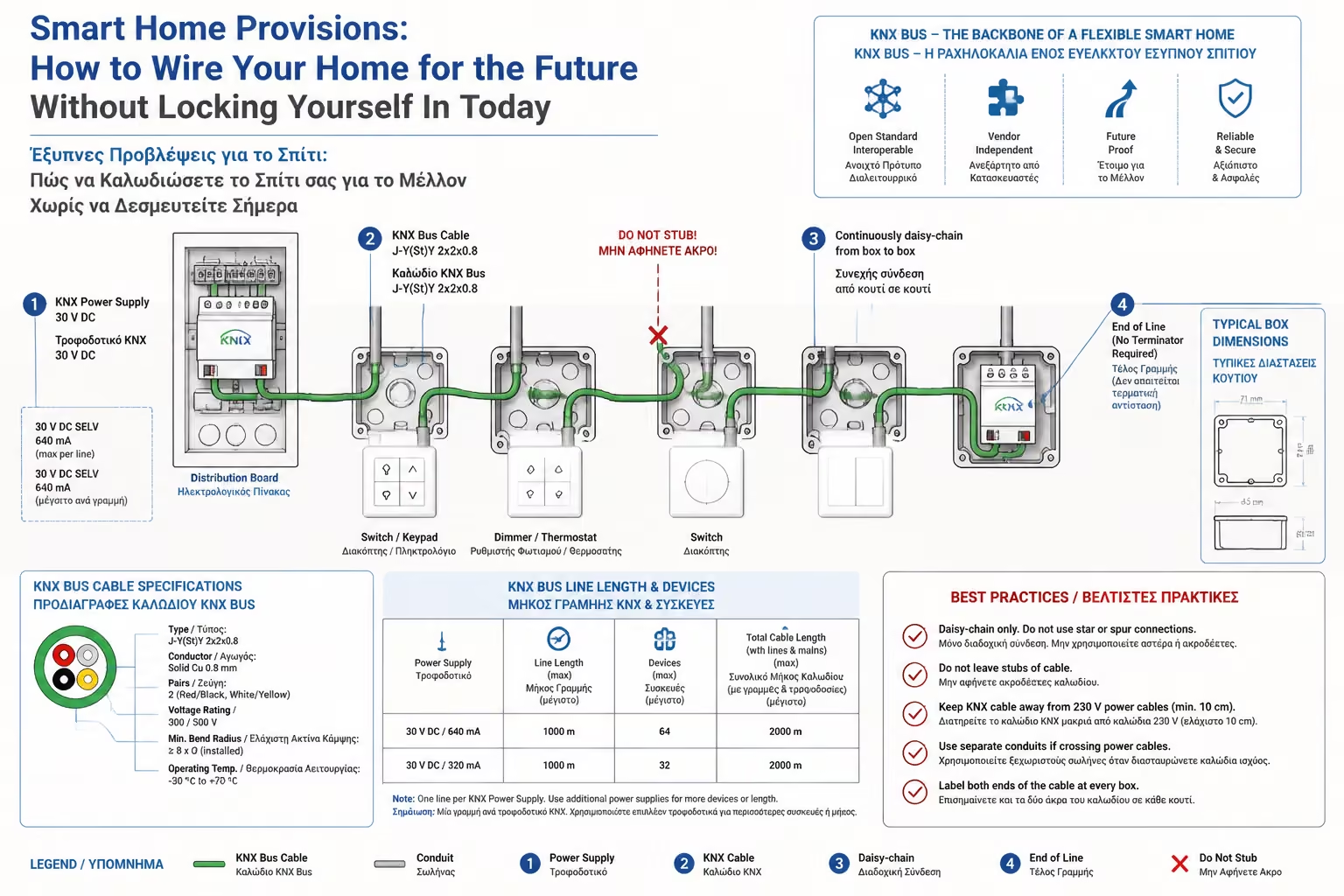
It keeps the route open to fully wired central automation later.
Cameras, media points and central equipment all benefit from wired infrastructure.
Wireless convenience is useful, but a wired backbone remains stronger.
Even if you do not know today's final system, the infrastructure keeps multiple paths open.
Many smart-home ideas fail not because they are technologically complex, but because one simple cable is missing at the wrong location. Electric curtains and blinds need power near the motor, cameras need data, and sensors need strategic provisions in corridors or ceilings.
These small provisions have a large effect. Without them, the owner either abandons the idea or ends up with batteries, chargers and ugly surface routes.
The correct mindset is to treat smart home as future building infrastructure rather than as a set of gadgets that will somehow be attached later.
The same applies to access points, video-entry stations, local control panels and media points. The more of these you treat as future network nodes, the more mature and adaptable the overall wiring becomes.
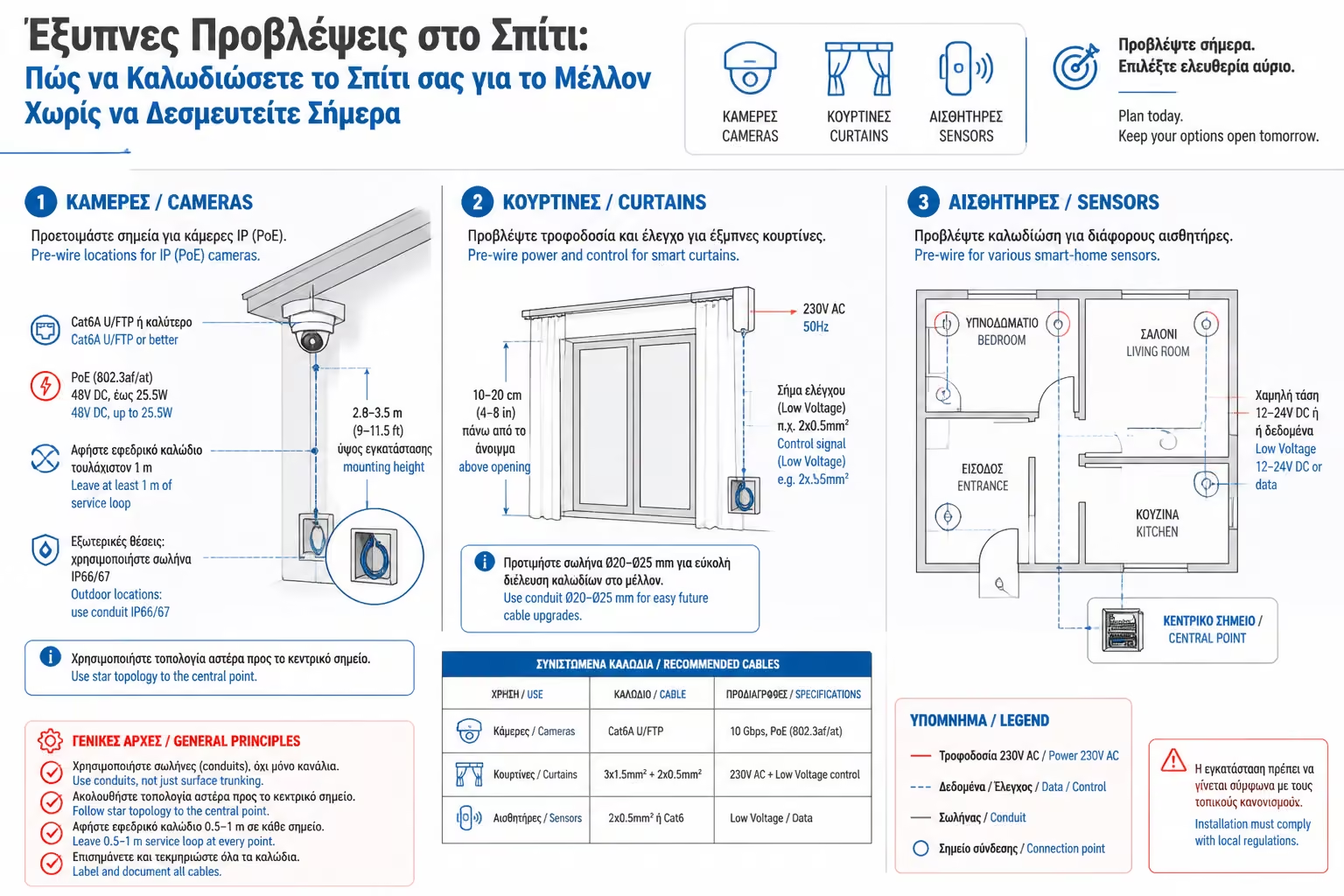
A small high-level box or provision makes future shading automation far easier.
Security and video performance improve sharply with wired infrastructure.
Small reserved points in ceilings or corridors enable much better automation logic.
The earlier you think of it that way, the cleaner and cheaper the solutions become.
Return to category.
Go to categoryReturn to the central guide.
Go to guide