A Schuko socket is an emergency option
It is not the right basis for safe, fast and routine EV charging.
Electromobility has already moved from theory into the mainstream market. If you are building or renovating today, preparing for a wallbox is not a luxury gadget decision but sensible infrastructure that improves both usability and property value.
The key point is that the correct preparation now costs only a few metres of cable, conduit and some reserved panel space. If you postpone the decision until the house is finished, the same work turns into demolition, damage and disproportionate cost.
This provision has to be designed as a future dedicated charging circuit, not as an ordinary socket in the garage that might somehow be enough.
An ordinary domestic socket should be seen only as an occasional or emergency solution, not as a serious daily charging strategy. Its available power is low and the charging times for a modern EV battery become impractical.
More importantly, a Schuko outlet was not designed for sustained high-current operation over many hours. Continuous charging can overheat contacts, age materials prematurely and increase the risk of fault or fire.
A wallbox is the correct device because it communicates with the vehicle, controls charging safely and is paired with a dedicated circuit and suitable protection.
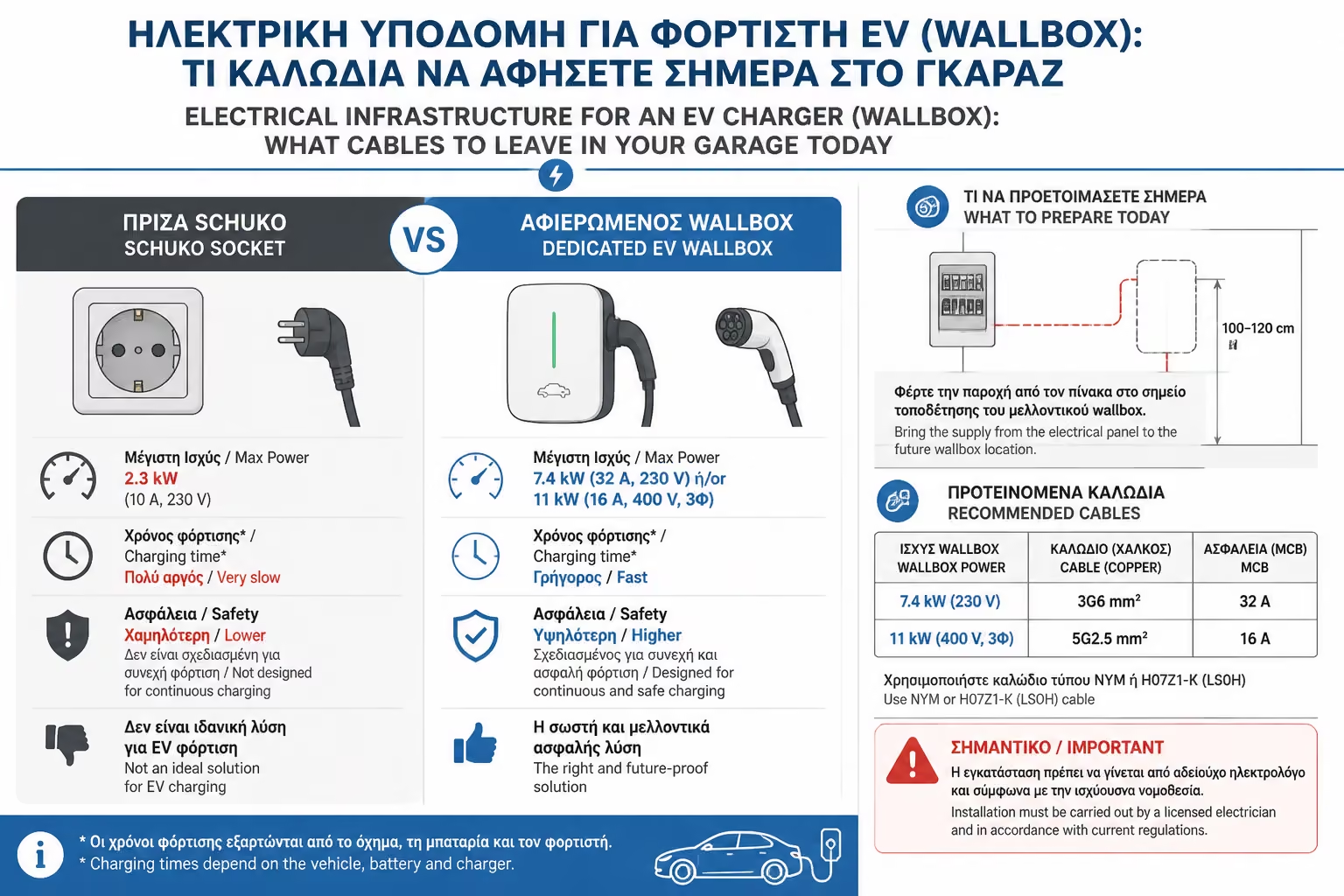
It is not the right basis for safe, fast and routine EV charging.
An ordinary outlet turns full charging into an all-day affair.
Domestic outlets do not like operating near their limit for many hours.
It is designed as a controlled charging point with the right electrical strategy behind it.
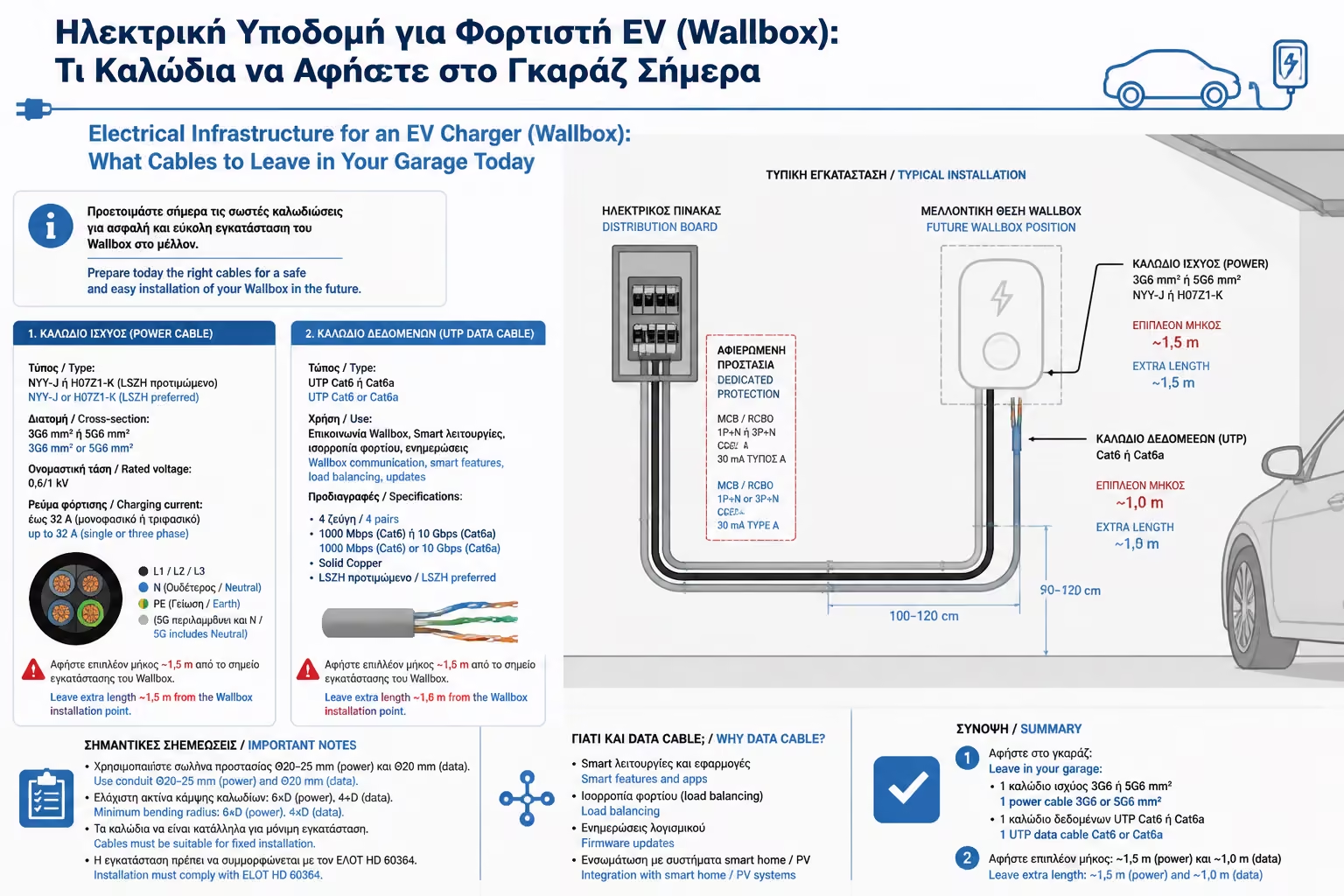
The route to the parking bay should be designed as a dedicated future supply. In single-phase terms that often means 3x6 mm², while a more future-proof three-phase approach usually points toward 5x6 mm².
In addition to power, it is highly useful to install a UTP Cat6 cable at the same time. That enables communication, monitoring and load-management functions such as dynamic load balancing with a meter in the main panel.
The data cable is what many people forget, but it is also what separates a vague provision from a genuinely intelligent charging infrastructure.
Future charging should not be improvised on top of unrelated garage loads.
The choice depends on both today's supply and tomorrow's ambitions.
It supports communication, smart control and better charging management.
Running everything together early is far cheaper than retrofitting later.
Power cables for a wallbox are not small, forgiving lighting cables. They need adequate conduit diameter, clean bends and a rational route layout.
In buried or external runs, mechanical protection has to be stronger as well. Heavy-duty or twin-wall conduit reduces the risk of crushing, traffic damage and early ageing of the route.
If the conduit is undersized or badly routed, the problem appears later when the charger installer tries to pull the cable and discovers that the supposed provision is unusable.
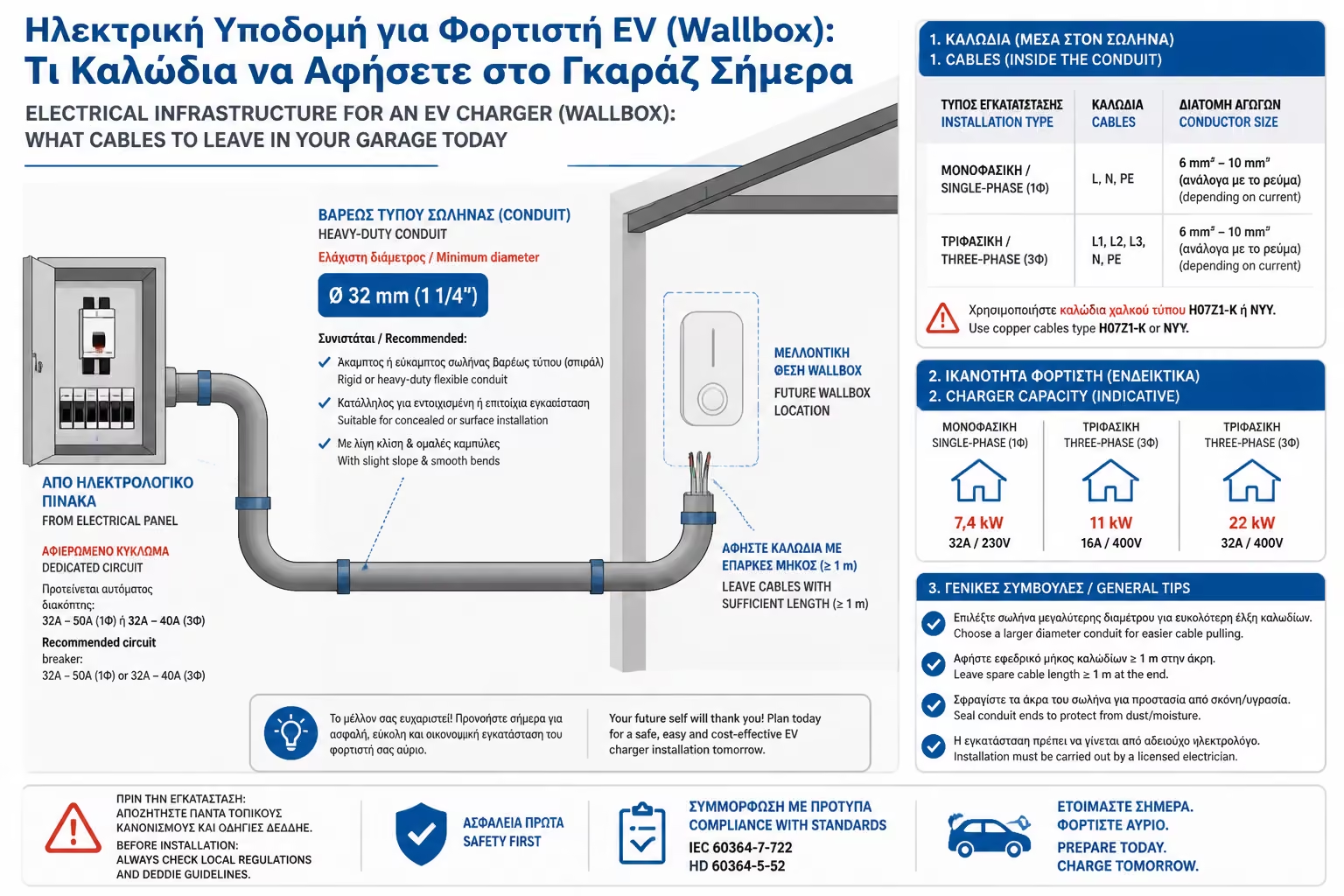
Correct diameter is what allows the final cable installation to happen without abuse.
The fewer violent direction changes, the better for the future installation.
Load, UV exposure and buried service demand more serious conduit protection.
A provision is worthless if the cable ultimately cannot be installed.
A wallbox does not simply connect to any spare breaker. It requires dedicated protection, including an MCB and an RCD compatible with EV-charging requirements.
In practice that often means several DIN-rail modules, depending on the arrangement, RCD type and any additional meters or load-control hardware. If the panel is already packed, the later installation becomes harder and more expensive.
So proper provision includes not only the route to the garage but also spare panel capacity and an honest view of the available electrical supply.
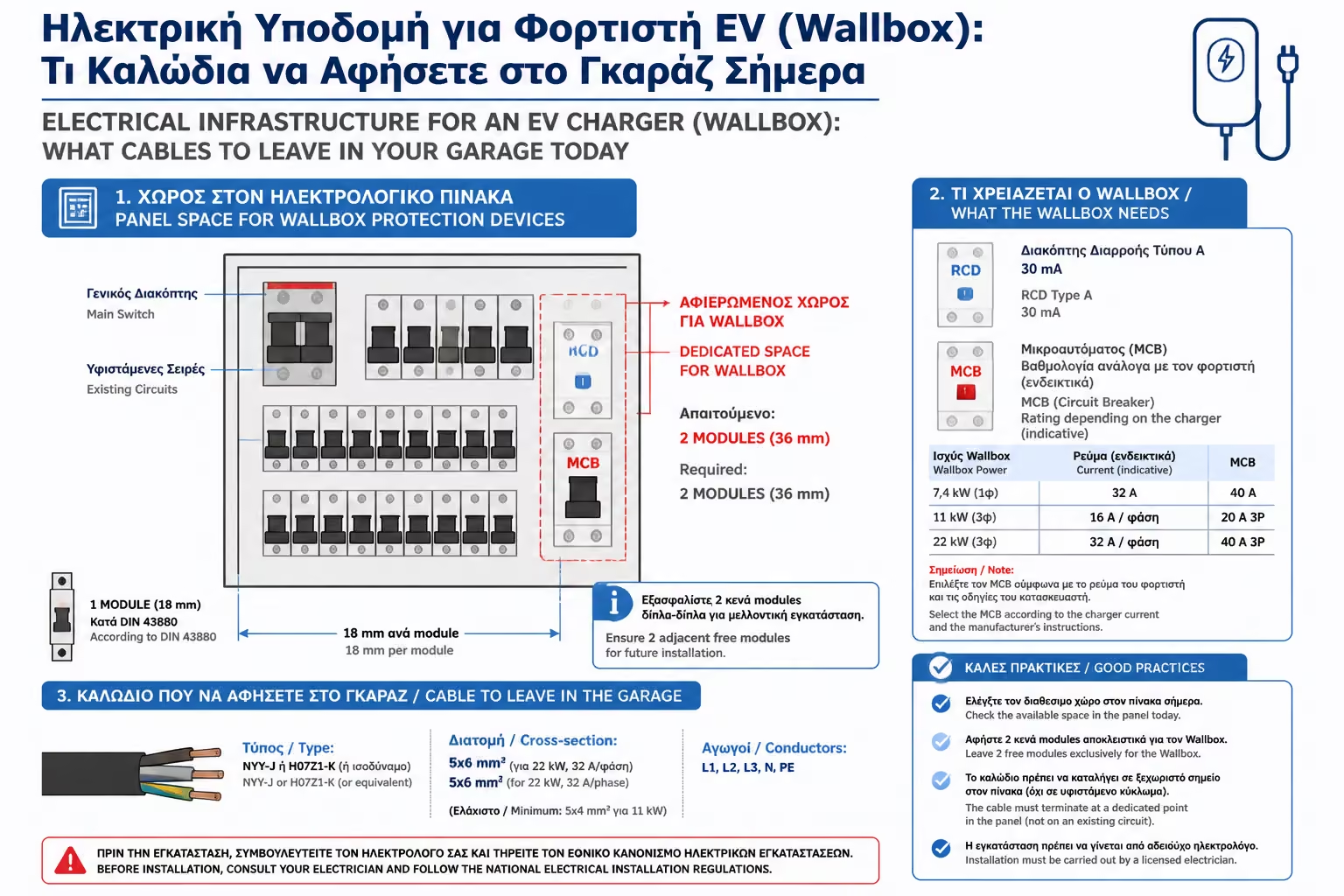
The charger should have its own properly sized protected circuit.
Leakage protection for EV charging has specific requirements and should not be improvised.
The panel needs genuine physical capacity for the future addition.
Cable, conduit, panel and load management all belong to the same design decision.
Return to category.
Go to categoryReturn to the central guide.
Go to guide