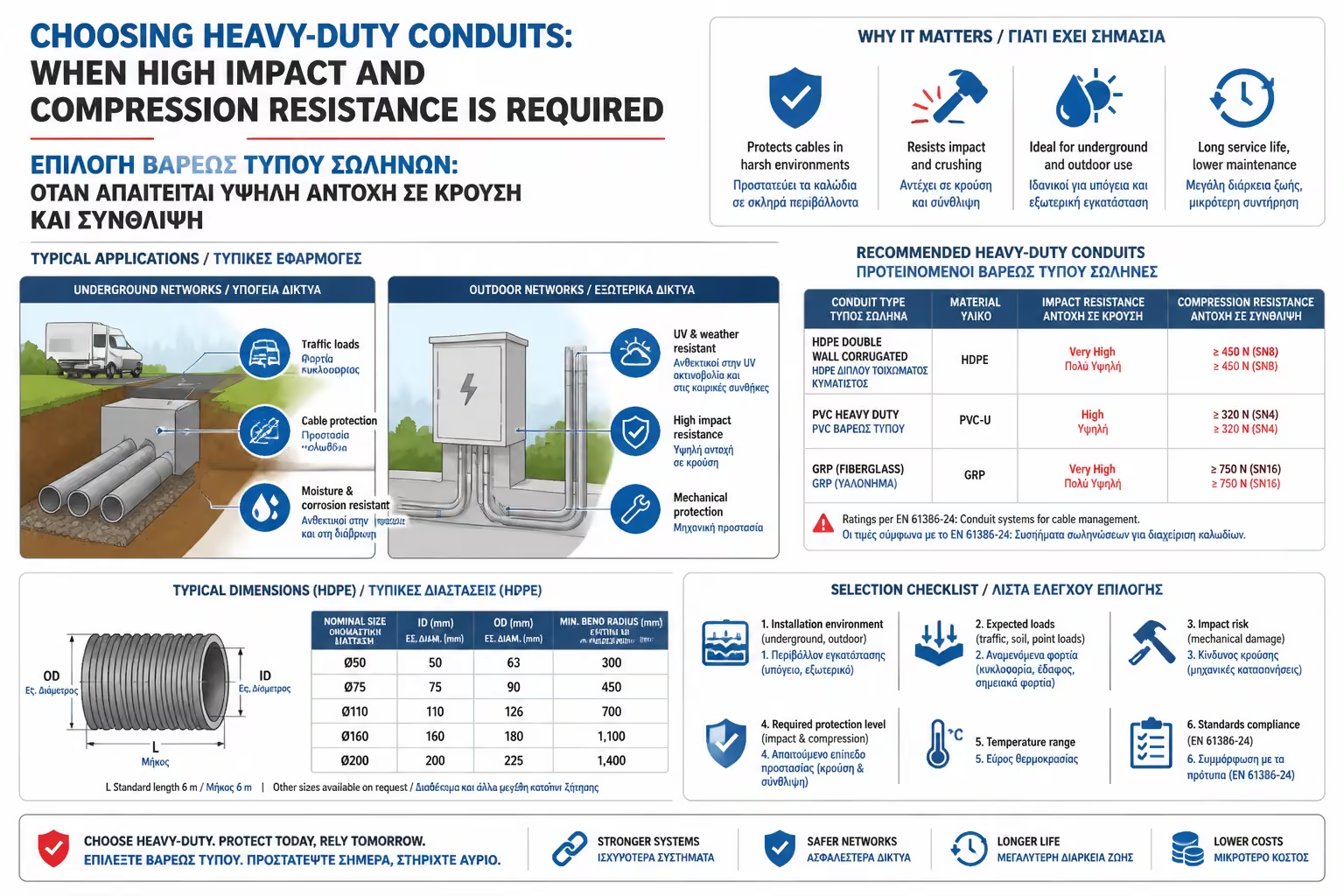
Newton is a real engineering rating
It describes how the conduit behaves under actual compressive load.
Inside a normal home, most electrical conduits live in a relatively protected environment. They sit inside plaster, drywall or concealed zones where they do not face real impact, traffic or ultraviolet exposure.
The moment the installation moves into a garden, garage, roof or outdoor service space, the conditions change dramatically. Soil pressure, vehicle loads, sunlight and accidental impact all become daily realities.
In those situations heavy-duty conduit is not an over-specification but the only realistic choice. Selecting the correct strength category matters just as much as selecting the cable itself.
Conduit classes expressed in Newton describe resistance to compression. A 1250N conduit tolerates much higher direct pressure than 320N or 750N without permanent deformation, and it usually comes with higher impact resistance as well.
That does not make it indestructible, but it does mean it is intended for environments where the conduit faces genuine mechanical stress. The difference becomes critical when there is soil load, vehicle traffic or regular risk of impact.
In the market these conduits are often black or dark grey and carry markings that indicate their rating. The correct selection starts from reading that marking, not from guessing based on colour alone.
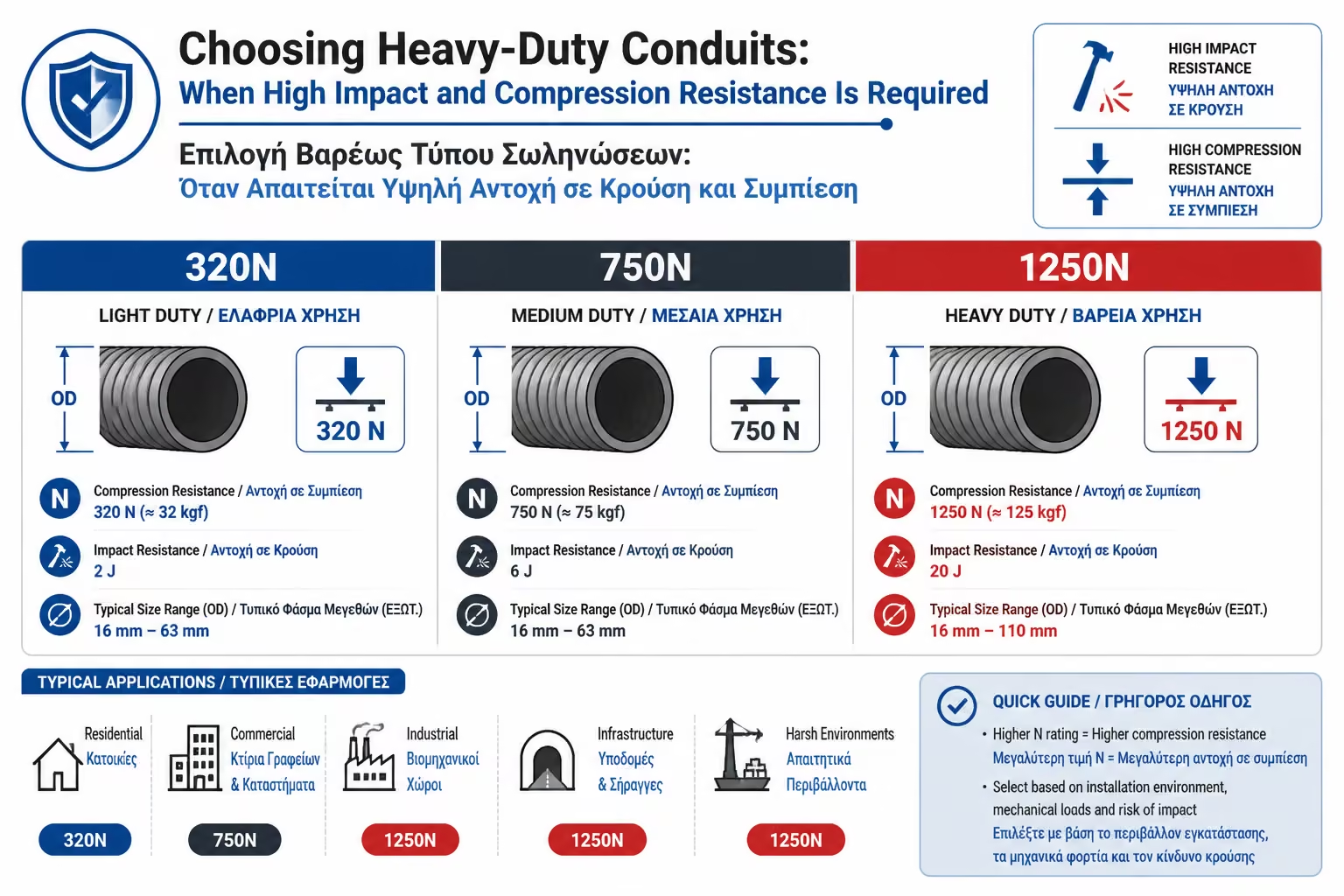
It describes how the conduit behaves under actual compressive load.
Where an ordinary conduit would flatten or crack, heavy-duty conduit is designed to stay functional.
The right conduit is selected from technical data, not from assumptions on site.
If the conduit survives, future cable replacement and extension remain possible.
In trenches, gate supplies, gardens and external service runs, the conduit is exposed not only to a single accidental hit but to permanent pressure. Soil, moisture and traffic loads test its integrity every day.
Once sun exposure is added, the challenge grows again. Ordinary light-coloured plastic conduits age rapidly under UV radiation and become brittle after only a few summers.
That is why underground or externally exposed runs should use either properly UV-stabilised 1250N conduit or dedicated twin-wall systems where the application demands them.
Soil load and traffic demand a conduit that will not gradually collapse.
UV exposure quickly destroys unsuitable plastic materials.
They often provide better mechanical behaviour and lower pulling resistance on underground routes.
It is not enough for the route to survive installation day; it has to remain dependable for years.
In private garages, storage rooms, workshops and technical spaces, exposed routes are constantly threatened by carts, tools, doors and awkward vehicle manoeuvres. In these places the conduit needs impact resistance as much as compressive strength.
1250N conduit covers many of these applications well, provided it is supported correctly and not exposed beyond its intended design envelope. In more aggressive settings, though, even that may not be enough.
At loading bays, in heavy industry or in forklift routes, galvanised steel conduit often becomes the appropriate solution because its mechanical protection is on another level entirely.
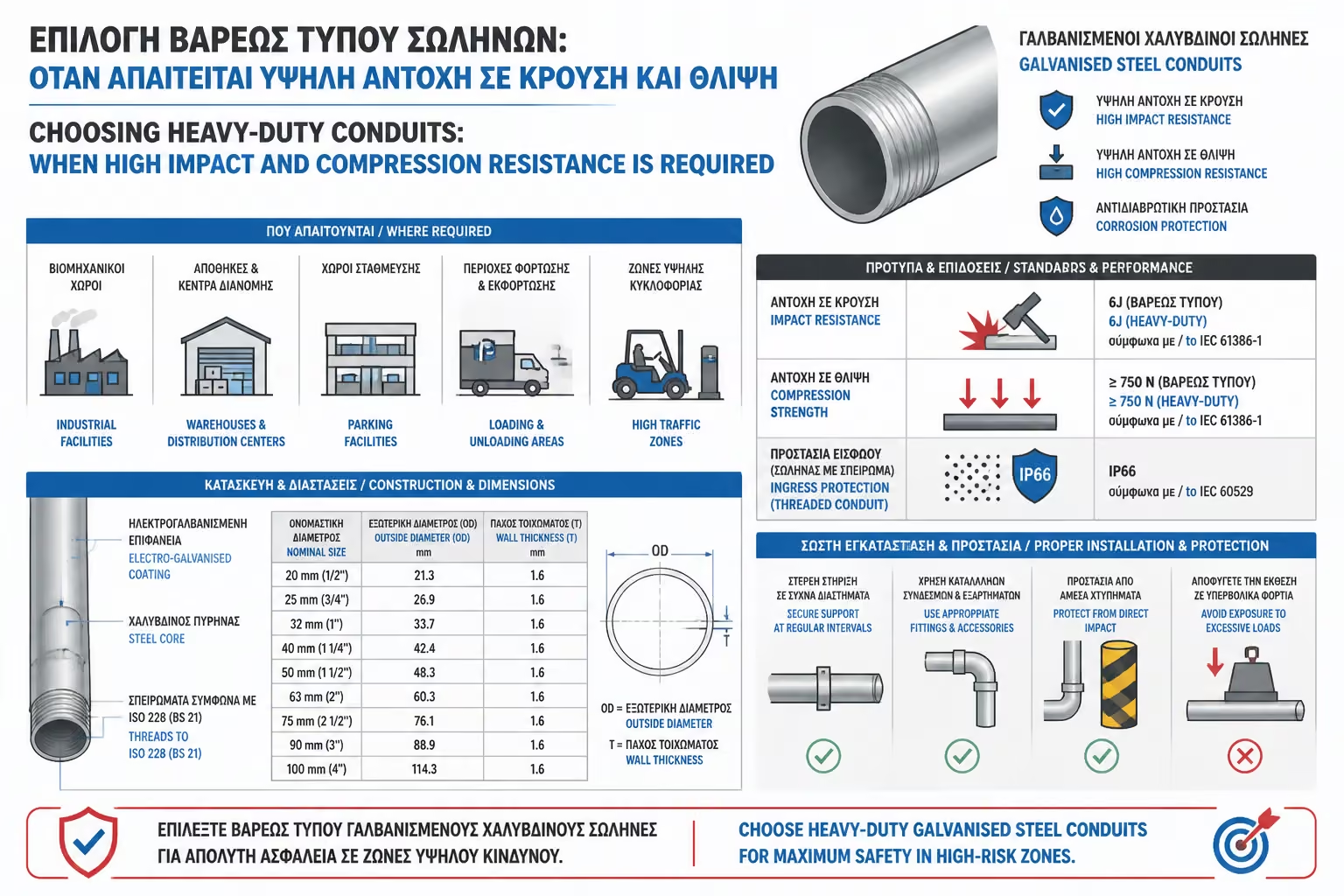
The installation has to be designed for real use conditions, not for ideal drawings.
Garages, stores and exposed outdoor service routes usually belong in this category.
Where impact is frequent and severe, steel is often the only realistic answer.
Even a strong conduit fails if it is installed carelessly or outside its support rules.
Once a design moves into steel conduit, mechanical protection increases dramatically, but electrical safety requirements rise with it. The metallic network must be correctly earthed so it does not become dangerous in the event of insulation failure.
That means final selection is never just about brute strength. It combines the environment, the expected impact, sun exposure, maintenance strategy and the earthing or waterproofing obligations of the installation.
Put simply, the wrong conduit choice can undermine the quality of the entire system. The right conduit is the one that matches the real risk of the project, not the one left over from an indoor job.
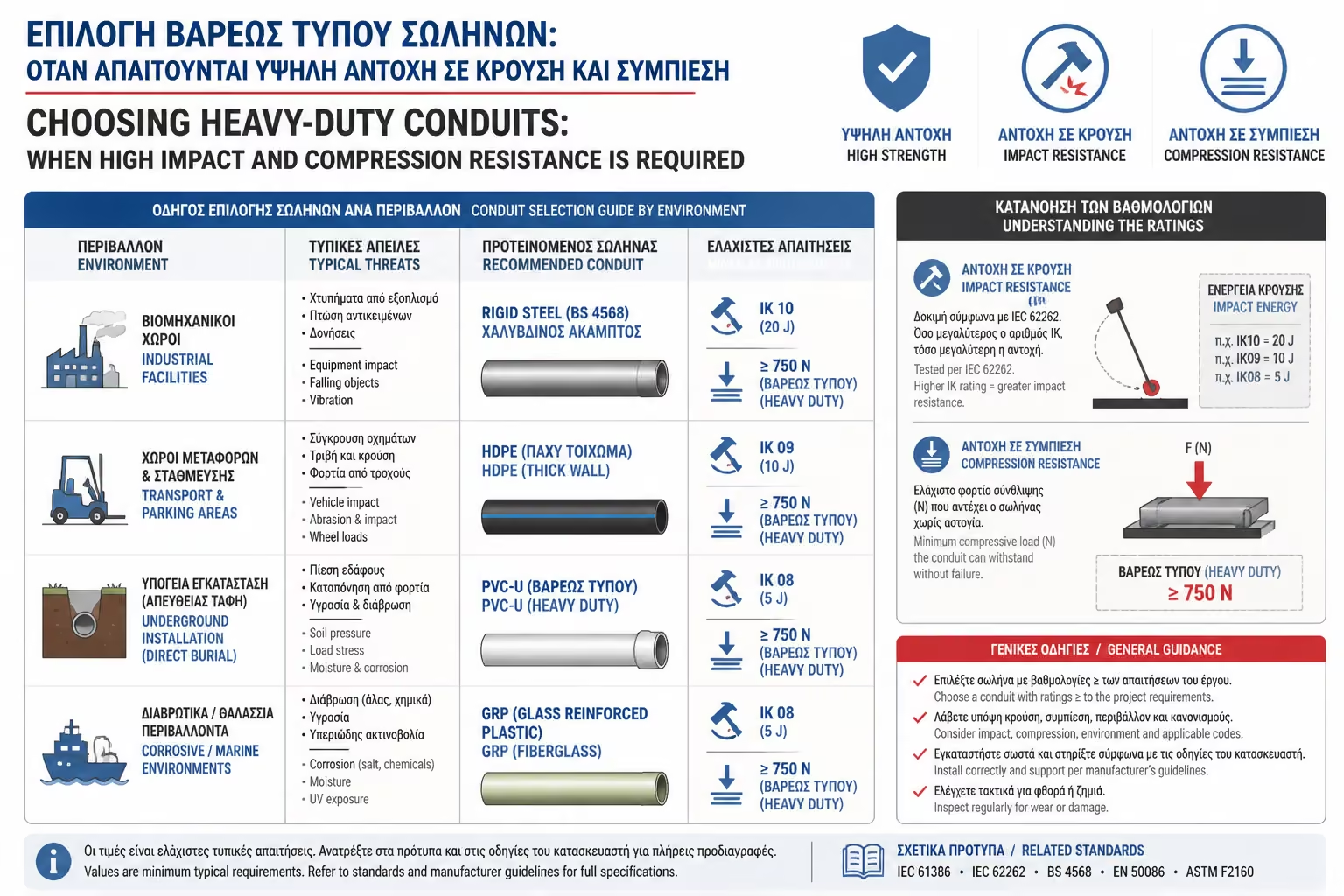
Mechanical armour is useless if it introduces an electrical hazard.
Selection has to be made holistically, not against a single criterion.
If the conduit stays intact, the network remains maintainable as well.
A living room, a concrete slab, a garage and an underground run should not all receive the same conduit.
Return to category.
Go to categoryReturn to the central guide.
Go to guide