320N is a site risk
Light conduit deforms too easily under boots, tools and wet-concrete pressure.
Concrete day is one of the most chaotic moments on any building site. Pumps, heavy boots, vibrators and fast-moving crews create an environment where every weak detail gets destroyed immediately.
In that environment, electrical conduits are exposed. If they are crushed, cracked or filled with cement slurry, the damage is extremely difficult to correct once the slab has hardened.
That is why routing conduits in a slab is not a last-minute chore but a genuine technical operation. The conduit rating, its position inside the reinforcement, the sealing strategy and the supervision during the pour decide whether the system remains usable for decades.
If this stage fails, the recovery options are usually poor: visible surface trunking, additional chasing or heavy drilling into completed concrete. Discipline before and during the pour is therefore far cheaper than any later rescue operation.
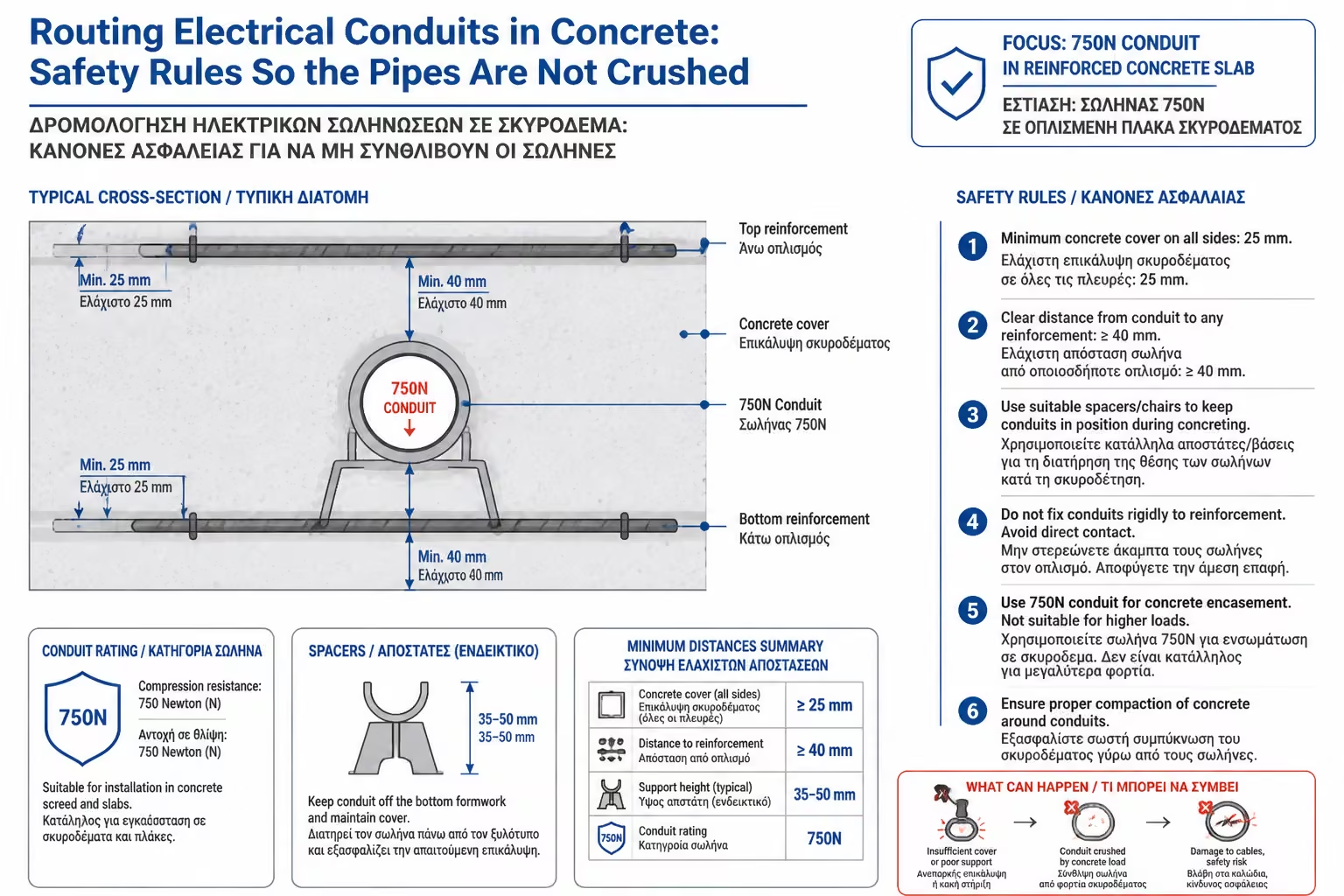
The most common mistake is using light 320N corrugated conduit because it bends easily and costs less. Inside a concrete slab, however, that material cannot cope with foot traffic, labour loads or the pressure of the pour itself.
For concrete embedding, medium-duty 750N conduit is the real minimum, while 1250N becomes sensible in harsher conditions. Straight rigid conduit holds its geometry better over long runs, while 750N flexible conduit should be reserved mainly for curves.
If a conduit collapses at this stage, the problem is not cosmetic but operational. The fish tape may never pass and every future cable pull can fail permanently.
Light conduit deforms too easily under boots, tools and wet-concrete pressure.
That is where safe slab embedding actually starts for electrical routes.
They preserve cross-section better and make later cable pulling far more reliable.
Once the slab hardens, a crushed conduit usually means drilling, demolition or ugly surface rerouting.
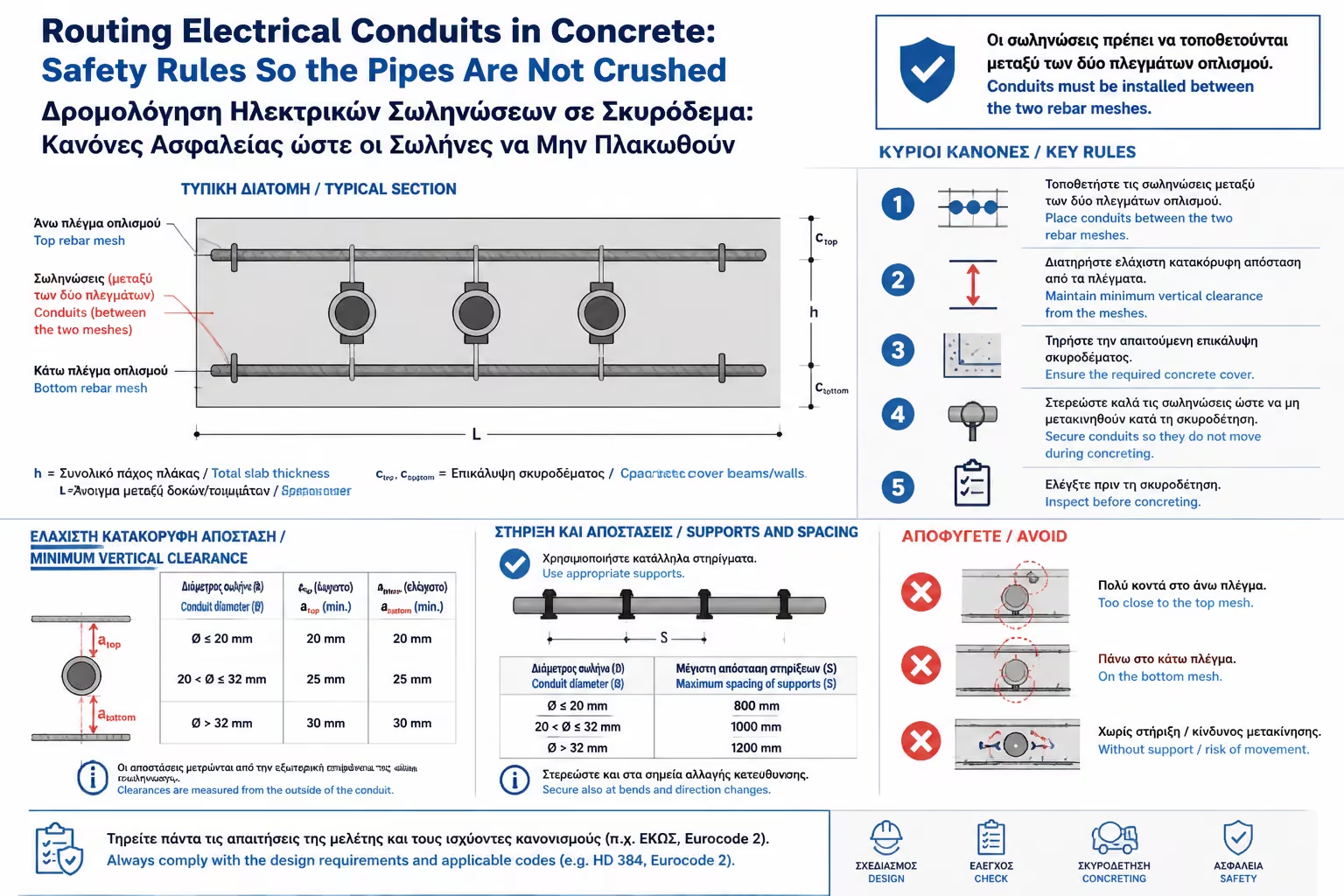
Conduits are installed after the reinforcement is tied and before the concrete is poured. The ideal zone is between the upper and lower rebar meshes, where the route is protected from direct foot traffic and sits more safely within the slab build-up.
Fixing to the reinforcement is equally important. With cable ties or soft wire at regular intervals, the conduit remains stable and does not float upward once the wet concrete starts moving around it.
A loose route can rise, shift or even emerge at the slab surface. At that point you lose not only the conduit but the accuracy of the whole electrical layout.
That location protects the route and keeps it away from the most aggressive site movement.
Frequent support prevents the conduit from wandering or lifting during the pour.
Unsecured ends twist, move and often reappear in the wrong place later.
A stable route makes cable pulling and termination work dramatically easier afterwards.
When many thick conduits pile up at the same location, they create a plastic ridge inside the slab. Concrete can no longer surround the reinforcement properly and the local structural quality is compromised.
That is why routes should remain as parallel and spread out as possible, with crossings kept to the minimum and handled cleanly where they are genuinely necessary.
The second hidden enemy is cement slurry. If couplings, transitions or open conduit ends remain unsealed, the fine liquid phase of the concrete enters the route, hardens inside it and turns the conduit into a useless shell.
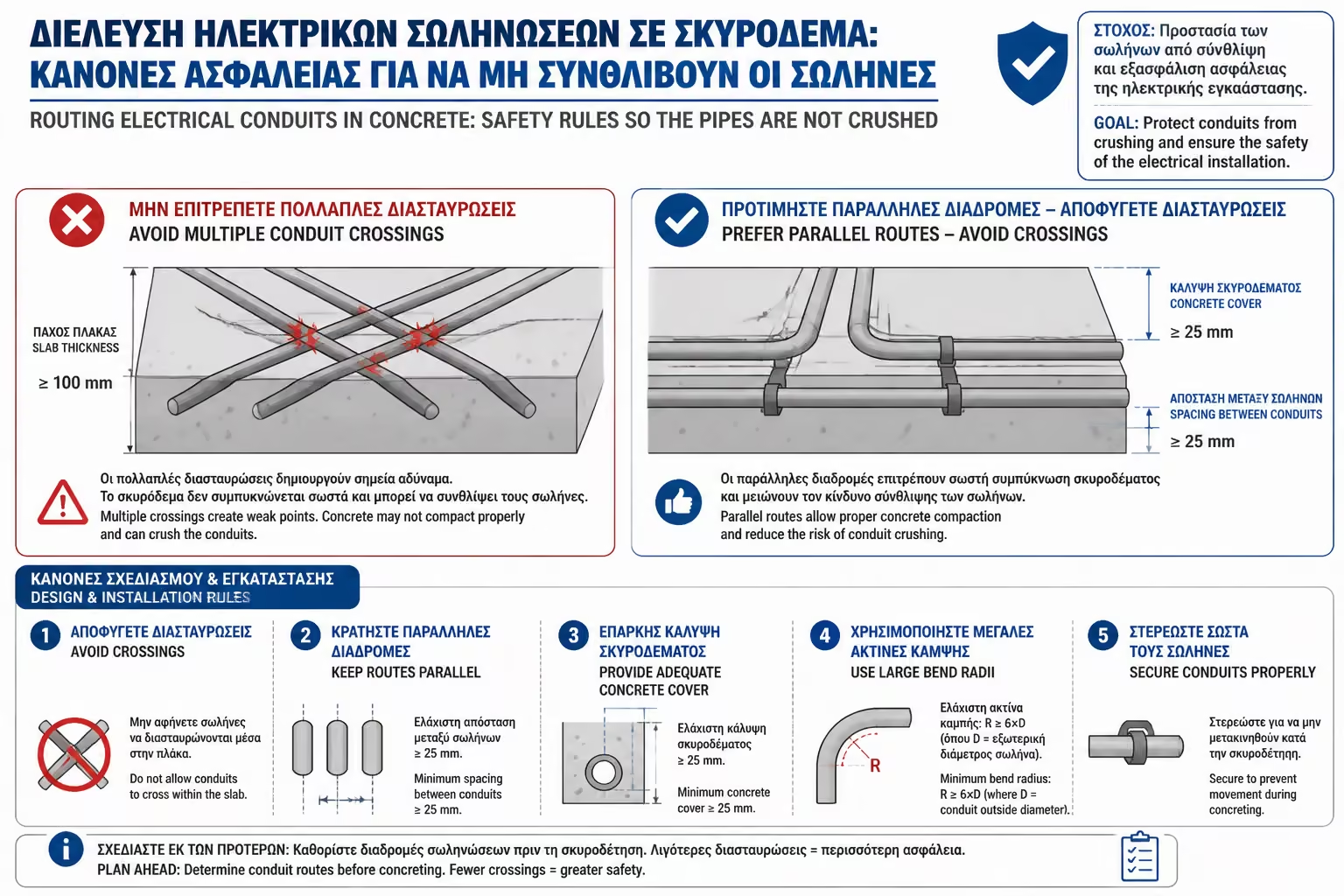
Spreading the conduits helps both concrete placement and later cable installation.
If crossings are unavoidable, make them isolated and deliberate rather than clustered.
Transitions and couplers are the typical entry points for cement slurry.
An uncapped upstand during the pour is often equivalent to losing the conduit entirely.
On long or difficult runs, inserting a nylon draw cord or cheap galvanized guide before concreting is a highly effective precaution. If the route gets slightly compressed later, the pre-installed guide may be what saves the cable pull.
During the pour itself, real supervision is needed. Concrete vibrators, boots and rushed movement can destroy conduit bends or slab boxes in seconds.
Finally, full photo and video documentation of the slab before the pour is invaluable. Years later, when you need to drill the floor or locate a route, that record becomes the only trustworthy map.
Having the electrician or a supervisor present is not excessive caution. At that moment no one else on site is prioritising the survival of the electrical route unless someone is actively watching it and intervening in time.
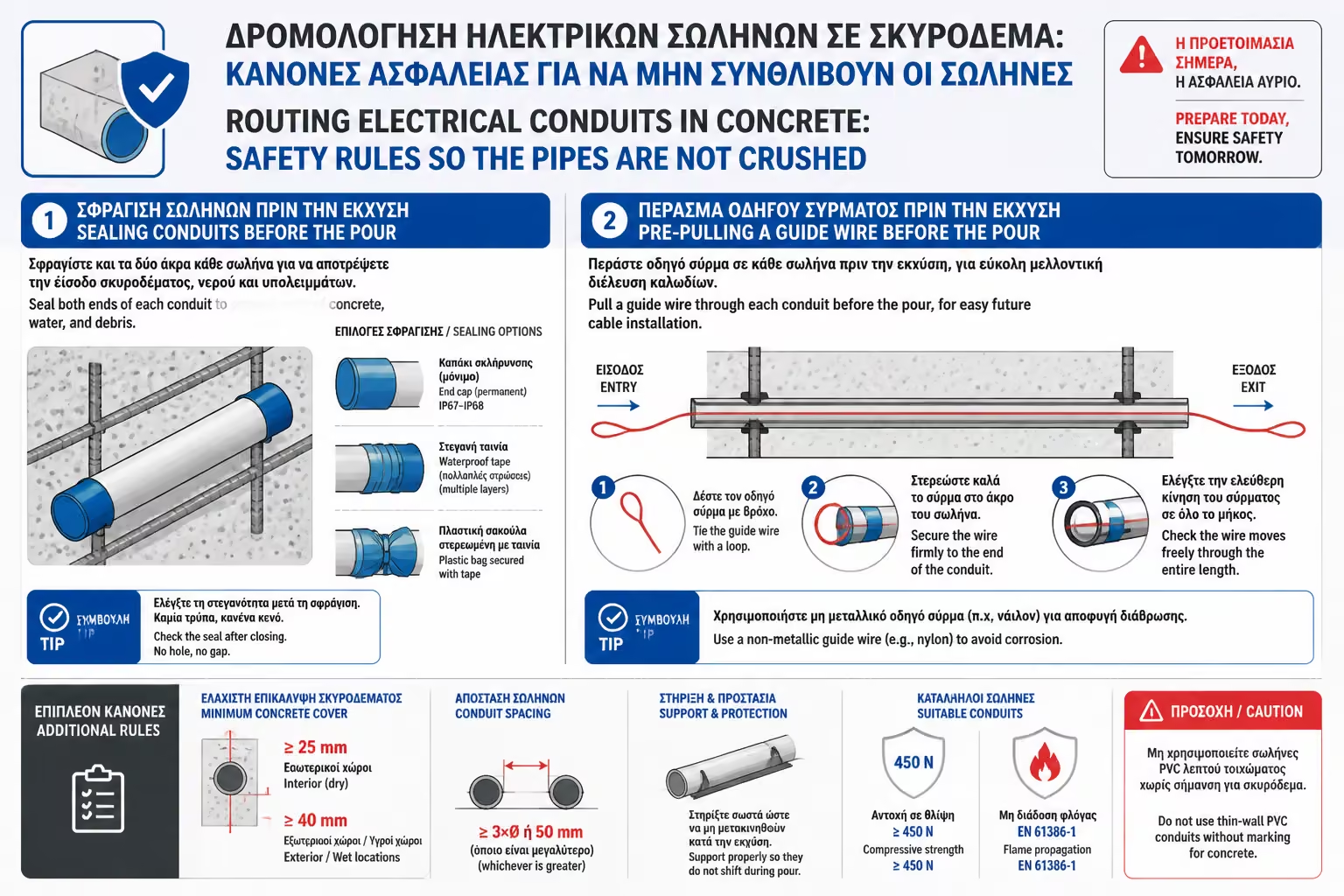
On long routes it greatly improves the odds that the conduit remains usable after concreting.
Without oversight, conduits are treated as invisible by the rest of the site team.
Its metal head and force can destroy plastic fittings almost instantly.
That record prevents expensive mistakes during future drilling and retrofit work.
Return to category.
Go to categoryReturn to the central guide.
Go to guide