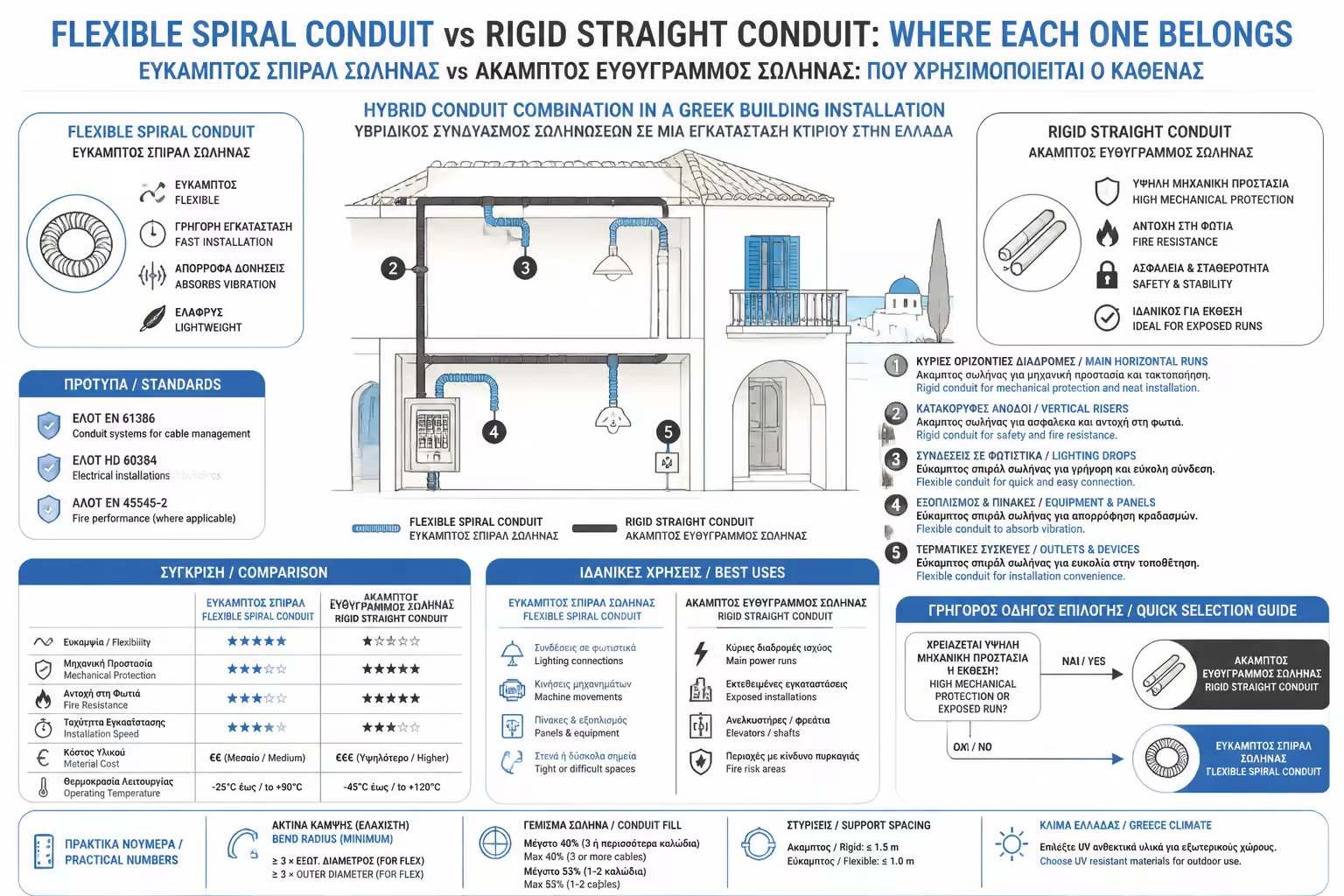
High flexibility
It follows complex routes without needing elbows and couplers at every turn.
Cables are never buried naked inside walls and floors. The conduit is their mechanical shield and the element that allows them to be replaced later without destroying the building.
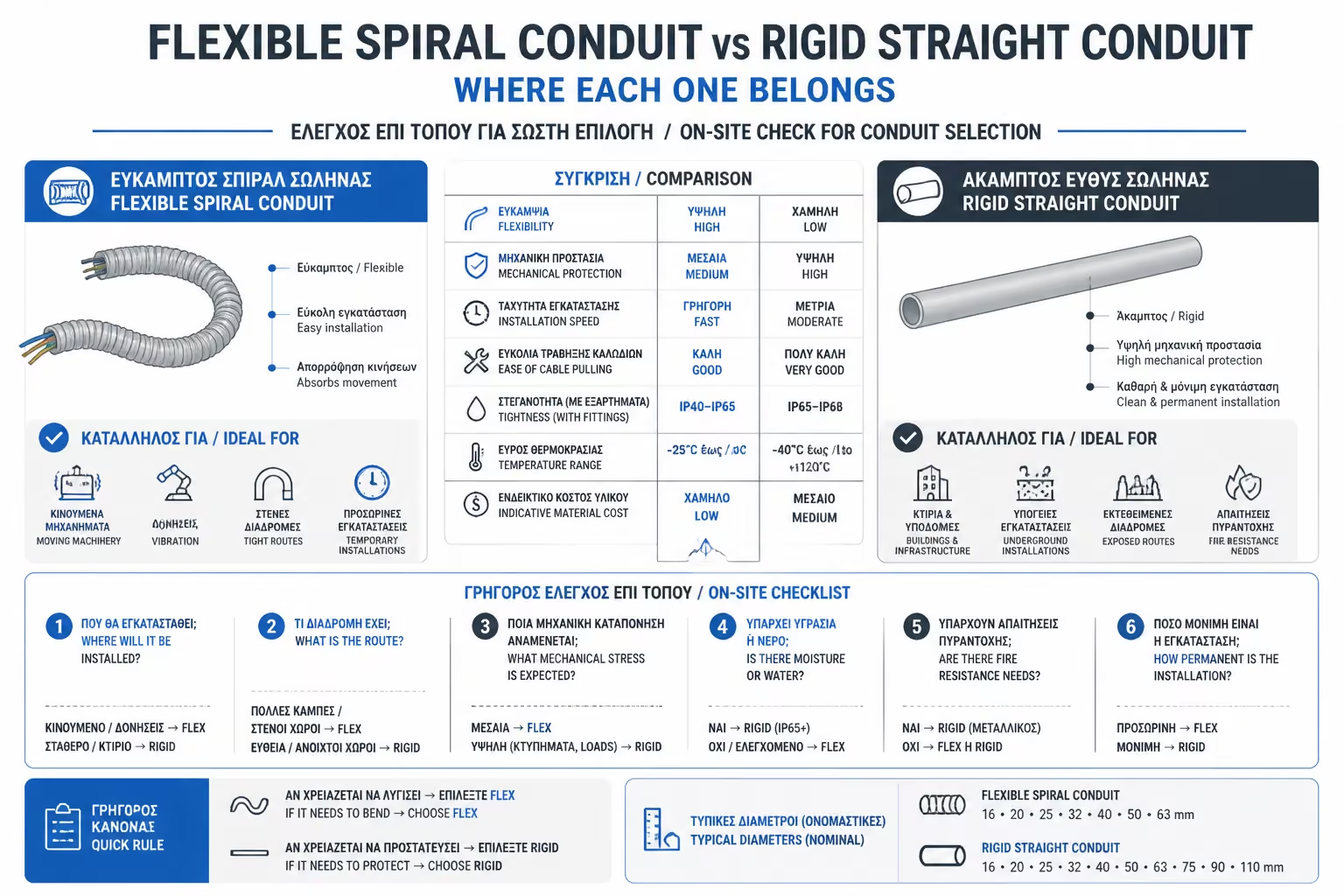
Choosing between flexible spiral conduit and rigid straight conduit is not a matter of taste. It depends on route geometry, installation speed, future cable-pulling ease and resistance to the physical abuse of the building site.
The right conduit determines whether cables will pull easily today and whether they can be replaced cleanly ten or twenty years from now. That means the selection affects future maintenance quality just as much as initial installation speed.
Many problems that later appear as “impossible pulling”, “blocked route” or “no way to replace the cable” are in fact problems created on the day the wrong conduit was selected or installed badly.
Flexible conduit is extremely practical when the route includes bends, obstacles and irregular changes in direction. It uncoils quickly, passes through drywall framing easily and lets the installer move fast without many fittings.
The downside is that its interior is not perfectly smooth. Over longer distances or poor bends, friction and crushing make fish tapes jam and future cable replacement much harder.
Flexible corrugated conduit is invaluable in masonry with many small bends, in plasterboard work and anywhere you need routing freedom without extra fittings.
Provided, of course, that the bends remain smooth and the conduit is not crushed shut, because once that happens the advantage of flexibility disappears and the route stays troublesome for life.
It follows complex routes without needing elbows and couplers at every turn.
It allows quick routing inside walls and suspended ceilings.
If forced too tightly it can collapse and block the route completely.
The corrugated interior makes long cable pulls more difficult.
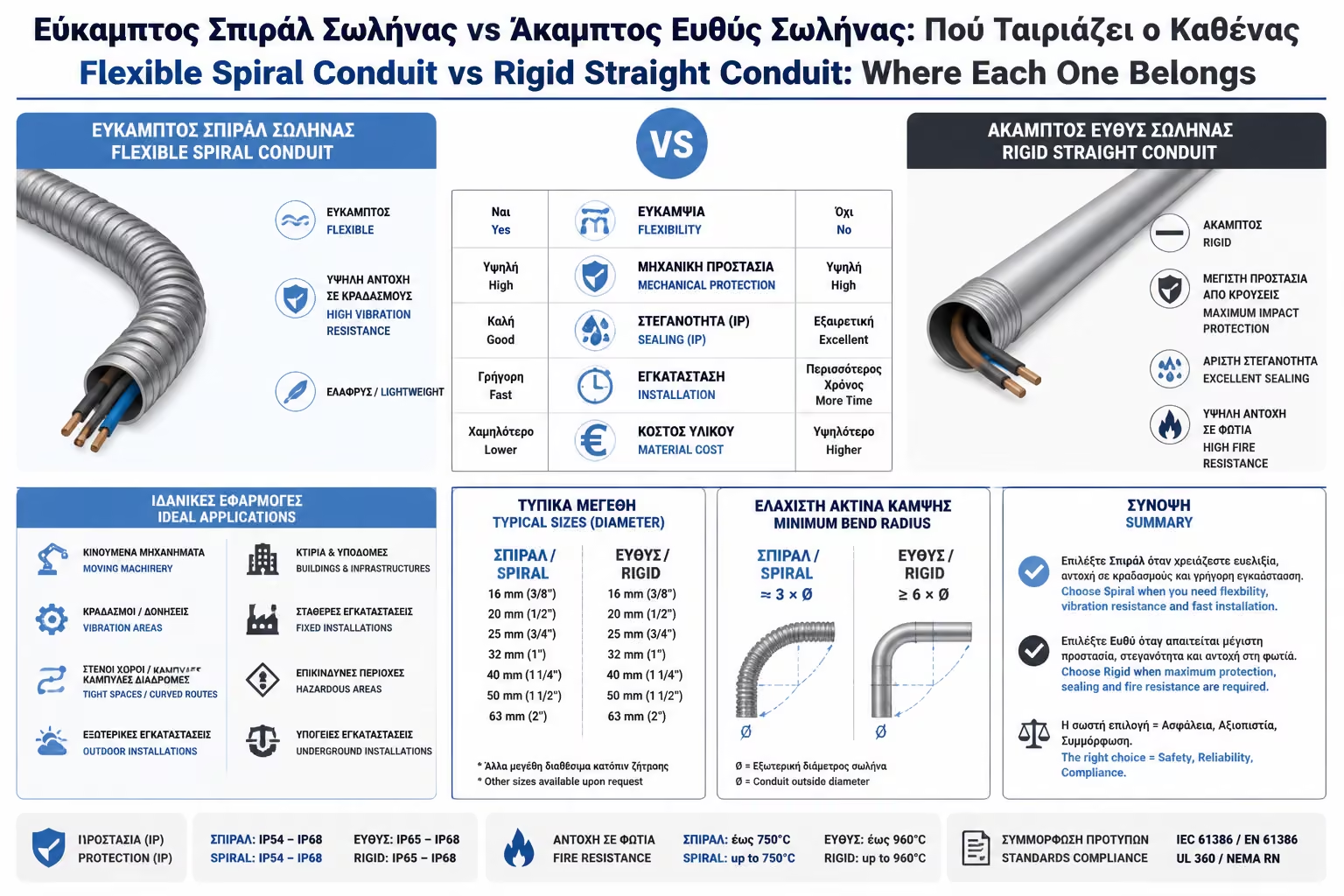
Rigid conduit offers a smooth interior, better geometry and much stronger mechanical behaviour. In long straight runs or visible technical installations, it is often the more professional choice.
Its drawback is that it does not bend by itself. Every corner and route change needs a fitting or a deliberate transition to a flexible section.
Rigid conduit, by contrast, wins where distances are longer, routes are cleaner and the priorities are lower friction, stronger mechanical resistance and a neater visual result.
Fish tape and cables travel much more easily over long runs.
It is less likely to be crushed or distorted than ordinary flexible spiral conduit.
It creates clean straight lines in garages, basements and service areas.
Elbows, couplers and transitions require more planning and installation discipline.
In most serious installations you do not choose only one system. Rigid conduit handles the long straight or exposed runs, while flexible conduit takes over in controlled bends and difficult transitions.
That hybrid method often provides the best balance between installation speed, cable-pulling ease and long-term route quality.
In modern installations, the hybrid combination is often the smartest answer: rigid conduit on the main runs and short flexible sections for controlled changes of direction.
Keeps friction low and geometry clean over distance.
Allows smooth turns without complicated fittings everywhere.
The combination makes later interventions more realistic and less destructive.
It should be based on long-term performance rather than installer habit.
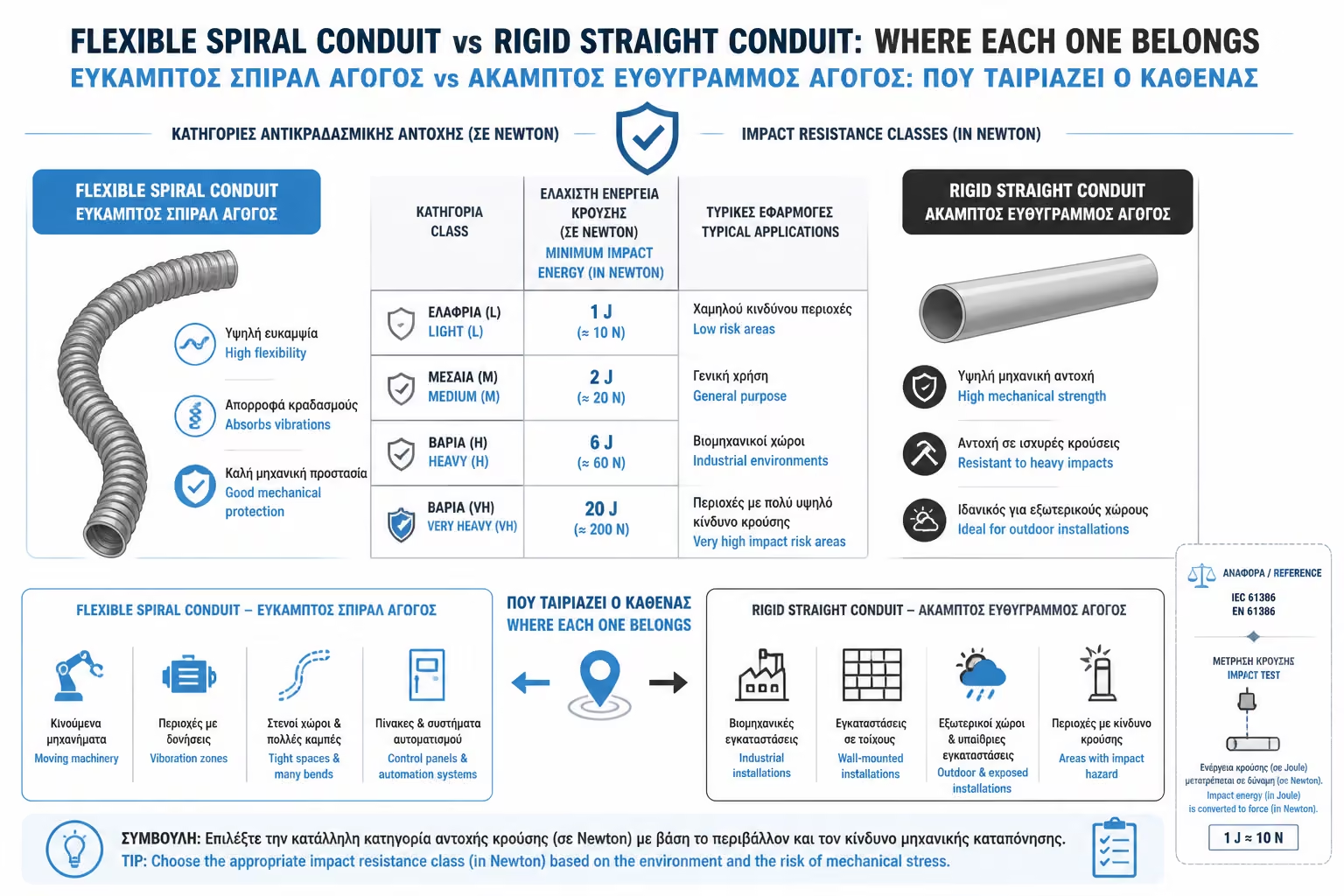
Besides whether the conduit is flexible or rigid, you also need to know its mechanical resistance class. Light-duty products suit walls and drywall, medium-duty products belong in concrete or floors, and heavy-duty ones are for underground or highly exposed routes.
If you see light white conduit thrown onto a floor that will soon be concreted over, that is a legitimate reason to stop the work and demand a correct material change.
The Newton impact class is equally critical. A conduit suitable for plasterboard is not automatically suitable for concrete, floors or buried external routing.
On site, that becomes a simple rule: before a conduit is buried or cast in, you need to know not only its route but also the loads, impacts and environmental stresses it will face.
Suitable for drywall systems and concealed routes with low mechanical stress.
The serious minimum where conduits may be stepped on or embedded.
Useful in underground runs, industrial floors and highly exposed external routes.
Conduit quality is visible before it is covered. That is when mistakes must be caught.
The right conduit is chosen not just by how easily it bends, but by whether it will still perform after the building work is finished.
Return to category.
Go to categoryReturn to the central guide.
Go to guide