Less copper and a smaller board
The traditional logic remains financially attractive in simpler homes or lighter zones.
For decades, the traditional home relied on a branching logic: one circuit reaches a room and is then split locally across lights and sockets. That approach is economical and worked well in houses with simpler electrical demands.
Modern homes, however, carry denser loads, more devices and much stronger demand for smart control. As a result, star wiring is gaining ground, with many independent circuits returning to a central panel.
The right answer is not always 'everything star' or 'everything traditional'. The real question is where independence is worth paying for, where grouping is still adequate and how the cabling supports the level of living comfort and automation you actually want.
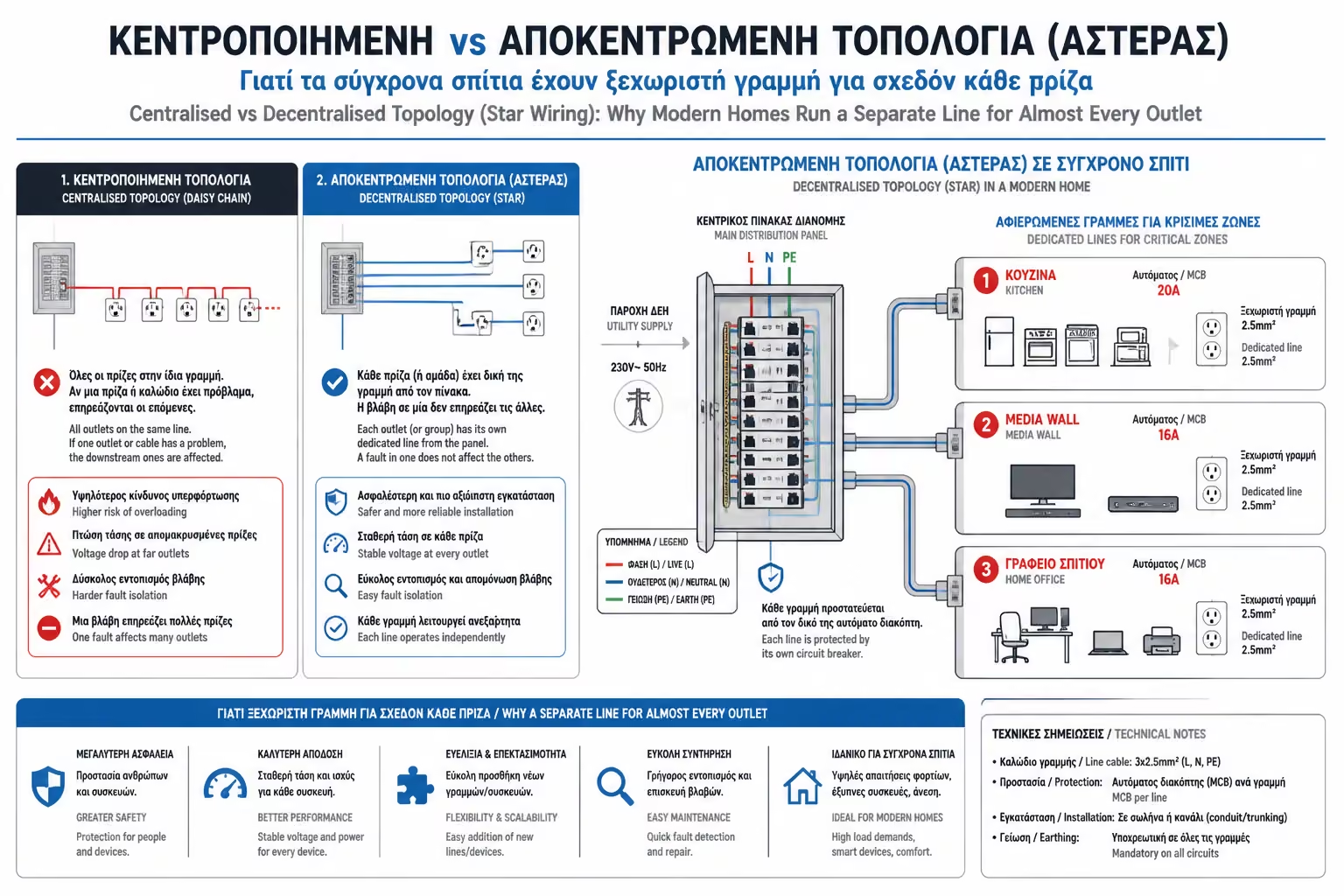
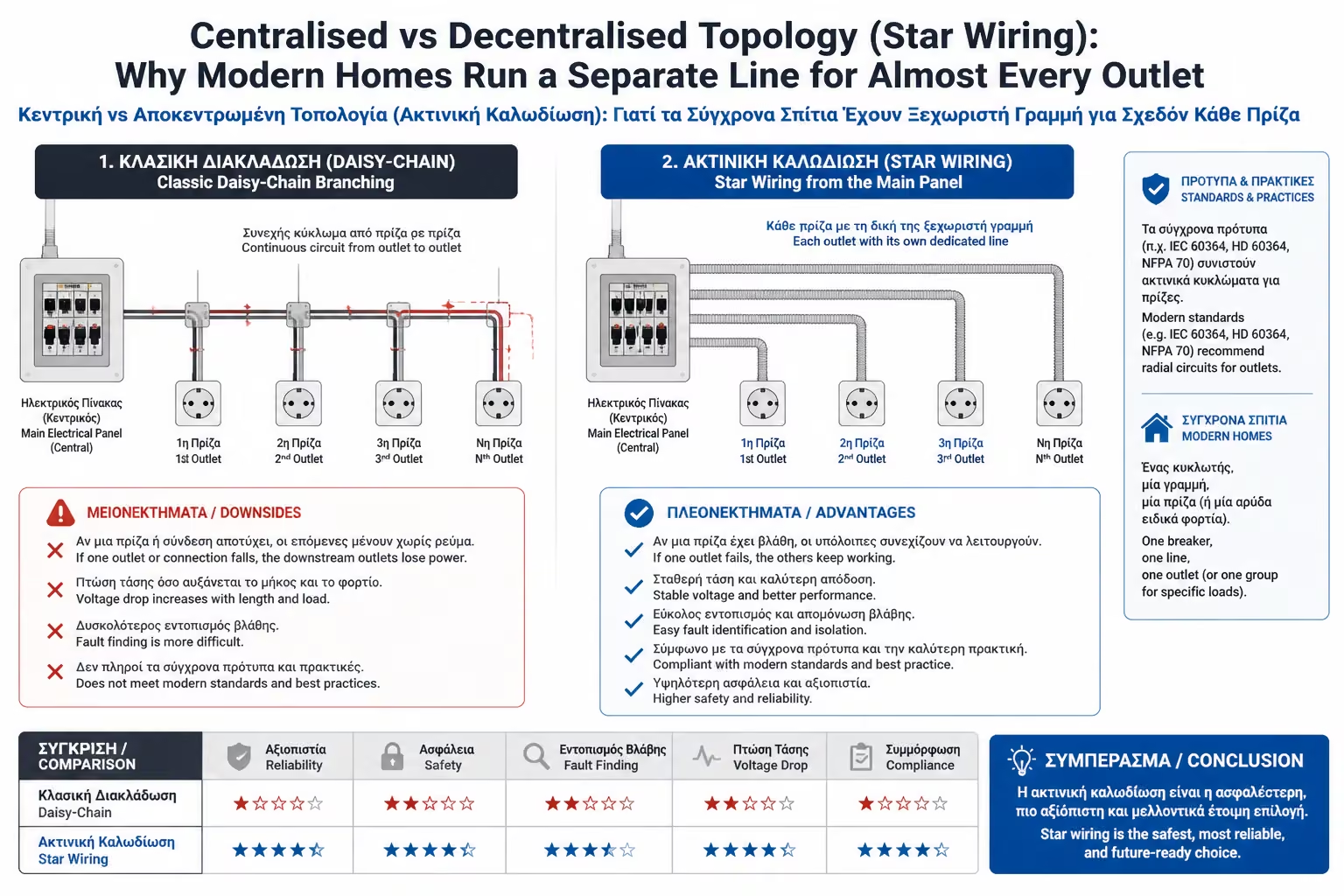
In a daisy-chain logic, one circuit feeds a room or zone and then branches locally inside junction boxes or socket points. The advantage is obvious: fewer cable metres, fewer conduits, a smaller panel and lower labour cost.
The downside is that many points share the same protective limit. A short circuit or overload at one outlet can trip the entire zone, while the available power is shared across multiple users with limited flexibility.
For simple bedrooms and light-use areas, this is often perfectly adequate. For heavy appliance zones, media equipment or spaces that demand higher continuity, traditional grouping begins to show its limitations.
The traditional logic remains financially attractive in simpler homes or lighter zones.
A fault or overload at one load often affects an entire room or group of sockets.
A 16A protective limit belongs to the whole group, not to one single outlet.
Bedrooms and auxiliary spaces often do not justify more complex treatment.
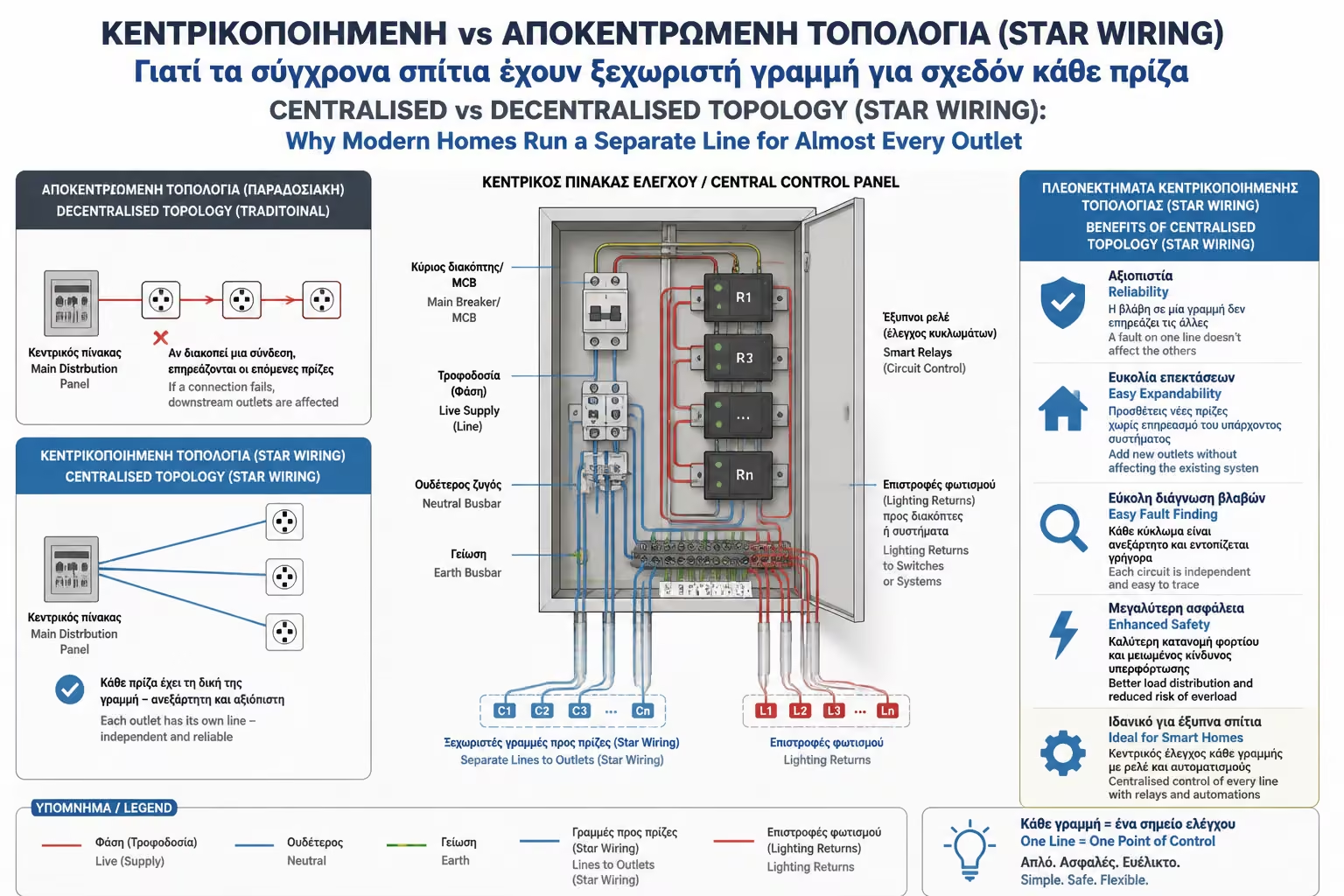
With star wiring, important outlets or small outlet groups run on their own lines back to the panel. The same can apply to lighting circuits, especially when the owner wants central smart-home control.
The big gain is fault isolation and better power management. A problem on one line does not necessarily black out an entire room, while kitchens, home-office zones and media walls can enjoy dedicated supply with clear electrical identity.
At the same time, all the 'intelligence' can be concentrated at the panel by using DIN rail relays, KNX actuators or other control systems that are far easier to maintain than improvised modules hidden behind switches.
A defective appliance affects only its own circuit rather than an entire daily-use zone.
Kitchens, media walls and offices perform better when their supply is not randomly shared.
Maintenance, expansion and professional organisation become dramatically easier.
The board becomes a real control centre instead of a vague set of generic breakers.
Star wiring is not a free upgrade. It requires many more circuits, more conduits, a larger panel and more demanding coordination within floors and walls. In larger homes, the board may resemble a small rack rather than a standard domestic consumer unit.
That does not make it wrong. It means the decision has to be mature. If you run a dedicated line for every insignificant load, you may pay heavily for a level of separation that never delivers practical value.
For this reason, the star approach makes the most sense where there is real technical or operational benefit: heavy loads, complex media, uptime expectations, future smart-home logic or zones likely to evolve significantly.
Independence is purchased with real material and installation cost.
When each line needs space, a standard domestic solution often stops being enough.
Numerous routes demand serious planning across floors, walls and service penetrations.
Premium wiring only makes sense when it is tied to real requirements rather than aesthetics alone.
In most homes, the most rational strategy is hybrid. That means star wiring for the critical or heavy-use zones, and traditional grouping for the lighter points that do not justify independent circuits.
Typical star candidates include kitchen worktop outlets, refrigerators, air-conditioning, home-office supply, media walls, automation provisions and lighting circuits intended for central control. In contrast, simple bedroom sockets can often remain grouped.
This hybrid architecture keeps the budget in a reasonable place while still delivering the technical quality and expandability that genuinely matter to the owner.
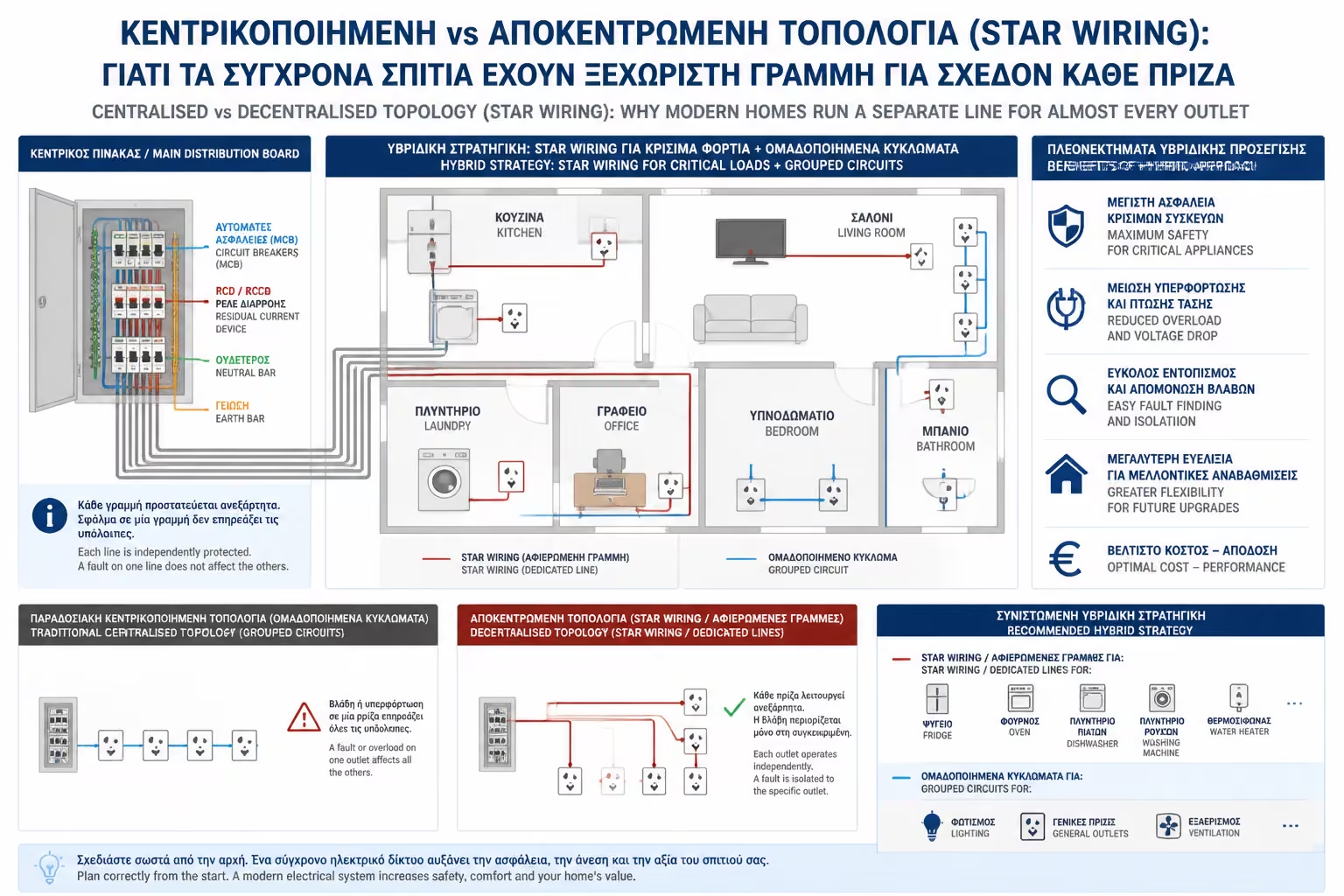
Kitchens, media walls, offices, A/C and automation zones are typical candidates.
Ordinary bedroom sockets do not always need premium treatment.
The hybrid solution gives real value without turning every home into a data centre.
The aim is not theoretical perfection but an installation that serves its users properly.
The best home is not the one with the most cables. It is the one where each line exists because it serves a clear functional purpose.
Return to category.
Go to categoryReturn to the central guide.
Go to guide