A small box is a bad starting point
If the box is already full on day one, the installation is on the wrong path.
A junction box is the node of the electrical installation. It is where circuits meet, branches are made and the future of maintenance is decided: either straightforward diagnosis or complete chaos hidden in the wall.
A tidy junction box is not merely an aesthetic preference. It is a sign of better thermal behaviour, easier inspection, lower short-circuit risk and a much more maintainable installation over time.
Good organisation inside the junction box is not just an aesthetic preference. It is what allows future inspection to happen quickly and cleanly, without needlessly damaging conductors that should remain reliable for years.
Many problems begin because too many circuits were forced into a box that was too small. The conductors are compressed, the joints are crowded, the lid closes under pressure and any future intervention becomes miserable.
The right size depends on the number of incoming circuits, the connector type, the spare space you want to preserve and whether the box is a simple local branch or a more central distribution point.
Correct box capacity gives the joints breathing room, improves heat dissipation and above all leaves enough space for the technician to fold and inspect conductors without forcing or kinking them.
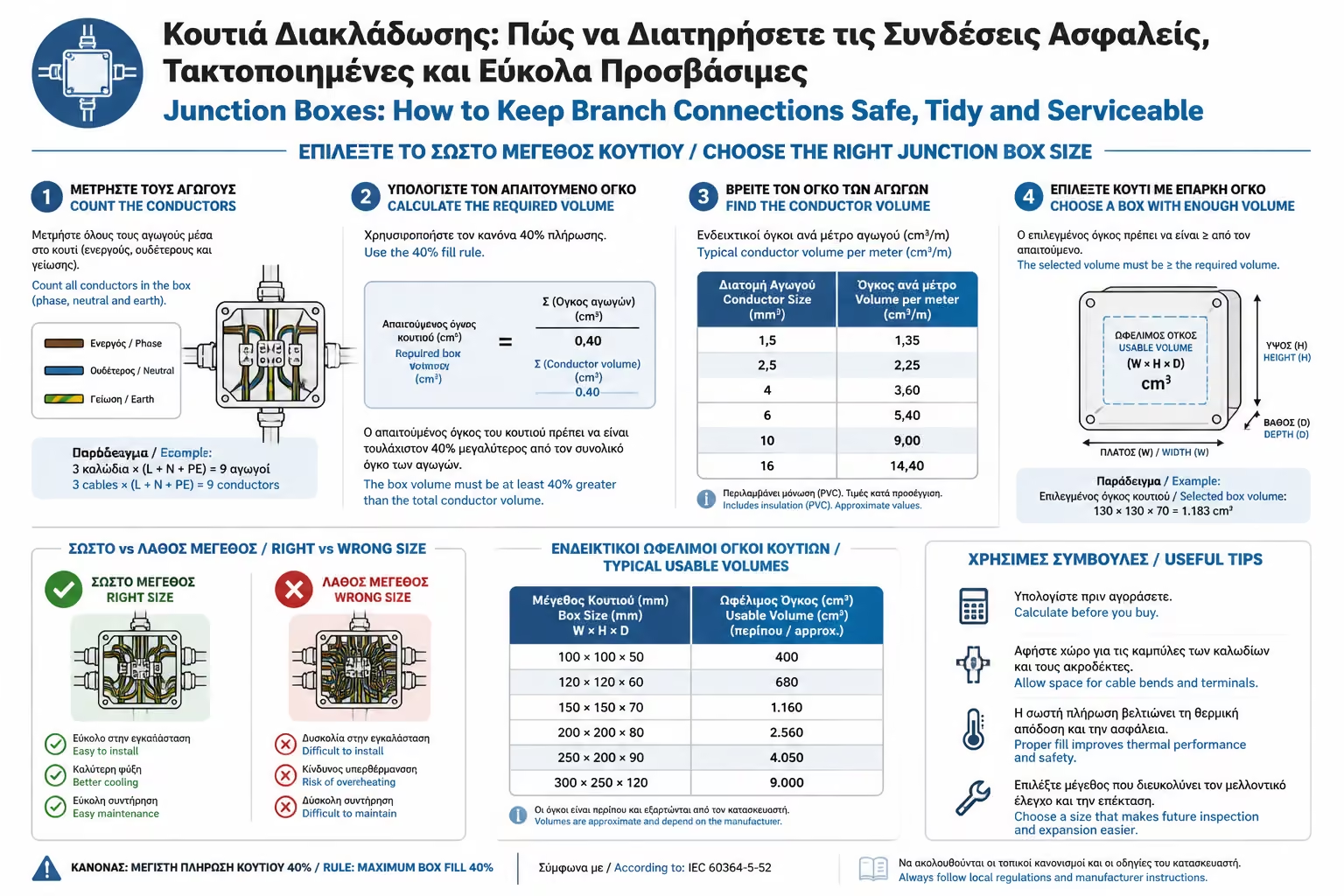
If the box is already full on day one, the installation is on the wrong path.
Extra space helps organisation, heat dissipation and future maintenance.
Corridors and distribution points deserve more generous dimensions.
It should not be chosen randomly or only on the lowest material cost.
Every cable entering a junction box should leave enough spare length to work comfortably and to re-strip a conductor in the future if necessary. Cutting conductors flush at the entry point is a recipe for frustration.
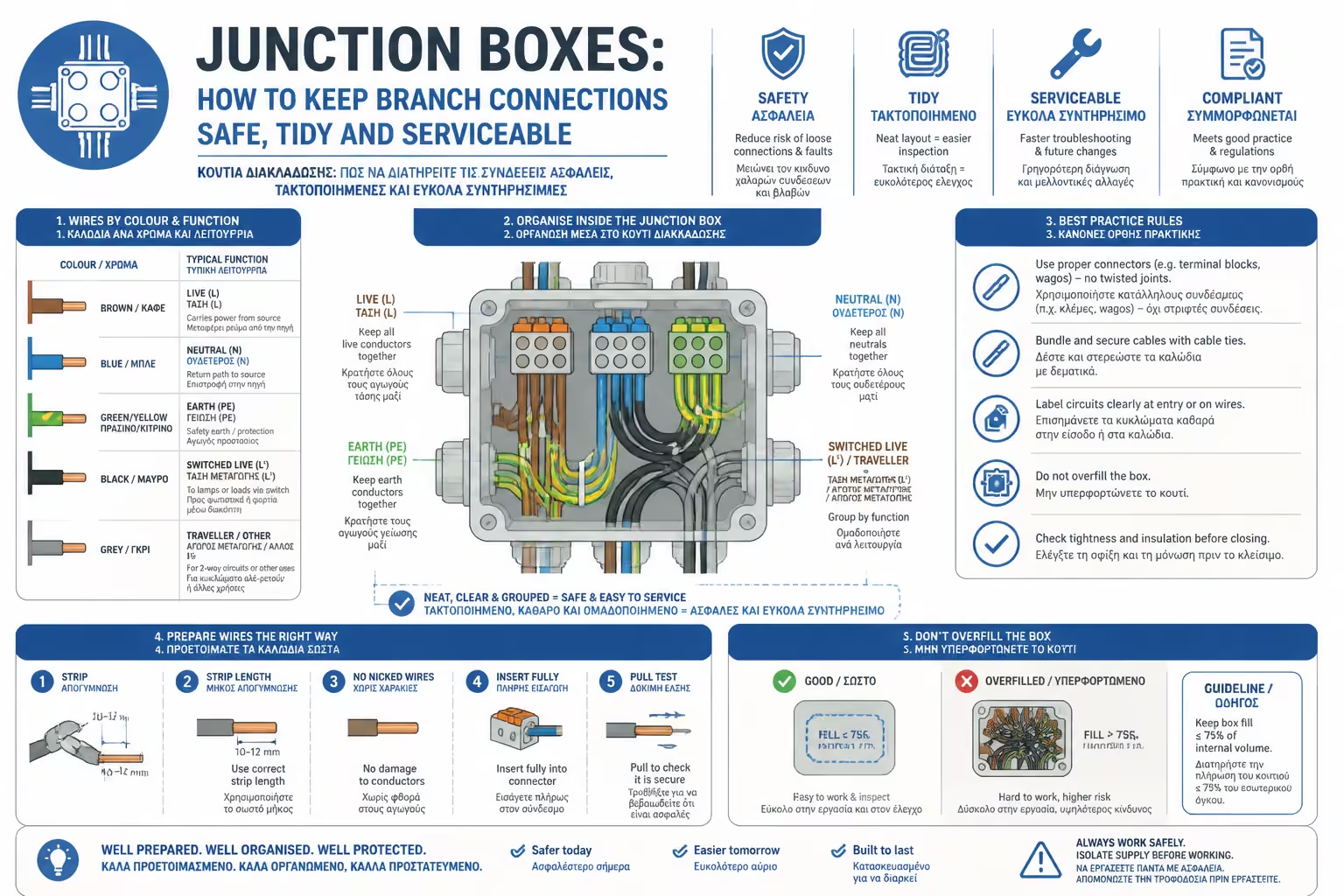
At the same time, conductors should be grouped by function: earths together, neutrals together, permanent lives together and switched or special lines in their own groups. That logic makes any later check far clearer.
Conductor slack is just as critical because it allows reconnection or repair if one end becomes damaged. When everything is cut exactly flush, even a small intervention becomes a problem immediately.
This gives working room and future repair flexibility.
Organised grouping dramatically reduces mistakes during maintenance or extension.
Dust, debris and plaster have no place where electrical connections are made.
The result depends on process and sequence, not only on the connector type.
Once the joints are made, you do not simply shove the wiring back into the box. Earths and neutrals usually sit deeper, while lives and switched conductors are arranged so they can be checked later with relative ease.
The lid must close freely without crushing connectors. If you have to force it, the interior has not been organised correctly.
Grouping by colour and function turns the box from a plate of spaghetti into a readable node. You can immediately identify the earths, neutrals, permanent lives and switched returns.
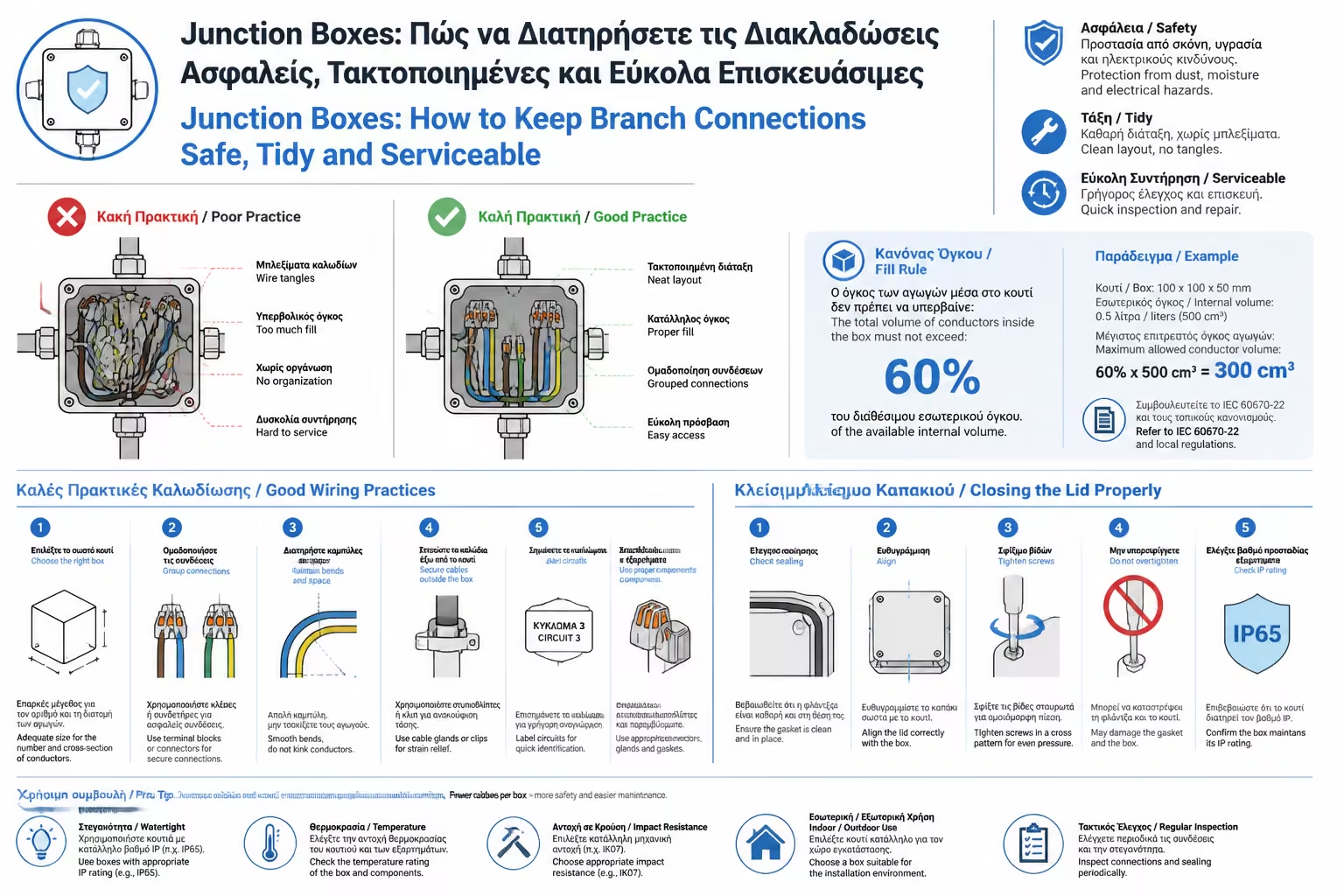
The wiring should sit in ordered layers rather than a random knot.
Pressure on the joints leads to future failures and poor contacts.
The next technician should be able to open the box and understand it quickly.
An organised box dramatically reduces troubleshooting time later.
On balconies, in gardens and on external walls, an ordinary plastic box is not enough. You need a suitable IP rating, proper seals, cable glands at every entry point and, where necessary, extra protection against moisture and corrosion.
In harsher environments, gel or similar insulating protection around the joints helps prevent oxidation and early faults. Good detailing here is often the difference between a circuit that survives for years and one that trips the RCD every winter.
Outdoor boxes add the moisture factor, so proper IP sealing, cable glands and gel protection where needed are not luxuries but part of the circuit's basic safety strategy.
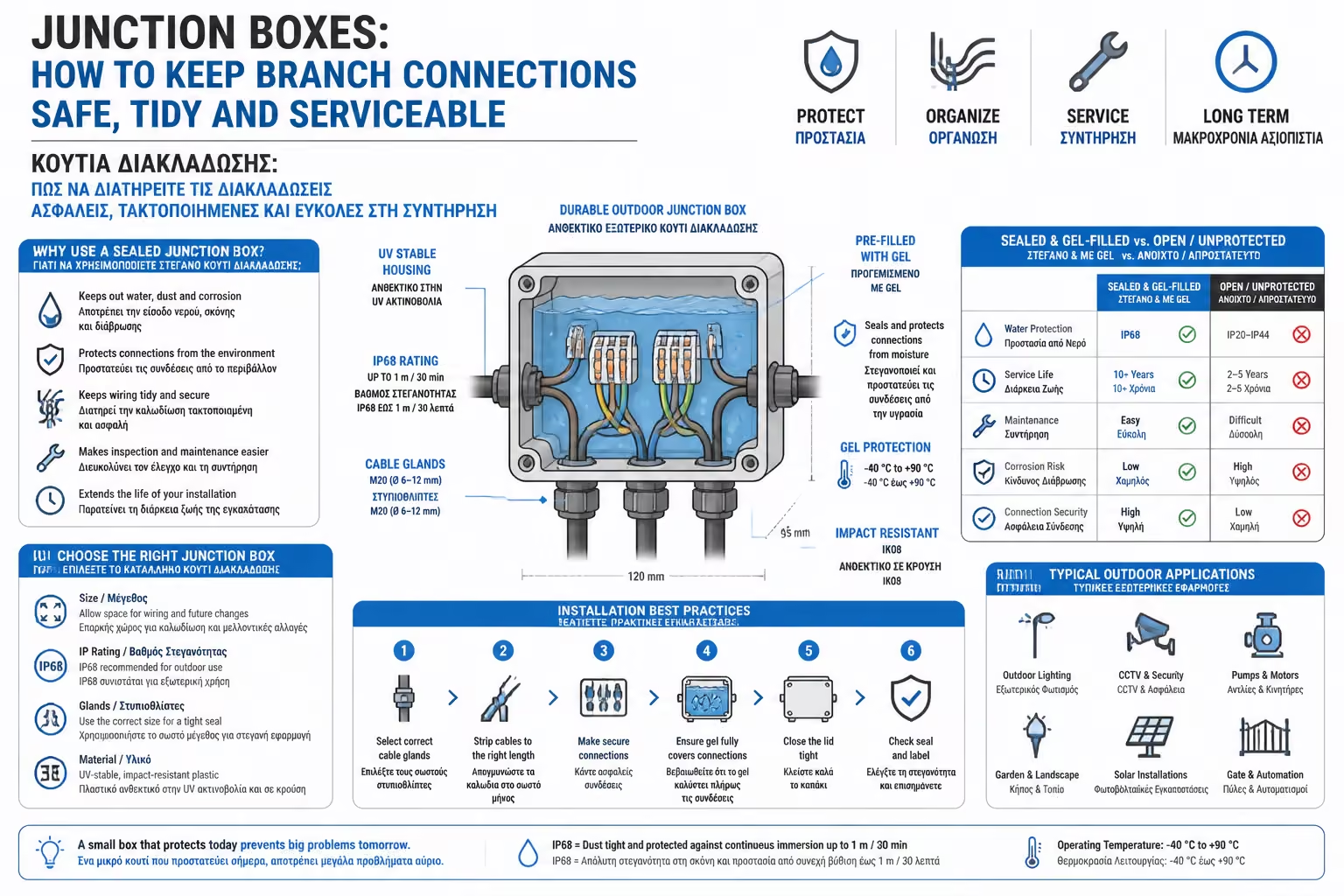
The waterproofing level must match the real environment, not just look acceptable.
Only glands create a genuine sealed grip around the cable.
It adds protection against moisture and corrosion in difficult outdoor environments.
The box should remain inspectable while also being properly sealed when closed.
A good junction box is not one that merely closes. It is one that stays organised and safe when someone opens it again years later.
Return to category.
Go to categoryReturn to the central guide.
Go to guide