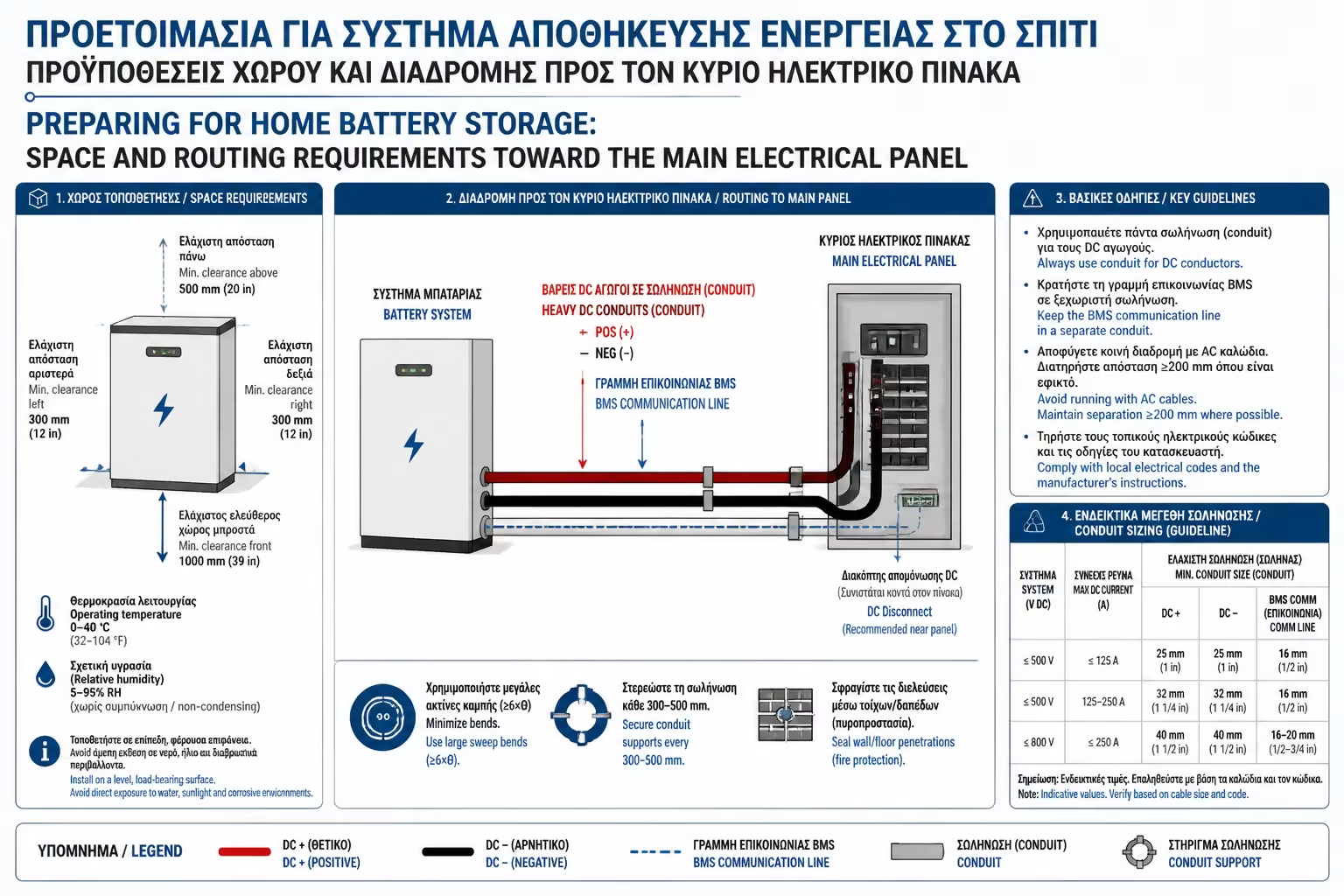
Weight is a real structural constraint
Battery support should be treated with the seriousness given to any other technical plant item.
Home batteries are moving rapidly from niche technology to mainstream energy infrastructure. Anyone investing in photovoltaics, a heat pump or simply seeking better blackout resilience will sooner or later think seriously about energy storage.
The mistake is to treat the battery as a box that can simply be hung on any wall. In reality it needs a suitable space, correct thermal conditions, serious power routes and a panel that was organised early enough to support backup logic.
If a home is designed as battery-ready today, the future addition can be clean and orderly. If not, even expensive equipment may be blocked by a bad garage environment, missing routes or a panel with no room for the required protections.
A home battery is not a lightweight appliance. Its weight can easily exceed 100 kilograms, which means the wall support or floor has to be treated seriously. Light drywall without reinforcement or improvised mounting solutions are not mature practice.
Temperature is equally critical. Lithium batteries perform best in moderate environments and suffer under extreme cold or summer overheating. That is why balconies, metal sheds and highly exposed spaces are rarely good choices.
The correct location is usually an internal plant room, utility room, cool garage or basement with reasonable access for service. You want safety, stability and usability, not merely a place where the unit physically fits.
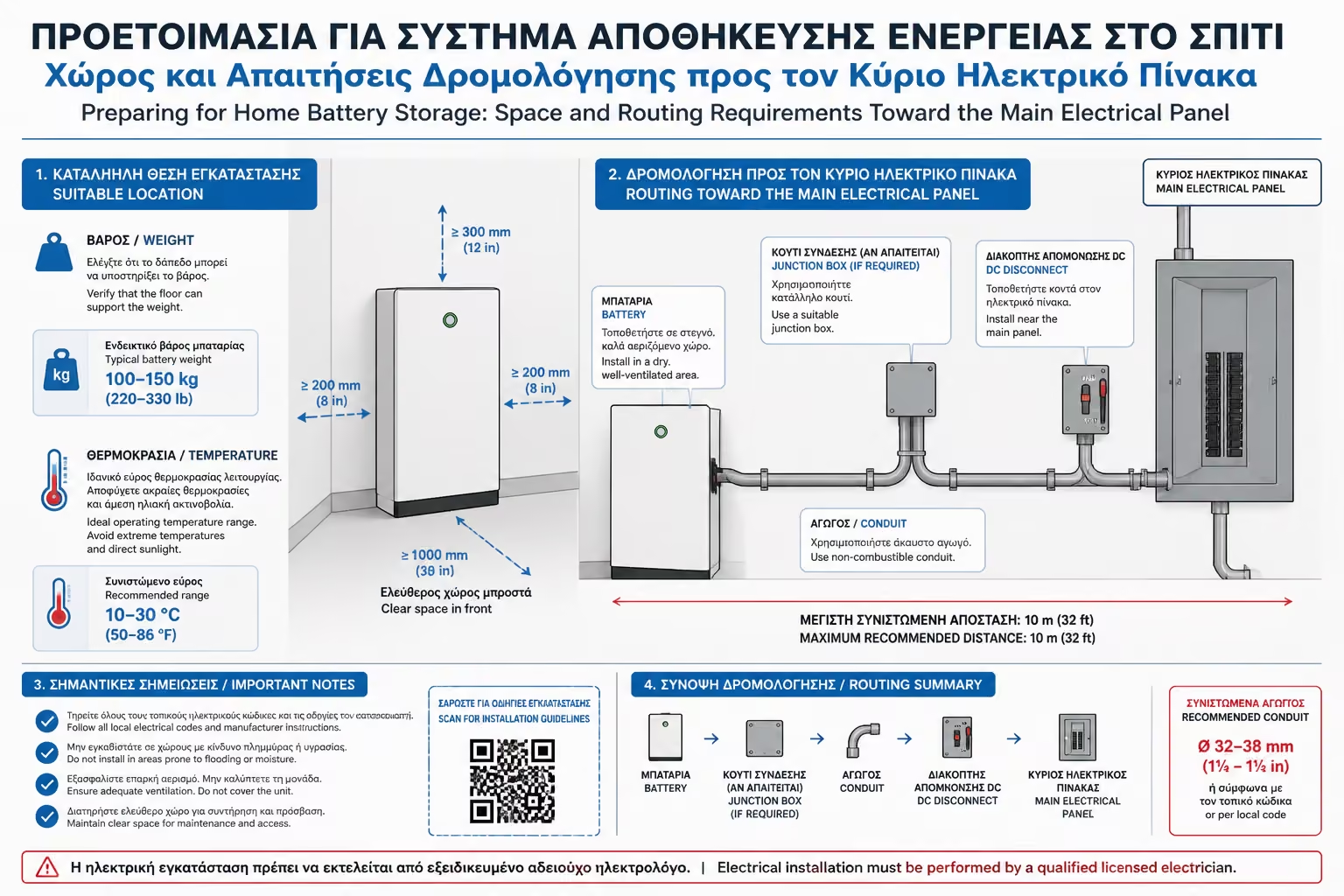
Battery support should be treated with the seriousness given to any other technical plant item.
Too much cold or heat reduces performance, charging capability and long-term reliability.
A cool garage, basement or utility room is generally a more mature location than a balcony.
The equipment has to be inspected, maintained and replaced without awkward improvisation.
A battery works closely with a hybrid inverter or related equipment, and the DC currents can be substantial. That means the conduits must be generous and appropriate for large cable sections, not small improvised routes that might only fit something marginally.
In many cases, one or two empty 40 mm routes or similar are sensible between the battery position, inverter and panel, depending on the system layout. At the same time, the BMS communication cable or other data lines need their own clear strategy so they are not unnecessarily mixed with the heavy power routes.
A little extra generosity in conduit planning is cheap today and extremely valuable later. If the routes are undersized or badly arranged, the future installation becomes technically awkward and often visually poor.
The provision should never rely on optimistic assumptions that everything will somehow fit.
The geometry of the project determines whether separate paths are needed between battery, inverter and panel.
System communication should remain clean and protected from unnecessary interference.
Correct routing is part of the genuine value of a battery-ready home.
A battery should not be designed simply to power everything during a blackout. In practice, that is often neither technically correct nor economically rational. For the system to work properly, the panel should be logically separated into critical and non-critical loads.
Critical loads usually include lighting, the refrigerator, internet equipment, selected socket circuits and perhaps the garage door or security systems. Non-critical loads are large consumers such as ovens, water heaters, powerful air-conditioning or EV charging that you do not want draining the battery in minutes.
If this logic is prepared today, the future installer can integrate backup operation properly. If not, the house may own a battery but still have no clear strategy for what remains alive when the grid goes down.
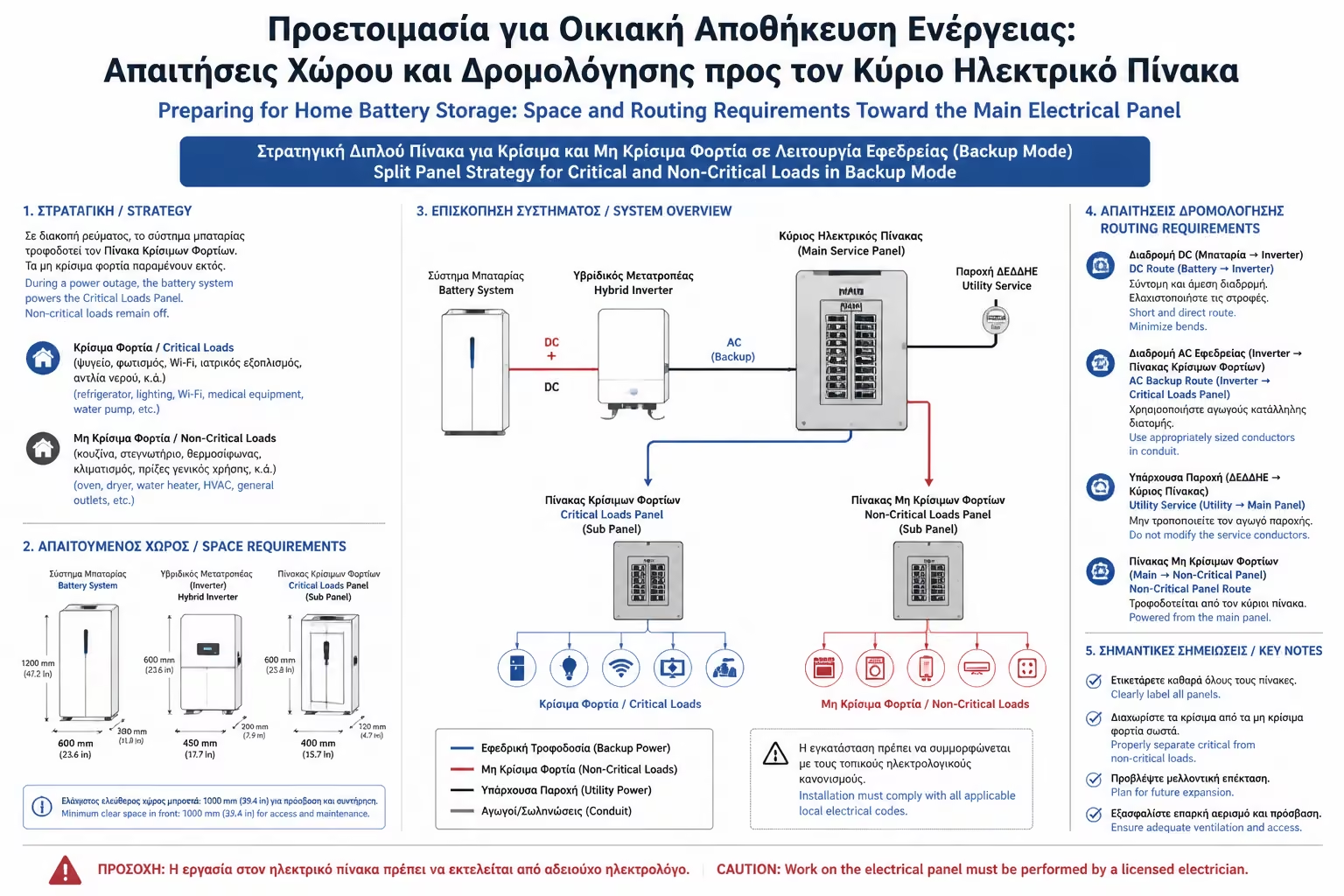
Serious design starts by deciding which loads deserve to stay alive during a blackout.
That split inside the panel is the core of any mature backup supply strategy.
Prioritisation is what gives stored energy real practical value.
Owning a battery is not enough if the house does not know how to use the reserve intelligently.
For a home with a battery to operate safely and legally during a blackout, it needs proper isolation from the public grid. That usually means changeover logic, additional protection, possibly smart metering and other equipment that consumes space inside the panel.
If the panel was already designed at its limit, integrating a battery becomes awkward and often unprofessional. By contrast, a few extra DIN spaces and a clean internal layout make the difference between a clumsy add-on and a serious energy upgrade.
A battery-ready home, therefore, is not only about conduits. It is also about panel architecture. Spare capacity, clear zoning and a rational expansion strategy are what allow the system to mature correctly when the time comes.
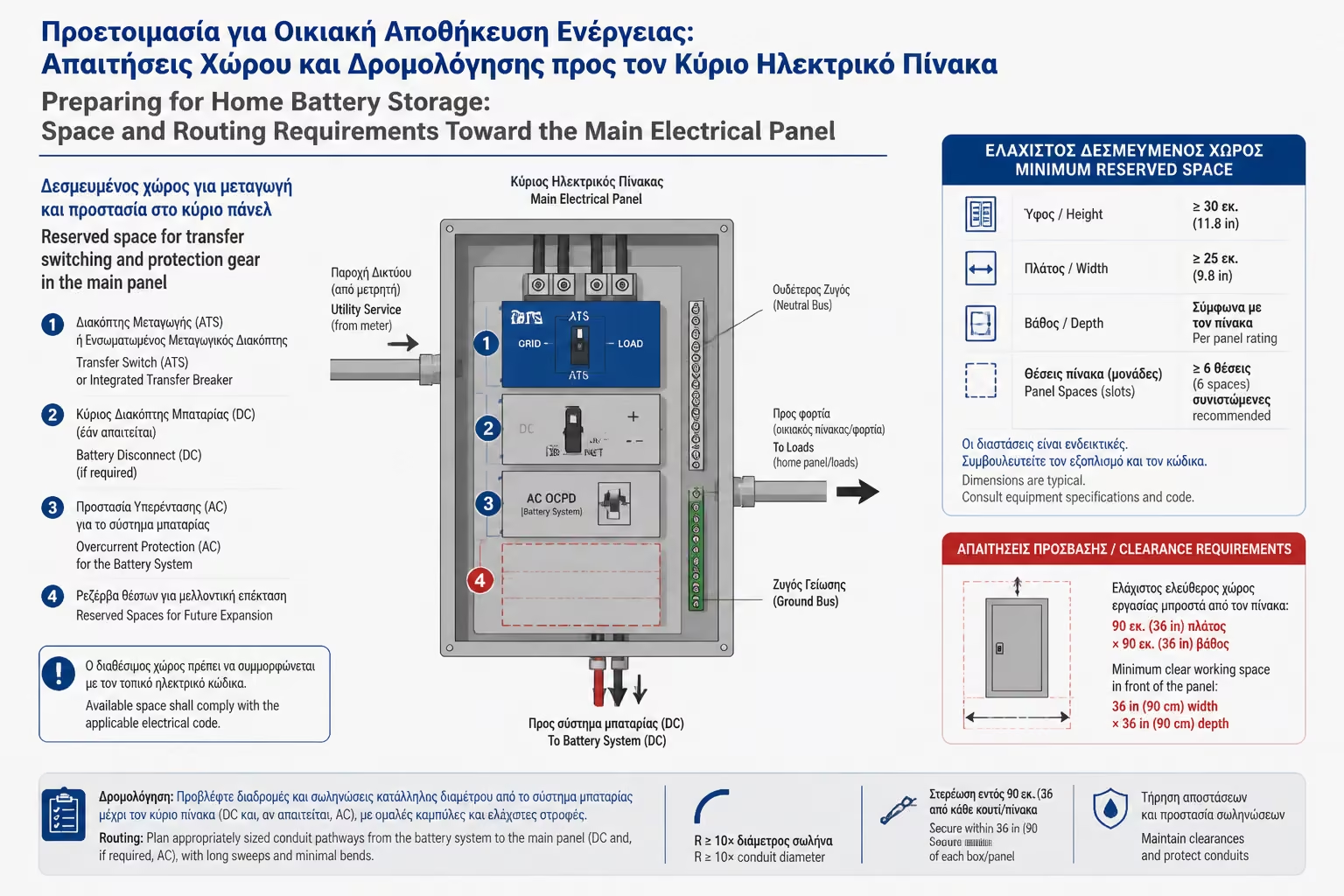
Transfer and grid isolation hardware do not magically fit inside an already saturated board.
A few free modules today can be worth far more tomorrow.
An organised panel means better installation quality, safer service and easier expansion.
Location, routing and backup logic all need to coexist for the provision to be meaningful.
A battery is not only a storage device. It is a different way of organising the home around energy and around the priority of its loads.
Return to category.
Go to categoryReturn to the central guide.
Go to guide