🔥 The danger is invisible overheating
The cable may operate near its limit for a long time without any visible sign, which makes the risk particularly deceptive.
The need for more outlets is almost guaranteed in an older home. Houses from another era were designed for far fewer appliances and much lower power demand in each room. Today we expect televisions, routers, chargers, air-conditioning units, countertop devices and several simultaneous uses in the same space.
The common mistake is to assume that a new outlet is “just a small job” that can simply borrow power from the nearest existing one. In reality the key question is whether the old cable and the old breaker can carry the extra demand without overheating.
In many older houses the socket circuits are few in number and each one serves many points at once. An entire side of the property may hang from a single general circuit with no sensible load separation at all.
If you add a new outlet to that same circuit and start feeding modern appliances, the problem is not only whether the breaker trips. The worse scenario is that it does not trip soon enough and the cable overheats inside the wall.
That is why adding an outlet should be treated as a small design exercise rather than an obvious extension. The circuit may already be close to its limit long before any visible symptom appears.
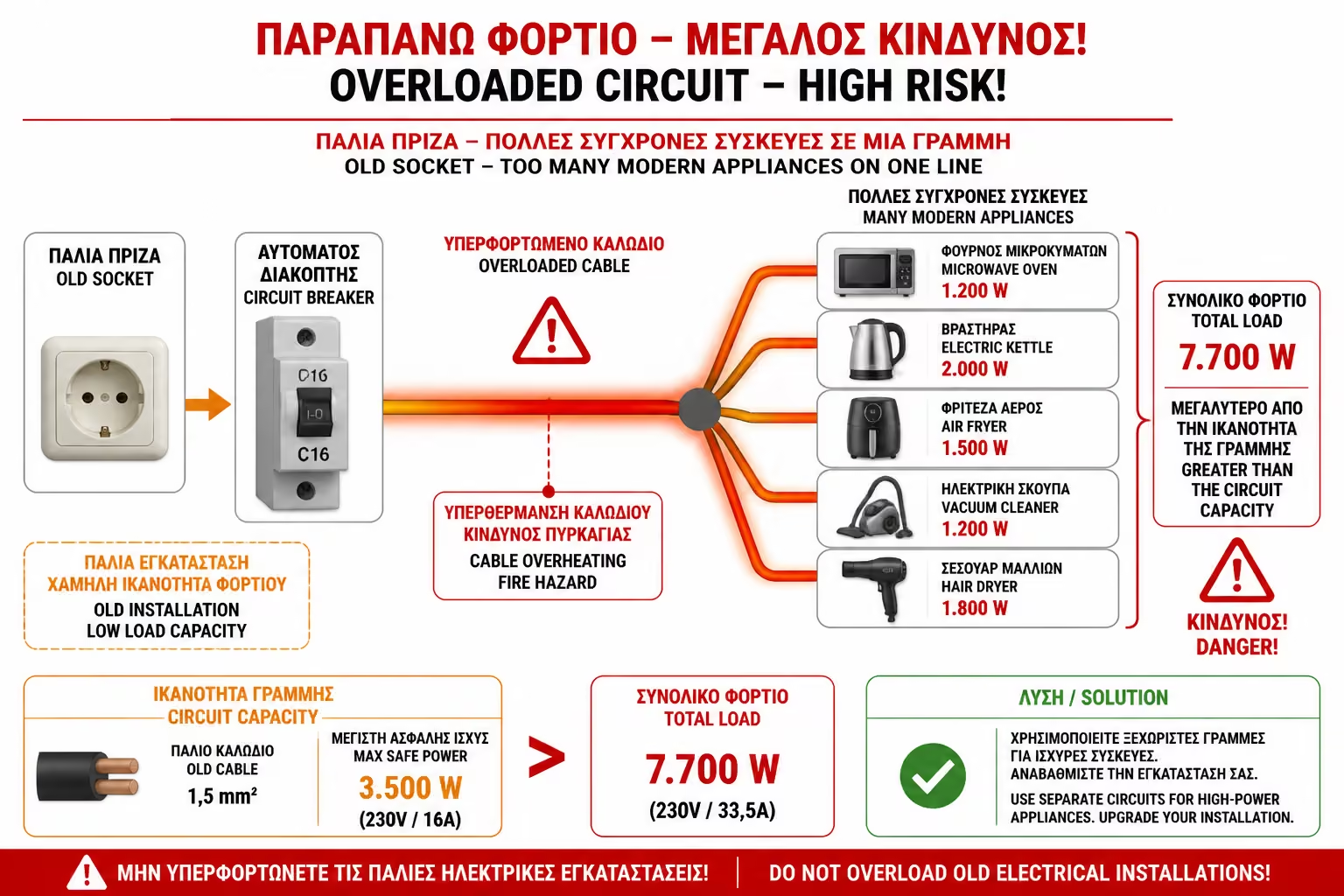
The cable may operate near its limit for a long time without any visible sign, which makes the risk particularly deceptive.
Air fryers, kettles, heaters, computers and multi-way adaptors create demand that did not exist when the house was designed.
You are not only assessing the new point itself, but everything that may later be plugged into it.
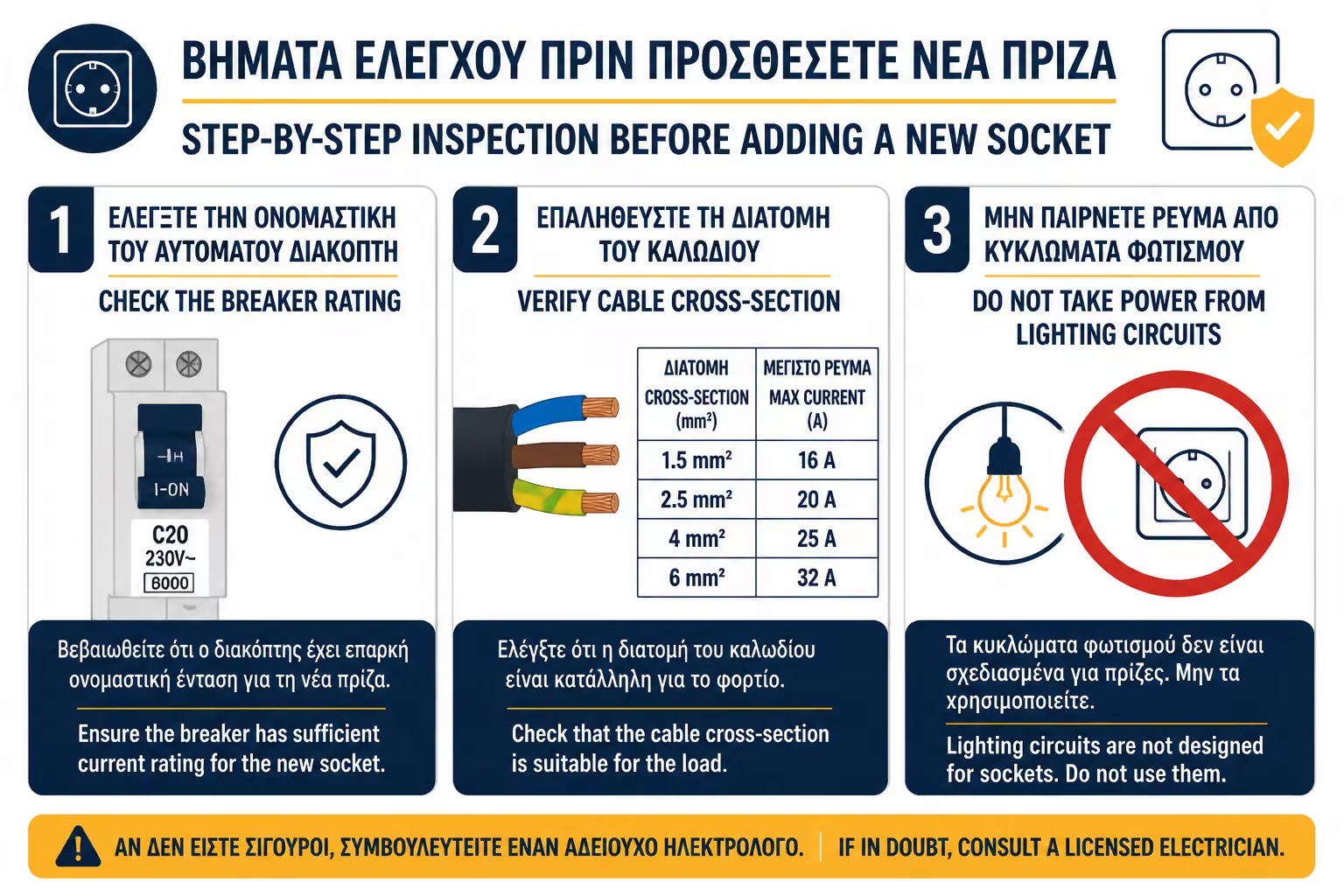
Before anyone opens the existing outlet, you need to check the breaker, the conductor size and the intended use. Without those checks, adding a new outlet is essentially blind work.
The MCB rating must match the conductor size and the intended circuit type. A large breaker protecting a thin cable is a direct hazard.
A modern socket circuit is generally expected to be 2.5mm². If you find 1.5mm², you need much more caution and often a new dedicated circuit.
The idea of taking power from a lighting line to create a new socket is one of the most dangerous improvisations, because lighting circuits follow different sizing and protection rules.
A charging point for a phone is one thing; a future outlet that may feed a heater or kitchen appliance is something very different. Future use changes the whole decision.
If the inspection shows that the circuit is suitable, the extension must still be executed professionally: inside a proper box, with safe connections and with cable of the correct type and size.
The new outlet is not a hidden improvised tail buried in plaster. It becomes a formal part of the circuit and must remain inspectable, stable and thermally safe for years.
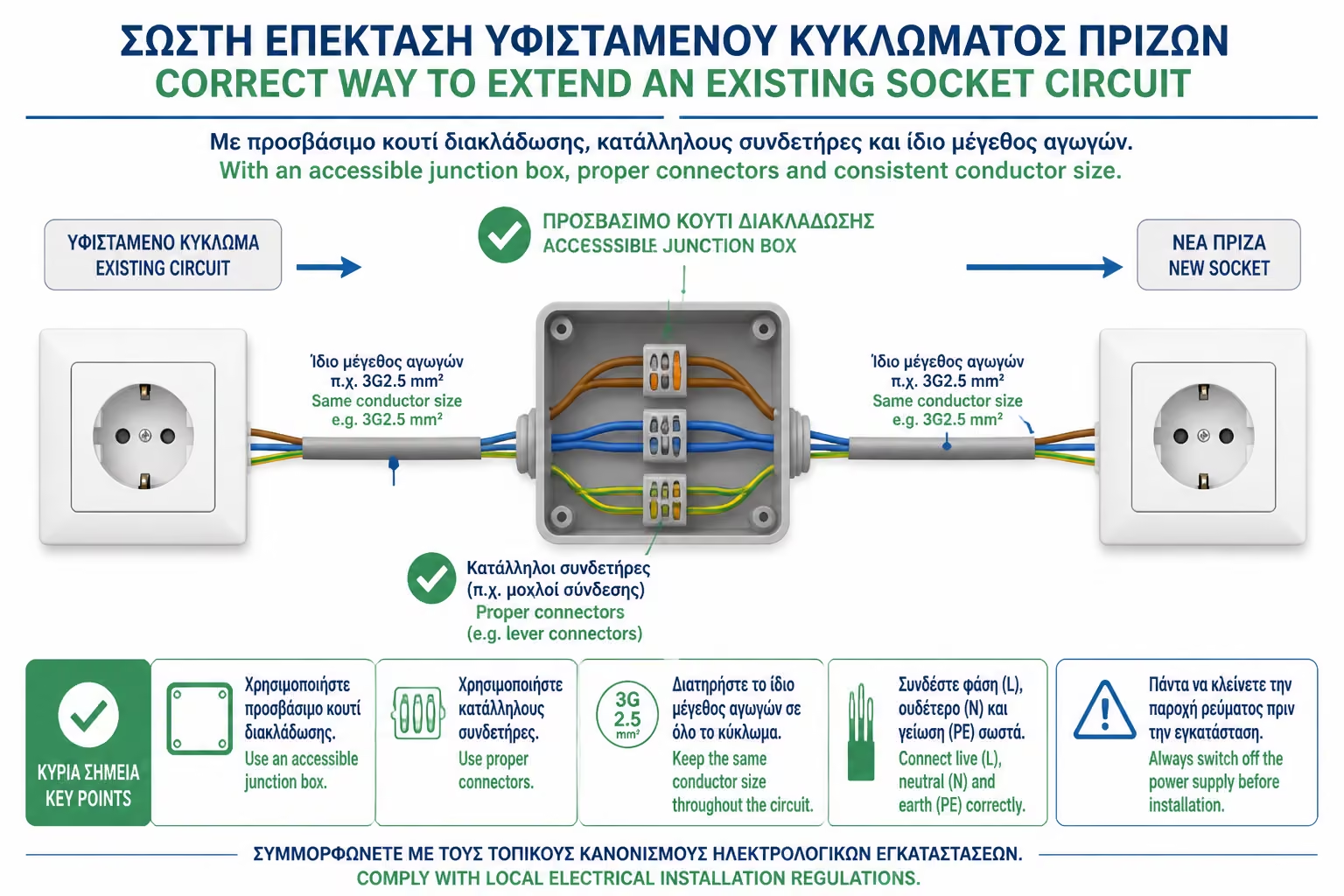
Joints must be made in an accessible enclosure, not left loose inside the wall.
Use terminals or quality push connectors, not twisted wires and tape as a permanent solution.
Do not arbitrarily reduce the conductor size on the new branch. The circuit must remain technically coherent throughout.
After the extension, tightening, polarity and loaded behaviour should all be checked so the new outlet is not merely live, but actually safe.
If the old line you want to extend turns out to be 1.5mm², the answer is not automatically “never”, but it is definitely not “do it casually either.” A careful evaluation is required, based on protection, safety and the types of loads that will be connected.
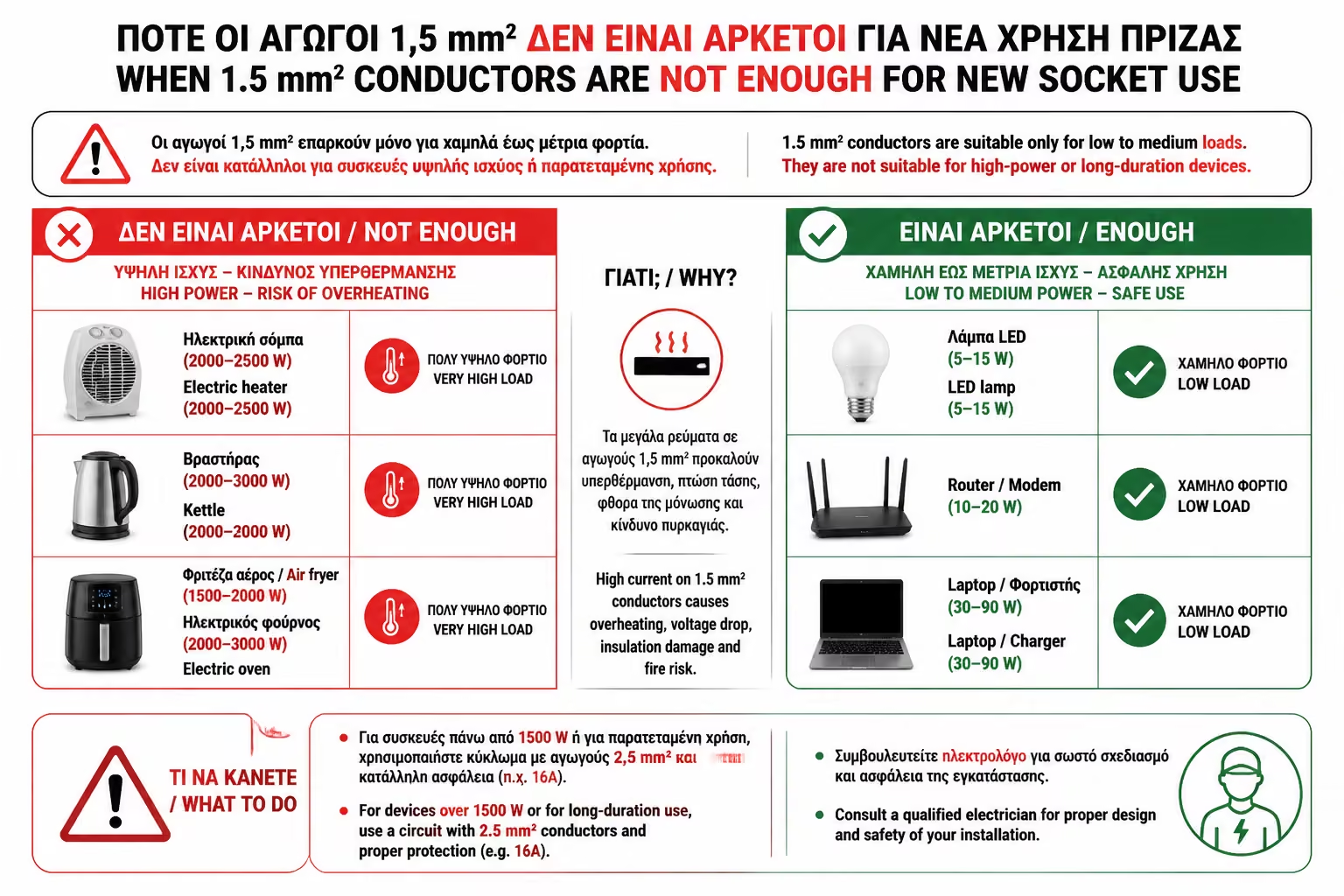
Heaters, kettles, microwaves and similar loads should never be treated as innocent uses on an old undersized circuit.
In some cases the circuit may serve very moderate loads, but only after a documented evaluation by the electrician.
If you want real safety and convenience, a new independent circuit from the panel is usually more honest than pushing an ageing line beyond its comfort zone.
💡 The real problem is not adding one more outlet. It is what someone will later consider normal to plug into it.
Return to category.
Go to categoryReturn to the central guide.
Go to guide