Plug & Play (No Electrician)
You buy it (it costs from €15 to €100 depending on the brand), plug it in and you're done. No interference with cables.
It's noon in August. Your Airbnb guests have left for a full-day boat trip. You enter the accommodation to change towels and a cold wave hits you. The air conditioner is on full blast, at 18°C, with the windows half open.
This picture is every host's nightmare. The air conditioner (A/C) is not only the most energy-consuming device in the house; when it runs non-stop in extreme temperatures, it strains its compressor (motor), shortens its life and increases the risk of breakdown during the summer.
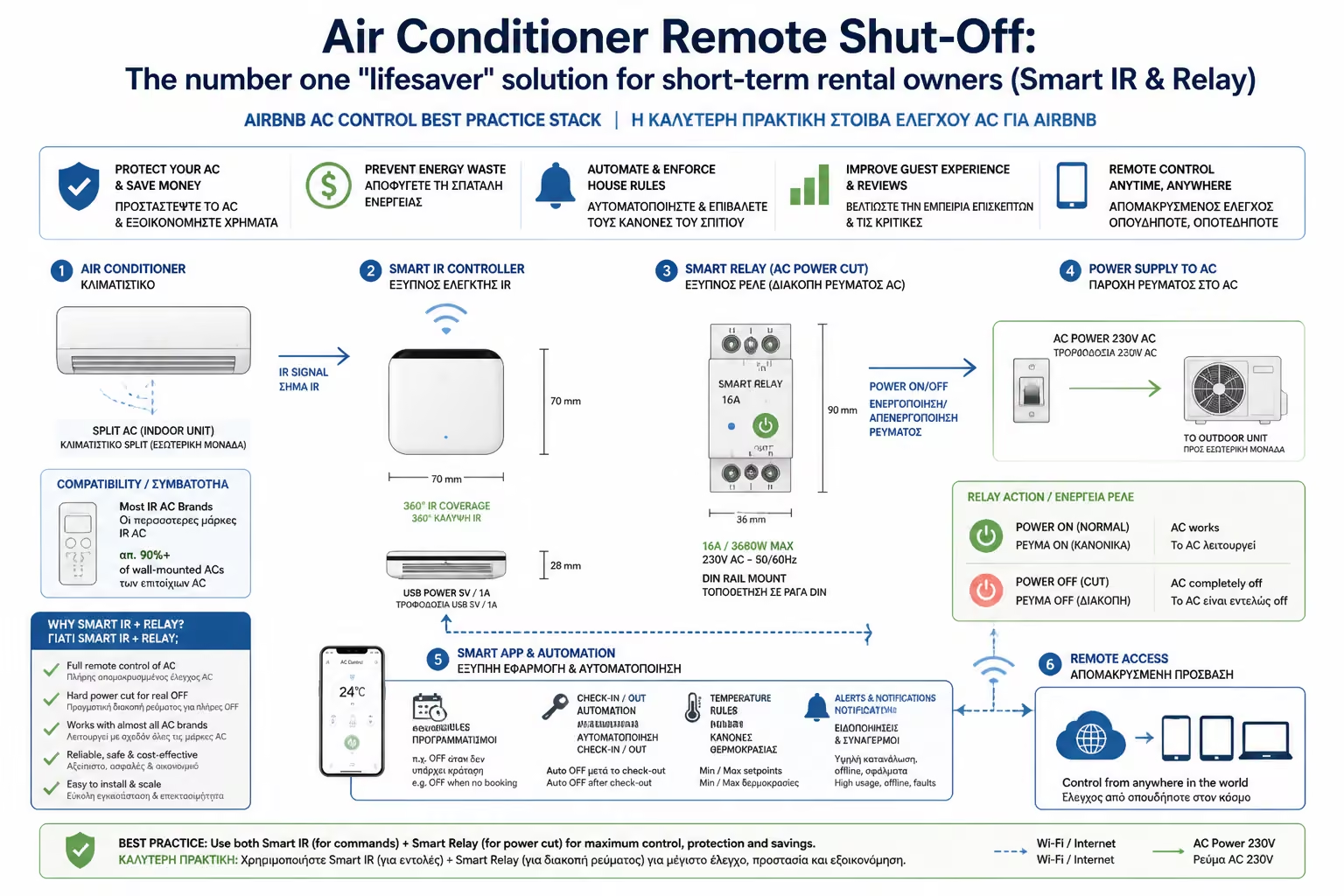
To take control into your own hands, there are two technical paths. The first is more "gentle" (via infrared) and the second absolutely "hard" (via the electrical panel). As engineers, we're going to analyze both solutions to see which one fits your infrastructure.
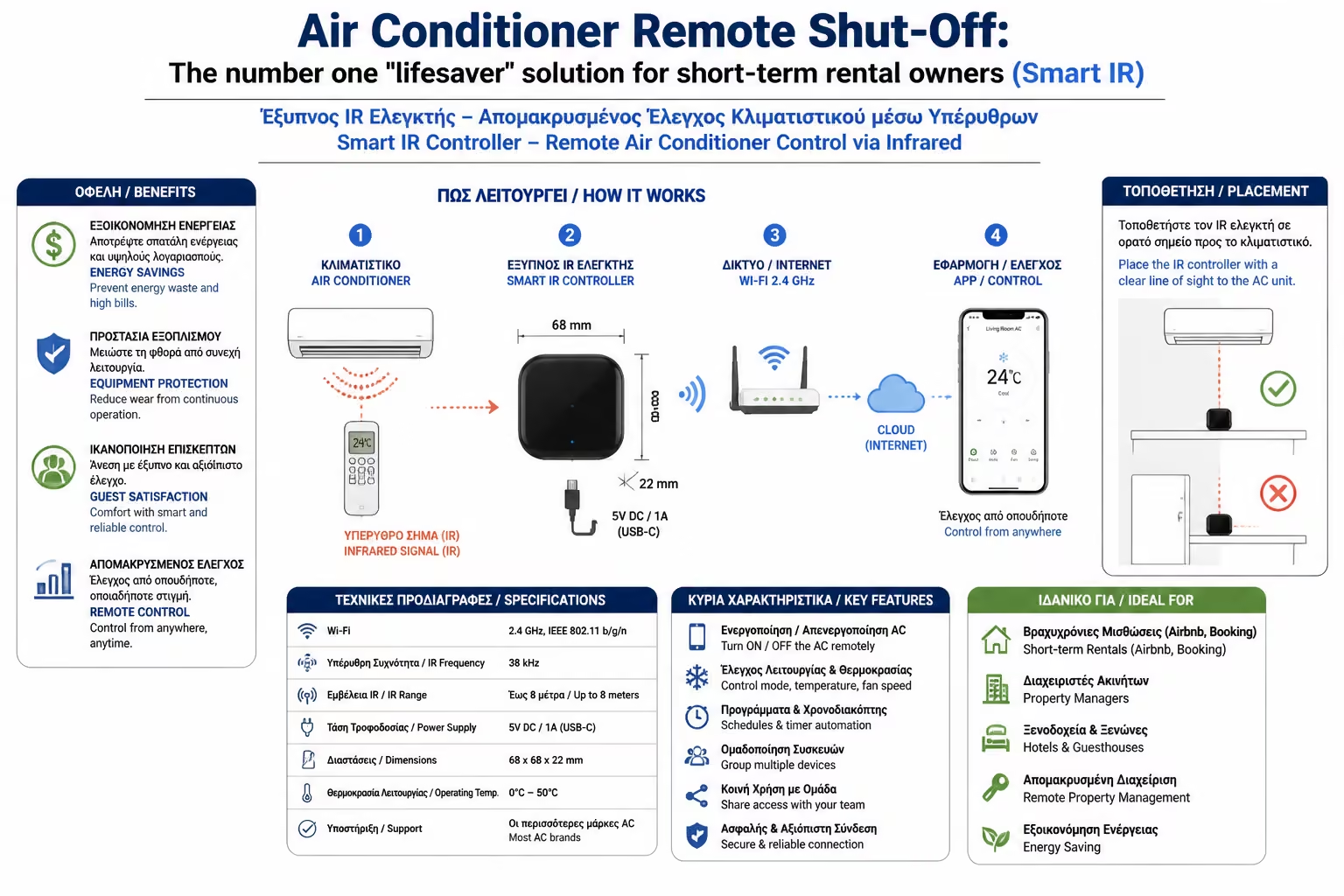
The air conditioners communicate with their remote control via infrared radiation (IR - Infrared). A smart IR controller (eg Broadlink, Sensibo, or a simple Tuya Smart IR) is a small, unobtrusive "box" (like a black pebble) that plugs into an outlet in the same room as the air conditioner.
How it works: Connects to home Wi-Fi. Through your mobile phone, you tell him which brand of air conditioner you have. From that moment, the little box "learns" to imitate the remote control!
The Advantages:
The Downside (The "Blind" Condition): Cheap Smart IRs are "blind". They send the signal to turn off the A/C, but they don't know if the A/C actually turned off. If the customer picks up the physical remote and turns it back on, your mobile app may show "Closed" when it's actually working. (Tip: That's why experienced hosts "hide" the physical remotes and use only the smart control or touch screens).
You buy it (it costs from €15 to €100 depending on the brand), plug it in and you're done. No interference with cables.
You don't just turn On/Off. You can change the temperature, change the fan speed or turn it from cooling to heating.
Devices like Sensibo have a temperature sensor and software that allows you to set limits. B.C. "If the customer puts it below 22°C, you quietly turn it back to 22°C."
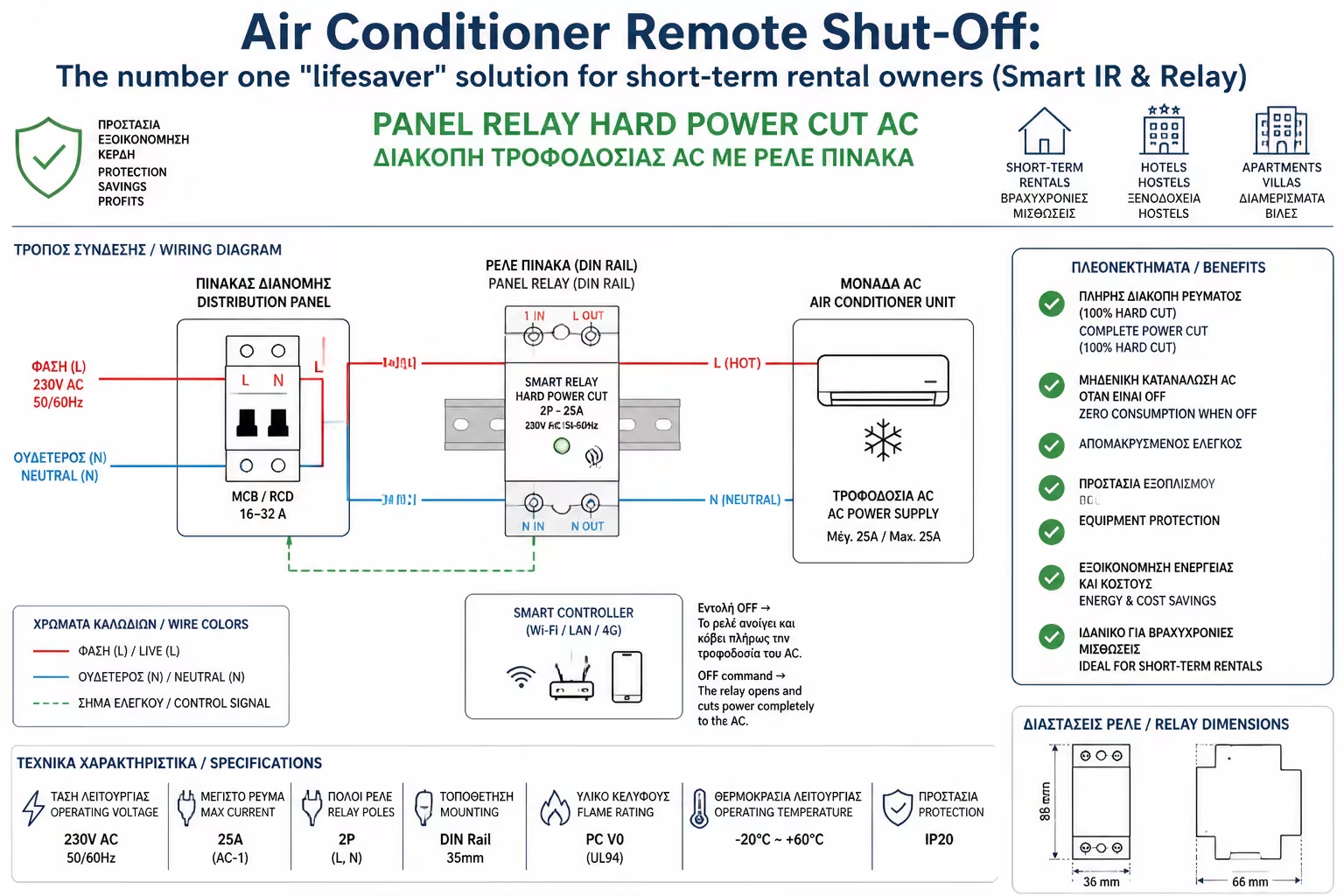
If you want absolute security and don't care about remote controls, the solution is in the central electrical panel of the house.
How it works: Your electrician installs a Wi-Fi Smart Switch (eg Shelly 1 / Shelly Pro) which is connected to a Power Relay (Contactor) directly on the line that supplies power to the air conditioner. When you press the button on your mobile, the relay "cuts" the power supply (230V) to the machine. It's like turning down the general A/C.
The Advantages:
The Disadvantage (The "Strain" of the Board): Modern Inverter air conditioners are complex computers. When you close them from the remote, the machine does a "close cycle" (closes the blinds smoothly, stops the compressor, does a little cleaning). When you forcefully cut the power from the panel while it is working at full capacity, it is like unplugging your computer instead of "Shut down". If this is done every day, 3 times a day, there is a serious risk of burning out the inverter electronic board, which often costs half the price of an air conditioner!
If you press OFF, it is OFF. The customer cannot turn it on with any remote control, because the machine simply has no power at all.
This solution "snaps" perfectly with Card Switches. When the customer takes the card/key and leaves the house, the relay automatically cuts off the power.
Because "hard" panel power outage is dangerous for modern A/Cs, our best practice in commercial accommodations is Two-Stage Automation.
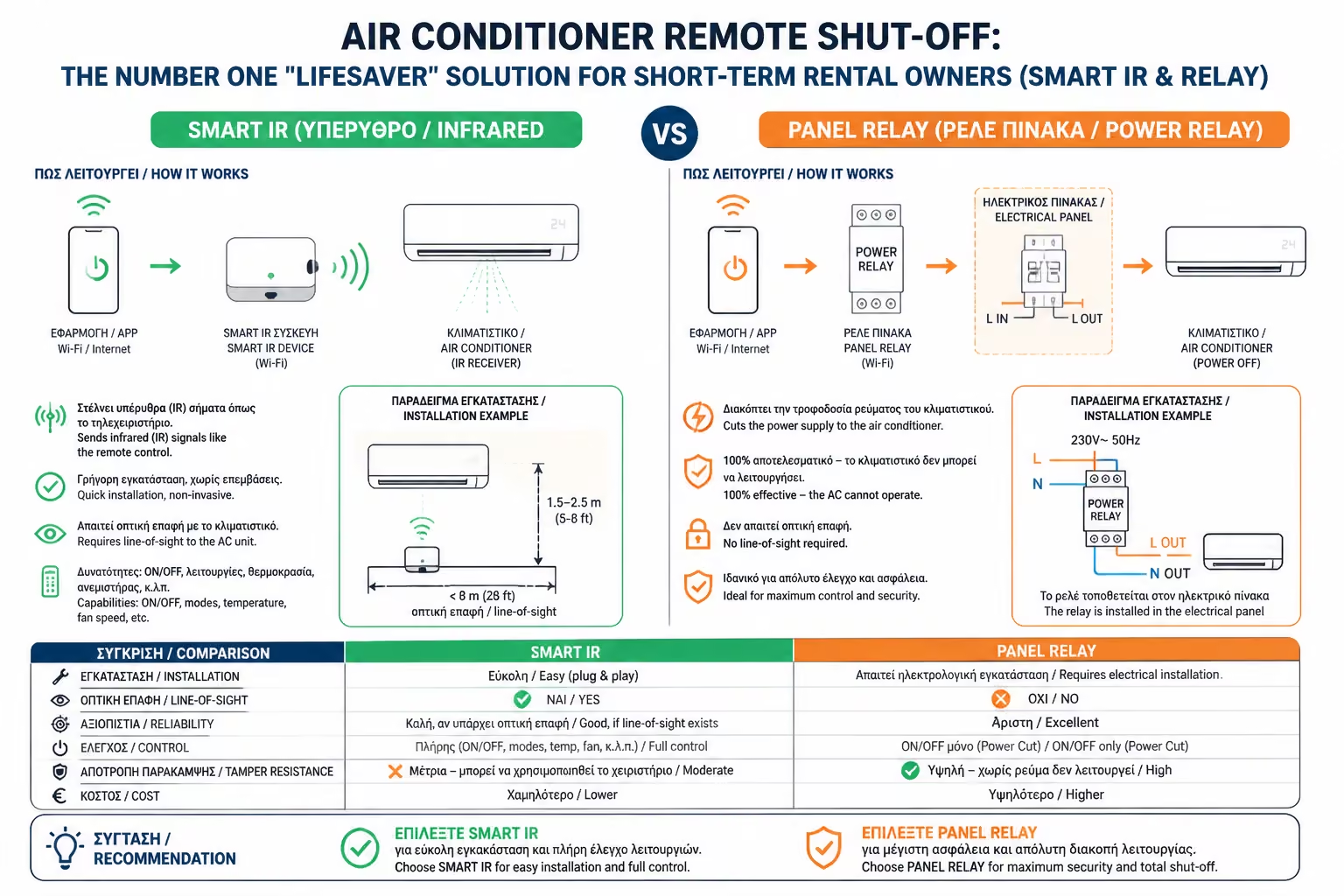
If you're managing an Airbnb and haven't yet put remote control on your air conditioners, you're losing money literally every hour that goes by. For small apartments and an immediate result, buy a Smart IR "box" today (at €20-30). If you are doing a major renovation, ask your electrician to prepare the panel with relays, so that you have complete control at the wiring level.
Next Step: We mentioned the "Card Switch" above. We all know the old hotels where we put the key fob in the reception to turn on the electricity. But today, customers have become smart and leave any card (eg a supermarket card) in the slot to keep the A/C running while they are away!
We continue in the guide: Hotel card switches (RFID) vs. Smart Attendance Automations: What to choose for your rooms.
This article also has a video version with the same topic in a more direct walkthrough format.
Watch the short video on how a Smart IR can prevent wasted energy from a forgotten AC.
Watch the YouTube Short on remotely switching off an AC in an Airbnb or empty home.
Return to category.
Go to categoryReturn to the central guide.
Go to guide