How they work
Inside the slot is not just a switch, but a chip reader. To arm the room's current, the card inserted into the slot must have the correct digital chip (frequency 13.56 MHz), which is coded exclusively for the specific room.
We all know the old, classic "trick" of hotels. The customer enters the room, puts the key fob with the card in the special slot next to the door, and the room comes alive: the lights turn on and the air conditioner starts. When the customer wants to go to the beach but wants to find the room "fridge" when he returns, what does he do? He simply removes the key from the key fob and leaves the card in the slot. Or, even worse, he puts an old supermarket card or a folded... cardboard in the slot!
The result? The supposed energy savings go a long way.
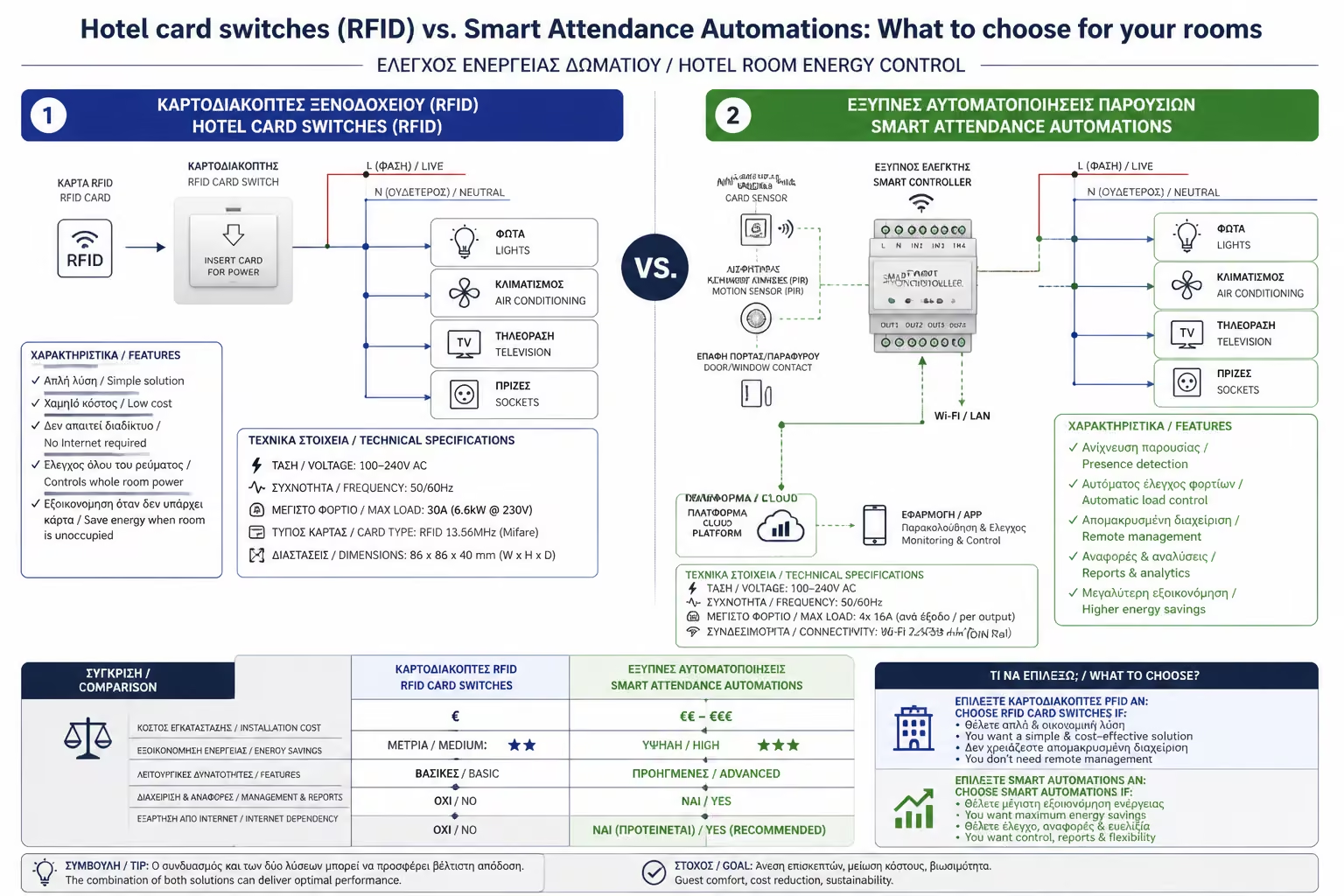
To deal with this human ingenuity, engineers evolved technology. Now, the battle is between the advanced RFID Card Switches and the Intelligent Presence Systems (Presence Detection). Let's put the two technologies under the microscope to see which one suits your own accommodation (Airbnb or Boutique Hotel) in 2026.
Classic (optical) card switches, fooled with a cardboard, are now considered obsolete. They have been replaced by RFID (Radio Frequency Identification) or Mifare card switches.
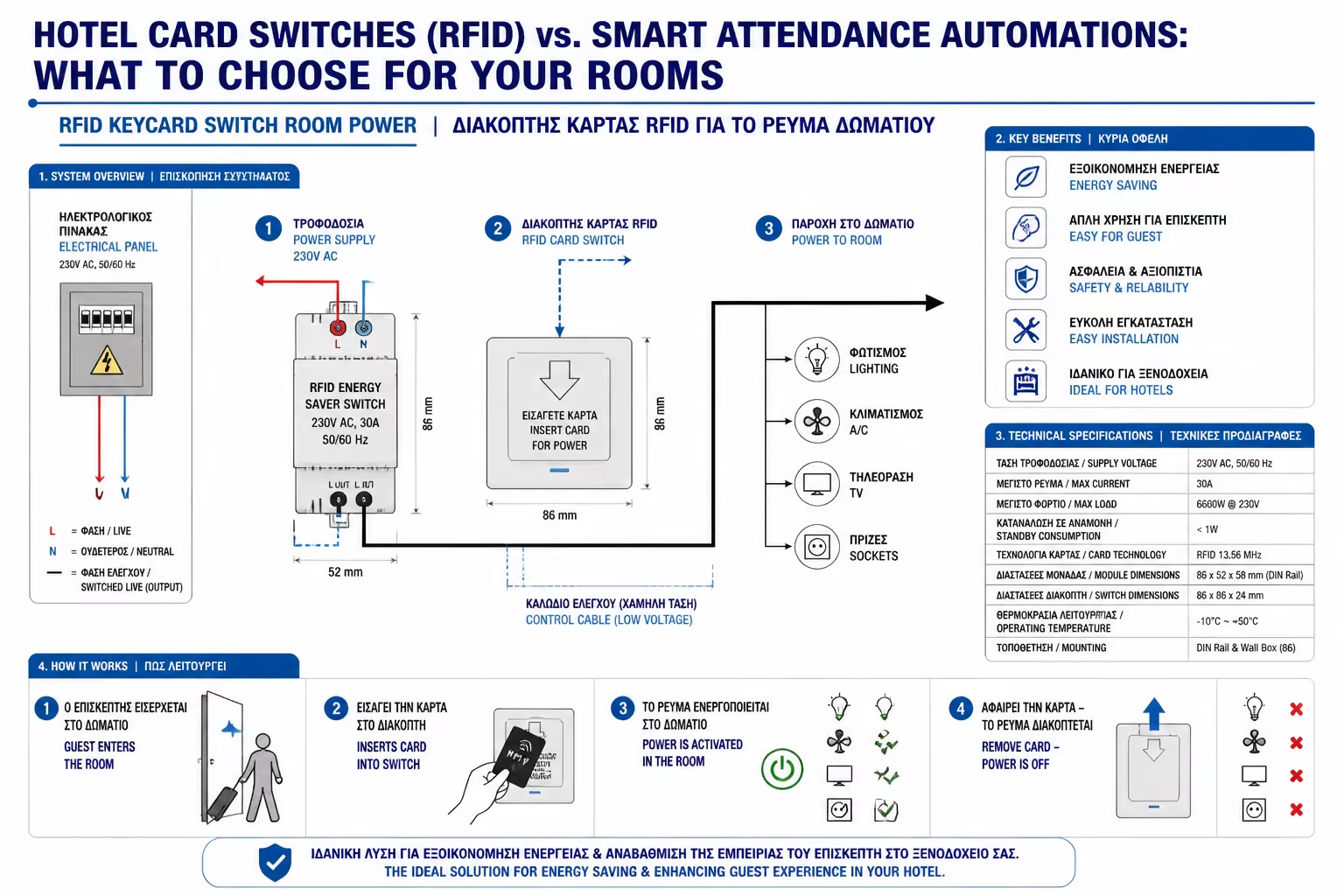
Inside the slot is not just a switch, but a chip reader. To arm the room's current, the card inserted into the slot must have the correct digital chip (frequency 13.56 MHz), which is coded exclusively for the specific room.
No more business card tricks. It's a robust, professional solution (usually connected to a central rail relay in the panel that lifts all the "heavy" loads in the room).
Customers adapt quickly. If they intend to leave the A/C on, they'll just ask the front desk for a second room card (or if it's Airbnb, rip the card off the key) and leave it permanently in the slot. Also, as a user experience (UX), fumbling in the dark to put the card in the slot is now considered a bit "old fashioned".
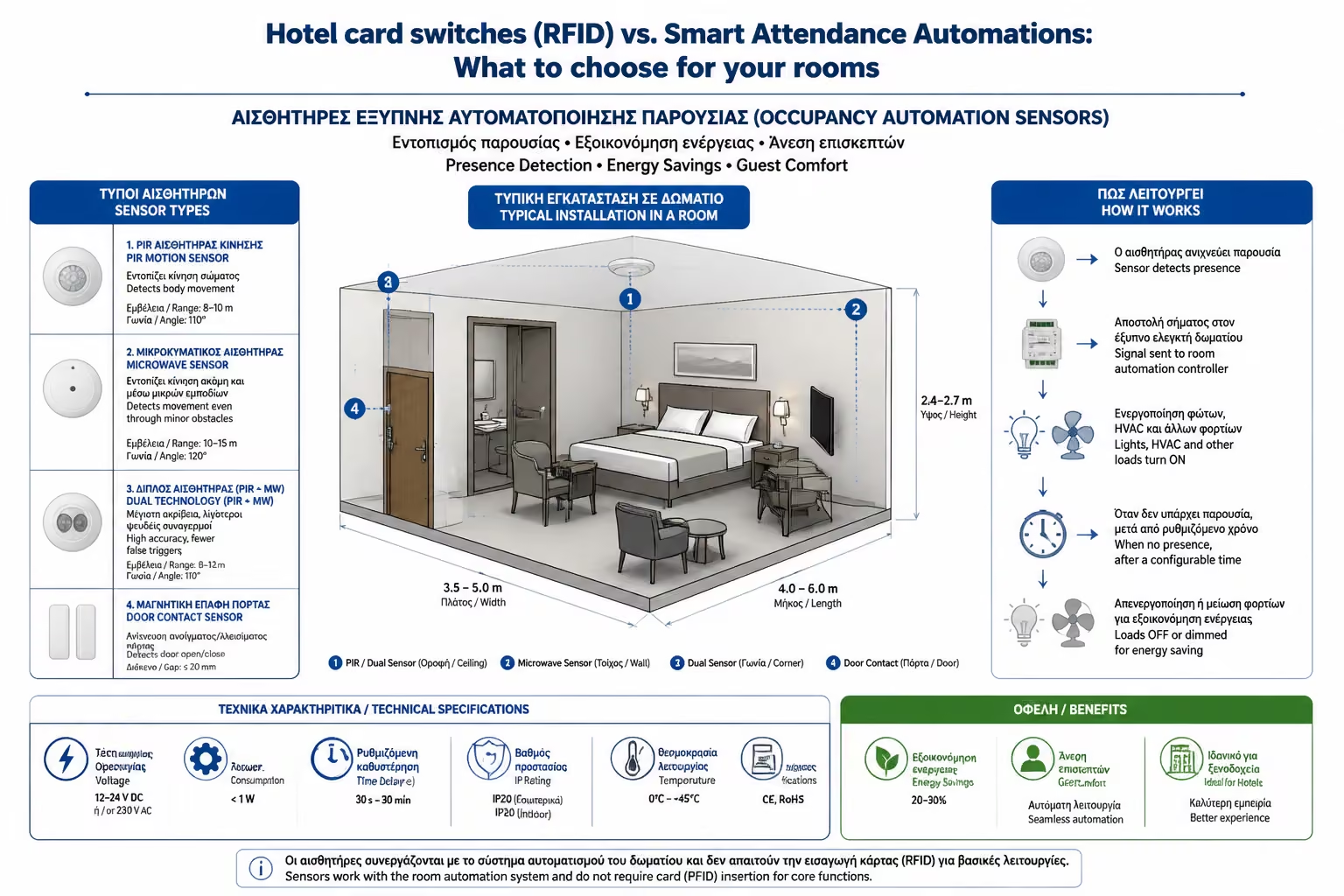
Why rely on a plastic tag when you can tell if there's a real person in the room? The ultimate solution in the modern Smart Home completely removes the card switch from the wall.
This approach uses a combination of two "invisible" sensors that connect wirelessly to the smart home panel:
The system (eg Home Assistant or a Tuya/Aqara hub) runs an algorithm in the background: The front door opens and closes. (The system says: "Someone entered or someone exited"). The mmWave radar scans the room for the next 5 minutes. If it sees a presence: It understands that the customer has entered. It doesn't do anything, it leaves the electricity and the air conditioner working normally. If he does NOT see any presence: He understands that the customer has left and closed the door behind him. Immediately, it sends a signal to the panel's smart relays to cut off the water heater, turn off the lights and turn off the air conditioner (via Smart IR, as we saw in the previous article).
The table below shows where each option wins, so you can judge whether the smarter setup is worth the extra complexity.
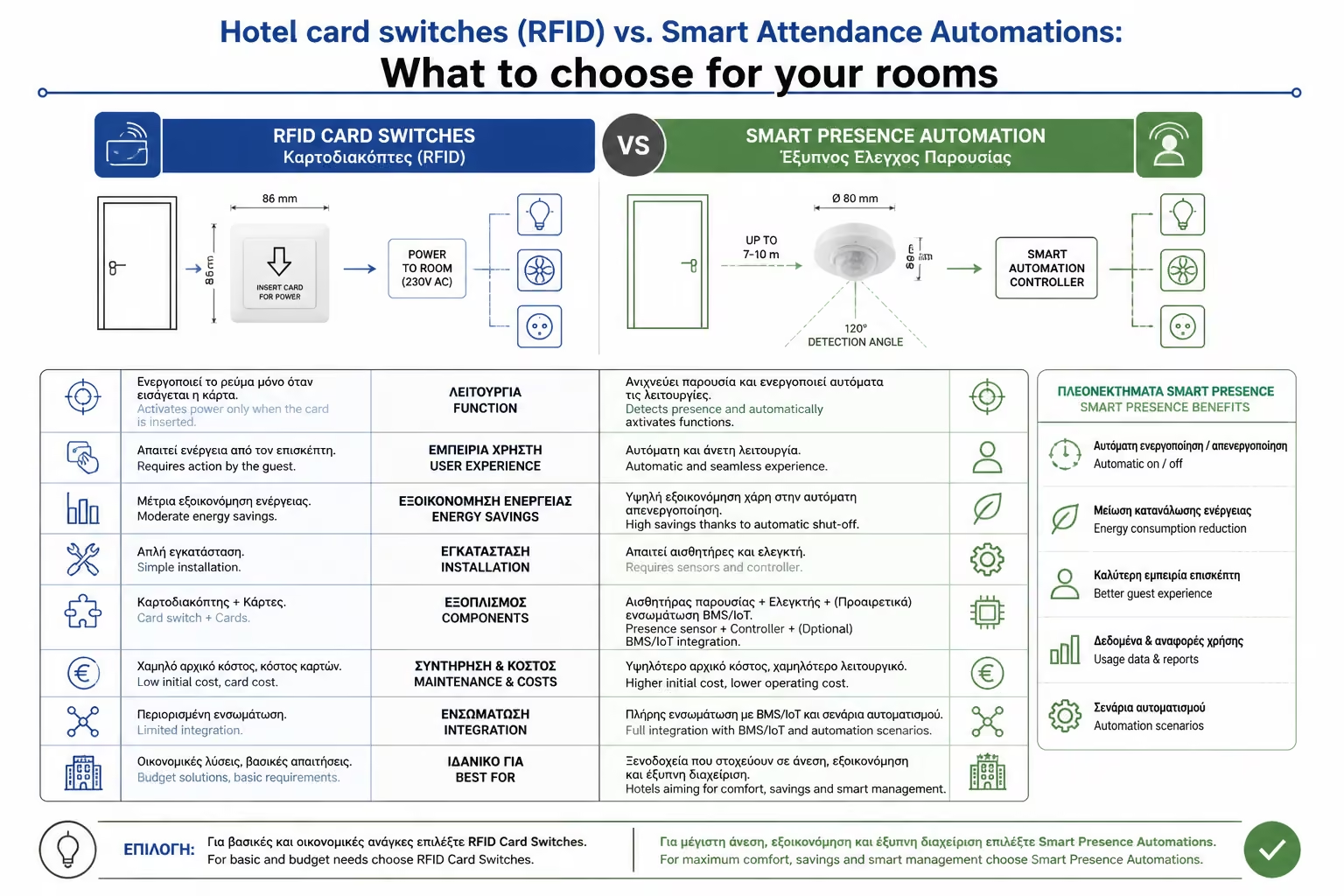
| Feature | RFID card switch | Attendance System (mmWave + Door) |
|---|---|---|
| Customer Experience (UX) | Requires action (to insert/remove the card). | 100% "Magical" and Invisible. It comes in and the lights just work. |
| Deception Rate | Moderate (They leave a second card in the slot). | Zero. If someone is not breathing in the space, it turns everything off. |
| Installation | It requires trenches in the wall, cables and digging next to the door. | Wireless sensors (Battery/USB) or small interventions in the ceiling. |
| Implementation Cost | Low / Medium. | Slightly higher (Due to cost of mmWave & Hub sensors). |
| Key Management | You have to manage physical RFID cards (they get lost). | It combines perfectly with "Smart Locks" (Smart Locks) with a PIN code, completely eliminating physical keys. |
If you are building or renovating a property today, choosing a smart presence system (mmWave Radar) is the only way to go.
The modern customer wants to feel at home, and in their home no one uses cards to turn on the light. By combining a smart lock (Smart Lock) with a PIN code for customer entry, and presence sensors to control electricity, you save forever the stress of lost keys, locked out guests and, of course, inflated electricity bills. The control is absolute and, most importantly, it does not accept... "patents" from visitors.
Next Step: We solved the air conditioner and mains issue. But what about the second biggest "nightmare" of the electrical panel, the electric water heater?
We continue in our practical guide: Automated Water Heater Control for Guests: Timers, Smart Relays and automatic shut-off.
Return to category.
Go to categoryReturn to the central guide.
Go to guide