The Problem
The visitor sets the cooling to "full" (18 degrees) or the heating to 30 degrees.
Welcome to the harsh reality of short term renting. You've renovated your apartment, taken professional photos, the bookings are pouring in and the reviews are excellent. Everything seems perfect, until the moment the utility bill comes and "swallows" all your net profit.
It is the well-known "Hotel Syndrome". Guests who pay for accommodation rarely feel the need to save. They leave the air conditioner at 18°C and leave for 10 hours at the beach only to find the house cool when they return. They turn on the water heater and leave it on until the next day. They leave lights on in empty rooms.
As engineers, our stance is clear: You cannot change the mindset of your visitors. But you can change the intelligence of your home.
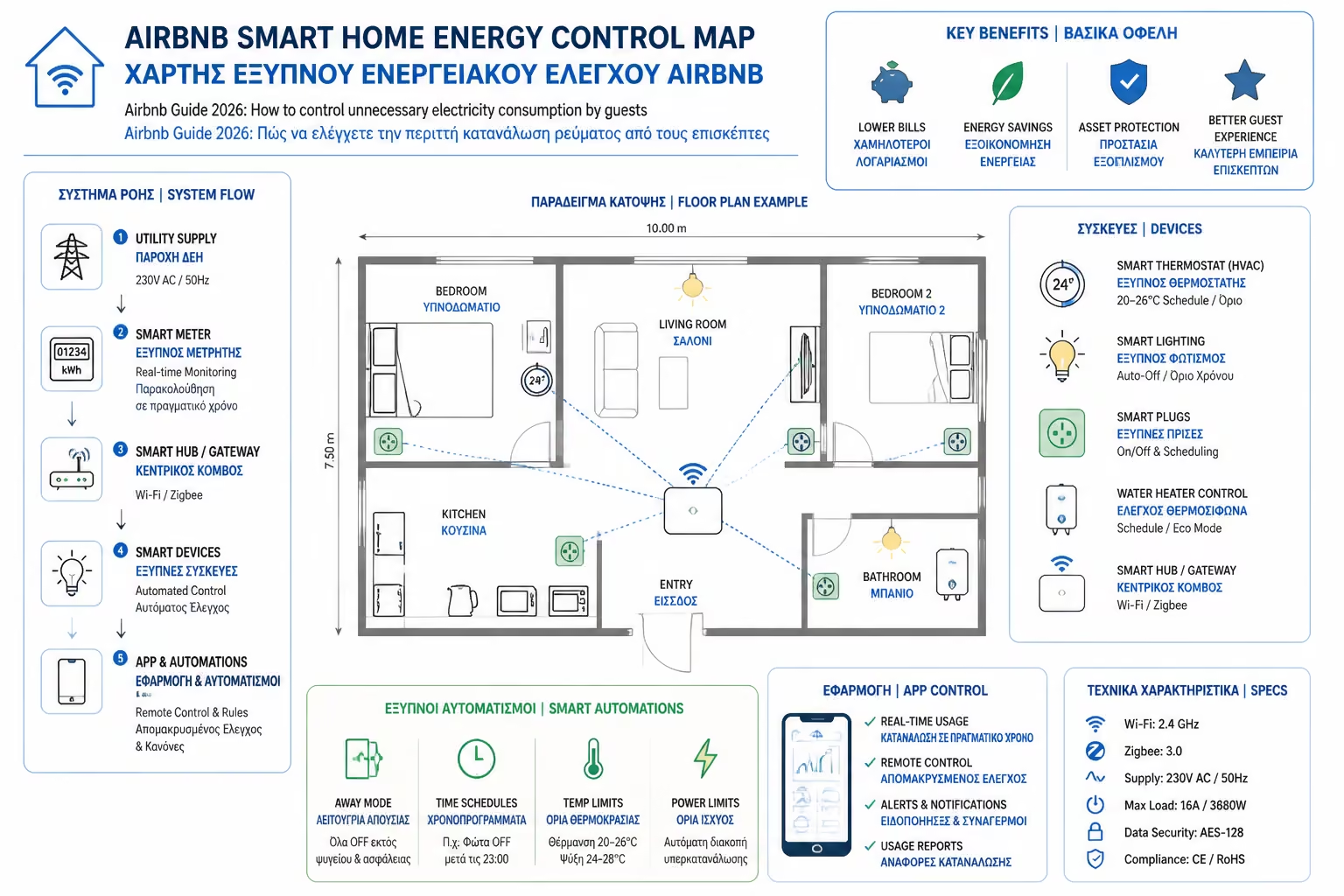
Entering 2026, Smart Home technology is no longer a "luxury" for an Airbnb, but the most basic survival tool. Let's map out the strategies you need to implement to shield your business against energy waste, but without ruining your customer experience.
Before you start buying smart devices, you need to understand the number one rule of hospitality: The guest hates complexity. If you ask him to download an app on his phone to turn on the light, or if you give him a complicated digital panel with 15 buttons, he will get upset and leave you a bad review. Your own saving technology should be completely invisible. Wall switches should work like normal switches. Your automations (eg turning off the air conditioner when they're away) should happen in the background, automatically, without any customer involvement.
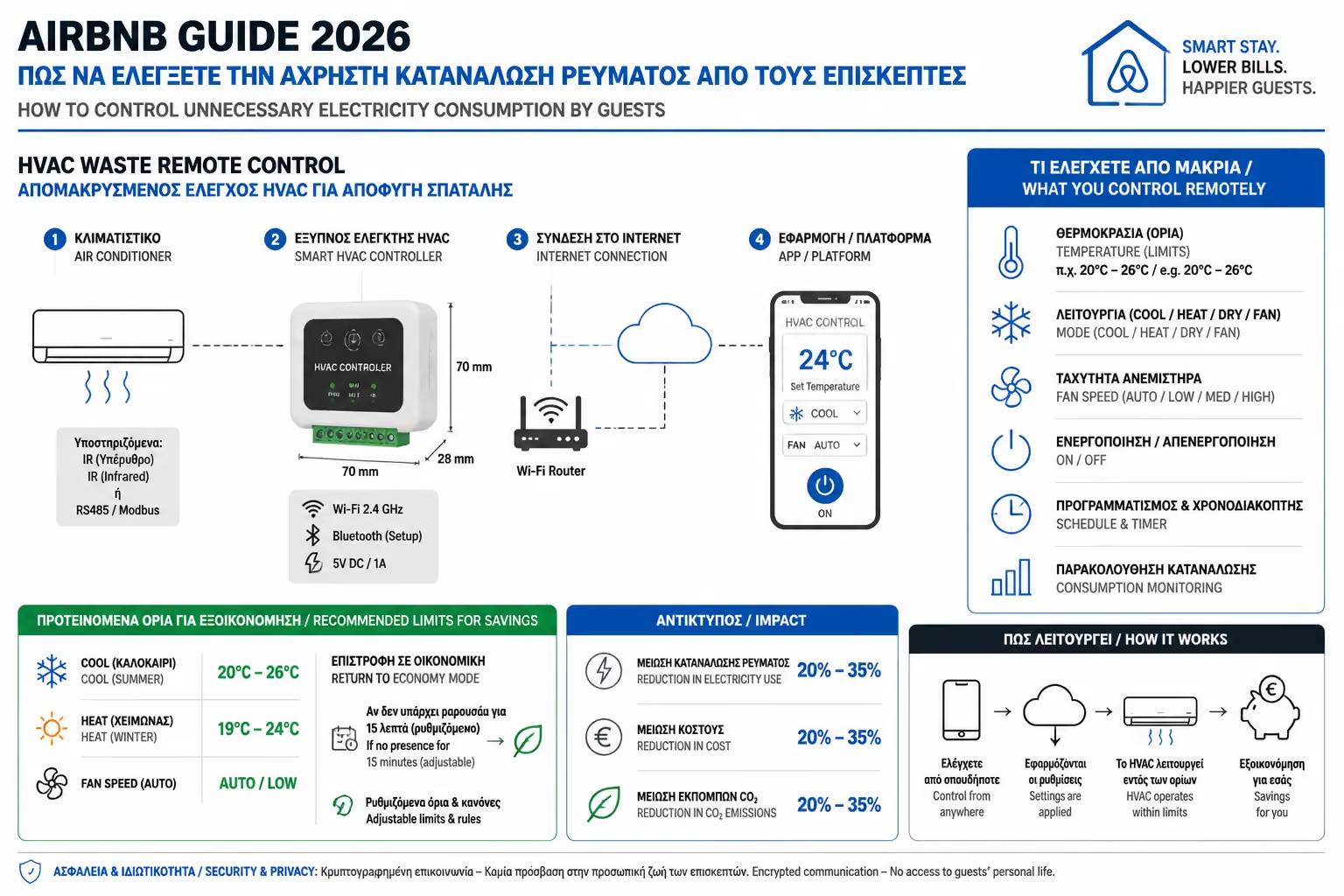
Air conditioners are usually responsible for 60% to 80% of the electricity bill in a tourist accommodation. They are the first load you need to control.
The visitor sets the cooling to "full" (18 degrees) or the heating to 30 degrees.
You need to get remote control. It is not a professional Airbnb today without a smart air conditioner controller (Smart IR Controller). This device allows you to see from your mobile if the AC is on while the house is empty, and turn it off with a button. Even better, it allows you to lock temperature limits (eg not allow selection below 22°C in summer). We will break down the exact equipment in the next article.
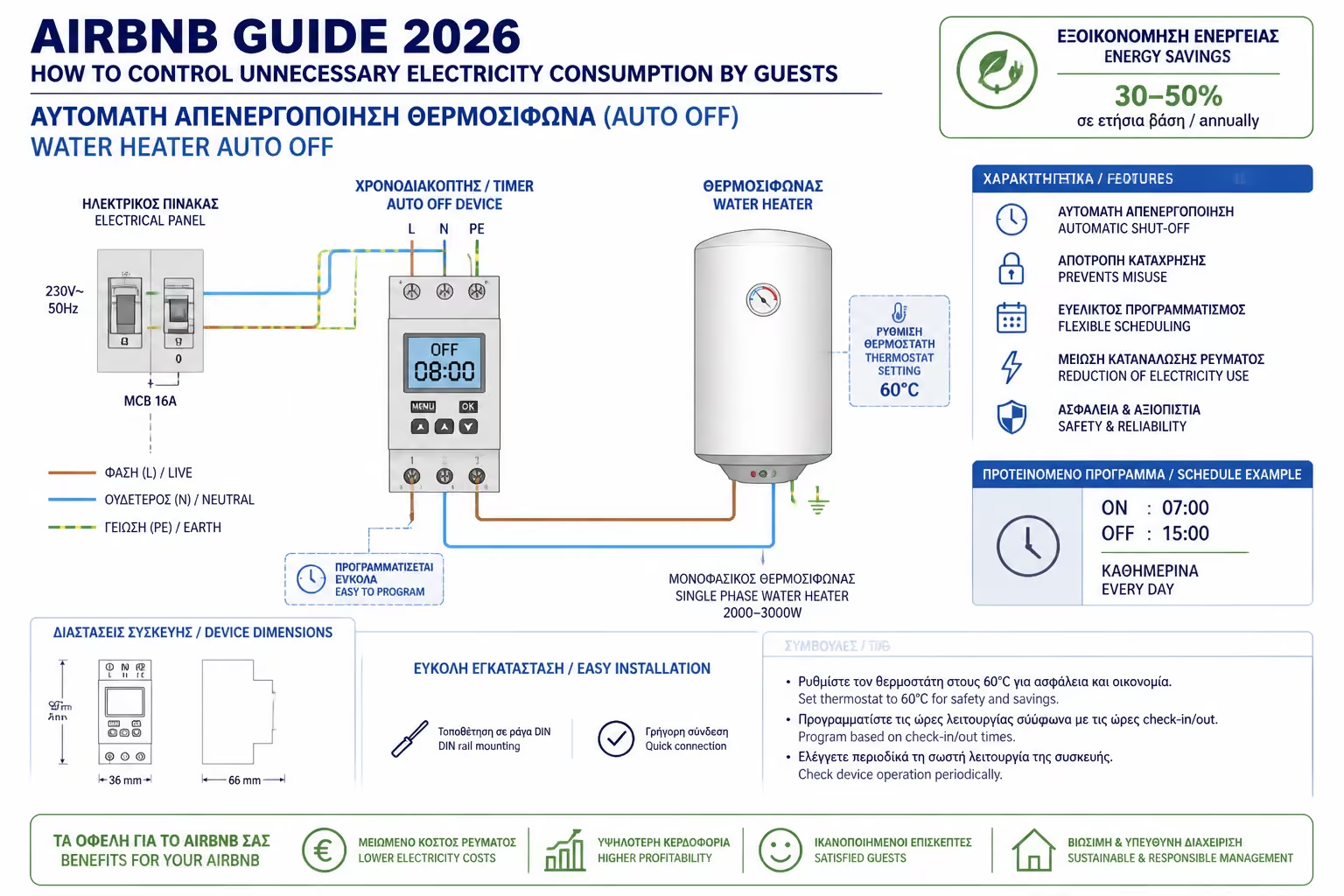
A classic electric water heater (of 4000W) that is left on for hours for no reason, burns several euros worth of electricity every day, while at the same time wearing down its resistance and creating a risk of overheating/explosion if its thermostat breaks.
The visitor turns it on to take a bath and forgets to turn it off when he leaves for a walk.
Forget the classic, "dumb" switch on the panel. Install a smart DIN-rail relay (e.g. Shelly Pro) that controls the water heater. The guest can press the button to turn it on, but the system will keep an internal timer and automatically switch the water heater off after exactly 30 or 45 minutes. The guest still gets hot water, and you avoid unnecessary waste.
It mostly happens in island and seaside properties. The guest has the air conditioner on full blast, but opens the balcony door wide to listen to the waves or let the dog in. The air conditioner then tries in vain to cool the entire outdoors, consuming astronomical amounts of energy.
The solution is Door/Window Sensors. These small, wireless sensors are placed on balcony doors. Through the Smart Home system, you create a simple rule: "If the balcony door remains open for more than 3 consecutive minutes, turn the air conditioner off. When the door closes, turn it back on." It is perfectly fair, reasonable, and protects your equipment from continuous overuse.
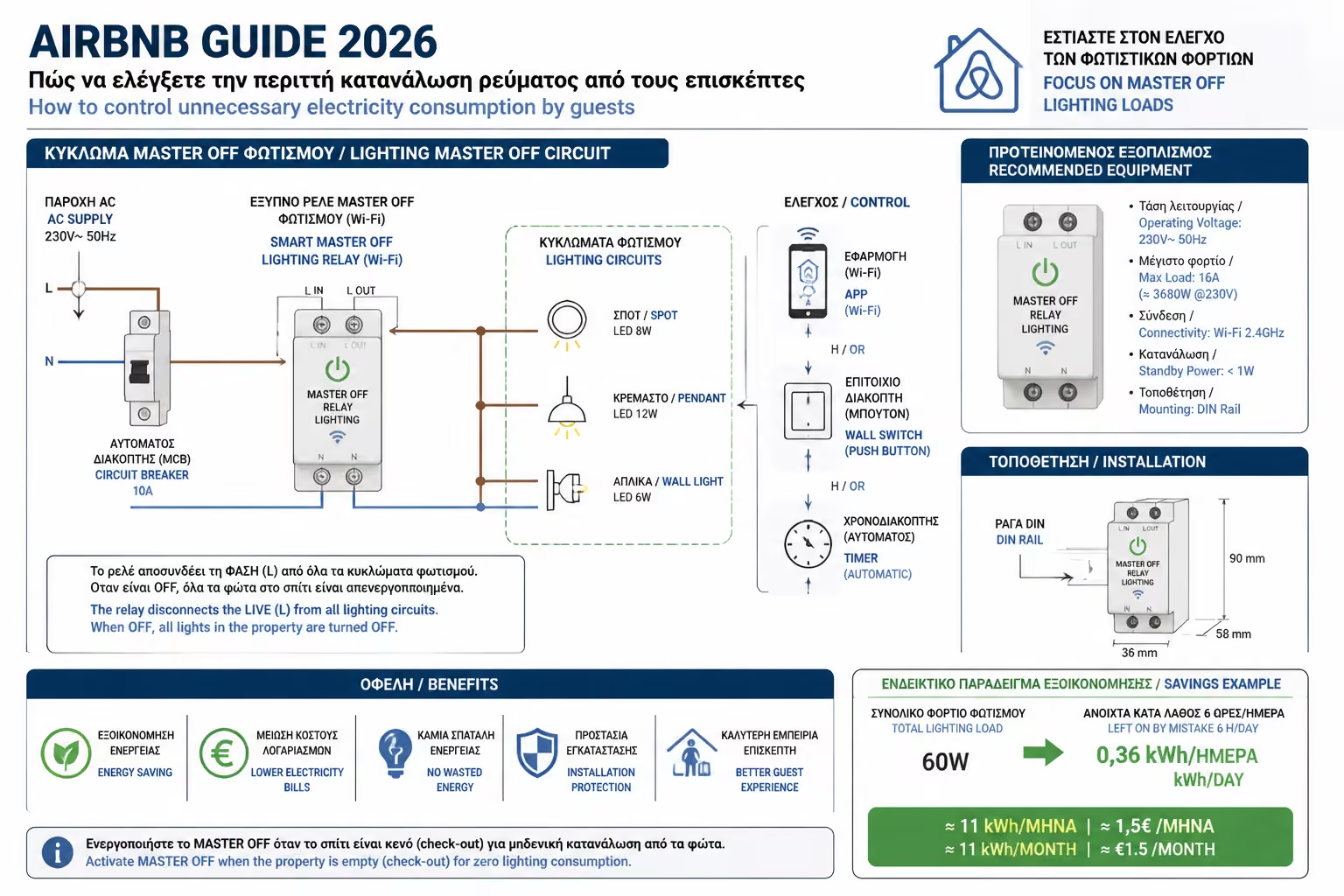
There is nothing more tiring for a host than walking out of his apartment at night, knowing that the guests are out, and seeing all the lights in the house and the TV playing blank.
In addition to the classic hotel card switches, you can have a general "Leaving Home" (Master Off) switch next to the front door. Or, even more intelligently, through the system, you can, after confirming that guests have left, switch off all the lights and the heavy-load sockets at the same time with a tap on your phone.
The success of an Airbnb in 2026 is not only judged by how much revenue (bookings) it brings in, but also by how it controls its expenses. Don't try to "educate" your customers by putting up threatening signs ("Please turn off the AC"). Educate your own home. An investment of €200 - €300 in smart controllers will pay for itself before the first summer season is even over.
Next Step: Let's tackle the biggest problem, the air conditioners, and see the technical solution step by step. How exactly do we get control? Moving on to the practical guide: Remote Air Conditioner Shut-Off: The number one "lifesaver" solution for short-term rental owners (Smart IR & Relay).
Return to category.
Go to categoryReturn to the central guide.
Go to guide