At 08:00 in the morning (little sun)
LEDs light up at 80%.
Have you ever walked into a modern office with huge windows, at 12:00 noon in the bright sun, and noticed that the ceiling lights are on at 100%? This is one of the most common and silent forms of energy waste, both in professional spaces and in homes with large openings.
Historically, lighting has been an "On/Off" affair. If the day was cloudy, we turned on the lights. If it was sunny, we turned them off. But the brightness of a space is not black and white. It changes constantly throughout the day. This is where one of the most elegant building automation strategies comes in: Daylight Harvesting.
As engineers, we consider this technology a "must" for any building that wants to be called bioclimatic or smart. Let's see how the algorithm correlates the sun with the current to give you the perfect visual comfort, zero waste.
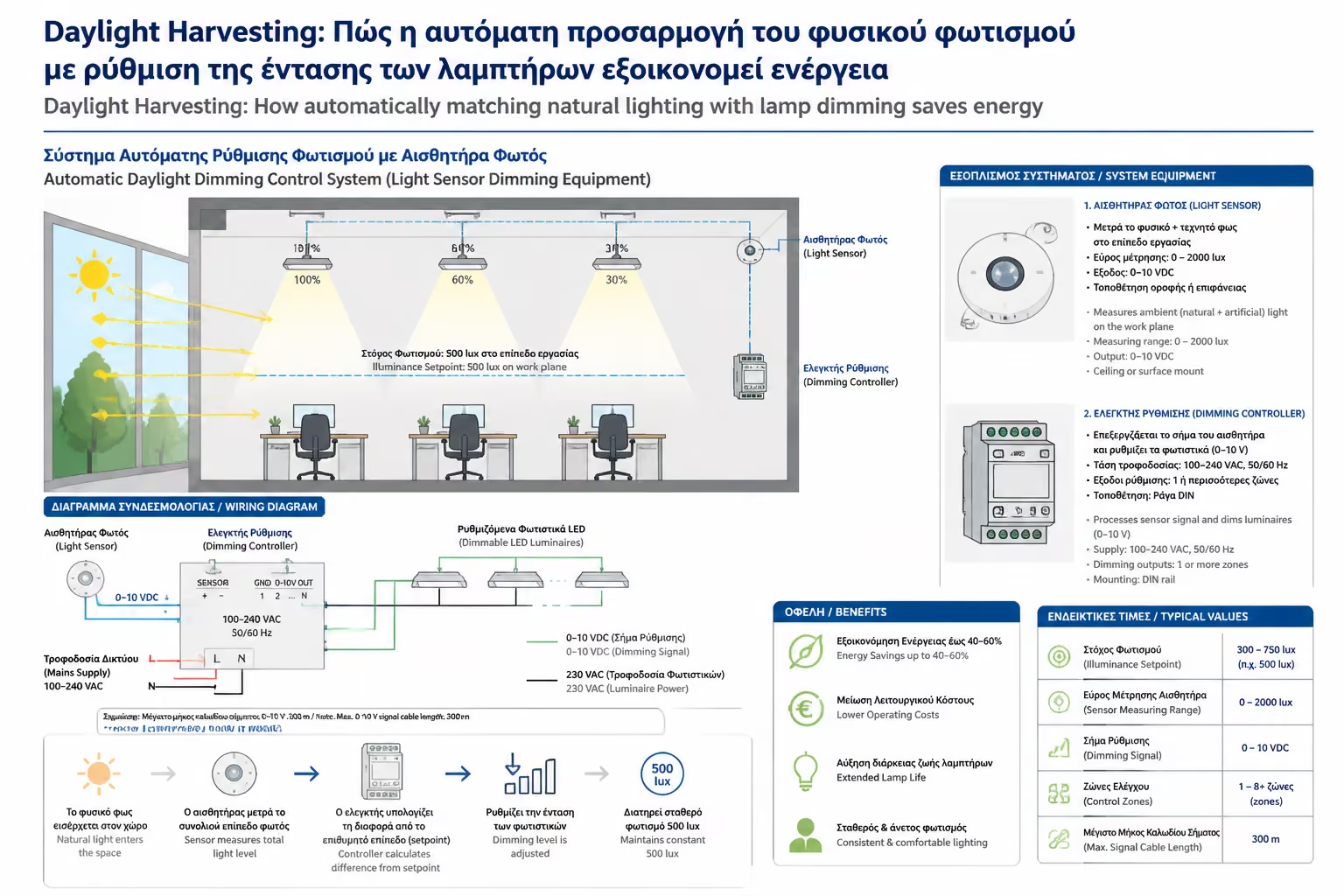
Think about your workplace. To comfortably read a document at your desk, your eyes need a constant level of brightness, at least 500 Lux (the unit of measurement of illumination).
Daylight Harvesting does something very simple: It mixes free natural sunlight with the expensive, artificial light of LED bulbs so that they always add up to exactly 500 Lux.
The worker in the field does not understand any change at all. He sees his space steadily and pleasantly lit, while the electrical panel saves thousands of Watts.
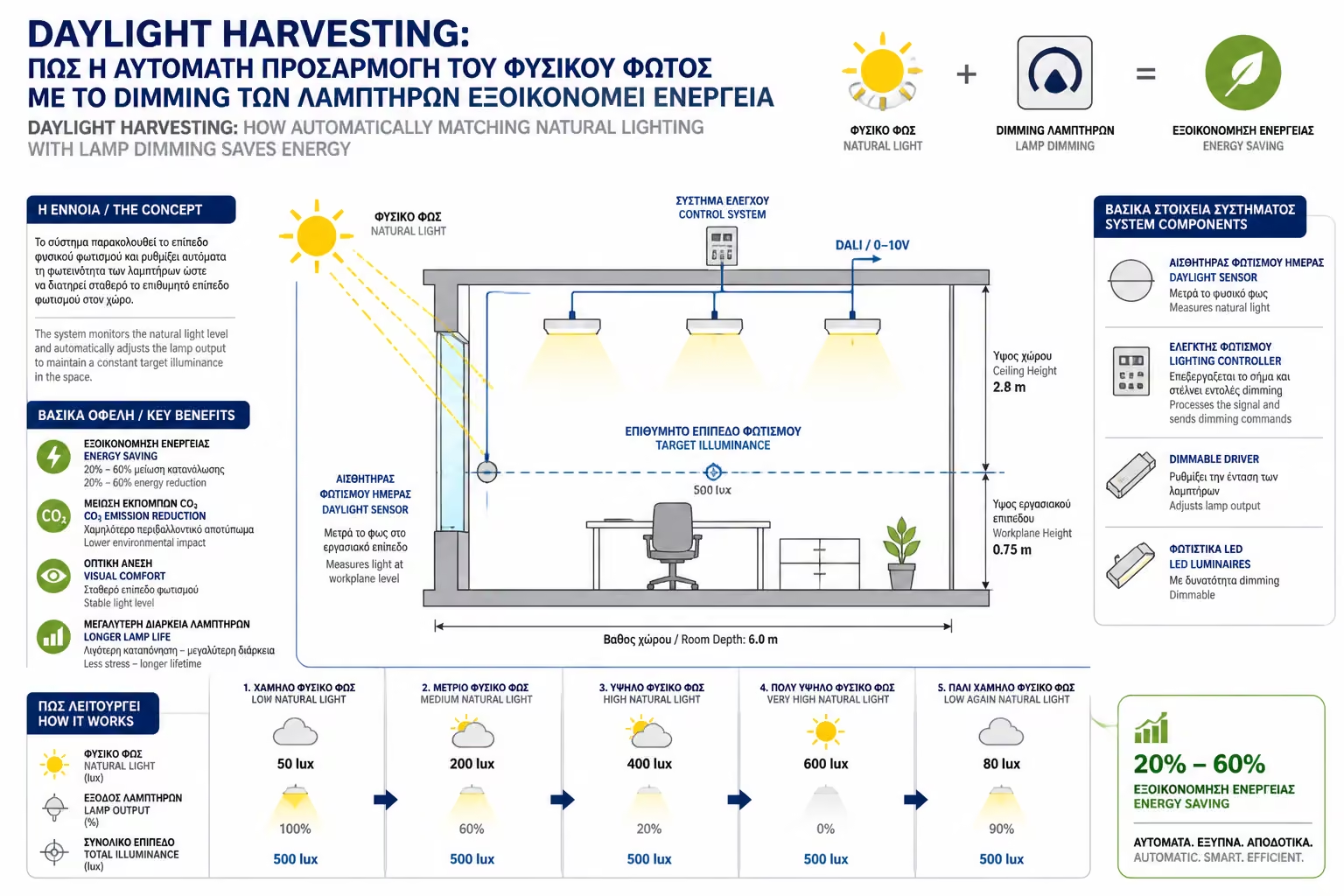
LEDs light up at 80%.
The LEDs automatically dim to 10% or turn off completely.
LEDs step up to 60%.
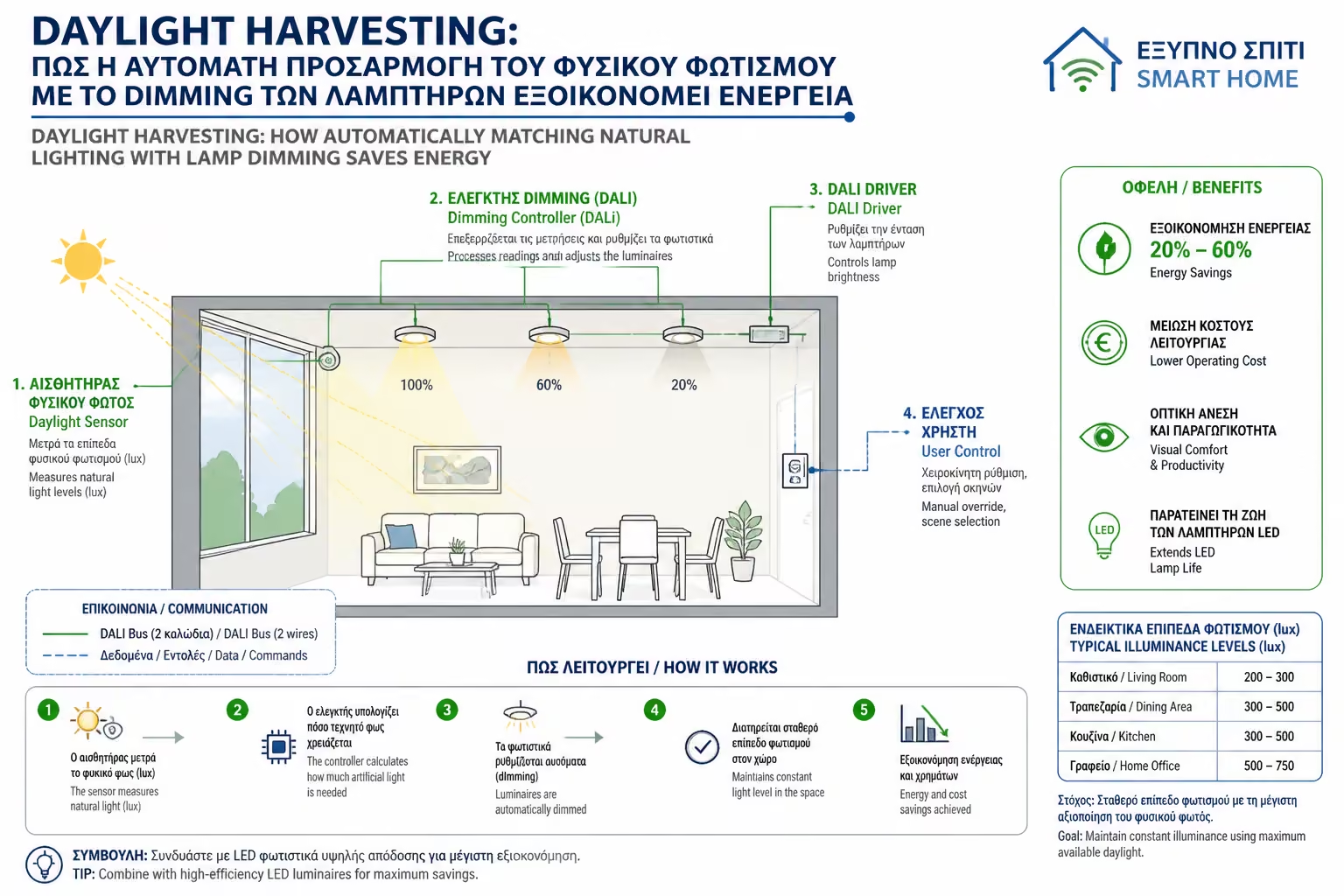
To implement this scenario, the system needs "eyes" and "muscles".
In a typical commercial building, lighting can account for anywhere from 20% to as much as 40% of total electricity consumption.
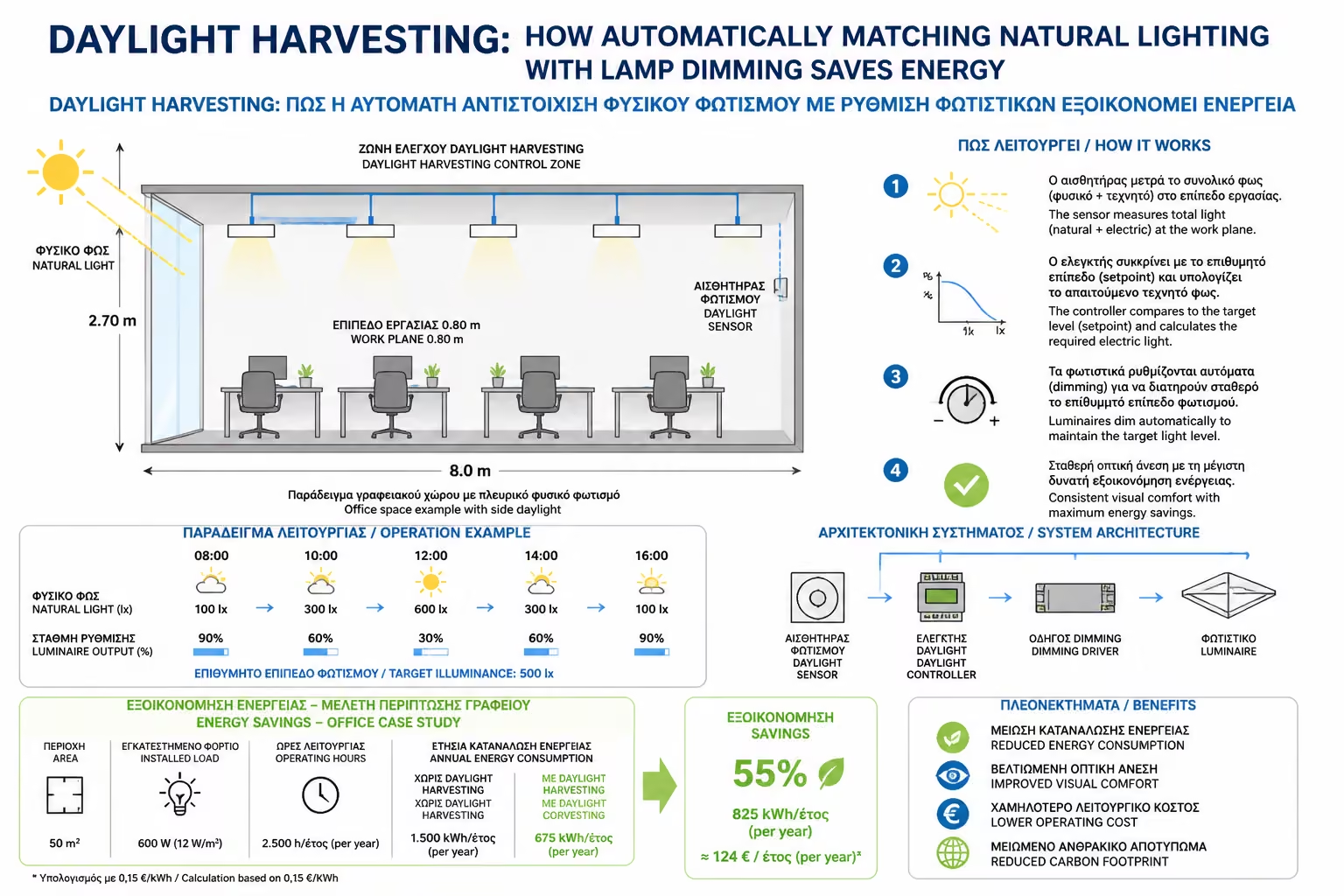
Studies show that the application of Daylight Harvesting in offices with large windows leads to a reduction in energy consumption for lighting from 20% to 60%.
Any bulb that burns at 100% emits heat. By dimming the lights in the summer, the building heats up less, which means the central air conditioning (VRV/Chillers) works less.
When an LED Panel works on average at 40% of its power instead of 100%, the thermal stress of its board is minimal. The lifetime of the fixtures (which are expensive) is often doubled.
DALI is amazing, but it's made for professionals and requires special wiring. Can we do Daylight Harvesting at home? Of course, and very easy indeed!
You only need three things:
How to set up Automation (Script):
Daylight Harvesting is the epitome of harmony between the natural environment and technology. It doesn't ask you to sacrifice your light to save money; it just stops the senseless operation of lamps at maximum power when the sun is offering its energy completely for free. For business premises, it is perhaps the fastest payback of investment in lighting.
Next Step: We set the lighting and the climate. But what about the "heavy" chores around the house, like laundry or watering? There the solution is not to "dimarize" them, but to change their time.
We continue to the next crucial guide of Category D: Load Shifting: How to transfer large loads (washing machines, pumps) to the hours when electricity is cheaper.
Return to category.
Go to categoryReturn to the central guide.
Go to guide