Load Shifting: How to move large loads (washing machines, pumps) to
times when electricity is cheaper
So far we've looked at ways to reduce the amount of energy we use (eg
turning off lights or installing smart thermostats). But what about
those "heavy" chores around the house or business that must be
done?
The clothes need to be washed, the pool needs to be cleaned by the pump,
the electric car needs to be charged and the water needs to be heated.
You can't ask the water heater to burn 1000W instead of 4000W, nor can
you "dim" it like a light bulb. The amount of energy (kWh)
required for these jobs is fixed.
So since we can't change how much we burn, the engineers' solution is to
change when we burn it. This strategy is called Load Shifting and is the
most powerful saving "weapon" in the era of modern electricity
tariffs.
1. What exactly is Load Shifting?
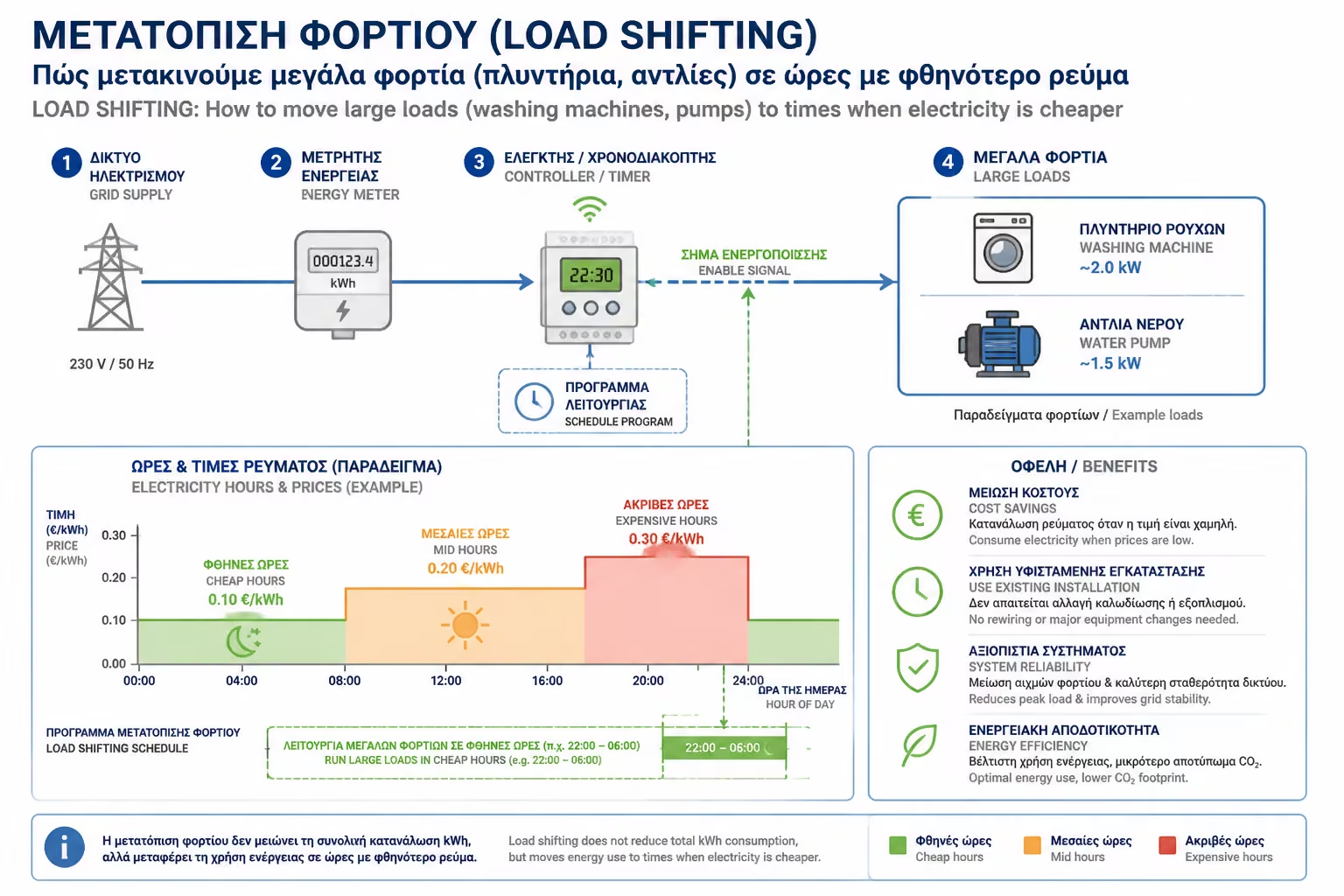
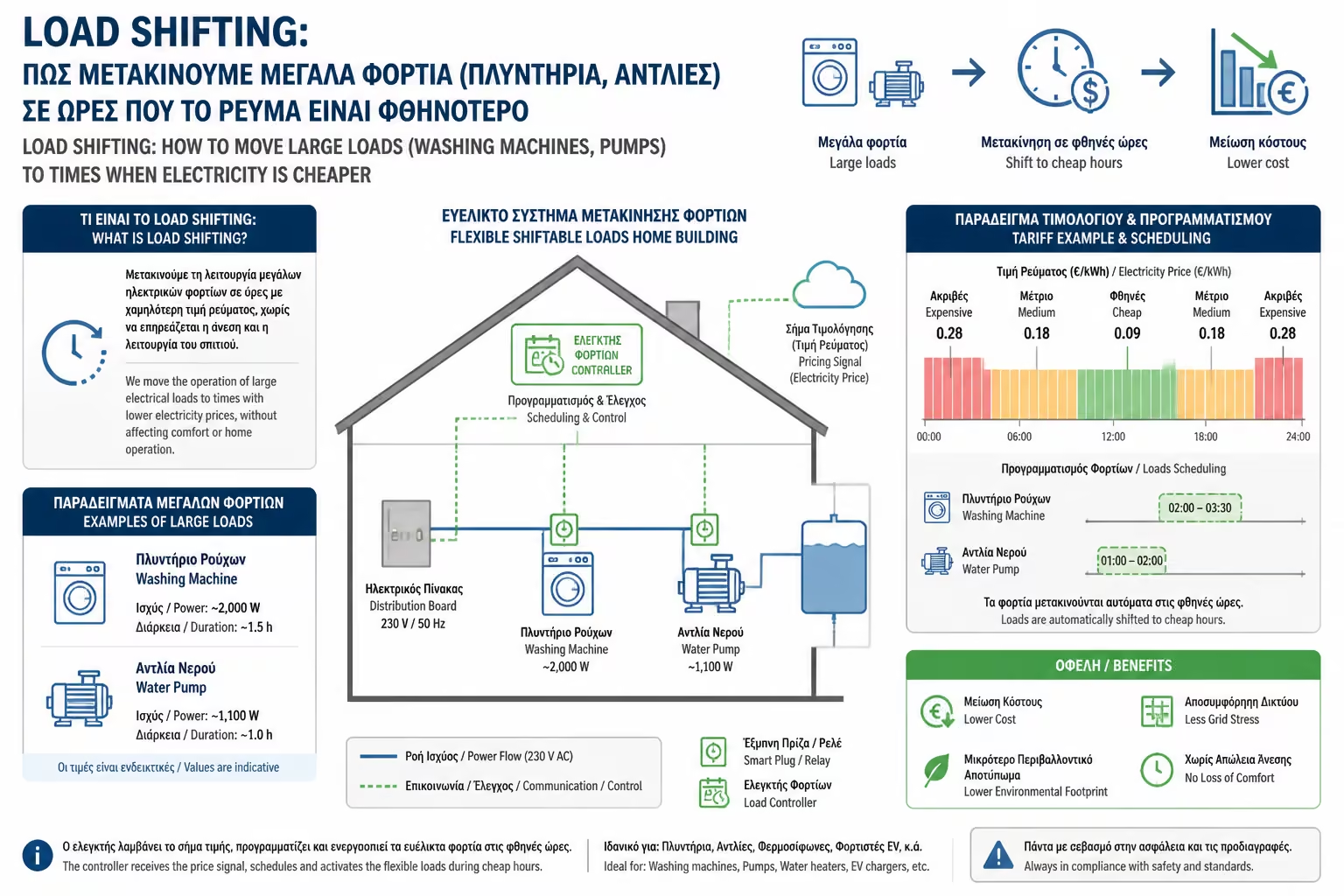
The logic is extremely simple: We transfer the operation of
energy-intensive devices from Peak Hours, where electricity is very
expensive, to Off-Peak Hours, where electricity is cheap or even free.
In the past, this simply meant waiting until 11:00 PM to turn on the
washing machine with PPC's classic "Night Tariff".
Today (in 2026), with Dynamic (Orange) tariffs and Photovoltaic (Net
Billing), cheap electricity is not only at night. Often, the
cheapest time of day is at 2pm in the afternoon, when the country's
(or your roof's) solar output "floods" the grid.
2. Which loads are "Shiftable Loads"?
Not all devices can be upgraded. You can't say "I won't cook now
that I'm hungry, I'll cook at 03:00 in the morning because electricity
is cheap", nor can you switch the TV on.
Ideal loads for Load Shifting are those that produce an effect that
can be stored (thermally, chemically, or practically) for future use:
Electric Water Heater / Heat Pumps (Hot Water): The boiler is a
giant "heater". If you heat the water at 13:00 in the
afternoon (with free electricity from your panels or cheap mains
electricity), the water will stay hot until 20:00 at night when you
shower.
Washing Machines (Clothes / Dishes): Dishes and clothes don't care
what time they are washed, as long as they are clean when you need
them.
Electric Vehicle (EV) Charging: Your car battery can store
electricity at minimal cost in the early morning so you can drive
the next morning.
Pool Pumps and Irrigation Systems: The garden and pool must be
cleaned/watered for some hours 24 hours a day. The exact time window
is completely flexible.
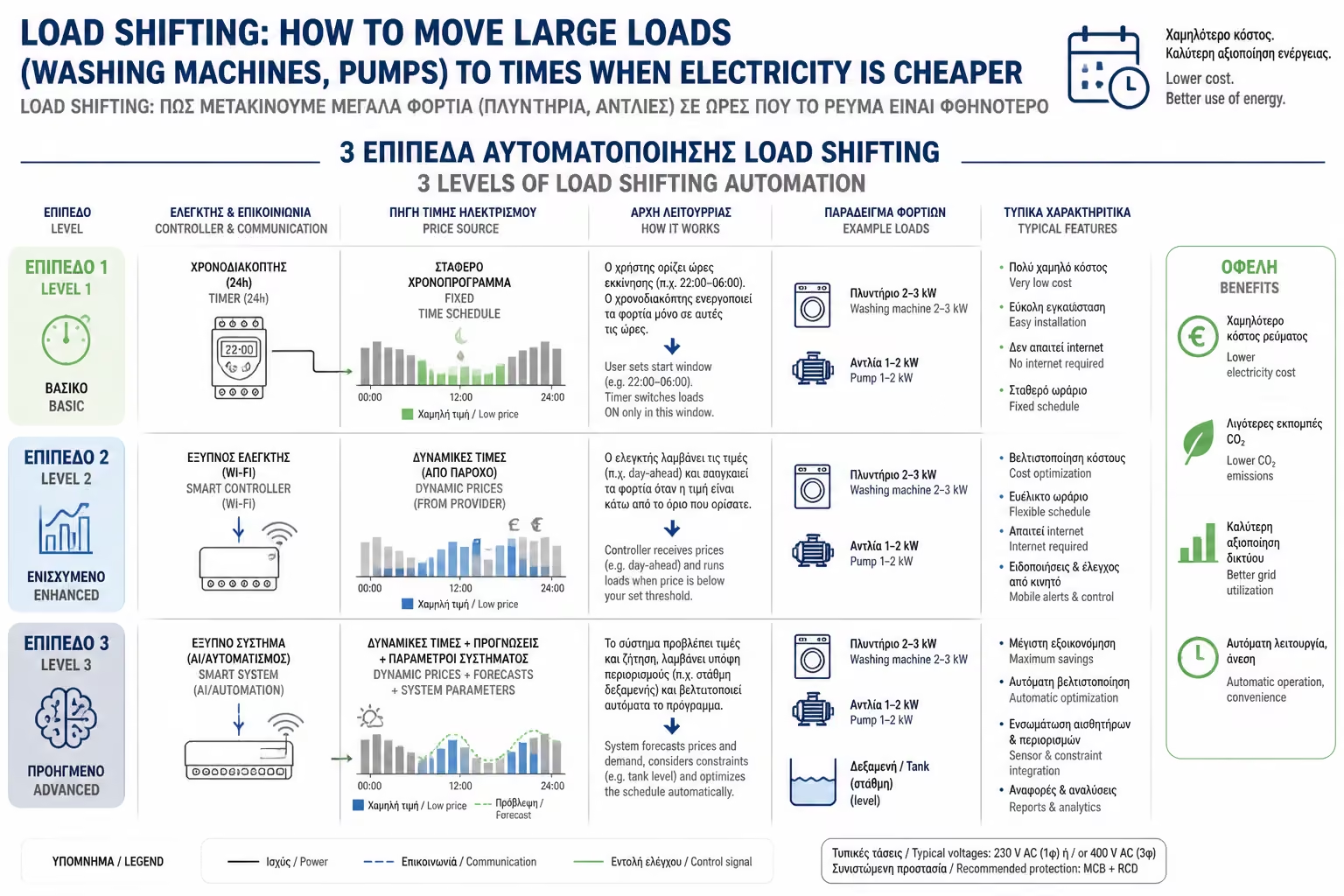
3. How it is applied in practice (3 Levels of Automation)
Gone are the days when you set an alarm to get up to press the water
heater button. Heterochronization should be done automatically.
Level 1: The built-in tools (Delay Start)
All modern washing machines and dishwashers have a Delay Timer
button. You prepare the bin with clothes and detergent at 19:00 in
the evening (peak time). Instead of pressing "Start", you
select "Start in 6 hours". The machine will wake itself up
at 01:00 at night and work on the cheap night power.
Level 2: Smart Switches and Schedules
For devices that do not have their own brain (like the water heater
or the pool pump), we use Smart Relays (eg Shelly Pro, Sonoff) in
the electrical panel, as we saw in the previous chapters. Within the
app, we make simple weekly schedules: "Turn on the pool pump
every day from 02:00 AM to 05:00 AM."
Level 3: Dynamic Heterochronism (The Ultimate Smart Home)
This is where the price-driven automations we saw in Home Assistant
come in. If you are on a dynamic (Orange) tariff, the night program
is not enough, because the prices change. The smart home scans the
energy market prices for the next day, finds which are the 3
cheapest times in a row (which on Monday might be 03:00 AM and
Tuesday 14:00 PM) and automatically moves the operation of the water
heater or car charger to the correct time "window"!
4. What is the financial gain?
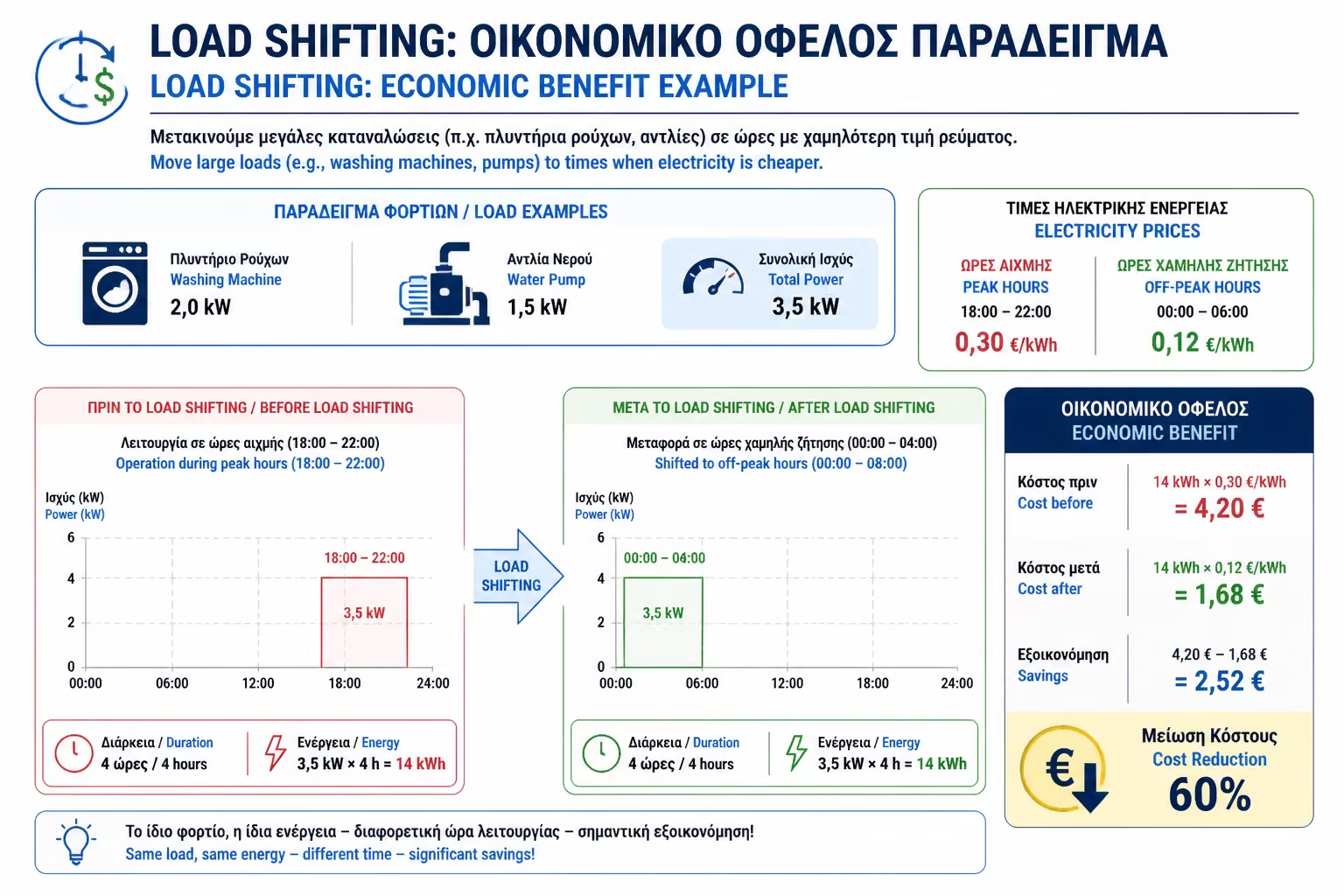
Let's make a hypothetical comparison for an electric car that needs 40
kWh to fill up, using a dynamic tariff.
If you plug it in as soon as you get home from work (19:00), the
price can be 0.25€/kWh. Charging cost: €10.00
If you apply Load Shifting and the system starts charging at 04:00
in the morning, the price may have dropped to 0.08€/kWh. Charging
cost: €3.20
We are talking about a saving of almost 70%, without changing anything
at all in the way you live (since in the morning the car will be just
as full).
Summarizing
Load Shifting is the practical application of the proverb "the
smart admits, the cunning excuses". We don't fight our energy
needs, we just learn to satisfy them when the market sells us energy at
the lowest possible price. Proper use of "smart" relays and
Delay Start can reduce your bill dramatically by making the most of
modern tariffs.
Next Step: Synchronization shifts the loads to save you money on the
kilowatt hour price. But what happens when too many devices turn on at
the same time and the building risks "throwing" the main
switch or being fined by grid operator due to huge demand?
We continue to the next technical guide, which mainly concerns
professionals and large installations: Peak Shaving: What it is, how
network overloads are avoided and why it concerns large installations.