
Peak Shaving: What it is, how network overloads are avoided and why it concerns large installations

In the previous chapter we analyzed Load Shifting, which is about when we consume energy to find a cheaper price. But what happens when our problem is not the price of the kilowatt hour, but the strength of the cables?

Imagine a hotel at midday in August: The 50 air conditioners in the rooms are working at full blast, the kitchen is turning on 4 commercial ovens at the same time, the pool pump is starting, and in the parking lot 3 customers are plugging in their electric cars for quick charging.

This simultaneous, gigantic energy demand creates Peak Demand. If this peak exceeds the limits of the installation, the result is either that the main switch "falls" plunging the building into darkness, or that an electricity bill comes with outrageous penalties from the provider. The technological answer to this Facility Managers' nightmare is called Peak Shaving.

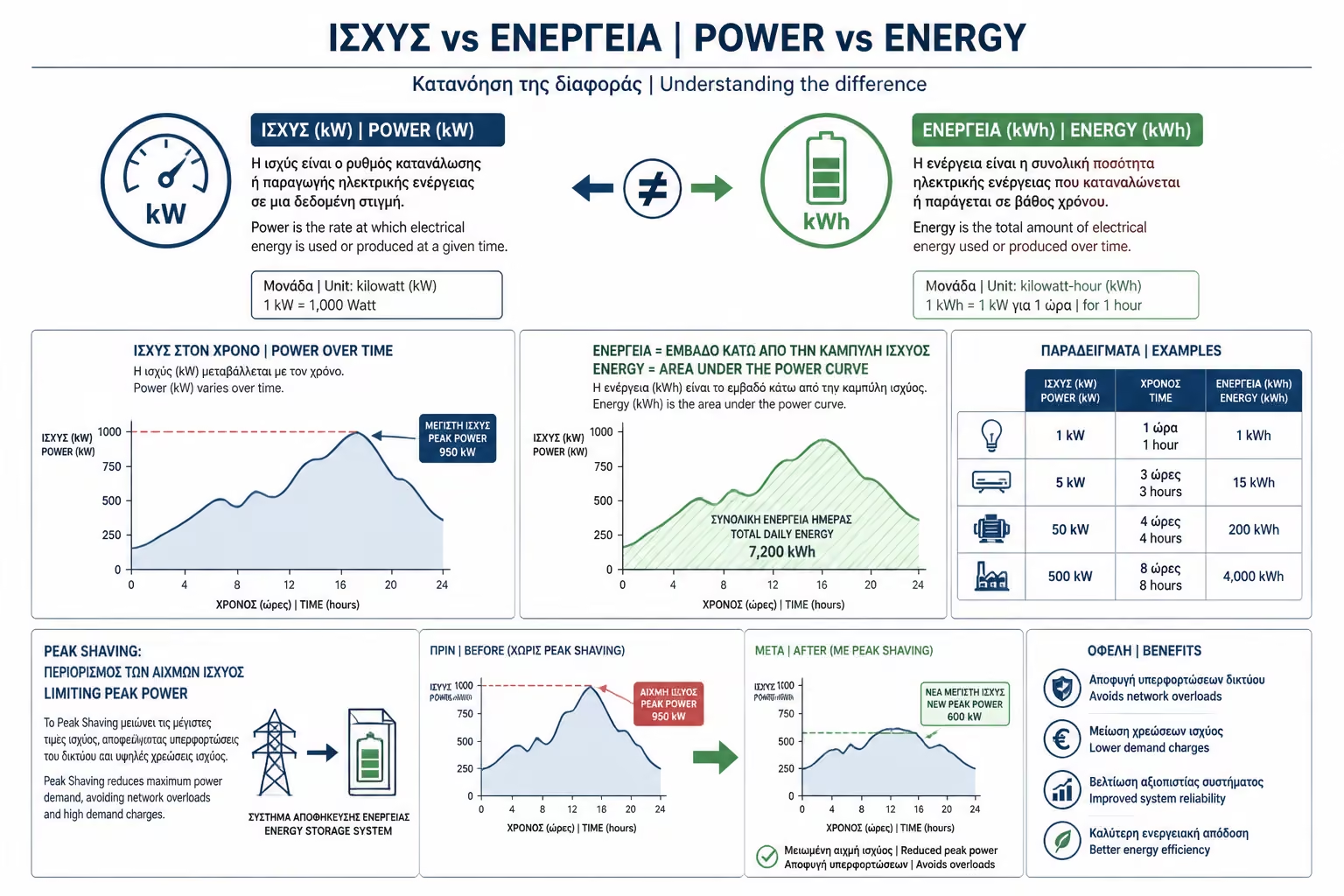
1. Understanding the difference: Energy (kWh) vs. Power (kW)

To understand the problem, we need to use the classic example of water.

  • Energy (kWh) is the total volume of water you used throughout the month.
  • Power (kW) is how thick the pipe needs to be to get the water through if you turn on all the faucets at once.

Energy providers (and grid operator) are forced to build huge, expensive networks of cables and transformers to withstand this "fat pipe", even if you only use it at 100% for 15 minutes a day.

Illustration for 1. Understanding the difference: Energy (kWh) vs. Power (kW)

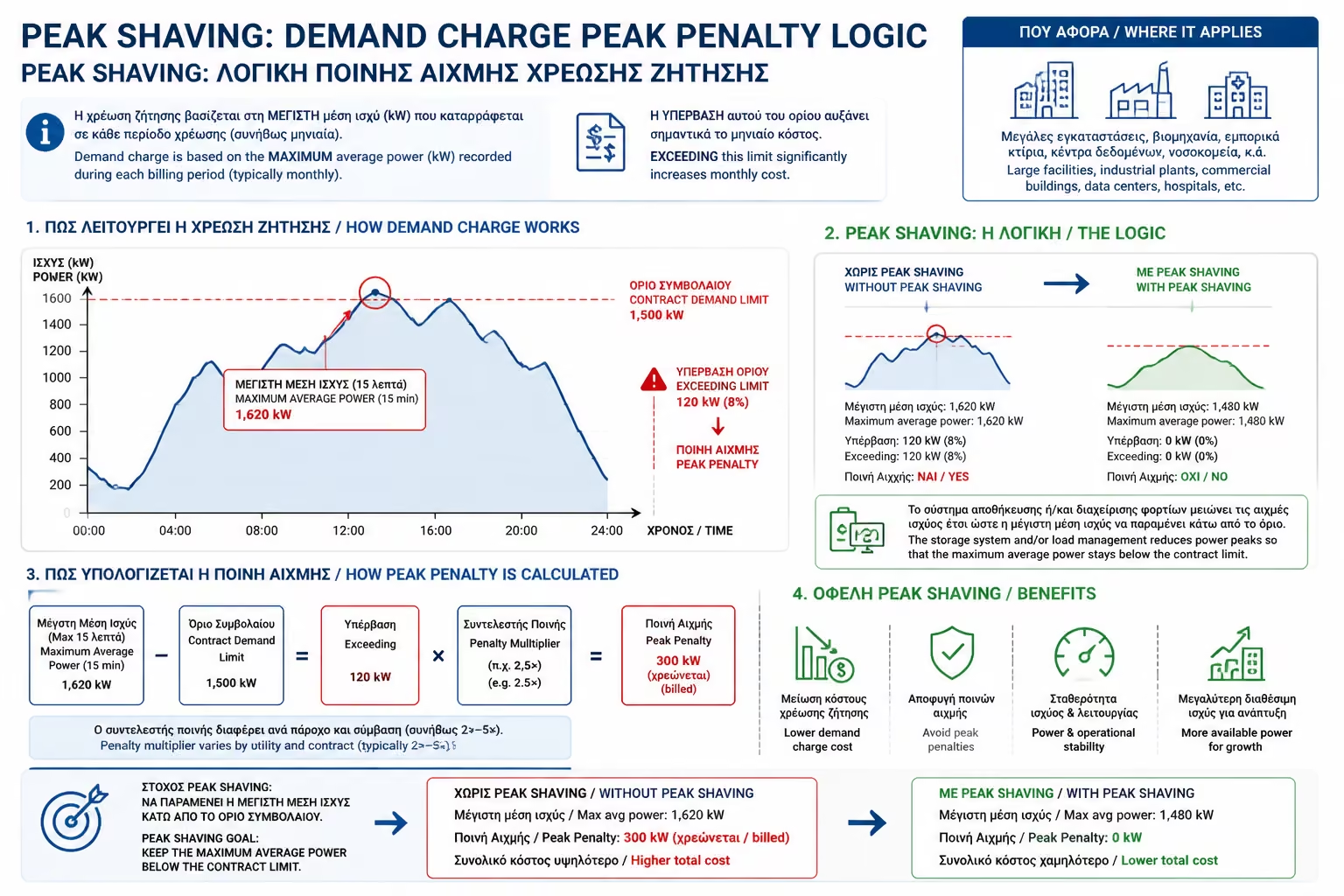
2. How Peak (Power Charge) is penalized

Illustration for 2. How Peak (Power Charge) is penalized

In residential tariffs (C1), we are charged mainly for kilowatt-hours (the volume). However, in large installations (Industrial tariffs, Medium Voltage, large hotels), the bill has a separate, heavy line called the Demand Charge.

The grid operator meter is constantly monitoring. If for even 15 consecutive minutes in the month you turn on all your machines at the same time and "hit" a huge peak (eg 200 kW), the provider will charge you a huge fixed amount for the whole month based on that 15 minutes, even if the rest of the month the plant was underpowered! Leaving spikes unchecked is financial suicide.

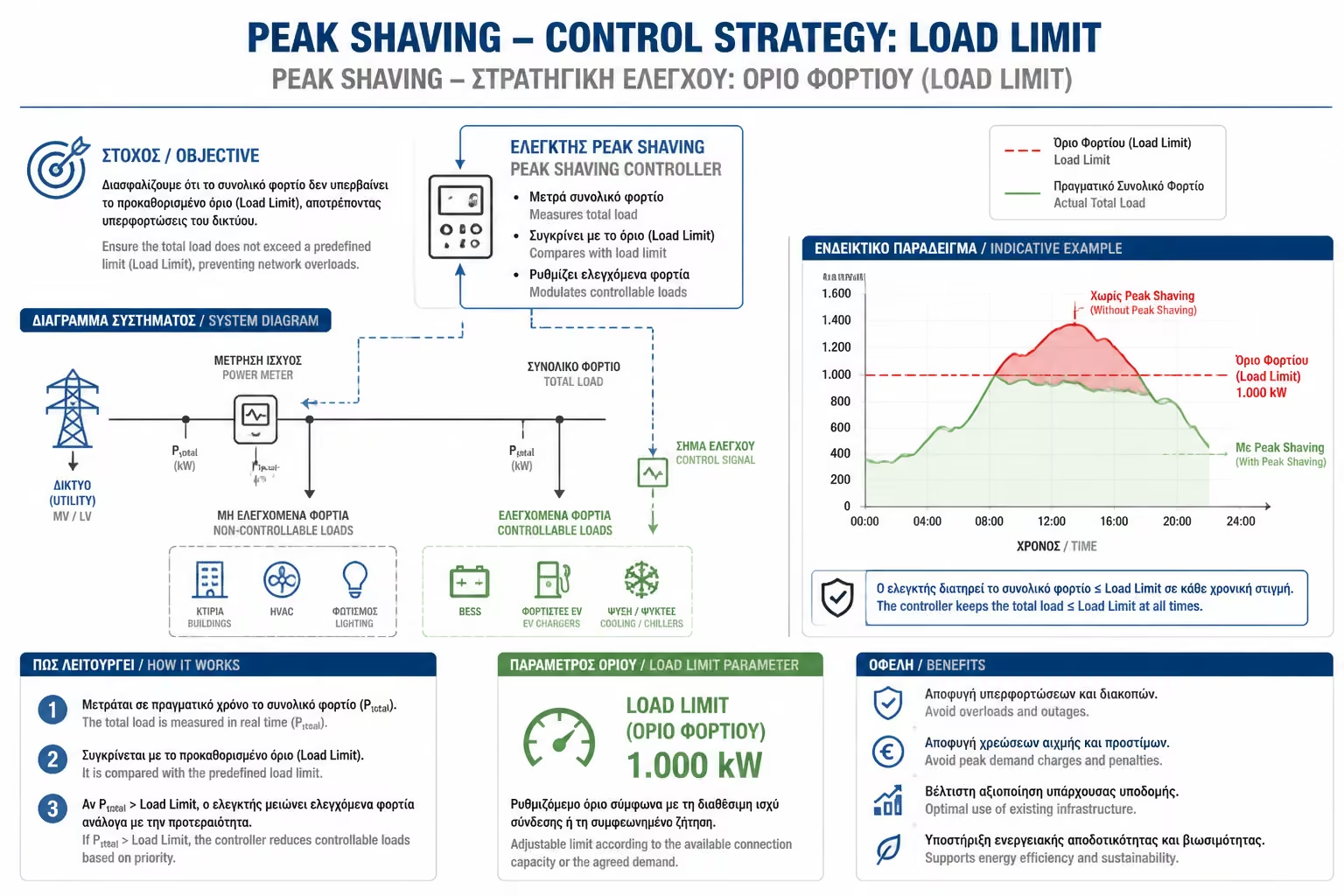
3. The Solution: How Peak Shaving Works

Peak Shaving is an automated strategy that "cuts off" the peak of the mountain in your consumption graph, keeping the total demand below a strict, pre-set limit (eg 150 kW).

The Algorithm in action: The Central Control System (BMS) reads the data from the building's central current meter in real time (every second). As soon as it sees that the total consumption is approaching the dangerous limit (the red threshold), it intervenes instantly in two ways:

Illustration for 3. The Solution: How Peak Shaving Works

A. Temporary Interruption of Non-Critical Loads (Load Shedding)

The system "knows" which devices can take a short break without anyone noticing. For example, it cuts power to large refrigerators' compressors, water pumps or ventilation for exactly 10 minutes. During these 10 minutes, the temperature of the cooler does not have time to change, but the power peak is avoided. As soon as the kitchen ovens are turned off, the system re-energizes the refrigerators.
B. Throttling

Instead of turning off a device completely, it reduces its power. This is widely applied in electric vehicle charging stations (Dynamic Load Management - DLM). If the building reaches its limits, the car chargers in the basement do not turn off, but "dim" their charging speed (from 22kW to 11kW or 7kW). The customer doesn't realize it, but the building is saved from the blackout.

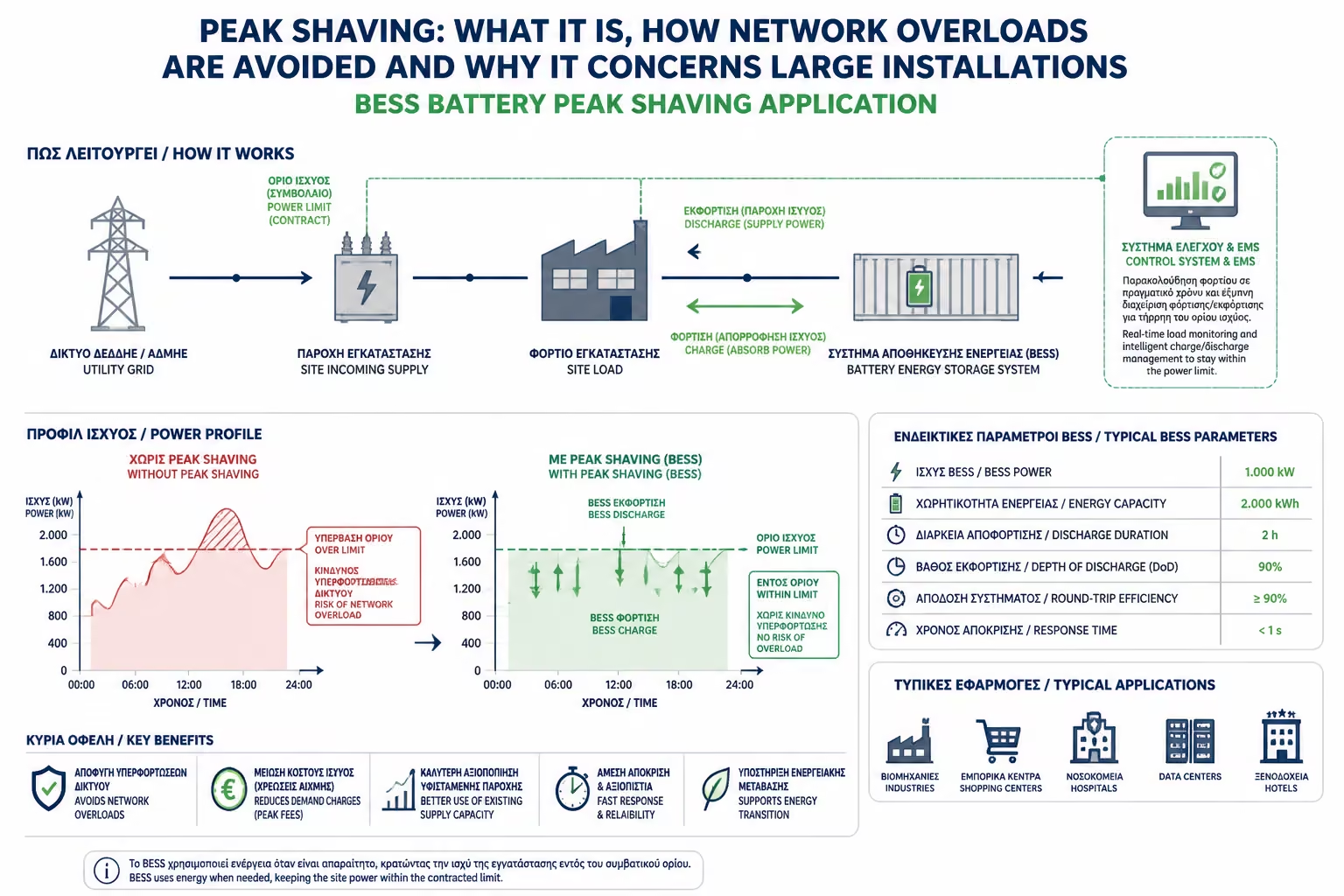
4. Peak Shaving with Batteries (BESS)

Illustration for 4. Peak Shaving with Batteries (BESS)

In state-of-the-art industries, stopping devices is not always possible (a production line robot cannot be stopped). Here Peak Shaving is done through Battery Energy Storage Systems (BESS).

  • When the plant's demand is low, the huge lithium batteries charge.
  • When all the machines turn on at the same time and the demand "hits red", the system does not draw the extra power from the PPC network (so as not to eat a fine). Instead, it "opens" its batteries and covers the tip internally! The network sees a steady, "flat" consumption line.

Summarizing

If you're running a household, Peak Shaving is mainly of interest to you so that general safety doesn't go down (eg setting your car charger to drop its speed when you turn on the oven).

But if you run a hotel, supermarket or factory, Peak Shaving is probably the most critical algorithm in your switchboard. By keeping the peaks under control, you save thousands of euros from the provider's "hidden" power charges and avoid the huge substation upgrade costs (new transformers) that grid operator would require.

Next Step: We talked about power penalties. But there is another, much more "insidious" fine that grid operator imposes on professional facilities, and it concerns "useless" electricity.

We continue to the next advanced guide for professionals and industries: Reactive Power Compensation: what cosφ correction capacitors are and how they eliminate reactive-power penalties.

Related Articles

Preview