Blue (Constant)
Things are simple. You put in the fixed price (e.g. €0.15) and the system does a simple multiplication.
Until recently, energy monitoring was a "dry" kilowatt-hour (kWh) affair. You knew you burned 10 kWh, you multiplied it by a fixed price you had agreed with the provider (e.g. €0.11/kWh) and found the cost.
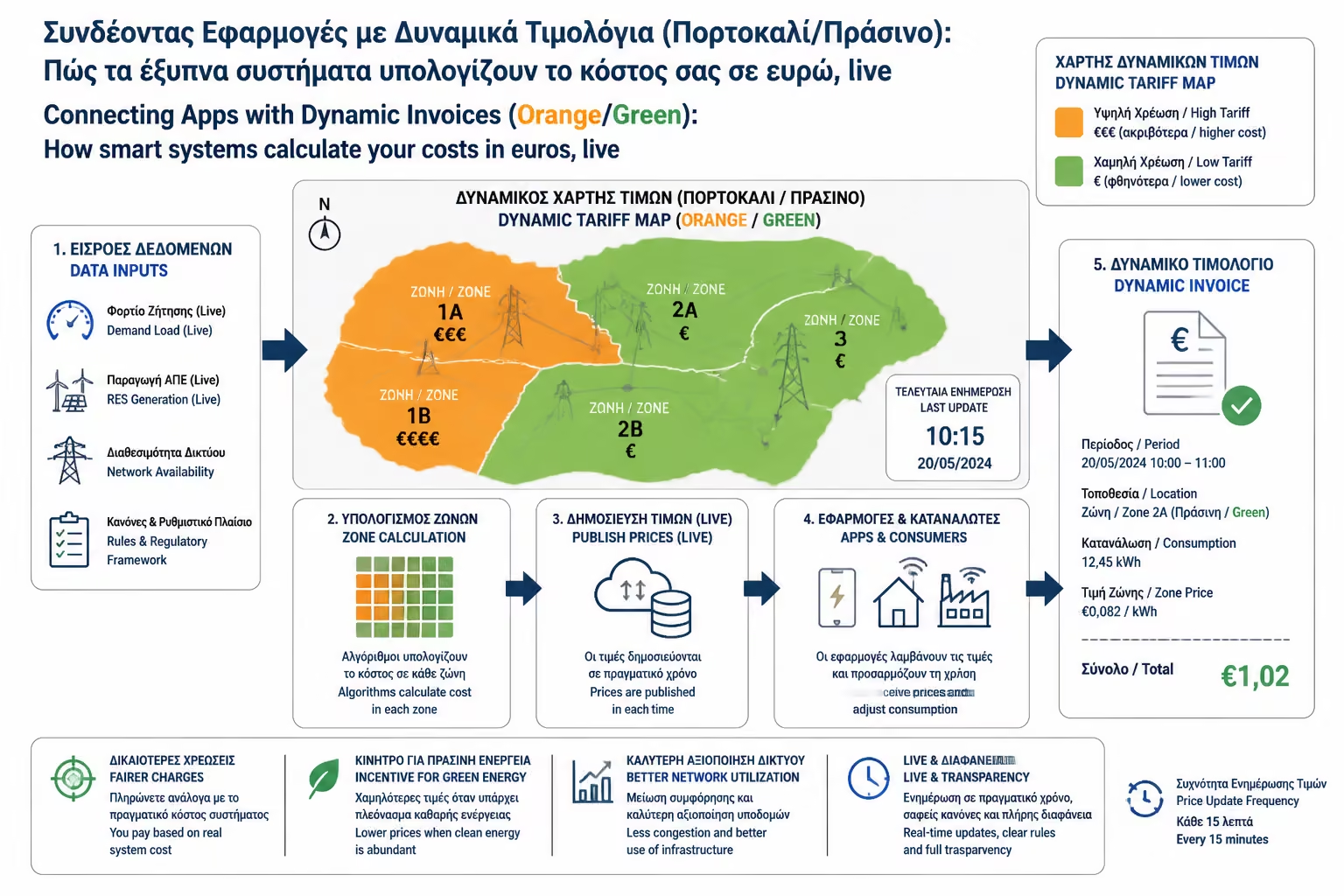
Today, the energy market has changed dramatically. With the introduction of "colored" tariffs (Green, Yellow, Blue, Orange), the price per kilowatt hour is no longer fixed. In many cases it changes every month, or - in the case of dynamic tariffs - it changes every hour of the day!
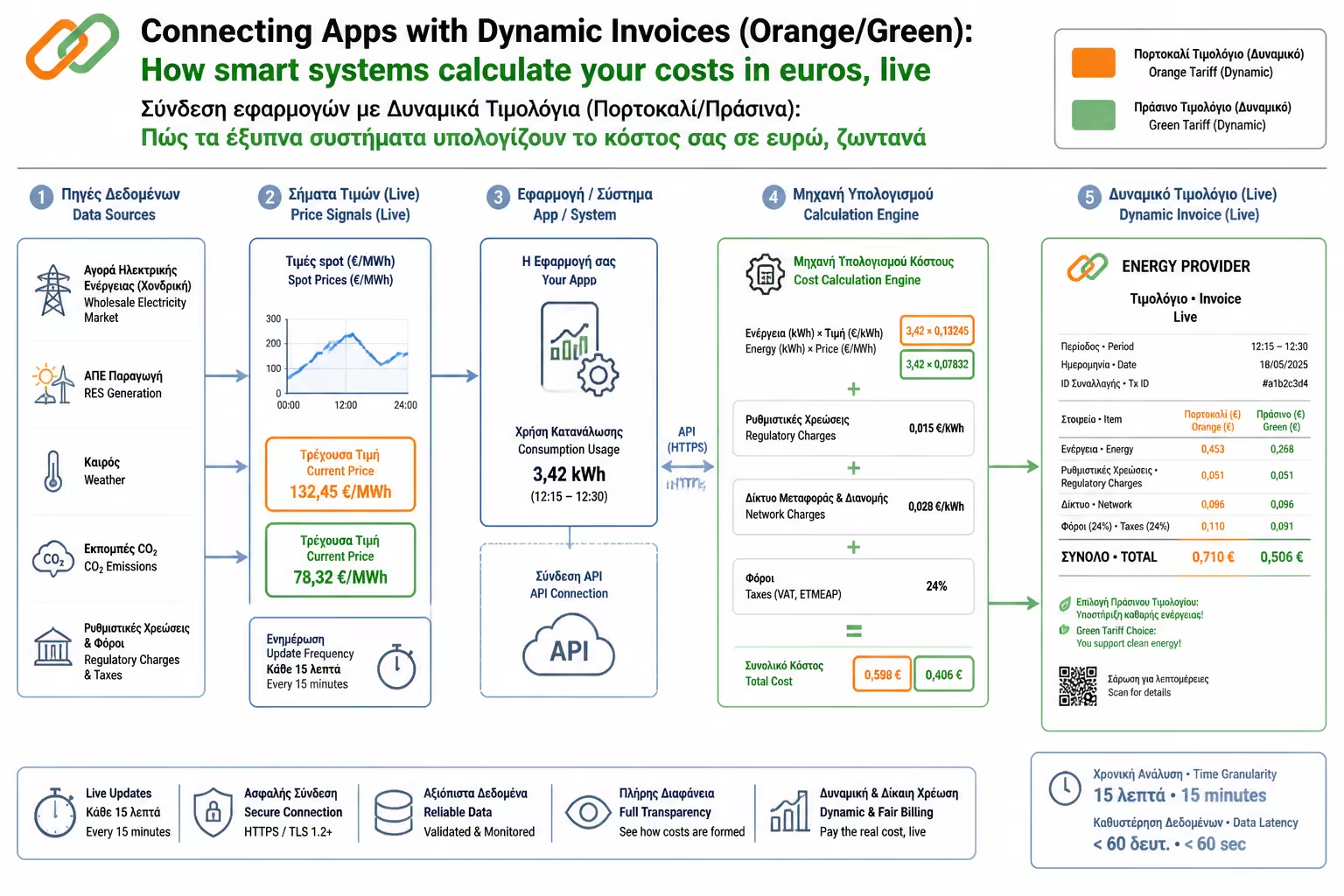
So how can you know how much electricity is really costing you right now? It is not enough that the meter reads Watts. Your software must "talk" to the Energy Exchange. Let's see how modern Smart Systems translate your data into pure Euros, in real time.
For the system to calculate cost correctly, you must first define which tariff structure you are using:
_(Note: In Greece, an Orange tariff requires the grid operator to have installed the new smart telemetered utility meter.)_
Things are simple. You put in the fixed price (e.g. €0.15) and the system does a simple multiplication.
Here the price is set on the 1st of each month based on the previous wholesale result. In simple apps, you usually have to update that value manually every month.
This is the truly dynamic case. The kilowatt-hour price changes every hour. At 14:00 on a sunny day it may cost €0.05, and at 20:00 it may jump to €0.25. In this scenario, manual entry is not realistic. Automated API integration is required.
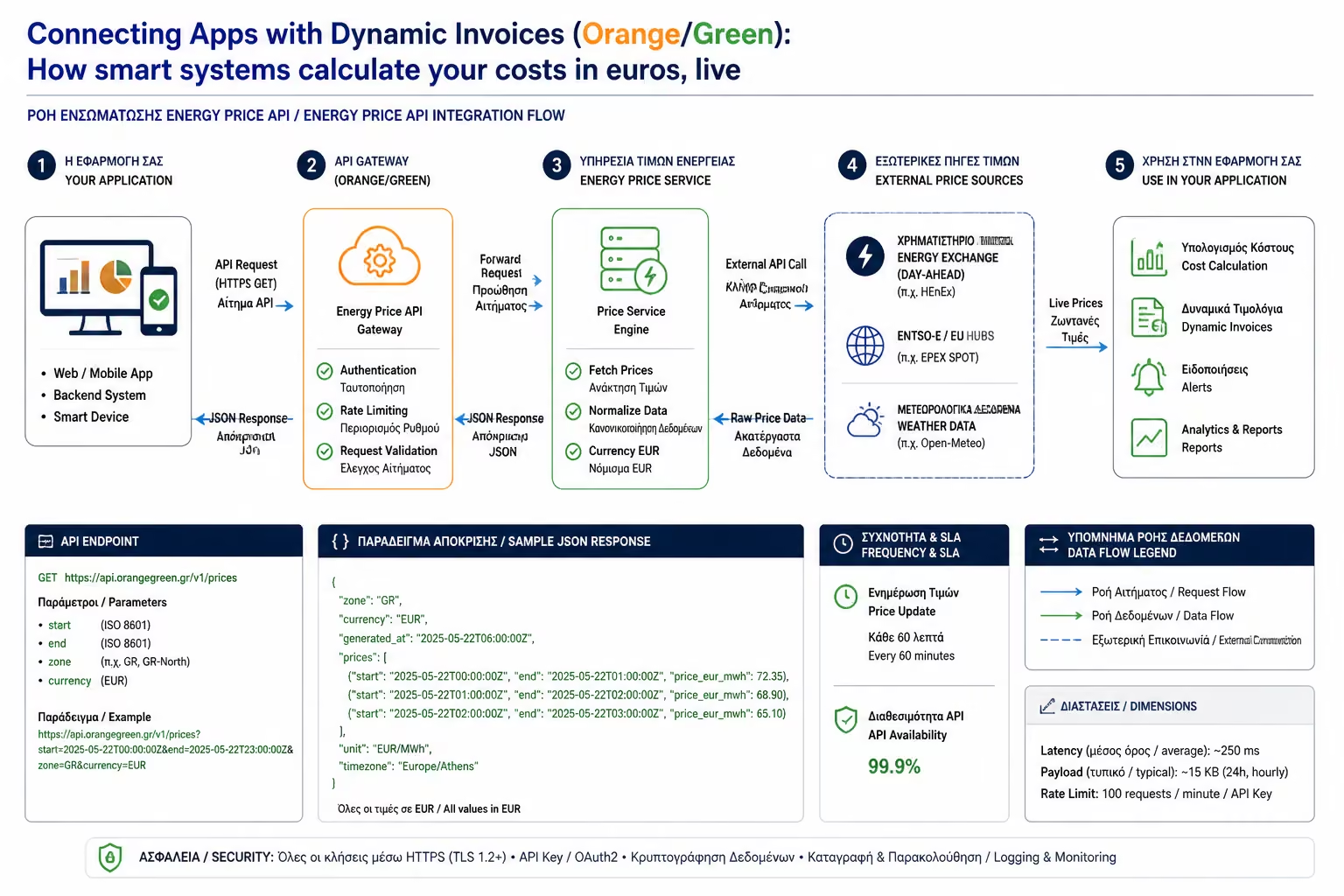
In order to have a live Euro cost calculation, the "brain" of your smart home needs to be connected to external data sources, usually via an API (Application Programming Interface).
In Europe, the most well-known source is the Nord Pool (the European energy exchange). In Greece, the data comes from the Hellenic Energy Exchange (ENEX - EnExGroup).
Advanced systems such as Home Assistant have integrations that connect automatically to these data sources. Around midday, the system downloads the wholesale prices for the next 24 hours. In that sense, your home effectively knows tomorrow's price curve in advance.
How does all this apply to the applications we saw in previous articles?
Unfortunately, in these cheap ecosystems, cost management is rudimentary. At most they allow you to set a single, fixed price per kilowatt hour. They do not support dynamic invoices or complex calculations with adjustable charges.
Shelly's app is great for Green and Yellow invoices. Allows you to build Custom Tariffs. You can set a different price for Morning and a different one for Night. If you switch to dynamic (Orange) billing, Shelly allows advanced users to "run" small Scripts (pieces of code) inside their Pro meters (eg Shelly Pro 3EM) to pull prices from the internet.
Home Assistant is the only tool made for this exact job. In the Energy Dashboard, you don't just put in a price. You connect the sensor of your consumption (e.g. the kilowatt hour of the water heater) to the Price Sensor of the Energy Exchange. The result? As the day goes on, the app multiplies each hour's consumption by that hour's _corresponding price_, automatically adds VAT and network charges, and shows you the final cost to the nearest cent!
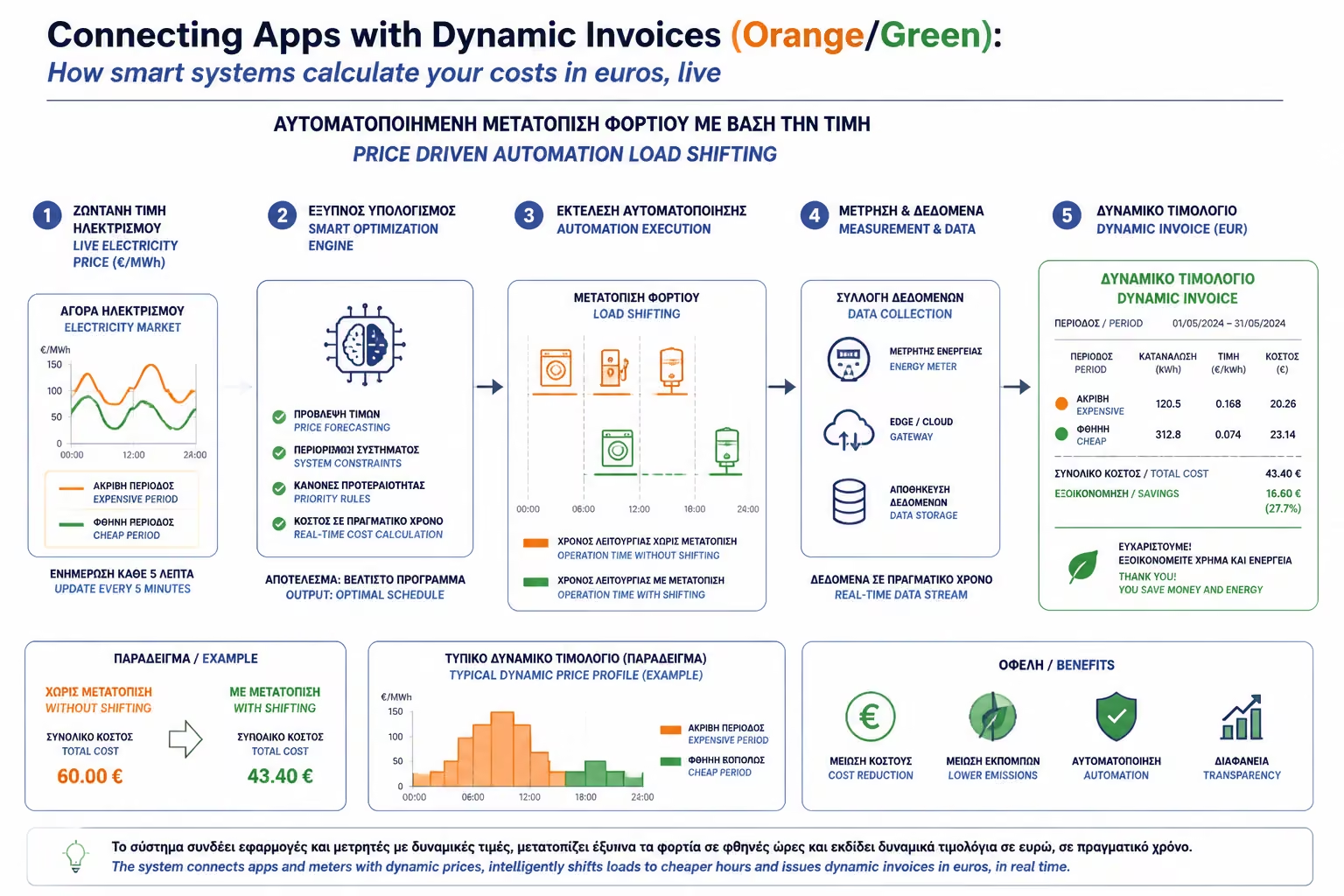
Just seeing the cost is informative. Getting the house to react to it is profitable.
Having integrated Orange (Dynamic) invoices into your smart home, you can build scenarios that are not based on time, but on... your wallet!
Examples of Price-driven Scenarios:
_"If the kilowatt hour price drops below €0.06 (usually early mornings or sunny weekend afternoons), then instruct the charger (Wallbox) to start charging the car. If the price exceeds €0.15, stop charging."_
_"Find the 3 consecutive hours with the cheapest electricity for today's 24 hours, and turn on the pool pump exclusively in that window."_
_"If the price of electricity exceeds 0.25€/kWh (it usually happens on August afternoons), send me a message on my phone to turn off the oven and unnecessary air conditioners."_
The energy market is getting complicated, but technology is simplifying it. Being on an Orange/Dynamic tariff without having a smart "translator" like Home Assistant to pull prices live is a financial risk. By linking Energy Exchange data to your meters, you move from passive bill paying to Active Cost Management, leveraging price "dips" to your advantage.
Return to category.
Go to categoryReturn to the central guide.
Go to guide