How it works
You set it at 21°C. When the house drops to 20.5°C, the thermostat clicks and turns on the boiler at 100% power. The radiators are burning.
If the Vampire Power we saw in the previous article is the "thief", then Heating, Ventilation, and Air Conditioning (HVAC) is the "elephant" in the room. In an average Greek household, temperature regulation is responsible for 50% to 70% of the total annual energy costs.
Here, the traditional "put on a sweater" advice isn't enough. The heart of the problem is usually in that little plastic box on your living room wall: the thermostat.
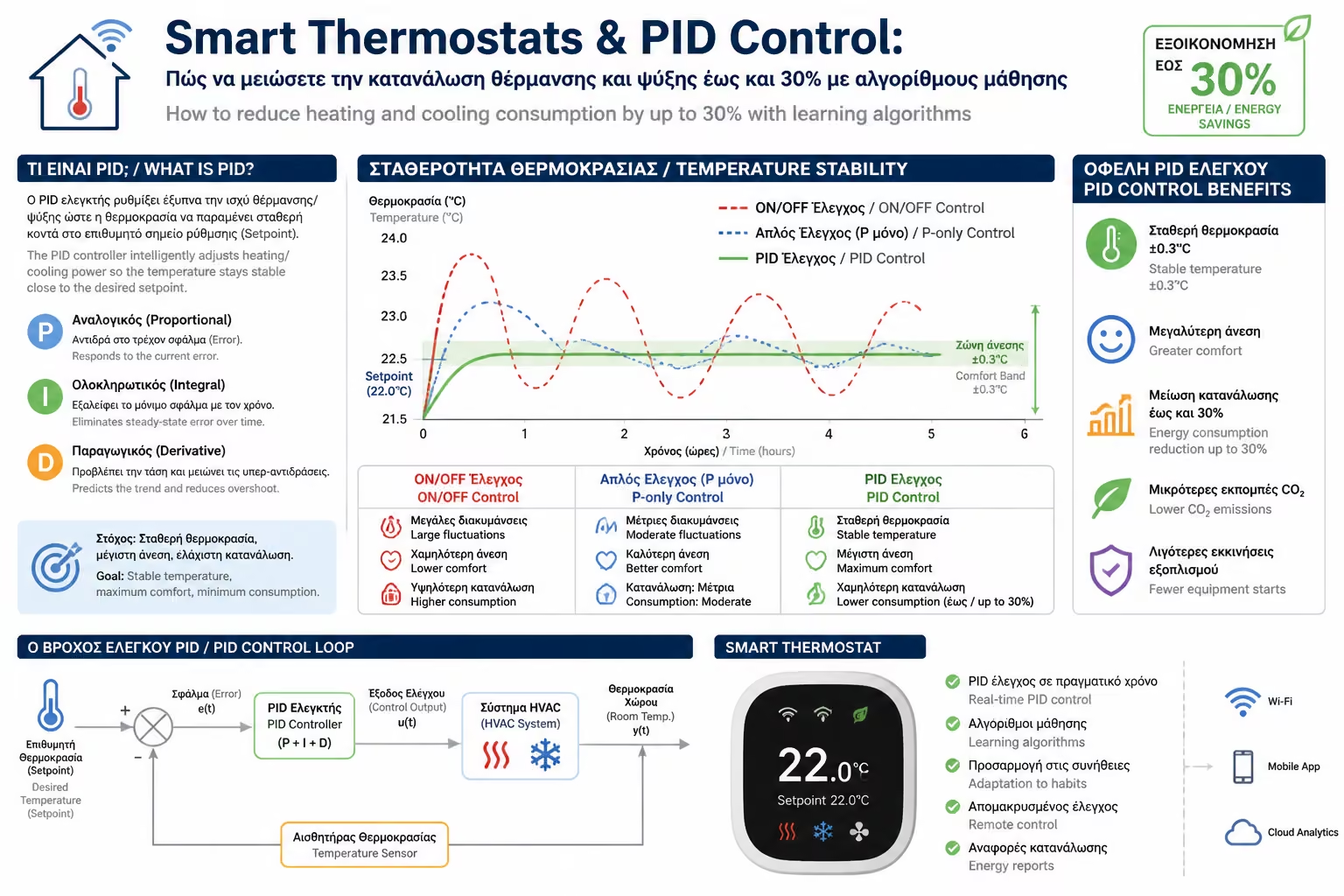
Most classic thermostats are just "dumb" switches. Modern Smart Thermostats, however, hide within them advanced mathematical models (such as the PID algorithm) and machine learning capabilities. As engineers, we're going to "open the lid" of these devices to understand how they can drop your costs by up to 30%, without sacrificing your thermal comfort.
The classic (bimetallic or simple digital) thermostat works with a primitive logic called "Bang-Bang Control" (or On/Off) in automation science. It has a "dead zone" called Hysteresis, typically ±0.5°C.
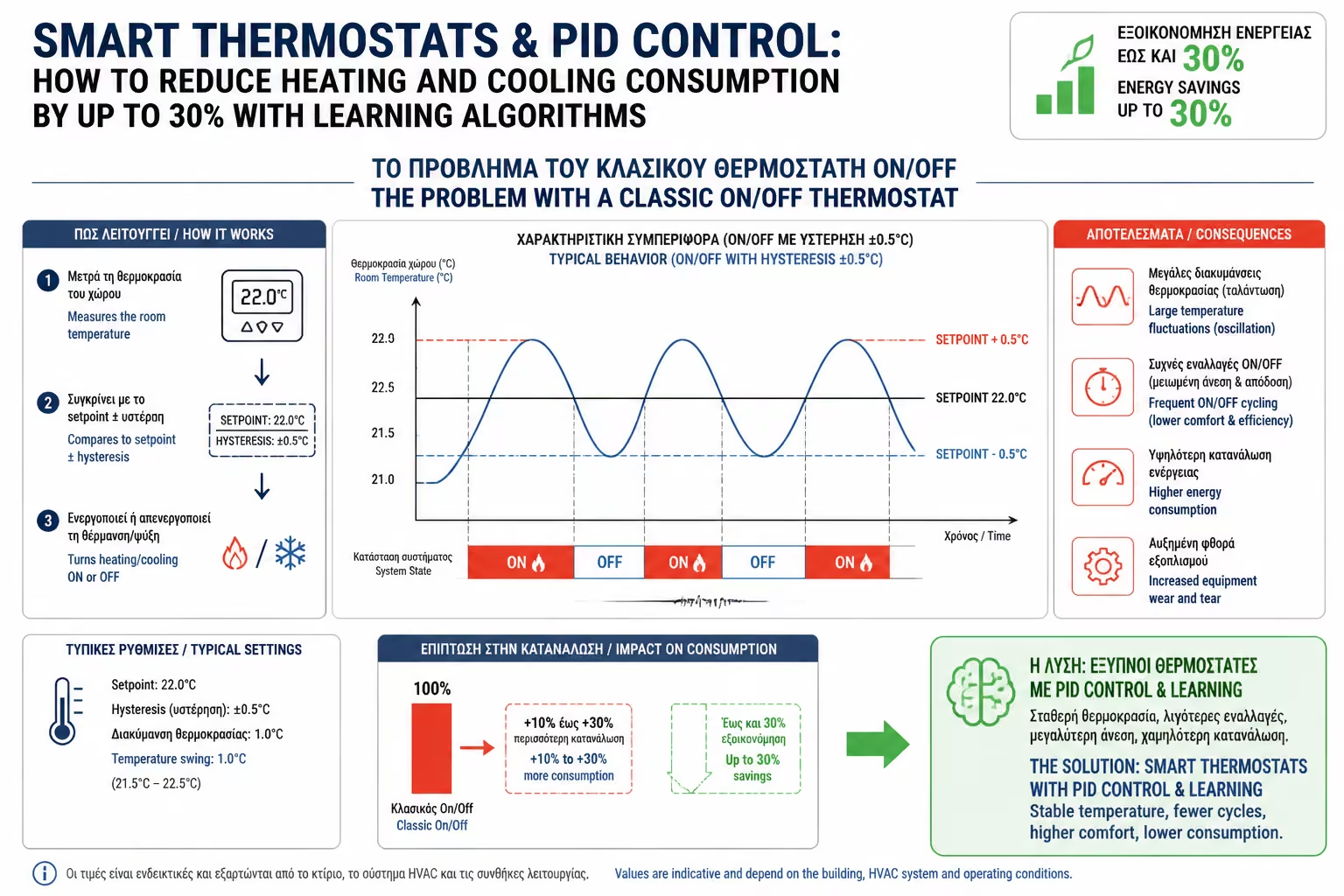
You set it at 21°C. When the house drops to 20.5°C, the thermostat clicks and turns on the boiler at 100% power. The radiators are burning.
As soon as the room reaches 21°C, the thermostat switches off the boiler. But the water inside the radiators is still hot (70°C). This "stored" heat continues to be released into the space, sending the temperature to 22°C or even 23°C (Overshoot).
The house overheats (wasting fuel/electricity) and then cools down again, creating an unpleasant, energy-consuming "roller coaster" (thermal swings).
Smart thermostats (like Nest, tado°, Netatmo, or KNX systems) do away with On/Off and use the PID (Proportional - Integral - Derivative) algorithm.
Don't be intimidated by math, logic is extremely elegant. Instead of just looking at "what's the temperature now", the thermostat looks at three different time dimensions:
The Driving example: The simple On/Off thermostat is like a driver who has the accelerator pressed to the limit and hits the brakes at the last minute at a red light. The PID thermostat is the experienced driver who sees the traffic light from afar, lets off the gas and rolls smoothly to the line. It is this "rolling" that saves huge amounts of energy!
PID Control is great, but really smart thermostats take it a step further.
Each building has a different Heat Capacity (how quickly it stores heat) and different Heat Losses (how quickly it cools). A stone house reacts differently than a plasterboard house.
No more guessing or waking up in the cold because the timer "fell out".
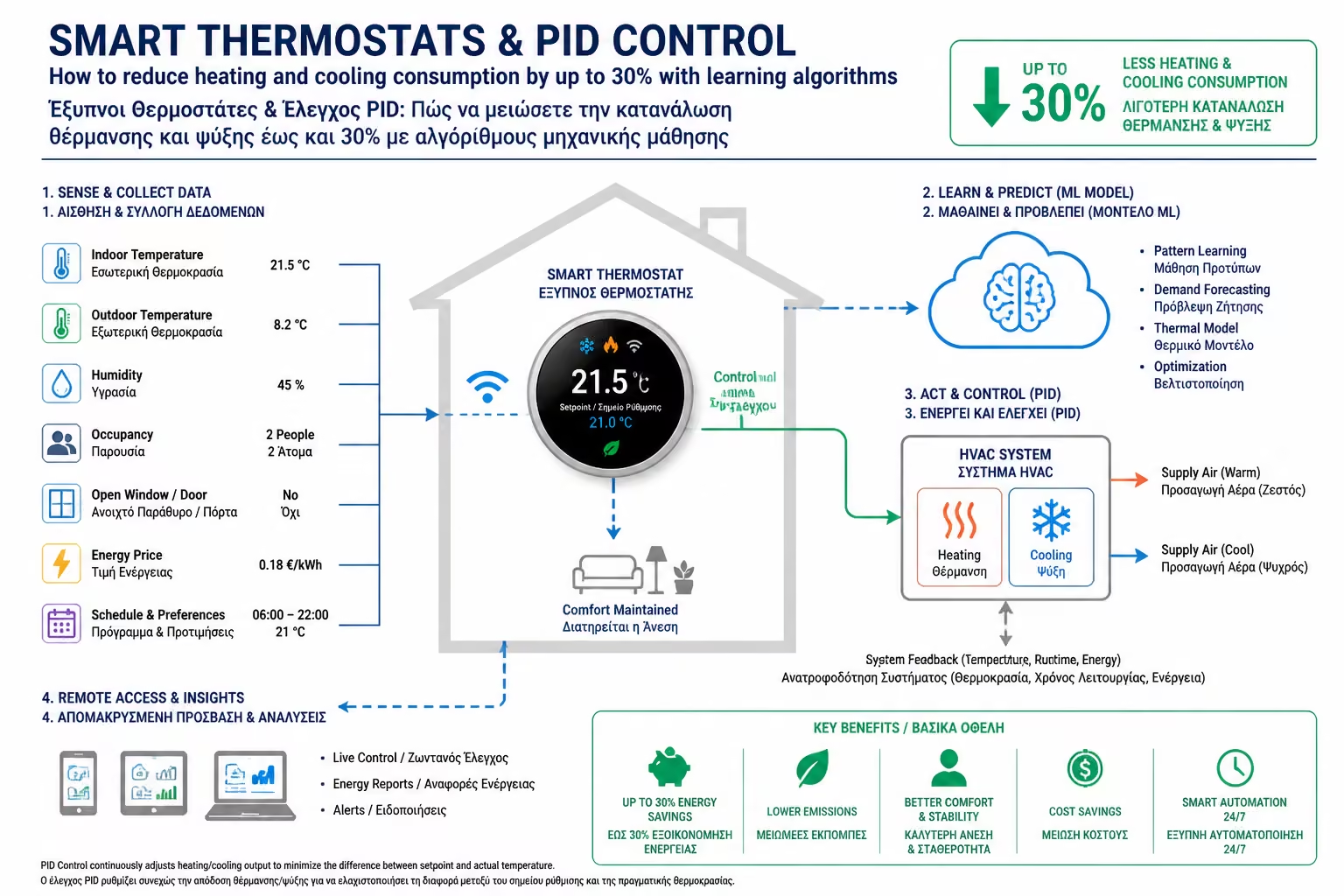
In the first 2-3 weeks of operation, the thermostat "reads" how long it takes your house to rise by 1°C.
The thermostat is connected to Wi-Fi and "sees" the weather. If it knows that at 08:00 tomorrow morning it will be 0°C outside, and you want to wake up at 21°C, it calculates (based on the heat capacity of your house) that it should turn on the boiler at exactly 06:42.
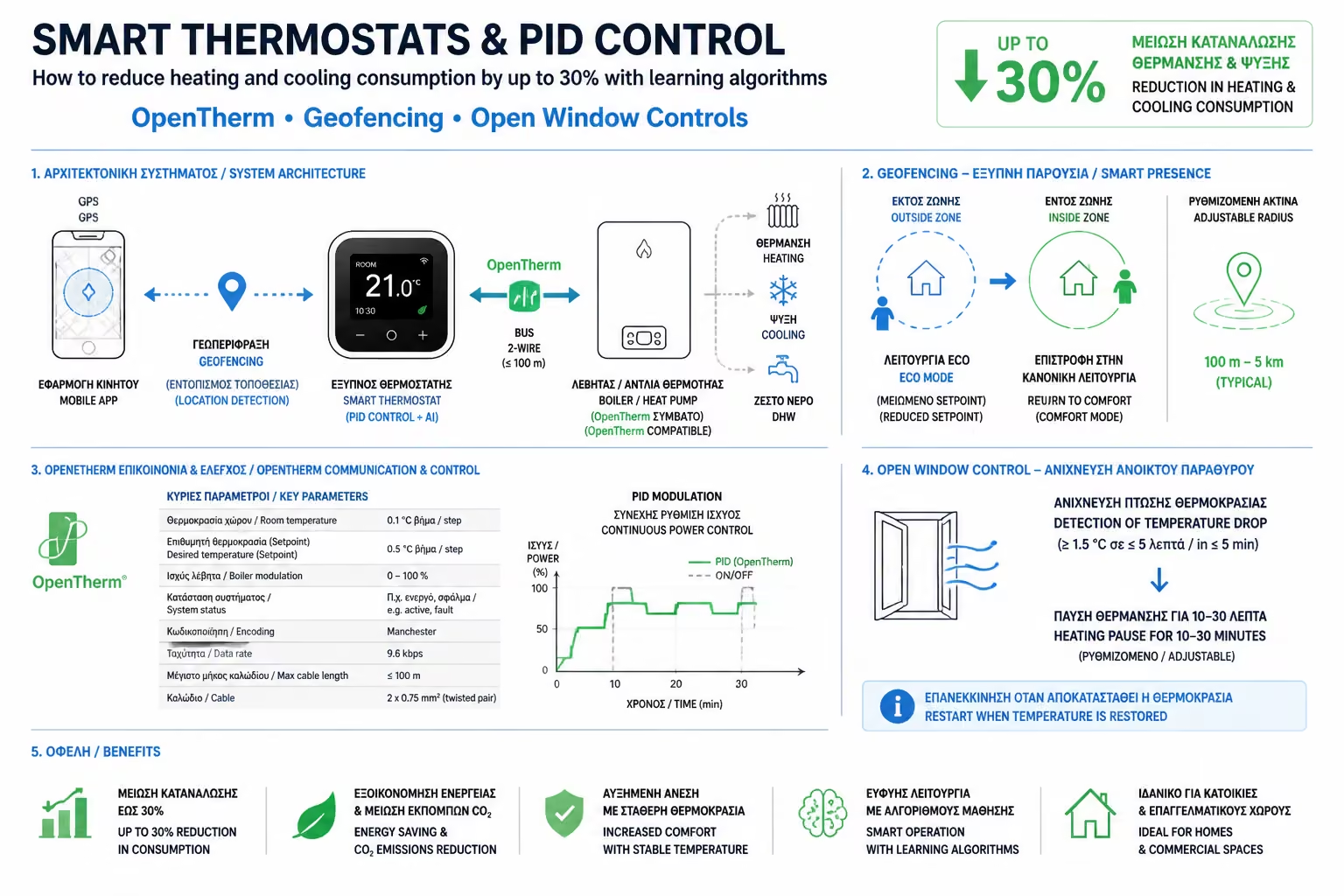
Here lies the biggest pitfall during installation. The best PID algorithm is useless if the thermostat is connected to the gas boiler or heat pump with the old classic 2 wires (On/Off).
For the savings to work, the smart thermostat and boiler must talk digitally. This is done (in Europe) via the OpenTherm protocol. Through OpenTherm, the thermostat doesn't just tell the boiler "On" or "Off". She tells him: "I need some heat. Turn your flame to 30% and send me water at 45°C, not 70°C." It is this Power Modulation that drives Condensing Gas Boilers and Inverter Heat Pumps to their absolute peak performance, dramatically reducing consumption.
Two more features that contribute to the famous "30% savings":
Through the mobile app, the thermostat knows where you (and your family) are. As soon as the last phone is removed, e.g. 2 km from home, the thermostat automatically drops the temperature to "Eco" mode (eg 17°C). When the GPS sees that you are returning (e.g. approaching 5km), it turns the heating back on so you find the house warm when you enter. No more waste on empty houses.
If the thermostat detects a sudden, unnatural drop in temperature (e.g. 1.5°C within 3 minutes) it understands that you have opened a balcony door to ventilate. It immediately turns off the heating for the next 15 minutes so it doesn't try to heat the street.
When companies (like Google with Nest) advertise savings of "up to 30%", they are referring to homes that traditionally left the heating on full blast while they were away, and had huge thermal swings (Overshoots).
Even if you are a prudent user, a smart thermostat with a PID algorithm and OpenTherm wiring will surely give you a 10% to 15% saving. At an annual heating cost of €1,500, this means a €150 - €225 profit per season. Given that a good smart thermostat costs around €200, it is one of the few "smart" devices that pays for itself in less than a year.
Next Step: The thermostat takes over the temperature completely automatically. But what about lighting, blinds, sockets and an alarm?
We continue to the next guide in Category D: Automations Based on Scenarios (Routines): Setting "Goodnight" or "Leaving Home" to close all unnecessary loads with one touch.
Return to category.
Go to categoryReturn to the central guide.
Go to guide